
Hold a thin gold chain up to the light. It looks perfectly solid, and gold is one of the densest metals there is. Yet nearly all of that chain is empty space: if one of its atoms were blown up to the size of Dasharath Stadium, its nucleus would be a marble on the center spot, and the electrons would be a haze round the stands. And those electrons don’t move round the marble like planets: they are spread out as waves, and you can only ever say where one is likely to be.
This unit is the story of how we found that out, and what it lets us do. It starts with Rutherford’s gold foil and Bohr’s orbits, and the colors a hydrogen lamp gives out that only Bohr could explain. Then come the ideas that replaced the orbits: electrons as waves, the limit on what can be measured, and orbitals. Last come the four quantum numbers and three rules (Pauli’s, Aufbau and Hund’s) that tell you where every electron of every atom goes, and so explain the periodic table you will meet in Unit 4.
In Unit 2 you met Dalton’s atomic theory: an atom is the smallest particle of an element, and it can’t be divided. Experiments from the 1890s on showed that it can: an atom has a tiny, heavy, positive nucleus at its center, with light, negative electrons round it.
- In 1897 the British physicist J. J. Thomson discovered the electron, the negative particle in every atom, with his cathode ray tubes.
- In 1911 Ernest Rutherford found from his alpha particle scattering experiment that an atom’s positive charge sits in a tiny nucleus, and by 1919 he had shown that every nucleus contains protons, the positive particles that hydrogen’s nucleus is made of.
- In 1932 James Chadwick discovered the neutron, a neutral particle in the nucleus with almost the same mass as the proton (slightly more) and about 1840 times the mass of an electron.
3.1 Rutherford’s atomic model
The alpha particle scattering experiment
In 1909, working under Ernest Rutherford at the University of Manchester, Hans Geiger and Ernest Marsden fired alpha particles at a very thin sheet of gold. An alpha particle is a helium nucleus, He²⁺: two protons and two neutrons, about 7300 times as heavy as an electron, shot out of radium at about 15,000 km/s.
The set-up (Figure 3.2):
- A little radium in a lead box with a narrow hole gave a thin beam of alpha particles (lead stops the rest).
- The beam struck gold foil about 0.4 µm thick, only about 1400 atoms thick.
- Round the foil stood a screen coated with zinc sulphide, which gives a tiny flash of light where an alpha particle hits it. Looking through a microscope that could be turned round the foil, they counted the flashes at each angle, in the dark, for hours.
They found that:
- a.most alpha particles (well over 99 %) went straight through the foil, with little or no deflection;
- b.a small fraction were deflected through small angles;
- c.very few (about 1 in 20,000, through foil this thin) were turned through more than 90°, and some bounced almost straight back towards the source.
Rutherford said the last result was “as if you fired a 15-inch shell at a piece of tissue paper and it came back and hit you”. On the old idea of the atom, Thomson’s plum pudding with its positive charge spread thinly through the whole atom, nothing in the foil could turn a heavy, fast alpha particle round.
What the results mean
- a.Most of the atom is empty space. Most alpha particles went straight through, meeting nothing that could turn them.
- b.The positive charge is concentrated. The particles that were deflected were pushed away by something positive, like charges repelling.
- c.Nearly all the mass and all the positive charge are packed into a tiny nucleus. Only something very small, very heavy and highly charged could turn an alpha particle straight back, and so rarely, because so few particles passed close to it. From his counts Rutherford worked out that the nucleus is about 10⁻¹⁴ m across, while the atom is about 10⁻¹⁰ m: ten thousand times smaller.
Rutherford’s nuclear model
From these results Rutherford proposed in 1911 the nuclear model of the atom, also called the planetary model:
- an atom has a tiny, dense, positively charged nucleus at its center, holding nearly all its mass;
- the electrons go round the nucleus at high speed in circular paths, like planets round the Sun, the attraction between the positive nucleus and the negative electrons holding them in;
- the atom is neutral: the nucleus’s positive charge equals the electrons’ total negative charge;
- most of the atom’s volume is empty space.
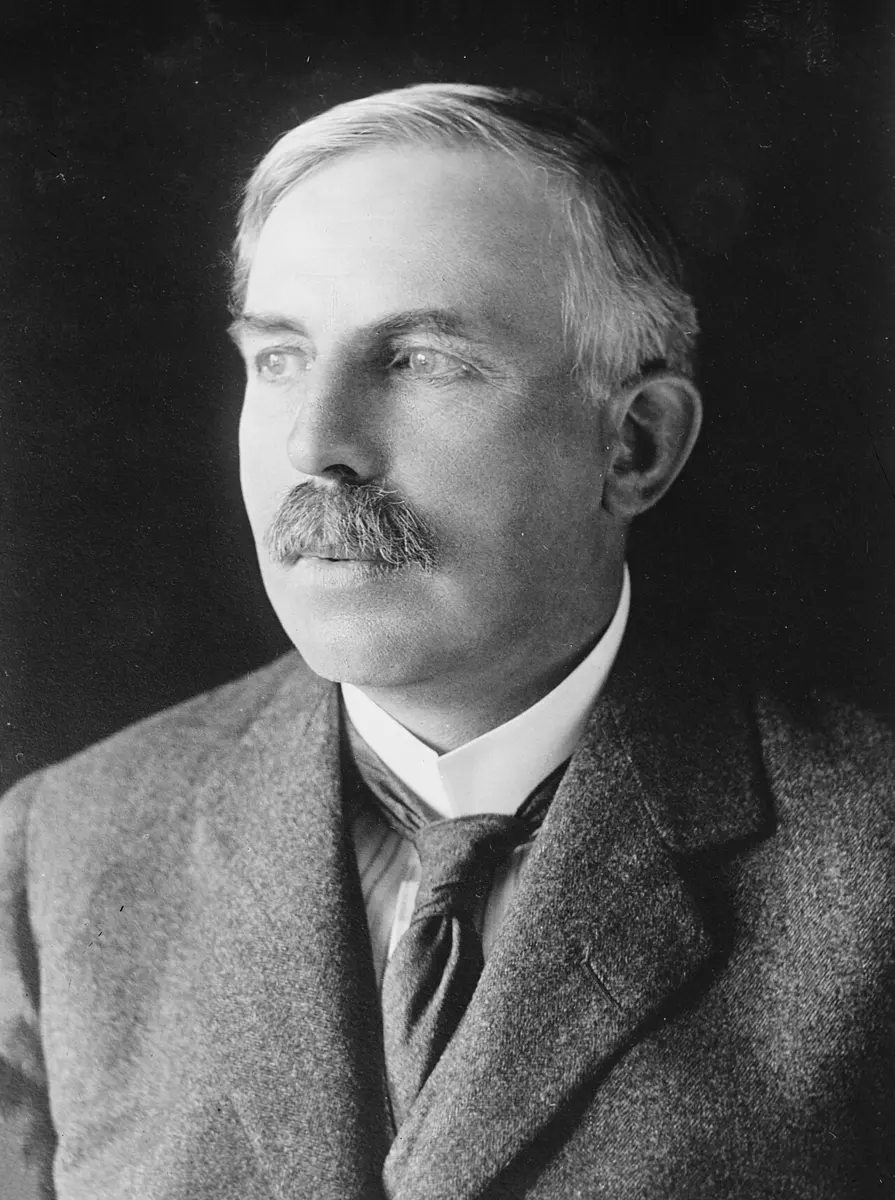
In the scattering experiment, why were a few alpha particles turned straight back?
Pick an answer to see why.
3.2 Limitation of Rutherford’s atomic model
Rutherford’s model put the nucleus at the center, and that part has never changed. But it had one great problem: it couldn’t explain why atoms are stable.
An electron going round in a circle keeps changing direction, so it is always accelerating. Classical physics (Maxwell’s theory of electromagnetism) says that an accelerating charge gives out electromagnetic radiation, and so loses energy. The electron should therefore spiral inwards, faster and faster, and crash into the nucleus (Figure 3.5), in about a hundred-thousandth of a microsecond (about 10⁻¹¹ s). Every atom in the universe should have collapsed long ago. Yet atoms last for billions of years.
There was a second problem, which Section 3.4 explains: a spiraling electron would give out light of every color, a continuous spectrum, while real atoms give out only a few sharp colors.
3.3 Postulates of Bohr’s atomic model and its applications
In 1913 the Danish physicist Niels Bohr saved Rutherford’s atom by mixing classical physics with a new idea, the quantum: that energy comes in fixed packets. His postulates (starting assumptions) are:
- a.Electrons go round the nucleus only in certain circular paths, called orbits or shells, labeled 1, 2, 3, 4 … or K, L, M, N … outwards from the nucleus. Each orbit has a fixed energy, so the orbits are also called energy levels.
- b.The farther an orbit is from the nucleus, the higher its energy: While an electron stays in one orbit, it neither gives out nor takes in energy. So these orbits are also called stationary states, and an electron in one doesn’t spiral in.
- c.An electron moves from one orbit to another only by taking in or giving out exactly the difference in energy. Taking in energy, it jumps to a higher orbit; falling back to a lower orbit, it gives out that energy as one photon of light, of frequency ν:
where is the energy of the higher orbit, that of the lower one, ν (nu) the frequency of the light, and Planck’s constant, J s. A bigger jump gives a photon of higher frequency, so of shorter wavelength.
d. Only those orbits are allowed in which the electron’s angular momentum is a whole-number multiple of :
where is the electron’s mass, its speed, the radius of the orbit, and the orbit’s number, the principal quantum number. This is the rule that picks out the allowed orbits and forbids all the others: it is called the quantization of angular momentum.
Bohr’s model worked out for hydrogen gives the radius of each orbit and the energy in it:
The energies are negative because a free electron, far from the nucleus, is taken as zero: the electron must be given energy to escape. The lowest level, , is the ground state; the levels above it are excited states. The physics behind these formulas is in Grade 12 Physics, Unit 23.
In Bohr’s model, an electron gives out light when it:
Pick an answer to see why.
How does Bohr’s model explain the stability of the atom?
Pick an answer to see why.
3.4 Spectrum of hydrogen atom
Absorption and emission spectra
When a gas is heated, or a spark passed through it, electrons in its atoms take in energy and jump to higher energy levels. They take in light the same way: an electron can jump up by absorbing a photon of exactly the right frequency.
- Pass white light through a gas and measure, with an instrument such as a spectrophotometer, which wavelengths come out weaker: the pattern of dark lines where the gas has taken in light is its absorption spectrum.
- When the excited electrons fall back to lower levels, they give out light at certain wavelengths: the pattern of bright lines is the gas’s emission spectrum.
Spectra are of two kinds:
- a continuous spectrum has every wavelength over a broad range, with no gaps, like a rainbow or the light of a hot filament;
- a line spectrum has only sharp lines at certain wavelengths, with darkness between: the spectrum of a gas of separate atoms.
Every element has its own line spectrum, as every product in a shop has its own bar code. That is how we know what the Sun and the stars are made of without going there: helium was found in the Sun’s spectrum in 1868, 27 years before it was found on Earth.
The hydrogen spectrum
Fill a glass tube with hydrogen at low pressure and put a high voltage across its electrodes: the gas glows pink. Pass that light through a slit and a prism, and it spreads out not into a rainbow but into separate lines (Figure 3.10). Measured with instruments that see beyond the eye, they form several groups, some in the visible, some in the ultraviolet and some in the infrared. Together they are the hydrogen spectrum, or hydrogen emission spectrum.

Bohr’s model explains it. A sample of hydrogen holds a huge number of atoms. The spark excites their electrons to many different levels, and each electron falls back by its own route, in one big jump or in several smaller ones. Every possible jump down gives one line, of exactly one wavelength, because the levels have exactly fixed energies.
The spectral series
The lines fall into series, named after their discoverers. All the lines of a series end on the same level (Figure 3.12):
| Series | Electron falls to | From | Region |
|---|---|---|---|
| Lyman | n₁ = 1 | n₂ = 2, 3, 4 … | ultraviolet |
| Balmer | n₁ = 2 | n₂ = 3, 4, 5 … | visible (and near ultraviolet) |
| Paschen | n₁ = 3 | n₂ = 4, 5, 6 … | infrared |
| Brackett | n₁ = 4 | n₂ = 5, 6, 7 … | infrared |
| Pfund | n₁ = 5 | n₂ = 6, 7, 8 … | infrared |
In 1888 the Swedish physicist Johannes Rydberg found one formula for the wavelengths of all of hydrogen’s lines, long before anyone knew why it worked:
where λ is the wavelength of the line, the number of the lower level, that of the higher level (), and the Rydberg constant for hydrogen, m⁻¹ (often rounded to 1.09 × 10⁷ m⁻¹). , the number of waves per meter, is called the wave number, . Bohr’s model gives this formula: comes out of the electron’s mass and charge and Planck’s constant, which was its great triumph.
Colored flames
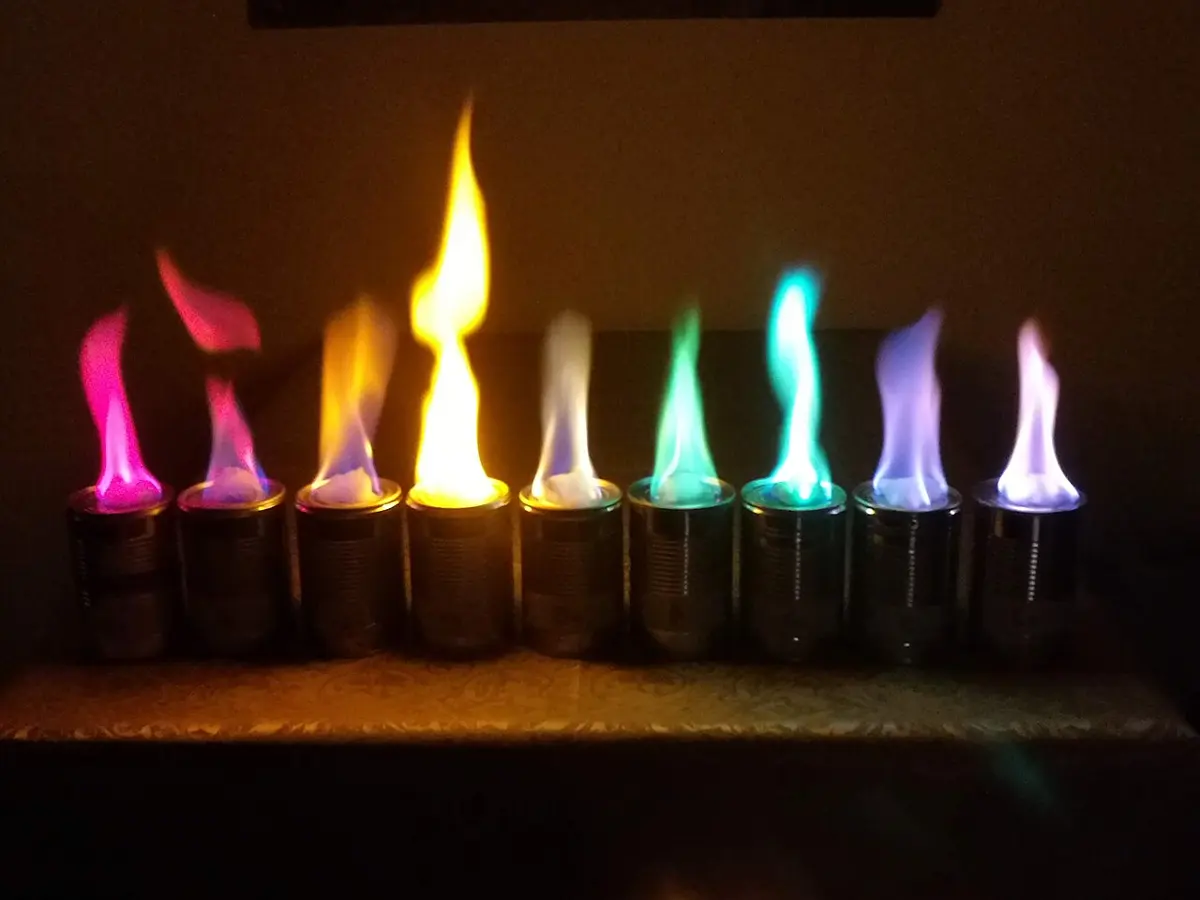
Hold a pinch of common salt in a gas flame on a wire, and the flame turns bright yellow-orange. Heat excites the electrons of the metal’s atoms; as they fall back to lower levels, they give out photons of the metal’s own wavelengths. The color tells you which metal is in the salt: the flame test.
| Metal | Flame color |
|---|---|
| sodium | bright yellow-orange |
| potassium | lilac (pale violet) |
| lithium | crimson |
| calcium | brick red |
| strontium | crimson red |
| barium | pale apple green |
| copper | blue-green |
A hydrogen atom has only one electron. Why does hydrogen’s spectrum have so many lines?
Pick an answer to see why.
3.5 Defects of Bohr’s theory
Bohr’s model was a huge step, and its energy levels are still used. But it has these defects:
- a.It works only for one-electron atoms and ions (H, He⁺, Li²⁺). It can’t explain the spectra of atoms with two or more electrons, even helium.
- b.It can’t explain the splitting of spectral lines into several close lines in a magnetic field (the Zeeman effect, Figure 3.14) or in an electric field (the Stark effect), nor the fine splitting seen with good spectroscopes even with no field.
- c.It treats the electron only as a particle moving in a definite path. It can’t explain the wave–particle duality of electrons (Section 3.6): an electron behaves both as a particle and as a wave.
- d.It gives no reason for the quantization of angular momentum, : Bohr just assumed it.
- e.A fixed orbit means a definite position and a definite speed at every moment, which the uncertainty principle (Section 3.7) says no electron can have.
Which of these can Bohr’s model explain?
Pick an answer to see why.
3.6 Elementary idea of the quantum mechanical model
In the 1920s a new theory, quantum mechanics, replaced Bohr’s orbits. It doesn’t give electrons fixed paths. It describes each electron by a wave function, from which you can work out where the electron is likely to be found and what energy it has (Figure 3.15). Three ideas led to it: the dual nature of matter (this section), the uncertainty principle (3.7) and probability (3.8).
de Broglie’s wave equation
In 1900 the German physicist Max Planck, explaining the light given out by hot objects, proposed that light is given out and taken in only in packets of energy, quanta (the full story). The energy of one quantum is
where ν is the frequency of the light and Planck’s constant, J s (exactly 6.62607015 × 10⁻³⁴ J s, by definition since 2019). In 1905 Einstein proposed that light itself travels as such packets, particles of light later called photons, and so explained the photoelectric effect. So light, a wave, also behaves as particles.
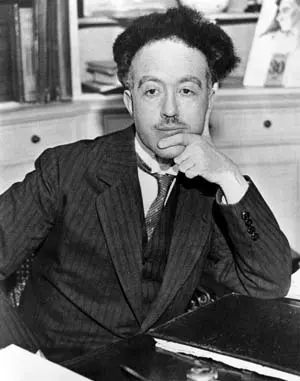
In 1924 the French physicist Louis de Broglie turned the idea round: if waves can behave as particles, perhaps particles behave as waves. His hypothesis of wave–particle duality says:
“Every material particle in motion, big or small, has a wave associated with it.”
He worked out the wavelength from the photon. Einstein’s mass–energy relation applied to a photon, treating it as a particle of mass moving at the speed of light , gives
Putting (1) and (2) together:
- , because
- , dividing both sides by and multiplying by λ.
is the photon’s momentum. De Broglie proposed that the same holds for any particle of mass moving with speed , its momentum being :
This is de Broglie’s wave equation. The wavelength is inversely proportional to the momentum: the lighter and slower the particle, the longer its wave.
- An electron has so little mass that its wavelength is about the size of an atom, and its wave nature decides how it behaves inside atoms.
- For everyday objects, is so large that λ is far too small ever to detect, so they behave simply as particles: de Broglie’s equation applies to them too, but its effect can’t be seen.
An electron and a proton move at the same speed. Which has the longer de Broglie wavelength?
Pick an answer to see why.
3.7 Heisenberg’s uncertainty principle
In 1927 the German physicist Werner Heisenberg showed that there is a limit to what can be known about a particle. His uncertainty principle says:
“It is impossible to know exactly both the position and the momentum of an electron (or any particle) at the same time.”
In mathematical form,
where
- is the uncertainty in position,
- is the uncertainty in momentum (),
- is Planck’s constant, and
- (“h-bar”) is the reduced Planck’s constant, J s.
The product of the two uncertainties can never be smaller than . So the more exactly you know where a particle is, the less exactly you can know its momentum, and the other way round. Knowing both exactly is impossible.
Why: looking at an electron
To see where an electron is, you must bounce light off it into a microscope (Figure 3.18). To find its position closely, you need light of short wavelength, since no microscope can see detail smaller than the wavelength it uses. But short-wavelength photons carry a large momentum (), and an electron is so light that the photon that finds it knocks it off its course, changing its momentum by an amount you can’t know. Use gentler, longer waves and the kick is smaller, but the position is blurred. You can’t win both.
This is not a fault of our instruments: the electron does not have an exact position and an exact momentum together. Its wave nature makes it so.
The principle matters only for microscopic particles. For a large object, the uncertainties it sets are far too small to notice.
The uncertainty principle explains why:
Pick an answer to see why.
3.8 Concept of probability
In Bohr’s model, an electron moves round the nucleus in a fixed path, where both its position and its momentum could be known exactly. The uncertainty principle says that this can’t be. So electrons don’t move in orbits: there is only a probability of finding an electron in each small region round the nucleus.
In quantum mechanics the state of an electron is described by a mathematical function called its wave function, (psi), worked out from the Schrödinger equation (1926). The square of the wave function, , gives the probability density: the chance of finding the electron in a tiny volume at each point. Where is large, the electron is likely to be; where it is zero, the electron is never found.
A picture of looks like a cloud, thick where the electron is likely to be and thin where it is not: an electron cloud. The region of space round the nucleus where the probability of finding the electron is greatest (usually drawn as the region holding it 90 % of the time) is called an orbital.
The 1s, 2s and 3s orbitals
Figure 3.19 shows how likely the electron is to be found at each distance from the nucleus in the 1s, 2s and 3s orbitals of hydrogen.
- In 1s, the electron is most likely at 0.0529 nm, exactly Bohr’s first radius, but it can be found nearer or farther.
- 2s and 3s are larger, and have nodes: spheres on which the probability of finding the electron is zero. 2s has one node, 3s two. (An ns orbital has n − 1 such nodes.)
- The electron cloud spreads out more as n increases: a higher shell is larger, and its electrons are on average farther from the nucleus.
What does tell us?
Pick an answer to see why.
3.9 Four quantum numbers
The word quantum comes from the Latin quantus, “how much”, “how great”. Quantum numbers are the set of numbers that describe the state of an electron in an atom. They tell which shell, subshell and orbital it is in, its energy, the orbital’s shape and orientation, and the electron’s spin. Every electron in an atom is described by four quantum numbers: n, l, m and s.
a. Principal quantum number (n)
The principal quantum number, n, was introduced by Niels Bohr in 1913 as the number of his orbits. It gives the main energy level, or shell, of the electron:
| n | 1 | 2 | 3 | 4 | … |
|---|---|---|---|---|---|
| shell | K | L | M | N | … |
- It can be any positive whole number: 1, 2, 3 …
- It decides the size of the shell and the electron’s average distance from the nucleus: as n increases, so does the distance.
- It largely decides the energy of the electron: as n increases, the energy increases.
- The maximum number of electrons in a shell is 2n²: K (n = 1) holds 2, L (n = 2) holds 8, M (n = 3) 18, N (n = 4) 32.
The elements of one period of the periodic table have their outermost electrons in the same shell, the same n. Going down a group, n increases, so the atoms get larger.
b. Azimuthal quantum number (l)
The azimuthal quantum number, l, also called the subsidiary or angular momentum quantum number, was introduced by Arnold Sommerfeld in 1915–16. It gives the subshell an electron is in, and so the shape of its orbital. It also fixes the size of the electron’s angular momentum, hence its second name.
Its values depend on n: l = 0, 1, 2 … (n − 1), n values in all. Each value has a letter:
| l | 0 | 1 | 2 | 3 |
|---|---|---|---|---|
| subshell | s | p | d | f |
| shape of orbital | spherical | dumbbell | double dumbbell (four lobes), mostly | more complex |
So the number of subshells in a shell equals n:
| Shell | n | l | Number of subshells | Subshells |
|---|---|---|---|---|
| 1st (K) | 1 | 0 | 1 | 1s |
| 2nd (L) | 2 | 0, 1 | 2 | 2s, 2p |
| 3rd (M) | 3 | 0, 1, 2 | 3 | 3s, 3p, 3d |
| 4th (N) | 4 | 0, 1, 2, 3 | 4 | 4s, 4p, 4d, 4f |
A subshell is named by its n and its letter: 3d means n = 3, l = 2. So there is no 1p, 2d or 3f: l must be less than n.
c. Magnetic quantum number (m)
The magnetic quantum number, m (also written mₗ), also from Sommerfeld, gives the orientation of an orbital in space, and so the number of orbitals in a subshell. It is called magnetic because orbitals of different m respond differently to a magnetic field (the Zeeman effect).
Its values depend on l: m = −l … 0 … +l, all the whole numbers in between. So a subshell has 2l + 1 orbitals:
| Subshell | l | m | Number of orbitals (2l + 1) |
|---|---|---|---|
| s | 0 | 0 | 1 |
| p | 1 | −1, 0, +1 | 3 |
| d | 2 | −2, −1, 0, +1, +2 | 5 |
| f | 3 | −3, −2, −1, 0, +1, +2, +3 | 7 |
- An s subshell has only one value of m: its one orbital is a sphere, the same in every direction, with no particular orientation.
- A p subshell has three values of m: three orbitals, pointing along the three axes, called pₓ, py and pz.
d. Spin quantum number (s)
The spin quantum number, s (also written mₛ), was introduced by George Uhlenbeck and Samuel Goudsmit in 1925. An electron behaves as if it were spinning on its axis, which makes it a tiny magnet. It can spin in only two ways, so s has only two values: +½ and −½, often pictured as clockwise and anticlockwise spin and drawn as arrows ↑ and ↓.
Since s has only two values, an orbital can hold at most two electrons, and they must have opposite spins, ↑↓ (Section 3.11).
Paramagnetic and diamagnetic
Each electron’s spin makes it a tiny magnet.
- In an orbital holding two electrons with opposite spins, ↑↓, the two magnets cancel. A substance whose electrons are all paired like this is diamagnetic: it is weakly repelled by a magnet.
- An unpaired electron’s magnet is not canceled. A substance with unpaired electrons is paramagnetic: it is attracted into a magnetic field.
Which set of quantum numbers is not allowed?
Pick an answer to see why.
3.10 Orbitals and shapes of s and p orbitals
From the quantum numbers, an orbital is the region within a subshell where the electron is most likely to be found. The two simplest shapes are these (Figure 3.22).
s orbitals are spherical. An s orbital is spherically symmetrical: the probability of finding the electron at a given distance from the nucleus is the same in every direction. The s orbital of the first shell is the 1s orbital; that of the second shell, the 2s orbital, is the same shape but larger and higher in energy, with a node inside (Section 3.8).
p orbitals are dumbbell shaped. Each p subshell, from n = 2 on, has three p orbitals, at right angles to one another, pointing along the x, y and z axes: pₓ, py and pz.
- The pₓ orbital has its two lobes along the x axis, where the electron is most likely to be; the probability is zero everywhere in the plane of the y and z axes. In the same way py lies along the y axis and pz along the z axis.
- Each p orbital is two lobes on opposite sides of the nucleus: a dumbbell. At the nucleus, between the lobes, the probability of finding a p electron is zero: that plane is a node (a nodal plane).
Although pₓ, py and pz point in different directions, an electron in any of them has exactly the same energy. Orbitals of the same energy are called degenerate orbitals, and the effect degeneracy. The three 2p orbitals are degenerate, and so are the five 3d orbitals (in a free atom).
How many nodes does a single p orbital have at the nucleus?
Pick an answer to see why.
3.11 Pauli’s exclusion principle
Electrons in the same shell have the same n; in the same subshell, the same n and l; in the same orbital, the same n, l and m. Two electrons in the same orbital must therefore differ in their spin.
In 1925 the Austrian physicist Wolfgang Pauli stated the exclusion principle:
“No two electrons in an atom can have the same set of all four quantum numbers.”
“Exclusion” means that once one electron has a set of four quantum numbers, every other electron of the atom is shut out of that set. Two electrons in one orbital share n, l and m, so they must have different s: one +½ and one −½. So:
An orbital can hold at most two electrons, and they must have opposite spins.
From this, the 2(2l + 1) electrons of a subshell and the 2n² of a shell follow at once.
For the two electrons of helium, in the 1s orbital:
| Electron | n | l | m | s |
|---|---|---|---|---|
| 1 | 1 | 0 | 0 | +½ |
| 2 | 1 | 0 | 0 | −½ |
Pauli’s principle is why matter takes up space at all: electrons can’t all crowd into the lowest orbital, so atoms have shells, and two atoms can’t be squeezed into one another.
What is the maximum number of electrons in one orbital, and why?
Pick an answer to see why.
3.12 Aufbau principle
Aufbau is German for “building up”. The Aufbau principle gives the order in which the electrons of an atom fill its orbitals:
“Electrons fill the atomic orbitals in increasing order of their energies.”
The lowest-energy orbital available is filled first, then the next lowest, and so on. Which orbital is lower in energy in a many-electron atom is found by the (n + l) rule:
- i.The orbital with the lower value of (n + l) has the lower energy, so it is filled first.
- ii.When two orbitals have the same (n + l), the one with the lower n has the lower energy.
| Orbital | n | l | n + l |
|---|---|---|---|
| 1s | 1 | 0 | 1 |
| 2s | 2 | 0 | 2 |
| 2p | 2 | 1 | 3 |
| 3s | 3 | 0 | 3 |
| 3p | 3 | 1 | 4 |
| 4s | 4 | 0 | 4 |
| 3d | 3 | 2 | 5 |
| 4p | 4 | 1 | 5 |
2p and 3s both have n + l = 3, so 2p (lower n) comes first; 3p and 4s both have 4, so 3p first; 3d and 4p both have 5, so 3d first. 4s (n + l = 4) fills before 3d (n + l = 5). The order is
1s < 2s < 2p < 3s < 3p < 4s < 3d < 4p < 5s < 4d < 5p < 6s < 4f < 5d < 6p < 7s < 5f < 6d < 7p
Figure 3.24 is an easy way to remember it.
Which is filled first?
Pick an answer to see why.
3.13 Hund’s rule and electronic configurations of atoms and ions
The Aufbau principle says which subshell fills next. But a subshell such as 2p has three orbitals of the same energy, degenerate orbitals: in which order do electrons go into them? In 1925 the German physicist Friedrich Hund gave the answer, Hund’s rule:
“Electrons occupy degenerate orbitals singly, with parallel spins, before any of them pair up.”
So in a p subshell, each of the three orbitals gets one electron (↑ ↑ ↑, all with the same spin) before any gets a second; pairing (↑↓) starts only with the fourth electron.
Why? Electrons repel. In separate orbitals they are farther apart than two in the same orbital, so they repel less, and the atom has lower energy and is more stable. The number of unpaired electrons is called the multiplicity, and since Hund’s rule makes it as large as possible, it is also called Hund’s rule of maximum multiplicity.
Here are the configurations of lithium to neon, by Hund’s rule:
| Element | Configuration | Unpaired electrons |
|---|---|---|
| Lithium, Li | 1s² 2s¹ | 1 |
| Beryllium, Be | 1s² 2s² | 0 |
| Boron, B | 1s² 2s² 2p¹ | 1 |
| Carbon, C | 1s² 2s² 2p² | 2 |
| Nitrogen, N | 1s² 2s² 2p³ | 3 |
| Oxygen, O | 1s² 2s² 2p⁴ | 2 |
| Fluorine, F | 1s² 2s² 2p⁵ | 1 |
| Neon, Ne | 1s² 2s² 2p⁶ | 0 |
Electronic configuration
Bohr’s model places electrons in shells by the 2n² rule. But that is not enough to say which subshells they are in; the Aufbau principle and the (n + l) rule do that.
The arrangement of an atom’s electrons in its shells, subshells and orbitals is called its electronic configuration. To write it:
- Find the number of electrons (the atomic number, for a neutral atom).
- Fill the subshells in the Aufbau order, 1s, 2s, 2p, 3s, 3p, 4s, 3d …, each up to its maximum (s 2, p 6, d 10, f 14).
- Write each subshell with its electrons as a superscript: 1s² 2s² 2p⁶ 3s¹.
- To show the orbitals, draw a box per orbital and fill each subshell by Hund’s rule, two at most to a box with opposite spins (Pauli).
For example, nitrogen (7 electrons) is 1s² 2s² 2p³, the three 2p electrons in separate orbitals by Hund’s rule.
The periodic table follows the configurations. Elements in the same group have the same arrangement of their outer (valence) electrons, and the last electron of each element goes into the subshell of its block (Figure 3.29): s for groups 1–2, p for 13–18, d for the transition metals and f for the lanthanides and actinides. Unit 4 builds on this.
The noble gas core. Writing every subshell gets long. The inner electrons of an atom are arranged as in the noble gas before it, so we write that noble gas’s symbol in square brackets for them, then only the outer electrons. Sodium, 1s² 2s² 2p⁶ 3s¹, is written [Ne] 3s¹. This is the noble gas notation, the shorthand or condensed electronic configuration.
The first ten elements:
| Element | Configuration |
|---|---|
| Hydrogen, H (1) | 1s¹ |
| Helium, He (2) | 1s² |
| Lithium, Li (3) | 1s² 2s¹ = [He] 2s¹ |
| Beryllium, Be (4) | 1s² 2s² = [He] 2s² |
| Boron, B (5) | 1s² 2s² 2p¹ = [He] 2s² 2p¹ |
| Carbon, C (6) | 1s² 2s² 2p² = [He] 2s² 2p² |
| Nitrogen, N (7) | 1s² 2s² 2p³ = [He] 2s² 2p³ |
| Oxygen, O (8) | 1s² 2s² 2p⁴ = [He] 2s² 2p⁴ |
| Fluorine, F (9) | 1s² 2s² 2p⁵ = [He] 2s² 2p⁵ |
| Neon, Ne (10) | 1s² 2s² 2p⁶ |
and the first row of transition metals, scandium to zinc, where the 3d subshell fills after 4s:
| Element | Configuration | Condensed |
|---|---|---|
| Scandium, Sc (21) | 1s² 2s² 2p⁶ 3s² 3p⁶ 4s² 3d¹ | [Ar] 4s² 3d¹ |
| Titanium, Ti (22) | 1s² 2s² 2p⁶ 3s² 3p⁶ 4s² 3d² | [Ar] 4s² 3d² |
| Vanadium, V (23) | 1s² 2s² 2p⁶ 3s² 3p⁶ 4s² 3d³ | [Ar] 4s² 3d³ |
| Chromium, Cr (24) | 1s² 2s² 2p⁶ 3s² 3p⁶ 4s¹ 3d⁵ | [Ar] 4s¹ 3d⁵ |
| Manganese, Mn (25) | 1s² 2s² 2p⁶ 3s² 3p⁶ 4s² 3d⁵ | [Ar] 4s² 3d⁵ |
| Iron, Fe (26) | 1s² 2s² 2p⁶ 3s² 3p⁶ 4s² 3d⁶ | [Ar] 4s² 3d⁶ |
| Cobalt, Co (27) | 1s² 2s² 2p⁶ 3s² 3p⁶ 4s² 3d⁷ | [Ar] 4s² 3d⁷ |
| Nickel, Ni (28) | 1s² 2s² 2p⁶ 3s² 3p⁶ 4s² 3d⁸ | [Ar] 4s² 3d⁸ |
| Copper, Cu (29) | 1s² 2s² 2p⁶ 3s² 3p⁶ 4s¹ 3d¹⁰ | [Ar] 4s¹ 3d¹⁰ |
| Zinc, Zn (30) | 1s² 2s² 2p⁶ 3s² 3p⁶ 4s² 3d¹⁰ | [Ar] 4s² 3d¹⁰ |
Chromium and copper
Two elements break the Aufbau order. By the rules, chromium should be [Ar] 4s² 3d⁴ and copper [Ar] 4s² 3d⁹. In fact they are
- Cr: [Ar] 4s¹ 3d⁵ and
- Cu: [Ar] 4s¹ 3d¹⁰.
One 4s electron moves into 3d, because a half-filled (d⁵) or completely filled (d¹⁰) d subshell is extra stable. 4s and 3d are very close in energy, and a half-filled or filled subshell is especially stable for two reasons:
- symmetry: its electrons are spread evenly over all the orbitals, so the charge is shared out evenly round the nucleus;
- exchange energy: electrons of parallel spin in degenerate orbitals can trade places, and each such pair lowers the energy. Five parallel spins in 3d⁵ give the most pairs (10), more than the small cost of moving an electron up from 4s.
The same is why chromium’s and copper’s neighbors in their groups, molybdenum and silver, do the same (chromium’s story, copper’s).
The configuration of chromium (24) is
Pick an answer to see why.
Electronic configuration of ions
An ion’s configuration is written like an atom’s, with electrons taken away or added.
- A positive ion loses electrons from the outermost shell, the one with the highest n.
- A negative ion gains electrons into the next vacancy, by the Aufbau order.
| Species | Configuration | |
|---|---|---|
| sodium atom, Na | 1s² 2s² 2p⁶ 3s¹ | |
| sodium ion, Na⁺ | 1s² 2s² 2p⁶ | one electron lost from 3s: |
| chlorine atom, Cl | 1s² 2s² 2p⁶ 3s² 3p⁵ | |
| chloride ion, Cl⁻ | 1s² 2s² 2p⁶ 3s² 3p⁶ | one electron added to 3p: |
Na⁺ has the configuration of neon, and Cl⁻ that of argon: both have a noble gas’s stable arrangement.
Transition metal ions lose their 4s electrons before 3d. The transition metals (d block) usually show several oxidation states, because their 4s and 3d electrons are close in energy and can be lost in different numbers. Titanium:
| Species | Configuration |
|---|---|
| Ti | 1s² 2s² 2p⁶ 3s² 3p⁶ 4s² 3d² |
| Ti⁺ | 1s² 2s² 2p⁶ 3s² 3p⁶ 4s¹ 3d² |
| Ti²⁺ | 1s² 2s² 2p⁶ 3s² 3p⁶ 3d² |
| Ti³⁺ | 1s² 2s² 2p⁶ 3s² 3p⁶ 3d¹ |
| Ti⁴⁺ | 1s² 2s² 2p⁶ 3s² 3p⁶ |
4s fills before 3d, yet it is emptied first. Why? Once electrons are in 3d, the 3d orbitals drop in energy below 4s, and the 4s electrons, in the outermost shell (n = 4), are farthest from the nucleus and the easiest to remove: they have the lower ionization energy. So write the atom’s configuration first, then take electrons from the outermost shell, 4s, before 3d.
History of the development of the atomic model
- Leucippus and Democritus (about 400 BC), in ancient Greece, proposed that everything is made of tiny particles that can’t be divided, atomos, “uncuttable”. In India, the philosopher Kanada had a similar idea of paramanu, the smallest particles of matter.
- John Dalton (1803–1808) turned the idea into science: each element is made of its own kind of atom, with its own mass, and compounds are atoms joined in fixed whole-number ratios. Atoms were still thought indivisible.
- J. J. Thomson discovered the electron with cathode rays in 1897, proving atoms can be divided, and in 1904 proposed the plum pudding model: electrons dotted through a ball of positive charge.
- Ernest Rutherford found the nucleus in 1911 with the gold foil experiment: a small, dense, positive center with electrons round it.
- Niels Bohr introduced quantized orbits in 1913. They explained the stability of atoms and hydrogen’s spectral lines.
- Quantum mechanics grew in the 1920s: wave–particle duality (de Broglie, 1924), the uncertainty principle (Heisenberg, 1927) and the Schrödinger equation (1926).
- The electron cloud model, from quantum mechanics, pictures the electrons as clouds of probability round the nucleus. It is the model used today.
- James Chadwick discovered the neutron in 1932, completing the nucleus: protons and neutrons, with electrons round them.
- The Standard Model of particle physics, built in the 1960s and 1970s, describes the particles inside protons and neutrons (quarks) and the electromagnetic, weak and strong forces between all particles.
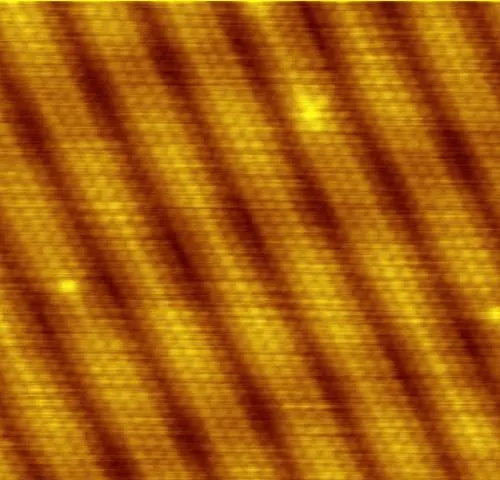
- Imaging atoms: the scanning tunneling microscope (STM, 1981; the full story) and the transmission electron microscope (TEM) now show individual atoms (Figure 3.31).
Exercise
A. Multiple choice questions
- Which of the following statements best describes Pauli’s exclusion principle?
Pick an answer to see why.
- Which of the following pairs of species have the same electronic configuration?
Pick an answer to see why.
- Which of the following principles did Bohr use to explain his atomic model?
Pick an answer to see why.
- Assuming equal velocities, which of the following has the longest de Broglie wavelength?
Pick an answer to see why.
- Half-filled and completely filled orbitals are extra stable because of their
Pick an answer to see why.
- Which of the following orbitals is filled last?
Pick an answer to see why.
- Which electronic configuration represents an atom in an excited state?
Pick an answer to see why.
- The valence shell configuration of a d-block metal is shown above. The metal is
Pick an answer to see why.
- In which region of the spectrum is the line from the jump in the figure above seen?
Pick an answer to see why.
- What does the magnetic quantum number (m) give?
Pick an answer to see why.
- Which orbital does the set n = 3, l = 2, m = −1 represent?
Pick an answer to see why.
- According to Bohr, what happens when an electron falls from a higher energy level to a lower one?
Pick an answer to see why.
- How many electrons in the configuration above have azimuthal quantum number l = 0?
Pick an answer to see why.
B. Short answer questions
Rutherford’s atomic model is based on his famous experiment, the alpha particle scattering experiment.
- a.Why is it called the alpha particle scattering experiment?
- b.What were the observations of this experiment?
- c.Write any three conclusions from these observations.
Answer
- a.What was the major limitation of Rutherford’s atomic model?
- b.Write any three postulates of Bohr’s atomic model.
- c.How did Bohr explain the stability of an atom?
Answer
- a.Define orbit. How many orbits are possible round the nucleus of an atom?
- b.What is the relationship between the distance of an orbit from the nucleus and its energy?
- c.Why are orbits called stationary energy levels?
Answer
One success of Bohr’s atomic model was the explanation of the hydrogen spectrum, which Rutherford’s model could not explain.
- a.Write two similarities and two differences between the two models.
- b.Write the postulate of Bohr’s model that explains the cause of the hydrogen spectrum.
- c.Why is the hydrogen spectrum called an emission spectrum?
- d.Name the spectral series of hydrogen and the regions in which they are seen.
Answer
Give reasons:
- a.Electrons do not fall into the nucleus.
- b.4p has greater energy than 3s.
- c.Bohr’s atomic model goes against the uncertainty principle.
- d.The dual nature of particles matters only for microscopic objects.
- e.The ground-state nitrogen atom has 3 unpaired electrons.
Answer
State and explain:
- a.Hund’s rule of maximum multiplicity
- b.Heisenberg’s uncertainty principle
- c.de Broglie’s wave equation
- d.the dual nature of electrons
Answer
Differentiate between:
- a.orbit and orbital
- b.principal and azimuthal quantum numbers
- c.the Lyman series and the Balmer series
- d.s and p orbitals
Answer
The electronic configuration of an element X is [Ar] 3d¹⁰ 4s².
- a.How many protons and electrons does its atom have?
- b.Give the group, block and period of X in the periodic table.
- c.Write the configuration of the X²⁺ ion and compare its size with that of X.
Answer
Three models of the atom proposed by different scientists are shown in the figure, A, B and C.
- a.Which is the model proposed by Rutherford? Give two reasons.
- b.What is the limitation of Rutherford’s atomic model?
Answer
The maximum number of electrons in a shell is given by the 2n² rule, where n is the principal quantum number.
- a.Give three pieces of information that the principal quantum number gives.
- b.What are the possible values of n?
- c.Write the values of all the quantum numbers for an electron in a 3p orbital.
Answer
The orientation of orbitals in space is also explained by one of the quantum numbers.
- a.Name the quantum number that gives the orientation of orbitals.
- b.Write the values of l and m for a p subshell, and show that the p orbitals have three different orientations.
- c.Draw the shapes of the three p orbitals.
- d.Which of these orbitals has more energy, and why?
Answer
One of the relationships of the quantum mechanical model of the atom is
- a.Name and state the principle it shows.
- b.Write the meaning of each term.
- c.Does this principle apply to macroscopic objects? Why?
Answer
Hund’s rule of maximum multiplicity explains how electrons are placed in degenerate orbitals. Four ways of placing the electrons of an element are shown in the figure.
- a.What are degenerate orbitals? Give one example.
- b.Which arrangement is correct, and why?
- c.How does Pauli’s exclusion principle support Hund’s rule?
- d.Do the spin quantum numbers of the p electrons differ between C and D? Why?
Answer
C. Long answer questions
The electronic configuration of an atom gives the arrangement of its electrons in its orbitals, and is based on the Aufbau principle.
- a.State the Aufbau principle.
- b.What is the (n + l) rule of the Aufbau principle?
- c.Write the electronic configuration of chromium (24), and show that the 4s orbital has lower energy than 3d.
- d.Write the four quantum numbers of the 15th electron of a chromium atom.
- e.Write the configuration of the chromium(III) ion, and find the number of its unpaired electrons.
Answer
Bohr’s atomic model uses orbits to explain the stability of an atom, as in the figure.
- a.Define the term orbit.
- b.Arrange the orbits in the figure in increasing order of energy.
- c.Name the spectral series seen when an electron jumps as in the figure.
- d.How does this model explain the stability of an atom?
Answer
Bohr’s atomic model explains the cause of the hydrogen spectrum, as shown in the figure.
- a.What is the hydrogen spectrum? How does it arise?
- b.Why is the hydrogen spectrum an emission spectrum?
- c.Identify x and y in the figure.
- d.Name the regions in which x and y are seen.
- e.What happens if an electron jumps from the first orbit to the second?
Answer
The electronic configuration of an atom is shown by subshells in the figure.
- a.Name the subshell farthest from the nucleus.
- b.Write the values of n and l for the subshells of the second shell.
- c.Arrange the orbitals in increasing order of energy.
- d.Find the number of unpaired electrons in the atom.
- e.It is difficult to remove a valence electron from this atom to make a cation. Why?
Answer
Some d-block transition metals, such as copper and chromium, don’t follow the Aufbau principle in their electronic configurations.
- a.State the Aufbau principle and give an example of it.
- b.Write the electronic configurations of copper and chromium atoms. How can these configurations be justified?
- c.Write the configuration of the copper(II) ion, and find the number of its unpaired electrons.
Answer
The ground state configuration of an atom, as given by Hund’s rule, is shown in the figure.
- a.State Hund’s rule. Why is it called the rule of maximum multiplicity?
- b.Identify the atom, and write the values of l and m for its p subshell.
- c.Write the spin quantum numbers of the electrons in its 1s orbital.
- d.What would happen to the atom’s stability if one of the p orbitals held a pair?
Answer
Printable PDFs
- Study notes 3 pages
- Worksheet 5 pages Answer key
Quiz yourself: Matter, Atoms and Reactions, Grades 5–12 →
Practice every question in the book, and keep track of the ones you miss →
A companion to your textbook, not a replacement for it: study from the book your school uses, and where the two differ, follow your teacher. Found a mistake? Please tell us.