
Sodium is a soft metal you can cut with a knife, and it bursts into flame on water. Chlorine is a choking green gas. Put them together and you get the salt on your dal. Now look at where they sit: sodium at the far left of the periodic table, chlorine at the far right, both in the same row. Their places tell you almost everything about them before you have ever seen them, and that is what makes the periodic table the most useful single page in chemistry.
This unit explains why. It starts with how Mendeleev’s table became the modern one, ordered by atomic number, and how its groups, periods and blocks (s, p, d and f) follow from the electronic configurations of Unit 3. Then it takes one idea, effective nuclear charge, the pull an outer electron really feels, and uses it to explain the trends you will use for the rest of the course: atomic and ionic radius, ionization energy, electronegativity, electron affinity and metallic character.
In 1869 the Russian chemist Dmitri Mendeleev (1834–1907) and, working on his own, the German chemist Julius Lothar Meyer (1830–1895) made the same discovery: arrange the elements in order of atomic mass, in rows, and the elements that fall into the same vertical column have similar properties. Mendeleev stated it as his periodic law: the properties of the elements are periodic functions of their atomic weights. He was bold enough to leave gaps for elements not yet discovered, and to describe them in advance. When gallium, scandium and germanium turned up with the properties he had predicted, the periodic table became the foundation on which the rest of chemistry was built.
The limitations of Mendeleev’s table
Mendeleev’s table had defects that no arrangement by atomic weight could cure:
- Anomalous pairs. In a few places, to keep families together, a heavier element has to come before a lighter one: argon (39.9) before potassium (39.1), cobalt (58.9) before nickel (58.7), tellurium (127.6) before iodine (126.9). Mendeleev put Te before I and simply believed tellurium’s weight had been measured wrongly. It hadn’t.
- Isotopes. Isotopes of an element have different atomic masses (³⁵Cl and ³⁷Cl), so a table by mass would need a separate place for each, though they are chemically the same.
- The position of hydrogen. It is like the alkali metals (one electron, forms H⁺) and like the halogens (forms H⁻, H₂ is a diatomic gas), so it fits neither group well.
- Unlike elements together, like elements apart. Copper, silver and gold sat in group I with the very reactive alkali metals; the lanthanides were crowded into a single place.
- No room for the noble gases, which were unknown in 1869 (argon was found in 1894), and no reason why the properties should repeat at all.
4.1 Modern periodic law and modern periodic table
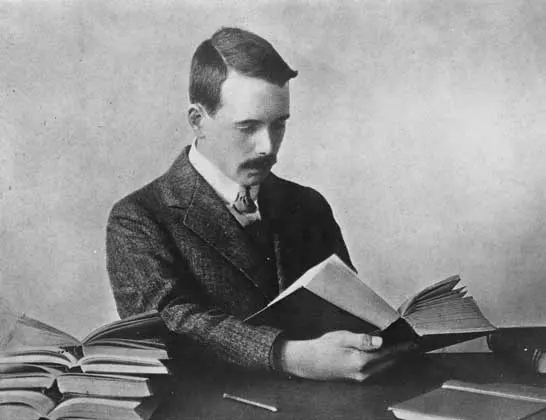
In 1913 the English physicist Henry Moseley fired electrons at targets of different elements and measured the frequency of the X-rays each one gave out. He found a beautifully simple rule: the square root of the frequency of the strongest X-ray line goes up by the same step from one element to the next. The step is one unit of nuclear charge: each element has one more proton than the one before it. So the true order of the elements is the order of their atomic number Z, the number of protons, and atomic number is a more fundamental property than atomic mass. Mendeleev’s law became the modern periodic law:
The physical and chemical properties of the elements are periodic functions of their atomic numbers.
That is, arrange the elements in order of increasing atomic number, and their properties come back at regular intervals.
Moseley’s order cured the old table’s worst defects at once. Argon (Z = 18) comes before potassium (Z = 19), cobalt (27) before nickel (28), and tellurium (52) before iodine (53), whatever their masses. All isotopes of an element have the same atomic number, so they share one place. And Moseley’s numbers showed exactly which elements were still missing (Z = 43, 61, 72 and 75), and that there could be no others between hydrogen and uranium.
To find any element’s name, with its story and its uses in Nepal, open our interactive Periodic Table.
Which pair of elements comes out in the wrong order in a table arranged strictly by atomic mass?
Pick an answer to see why.
4.1.1 Classification of elements in period, group and block
Groups are the vertical columns. There are 18 groups. They used to be numbered with Roman numerals I to VIII, split into A and B subgroups (IA, IIA … VIIA, 0, and IB to VIIIB for the transition metals); IUPAC now recommends plain numbers 1 to 18, left to right. Some groups have family names:
| Group | Name |
|---|---|
| 1 | alkali metals |
| 2 | alkaline earth metals |
| 3–12 | transition metals |
| 15 | pnictogens (the nitrogen family) |
| 16 | chalcogens (the oxygen family) |
| 17 | halogens |
| 18 | noble gases (once called inert gases) |
Groups 1, 2 and 13–17 are the main group or representative elements (the noble gases, group 18, are often counted with them). Elements of a group have the same number of valence electrons in the same kind of orbital, so they have similar chemical properties: lithium, sodium and potassium each have one outer s electron, and all three react with water to give a strongly basic hydroxide and hydrogen.
Periods are the horizontal rows. There are seven periods, numbered 1 to 7. The period number is the number of shells an atom has, the principal quantum number n of its valence shell: sodium, [Ne] 3s¹, is in period 3. Across a period the properties change in the same way each time, from reactive metals on the left to non-metals and then a noble gas on the right.
| Period | Orbitals filled | Number of elements |
|---|---|---|
| 1 | 1s | 2 |
| 2 | 2s 2p | 8 |
| 3 | 3s 3p | 8 |
| 4 | 4s 3d 4p | 18 |
| 5 | 5s 4d 5p | 18 |
| 6 | 6s 4f 5d 6p | 32 |
| 7 | 7s 5f 6d 7p | 32 |
Look at the outer configurations of groups 1 and 2:
| Group 1 | Group 2 |
|---|---|
| Li [He] 2s¹ | Be [He] 2s² |
| Na [Ne] 3s¹ | Mg [Ne] 3s² |
| K [Ar] 4s¹ | Ca [Ar] 4s² |
| Rb [Kr] 5s¹ | Sr [Kr] 5s² |
| Cs [Xe] 6s¹ | Ba [Xe] 6s² |
Down each column, n goes up by one each time (a new period, a new shell), while the outer configuration keeps the same form, ns¹ or ns². That is the whole reason for the table’s pattern.
Blocks
The elements are also sorted into four blocks, by the subshell the last electron enters (Figure 4.4):
- s-block elements: the last electron enters an s subshell. Groups 1 and 2 (and helium). General outer configuration ns¹⁻²: ns¹ for group 1, the alkali metals, and ns² for group 2, the alkaline earth metals. They sit at the far left. Apart from hydrogen and helium they are shiny, reactive metals with low ionization energies, which lose their outer electrons easily to form positive ions: they are electropositive. The alkali metals are soft enough to cut with a knife and react violently with water; the group 2 metals are harder and less reactive (beryllium hardly reacts with water at all).
- p-block elements: the last electron enters a p subshell. Groups 13 to 18, at the right. General outer configuration ns² np¹⁻⁶ (helium, 1s², is the exception, placed in group 18 for its properties). They include all the non-metals except hydrogen and helium, the metalloids, and some metals (aluminium, tin, lead). The non-metals among them tend to gain electrons and are electronegative. The s- and p-block elements together are the representative or main group elements.
- d-block elements: the last electron enters a (n − 1)d subshell. Groups 3 to 12, between the s- and p-blocks. General outer configuration (n − 1)d¹⁻¹⁰ ns¹⁻² (most have ns²; chromium and copper keep one s electron, as Unit 3 showed). They are the transition metals: iron, copper, silver, gold, nickel, zinc. Most are hard, with high melting points, malleable, ductile and good conductors of heat and electricity, so they are the metals of daily life. Many show several oxidation states, many of their compounds are colored, and many are used as catalysts (iron in making ammonia, nickel in hardening vegetable oil into vanaspati ghee).
- f-block elements: the last electron enters an (n − 2)f subshell. The two rows at the bottom: the lanthanides (La to Lu, the 4f series) and the actinides (Ac to Lr, the 5f series). They are the inner transition elements, all metals. The lanthanides, with scandium and yttrium, are called the rare earth elements. Most of the actinides are radioactive and made only in reactors.
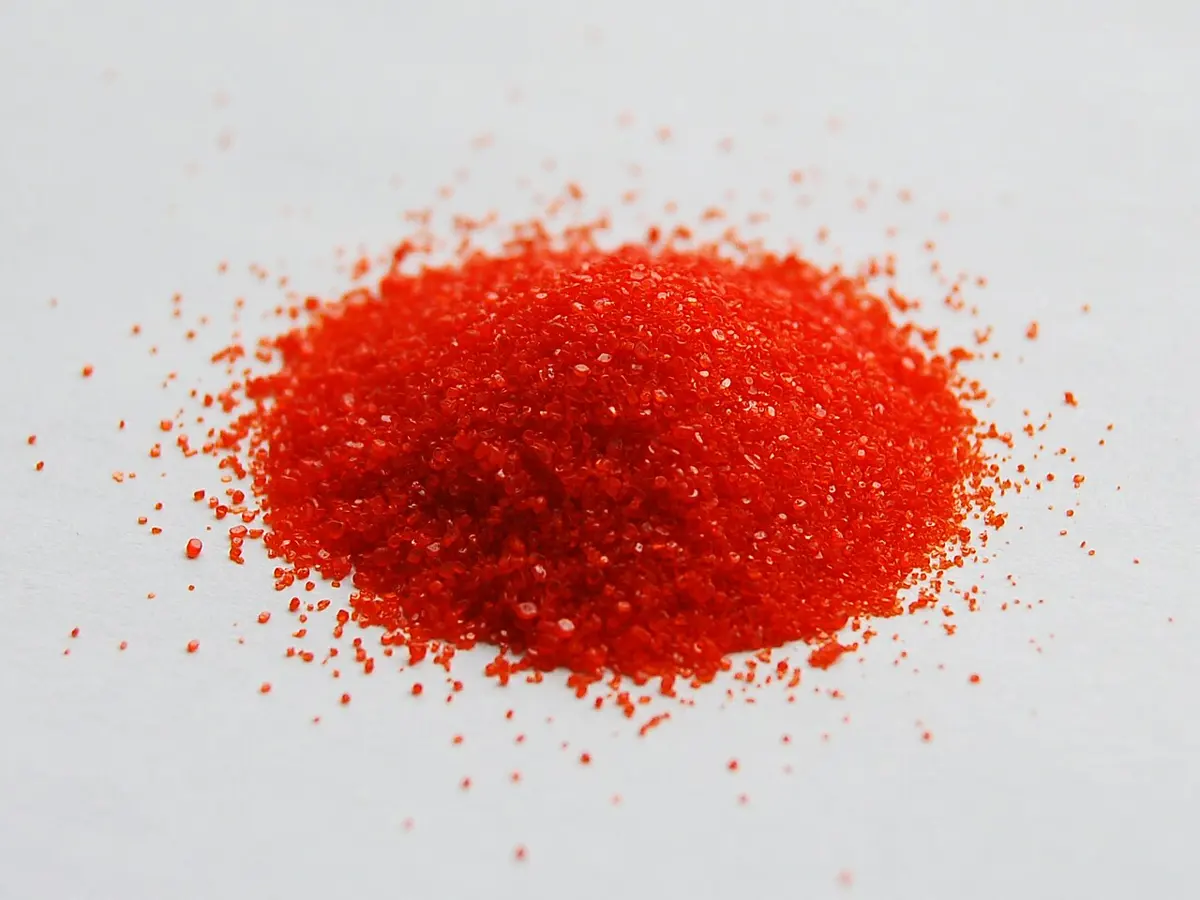
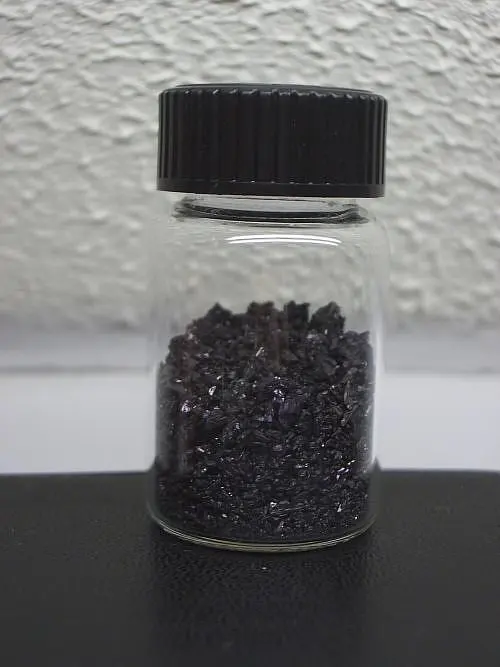
Two compounds of transition metals show their colors well: potassium dichromate, which is bright orange, and potassium permanganate, which forms dark purple crystals and gives a pink to purple solution in water. In both, the color comes from the d-block metal (chromium and manganese) in a high oxidation state.
An element has the outer configuration 3d⁶ 4s². To which block, period and group does it belong?
Pick an answer to see why.
What do the elements of one period have in common?
Pick an answer to see why.
4.1.2 Classification of elements into metals, non-metals and metalloids
Over three-quarters of the elements are metals, on the left, in the middle and along the bottom of the table. Metals are usually hard, shiny, malleable and ductile, and good conductors of heat and electricity. Their atoms lose electrons easily and become positive ions: they are electropositive, and in reactions they act as reducing agents (they give electrons to the substance they react with).
The non-metals are in the upper right (and hydrogen). They may be solids (carbon, sulphur, iodine), a liquid (bromine) or gases (oxygen, nitrogen, chlorine). Their atoms tend to gain electrons and form negative ions, or share electrons: they are electronegative, and many act as oxidizing agents (they take electrons).
Between them, along a staircase from boron down to astatine, are the metalloids (semi-metals): boron, silicon, germanium, arsenic, antimony and tellurium, and usually astatine, so radioactive that nobody has ever seen a piece of it. They have properties of both: silicon is shiny like a metal but brittle, and it conducts electricity only a little, more as it gets warmer. That makes silicon and germanium semiconductors, the materials of transistors, solar cells and every chip in your phone.
Diagonal relationship
Some elements of period 2 behave less like the element below them than like the element diagonally below and to the right: lithium like magnesium, beryllium like aluminium, and boron like silicon (Figure 4.7). This is the diagonal relationship.
The reason is size and charge. Going across a period, atoms and ions get smaller and more highly charged; going down a group, they get larger. One step right and one step down roughly cancel, so the diagonal pairs have similar charge-to-size ratios (ionic potential) and similar electronegativities, and that gives them similar chemistry. For example, lithium and magnesium both burn in air to give a normal oxide (Li₂O, MgO) and combine directly with nitrogen to give a nitride (Li₃N, Mg₃N₂), which the other alkali metals don’t; their carbonates both break down on heating. Beryllium and aluminium both form oxides that are amphoteric (they react with acids and with bases), and both are made passive by concentrated nitric acid.
4.2 Nuclear charge and effective nuclear charge
The electrons of an atom are held in it by the attraction of the positive nucleus at its center. The charge on the nucleus is the nuclear charge, Z: one positive unit for each proton, so it equals the atomic number (sodium’s nucleus has a charge of +11). It increases by one from each element to the next, so it increases along a period and down a group.
But an outer electron doesn’t feel the whole of that charge. Between it and the nucleus are the inner electrons, whose negative charge repels it and partly cancels the nucleus’s pull. This is the shielding or screening effect (the two names mean the same thing). What is left over is the effective nuclear charge, Zeff (also written Z*):
The effective nuclear charge is the net positive charge that an electron actually experiences from the nucleus: the nuclear charge reduced by the shielding of the other electrons, mainly those in inner shells.
where Z is the nuclear charge (the atomic number) and S (also written σ) is the shielding constant (screening constant), which measures how much of the nucleus’s charge the other electrons cancel.
The simplest estimate counts each inner electron as canceling one proton: S = the number of inner electrons. Then sodium’s outer electron feels 11 − 10 = +1, chlorine’s 17 − 10 = +7, potassium’s 19 − 18 = +1.
Slater’s rules: a better estimate
Inner electrons don’t shield perfectly, and electrons in the same shell shield each other a little. In 1930 the American physicist John Slater gave simple rules for S that match careful calculations quite well. For an electron in an s or p orbital of shell n:
- Write the configuration in groups: (1s) (2s 2p) (3s 3p) (3d) (4s 4p) (4d) (4f) (5s 5p) …
- Electrons in groups to the right of the electron’s own group shield nothing.
- Each other electron in the same group shields 0.35 (0.30 inside 1s).
- Each electron in the shell n − 1 shields 0.85.
- Each electron in shells n − 2 and lower shields 1.00.
(For an electron in a d or f group, every electron in groups to its left shields 1.00, and those in its own group 0.35.)
The trends in Zeff
- Across a period (left to right), each element has one more proton, and the extra electron goes into the same shell, where it shields poorly (0.35). The inner shells stay the same. So Zeff increases steadily across a period, and the outer electrons are pulled in more tightly.
- Down a group, the nuclear charge rises a lot (Na 11, K 19, Rb 37), but each new period also adds a whole shell of inner electrons, whose shielding rises almost as much. Zeff felt by the outer electron changes far less than Z does: by Slater’s rules it stays at 2.2 for Na, K, Rb and Cs, and in the p-block it rises only a little (O 4.55, S 5.45, Se 6.95, while Z goes 8, 16, 34). Meanwhile that electron is much farther from the nucleus, in a bigger shell. So the outer electron is held less strongly as you go down a group.
4.3 Periodic trend and periodicity
Chemists use the physical properties of the elements (their sizes, how readily they lose or gain electrons) to understand their structure and bonding. When the elements are arranged by atomic number, these properties change regularly across each period, and then the pattern starts again in the next one. The repeating pattern of properties in the periodic table is called periodicity, and a property that shows it is a periodic property.
The cause of periodicity is the repetition of the outer electronic configuration: after each noble gas a new shell begins, and the outer configurations ns¹, ns², ns² np¹ … ns² np⁶ come round again. Since an atom’s properties depend mainly on its outer electrons and on how strongly the nucleus holds them (Zeff and distance), the properties come round again too. The trends below all follow from the two ideas of section 4.2: across a period, Zeff rises with the same number of shells; down a group, a shell is added each time.
4.3.1 Atomic radius
The atomic radius describes the size of an atom: the larger the atomic radius, the larger the atom. An atom has no sharp edge (its electron cloud just thins out), so its radius is measured from the distance between the nuclei of two atoms joined together: the atomic radius is usually taken as half the internuclear distance between two identical atoms bonded to each other (Figure 4.12).
What it is half of depends on how the atoms are held together, so there are three kinds of atomic radius:
- Covalent radius: half the distance between the nuclei of two atoms of the same element joined by a single covalent bond (in Cl₂, the nuclei are 198 pm apart, so chlorine’s covalent radius is 99 pm).
- Metallic radius: half the distance between the nuclei of two neighboring atoms in a metal crystal (in sodium metal they are 372 pm apart, so 186 pm).
- van der Waals radius: half the distance between the nuclei of two non-bonded atoms of the same element at their closest approach, as in neighboring molecules in a solid, or noble gas atoms in a crystal (chlorine’s is 175 pm).
Different ways of measuring give slightly different values: chlorine’s covalent radius is 99 pm from the Cl₂ molecule alone, and 102 pm averaged over many of its compounds (the values used in the trends below, from Cordero and others, 2008). So compare radii only from the same table.
For one element the covalent radius is the smallest (the bond pulls the atoms into each other) and the van der Waals radius the largest. Noble gases form almost no bonds, so they have no covalent radius to measure, only a van der Waals radius; that is why tables of atomic radii often leave them out, or give a van der Waals value that can’t fairly be compared with the others.
Units. Atomic radii are tiny, so they are given in picometers (1 pm = 10⁻¹² m) or in ångströms (1 Å = 10⁻¹⁰ m = 100 pm). For hydrogen, the covalent radius (half of the 74 pm bond in H₂) is 0.37 Å = 37 pm; the radius of the electron’s orbit in Bohr’s model, the Bohr radius, is 0.53 Å = 53 pm.
The atomic radius depends on two things: the number of shells (more shells, larger atom) and the effective nuclear charge (a larger Zeff pulls the electrons in, smaller atom).
- Down a group, atomic radius increases, because each step adds a new shell, farther out. Chlorine (3 shells) is larger than fluorine (2 shells); potassium larger than sodium, sodium larger than lithium.
- Across a period, atomic radius decreases, because the number of shells stays the same while Zeff increases, pulling all the electrons closer. Chlorine (17 protons) is smaller than sodium (11 protons), both with 3 shells: Na 166 pm, Mg 141, Al 121, Si 111, P 107, S 105, Cl 102 pm (covalent radii).
- Across a transition series the radius hardly changes (from Cr to Cu it stays near 130 pm), because the extra electrons go into the inner (n − 1)d subshell, where they shield the outer 4s electrons fairly well.
Which atom is the largest?
Pick an answer to see why.
4.3.2 Ionic radius
The size of an ion is given by its ionic radius: the distance from the nucleus of the ion to the edge of its electron cloud, the distance over which it holds its electrons. It is found from crystals: the distance between neighboring nuclei in a crystal such as NaF is shared out as the radius of the cation plus the radius of the anion.
- A cation is smaller than its atom. Removing electrons usually removes the whole outer shell (Na → Na⁺ empties shell 3), and the same nuclear charge now pulls on fewer electrons, which also repel each other less, so the effective nuclear charge per electron rises.
- An anion is larger than its atom. The added electrons go into the same shell, the same nuclear charge is now shared among more electrons, and they repel each other more, so the effective nuclear charge per electron falls and the cloud spreads out.
- Down a group, ionic radius increases, just like atomic radius, for the same reason: one more shell each time.
Isoelectronic species
Atoms and ions with the same number of electrons are isoelectronic (“equal in electrons”). O²⁻, F⁻, Ne, Na⁺, Mg²⁺ and Al³⁺ all have 10 electrons, in the configuration 1s² 2s² 2p⁶. Their sizes depend only on how many protons pull on those 10 electrons: the more protons, the smaller the species.
So Na⁺ (11 protons) < Ne (10) < F⁻ (9): all have 10 electrons, but the 11 protons of Na⁺ pull them in most strongly. In order of size:
(Neon’s place in the order is set by its nuclear charge. Its size is not measured the same way as an ion’s, since it forms no bonds and no crystals with ions, so it isn’t drawn in Figure 4.16.)
Which is the smallest?
Pick an answer to see why.
4.3.3 Ionization energy
An atom’s electrons are held by the nucleus, so energy must be supplied to pull one off and make a positive ion. The (first) ionization energy is the minimum energy needed to remove one mole of electrons from one mole of isolated gaseous atoms, each in its ground state, to form one mole of gaseous ions with a charge of +1:
It is always positive (energy is taken in). It is measured in kJ/mol, or in electronvolts for a single atom (1 eV per atom = 96.5 kJ/mol); an older name is ionization potential.
The atoms must be gaseous so that each is on its own: in a solid or liquid, its neighbors would pull on its electrons too, and the measured energy would include those forces.
Removing a second electron, from the positive ion, takes the second ionization energy, always larger than the first, because the electron is pulled off an ion that is already positive:
Sodium’s second ionization energy is over nine times its first, because the second electron must come out of the full inner shell 2: that is why sodium forms Na⁺ and never Na²⁺.
Ionization energy depends mainly on the distance of the electron from the nucleus (atomic size) and the effective nuclear charge:
- The farther the outer electron is from the nucleus, the weaker the attraction, and the lower the ionization energy.
- The larger the effective nuclear charge, the stronger the attraction, and the higher the ionization energy.
So:
- Down a group, ionization energy decreases: the atoms get larger, the outer electron is farther away and more shielded, and it is easier to remove (Li 520, Na 496, K 419, Rb 403, Cs 376 kJ/mol).
- Across a period, ionization energy increases (roughly): Zeff rises and the atoms shrink, so the electrons are held more tightly. Each period starts with an alkali metal, the lowest, and ends with a noble gas, the highest.
Two dips: Be to B, and N to O
Across period 2 the ionization energy doesn’t rise smoothly. It drops from beryllium to boron, and again from nitrogen to oxygen (Be 900 > B 801; N 1402 > O 1314 kJ/mol).
- Be (2s²) and B (2s² 2p¹). Beryllium’s electrons are in a full 2s subshell. Boron’s outer electron is alone in 2p, which is a little higher in energy and a little farther out, and is shielded by the 2s pair. It is easier to remove than one of beryllium’s 2s electrons.
- N (2s² 2p³) and O (2s² 2p⁴). Nitrogen’s three 2p electrons are in three separate orbitals: a half-filled subshell, extra stable. Oxygen’s fourth 2p electron has to pair up in an orbital that already holds one, and the repulsion between the two in that orbital makes one of them easier to remove.
The same two dips come again in period 3, from Mg to Al and from P to S. In short, atoms with full or half-filled subshells have a higher ionization energy than their neighbors expect.
Which has the higher first ionization energy, and why?
Pick an answer to see why.
4.3.4 Electronegativity

A covalent bond is a pair of electrons shared by two atoms. If the two atoms are the same (H–H, Cl–Cl), they pull equally, and the pair sits exactly in the middle. If they are different, one usually pulls harder, and the pair is drawn towards it. In H–Cl the shared pair is pulled towards chlorine, which gets a small negative charge, δ−, and hydrogen a small positive charge, δ+ (Figure 4.20).
Electronegativity is the tendency of an atom in a molecule to attract the shared pair of electrons of a covalent bond towards itself.
It is a property of an atom in a bond; it has no units. It is usually given on the scale of the American chemist Linus Pauling (1932), from 0.79 for cesium (about 0.7 estimated for francium) up to 3.98, about 4.0, for fluorine, the most electronegative element. Oxygen (3.44), chlorine (3.16) and nitrogen (3.04) come next.
Electronegativity depends on the size of the atom and its effective nuclear charge: the smaller the atom and the larger Zeff, the closer the shared pair can come to the nucleus and the more strongly it is pulled.
- Down a group, electronegativity decreases: the atoms get larger, and the shared pair is farther from the nucleus (F 3.98, Cl 3.16, Br 2.96, I 2.66).
- Across a period, electronegativity increases: Zeff rises and the atoms shrink (Li 0.98, Be 1.57, B 2.04, C 2.55, N 3.04, O 3.44, F 3.98).
So the most electronegative elements are in the top right (F, O, Cl, N) and the least in the bottom left (Cs, Fr). Noble gases are usually left out: helium, neon and argon form no stable compounds.
What electronegativity tells you
- The type of bond. When the difference in electronegativity (ΔEN) between two atoms is large, one atom takes the electrons completely: an ionic bond (Na⁺F⁻). When it is small, they share: a covalent bond.
- The polarity of a covalent bond. If the two atoms have different electronegativities, the bond is polar (δ+ and δ− ends); if they are the same, it is non-polar.
A rough guide, with ΔEN worked out from Pauling’s values:
| Bond type | ΔEN | Example |
|---|---|---|
| pure covalent | 0 | H–H in H₂ (2.20 − 2.20 = 0) |
| non-polar covalent | below about 0.4 | C–H in CH₄ (2.55 − 2.20 = 0.35) |
| polar covalent | about 0.4 to 1.7 | H–Cl in HCl (3.16 − 2.20 = 0.96) |
| ionic | above about 1.7 | Na⁺F⁻ in NaF (3.98 − 0.93 = 3.05) |
Which bond is the most polar?
Pick an answer to see why.
4.3.5 Electron affinity
When an electron is added to a neutral gaseous atom, a negative ion forms, and for most atoms energy is released: the process is exothermic.
The (first) electron affinity is the energy released when one mole of electrons is added to one mole of isolated gaseous atoms, to form one mole of gaseous ions with a charge of −1.
It is measured in kJ/mol (or eV per atom).
The more energy an atom releases on taking an electron, the more readily it forms a negative ion. Atoms that release a lot (the halogens, oxygen, sulphur) gain electrons easily. Atoms with full or half-filled subshells don’t want an extra electron: the noble gases (ns² np⁶), beryllium and magnesium (ns²), and nitrogen (2p³). For them the added electron would have to go into a new, higher subshell or pair up against a half-filled one, energy has to be put in, and the negative ion is not stable; such values are written “> 0” in a ΔH table.
| Li | Be | B | C | N | O | F | Ne | |
|---|---|---|---|---|---|---|---|---|
| ΔH, kJ/mol | −60 | > 0 | −27 | −122 | > 0 | −141 | −328 | > 0 |
| Na | Mg | Al | Si | P | S | Cl | Ar | |
| ΔH, kJ/mol | −53 | > 0 | −42 | −134 | −72 | −200 | −349 | > 0 |
Electron affinity depends on the nuclear charge (Zeff) and the size of the atom: a larger Zeff attracts the incoming electron more, so more energy is released; a larger atom holds it farther from the nucleus, so less is released.
- Across a period, electron affinity generally increases (more energy released), because Zeff rises and the atoms shrink, with dips at the full and half-filled subshells (Be, N, Mg, Ne).
- Down a group, it generally decreases, because the atoms get larger (Cl 349, Br 325, I 295 kJ/mol released).
Chlorine beats fluorine
There is one striking exception: the elements of period 2 release less energy than those below them in period 3. Chlorine’s electron affinity (349 kJ/mol released) is the highest of all the elements, higher than fluorine’s (328), and sulphur’s is higher than oxygen’s. Fluorine is so small that its 2p subshell is crowded: the incoming electron is squeezed close to the seven already there and is strongly repelled by them, which cancels part of the attraction. In chlorine’s larger 3p subshell there is more room, less repulsion, and more energy is released.
Which element releases the most energy when it gains an electron?
Pick an answer to see why.
4.3.6 Metallic character

The metallic character of an element is how strongly it shows the properties of a metal: electrical and thermal conductivity, malleability, ductility, luster, and in reactions the tendency to lose electrons and form positive ions. Chemically, it is measured by how easily an atom gives up its outer electrons, so it goes with a low ionization energy and a large atom. The conductivity, malleability and luster of a metal come from its free electrons: the outer electrons of a metal are not tied to any one atom but move through the whole piece, carrying charge and heat and letting the layers of atoms slide over each other without breaking apart.

- Across a period, metallic character decreases (and non-metallic character increases). The nuclear charge and Zeff rise, the atoms shrink, and the outer electrons are held more tightly, so they are harder to give up. Period 3 runs from the metals Na, Mg and Al, through the metalloid Si, to the non-metals P, S and Cl (Figure 4.25).
- Down a group, metallic character increases. The atoms have more shells, the outer electrons are farther from the nucleus and well shielded by the inner ones, so they are lost more easily. Group 14 shows it best: carbon is a non-metal, silicon and germanium are metalloids, tin and lead are metals. And cesium and francium, at the bottom left, are the most metallic elements of all.
- The transition metals in the middle are all metals; their metallic character changes much less across a row, because the electrons added go into the inner d subshell.
Which element of group 14 is a metal?
Pick an answer to see why.
More about the periodic table
- Metalloids such as silicon and germanium have properties between those of metals and non-metals. Pure silicon conducts electricity only slightly, but a trace of phosphorus or boron added to it changes that a lot, which is how chips and solar cells are made.
- The noble gases of group 18 light up when electricity passes through them, each with its own color: neon red-orange, argon violet-blue, helium pink. That is how “neon” signs are made; most other colors use argon with a coating on the glass.
- Helium was found in the Sun before it was found on Earth. In 1868, during a total eclipse of the Sun, astronomers saw a yellow line in the Sun’s spectrum that matched no known element. It was named helium, from the Greek helios, the Sun. William Ramsay found it on Earth only in 1895, in a uranium mineral.
- The noble gases were long called “inert gases” because they were thought to form no compounds. In 1962 the British chemist Neil Bartlett made the first, a compound of xenon, and many compounds of xenon and krypton are now known, such as xenon difluoride, XeF₂.
- The other facts of this unit in one place: the electron affinity of chlorine is greater than that of fluorine; the first ionization energy of nitrogen is greater than that of oxygen, but the second ionization energy of oxygen is greater than that of nitrogen.
Project work
Exercise
A. Multiple choice questions
- Which of the following elements has the same number for its group and its period?
Pick an answer to see why.
- An element is in group 13 (IIIA) and period 2. How many electrons are there in its outer shell?
Pick an answer to see why.
- Which of the atoms with these electronic configurations has the highest first ionization energy?
Pick an answer to see why.
- Which of the following elements shows the most metallic behavior?
Pick an answer to see why.
- Which of the following is true of the elements of one group?
Pick an answer to see why.
- What is the correct order of electronegativity?
Pick an answer to see why.
- The relationship between Li and Mg, and between Be and Al, is
Pick an answer to see why.
- Which of the following has a higher electron affinity than fluorine?
Pick an answer to see why.
- What happens when an electron is added to the valence shell of a neutral atom (for most atoms)?
Pick an answer to see why.
- What is the name of the effect by which the inner electrons decrease the force of attraction between the valence electrons and the nucleus?
Pick an answer to see why.
- Element B lies directly above element A in the periodic table, and element C lies directly to the left of A. What is the correct ascending order of their electronegativities?
Pick an answer to see why.
- Which of these tells you the period of an element in the modern periodic table?
Pick an answer to see why.
B. Short answer questions
Differentiate between:
- a.period and periodicity
- b.nuclear charge and effective nuclear charge
- c.atomic radius and ionic radius
- d.electronegativity and electron affinity
Answer
Give reasons:
- a.The atomic radius of carbon is smaller than that of lithium.
- b.It is more difficult to ionize magnesium than calcium.
- c.Nitrogen and oxygen are both p-block elements.
Answer
Use this part of the periodic table for question 15c.
| B | C | N | O | F |
|---|---|---|---|---|
| Al | Si | P | S | Cl |
- a.State the modern periodic law.
- b.How does this law overcome the limitations of Mendeleev’s periodic law?
- c.Identify the elements with the smallest and the largest atomic radius in the table above.
Answer
- a.Define periodicity. What causes the periodicity of atomic properties?
- b.Name the periodic properties that generally decrease from left to right across a period, and give the reason.
Answer
Going down a group, the nuclear charge increases, but the attraction the outer electrons feel decreases.
- a.What do the terms nuclear charge and effective nuclear charge mean?
- b.Why does the nuclear charge increase down a group, while the pull on the outer electrons decreases?
- c.How is effective nuclear charge used to explain the trends in atomic radius and electronegativity?
Answer
The atomic radius of an atom plays a vital role in deciding its properties.
- a.Define atomic radius. What are its general trends in a group and in a period? Give the reasons.
- b.Why is a cation smaller than its atom?
Answer
The first ionization energies of the elements of period 2, in kJ/mol, for question 19:
| Li | Be | B | C | N | O | F | Ne |
|---|---|---|---|---|---|---|---|
| 520 | 900 | 801 | 1086 | 1402 | 1314 | 1681 | 2081 |
The first ionization energies of some elements are given above.
- a.Define first ionization energy.
- b.What is the general trend in ionization energy from Li to Ne?
- c.Which element has the highest first ionization energy? Give the reason.
Answer
Some isoelectronic species: O²⁻, F⁻, Na⁺, Mg²⁺, Al³⁺.
- a.What are isoelectronic species?
- b.Write the number of protons and electrons in each.
- c.Arrange them in ascending order of size, and give the reason.
Answer
Electron affinities of some elements, as ΔH in kJ/mol, for question 21:
| B | C | N | O |
|---|---|---|---|
| −27 | −122 | > 0 | −141 |
| Al | Si | P | S |
| −42 | −134 | −72 | −200 |
- a.Define electron affinity. What is its general trend across the period and down the group in the table?
- b.What does the negative sign of the values mean?
- c.Which element in the table has the highest electron affinity? Why?
Answer
The elements of one period are shown above.
- a.Identify the period. Why are these elements placed in the same period?
- b.What do the different colors of the elements mean?
- c.Why is there a gap between magnesium and aluminium?
- d.Which of these elements have a metallic radius, and which a covalent radius?
Answer
The energy change when an electron is added to a fluorine atom is:
- a.Name this energy and define it.
- b.What does the negative value of the energy mean?
- c.For nitrogen, would the value be higher or lower than for fluorine?
Answer
C. Long answer questions
Six elements of period 3, for question 24:
| Al | Cl | Mg | Si | P | S |
|---|
- a.Which of these elements is a metalloid? Write one property of it.
- b.List the elements in order of increasing electronegativity, and give the reason for the order.
- c.Which element do you think forms a cation most easily? Why?
- d.What is metallic character? Which of these elements has the highest metallic character, and why?
Answer
Effective nuclear charge, the net charge an electron feels from the nucleus, is a very useful idea for explaining the trends in the periodic table.
- a.How is effective nuclear charge related to the atomic number of an element?
- b.Explain how shielding affects the effective nuclear charge.
- c.In which direction (left to right, or top to bottom of the periodic table) does the effective nuclear charge generally increase, and why?
- d.How does effective nuclear charge affect the size of an atom, its ionization energy and its electronegativity?
Answer
Elements are divided into metals, metalloids and non-metals by their metallic character.
- a.What is the trend of metallic character in a group and in a period?
- b.Why do the alkali metals and alkaline earth metals show high metallic character?
- c.Which groups of the periodic table are known for their non-metallic character, and why?
- d.How does the number of valence electrons affect the metallic character of an element?
- e.Why are transition metals used for making wires?
Answer
The electronic configuration of an element X is 1s² 2s² 2p⁶ 3s² 3p⁶ 4s² 3d¹⁰ 4p⁵.
- a.What is the atomic number of the element?
- b.Identify the period, group and block of the element.
- c.Write any two properties of the elements of this block.
- d.Compare the size of X with X⁺ and X⁻.
Answer
Some elements of one block, for question 28:
| Li | Be |
|---|---|
| Na | Mg |
| K | Ca |
Some elements of the same block are given above.
- a.Write the electronic configuration of calcium.
- b.Identify the block, and write any two properties of the elements of this block.
- c.Why are the alkali metals among them (Li, Na, K) so soft?
- d.Arrange these elements in increasing order of atomic size.
- e.Name the elements here that are in a diagonal relationship.
Answer
A. Use the part of the periodic table above to find the element that has:
- a.the largest atomic radius
- b.the highest ionization energy
- c.the smallest electron affinity
- d.the most metallic character
- e.is the most difficult to ionize
B. Write the name of the group with each of these properties:
- a.Forms a strong base when dissolved in water.
- b.Forms ores.
- c.Has the highest electronegativity.
Answer
Printable PDFs
- Study notes 3 pages
- Worksheet 4 pages Answer key
Quiz yourself: Matter, Atoms and Reactions, Grades 5–12 →
Practice every question in the book, and keep track of the ones you miss →
A companion to your textbook, not a replacement for it: study from the book your school uses, and where the two differ, follow your teacher. Found a mistake? Please tell us.