
Drop a piece of sodium the size of a grain of rice into a bowl of water, and it fizzes, melts into a shining ball and races about on the surface, sometimes bursting into flame. Fill a glass tube with neon instead, and nothing you can do will make it react: heat it, spark it, mix it with fluorine, the most reactive element there is, and it stays neon. Yet a sodium atom has only one proton more than a neon atom.
That one proton brings one more electron, and the electron has to start a new shell, far from the nucleus and loosely held. Neon’s electrons fill every place they have. In this unit you will see how the periodic table is built from the way electrons fill their shells and subshells, how that sorts the elements into s, p, d and f blocks, how atomic size, valency, ionization potential, electron affinity and electronegativity change across the table, with the real measured numbers, and how all of it decides the way groups 1, 2, 15, 16 and 17 react.
6.1 Periodic table
Modern periodic law
Mendeleev arranged the elements in 1869 in order of their atomic masses, and had to break his own order in a few places to keep similar elements together. In 1913 Henry Moseley showed with X-rays that each element has one more unit of positive charge on its nucleus than the one before it (the story is in Grade 9 Optional Science). The order the elements really follow is the number of protons, the atomic number. This is the modern periodic law:
Modern periodic law: the physical and chemical properties of the elements are periodic functions of their atomic numbers.
“Periodic” means repeating at regular intervals, like the days of the week. Go along the elements in order of atomic number, and similar properties come back again and again: a soft, very reactive metal at 3, 11, 19, 37 and 55; an unreactive gas at 2, 10, 18, 36, 54 and 86.
Why should atomic number, and not mass, decide the properties? Because an atom’s chemistry is done by its electrons, and a neutral atom has as many electrons as protons. The mass of an atom also depends on its neutrons, which take no part in reactions. That is why every isotope of an element shares one place in the table, and why three pairs that were out of order by mass fall into place by atomic number:
| Pair | Atomic masses | Atomic numbers | Order in the table |
|---|---|---|---|
| argon and potassium | Ar 39.95, K 39.10 | Ar 18, K 19 | Ar before K |
| cobalt and nickel | Co 58.93, Ni 58.69 | Co 27, Ni 28 | Co before Ni |
| tellurium and iodine | Te 127.60, I 126.90 | Te 52, I 53 | Te before I |
In each pair the first element is heavier, because it has more neutrons, but has one proton fewer, so it comes first.
Modern periodic table
The table built on the modern periodic law is the modern periodic table, or the long form of the periodic table. Its main features:
- The elements are in order of increasing atomic number.
- There are 7 horizontal rows, the periods, and 18 vertical columns, the groups, numbered 1 to 18 as IUPAC recommends (the older numbering, IA to VIIA, IB to VIIIB and 0, is in Grade 10 Science).
- Elements in one group have the same number of electrons in their outermost shell, so they have similar properties.
- Elements in one period have the same number of shells: the period number is the number of the outermost shell. Sodium, 2, 8, 1, has three shells and is in period 3.
- Fourteen elements after lanthanum and fourteen after actinium are printed as two rows below the table, with lanthanum and actinium themselves, so that the table isn’t too wide to print.
The lengths of the periods, 2, 8, 8, 18, 18, 32 and 32, look odd until you see which subshells each period fills. A period starts when a new shell begins, with its s subshell, and ends when that shell’s p subshell is full:
| Period | Subshells filled, in order | Number of elements |
|---|---|---|
| 1 | 1s | 2 |
| 2 | 2s, 2p | 2 + 6 = 8 |
| 3 | 3s, 3p | 2 + 6 = 8 |
| 4 | 4s, 3d, 4p | 2 + 10 + 6 = 18 |
| 5 | 5s, 4d, 5p | 2 + 10 + 6 = 18 |
| 6 | 6s, 4f, 5d, 6p | 2 + 14 + 10 + 6 = 32 |
| 7 | 7s, 5f, 6d, 7p | 2 + 14 + 10 + 6 = 32 |
So the shape of the table is the shape of the electron subshells: you will see exactly how in 6.2. All 118 elements are now known and named, and period 7 has been complete since oganesson, element 118, was named in 2016.
Merits of the modern periodic table (over Mendeleev’s):
- It is based on the atomic number, a basic property of the atom, not on the atomic mass.
- The places of argon and potassium, cobalt and nickel, and tellurium and iodine are no longer anomalies.
- Isotopes need no separate places: they have the same atomic number.
- It explains why properties repeat: they repeat because the outer electronic configuration repeats.
- It keeps metals, non-metals and metalloids in separate regions, and puts the transition metals in a block of their own.
Its limitations:
- Hydrogen has no proper place: its 1s¹ suits group 1, but it is a non-metal that also gains one electron like the halogens.
- Helium (1s²) is an s-block element by its electrons but is placed in group 18, with the gases it behaves like.
- The lanthanides and actinides are printed outside the main table.
Why does argon (atomic mass 39.95) come before potassium (atomic mass 39.10) in the modern periodic table?
Pick an answer to see why.
To look up any element, with its story, open our Periodic Table.
6.2 Electronic configuration
Orbitals, subshells and shells
You met subshells in Grade 10 Science: each shell n has n subshells, s, p, d and f, and each subshell has a fixed number of orbitals, regions where an electron is likely to be found. Each orbital holds at most two electrons.
| Subshell | Orbitals | Most electrons |
|---|---|---|
| s | 1 | 2 |
| p | 3 | 6 |
| d | 5 | 10 |
| f | 7 | 14 |
An orbital is often drawn as a box, and each electron in it as an arrow, ↑ or ↓, for the two ways an electron can spin. (Electrons behave like tiny magnets that point one of two ways; Going Further shows the experiment that found it.) The electronic configuration of an atom says how its electrons are arranged in these subshells. Three rules decide it.
Three rules for filling orbitals
1. The Aufbau principle. Electrons fill the subshells in order of increasing energy: a subshell starts to fill only when the subshells of lower energy are full. Up to atomic number 36 the order is
The surprise in it is that 4s comes before 3d. A quick way to get the order is the (n + l) rule: give s, p, d, f the numbers l = 0, 1, 2, 3, add the shell number n, and the subshell with the smaller sum fills first; for equal sums, the one with the smaller n. For 4s, 4 + 0 = 4; for 3d, 3 + 2 = 5, so 4s fills first. (The diagonal diagram for the same order is in Grade 10 Science.)
2. Pauli’s exclusion principle. An orbital can hold at most two electrons, and if it holds two, they must spin in opposite directions, ↑↓. Wolfgang Pauli stated it in 1925 in a more general form: no two electrons in an atom can be in exactly the same state.
3. Hund’s rule. When electrons go into a subshell with more than one orbital (p, d or f), they go into separate orbitals first, one in each, all spinning the same way. Only when every orbital of the subshell has one electron do they start to pair up. Electrons repel each other, and in separate orbitals they keep farther apart. The rule was found by the German physicist Friedrich Hund in the 1920s.
Look at the 2p subshell of carbon, nitrogen and oxygen:
| Element | 2p electrons | Boxes for 2p | Unpaired electrons |
|---|---|---|---|
| carbon (6) | 2 | ↑ · ↑ · empty | 2 |
| nitrogen (7) | 3 | ↑ · ↑ · ↑ | 3 |
| oxygen (8) | 4 | ↑↓ · ↑ · ↑ | 2 |
Nitrogen’s three 2p electrons sit one to an orbital, not two in one orbital and one in another. Oxygen’s fourth has to pair up.
Configurations of the elements up to atomic number 30
A full configuration repeats the same inner electrons over and over, so chemists shorten it with the noble gas whose configuration is the same as the inner electrons. Sodium, 1s² 2s² 2p⁶ 3s¹, is written [Ne] 3s¹: the neon core and one more electron. The core electrons are held tightly and take no part in reactions; what follows the core is what makes the element behave as it does.
| Z | Element | Configuration | Unpaired |
|---|---|---|---|
| 1 | H | 1s¹ | 1 |
| 2 | He | 1s² | 0 |
| 3 | Li | [He] 2s¹ | 1 |
| 4 | Be | [He] 2s² | 0 |
| 5 | B | [He] 2s² 2p¹ | 1 |
| 6 | C | [He] 2s² 2p² | 2 |
| 7 | N | [He] 2s² 2p³ | 3 |
| 8 | O | [He] 2s² 2p⁴ | 2 |
| 9 | F | [He] 2s² 2p⁵ | 1 |
| 10 | Ne | [He] 2s² 2p⁶ | 0 |
| 11 | Na | [Ne] 3s¹ | 1 |
| 12 | Mg | [Ne] 3s² | 0 |
| 13 | Al | [Ne] 3s² 3p¹ | 1 |
| 14 | Si | [Ne] 3s² 3p² | 2 |
| 15 | P | [Ne] 3s² 3p³ | 3 |
| 16 | S | [Ne] 3s² 3p⁴ | 2 |
| 17 | Cl | [Ne] 3s² 3p⁵ | 1 |
| 18 | Ar | [Ne] 3s² 3p⁶ | 0 |
| 19 | K | [Ar] 4s¹ | 1 |
| 20 | Ca | [Ar] 4s² | 0 |
| 21 | Sc | [Ar] 4s² 3d¹ | 1 |
| 22 | Ti | [Ar] 4s² 3d² | 2 |
| 23 | V | [Ar] 4s² 3d³ | 3 |
| 24 | Cr | [Ar] 4s¹ 3d⁵ | 6 |
| 25 | Mn | [Ar] 4s² 3d⁵ | 5 |
| 26 | Fe | [Ar] 4s² 3d⁶ | 4 |
| 27 | Co | [Ar] 4s² 3d⁷ | 3 |
| 28 | Ni | [Ar] 4s² 3d⁸ | 2 |
| 29 | Cu | [Ar] 4s¹ 3d¹⁰ | 1 |
| 30 | Zn | [Ar] 4s² 3d¹⁰ | 0 |
Two exceptions: chromium and copper
By the Aufbau order, chromium (24) should be [Ar] 4s² 3d⁴ and copper (29) [Ar] 4s² 3d⁹. Experiments on their spectra and magnetism show something else:
In each, one electron has moved from 4s into 3d. By this point in period 4 the energies of 4s and 3d are very close, and a half-filled (d⁵) or completely filled (d¹⁰) d subshell is especially stable: its electrons are spread evenly round the nucleus, and in d⁵ all five spin the same way, which lowers their energy. The move costs a little energy and gains more. So chromium has six unpaired electrons, the most of any element up to 30.
There is one more surprise. When a transition metal forms an ion, it loses its 4s electrons first, not the 3d electrons that went in last. Iron, [Ar] 4s² 3d⁶, becomes Fe²⁺, [Ar] 3d⁶, and then Fe³⁺, [Ar] 3d⁵. Once 3d holds electrons, it drops below 4s in energy. Notice that Fe³⁺ has a half-filled 3d: it is the more stable of iron’s two ions in air, one reason why rust is an iron(III) compound.
Finding an element’s place from its configuration
The configuration tells you where an element sits, without looking at a table:
- Period = the number of the outermost shell (the highest n).
- Block = the subshell the last electron goes into, by the Aufbau order: s, p, d or f.
- Group: for the s block, the number of s electrons in the outermost shell (1 or 2); for the p block, 12 + the number of p electrons (so p¹ is group 13 and p⁶ group 18); for the d block, the number of (n − 1)d electrons plus the ns electrons.
6.3 s-block, p-block, d-block and f-block elements
Description
Each block of the table is the set of elements whose last electron goes into one kind of subshell. A block’s width is the number of electrons its subshell holds: the s block is 2 groups wide, the p block 6, the d block 10 and the f block 14.
| Block | Groups | Outer configuration | Elements |
|---|---|---|---|
| s | 1, 2 (and He) | ns¹ or ns² | alkali and alkaline earth metals, hydrogen, helium |
| p | 13 to 18 | ns² np¹⁻⁶ | metals, metalloids, non-metals and noble gases |
| d | 3 to 12 | (n − 1)d¹⁻¹⁰ ns¹⁻² | the transition metals |
| f | below the table | (n − 2)f¹⁻¹⁴ (n − 1)d⁰⁻¹ ns² | lanthanides and actinides |
s-block elements
The s block is groups 1 and 2, with hydrogen and helium. Group 1 (lithium to francium) are the alkali metals, ns¹; group 2 (beryllium to radium) the alkaline earth metals, ns².
Characteristics:
- All except hydrogen and helium are metals: soft (sodium and potassium can be cut with a knife), light, with low melting points that fall down group 1 (lithium 181 °C, sodium 98 °C, potassium 63 °C, cesium 28 °C, which melts in a warm hand).
- They have low ionization potentials, so they lose their one or two outer electrons easily, forming M⁺ or M²⁺ ions. They are the most electropositive elements and strong reducing agents.
- They have a fixed valency: 1 for group 1, 2 for group 2.
- They are very reactive, so they are never found free in nature; group 1 metals are stored under oil.
- They form mostly ionic compounds, and their oxides and hydroxides are basic (NaOH and KOH are strong alkalis).
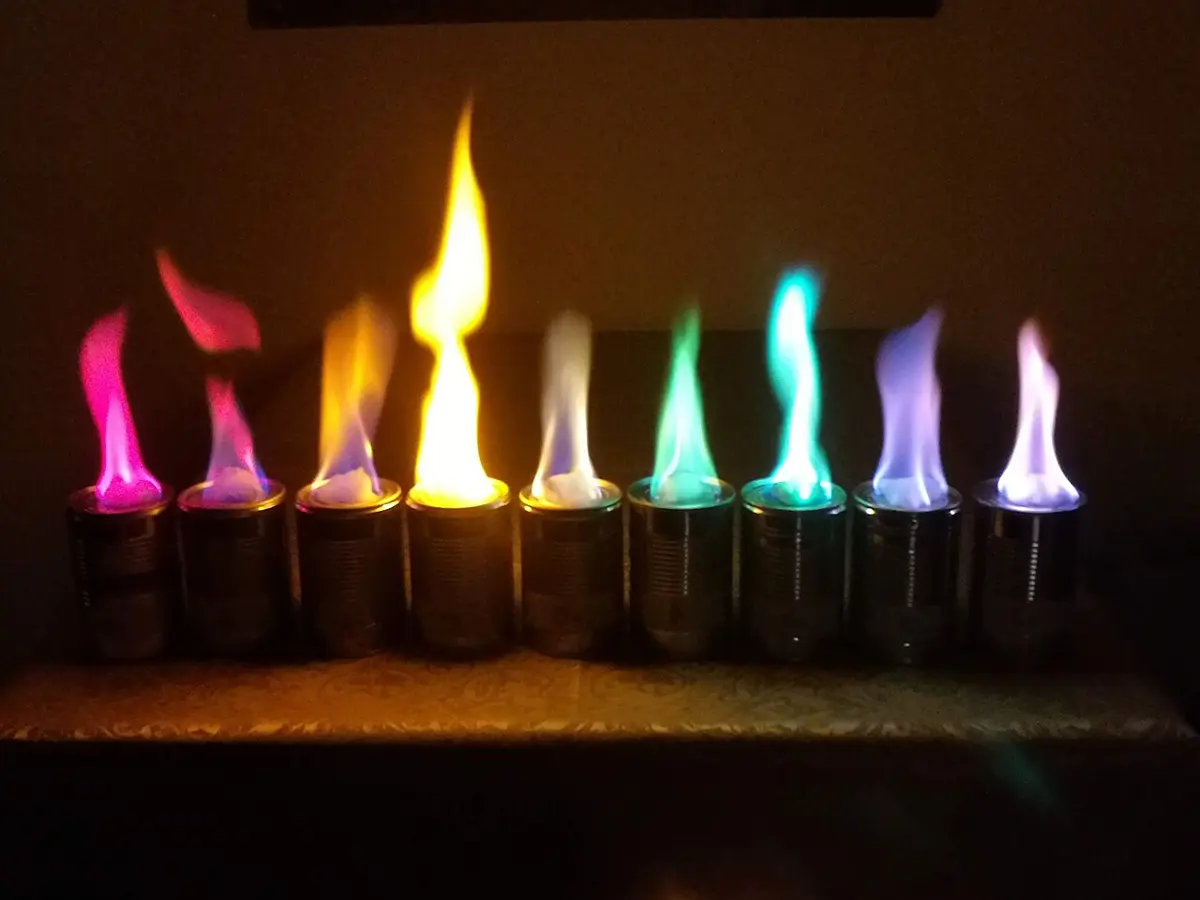
- Many give colors to a flame: lithium crimson, sodium yellow, potassium lilac, calcium orange-red, strontium red, barium pale green.
- Their compounds are usually white or colorless.
p-block elements
The p block is groups 13 to 18, from boron’s group to the noble gases, with outer configurations from ns² np¹ to ns² np⁶.
Characteristics:
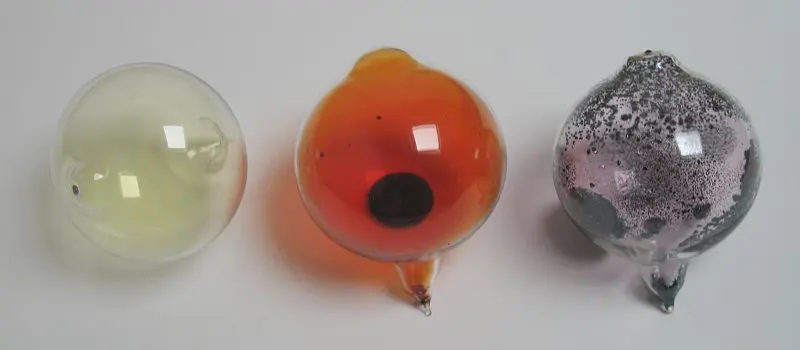
- It is the only block with all three kinds of element: metals (aluminium, tin, lead, bismuth), metalloids (boron, silicon, germanium, arsenic, antimony, tellurium) and non-metals (carbon, nitrogen, oxygen, phosphorus, sulphur, the halogens). The noble gases end it.
- Most p-block elements have high ionization potentials and electron affinities: they tend to gain or share electrons, not lose them.
- Many show variable valency: phosphorus 3 and 5 (PCl₃, PCl₅), sulphur 2, 4 and 6 (H₂S, SO₂, SO₃).
- They form both covalent compounds (with each other) and ionic ones (with s-block metals).
- Oxides of the non-metals are acidic (CO₂, SO₂, P₄O₁₀); some of the metals’ oxides are amphoteric (Al₂O₃).
- Metallic character increases down each group: in group 14, carbon is a non-metal, silicon and germanium are metalloids, tin and lead are metals.
- Group 17 (the halogens) are the most reactive non-metals; group 18 (the noble gases) have full outer shells and hardly react at all.
d-block elements
The d block is the ten groups 3 to 12, in the middle of the table, where a d subshell of the shell below the outermost one is being filled: (n − 1)d¹⁻¹⁰ ns¹⁻². The first row, scandium to zinc, fills 3d. Most of these elements are called transition elements or transition metals, because they form a bridge between the very reactive s-block metals on the left and the p block on the right.
Characteristics:
- All are metals: mostly hard and strong, with high melting and boiling points (tungsten’s, 3,422 °C, is the highest of any metal), good conductors of heat and electricity. Mercury, a liquid, and zinc, which melts at 420 °C, are the odd ones out, because their d subshells are full.
- Their atoms change little in size across each row (6.4), so one metal’s atoms can take the place of another’s, and they form alloys easily: stainless steel (iron, chromium, nickel), brass (copper, zinc).
- They show variable valency, because both the ns and some (n − 1)d electrons can be lost: iron 2 and 3 (FeCl₂, FeCl₃), copper 1 and 2 (Cu₂O, CuO), manganese 2 to 7.
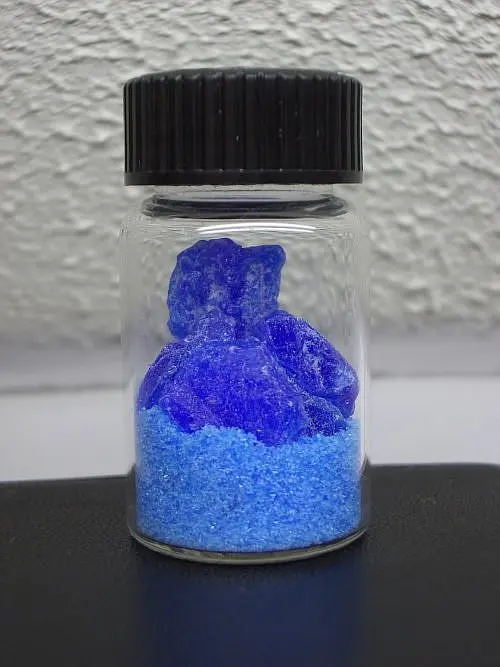
- Most of their compounds are colored: copper sulphate crystals are blue, iron(II) sulphate pale green, potassium permanganate deep purple, potassium dichromate orange. The color comes from electrons jumping between d orbitals of slightly different energy, absorbing part of the light. So an ion with an empty d subshell (Sc³⁺, 3d⁰) or a full one (Zn²⁺, 3d¹⁰) gives colorless or white compounds: zinc sulphate is white.
- Many are paramagnetic, because of their unpaired d electrons, and iron, cobalt and nickel are ferromagnetic (see Unit 14).
- Many are good catalysts: iron in making ammonia (the Haber process), vanadium(V) oxide in making sulphuric acid, nickel in hardening vegetable oils into vanaspati ghee, and platinum, palladium and rhodium in the catalytic converters of cars.
- They form complex ions, a metal ion with molecules or ions bound round it: the deep blue [Cu(NH₃)₄]²⁺ that appears when ammonia is added to copper sulphate solution.
f-block elements
The f block is the two rows printed below the table, where an f subshell two shells inside the outermost is filled: (n − 2)f¹⁻¹⁴. They are also called the inner transition elements.
- The lanthanides, lanthanum (57) to lutetium (71), fill 4f. They were once called the rare earths, but most are not rare: cerium is more common in the Earth’s crust than copper.
- The actinides, actinium (89) to lawrencium (103), fill 5f.
Characteristics:
- All are metals, silvery and fairly reactive, and most show a valency of 3.
- Within each series the properties are very similar, because the electrons being added go into a deep inner subshell that hardly affects the outside of the atom. Separating one lanthanide from another took chemists more than a century.
- Across the lanthanides the atoms and ions get steadily smaller (the lanthanide contraction).
- All the actinides are radioactive. Only thorium and uranium are found in nature in large amounts; the elements after uranium (the transuranium elements) are made in nuclear reactors and accelerators.
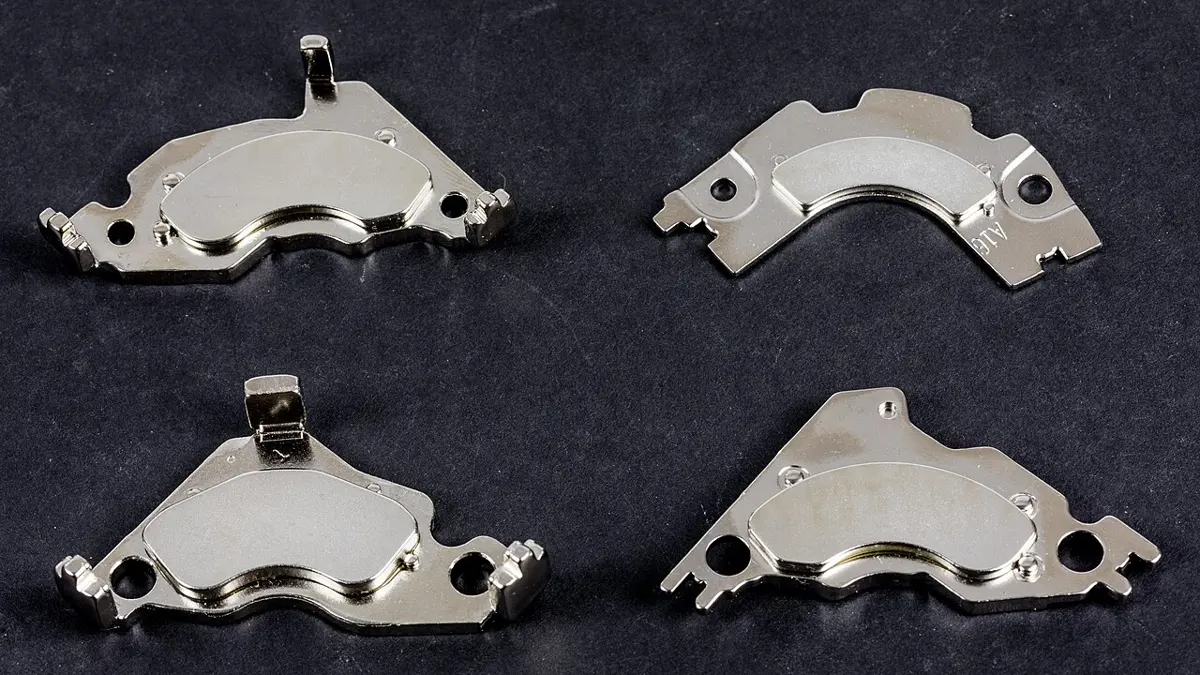
- Uses: neodymium in the strong magnets of phones, earbuds, hard disks, electric cars and wind turbines; europium in the red of older TV screens and of energy-saving lamps; cerium in lighter flints; uranium as nuclear fuel; a tiny piece of americium in many smoke detectors.
An element has the outer configuration 3d⁵ 4s² ([Ar] 4s² 3d⁵). It belongs to:
Pick an answer to see why.
Which property belongs to the transition metals and not to the alkali metals?
Pick an answer to see why.
6.4 Variation of periodic properties of elements
Atomic size, valency, ionization potential, electron affinity and electronegativity are called periodic properties: they change regularly along a period and down a group. Almost all of the changes come from two things:
- Nuclear charge. The nucleus, with Z protons, pulls the electrons in.
- Shielding. The inner electrons sit between the nucleus and the outer electrons and push the outer electrons away, canceling part of the nucleus’s pull. Electrons in the same shell shield each other only a little.
A rough count of the pull felt by an outer electron is the number of protons minus the number of inner electrons. Across a period, each step adds a proton but no inner electron, so the pull felt rises. Down a group, each step adds a whole new shell, so the pull felt stays about the same, but the outer electrons are farther out.
Atomic size
An atom has no sharp edge, so its size is measured from the distances between nuclei. The covalent radius is half the distance between the nuclei of two identical atoms joined by a single covalent bond: two chlorine atoms in Cl₂ are 199 pm apart, so chlorine’s covalent radius is about 100 pm (102 pm, averaged over thousands of its compounds). (For metals the metallic radius, half the distance between neighboring atoms in the metal, is used too; 1 pm = 10⁻¹² m.) The values below are covalent radii, all measured the same way.
Across a period, atomic size decreases. The number of shells stays the same, but the pull felt by the outer shell grows, drawing it in:
| Period 2 | Li | Be | B | C | N | O | F |
|---|---|---|---|---|---|---|---|
| radius (pm) | 128 | 96 | 84 | 76 | 71 | 66 | 57 |
| Period 3 | Na | Mg | Al | Si | P | S | Cl |
|---|---|---|---|---|---|---|---|
| radius (pm) | 166 | 141 | 121 | 111 | 107 | 105 | 102 |
Down a group, atomic size increases, because each step adds a new shell, farther from the nucleus, while the pull felt hardly changes:
| Group 1 | Li | Na | K | Rb | Cs |
|---|---|---|---|---|---|
| radius (pm) | 128 | 166 | 203 | 220 | 244 |
| Group 17 | F | Cl | Br | I |
|---|---|---|---|---|
| radius (pm) | 57 | 102 | 120 | 139 |
Across a transition series, the size changes much less. From scandium (170 pm) to zinc (122 pm), the atoms shrink at first and then most stay between 120 and 140 pm. Each new electron goes into the inner 3d subshell, where it shields the outer 4s electrons well from the extra proton, so the pull on the outside barely grows.
Ions. A positive ion is smaller than its atom, and a negative ion larger. Sodium (radius 166 pm) loses its whole outer shell to become Na⁺, with an ionic radius of 102 pm. Chlorine (102 pm) gains an electron into its outer shell: the 18 electrons of Cl⁻ repel each other more, and the same 17 protons hold them less tightly, so Cl⁻ swells to 181 pm.
Valency
The valency of an element is its combining capacity: the number of electrons an atom loses, gains or shares when it forms a compound. It depends on the number of valence electrons.
Down a group, valency stays the same, because the number of valence electrons is the same: all of group 1 has valency 1, all of group 2 valency 2, and the halogens valency 1 with hydrogen and metals.
Across a period, valency changes. With hydrogen it rises from 1 to 4 and falls back to 1; with oxygen it rises from 1 to 7, because an element can use all its valence electrons to combine with oxygen:
| Period 3 | Na | Mg | Al | Si | P | S | Cl |
|---|---|---|---|---|---|---|---|
| valence electrons | 1 | 2 | 3 | 4 | 5 | 6 | 7 |
| hydride | NaH | MgH₂ | AlH₃ | SiH₄ | PH₃ | H₂S | HCl |
| valency with hydrogen | 1 | 2 | 3 | 4 | 3 | 2 | 1 |
| highest oxide | Na₂O | MgO | Al₂O₃ | SiO₂ | P₄O₁₀ | SO₃ | Cl₂O₇ |
| highest valency with oxygen | 1 | 2 | 3 | 4 | 5 | 6 | 7 |
The noble gases have valency 0. The s-block elements keep one valency; the p-block non-metals and the d-block metals often have several (6.3).
Ionization potential
The ionization potential (ionization energy) of an element is the minimum energy needed to remove the most loosely held electron from one isolated atom of it, in the gas state:
It is measured in electronvolts per atom (eV), or in kilojoules per mole of atoms (kJ/mol), the energy to remove one electron from each of 6.022 × 10²³ atoms. The two are linked by
Hydrogen’s is 13.6 eV, or 1,312 kJ/mol: the energy that lifts its electron from Bohr’s first level to zero, outside the atom (as in Grade 9 Optional Science). A low ionization potential means an atom gives up an electron easily, as metals do.
It depends on:
- Nuclear charge: the more protons pulling, the higher.
- Atomic size: the farther the outer electron from the nucleus, the lower.
- Shielding: the more inner electrons in between, the lower.
- Stable arrangements: a full or half-filled subshell is hard to break into, so its ionization potential is a little higher than expected.
Across a period, ionization potential increases (the pull felt grows and the atom shrinks), from the alkali metal, lowest, to the noble gas, highest:
| Period 3 | Na | Mg | Al | Si | P | S | Cl | Ar |
|---|---|---|---|---|---|---|---|---|
| kJ/mol | 496 | 738 | 578 | 787 | 1,012 | 1,000 | 1,251 | 1,521 |
Down a group, ionization potential decreases (the outer electron is farther out and better shielded):
| Group 1 | Li | Na | K | Rb | Cs |
|---|---|---|---|---|---|
| kJ/mol | 520 | 496 | 419 | 403 | 376 |
Look at the two small dips in each period. Magnesium (738) is higher than aluminium (578): magnesium’s outer electrons fill 3s, while aluminium’s third goes into 3p, which is higher in energy and easier to remove. Phosphorus (1,012) is higher than sulphur (1,000): phosphorus has a half-filled 3p (↑ ↑ ↑), and sulphur’s fourth 3p electron has to share an orbital with another, which repels it. Both dips are evidence that subshells, and Hund’s rule, are real. (The same graph up to xenon, and why the subshells’ shapes cause the dips, is in Going Further.)
Successive ionization potentials
After one electron is gone, a second can be removed, then a third, each needing more energy than the last, because the electrons left are held by the same protons with fewer electrons to repel them. Watch for the huge jump:
| 1st | 2nd | 3rd | 4th | |
|---|---|---|---|---|
| sodium, [Ne] 3s¹ | 496 | 4,562 | 6,910 | 9,543 |
| magnesium, [Ne] 3s² | 738 | 1,451 | 7,733 | 10,543 |
| aluminium, [Ne] 3s² 3p¹ | 578 | 1,817 | 2,745 | 11,577 |
(all in kJ/mol). Sodium’s second electron must come out of the neon core, a full shell much nearer the nucleus: the energy jumps more than nine times. For magnesium the jump comes after two electrons, for aluminium after three. The jump shows how many electrons an atom can lose in a reaction, and that is its valency: 1, 2 and 3.
Electron affinity
The electron affinity of an element is the energy released when an electron is added to one isolated atom of it, in the gas state, forming a negative ion:
The more energy released, the more strongly the atom attracts an extra electron. Chlorine releases 349 kJ/mol; sodium only 53 kJ/mol.
Across a period, electron affinity generally increases: the atoms get smaller and their pull felt grows, so an incoming electron is held more strongly. The halogens, one electron short of a noble gas, release the most energy of all.
Down a group, it generally decreases: the added electron goes into a shell farther from the nucleus.
| Group 17 | F | Cl | Br | I |
|---|---|---|---|---|
| kJ/mol | 328 | 349 | 325 | 295 |
| Group 16 | O | S | Se |
|---|---|---|---|
| kJ/mol | 141 | 200 | 195 |
Exceptions. The first element of a group is so small that its outer shell is crowded: fluorine’s 2p electrons repel the new electron more than chlorine’s roomier 3p electrons do. So chlorine has the highest electron affinity of all the elements, higher than fluorine, and sulphur’s is higher than oxygen’s. And atoms whose next electron would have to start a new subshell or break a stable one, beryllium and magnesium (full s), nitrogen (half-filled p) and the noble gases (full shell), form no stable negative ion at all: adding an electron to them costs energy instead of releasing it.
Electronegativity
When two atoms share a pair of electrons in a covalent bond, they don’t always share it equally. Electronegativity is the tendency of an atom in a molecule to attract the shared pair of electrons towards itself. In hydrogen chloride, H–Cl, chlorine pulls the shared pair closer to itself, so the chlorine end is slightly negative and the hydrogen end slightly positive.
It has no unit. The American chemist Linus Pauling made the first scale in 1932, from the energies of bonds, giving fluorine, the most electronegative element, a value near 4. On the Pauling scale fluorine is 3.98, oxygen 3.44, chlorine 3.16, nitrogen 3.04, carbon 2.55, hydrogen 2.20, sodium 0.93 and cesium 0.79.
Across a period, electronegativity increases, and down a group it decreases, for the same reasons as electron affinity:
| Period 2 | Li | Be | B | C | N | O | F |
|---|---|---|---|---|---|---|---|
| Pauling | 0.98 | 1.57 | 2.04 | 2.55 | 3.04 | 3.44 | 3.98 |
| Group 17 | F | Cl | Br | I |
|---|---|---|---|---|
| Pauling | 3.98 | 3.16 | 2.96 | 2.66 |
So the most electronegative elements are at the top right of the table (leaving out the noble gases, which hardly form bonds) and the least at the bottom left.
6.5 Chemical reactivity of elements
How readily an element reacts depends on what it does in a reaction:
- A metal reacts by losing electrons. The lower its ionization potential, the more easily it loses them, and the more reactive it is.
- A non-metal reacts by gaining (or pulling on shared) electrons. The higher its electron affinity and electronegativity, the more reactive it is.
So the reactivity of metals increases down a group and decreases across a period, and the reactivity of non-metals does the opposite. This section looks at the five groups the curriculum names: 1 and 2 (metals), and 15, 16 and 17 (mostly non-metals). Many of the single reactions of oxygen, sulphur and chlorine are in Grade 9 Optional Science; here the point is how members of a group compare.
Group 1: the alkali metals
All have one electron outside a noble gas core (ns¹), lost to form M⁺. Reactivity increases down the group: Li < Na < K < Rb < Cs, as the ionization potential falls (520, 496, 419, 403, 376 kJ/mol).
With water, each gives a strong alkali and hydrogen:
Lithium fizzes steadily; sodium melts into a ball and darts about; potassium catches fire at once with a lilac flame; rubidium and cesium explode.
With oxygen, they tarnish in air within seconds, which is why they are kept under oil: , . (Burned in plenty of air, sodium forms mainly the peroxide Na₂O₂, and potassium the superoxide KO₂.)
With chlorine, they burn to form white ionic chlorides: .
Group 2: the alkaline earth metals
All have two outer electrons (ns²), lost to form M²⁺. They are less reactive than group 1 in the same period: two electrons must be removed, and the atoms are smaller, with a stronger pull. Down the group reactivity increases, Be < Mg < Ca < Sr < Ba, as the energy to remove the two electrons falls.
With water:
- Beryllium doesn’t react, even with steam.
- Magnesium reacts very slowly with cold water and quickly when heated in steam: .
- Calcium reacts steadily with cold water: .
- Strontium and barium react faster still.
With oxygen, magnesium burns with a dazzling white light, used in fireworks and old camera flashes: . With chlorine: .
Group 15: nitrogen to bismuth
All have five outer electrons (ns² np³), with a half-filled p subshell. They are three short of an octet, and show valency 3 (NH₃, PCl₃) and, except nitrogen, 5 (PCl₅).
Down the group, non-metallic character decreases and metallic character increases: nitrogen and phosphorus are non-metals, arsenic and antimony metalloids, and bismuth a metal. Their oxides change the same way, from acidic (N₂O₅, P₄O₁₀) to basic (Bi₂O₃).
Their reactivity doesn’t simply follow the trend, and the reasons are worth knowing:
- Nitrogen is very unreactive. Its two atoms are held by a triple bond, N≡N, one of the strongest bonds known (about 945 kJ/mol to break). That is why air, four-fifths nitrogen, lets things burn only in its oxygen. Nitrogen reacts only under harsh conditions: with oxygen in lightning, , and with hydrogen at about 450 °C and 200 atm with an iron catalyst, (the Haber process, which makes the ammonia for urea fertilizer).
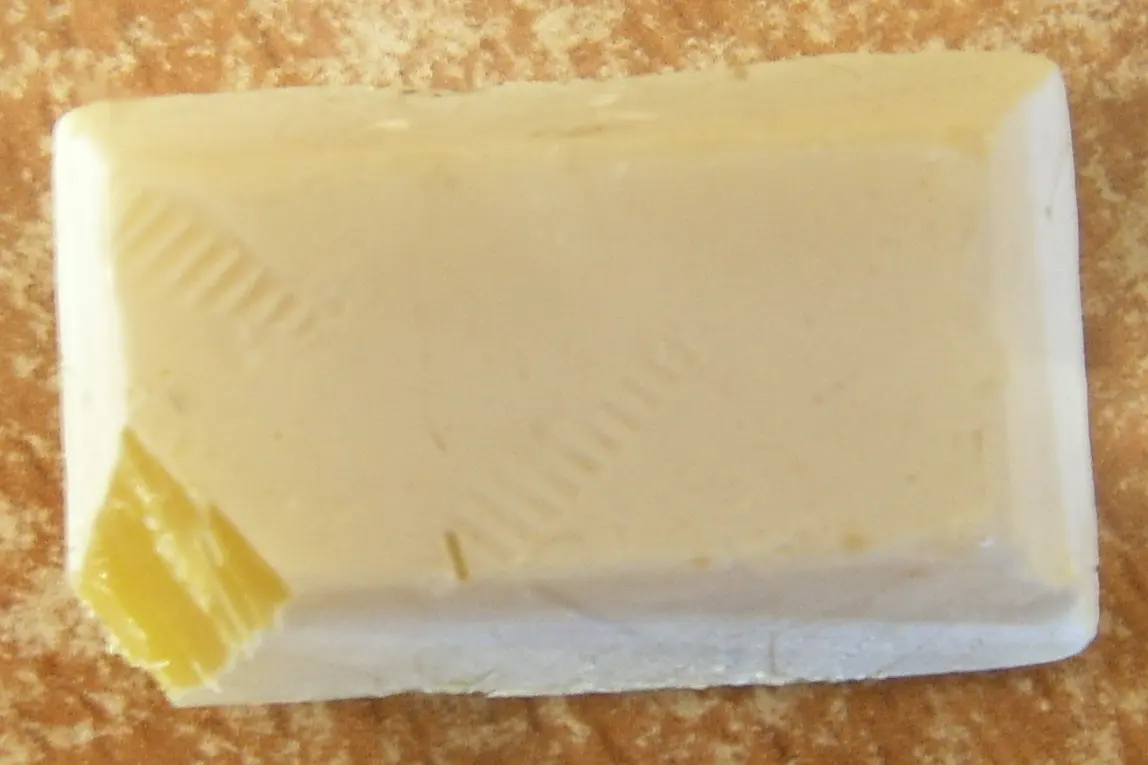
- White phosphorus is very reactive. It is made of P₄ molecules whose bonds are bent tightly at 60°, so they break easily. It catches fire in air a little above room temperature, about 30 °C, and is stored under water: . With chlorine it gives , then . Red phosphorus, with the atoms in long chains, is far safer: it is on the side of a matchbox.
Group 16: oxygen to polonium
All have six outer electrons (ns² np⁴), two short of an octet. They gain two electrons to form ions such as O²⁻ and S²⁻, or share two (H₂O, H₂S): valency 2, and for sulphur also 4 and 6 (SO₂, SO₃).
Down the group reactivity decreases, O > S > Se > Te, and metallic character increases: oxygen and sulphur are non-metals, selenium mostly a non-metal, tellurium a metalloid and polonium a metal. Oxygen, small and the second most electronegative element, combines with almost every element, often burning: . Sulphur combines with hydrogen only when heated, , and with iron when the two are heated together, .
Group 17: the halogens
All have seven outer electrons (ns² np⁵), one short of an octet, which they complete by gaining one electron (X⁻) or sharing one. They are the most reactive non-metals, and reactivity decreases down the group: F > Cl > Br > I.
Displacement. A more reactive halogen takes the place of a less reactive one in its salts:
Chlorine water turns potassium bromide solution orange (bromine) and potassium iodide solution brown (iodine). Iodine can’t displace chlorine or bromine: no reaction.
With hydrogen, all form hydrogen halides, ever less readily down the group:
| Halogen | Reaction with hydrogen |
|---|---|
| fluorine | explodes even in the cold and dark: |
| chlorine | explodes in sunlight, slow in the dark: |
| bromine | only when heated, or with a platinum catalyst |
| iodine | slowly and only partly, even when heated, and the reaction reverses: |
With metals: chlorine takes iron to its higher valency, , but iodine, a weaker oxidizer, only to the lower one, .
Across a period
Period 3 shows all the trends in one row. From left to right, the elements change from very reactive metals, through less reactive ones, to non-metals that get more reactive, ending in an unreactive noble gas:
| Element | Kind | With water | Highest oxide, its nature |
|---|---|---|---|
| Na | metal | violently, cold: NaOH + H₂ | Na₂O, basic |
| Mg | metal | slowly with cold, fast with steam | MgO, basic |
| Al | metal | no reaction: a thin oxide layer protects it | Al₂O₃, amphoteric |
| Si | metalloid | no reaction | SiO₂, weakly acidic |
| P | non-metal | no reaction (white P is stored under water) | P₄O₁₀, acidic |
| S | non-metal | no reaction | SO₃, acidic |
| Cl | non-metal | dissolves and partly reacts: | Cl₂O₇, strongly acidic |
| Ar | noble gas | no reaction | none |
The metals’ reactivity falls from sodium to aluminium, as their ionization potentials rise and they must lose more electrons. The non-metals’ pull on electrons rises from phosphorus to chlorine, as their electronegativity rises (2.19, 2.58, 3.16). The same is true of groups 1 and 2 against each other (sodium is more reactive than magnesium, potassium than calcium) and of groups 15, 16 and 17 (nitrogen < oxygen < fluorine as oxidizing agents).
What happens when chlorine water is added to potassium iodide solution?
Pick an answer to see why.
Exercise
1. Choose the correct option
a. Which rule says that electrons enter the orbitals of a subshell singly before they pair up?
Pick an answer to see why.
b. The electronic configuration of chromium (Z = 24) is:
Pick an answer to see why.
c. Which element has the largest atomic radius?
Pick an answer to see why.
d. The element with the highest electron affinity is:
Pick an answer to see why.
e. Transition elements show variable valency because:
Pick an answer to see why.
2. Give reasons
The properties of elements repeat at regular intervals of atomic number.
Hint
Answer
Potassium’s 19th electron goes into 4s and not 3d.
Hint
Answer
Copper’s configuration is [Ar] 4s¹ 3d¹⁰, not [Ar] 4s² 3d⁹.
Hint
Answer
Atomic size decreases from sodium to chlorine.
Hint
Answer
The ionization potential of magnesium is higher than that of aluminium, although aluminium is to its right in period 3.
Hint
Answer
Chlorine has a higher electron affinity than fluorine.
Hint
Answer
Nitrogen is much less reactive than its position in the periodic table suggests.
Hint
Answer
The compounds of zinc are white, while those of copper are usually colored.
Hint
Answer
3. Differentiate between
s-block and p-block elements
Hint
Answer
d-block and f-block elements
Hint
Answer
Ionization potential and electron affinity
Hint
Answer
Electron affinity and electronegativity
Hint
Answer
4. Answer the following questions
State the modern periodic law. Write any three merits of the modern periodic table over Mendeleev’s.
Hint
Answer
Explain why the periods of the periodic table contain 2, 8, 8, 18 and 18 elements.
Hint
Answer
State the Aufbau principle, Pauli’s exclusion principle and Hund’s rule. Show the orbital diagram of oxygen.
Hint
Answer
Write the electronic configurations of the elements with atomic numbers 11, 16, 21 and 29, and find the block, period and group of each.
Hint
Answer
Write four characteristics each of s-block and d-block elements.
Hint
Answer
What is ionization potential? How does it vary in a period and in a group? Explain with reasons.
Hint
Answer
What is electronegativity? How does it vary in the periodic table? Name the most and least electronegative elements.
Hint
Answer
How does the reactivity of the alkali metals change down the group? Explain, with the reaction of potassium with water.
Hint
Answer
How does the reactivity of the halogens change down group 17? Describe one experiment that shows it, with equations.
Hint
Answer
Compare the elements of group 15 from nitrogen to bismuth in metallic character and reactivity.
Hint
Answer
5. Problems
The atomic numbers of A, B, C and D are 9, 12, 17 and 20. (i) Which two are in the same group? (ii) Which is the most reactive non-metal? (iii) Which is the most reactive metal? (iv) Write the formula of the compound formed by B and C.
Hint
Answer
The successive ionization potentials of an element Y, in kJ/mol, are 578, 1,817, 2,745 and 11,577. (i) How many valence electrons does Y have? (ii) To which group does it belong? (iii) Write the formula of its oxide.
Hint
Answer
Calculate the energy released when 3.55 g of chlorine atoms, in the gas state, each gain an electron. The electron affinity of chlorine is 349 kJ/mol. (Cl = 35.5)
Hint
Answer
How many unpaired electrons are there in (i) phosphorus (15), (ii) iron (26), (iii) Fe³⁺ and (iv) chromium (24)? Which of them would be attracted most strongly by a magnet?
Hint
Answer
Arrange in order, giving a reason in each case: (i) Na, Mg, Al, Cl by atomic size (largest first); (ii) F, Cl, Br, I by electronegativity (highest first); (iii) Li, Na, K by first ionization potential (highest first); (iv) Mg²⁺, Na⁺, Na, Cl⁻ by size (smallest first).
Hint
Answer
Think: Yangchen says, “Fluorine has 9 protons and lithium only 3, so fluorine’s atom must be bigger, because it has more of everything.” Explain her mistake, using the numbers.
Hint
Answer
Printable PDFs
- The unit as a book (A5) 30 pages Answers as an A4 booklet, 8 sheets
- Study notes 3 pages
- Worksheet 5 pages Answer key
- Harder practice questions 3 pages Answer key
Practice every question in the book, and keep track of the ones you miss →
Found a mistake? Please tell us.