
Taming the infinities of the weak force
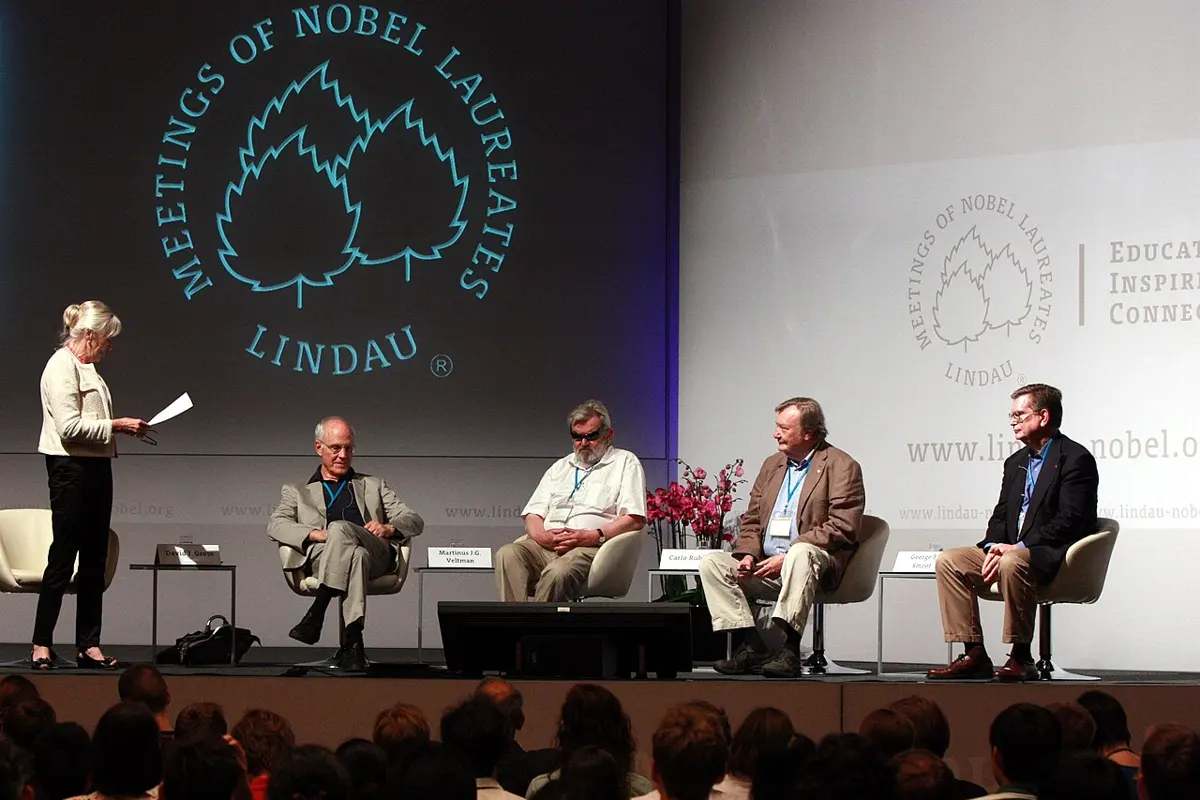
Nobel Prize in Physics, 1999: Gerard ’t Hooft and Martinus Veltman
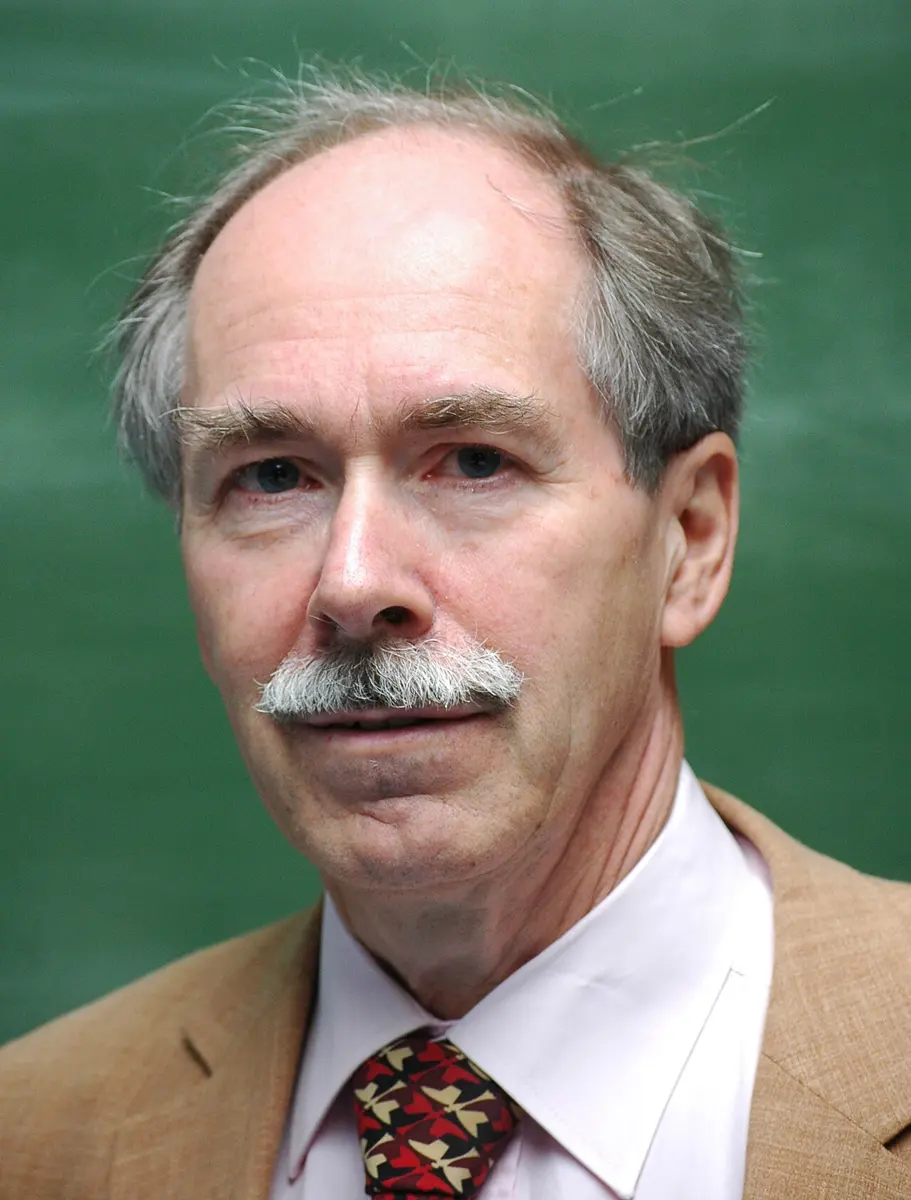
Gerard ’t Hooft
born 1946 in Den Helder, the Netherlands
At eight he told his teacher he wanted to be “a man who knows everything”. His great-uncle Frits Zernike had won the Nobel Prize in Physics in 1953.
Photo: Wammes Waggel, CC BY-SA 3.0
-
Martinus Veltman
1931–2021, born in Waalwijk, the Netherlands
The son of a primary-school headmaster, he only just passed his final school exams. His physics teacher came to his home to persuade his parents to send him to university.
The Sun has been shining for about four and a half billion years. To shine, it needs a force that most people have never heard of: the weak force, which can turn a proton into a neutron. Without it, the Sun’s fire would never start.
In the 1960s physicists wrote down a theory that joined the weak force with electricity and magnetism. It was beautiful, but it had a fatal flaw: whenever you tried to calculate something exactly, the answer came out infinite. In 1971 a young student, Gerard ’t Hooft, and his teacher, Martinus Veltman, showed how to tame those infinities. Their methods let physicists predict how heavy two unknown particles should be, years before either was found. In 1999 they shared the Nobel Prize in Physics.
The problem: a theory that answered “infinity”
Everything around you is made of atoms. Atoms are made of electrons, protons and neutrons, and protons and neutrons are made of smaller particles called quarks Grade 9: Structure of an atom. Between these particles act four basic forces: gravity, electromagnetism, the strong force that holds a nucleus together, and the weak force.
The weak force is what makes some nuclei radioactive. In beta decay it turns a neutron into a proton, and an electron shoots out (Beta decay). In the Sun it does the opposite: it turns one of two colliding protons into a neutron, the first step in making helium Grade 9: Nuclear reaction in the Sun.
Physicists describe each force as carried by messenger particles. Two electrons push each other apart by passing photons, particles of light, between them. In the 1960s Sheldon Glashow, Abdus Salam and Steven Weinberg found a theory in which electromagnetism and the weak force are two sides of one electroweak force (their prize, 1979). Its messengers are the photon and three new particles, called W⁺, W⁻ and Z. Unlike the photon, these three are very heavy: about 86 and 97 times as heavy as a proton.
The theory explained a lot. But a physical theory must do more than explain: it must give numbers that experiments can check. And when physicists tried to calculate with the electroweak theory, it kept giving answers such as “the chance of this happening is infinity”. A chance can never be more than 1 (certain). So something was badly wrong, and many physicists decided the theory was useless.
What does the weak force do?
Pick an answer to see why.
How physicists calculate: a first answer, then corrections
To see where the infinities came from, you need to know how such a theory is used.
Physicists can’t solve the equations exactly. Instead, they work out a first answer, then add a smaller correction, then an even smaller one, and so on, like finding the price of a bag of rice, then adding the tax, then the small rounding at the till. If every correction is smaller than the last, a few of them give a very exact answer.
The corrections come from a strange fact of the quantum world. Every particle is surrounded by a cloud of virtual particles: messengers and pairs of particles that pop into existence for a tiny moment and vanish again. An electron is never alone. It always carries its cloud, and the cloud changes its mass and charge a little.
When physicists added up the effect of the cloud, they had to include virtual particles of every possible energy, and the sum grew without end. In the 1940s a way was found to deal with this for electrons and light, called renormalization (the 1965 prize). Nobody ever measures an electron without its cloud, so you write the measured mass and charge into the equations. Done carefully, the infinite pieces cancel, and what is left are small, sensible corrections.
Why it was hard: heavy messengers
The same trick did not work for the weak force, and the reason was the weight of its messengers.
The mathematics that joined the forces, a kind of theory called a Yang–Mills or gauge theory (first written down by Chen Ning Yang and Robert Mills in 1954), only works if the messengers have no mass, like the photon. But W and Z are heavy. If you simply give them a mass in the equations, the infinities no longer cancel. Worse, each correction becomes bigger than the last, so the method of “first answer, then smaller corrections” falls apart.
There was a way to give the messengers mass more gently. In 1964 several physicists, among them Peter Higgs, François Englert and Robert Brout, had shown that a field filling all of space, now called the Higgs field, could give messengers mass without breaking the theory’s mathematics (their prize, 2013). But nobody knew whether a theory built this way could be renormalized. Checking it meant pages and pages of algebra, with thousands of terms, where one wrong sign could hide the answer.
What they did, step by step
Veltman: a computer that does algebra
Martinus Veltman had studied the experiments on the weak force at CERN, the European laboratory for particle physics near Geneva. He became convinced that the weak force really was a Yang–Mills theory and that it could be made to work.
- 1963, a program. Tired of making mistakes in long calculations, Veltman began writing a computer program that did algebra: it simplified long expressions full of letters, not just numbers. He called it Schoonschip, from a Dutch saying for cleaning up a mess. At the time, programs were fed into room-sized computers on stacks of punched paper cards.
- 1966, Utrecht. Veltman became a professor at the University of Utrecht, in the Netherlands, and kept testing ideas for taming the weak force with his program. Many physicists doubted it could ever be done.
’t Hooft: the student who solved it
- 1969, a student. Gerard ’t Hooft, then 22, became Veltman’s doctoral student. Veltman gave him the problem he had been stuck on for years: how to renormalize a Yang–Mills theory.
- 1971, the proofs. ’t Hooft published two papers. The first showed how to do it when the messengers have no mass. The second showed that it also works when they get their mass from a Higgs field. The infinities cancel, and every correction comes out finite. The calculation needs imaginary particles, nicknamed ghosts, that appear in the middle of the working and disappear from the final answer.
- 1971, ten minutes. Veltman’s program checked ’t Hooft’s results, and Veltman saw that the problem he had worked on for years was solved. At a conference in Amsterdam he gave his student ten minutes to explain them. Physicists around the world started to take the electroweak theory seriously.
- 1972, four minus a little. Together they found a clever way to keep track of the infinities: calculate as if space and time had slightly fewer than four dimensions, 3.99999 instead of 4. Then every quantity comes out large but finite, and the large parts can be canceled before going back to exactly four dimensions. This method, dimensional regularization, is now used in almost every calculation in particle physics. ’t Hooft received his doctorate the same year.
How it works now: predicting particles before they are found
Once the electroweak theory could give exact numbers, it could be tested, and it could predict.
- The W and Z. They were found at CERN in 1983, with the masses the theory said they should have.
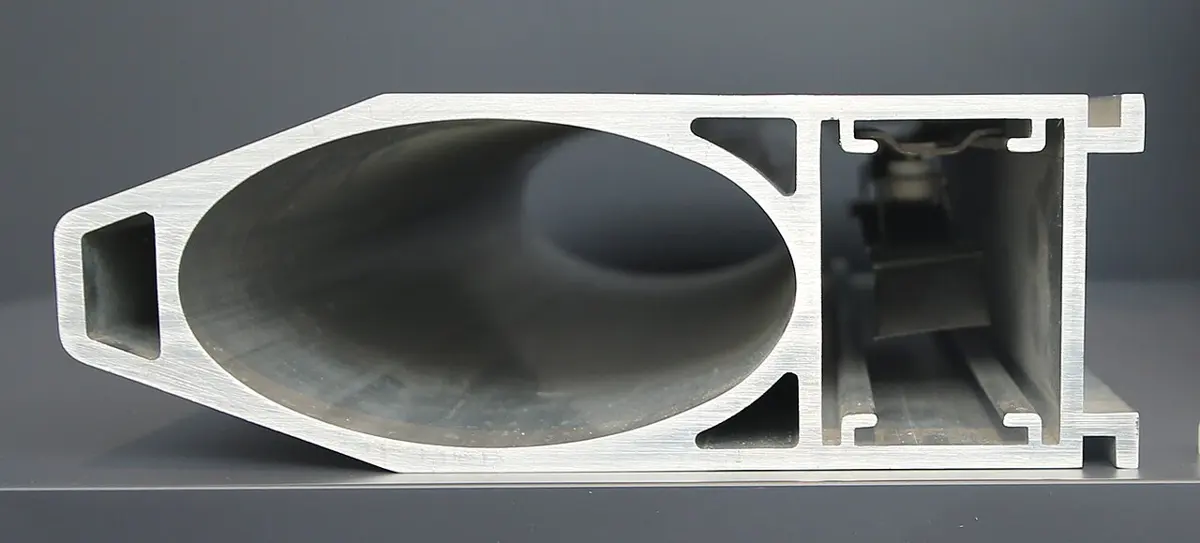
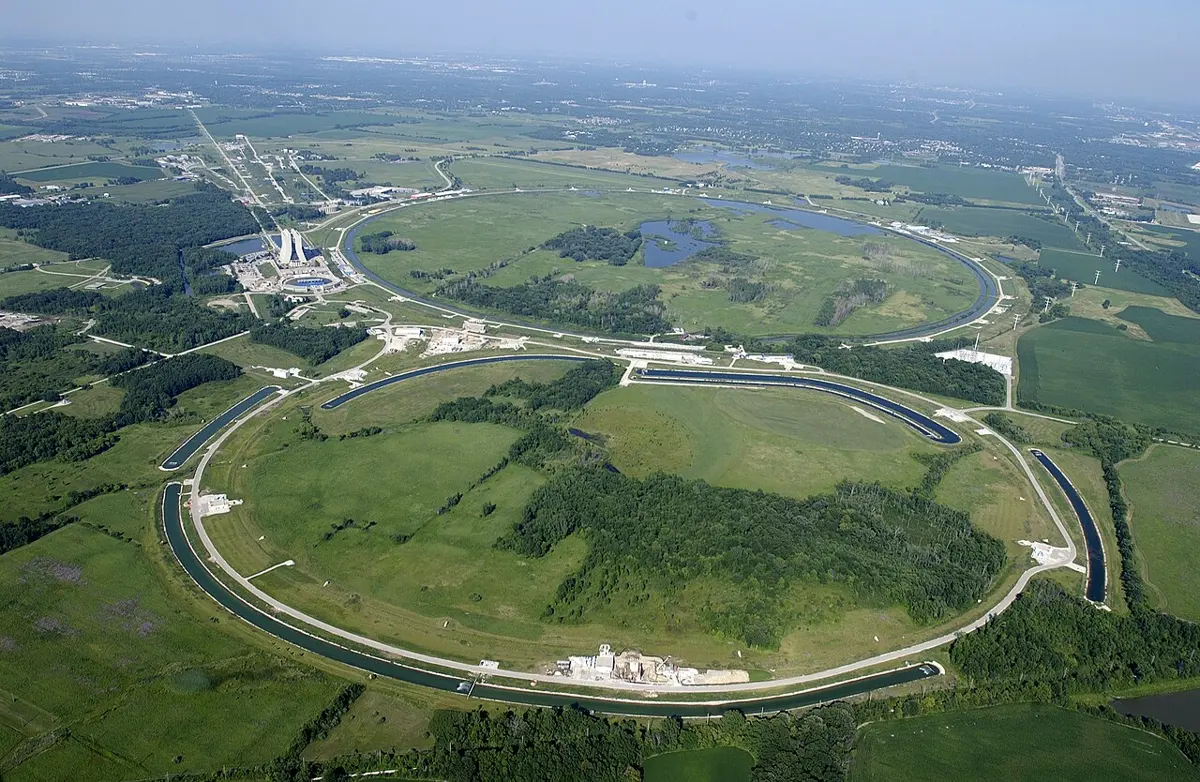
- The top quark. Quarks come in pairs, and in the early 1990s one quark, the top, was still missing. From 1989, CERN’s Large Electron–Positron collider (LEP), in a ring tunnel 27 km round, made millions of Z particles and measured them very exactly. Using ’t Hooft and Veltman’s methods, physicists worked out how much the cloud of virtual top quarks around each Z should change it (Figure 1), and so how heavy the top quark must be. Physicists give the masses of particles in a unit called the GeV; a proton is just under 1 GeV. In 1994 the answer was about 170 to 180 GeV, give or take 10 to 20 (different studies gave slightly different numbers). In 1995 Fermilab, near Chicago, found the top quark, close to where it was predicted. It is the heaviest particle known: about 185 times as heavy as a proton, nearly as heavy as a whole atom of gold.
- The Higgs particle. The same method narrowed down the mass of the Higgs particle. It was found at CERN’s Large Hadron Collider in 2012, about 133 times as heavy as a proton, inside the range the calculations allowed.
How could physicists know roughly how heavy the top quark was before anyone had made one?
Pick an answer to see why.
In your life today
- Sunshine. The theory that ’t Hooft and Veltman made usable describes the weak force that starts the fusion in the Sun, and the beta decay of carbon-14, which archaeologists use to date old wood and bones.
- Exact science. This theory, the Standard Model, agrees with very exact experiments, often to better than one part in a thousand. It is one of the most tested ideas in all of science.
- Computer algebra. Programs that do algebra, which Veltman pioneered, are now used by scientists, engineers and students everywhere to work through long calculations without slips.
What came next
- The Higgs. Finding the Higgs particle in 2012 completed the Standard Model, forty years after ’t Hooft and Veltman showed that the theory could be trusted.
- Open questions. The Standard Model leaves out gravity, and it says nothing about dark matter, the unseen matter that holds galaxies together. Nor does it explain why the particles have the masses they do. ’t Hooft has spent much of his later life on how gravity and quantum physics fit together, which nobody has yet solved.
In your science books
- Grade 8: what an atom is and the particles inside it.
- Grade 9: structure of an atom, radioactive elements, nuclear fusion and the nuclear reaction in the Sun.
- Going Further (Grades 9–12): beta decay, fusion, and why gravity is so weak compared with the other forces.
- More Nobel Prizes: the electroweak theory, taming the infinities of light and electrons, and the Higgs particle.
Learn more
- The Nobel Prize’s own explanation: the press release, with the pencil experiment, and the illustrated information (nobelprize.org).
- The laureates’ Nobel lectures: ’t Hooft and Veltman.
The official reason
The prize was given “for elucidating the quantum structure of electroweak interactions in physics.”