
Designing medicines on purpose
Nobel Prize in Physiology or Medicine, 1988: Sir James W. Black, Gertrude B. Elion, and George H. Hitchings
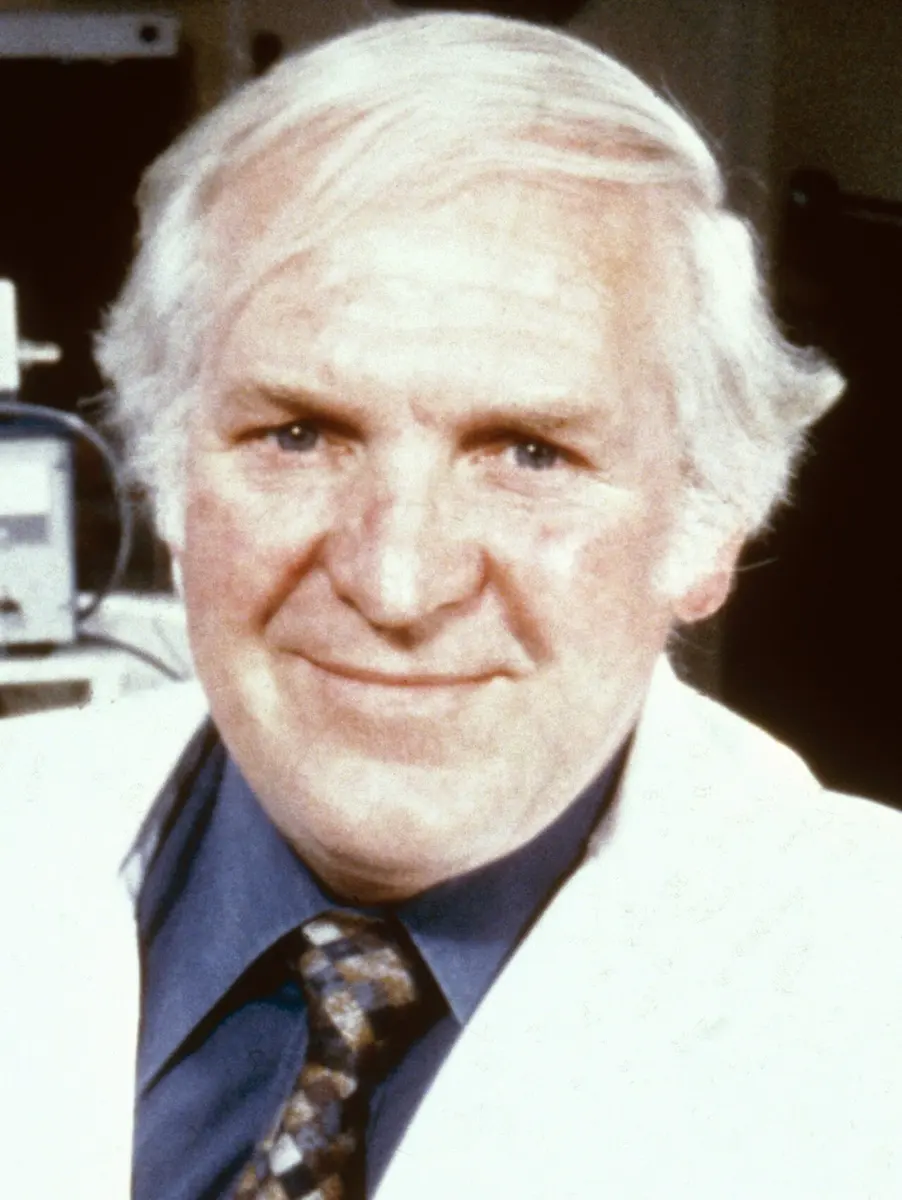
Sir James W. Black
1924–2010, born in Uddingston, Scotland
A coal-mining manager’s son who, by his own account, daydreamed through school. A teacher pushed him into a university scholarship exam at 15.
Photo: Wellcome Collection, CC BY 4.0
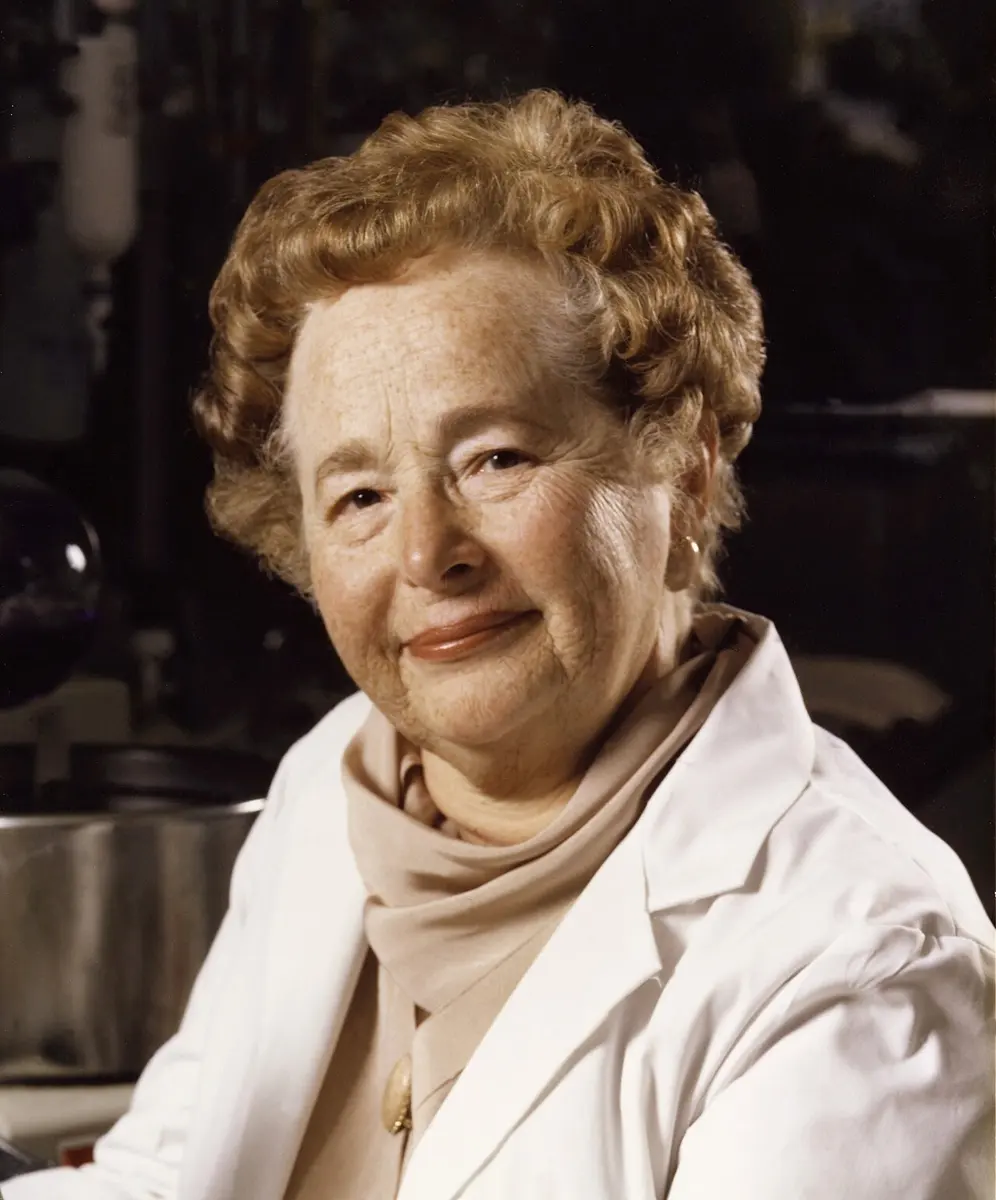
Gertrude B. Elion
1918–1999, born in New York, USA
Her grandfather died of cancer when she was 15, and she decided to fight the disease. Laboratories would not hire women, so she first worked for no pay.
Photo: GlaxoSmithKline plc, CC BY 4.0
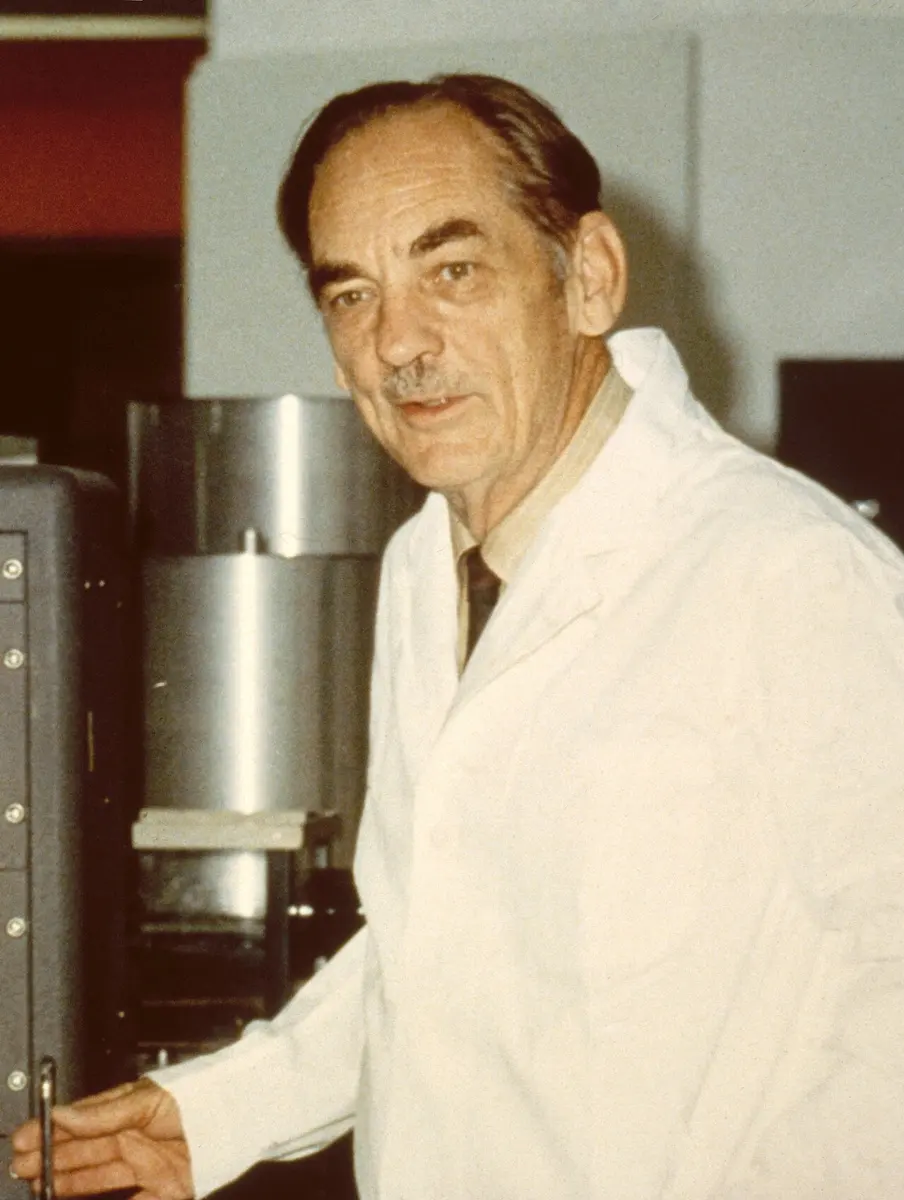
George H. Hitchings
1905–1998, born in Hoquiam, Washington, USA
A shipbuilder’s son. His father died after a long illness when George was 12, which turned his thoughts to medicine.
Photo: Wellcome Collection, CC BY 4.0
In 1896, a few months before he died, Alfred Nobel wrote to a friend that his doctor had prescribed him nitroglycerine, the explosive in his own dynamite, for the pain in his chest. “Isn’t it the irony of fate?” he wrote. The pain was angina: the heart muscle was not getting enough oxygen.
Nitroglycerine still helps angina today. But it was found by chance. For most of history, that is how medicines were found: by luck, by testing plants, or by trying thousands of chemicals to see which did something useful. The 1988 Nobel Prize in Physiology or Medicine went to three scientists who showed a better way: understand how the body, or the germ, works, and then design a medicine to change one exact step. James Black did it for the heart and the stomach; Gertrude Elion and George Hitchings for cancer, germs and viruses.
The problem: medicines found by luck
Imagine looking for the key to a lock by trying every key in a huge box. You might find one that works, but it could take years, and a key that works might also open doors you did not want opened.
That was medicine-making before the 1950s. Chemists took a substance from a plant, or made many variations of a known chemical, and tested each one on animals or on germs. A medicine that worked often had side effects nobody could explain, because nobody knew exactly what it was doing in the body.
Two things were needed to do better:
- knowing where in the body a medicine acts;
- knowing what makes the target (a germ, a cancer cell, an over-worked heart) different from the healthy body, so the medicine hits only the target.
How medicines can work
Locks and keys
Your body’s cells receive messages from chemical messengers, such as hormones. When you are frightened or running, your adrenal glands release adrenaline Grade 9: Adrenal glands, and nerves release a close relative of it. These messengers make the heart beat faster and harder.
A messenger works by fitting into a receptor, a protein on the surface of a cell, like a key fitting into a lock. When the key turns, the cell responds. A medicine can be a false key: it fits the lock but does not turn it. While it sits there, the real key cannot get in. A medicine that blocks a receptor in this way is called a blocker.
False building blocks
Every cell that grows and divides must copy its DNA Grade 10: DNA. DNA is built from small building blocks, including two kinds called purines and pyrimidines. A cell makes or collects these blocks and joins them into long chains.
A chemical that looks almost like a real building block, but not quite, can be a false building block. The cell takes it in by mistake, and it jams the machinery. Cancer cells, bacteria and the malaria parasite all grow fast, so they need building blocks fast, and are hit hardest.
A beta-blocker fits into the beta receptor on a heart cell but does not switch it on. What is the result?
Pick an answer to see why.
Why it was hard
- Nobody had seen a receptor. In 1948 the American scientist Raymond Ahlquist suggested that adrenaline has two kinds of receptors, which he called alpha and beta, to explain why it tightens some muscles and relaxes others. Many scientists doubted it. Receptors were only an idea.
- Little was known about DNA. When Hitchings and Elion began in the 1940s, nobody yet knew that DNA carries genes, or the steps by which cells make purines.
- The body and the target are very alike. A germ’s or a cancer cell’s chemistry is mostly the same as ours. A poison for one is usually a poison for the other. The trick is to find a small difference and aim at it.
What they did, step by step
Black: give the heart less work
- Mid-1950s, Glasgow, a new idea. Doctors treated angina by trying to bring the heart more oxygen. Black, a doctor teaching physiology at a veterinary school, turned the problem round: what if the heart could be made to need less oxygen? Adrenaline drives the heart hard. Block its beta receptors on the heart, he reasoned, and the heart would work more gently.
- 1958, a company laboratory. Black asked the chemical company ICI for help and went to work at its new laboratories in England. Starting from the shape of a chemical close to adrenaline, his team made one variation after another.
- 1962 and 1964, the first beta-blockers. The first, pronethalol, worked but was not safe enough for long use. The second, propranolol, was. In patients with angina it did just what Black had predicted. It was later found also to lower high blood pressure and to save lives after a heart attack Grade 10: Heart attack.
- 1964 onwards, a second puzzle: stomach acid. Black moved to another company, Smith, Kline & French. Here he took on a puzzle about histamine, the messenger behind many allergies. The antihistamine tablets of the time stopped sneezing and itching, but histamine also makes the stomach pour out acid, and the antihistamines did nothing about that. Black guessed that the stomach had a second kind of histamine receptor, with a different lock.
- 1972, H2 receptors. Starting from the shape of histamine, the team made one variation after another for several years. One of the first that worked, metiamide, healed ulcers but in rare cases harmed the blood. By 1972 they had cimetidine and had proved that the second receptor, called H2, exists. Cimetidine sharply cut the acid that eats into the stomach and causes painful ulcers, and far fewer patients needed operations. It became one of the best-selling medicines in the world.
Elion and Hitchings: false building blocks
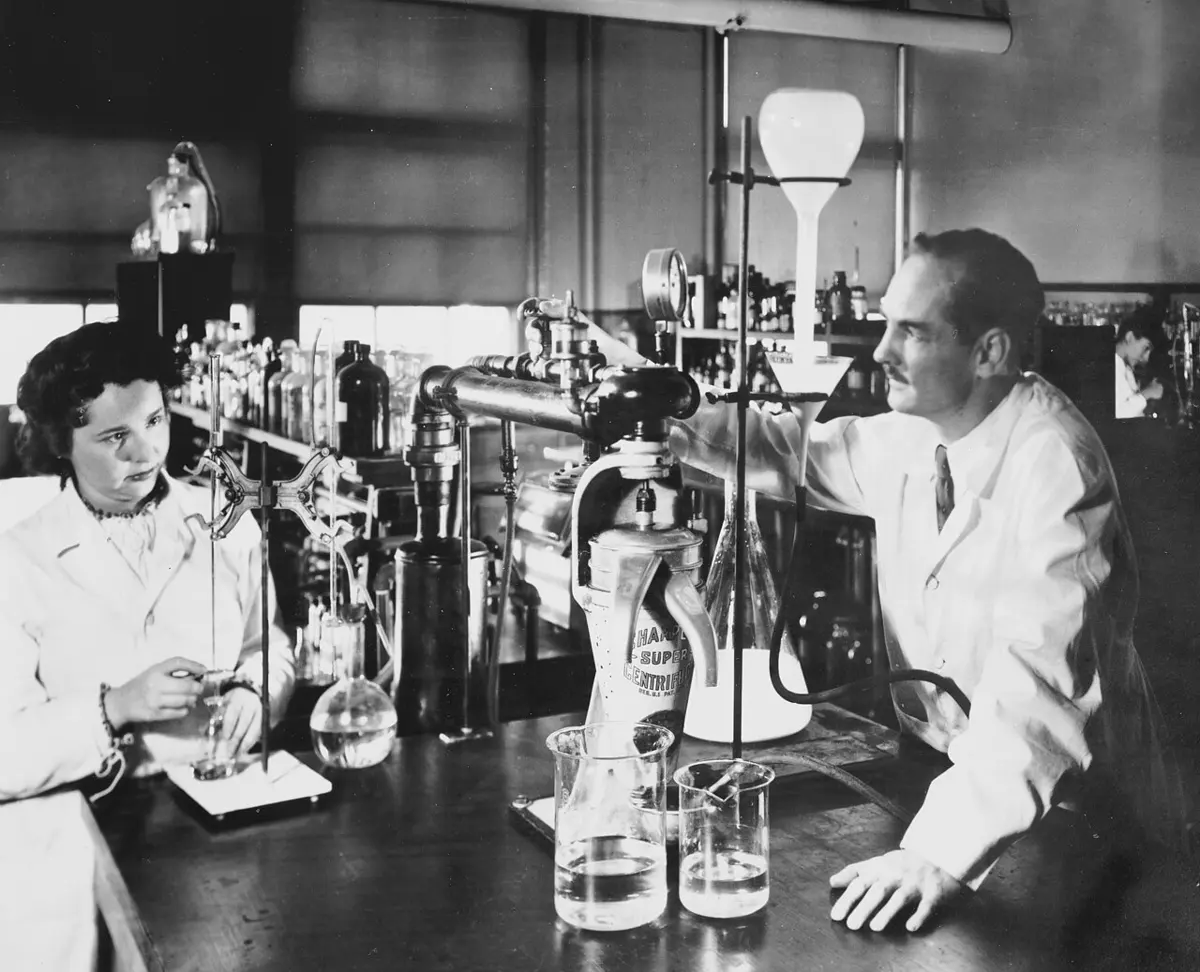
George Hitchings joined the Wellcome research laboratories near New York in 1942, as the head, and only member, of a new biochemistry department. In 1944 Gertrude Elion joined him as his assistant. She had a master’s degree in chemistry, but jobs in research had been closed to women until the war took many men away. She studied for a doctorate at night, but when told she would have to quit her job to finish it, she kept the job. She never had a PhD, except honorary ones.
Their plan was unusual: instead of testing chemicals at random, find out how cells make their DNA building blocks, and look for differences between human cells, cancer cells, bacteria, parasites and viruses.
- 1948, a first hit. Using a bacterium that needs purines to grow, they found a false purine, diaminopurine, that stopped it. It also worked against leukemia in tests, but was too poisonous for patients.
- 1950–1951, leukemia. Elion swapped one oxygen atom of a purine for a sulphur atom and made thioguanine and 6-mercaptopurine (6-MP). Leukemia is a cancer of the white blood cells. In 1953, about one third of patients given 6-MP whose leukemia had stopped responding to other medicines went into full remission: the cancer cells could no longer be found.
- 1950 and 1956, malaria and bacteria. Hitchings’s team made pyrimethamine, against malaria, and trimethoprim, against bacteria. Both block an enzyme that cells need to make DNA. Trimethoprim holds on to the bacteria’s version of the enzyme about 100,000 times more strongly than to ours. Combined with a sulpha drug, which blocks an earlier step, it works much better: this is co-trimoxazole, still one of the most used antibiotics.
- 1957, transplants. A small change to 6-MP gave azathioprine, which calms the body’s defense system. It stopped the body attacking a transplanted kidney (Medicine 1990). Twenty years later, a leading surgeon said that thanks to it, 20,000 people had received a new kidney.
- 1963, gout. Trying to make 6-MP last longer in the body, they blocked the enzyme that breaks it down. The same enzyme makes uric acid. The result, allopurinol, lowers uric acid and prevents gout, a painful disease of the joints Grade 10: Uric acid.
- 1977, the first good medicine against a virus. Elion’s team described acyclovir, which stops the herpes viruses (the cause of cold sores, chickenpox and shingles).
How the medicines work
Acyclovir shows the Elion–Hitchings idea at its sharpest. On its own, acyclovir does nothing. To become active, it must first have a phosphate group attached. Our own cells’ enzyme that does this job is very choosy and ignores acyclovir. But a herpes virus, once inside a cell, makes its own version of the enzyme, which is much less choosy. So acyclovir is switched on only in infected cells. There it is built into the virus’s new DNA like a false brick, and the chain cannot grow any further.
The same thinking runs through all their medicines: find a step that the target needs more, or does differently, and jam that step.
Black’s H2 blockers work like the beta-blockers in the first diagram, with a different lock. In the stomach lining, histamine fits the H2 receptor on the cells that make acid. Cimetidine fits the same lock without turning it, so less acid is made.
Why does acyclovir stop herpes viruses without harming the patient’s healthy cells?
Pick an answer to see why.
Ordinary antihistamine tablets stop sneezing caused by histamine, but they don’t reduce stomach acid. What did Black conclude?
Pick an answer to see why.
In your life today
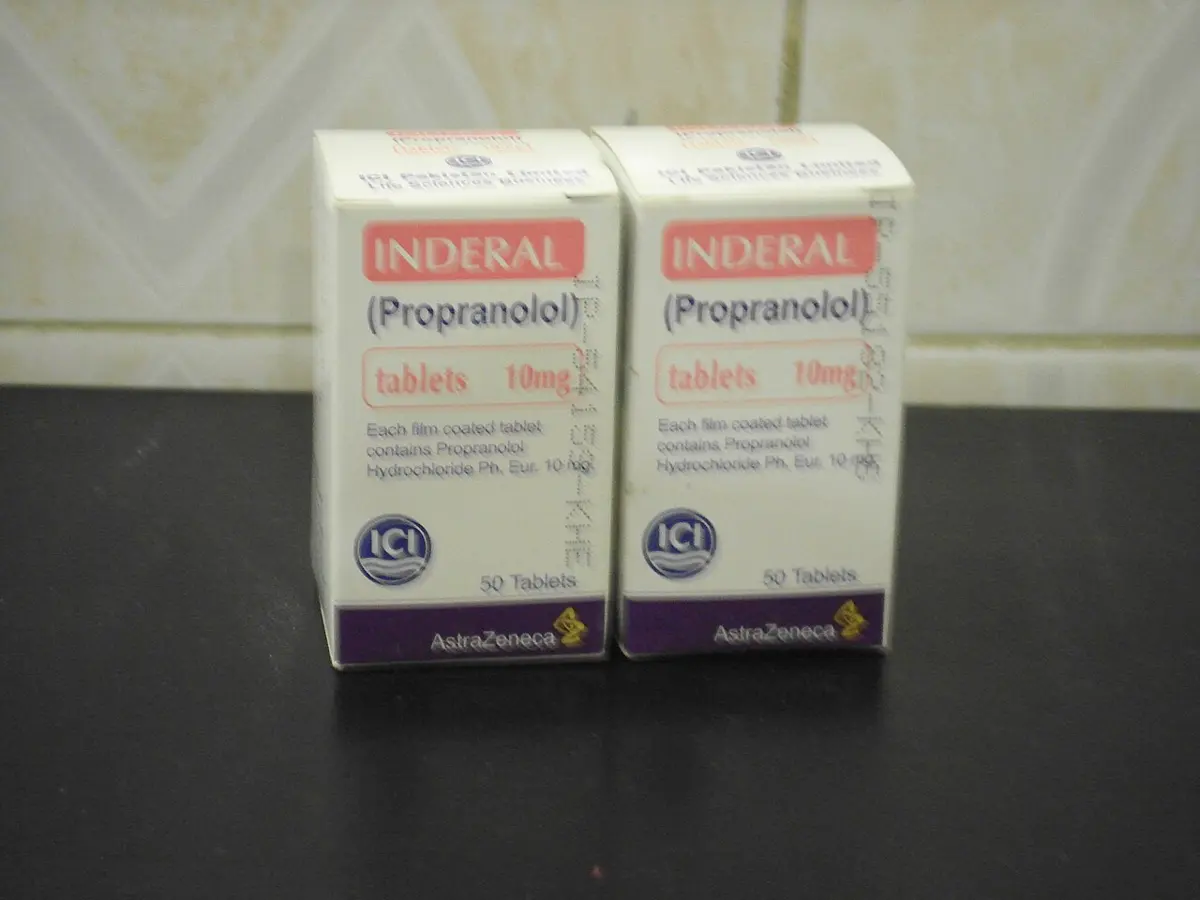
- Heart and blood pressure. Beta-blockers, the descendants of propranolol, are among the medicines most often taken for high blood pressure, angina and after heart attacks Grade 10: High blood pressure. Propranolol is on the World Health Organization’s list of essential medicines.
- “Gastric.” In Nepal almost everyone knows someone with “gastric”, stomach pain from too much acid. Antacids neutralize acid that is already there Grade 10: Acid–base reactions; H2 blockers such as famotidine stop the stomach making so much. Today doctors often use stronger acid-reducers that came later, and many ulcers are now known to be caused by a bacterium and cured with antibiotics (Medicine 2005).
- Infections. Co-trimoxazole (trimethoprim with a sulpha drug) and acyclovir, for chickenpox and shingles, are on the WHO’s essential list too.
- Leukemia and transplants. 6-MP is still part of the treatment for the commonest leukemia in children, which is now cured in about 9 children out of 10 where good care is available. Azathioprine is still used for transplants and for diseases in which the body attacks itself.
- Gout. Allopurinol is the most widely used medicine to lower uric acid.
What came next
- More medicines by design. In 1985 scientists at the same company, working with the US National Cancer Institute and following Elion and Hitchings’s ideas, found that AZT worked against HIV, the AIDS virus: the first medicine for it. Most new medicines today start, as Black’s did, from a chosen target.
- Seeing the locks. Black designed his blockers without ever seeing a receptor. Since then, scientists have learned to see receptors atom by atom (Chemistry 1988), including a beta receptor itself (Chemistry 2012), so that new keys can be designed on a computer.
- The germs fight back. Malaria parasites and bacteria have become resistant to pyrimethamine and trimethoprim in many places, by changing the enzyme the medicine aims at (Why antibiotics stop working). An open question: can medicines be designed so that the germ cannot easily escape them, for example by hitting two targets at once?
In your science books
- Grade 8: viruses and bacteria.
- Grade 9: the adrenal glands and the heart’s muscle.
- Grade 10: the heart, heart attack, high blood pressure and uric acid; DNA; antacids and acid–base reactions.
- Going further: why antibiotics stop working, and why two drugs at once.
Learn more
- The Nobel Assembly’s press release and the presentation speech (nobelprize.org), which tells Nobel’s nitroglycerine story.
- The Nobel lectures: Black on drugs and receptors, Elion on the purine path to acyclovir, and Hitchings.
The official reason
The prize was given “for their discoveries of important principles for drug treatment.”