
Transplants: a new kidney, new blood
Nobel Prize in Physiology or Medicine, 1990: Joseph E. Murray and E. Donnall Thomas
-
Joseph E. Murray
1919–2012, born in Milford, USA
A plastic surgeon who learned about transplants by caring for badly burned soldiers in the Second World War.
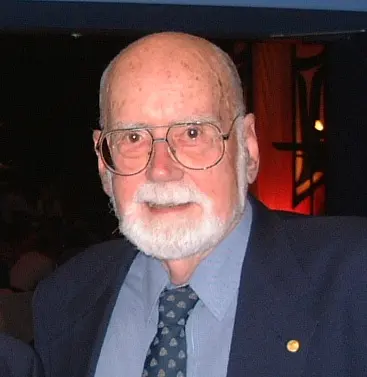
E. Donnall Thomas
1920–2012, born in Mart, Texas, USA
The son of a village doctor. He and his wife Dottie, who trained as a laboratory technician, worked side by side for more than fifty years.
Photo: Ca.garcia.s, CC BY-SA 3.0
In a hospital in Nepal, a man lies beside a humming machine two or three times a week, about four hours at a time. His kidneys have stopped working, and the machine cleans his blood for him. This is dialysis. It keeps him alive, but it can’t give him back an ordinary life. What could? A new kidney, from someone else.
Today that is an ordinary operation. More than 110,000 kidneys were transplanted around the world in 2023, and there is a national transplant center in Bhaktapur. But for most of history, a body has always destroyed an organ from someone else. In 1990 the Nobel Prize in Physiology or Medicine went to two American doctors who found how to get past that: Joseph Murray, for kidneys, and E. Donnall Thomas, for bone marrow.
The problem: organs that fail
Your two kidneys filter your blood. Every day they clean all of it many times over, take out wastes such as urea and extra water, and send them out as urine. If both kidneys fail, the wastes build up in the blood and, within days or weeks, the person dies.
Your bone marrow is the soft tissue inside your large bones. It makes all your blood cells: red cells that carry oxygen, white blood cells that fight germs, and platelets that help blood clot Grade 10: Blood corpuscles. In leukemia, a cancer of the blood, the marrow makes huge numbers of faulty white cells and crowds out the healthy ones. In the 1950s almost everyone with leukemia died of it.
The idea was obvious: replace the broken part with a healthy one from someone else. Around 1900 surgeons tried kidneys from pigs, sheep and goats, and in 1902 a kidney from another person. All failed. The French surgeon Alexis Carrel, who won the Nobel Prize in 1912, could sew blood vessels together so well that he could move an organ from one place to another in the same animal, and it worked. But an organ from a different animal always died. Carrel said there was a “biological force” that stopped it, and he believed no organ from one person would ever work in another.
How your body knows “me” from “not me”
Carrel’s “force” is your immune system, the body’s defense against germs. Its soldiers are the white blood cells.
Almost every cell in your body carries, on its surface, a set of marker molecules, like an identity card. The most important ones are called HLA markers (short for human leukocyte antigens). Your white blood cells check the cards of every cell they meet. Your own cards: leave it alone. A different card: attack, because it might be a germ.
You inherit your HLA markers from your parents, and there are so many kinds that two unrelated people almost never have the same set. So the white blood cells see a transplanted kidney as a huge invader, and kill it. This is rejection. It is the same idea that makes a blood transfusion with the wrong blood group dangerous Grade 10: Why the blood group must match.
There is one exception: identical twins. They grow from a single fertilized egg that split in two, so they have the same genes and the same markers (Identical twins). To the immune system, a twin’s kidney looks like “me”.
Why does the body reject a kidney from an unrelated donor?
Pick an answer to see why.
Why it was hard
- Rejection. Nobody knew how to stop the immune system from attacking an organ, without stopping it altogether.
- Stopping the immune system is dangerous. A body with no defenses can be killed by an ordinary infection.
- The surgery and the patient. The organ has to be taken out, carried and joined in quickly, before it dies, into a patient who is already very ill.
- Bone marrow attacks back. Donated marrow contains the donor’s own white blood cells. In the patient, they find themselves surrounded by strange markers, and attack the patient’s body. This reverse rejection is called graft-versus-host disease, and it can kill.
- A healthy donor. Taking a kidney out of a healthy person is an operation that does nothing for that person. Was it right to ask? Murray and his team talked it over with doctors, lawyers and religious leaders of many faiths before they went ahead.
What they did, step by step
Murray: the first kidney transplants
Joseph Murray wanted to be a surgeon from childhood. In the Second World War he was an army surgeon in a hospital in Pennsylvania, USA, caring for soldiers with terrible burns.
- 1944–1947, skin from strangers. Burned soldiers were covered with skin grafts from other people, to keep them alive until their own skin could be used. Murray noticed that the borrowed skin was slowly destroyed. How did the body know it wasn’t its own? His chief, a plastic surgeon named James Barrett Brown, had already shown in 1937 that skin swapped between identical twins was never rejected.
- Early 1950s, practice on dogs. At the Peter Bent Brigham Hospital in Boston, Murray worked out how to place a kidney in a new spot in a dog’s body and join it to the blood vessels so that it worked.
- 1954, the Herrick twins. Richard Herrick, 23, was dying of kidney disease. He had an identical twin, Ronald. Were they really identical? The team tried small skin grafts between them, and the twins’ fingerprints were compared at a Boston police station. On 23 December 1954, in an operation of about five and a half hours, the team took out one of Ronald’s kidneys and Murray placed it in Richard. It worked at once. Richard lived for eight more years, married one of the nurses who had looked after him, and had two children. Ronald lived for more than fifty years with one kidney.
- 1959, beyond identical twins. Most patients have no twin. Murray treated a patient with X-rays over the whole body, which weakens the immune system, and then gave him a kidney from his non-identical twin brother. He lived for many years. It was the first success between people who were not genetically identical, but X-rays were too dangerous to use widely.
- 1960–1962, drugs. The chemists George Hitchings and Gertrude Elion (Nobel Prize 1988) had made drugs that slow down dividing cells, including white blood cells. With them and the young British surgeon Roy Calne, Murray tested them on dogs, and one, azathioprine, worked best. The first patient to get it, in 1961, died of the drug, because the dose that suited dogs was too much for a person. In April 1962 a patient was given a kidney from a man who had just died, a stranger, and azathioprine. The kidney worked for more than a year. It was the first successful transplant from an unrelated donor.
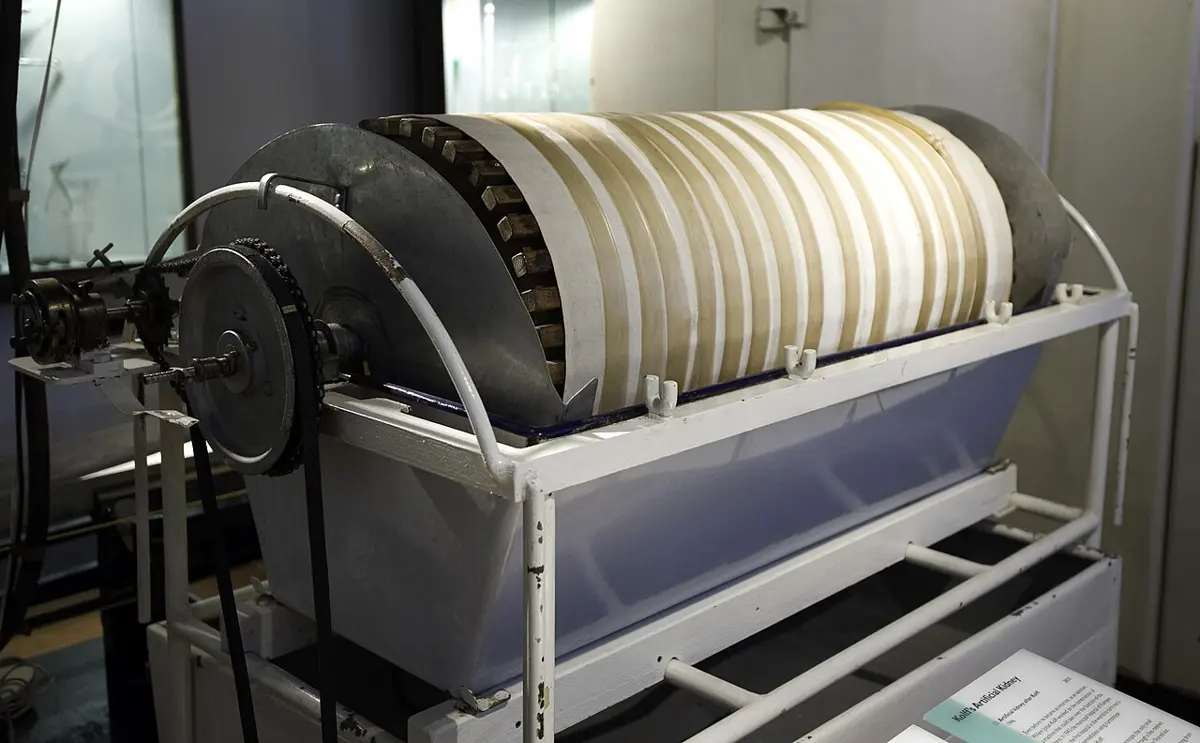
Thomas: new blood from bone marrow
E. Donnall Thomas grew up in a small village in Texas, where his father was the only doctor. As a young doctor he worked at the same Boston hospital as Murray, and helped care for Murray’s first transplant patient. But his own interest was the bone marrow and leukemia.
- Early 1950s, mice. Other scientists had found that mice given a deadly dose of radiation could be saved by an injection of bone marrow from another mouse. In 1955 they showed why: the donated marrow cells were alive, and had settled into the bones and started making blood.
- 1955–1963, Cooperstown, New York. Thomas began giving marrow to patients with leukemia. First the patient was given heavy radiation, to kill the cancer and the patient’s own marrow; then healthy marrow was dripped into a vein, like a blood transfusion. The marrow cells found their own way into the bones. In patients with an identical twin, the new marrow took, but the leukemia came back. With other donors, it almost always failed. So Thomas went back to experiments with dogs, for years.
- The drug for the reverse attack. In dogs, Thomas found that a drug called methotrexate, given after the transplant, calmed graft-versus-host disease.
- 1963 onwards, Seattle: matching. By the 1960s doctors could test people’s HLA markers, called tissue typing. In Seattle, Thomas’s team used it to choose a donor whose markers matched the patient’s, usually a brother or sister. At the end of the 1960s (sources give 1968 or 1969) they made the first successful transplants from a matched brother or sister who was not a twin.
- 1970s, cures. Through the 1970s they showed that some patients with leukemia, with aplastic anemia (marrow that stops working) and with inherited blood diseases such as thalassemia could be cured. In 1975 the team moved into the new Fred Hutchinson Cancer Research Center in Seattle. By 1990 it had done more than 4,000 marrow transplants.
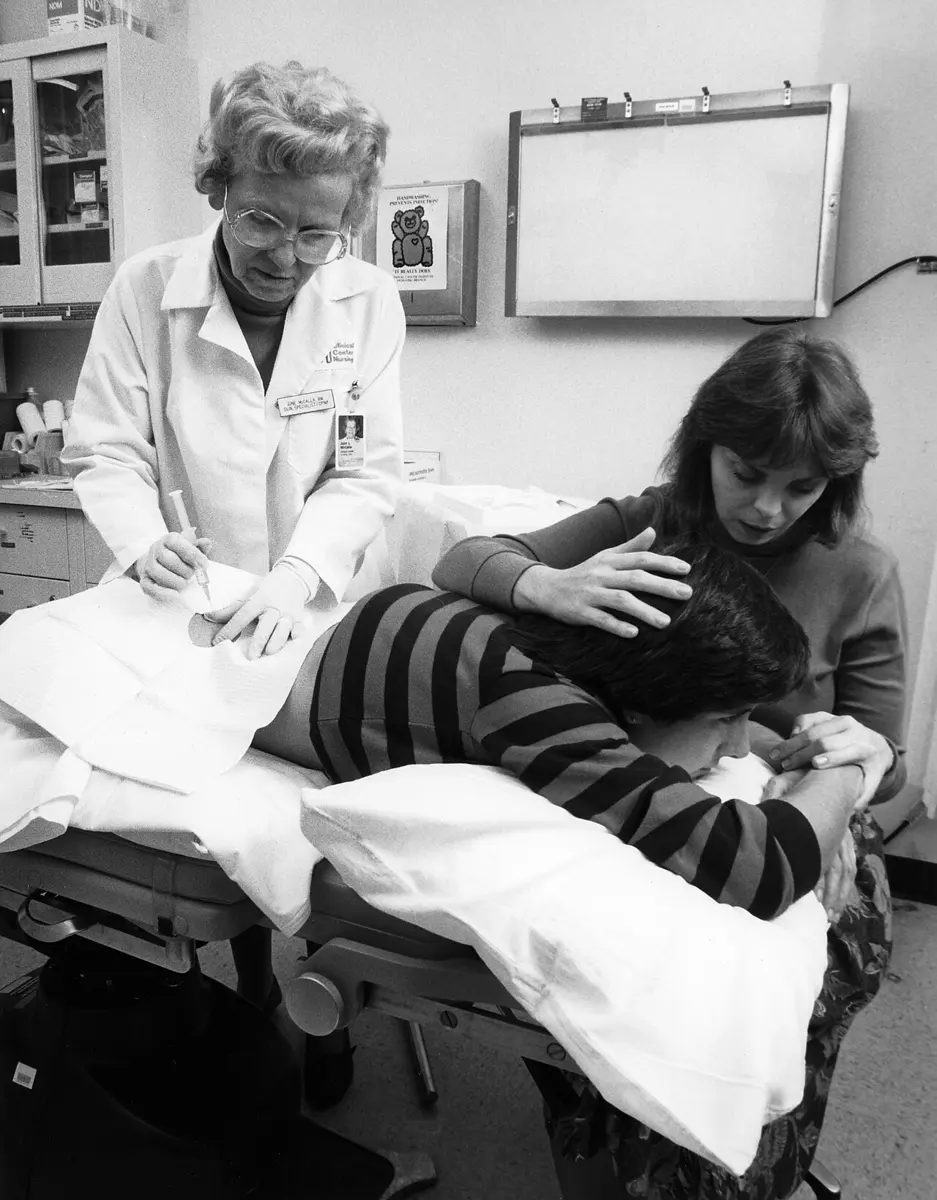
Why did Thomas’s team look for a donor whose HLA markers matched the patient’s?
Pick an answer to see why.
How transplants work now
A kidney transplant. The new kidney is not put where the old ones are. The surgeon places it low in the belly, just above the groin, joins its artery and vein to the large blood vessels that run to the leg, and joins its tube, the ureter, to the bladder. The patient’s own kidneys are usually left in place. The new kidney often starts making urine on the operating table.
The patient then takes drugs that calm the immune system, for as long as the kidney lasts, usually for life. Better drugs have come since Murray’s day, and matching the donor’s markers still helps. Kidneys come from living donors, usually relatives, or from people who have died. Murray helped write the rules that decide when a person whose brain has stopped working for good can be declared dead, so that their organs can be given.
A bone marrow transplant. It needs no surgery at all.
The cells that do the work are the blood stem cells in the marrow: cells that can divide again and again and turn into every kind of blood cell (Stem cells in medicine). A few of them are enough to rebuild a person’s whole blood supply. When no brother or sister matches, a stranger may: millions of volunteers around the world are listed in donor registries, with their HLA types, ready to give.
In your life today
- Transplants every day. More than 110,000 kidneys were transplanted around the world in 2023, together with livers, hearts, lungs and the pancreas. Murray’s first operation was the start of all of them.
- In Nepal. The Shahid Dharmabhakta National Transplant Centre in Bhaktapur, a government hospital set up in 2012, does kidney transplants, and in December 2016 it did Nepal’s first liver transplant. In August 2016 the Civil Service Hospital in Kathmandu did Nepal’s first bone marrow transplant; transplants from donors followed there in 2017.
- Leukemia can be cured. Many children and adults with leukemia, thalassemia or aplastic anemia are alive today because of a marrow or stem cell transplant.
What came next
- Better drugs. In the early 1980s a drug from a fungus, ciclosporin, made transplants of hearts and livers far more successful.
- Not enough organs. In every country, far more people need a kidney than there are kidneys to give. Many die while waiting.
- Organs from pigs. In 2024 surgeons in the United States began to transplant kidneys from pigs, whose genes had been changed so that the human immune system would attack them less, into a few living patients. It is still an experiment.
- An open question. Could we one day grow a new kidney from the patient’s own cells, so that it carries the patient’s own markers and needs no drugs at all? Scientists are trying, but nobody has done it yet.
In your science books
- Grade 8: how cells, tissues and organs are related.
- Grade 9: blood as a tissue.
- Grade 10: white blood cells, blood groups and why the blood group must match, and mitosis.
- Going Further: stem cells and stem cells in medicine, and how much brothers and sisters share.
Learn more
- The Nobel Assembly’s press release and the presentation speech (nobelprize.org).
- The Nobel lectures: Murray’s The first successful organ transplants in man and Thomas’s, and their own life stories: Murray, Thomas.
The official reason
The prize was given “for their discoveries concerning organ and cell transplantation in the treatment of human disease.”