
How a few genes make billions of antibodies
Nobel Prize in Physiology or Medicine, 1987: Susumu Tonegawa
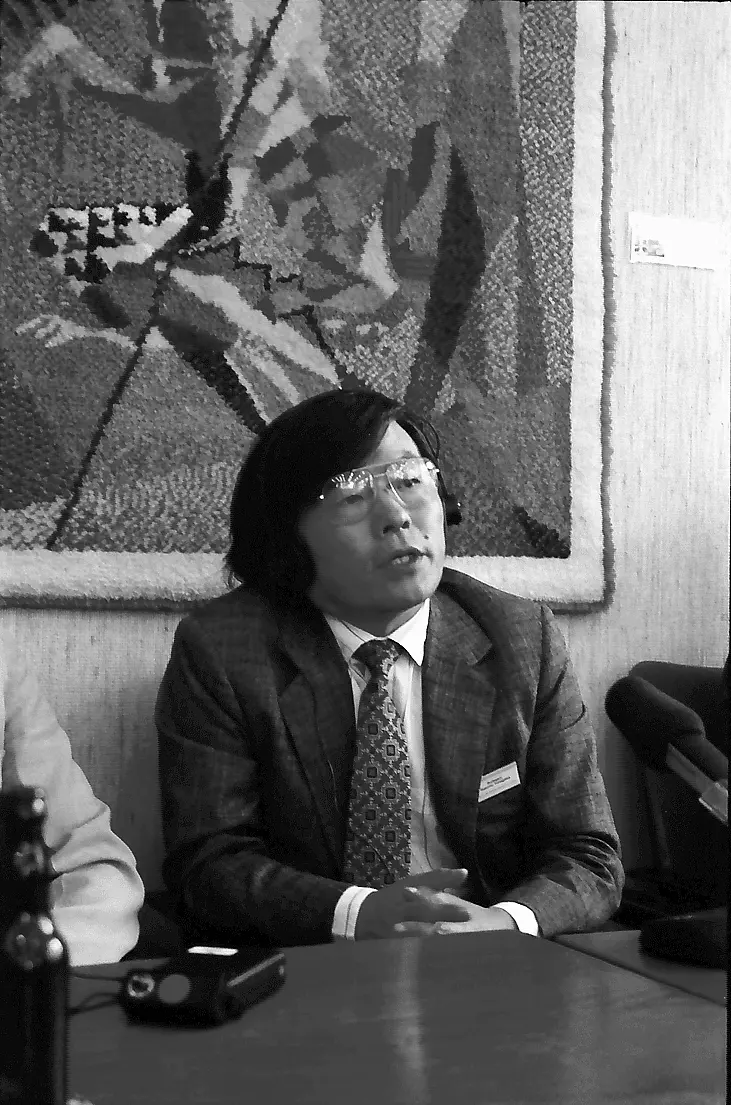
Susumu Tonegawa
1939–2026, born in Nagoya, Japan
A chemist turned molecular biologist who knew almost nothing about the immune system when he started. He went to Switzerland only because his visa to stay in the USA had run out.
Photo: Willy Pragher, CC BY 4.0
When you were a baby, you were taken to a clinic for vaccines: BCG, then polio, measles and others. Each vaccine teaches your body to make antibodies against one germ. Later, if that germ gets in, the antibodies are ready to grab it.
Here is the puzzle. Your body can make antibodies against measles, against flu, against a new kind of virus that nobody has ever seen before, and even against chemicals made in a laboratory last year. It must be ready with billions of different antibodies. Every protein in your body is made from instructions in a gene, but you have only about 20,000 genes. How can so few genes make so many antibodies? In 1987 the Nobel Prize in Physiology or Medicine went to Susumu Tonegawa, who found the answer.
The problem: too many antibodies, too few genes
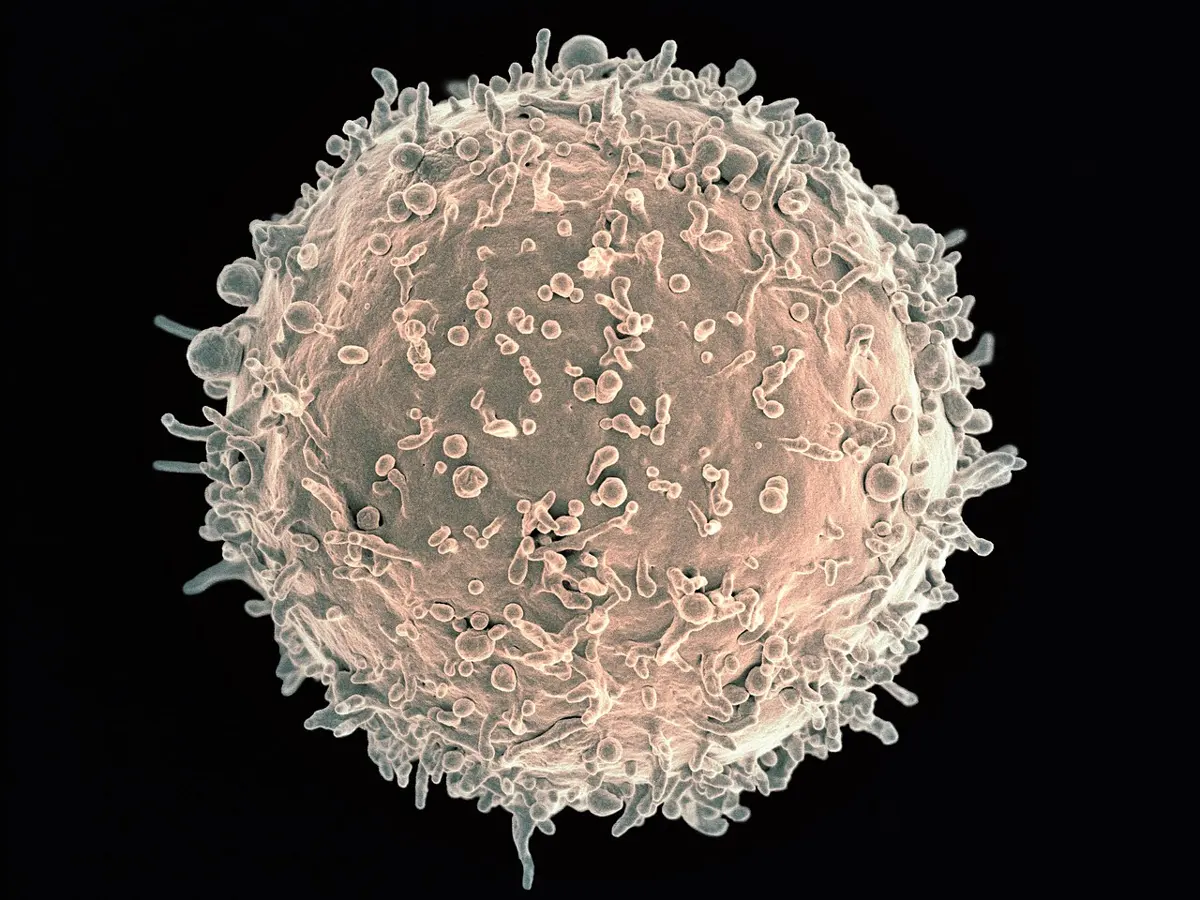
Your blood carries several kinds of white blood cells, which defend the body Grade 10: White blood cells. One kind is the B cell (B lymphocyte). B cells make antibodies.
An antibody is a protein shaped like the letter Y. It is made of four chains of amino acids: two long ones, called heavy chains, and two short ones, called light chains. At the tip of each arm is a small pocket. The shape of the pocket decides what the antibody can grab.
The thing an antibody grabs is called an antigen: usually a small part of the surface of a germ, such as a bump on a virus. When the pocket fits the antigen, like a key in a lock, the antibody sticks to it. A virus covered in antibodies can no longer get into your cells, and other white blood cells see the antibodies and come to destroy it.
By the 1960s scientists knew two important things:
- Each B cell makes only one kind of antibody, with one shape of pocket. There are millions of B cells, each with its own.
- The tips are all different, but the rest is the same. When scientists compared antibodies from different B cells, the stems were always alike. Only the tips, the variable part, were different.
Proteins are made from genes Grade 10: DNA, and at that time almost everyone believed in “one gene, one protein chain”. If that were true, you would need a separate gene for every kind of antibody: billions of genes. But the whole human body has far fewer genes than that. In the 1970s scientists thought there were perhaps 100,000 human genes; today we know there are only about 20,000, for everything: hemoglobin, digestive enzymes, the color of your eyes. The numbers simply didn’t add up.
Why couldn’t each antibody have its own gene?
Pick an answer to see why.
Two ideas, and a long argument
There were two main ideas.
- Idea 1: they are all inherited. Perhaps we really do inherit a huge number of antibody genes from our parents, more than anyone had counted.
- Idea 2: they are made in the body. Perhaps we inherit only a few antibody genes, and they are changed inside each young B cell as it grows, so that every B cell ends up with a different version.
In 1965 two American scientists, William Dreyer and Claude Bennett, made a bold guess: perhaps the variable part and the constant part of an antibody chain come from two separate genes, which are somehow brought together. Most scientists thought this was impossible. Every cell of your body was believed to carry exactly the same DNA, never cut and rejoined. For more than ten years nobody could test the idea.
Why it was hard
- Too much DNA. A mouse cell has about two thousand million “letters” (base pairs) of DNA. The antibody genes are a tiny part of it. Finding them was like finding a few lines in a library of thousands of books, without a catalog.
- No tools yet. In the early 1970s there was no way to read DNA letter by letter, and no easy way to copy one gene to study it.
- No pure B cells. Each normal B cell makes a different antibody, so a sample of B cells is a mixture. Scientists needed a large number of B cells that all make the same antibody.
The last problem had a solution: myeloma cells. A myeloma is a cancer of an antibody-making cell. One cell goes wrong and divides again and again, so all the cancer cells are copies of one cell and all make the same antibody. Mice with myelomas gave scientists plenty of identical antibody-making cells.
What Tonegawa did, step by step
Susumu Tonegawa studied chemistry at Kyoto University, then molecular biology in the USA. He knew how to work with DNA, but almost nothing about the immune system. In 1971, when his US visa ran out, he joined a new research institute in Basel, Switzerland: the Basel Institute for Immunology, full of immunologists. There he heard about the great argument over antibodies, and thought that the new tools of molecular biology could settle it.
- A new tool: restriction enzymes. Bacteria make restriction enzymes, proteins that cut DNA only where they find one particular short sequence of letters. The same enzyme always cuts the same DNA at the same places, like scissors that cut only at one word.
- The idea (1974–1976). Tonegawa reasoned like this. Take DNA from a mouse embryo, whose cells have not yet made any antibodies. Take DNA from myeloma cells, which make one antibody. Cut both with the same enzyme. If the V part and the C part of the light-chain gene are far apart in the embryo, they will land on two different pieces. If they have been brought together in the antibody-making cell, they may land on one piece.
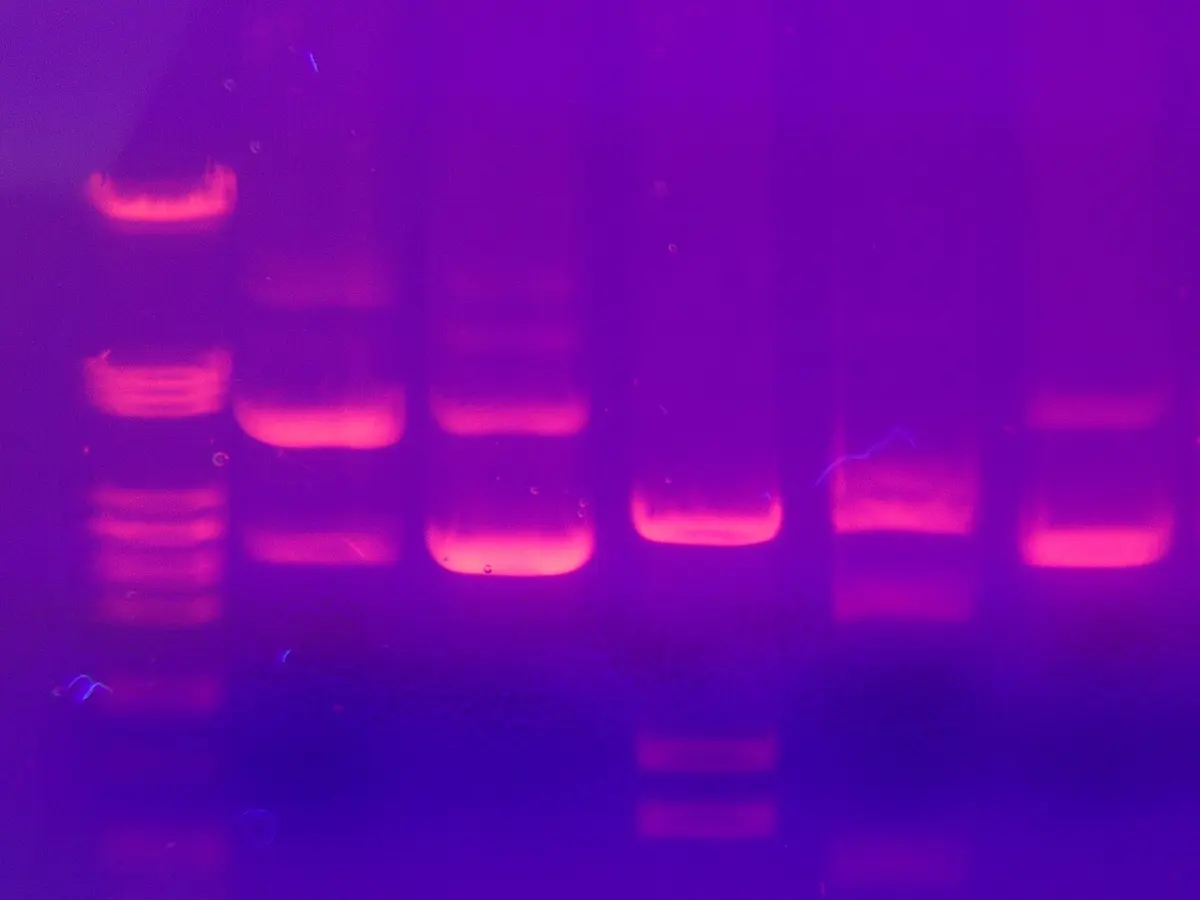
- Sorting the pieces. The pieces can be sorted by size in a gel, a slab of jelly through which an electric current pulls the DNA: small pieces move faster and further. But no one yet had a good way to find one gene among millions of pieces. One day Tonegawa saw, in a cold room at the institute, a huge plastic tray in which someone was sorting blood proteins in a gel. He realized a gel that big could hold enough DNA. With Nobumichi Hozumi, a young scientist in his group, he cut the gel into slices and tested each slice with a probe: the light chain’s own message molecule, made radioactive so it could be detected, which sticks only to the matching DNA.
- 1976: the answer. The results were clear. In embryo DNA, the V part and the C part were on two different pieces. In myeloma DNA, they were on one piece. The DNA had been rearranged: in the antibody-making cell, a stretch of DNA had been cut out and V had been joined close to C.
- 1978: J pieces. Tonegawa’s group then copied the genes and read their letters. They found that the V gene in the embryo was not even complete. The last few amino acids of the variable part came from a short extra piece, far away, which they called J (for joining). And there were several V pieces and several J pieces, so each B cell could join a different pair.
- About 1980: D pieces. For the heavy chain, Tonegawa’s group and others found a third set of short pieces, D (for diversity), between V and J. A heavy chain’s variable part is built from one V, one D and one J.
How it works: a gene lottery
Today we know how every young B cell gets its own antibody gene. It happens as the B cell develops in the bone marrow.
Your DNA carries the antibody genes in pieces. For the heavy chain, a person has roughly 40 working V pieces, about 25 D pieces and 6 J pieces, followed by the C part. As a young B cell develops, special enzymes:
- pick one D piece and one J piece, more or less at random, cut out all the DNA between them and join them;
- then pick one V piece, cut out the DNA between it and the D, and join it on.
The result is a complete gene, V–D–J, next to C. The DNA that was cut out is thrown away, so this cell and all the cells it later divides into keep this one gene for life. The light chain is made the same way, from one V and one J.
Now count. 40 × 25 × 6 gives about 6,000 different heavy chains. There are a few hundred different light chains. Any heavy chain can pair with any light chain, so that gives millions of different antibodies already.
Then there are two more tricks.
- Sloppy joins. The cuts and joins are not exact. A few DNA letters may be lost or added at each join. A mistake like this would ruin most genes, but here it makes even more different pockets.
- Fine-tuning. When a B cell meets its antigen, it starts to divide, and its antibody gene changes slightly, letter by letter, as it divides. The cells whose antibodies fit the antigen best are the ones that survive and multiply. That is why antibodies after a second dose of a vaccine fit better than after the first.
Altogether, a few hundred gene pieces can give billions of different antibodies. Your bone marrow makes huge numbers of new B cells every day, each with its own random antibody. Most are never needed, and soon die. But when a germ arrives, one of them is likely to fit it already.
Two B cells in your body make different antibodies. What is different about them?
Pick an answer to see why.
In your life today
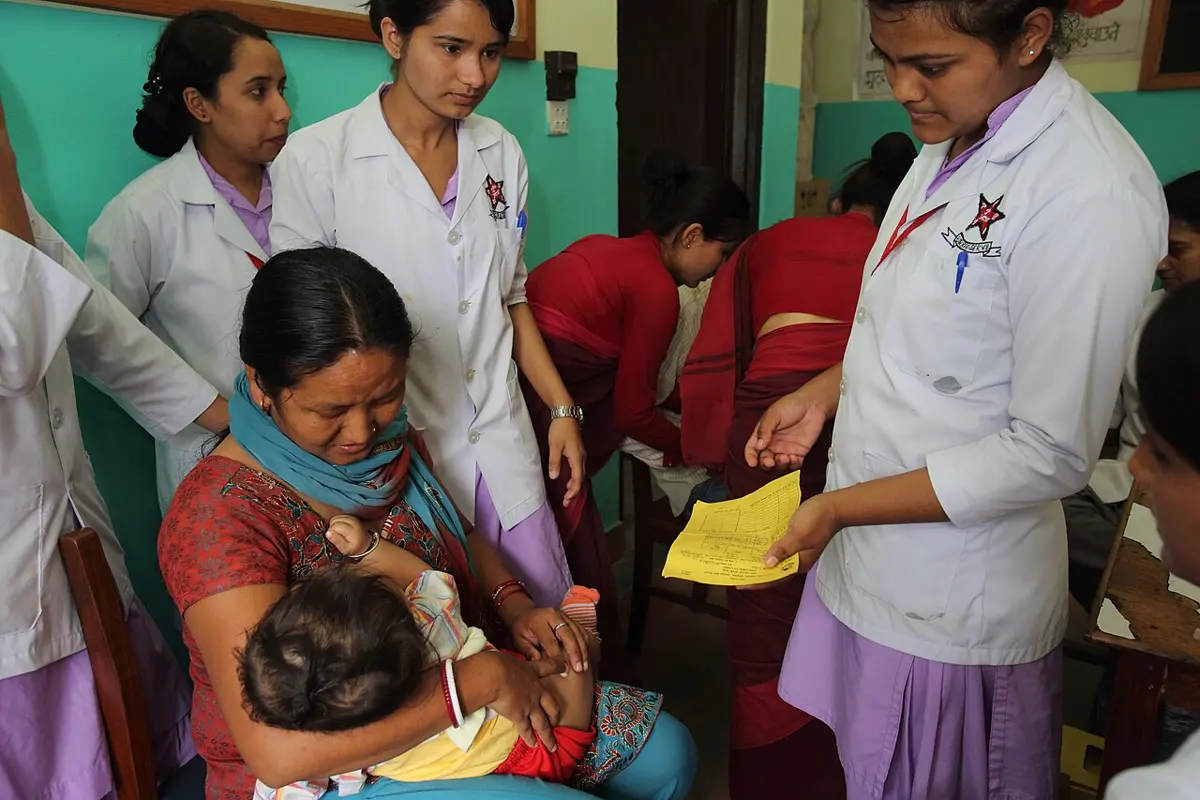
- Vaccines. A vaccine shows your immune system a harmless part or form of a germ. Among your billions of B cells, the few whose antibodies fit it multiply, and some stay in your body for years as memory cells. Nepal’s national immunization program gives every child vaccines against diseases such as tuberculosis, polio, measles and rubella, free, at health posts and clinics.
- Antibody tests. The quick tests used in Nepal’s hospitals for dengue, or the home tests used during COVID-19, contain antibodies that grab one antigen and change color when they do.
- Antibody medicines. Scientists can now pick one antibody and make it in large amounts. Such antibodies are used as medicines for some cancers and for diseases in which the immune system attacks the body itself, such as rheumatoid arthritis.
- Snakebite. Antivenom, kept in hospitals in the Terai for snakebites, is made of antibodies collected from horses that were given tiny doses of snake venom. It is the same idea as the first Nobel Prize in Medicine, in 1901 (Diphtheria serum).
What came next
- The scissors. In 1989–1990 other scientists found the two enzymes that cut the DNA, called RAG1 and RAG2. Children born without working RAG genes have no B cells or T cells that work, and catch infection after infection.
- When the lottery goes wrong. Cutting and joining DNA is risky. Sometimes a piece is joined in the wrong place, next to a gene that controls cell division. Some cancers of the blood, such as certain lymphomas, start this way.
- A new field. In the 1990s Tonegawa changed fields completely, to the study of memory in the brain. His group later found groups of brain cells in mice that store one particular memory.
- An open question. With billions of random antibodies, some will by chance fit parts of your own body. Most such B cells are removed while they develop, but not all, and that is how some autoimmune diseases begin. Why the checks fail in some people and not in others is still not fully understood.
In your science books
- Grade 10: white blood cells and the functions of blood; DNA and chromosomes; DNA testing, which also sorts DNA pieces in a gel.
- Going Further: how a gene makes a protein, and what one wrong letter can do.
Learn more
- The Nobel Prize’s own explanation: the press release and the speed read (nobelprize.org).
- Tonegawa’s Nobel lecture, Somatic generation of immune diversity, with the story of the gel in the cold room.
The official reason
The prize was given “for his discovery of the genetic principle for generation of antibody diversity.”