
Cholesterol and the LDL receptor
Nobel Prize in Physiology or Medicine, 1985: Michael S. Brown and Joseph L. Goldstein

Michael S. Brown
born 1941 in the United States
As a boy he got an amateur radio license at 13, and he loved writing as much as science. He was editor of his university’s student newspaper.
Photo: Radio89, CC BY-SA 4.0
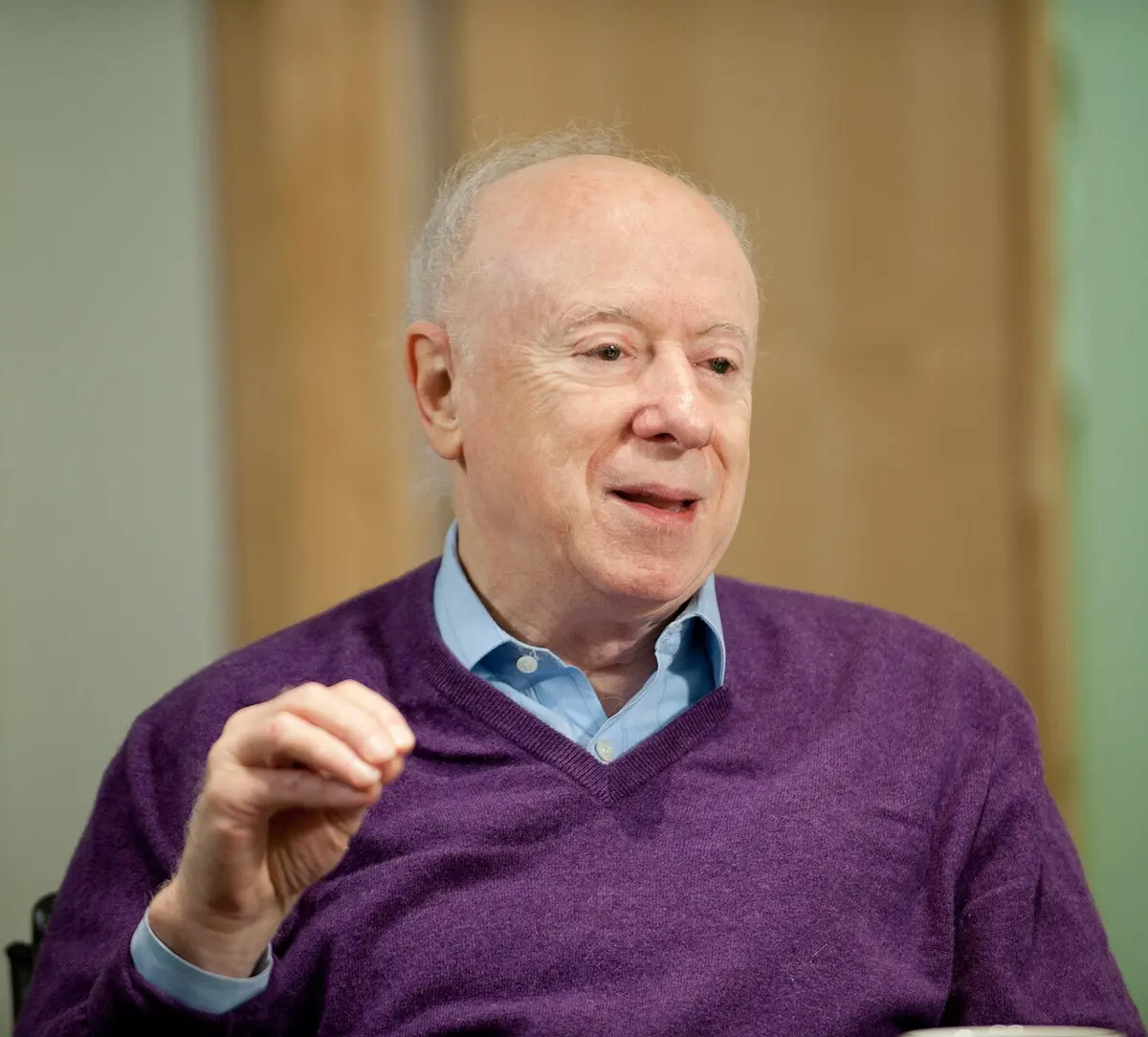
Joseph L. Goldstein
born 1940 in the United States
He grew up in a small town in South Carolina, where his family ran a clothing shop. He and Brown were also partners at the card game of bridge.
When a doctor in Nepal checks an adult’s health, one of the first blood tests is often for cholesterol. You may have heard someone say “my cholesterol is high” and then give up ghee, eggs or buffalo meat. Cholesterol is linked to heart attacks, now among the commonest causes of death in Nepal.
But your body cannot live without cholesterol, and it makes most of what it needs itself. So how does the body decide how much to make? And why do some families, even thin and active ones, have dangerously high cholesterol from the day they are born?
In 1985 the Nobel Prize in Physiology or Medicine went to two American doctors, Michael Brown and Joseph Goldstein, who answered both questions. They found a tiny catcher on the surface of our cells, the LDL receptor, that pulls cholesterol out of the blood.
The problem: an oily substance in watery blood
Cholesterol is a fatty, waxy substance. Every cell needs it:
- it is part of the thin membrane that wraps every cell Grade 8: the covering of the cell; more than 90% of the body’s cholesterol is in cell membranes;
- the body turns it into some hormones, such as the sex hormones Grade 9: Glands and hormones;
- the liver turns it into bile, which helps digest fat; and the skin uses a form of it to make vitamin D in sunlight.
Your body makes cholesterol, mostly in the liver, from small pieces of the food you eat. You also get some from food. Only foods from animals contain it: ghee, butter, milk, eggs and meat. Rice, dal and vegetables have none.
There is one difficulty. Cholesterol is oily, and blood is mostly water. Oil and water don’t mix, as you can see in a bowl of jhol with ghee floating on top. So the body packs cholesterol into tiny round parcels for the journey. The main parcel is called LDL, short for low-density lipoprotein. Each LDL has an oily core of about 1,500 molecules carrying cholesterol, a thin coat, and one large protein stuck in its surface.
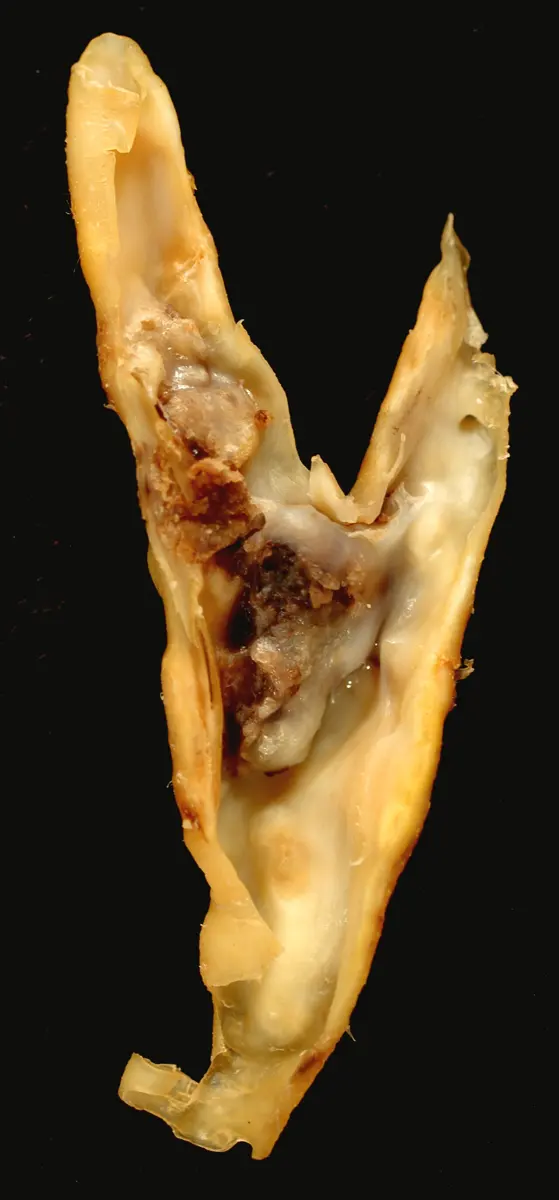
Too much LDL in the blood is dangerous. Over many years, cholesterol from LDL builds up in the walls of the arteries, forming lumps called plaques. A plaque narrows the artery. If a blood clot forms on it and blocks an artery that feeds the heart, part of the heart muscle dies: a heart attack Grade 10: How a heart attack happens.
A disease that runs in families
Since 1938 doctors had known of a disease that runs in families, now called familial hypercholesterolemia, or FH (“hyper” means too much). People with it have very high cholesterol from birth.
- People who inherit one faulty copy of the gene have about twice the normal LDL. Without treatment, many have heart attacks in their thirties, forties or fifties.
- Children who inherit two faulty copies, one from each parent, have six to ten times the normal LDL. Some have heart attacks while still children.
In 1972 nobody knew what the faulty gene did.
Why it was hard
The obvious place to look was the liver, where most cholesterol is made. But you cannot take pieces of liver from sick children to experiment on.
Brown and Goldstein had an idea that others thought unlikely to work. Doctors can take a tiny piece of skin from a patient, a few millimeters across, and grow its cells in a dish for months. Most scientists believed that the important work of cholesterol was done only in the liver and gut. If the faulty gene showed its effect in ordinary skin cells too, the two doctors could study the disease in a dish.
What they did, step by step
Two young doctors
Brown and Goldstein met in 1966 as young doctors at the Massachusetts General Hospital in Boston. They became friends, and later partners at the card game bridge. In 1972 both were working at a medical school in Dallas, Texas, and they began to work on FH together. They have worked as a pair ever since.
- 1972–73: the cell’s switch. Cells make cholesterol with a chain of about 30 chemical steps. One enzyme in the chain, called HMG-CoA reductase, works like a tap: it controls how fast the cell makes cholesterol. Brown and Goldstein grew skin cells from healthy people in a liquid with no LDL. The cells turned the tap on and made lots of cholesterol. When LDL was added, the tap turned off. In skin cells from a child with two faulty copies of the FH gene, the tap stayed on, LDL or no LDL. The disease showed up in a dish.
- The surprise. They guessed that the tap itself was broken. So they added pure cholesterol, which can slip straight through a cell’s membrane. Now the tap turned off in the patient’s cells too. The tap worked. What was broken was the cell’s way of getting the cholesterol out of LDL.
- 1973–74: the catcher. They made LDL slightly radioactive, so they could measure where it went. Healthy cells grabbed LDL tightly at special places on their surface, which they called LDL receptors. A receptor is a protein on a cell’s surface that catches one particular substance. The cells of children with two faulty copies had no working receptors at all. Cells from their parents, who each had one faulty copy, had about half the normal number.
- 1975–77: inside the cell. Working with the cell biologist Richard Anderson and an electron microscope, they saw that the receptors gather in small dips in the membrane called coated pits. A pit holding LDL pinches off into a little bubble and carries the LDL inside the cell. There the LDL is broken up, and the receptor travels back to the surface to catch more, making a round trip about every 10 minutes.
- One patient, J.D. Most patients’ cells didn’t bind LDL at all. But the cells of one patient, known only by the initials J.D., grabbed LDL and then could not pull it in. The receptors never gathered in the coated pits. This showed that the pits were essential. Years later, the two doctors found the cause: a change of a single letter in J.D.’s receptor gene, which altered one building block in the receptor’s short tail inside the cell (One wrong letter).
- 1984–85: the gene. With their team, they found the gene for the LDL receptor and read it. The receptor is a chain of 839 amino acids. By 1985 they had found many different faults in it in different families.
Brown and Goldstein added pure cholesterol to the skin cells of a child with severe FH, and the cells stopped making their own. What did this show?
Pick an answer to see why.
A father has one faulty copy of the LDL receptor gene; the mother has two working copies. Which is true for each of their children?
Pick an answer to see why.
How it works now
Brown and Goldstein’s discoveries joined into one picture of how a cell gets its cholesterol, called the LDL receptor pathway (Figure 3).
Step 5 is the key to how the body keeps a balance. It is a feedback loop, like the way your body keeps itself at 37 °C (The feedback loop).
- When a cell has enough cholesterol, it turns down its own making, and puts out fewer receptors. Fewer receptors means more LDL stays in the blood.
- When a cell is short of cholesterol, it turns its own making up, and puts out more receptors. More receptors means more LDL is pulled out of the blood.
Most of the body’s LDL receptors are in the liver. So the liver, by changing how many receptors it puts out, largely decides how much LDL stays in your blood.
This also explains a common problem. A diet very rich in animal fat and cholesterol fills the liver cells with cholesterol. They then put out fewer receptors, and LDL in the blood rises, even with perfectly good genes.
Medicines from a mold: statins
At about the same time, in Japan, the biochemist Akira Endo at the drug company Sankyo guessed that some molds might make a substance that blocks HMG-CoA reductase, the cholesterol tap, to fight off other microbes. Starting in 1971, his team tested 6,000 kinds of microbes over two years. The winner was a blue-green Penicillium mold, first found on rice from a shop in Kyoto. Medicines of this kind are called statins. The first sold, lovastatin, came on the market in 1987.

Brown and Goldstein’s work showed why statins work so well. A statin slows the liver’s own cholesterol making. The liver cells, now short of cholesterol, put out more LDL receptors, and these pull more LDL out of the blood. In their Nobel lecture they reported that a statin given to people with one faulty FH gene lowered their LDL by about 30%, and by 50–60% when combined with another medicine.
How does a statin lower the LDL in the blood?
Pick an answer to see why.
In your life today
- Statins are among the most used medicines in the world. They are on the World Health Organization’s list of essential medicines and are sold in pharmacies across Nepal.
- Heart disease in Nepal. In 2019, diseases of the heart and blood vessels caused about a quarter of all deaths in Nepal, up from about a tenth in 1990. High LDL is one of the main causes, together with smoking, high blood pressure, diabetes and too little exercise Grade 10: Preventing a heart attack.
- FH is common. In 1985 doctors thought about 1 person in 500 had one faulty copy of the gene. Newer studies suggest it is nearer 1 in 250. Most don’t know. When one person in a family is found to have very high cholesterol young, doctors now test the brothers, sisters and children, so they can be treated early.
- Not only cholesterol. The way the LDL receptor brings LDL into cells, by coated pits, turned out to be a common doorway. Cells use it to take in iron, some hormones and other substances, and many viruses use it to sneak in.
What came next
- The cell’s sensor. How does a cell measure its cholesterol? In the 1990s Brown and Goldstein found the answer: proteins called SREBPs, stuck in the membranes inside the cell. When cholesterol runs low, an SREBP is cut free and travels to the nucleus, where it switches on the genes for making cholesterol and for making LDL receptors.
- A new kind of medicine. In 2003, scientists studying a French family with very high cholesterol found faults in a gene called PCSK9, whose protein destroys LDL receptors. People born with a weak PCSK9 have low LDL all their lives and few heart attacks. Medicines that block PCSK9, first sold in 2015, lower LDL even further than statins can.
- An open question. Many people have heart attacks with normal cholesterol, and some with high cholesterol never do. Scientists are still working out how LDL, inflammation in the artery walls, and many other genes add up to each person’s risk.
In your science books
- Grade 8: the cell and its covering, and lysosomes.
- Grade 9: hormones and their functions.
- Grade 10: the heart, heart attack and its risk factors, arteries; the law of dominance.
- Going Further (9–12): the feedback loop; how one wrong letter in a gene changes a protein.
- Going Further (6–8): from the gut into the blood.
Learn more
- The Nobel Assembly’s press release and the presentation speech (nobelprize.org).
- Brown and Goldstein’s joint Nobel lecture, A receptor-mediated pathway for cholesterol homeostasis.
The official reason
The prize was given “for their discoveries concerning the regulation of cholesterol metabolism.”