
Cancer genes that begin as our own
Nobel Prize in Physiology or Medicine, 1989: J. Michael Bishop and Harold E. Varmus
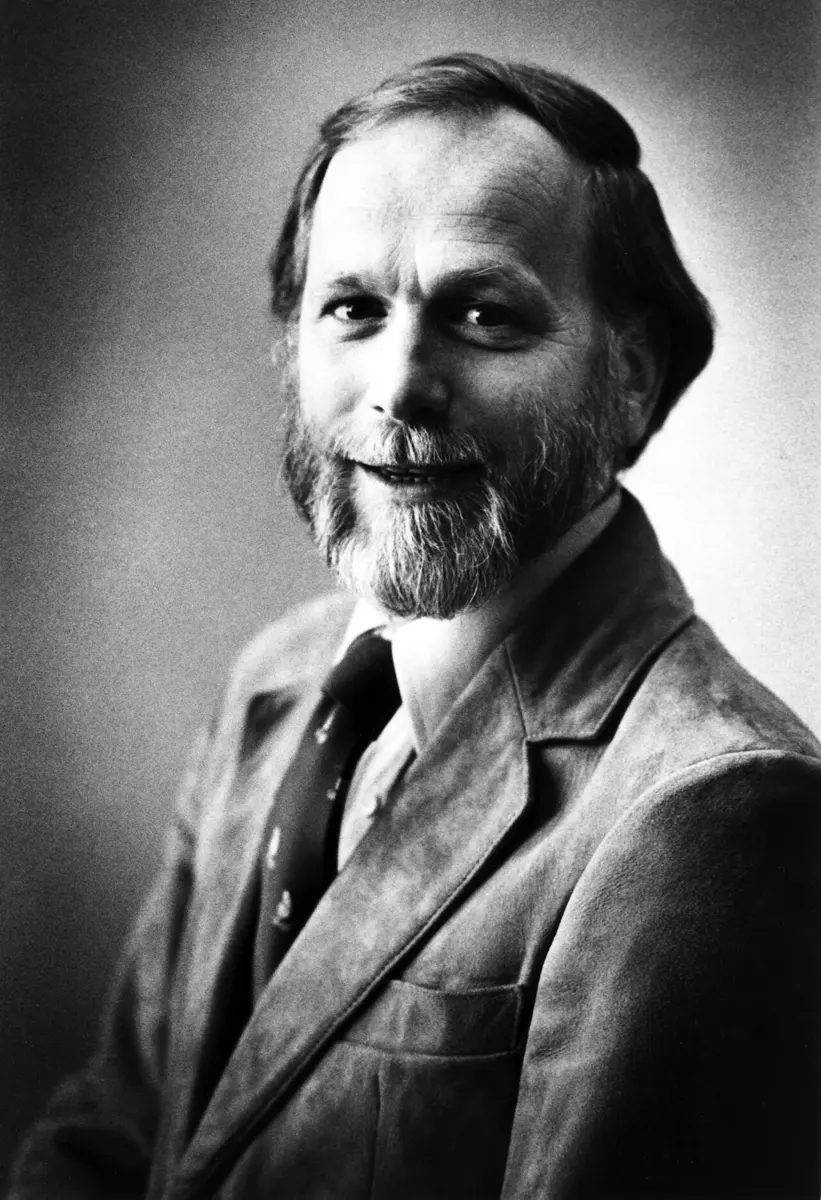
J. Michael Bishop
1936–2026, born in York, Pennsylvania, USA
He went to a two-room village school and said that, if he could live again, he would be a musician in a string quartet.
Photo: National Cancer Institute, Public domain
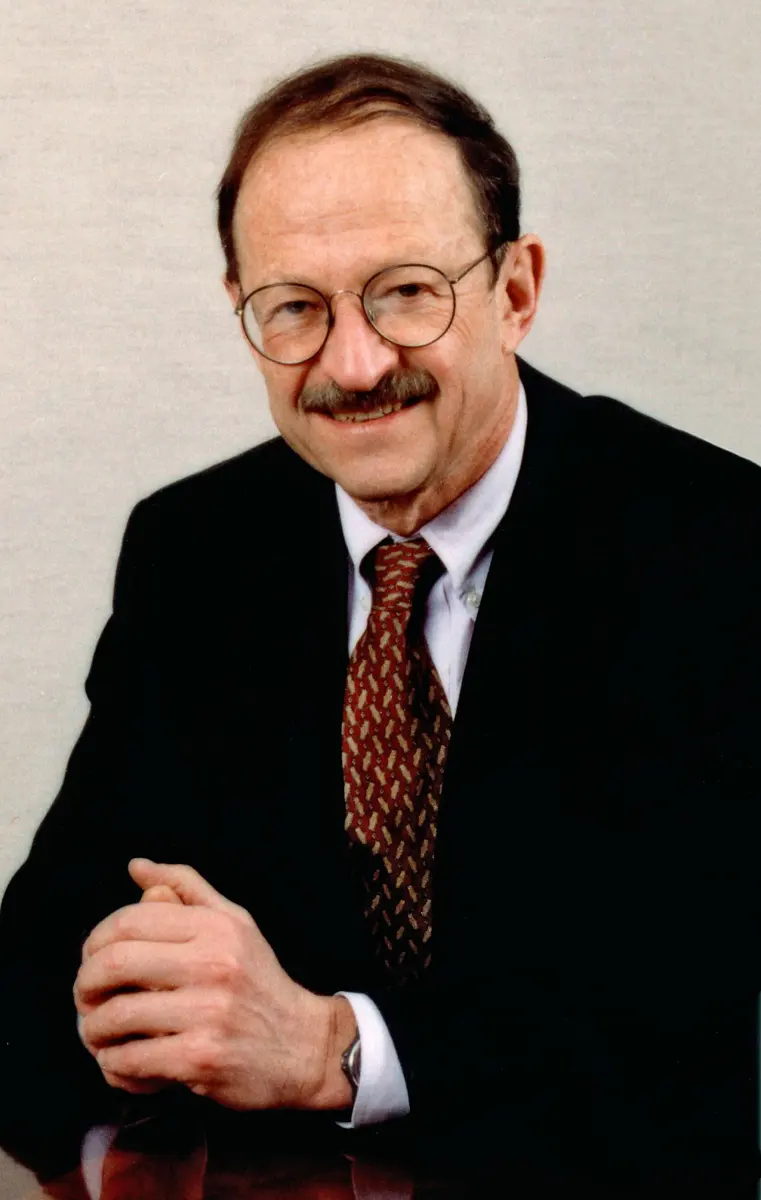
Harold E. Varmus
born 1939 in Oceanside, New York, USA
He studied English literature before medicine, and worked for a time at a mission hospital in Bareilly, in India, not far from Nepal’s border. He joined Bishop as a young researcher and became his equal partner.
Photo: Matthew Septimus (Photographer), Public domain
Cut your finger, and in a week or two it heals. The cells at the edge of the cut start to divide, making new skin, and when the gap is filled, they stop. Every day, all over your body, cells divide when they are needed and stop when they are not. Your body has tens of trillions of cells, and almost all of them obey these signals all your life.
Cancer begins when one cell stops obeying. It divides and divides, and its offspring do the same, until they form a lump, a tumor, that can spread through the body. In 1989 the Nobel Prize in Physiology or Medicine went to Michael Bishop and Harold Varmus, who found where the genes that drive cancer come from. The answer was a shock: they start out as our own normal genes.
The problem: where does cancer come from?
By the 1970s doctors knew many things that make cancer more likely: tobacco smoke, strong radiation, some chemicals and a few viruses. But they did not know what actually goes wrong inside a cell to make it divide out of control.
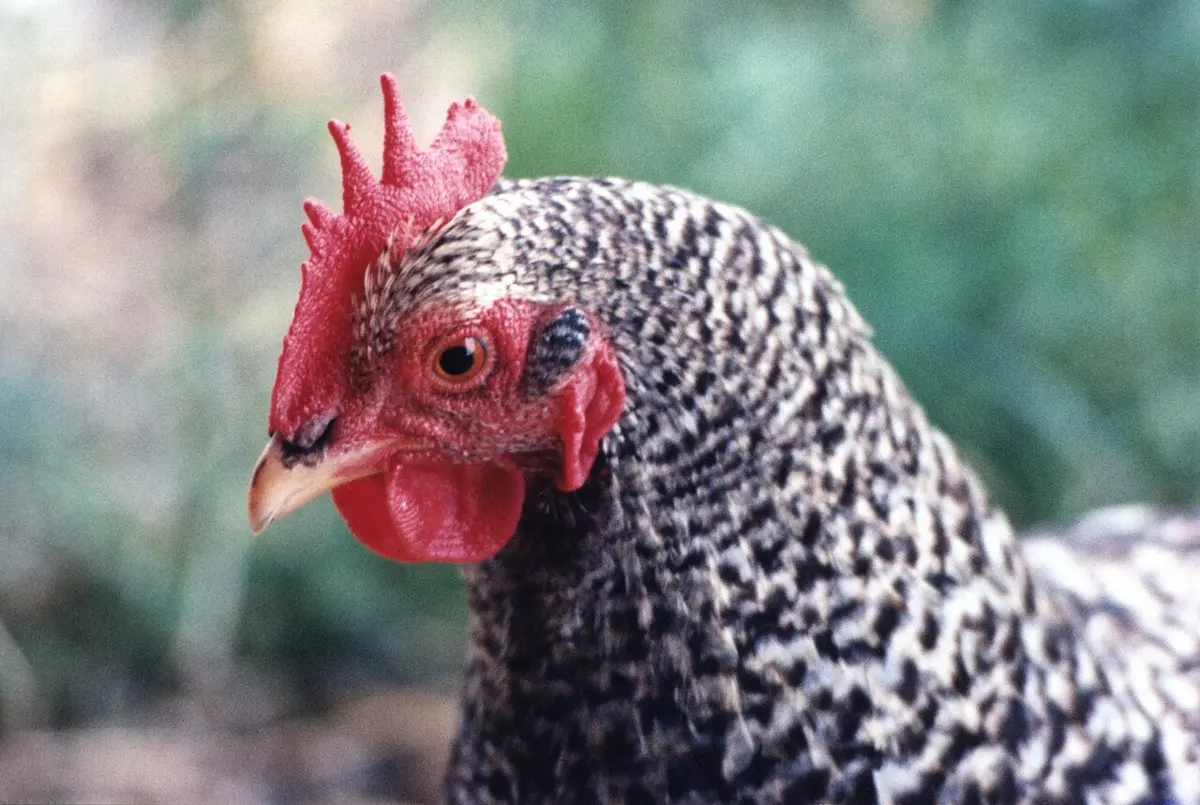
The best clue came from chickens. In 1911, in New York, Peyton Rous took a tumor from a hen, ground it up and pushed the juice through a filter so fine that no cell could pass through. When he injected the liquid into healthy chickens, they grew the same tumor. Something smaller than a cell was carrying cancer: a virus. It became known as the Rous sarcoma virus (a sarcoma is a cancer of the tissues that hold the body together, such as muscle and bone). Rous received the Nobel Prize for it in 1966, fifty-five years later.
In the 1960s many scientists had a bold idea. Perhaps all animals carry virus genes in their cells, picked up long ago and lying asleep. Cancer, they thought, starts when one of these sleeping virus genes wakes up. They called a gene that can cause cancer an oncogene, from the Greek onkos, a lump.
How did Peyton Rous know that something smaller than a cell was passing on the chickens’ cancer?
Pick an answer to see why.
How a virus like Rous’s works
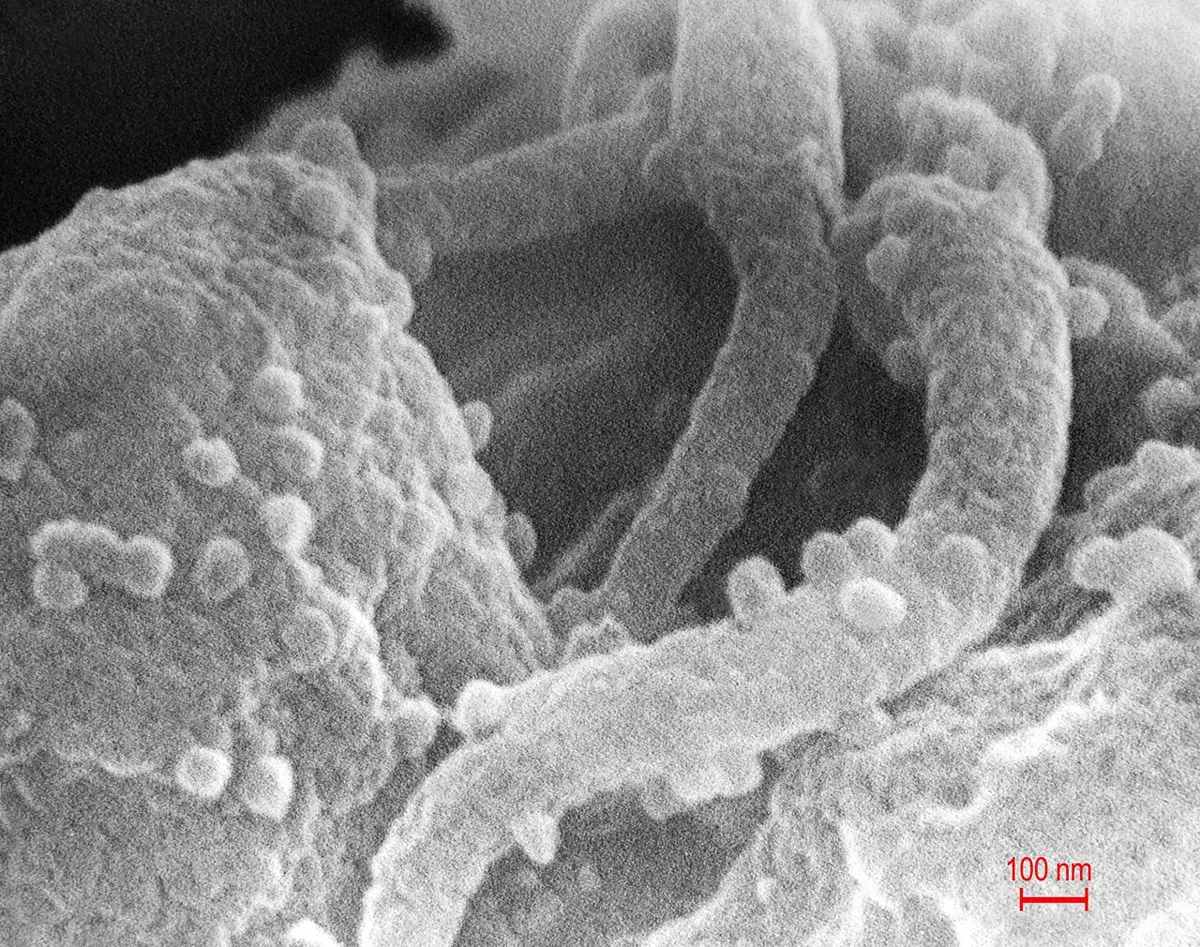
A virus is a tiny packet of genes in a coat of protein Grade 8: Virus. It cannot grow or multiply on its own. It must get into a living cell and make the cell build new viruses.
Rous’s virus is a retrovirus. Its genes are written in RNA, not DNA Grade 10: RNA. Once inside a cell, it uses a special enzyme to make a DNA copy of its genes, and slips that copy into one of the cell’s own chromosomes Grade 10: Chromosome. From then on, whenever the cell reads its genes, it also reads the virus’s, and makes new viruses. (HIV, the virus that causes AIDS, is another retrovirus.)
Rous’s virus has only four genes. Three are what any retrovirus needs to make copies of itself: its coat, its outer envelope, and the copying enzyme. The fourth, called src (say “sark”, from sarcoma), is something extra. By the early 1970s, other scientists had found that if the src gene is damaged or missing, the virus still multiplies perfectly well, but it no longer causes cancer. So src was the virus’s oncogene. But where had it come from?
Why it was hard
- Genes were invisible. In the early 1970s nobody could cut a single gene out of DNA or read its letters. Those tools arrived only later in the 1970s.
- One gene in a huge haystack. A chicken cell holds roughly a billion letters of DNA. The src gene is a tiny stretch of it. To find it you need something that will pick out exactly that stretch and nothing else.
- The wrong idea was attractive. If src turned up in normal chicken cells, it would seem to support the sleeping-virus idea. Only a careful test could show something different.
What they did, step by step
Bishop, Varmus and their team in San Francisco
Michael Bishop came to the University of California, San Francisco, in 1968, to study how viruses multiply. Harold Varmus joined him in 1970 as a young researcher. Within a year, Bishop said, he had “lost a postdoctoral fellow and gained a coequal”. They worked side by side, sharing one laboratory, for more than a decade.
- The tool: a sticky copy. DNA is two strands whose letters pair up: A with T, G with C. A single strand will stick tightly only to a strand whose letters match it. So if you make a single-stranded copy of a gene, and make it radioactive so you can detect it, it will find and stick to that gene among all the DNA of a cell. Such a copy is called a probe.
- Early 1970s, a probe for src alone. In 1971 the virus scientist Peter Vogt had found mutant Rous viruses that had lost src and could no longer cause cancer. The team copied all the genes of the normal virus into radioactive DNA. Then they mixed the copies with RNA from the mutant virus, which has every gene except src. Everything that stuck to the mutant’s RNA was thrown away. What was left could only match src. A young French scientist, Dominique Stehelin, finally made this probe work.
- 1975, normal chickens. The src probe stuck to the DNA of normal, uninfected chickens. Exciting, but it fitted the old idea of sleeping virus genes.
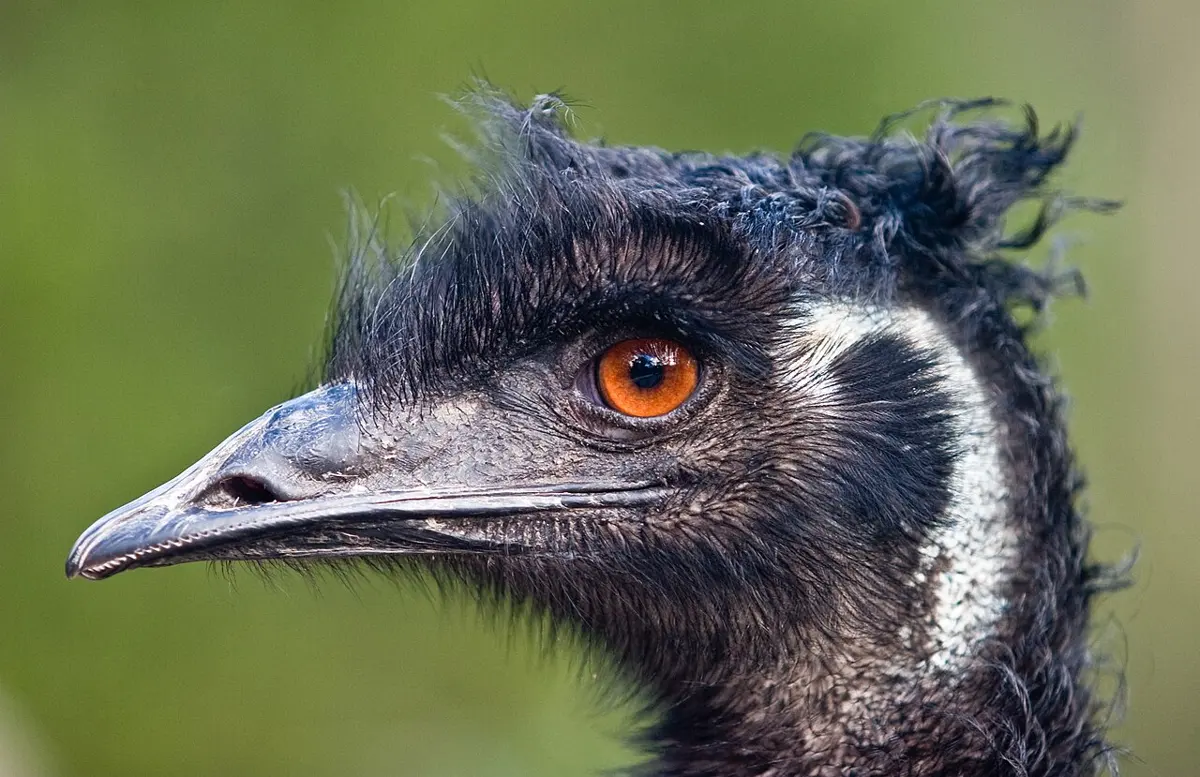
- Then other birds. The team tested DNA from ducks, quails and even the emu, a large Australian bird only distantly related to chickens. The src probe stuck to all of them. But a probe for the virus’s other genes stuck well only to chicken DNA.
- 1976, the conclusion. If src were a virus gene, it would travel with the other virus genes. Instead it was in every bird, and it had changed only slowly over at least 100 million years, as useful genes do. So src was not a virus gene at all. It was a normal gene of the cell, which the virus had picked up long ago and carried along. Soon after, the team found matching genes in mammals too, including humans.
What the gene does
In 1977–78 a team in Denver found the protein that src makes. It is an enzyme that sticks small phosphate tags on to other proteins, switching them on or off (Medicine 1992). Enzymes that do this are called kinases. The src kinase turned out to tag a part of proteins that no kinase was known to tag, the amino acid tyrosine. It was the first tyrosine kinase found. We now know that cells use tyrosine kinases everywhere to pass on the message “grow and divide”.
How oncogenes work
Our cells pass the message “divide now” along a chain, like a relay race. A growth factor outside the cell, released for example near a wound, fits a receptor on the cell’s surface. The receptor passes the signal to relay proteins inside the cell, and they pass it on until it reaches the nucleus, where switch proteins turn on the genes for dividing. When the growth factor goes away, the chain switches off.
The normal genes for the links are now called proto-oncogenes (“before oncogenes”). They are not cancer genes; you need them. Damage turns one into an oncogene. The damage can be a single wrong letter, a gene copied many times over, or a piece of chromosome broken off and joined in the wrong place. Each makes the protein too active or makes too much of it. The usual causes are not viruses at all, but tobacco smoke, radiation and other things that damage DNA, and plain mistakes when cells copy their DNA Grade 9: Mutation.
By 1989 more than forty oncogenes had been found, most of them first in viruses, which had picked them up from animals, just as Rous’s virus had picked up src.
Bishop and Varmus showed that src is a normal gene. Why do we have genes that can cause cancer?
Pick an answer to see why.
A cell needs several such changes before it becomes a cancer. It is rather like a bus that has both an accelerator jammed down and broken brakes. Cells also have “brake” genes, which stop division and must be damaged too. That is one reason most cancers appear late in life: it takes years for enough changes to build up in one cell.
In your life today
- Medicines aimed at oncogenes. One kind of blood cancer, chronic myeloid leukemia, is driven by a tyrosine kinase that is stuck on, made by an oncogene formed when two chromosomes swap pieces. In 2001 a tablet called imatinib was approved that blocks this one kinase. For many patients this cancer became a long-lasting illness they can live with, instead of a deadly one. Imatinib is on the World Health Organization’s list of essential medicines. Many newer cancer medicines also block a single oncogene’s protein.
- Tests for oncogenes. Hospitals test some cancers to see which oncogene is driving them, and choose the treatment to match.
- Protecting yourself. Most of the DNA damage that creates oncogenes comes from things you can avoid, above all tobacco. A few viruses also make some cancers more likely. In February 2025 Nepal began giving girls in Grades 6 to 10 free vaccines against HPV, a virus that causes cancer of the cervix, and more than 1.46 million girls were vaccinated in the first campaign (Medicine 2008).
What came next
- More links in the chain. One oncogene found in viruses, ras, makes a switch protein that is damaged in many human cancers. How such switches work is part of the story of Medicine 1994.
- The brakes. In the 1980s scientists found the brake genes, called tumor suppressor genes, such as one called p53. Many cancers have a broken brake as well as a stuck accelerator.
- Reading a whole cancer. Today scientists read all the DNA in a tumor and list every change in it. A typical tumor carries a handful of “driver” changes among many harmless ones.
- An open question. Cancers keep changing as they grow, and a medicine that blocks one oncogene often works for a while, until a cell with a new change escapes. How to stay ahead of a cancer that evolves is one of the big questions in medicine today.
In your science books
- Grade 8: viruses.
- Grade 9: variation and mutation.
- Grade 10: cell division and mitosis, DNA, RNA and chromosomes.
- Going further: genes as recipes for proteins, when a recipe changes, and mutations from outside, such as those caused by tobacco smoke and sunburn.
Learn more
- The Nobel Assembly’s press release and the presentation speech (nobelprize.org).
- The Nobel lectures: Bishop and Varmus, who tells the story of the src probe and the emu.
The official reason
The prize was given “for their discovery of the cellular origin of retroviral oncogenes.”