
Click chemistry: snap-together molecules
Nobel Prize in Chemistry, 2022: Carolyn R. Bertozzi, Morten Meldal, and K. Barry Sharpless
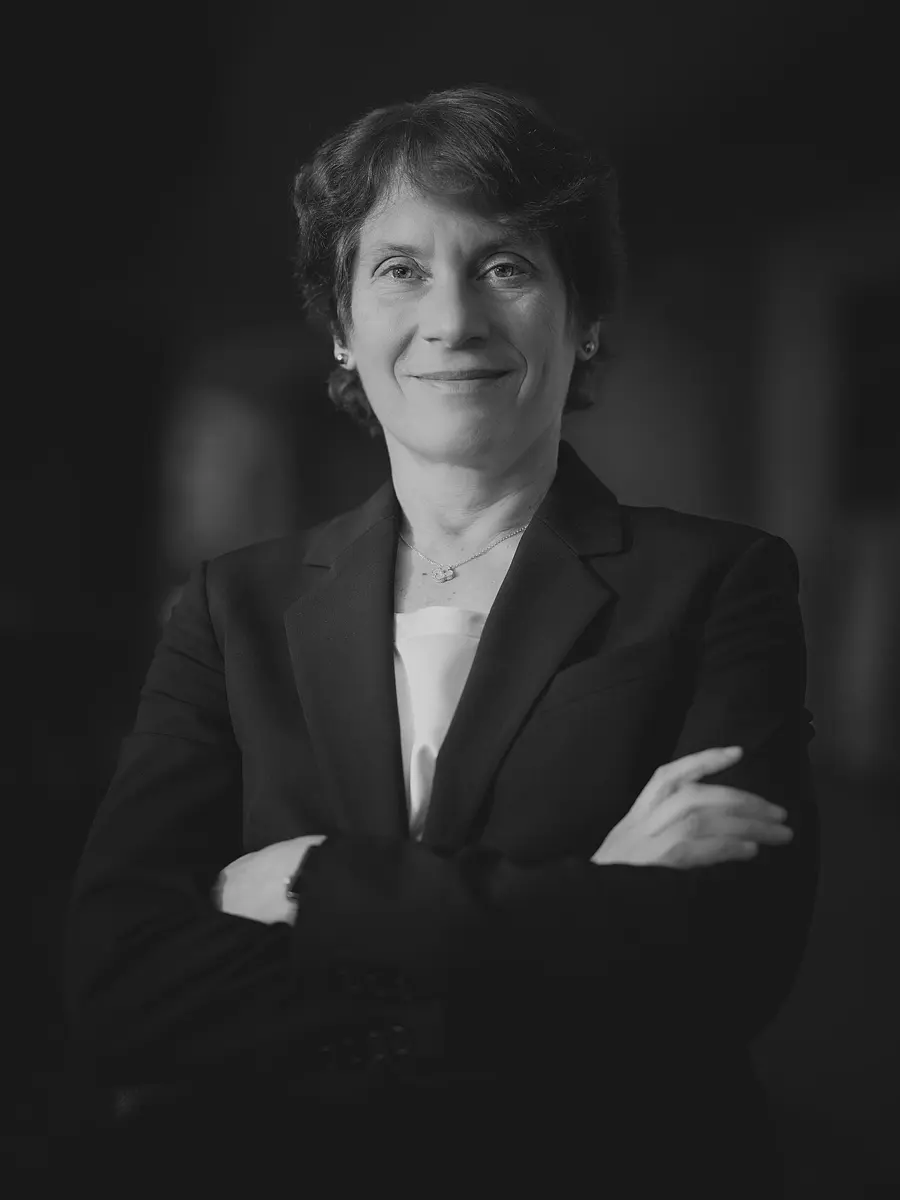
Carolyn R. Bertozzi
born 1966 in the United States
She wanted to study the sugars on the outside of cells, found there were no tools to do it, and invented them.
Photo: Christopher Michel, CC BY-SA 4.0
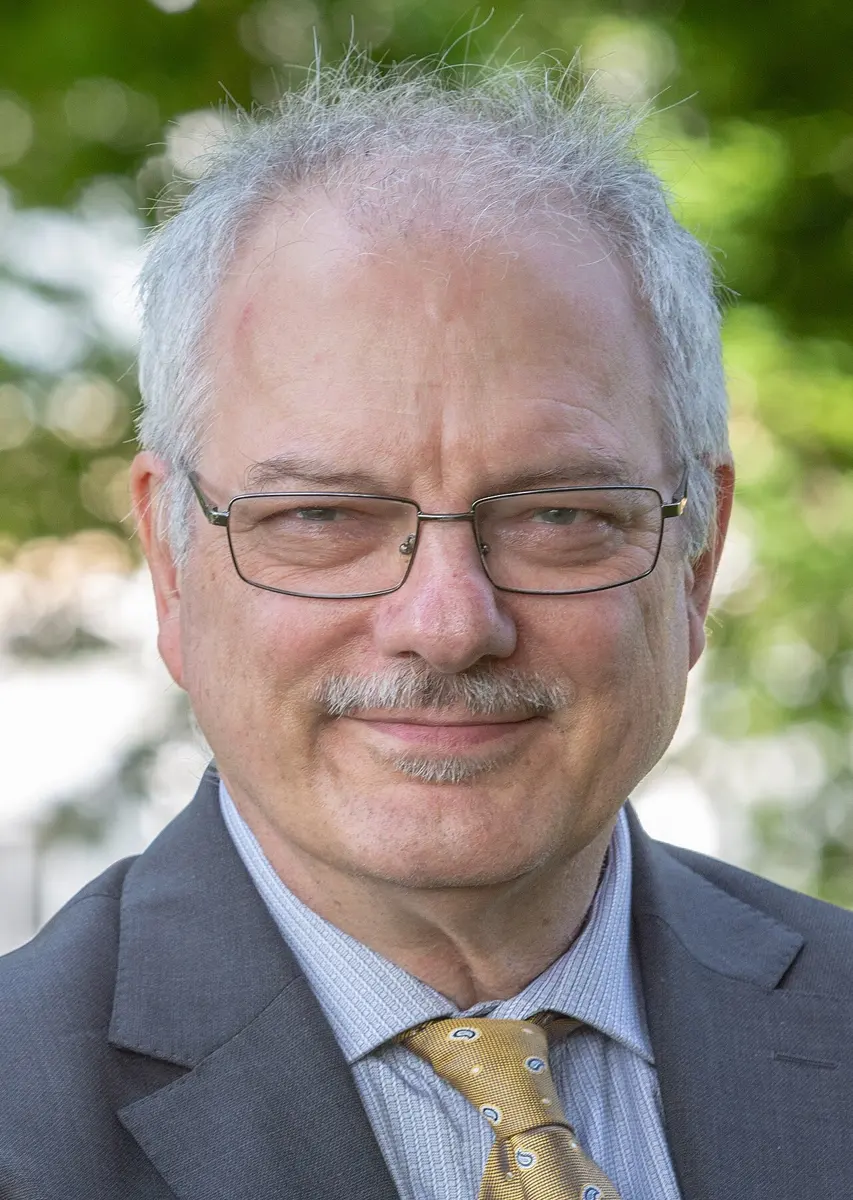
Morten Meldal
born 1954 in Denmark
A chemist in Copenhagen who looked closely at a result that should not have happened, instead of throwing it away.
Photo: Archivo Fotográfico Universidad de Navarra, CC BY-SA 4.0
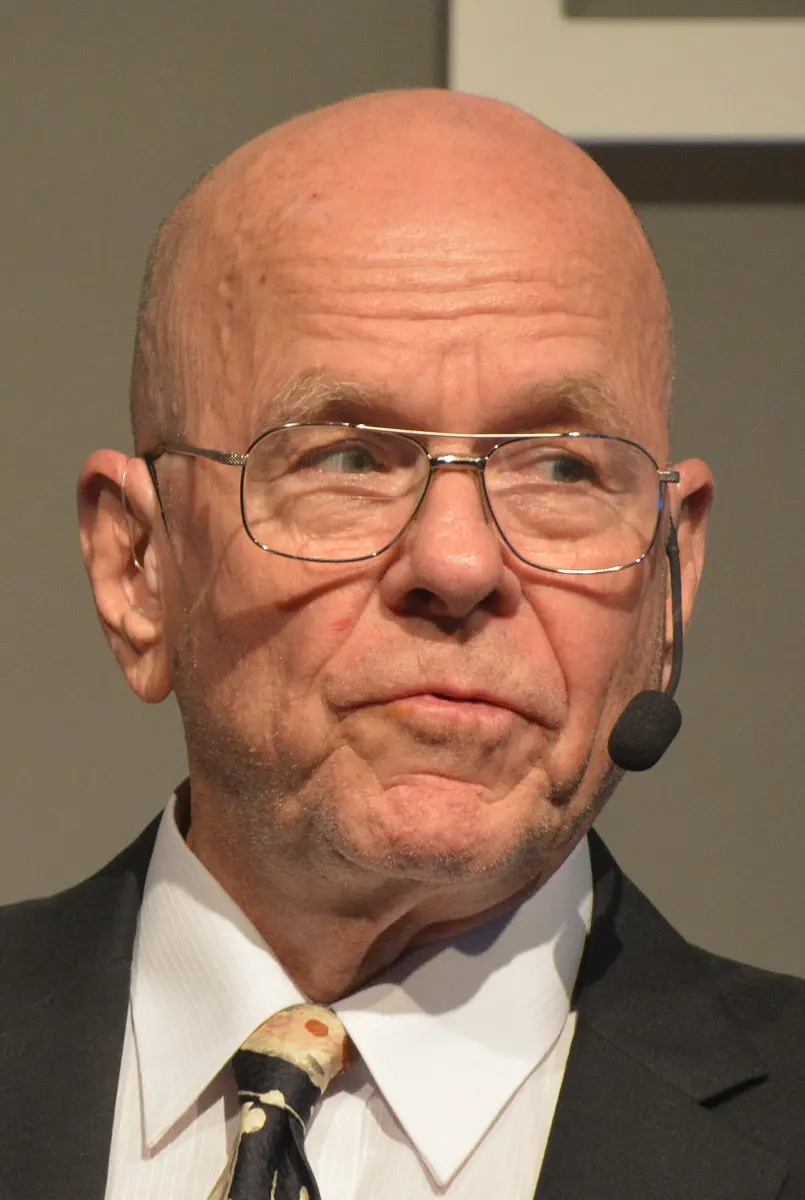
K. Barry Sharpless
born 1941 in the United States
He told chemists to stop copying nature and to build with simple pieces. It was his second Nobel Prize in Chemistry.
Photo: Bengt Oberger, CC BY-SA 4.0
Think of a seat belt. You push the metal tongue into the buckle and it goes click. It doesn’t matter whether the car is hot or cold, moving or still; it doesn’t catch on your shirt or your bag. It joins only to its own buckle, every time, in a moment.
Chemists had long wished their reactions worked like that. Most don’t. The 2022 Nobel Prize in Chemistry went to three people who found reactions that do: click chemistry, which joins molecules quickly and cleanly, and bioorthogonal chemistry, click reactions that work even inside living cells without disturbing them.
The problem: building a molecule is slow and wasteful
Many medicines are copies of molecules found in nature, in plants, molds or animals. Chemists can make such molecules in a laboratory, but a complicated one must be built step by step, one reaction after another, like building a house brick by brick.
The trouble is that each step goes a little wrong. Besides the substance you want, a reaction makes by-products: unwanted substances that must be separated out before the next step. And some of what you want is always lost.
Suppose each step keeps 80% of the material. After one step you have 80%. After two, 80% of 80%, which is 64%. After ten steps, only about 11% is left. Long routes can lose so much that hardly anything is left at the end. Barry Sharpless gave an example: it took six years of work to find a way to make the antibiotic meropenem in large amounts.
A medicine is made in 5 steps. Each step keeps half (50%) of the material. Out of 1,000 g at the start, about how much is left at the end?
Pick an answer to see why.
Why carbon is hard to join
The molecules of life are built on chains and rings of carbon atoms: sugars, fats, proteins, DNA Grade 10: Organic compounds. Living things have enzymes that join carbon to carbon easily. In a flask, it is much harder. Carbon atoms on two different molecules usually have little “wish” to bond with each other. Chemists must force them, by making one of the molecules much more reactive, and a reactive molecule tends to react with the wrong things too. That is where the by-products come from.
Sharpless’s idea: build with simple pieces
In 2001, the same year he received his first Nobel Prize, Barry Sharpless and two colleagues at the Scripps Research Institute in California wrote an article with a new idea. Stop trying to copy nature’s molecules exactly, he said. Instead:
- Start from small molecules that already have their carbon frame.
- Join them with bridges of nitrogen or oxygen atoms, which are much easier to control.
- Use only reactions with a strong natural drive to happen, so they go fast, make one product and little waste.
He called this click chemistry. A click reaction should work in water (cheap and safe, instead of poisonous solvents) and in ordinary air, and give a product that is easy to collect. You would not get exact copies of natural molecules this way, but you could get molecules that do the same job, quickly and in large amounts.
He listed some reactions that came close. But the best one had not yet been found.
The reaction: an azide meets an alkyne
The reaction that became “the” click reaction joins two groups of atoms:
- An alkyne has two carbon atoms joined by a triple bond, like ethyne (acetylene), the gas used to weld metal Grade 10: Alkynes.
- An azide is a group of three nitrogen atoms in a row. It stores a lot of energy, like a loaded spring. Sodium azide breaks apart so fast that it was used to fill the first car airbags (How an airbag works).
Chemists had known since the 1960s that an azide and an alkyne can join into a ring of five atoms: two carbons and three nitrogens, called a triazole. But on their own they react slowly, need heating, and give a mixture of two different products. Not a click at all.
The answer was copper. Add a few copper ions and the reaction runs fast, at room temperature, even in water, and gives only one of the two products. The copper is a catalyst: it speeds up the reaction without being used up Grade 10: Catalyst.
So, to join any two molecules, a chemist puts an azide on one and an alkyne on the other, adds a little copper, and they click together.
In the click reaction, what does the copper do?
Pick an answer to see why.
What they did, step by step
Meldal: a surprise in the flask
Morten Meldal, in Copenhagen, was looking for new medicines. He built huge libraries of molecules, sometimes hundreds of thousands of different substances, and tested them all to see if any could block a disease.
- Around 2001, a routine reaction. He and his colleagues wanted to join an alkyne to another molecule, using copper ions as the catalyst. It was a reaction chemists did all the time.
- The wrong product. When Meldal checked what had formed, the alkyne had joined to the wrong end of the other molecule: to an azide group there, forming a triazole ring. The part that should have reacted was almost untouched.
- He saw what it meant. The copper had made the azide and alkyne react cleanly, giving one product. He described it at a meeting in San Diego in June 2001, and published it in 2002, showing that it could join many different molecules.
Sharpless: the ideal click
- 2001, the idea. Sharpless set out what a click reaction should be (above).
- 2002, the same reaction. Working separately from Meldal, Sharpless and his colleagues published the copper-catalyzed azide–alkyne reaction too, showing that it works in water and works reliably. He called it an “ideal” click reaction.
- After that. Chemists everywhere took it up. Today it is used to link molecules in medicine research, and to build new materials: a plastic or fiber with azide handles can later have other molecules clicked onto it, to make it conduct electricity, kill bacteria or block ultraviolet light.
Bertozzi: click chemistry inside living cells
The second thread starts with sugars. Every cell in your body is covered with chains of sugar molecules, called glycans, sitting on its surface like a coat. They help cells recognize each other, and viruses and the immune system use them too. Your blood group is decided by sugar chains like these on your red blood cells Grade 10: Blood group.
In the 1990s glycans were very hard to study: the new tools for genes and proteins didn’t work on sugars. Carolyn Bertozzi spent four years working out what a single glycan did. She wanted a quicker way to see where glycans are in a cell.
- The idea: a chemical handle. Cells build glycans from sugars they take in. What if she gave cells a sugar carrying a small extra group, a handle? The cells would build it into their glycans, and she could then attach a glowing molecule to the handle and see the glycans under a microscope.
- The rule: touch nothing else. The handle and the reaction that joins to it must ignore every other molecule in a living cell, and must not harm the cell. She called such a reaction bioorthogonal (“running alongside life’s chemistry without crossing it”).
- 1997, it works. She showed that cells really did put a sugar with a handle onto their surfaces.
- 2000, the best handle: an azide. Azides are almost never found in living things, so nothing in a cell reacts with them. She found a reaction (a changed version of an old one, the Staudinger reaction) to join a glowing molecule to them.
- 2004, click without copper. The azide–alkyne click was faster, but copper is poisonous to cells. Bertozzi found an old report, from 1961, that an alkyne reacts with an azide almost explosively, without copper, if the alkyne is bent into a ring of eight carbon atoms. A triple bond wants to be straight; bent into a ring, it is strained like a bent spring, and the energy drives the reaction. This copper-free click worked in living cells.
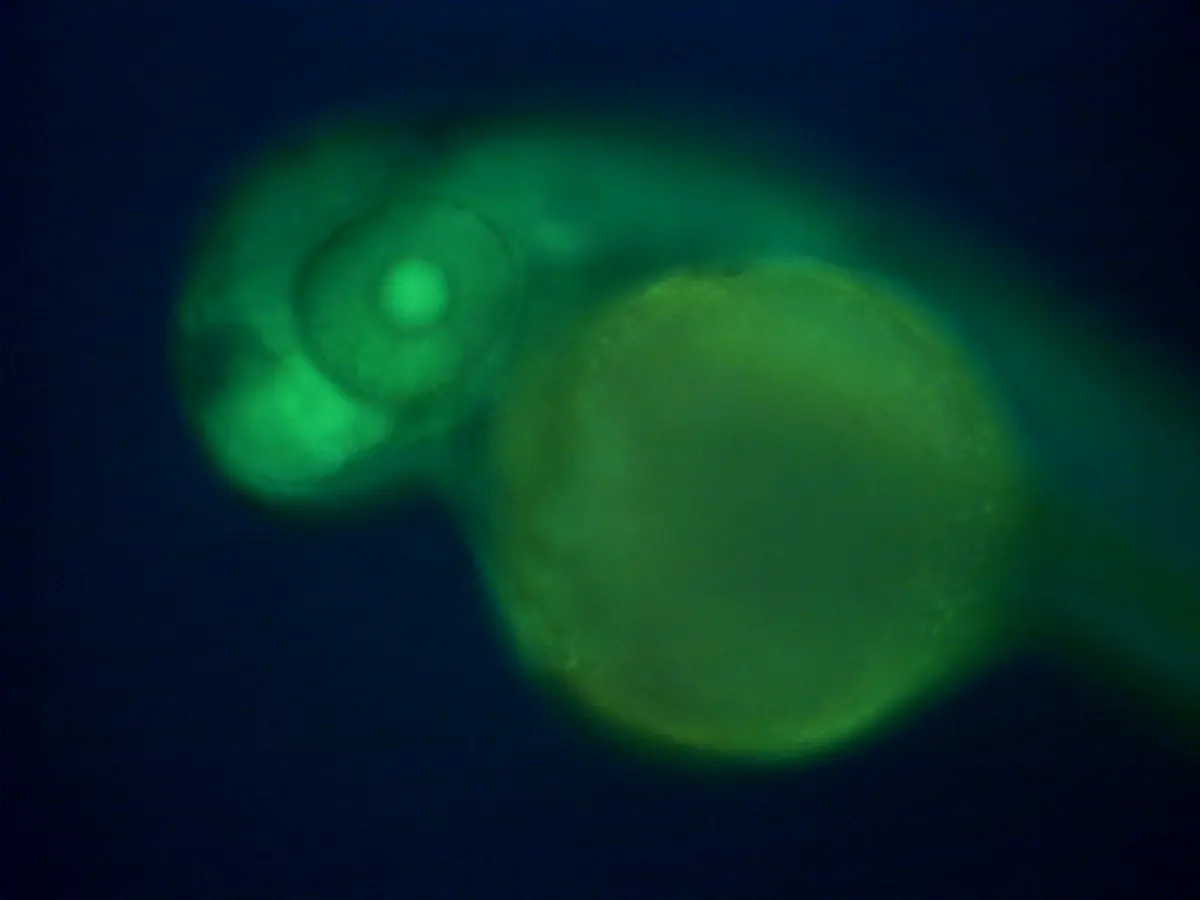
- 2008, a living animal. Her team made the glycans of developing zebrafish embryos glow, and watched where they appeared as the fish grew.
How it works now
Click and bioorthogonal reactions are now ordinary tools in laboratories around the world.
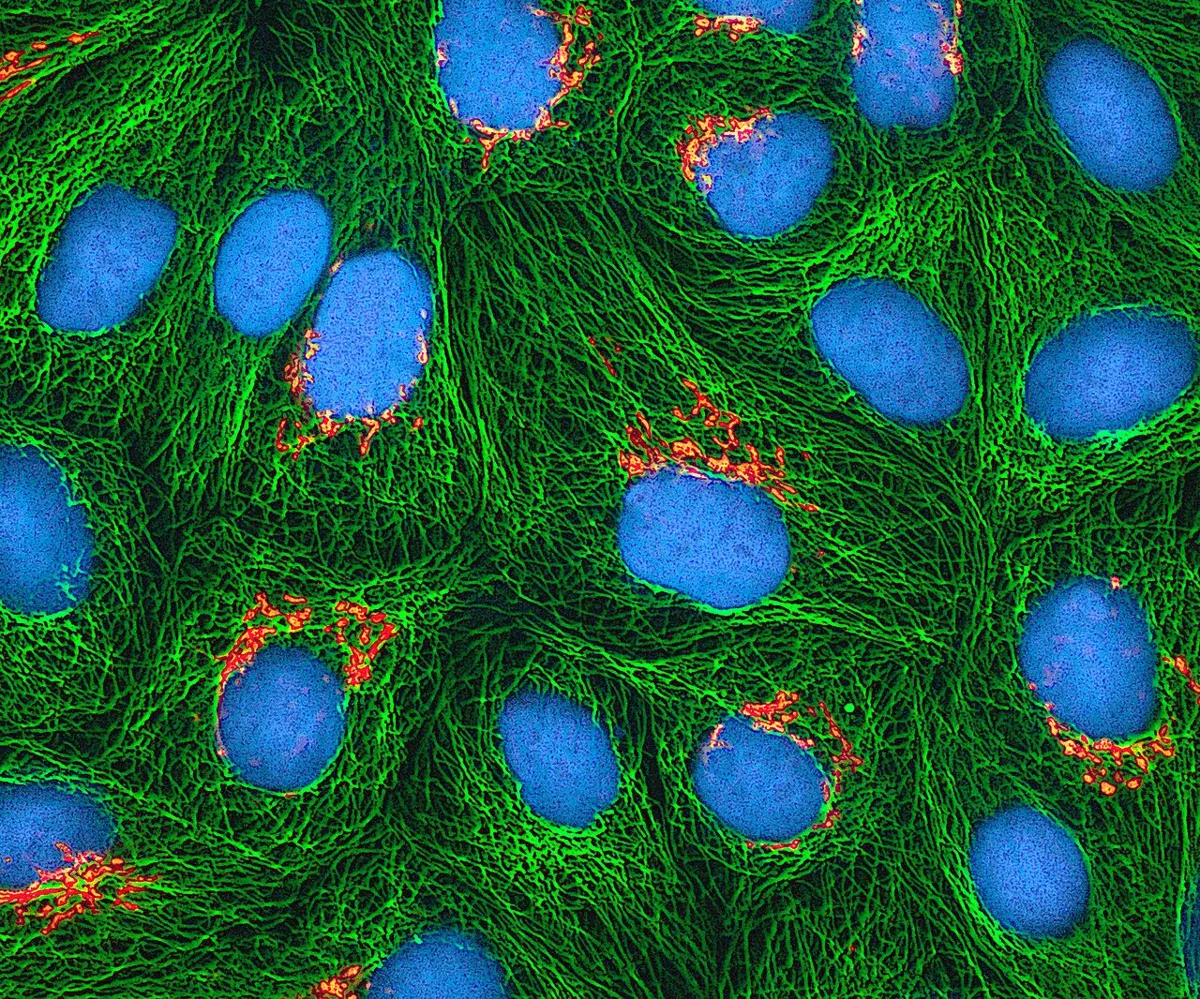
- Seeing inside cells. Biologists put azide handles on sugars, proteins or new DNA, then click on a glowing molecule to see where they are and how they move.
- Finding medicines. Chemists click small pieces together to build thousands of possible medicines quickly, then test which ones work.
- Fighting cancer. Bertozzi found that some tumor cells are coated with glycans that make immune cells switch off, a kind of shield. Her team joined an antibody that finds these cancer cells to an enzyme that cuts the glycans off. This medicine is being tested on people with advanced cancer. Other researchers give an antibody that sticks to a tumor, then a second molecule that clicks onto the antibody inside the body: it can carry a radioactive atom to show the tumor on a scan, or to kill the cancer cells.
Bertozzi chose the azide as her handle. What made it a good choice?
Pick an answer to see why.
In your life today
- Medicines in the making. Click chemistry is used to make and improve possible new medicines, and clicked-together molecules are being tested against cancer.
- Better materials. Click reactions can attach useful molecules to plastics and fibers, for example softeners that then stay in a plastic instead of slowly leaking out.
- The science behind your health. Much of what doctors now know about how cells signal to each other, and how viruses enter cells, was studied with these tools.
What came next
Bertozzi was the eighth woman to receive the Nobel Prize in Chemistry. She and others keep making faster and gentler bioorthogonal reactions, and new ones that can cut a molecule apart at the right place, for example to release a drug only inside a tumor.
The open question is whether these tools will become everyday treatments. The Nobel committee wrote in 2022 that we don’t yet know whether the new cancer therapies will work. Testing them in people takes many years.
In your science books
- Grade 10: organic compounds, built on carbon; alkynes and ethyne, with their triple bond; catalysts; blood groups, set by molecules on red blood cells.
- Grade 9: chemical reactions and chemical equations.
- Going further: lowering the hill: catalysts; how an airbag works, with sodium azide; four ways to show a molecule.
Learn more
- The Nobel Prize’s own explanation: Their functional chemistry works wonders (nobelprize.org), with the press release.
- The laureates’ Nobel lectures: Bertozzi, Meldal and Sharpless.
The official reason
The prize was given “for the development of click chemistry and bioorthogonal chemistry.”