
Small molecules that build one hand
Nobel Prize in Chemistry, 2021: Benjamin List and David MacMillan
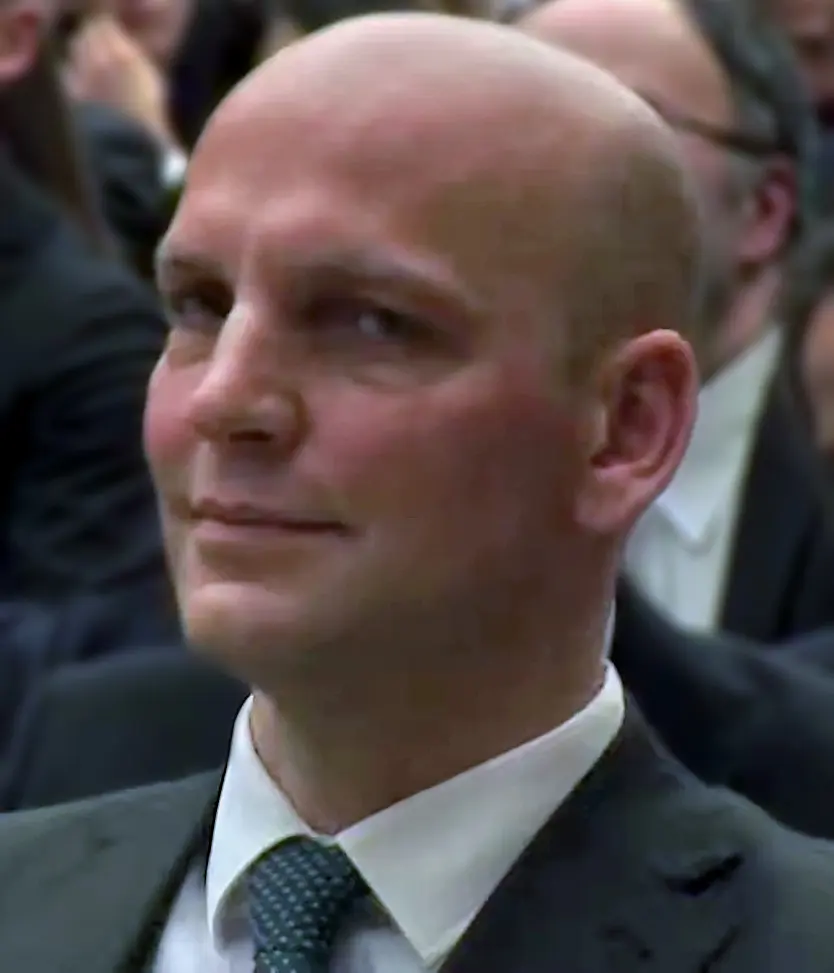
Benjamin List
born 1968 in Germany
He tried an idea he expected to fail, and it worked the first time. His aunt, Christiane Nüsslein-Volhard, won the Nobel Prize in Medicine in 1995.
Photo: DFG bewegt, CC BY 3.0
-
David MacMillan
born 1968 in Scotland
A steelworker’s son from a small town near Glasgow, who left behind the metal catalysts he had been trained to use.
Look at the strip of a medicine at home. Sometimes its name begins with levo- or es-: levocetirizine for an allergy, esomeprazole for acidity. These names mean the tablet contains only one “hand” of a molecule that comes in two mirror-image forms. Making just one hand, and not the other, is one of the hardest jobs in chemistry.
In 2021 the Nobel Prize in Chemistry went to Benjamin List and David MacMillan, who found a new, cheap and clean way to do it. Their tool is so simple that, as the Nobel committee wrote, many people wondered why nobody had thought of it earlier.
The problem: building molecules is messy
A great many things you use were built by chemists, one molecule at a time: medicines, dyes, plastics, the flavors in biscuits and the scent in soap. To build a big molecule, chemists join smaller ones together, step by step, like building a house brick by brick.
But you can’t pick up a molecule and put it where you want. You can only mix substances and hope they join in the right way. Often they join in the wrong way too, and you get a mixture full of unwanted by-products. The useful part has to be separated out, and the rest is waste.
Catalysts: helpers that are not used up
Chemists’ best helpers are catalysts. A catalyst is a substance that makes a chemical reaction go faster, without being used up itself Grade 10: Catalyst. At the end of the reaction it is still there, ready to help again. A catalyst lowers the “hill” that molecules must climb before they can react (Lowering the hill).
The idea is old. In 1835 the Swedish chemist Jöns Jacob Berzelius noticed that some substances started a reaction just by being there, and named this catalysis. Today about 35% of the world’s economy depends on catalysis in some way.
Until the year 2000, chemists thought there were just two kinds of catalyst:
- Metals, such as platinum, palladium or nickel. They are very good at it. But many only work with no air and no water around, which is hard in a big factory, and some are heavy metals that harm the environment.
- Enzymes, the catalysts of living things. They are proteins, huge molecules made of hundreds of amino acids (Proteins do the work). In your stomach and intestine, enzymes break down the dal and rice you eat. Enzymes are wonderfully exact, but each one does only its own job.
Which statement about a catalyst is true?
Pick an answer to see why.
Why it was hard: molecules with hands
Hold up your two hands. They have the same parts in the same order, but they are mirror images: you can’t lay your right hand exactly on top of your left, palms down. Many molecules are the same. If a carbon atom has four different groups joined to it, the molecule can be built in two ways that are mirror images of each other, like a left and a right hand. Chemists call such molecules chiral, from the Greek word for hand.
The two hands of a molecule are made of exactly the same atoms. They melt and boil at the same temperatures. But your body can tell them apart, because your body is built of one-handed molecules too. The receptors in your nose and the enzymes in your cells are like gloves, and only the right hand fits.
- One hand of a molecule called carvone smells of spearmint (pudina); its mirror image smells of caraway seeds.
- In a medicine, one hand may cure while the other does nothing, or causes harm.
When chemists build a chiral molecule from simple pieces, they usually get both hands, half and half. Separating them is slow and wasteful: half of everything you made is thrown away. Chemists wanted catalysts that would make only one hand. This is called asymmetric catalysis. Enzymes do it naturally. Some metal catalysts could do it too, and their inventors had won the Nobel Prize in 2001. But metal catalysts were expensive and fussy.
What they did, step by step
In the late 1990s both men were young scientists in California, working separately, hundreds of kilometers apart. Both asked the same question in different ways.
List: does a catalyst have to be a whole enzyme?
Benjamin List was working at the Scripps Research Institute near San Diego, trying to make antibodies work like enzymes.
- The question. An enzyme is huge, but often only one or a few of its amino acids do the actual work. Many enzymes use no metal at all. So List asked: does the amino acid have to be inside an enzyme? Could a single amino acid, on its own, do the same job?
- Proline. He chose proline, one of the twenty amino acids that make up our proteins. A few chemists had used it as a catalyst in the early 1970s, but almost nobody had followed it up. List guessed it hadn’t worked well. He tried it anyway, without much hope.
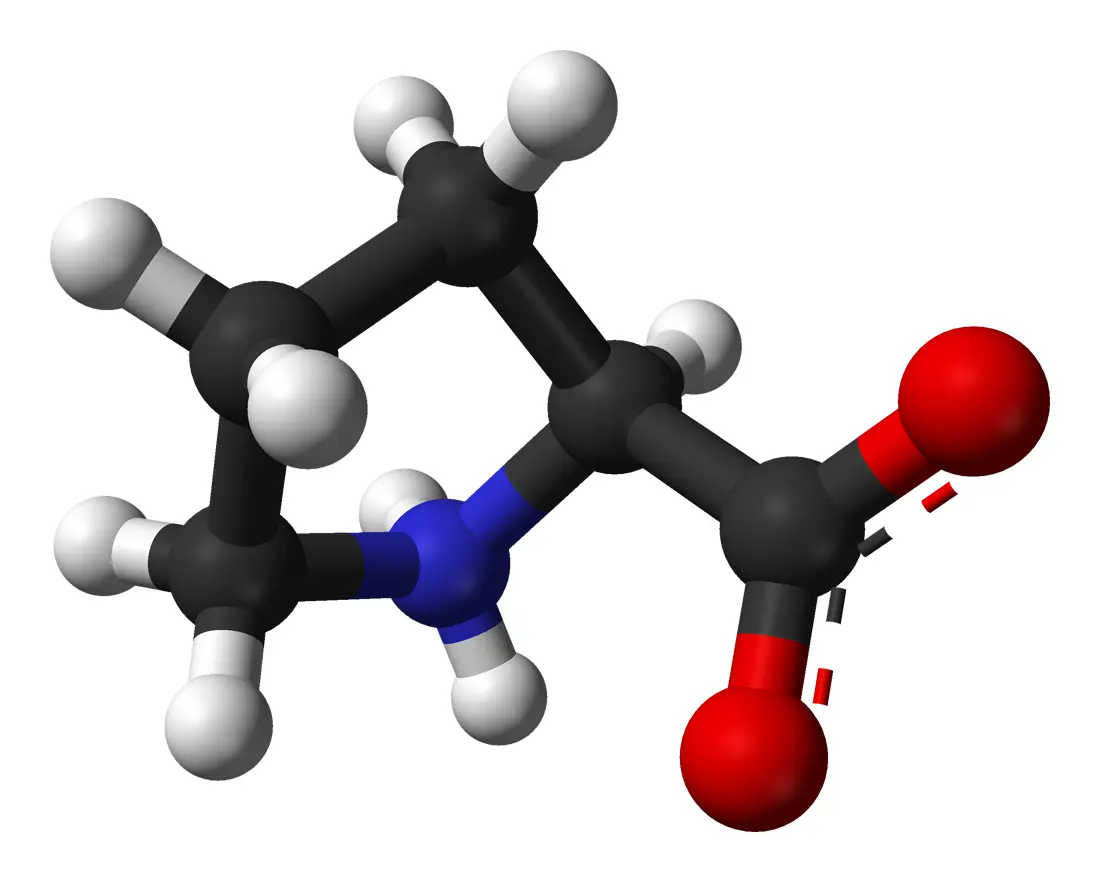
- It worked at once. List used proline for an aldol reaction, a common way to join the carbon atoms of two molecules. Proline made the reaction go, and it made far more of one hand than the other. Because proline is itself a one-handed molecule, it acted like a glove that lets the new molecule form only one way.
- February 2000. List, with Richard Lerner and Carlos Barbas, published the result. He saw at once that this was not a one-off trick but the start of a whole new kind of chemistry.
MacMillan: leaving the metals behind
David MacMillan had trained at Harvard in asymmetric catalysis with metals. He noticed that the clever metal catalysts invented in universities were hardly ever used in factories, because they needed dry, air-free conditions and were expensive.
- 1998, a fresh start. When he moved to the University of California, Berkeley, he decided to stop using metals. Instead he would design small molecules made of the ordinary atoms of living things, carbon, hydrogen, nitrogen and oxygen, that could do a metal’s job.
- A molecule that pulls on electrons. A metal catalyst works by pulling electrons towards itself, which loosens a molecule and makes it ready to react. MacMillan worked out that a nitrogen atom, in the right kind of small molecule, could hold another molecule and pull on its electrons in the same way.
- Testing. He made several such molecules and tried them on the Diels–Alder reaction, which chemists use to build rings of carbon atoms. They worked, and the best one gave more than 90% of one hand.
- January 2000, a name. When he sent his paper to a journal, MacMillan realized the idea needed a name, so that other chemists would see it was a whole new field to explore. He called it organocatalysis: catalysis by small organic molecules, the carbon-based molecules of living things Grade 10: Organic compounds.
How it works now: a third kind of catalyst
Since 2000, organocatalysis has grown, in the Nobel committee’s words, like a gold rush. Chemists have designed thousands of small organic catalysts for hundreds of reactions. The committee called it “the third pillar of catalysis”, beside metals and enzymes.
Organocatalysts have big advantages:
- They are cheap and often easy to make. Proline is a natural amino acid.
- They are stable: most don’t mind air or water, so they work in an ordinary factory.
- They contain no metals, so there are no poisonous metal traces to remove from a medicine.
- They can work in a cascade: several reactions, one after another, in the same pot, without stopping to clean up the product in between. Every clean-up loses some material, so fewer steps means less waste.
Why did MacMillan want catalysts without metals?
Pick an answer to see why.
Strychnine: 29 steps cut to 12
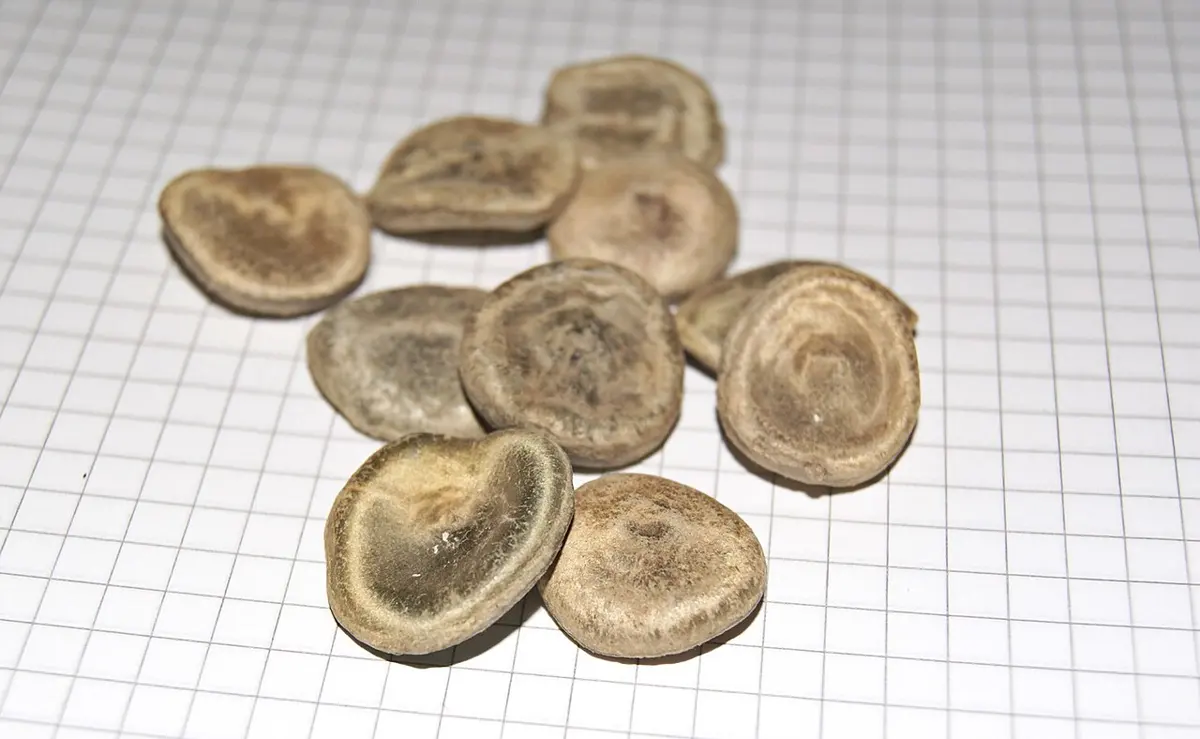
Strychnine is a poison found in the seeds of the Strychnos nux-vomica tree, which grows in South and South-East Asia. Its molecule is so complicated that chemists treat it like a Rubik’s Cube: can you build it in fewer steps?
When it was first built in a laboratory, in 1952, it took 29 reactions, and only 0.0009% of the starting material ended up as strychnine. In 2011 MacMillan’s group used organocatalysis and a cascade to build it in 12 steps, about 7,000 times more efficiently.
In your life today
- Medicines. Organocatalysis is used most in making medicines, which often need just one hand of a molecule. Drug companies use it to make some medicines faster and with less waste. The Nobel committee gave two examples: paroxetine, a medicine for anxiety and depression, and oseltamivir (sold as Tamiflu), a medicine for influenza.
- New medicines from rare sources. Some promising substances are found only in tiny amounts, in a rare plant or a creature of the deep sea. Organocatalysis helps chemists build them in the laboratory instead.
- Greener chemistry. Fewer steps, no heavy metals and less waste mean less pollution from chemical factories.
What came next
- Light and catalysts. MacMillan has gone on to join organocatalysts with light-absorbing molecules, so that visible light from a lamp helps drive reactions (photoredox catalysis), another fast-growing field.
- Strong acids that pick a hand. List has designed powerful organic acids that make one hand with almost perfect control, from only tiny amounts of catalyst.
- Medicine making. As of the mid-2020s, organocatalysts are in regular use in research, and a growing number of steps in the making of real medicines use them. But metals still do most of the catalysis in big industry.
- An open question: can small organic catalysts ever match an enzyme, which can speed up a reaction millions of times and pick one hand perfectly? Nobody yet knows how small a molecule can be and still do everything an enzyme does.
In your science books
- Grade 9: organic and inorganic compounds and uses of organic compounds.
- Grade 10: rate of chemical reaction, catalysts, and what an organic compound is.
- Going Further: What makes a reaction go faster? (how a catalyst lowers the hill), Proteins do the work (amino acids and enzymes), and Medicines shaped to fit.
- More on molecules with hands: the Chemistry Prize 2026, how a reaction can come to pick a hand by itself.
Learn more
- The Nobel Prize’s own explanation: Their tools revolutionized the construction of molecules (nobelprize.org).
- The two laureates’ Nobel lectures: List and MacMillan.
The official reason
The prize was given “for the development of asymmetric organocatalysis.”