
Gravitational waves: hearing space shake
Nobel Prize in Physics, 2017: Rainer Weiss, Barry C. Barish, and Kip S. Thorne
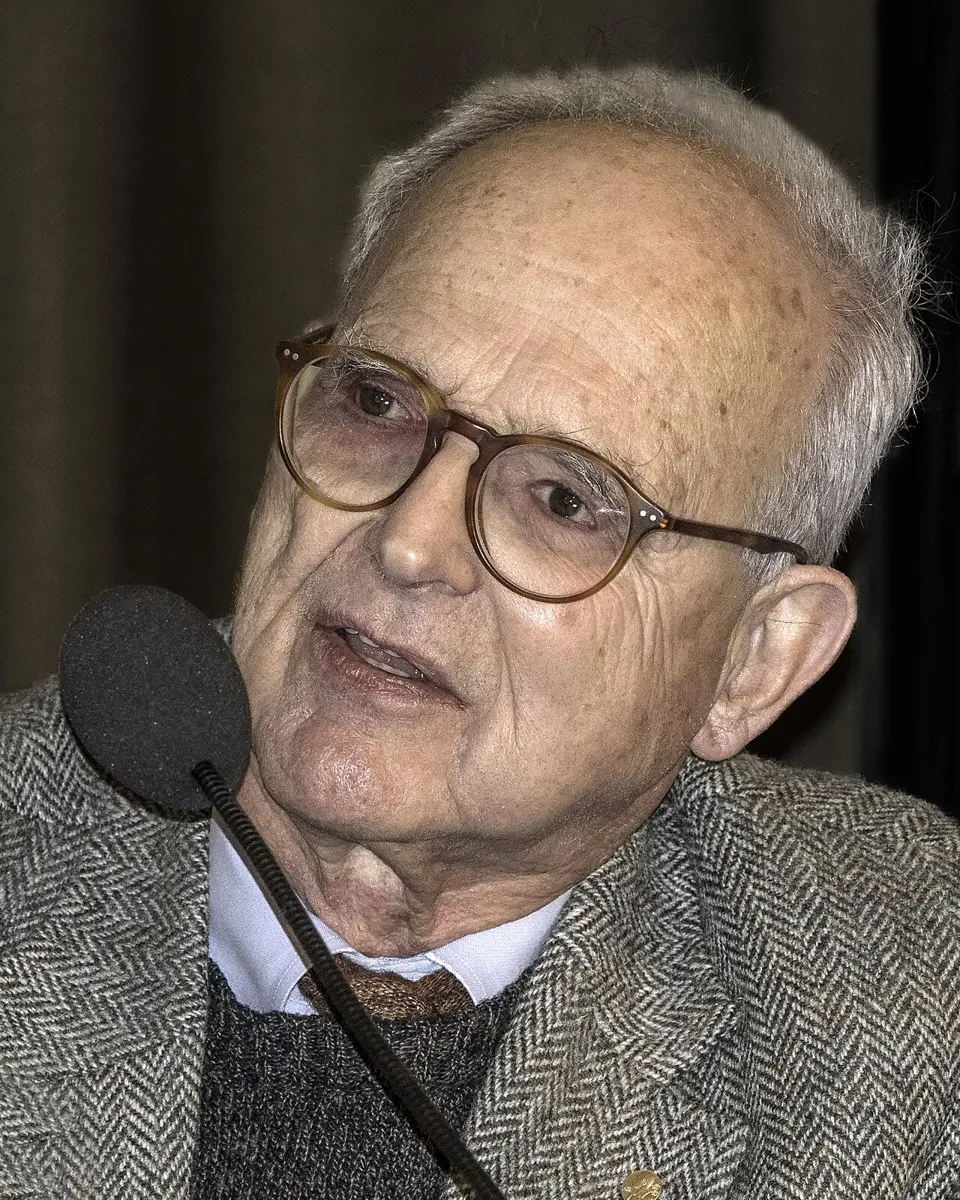
Rainer Weiss
1932–2025, born in Germany
As a child he fled the Nazis with his family. He worked out how to build the detector while trying to explain an idea to his students.
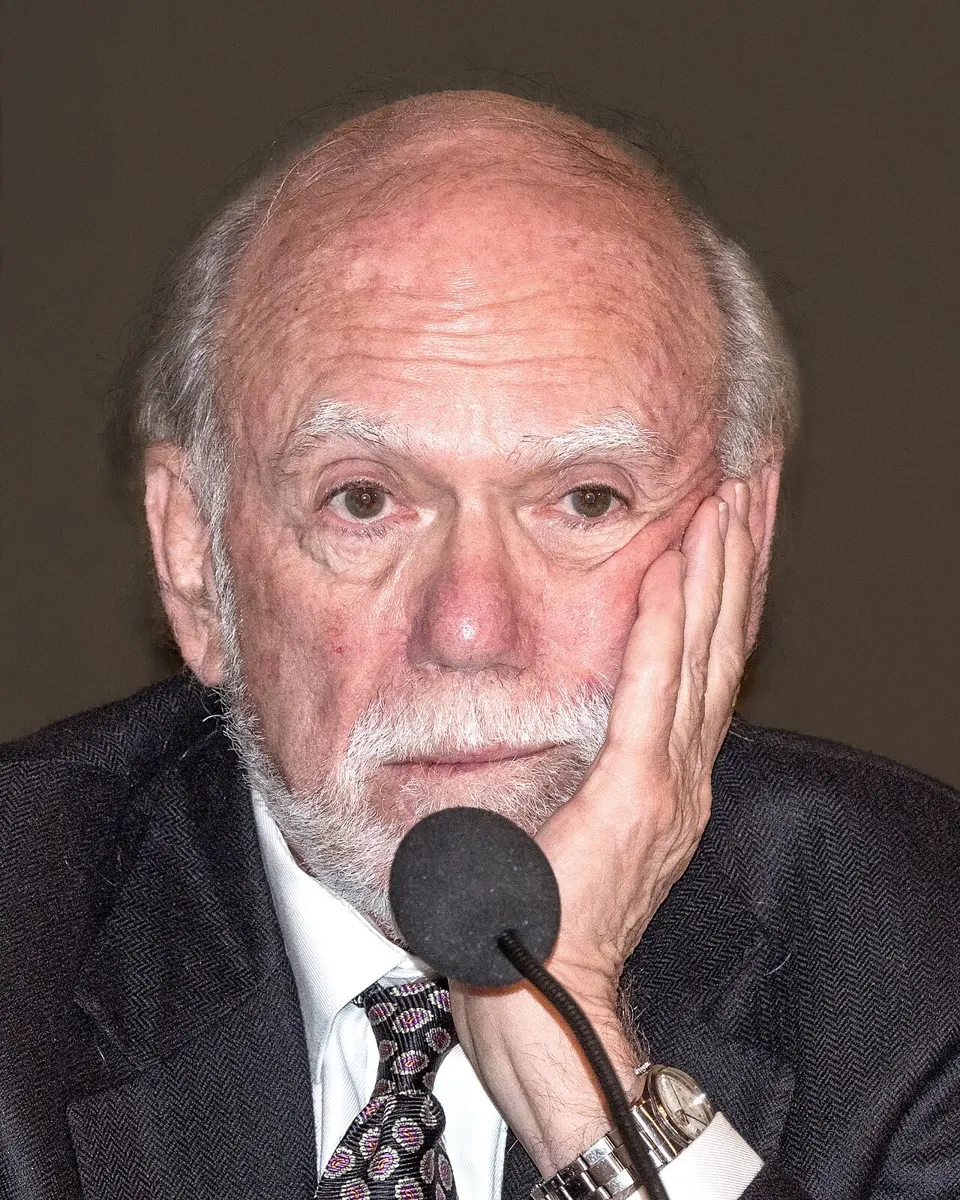
Barry C. Barish
born 1936 in the USA
A particle physicist who took over a struggling project and turned a small team into a worldwide one of more than a thousand people.
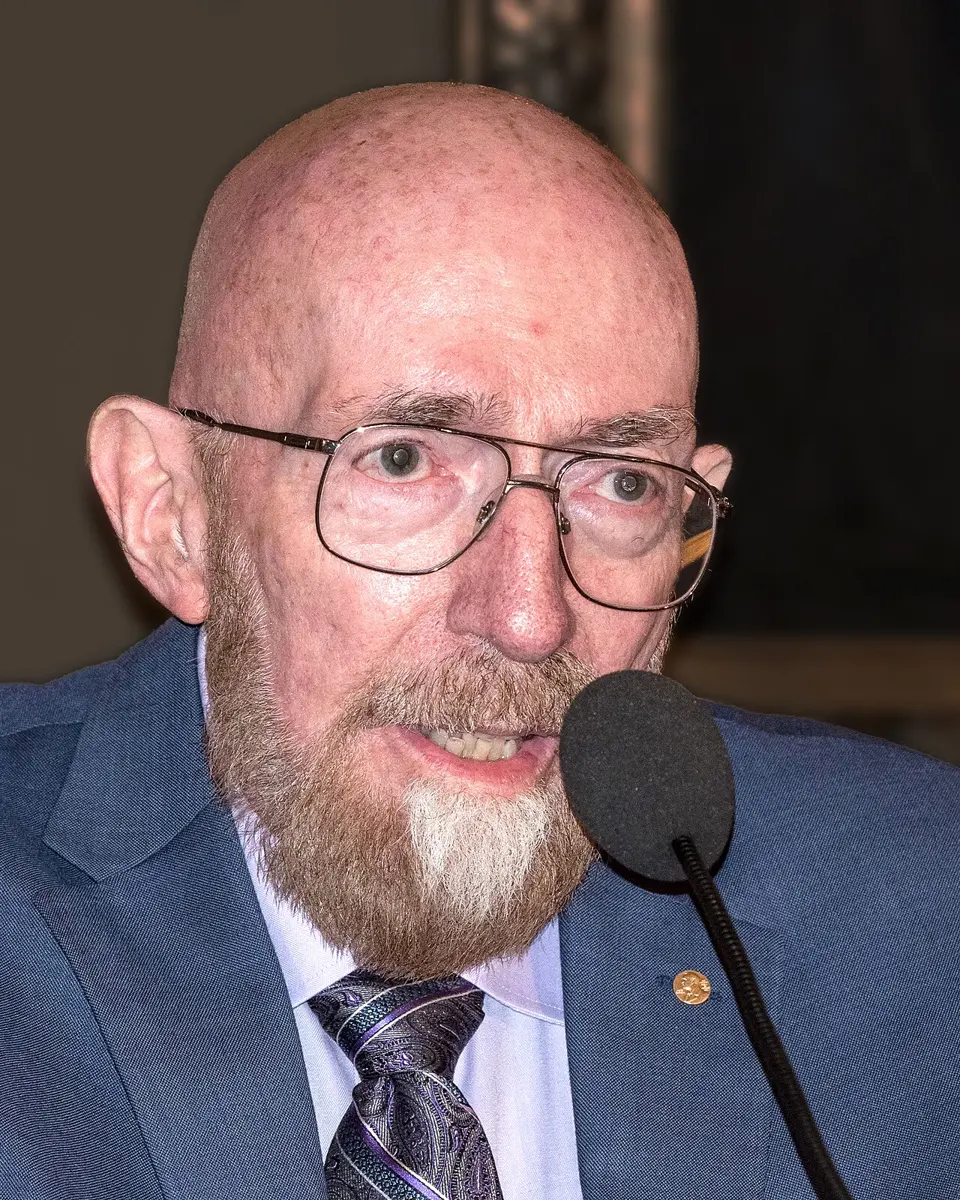
Kip S. Thorne
born 1940 in the USA
An expert on black holes, who worked out what their signals should look like. He later helped make the film Interstellar.
Drop a pebble into a still pond and ripples spread out in rings. A boat on the far side bobs up and down when they arrive, long after the pebble has sunk.
Space itself can ripple too. When huge masses whirl around each other, they send out ripples that stretch and squeeze everything they pass through, including you and the Earth. These gravitational waves were predicted a hundred years ago, but they are so faint that many people thought they could never be caught. On 14 September 2015, at 3:35 in the afternoon Nepal time, two machines in the USA caught one. In 2017 the Nobel Prize in Physics went to three of the people who made that possible.
The problem: a prediction nobody could test
You learned that gravity is the pull between masses: the Earth pulls you, and the Sun pulls the Earth Grade 10: Gravitation. In 1915 Albert Einstein gave a new picture of gravity, his general theory of relativity. In it, a mass bends space (and time) around it, a little like a heavy ball on a stretched rubber sheet makes a dip that smaller balls roll into.
In 1916 Einstein found that his theory predicted something new. When masses speed up, slow down or swing round each other, the bending of space should not stay still: it should spread outwards as waves, at the speed of light. As a wave passes, it stretches space in one direction and squeezes it in the direction at right angles, then the other way round, again and again.
But Einstein himself doubted that anyone would ever measure them. Gravity is by far the weakest of nature’s forces (Why is gravity so weak?), and space is very stiff. Only the most violent events in the universe, such as two black holes or two dead stars crashing together far away, can shake it noticeably, and by the time the waves reach us they are unimaginably small.
A gravitational wave passes through you. What happens?
Pick an answer to see why.
How small is small?
The waves caught in 2015 changed the length of a 4-kilometer tube by thousands of times less than the width of an atom’s nucleus, and a nucleus is itself about a hundred thousand times smaller than an atom. The Nobel committee compared it to measuring the distance to a star ten light-years away Grade 9: Light-year so precisely that you would notice a change of the width of a hair.
Everything else on Earth shakes far more than that: earthquakes on the other side of the world, waves on a beach hundreds of kilometers away, lorries on a road, wind on the building, even the atoms of a mirror jiggling because it is warm. That is what made the problem so hard. The signal is not just tiny; it is buried under shaking that is millions of times bigger.
What they did, step by step
In the 1960s an American physicist, Joseph Weber, built the first detectors: big aluminium bars that should ring like a bell when a gravitational wave passed. In 1969 he announced that he had caught some. Nobody else could repeat his results, and today they are thought to have been false alarms. But Weber had started the hunt.
Rainer Weiss: a puzzle for his students (1967–1975)
- 1967. Weiss was teaching a course on relativity at the Massachusetts Institute of Technology (MIT). His students asked him how Weber’s bars worked, and he couldn’t explain it to his own satisfaction. So he set them a simpler problem to think about: measure the time light takes to travel between floating masses, and watch it change as a wave passes.
- About 1968–1972: the design. He turned this into a practical machine, an interferometer (explained below), with mirrors hanging far apart and a laser to measure the distance between them. In a report written in 1972 he listed every kind of shaking that would hide the signal, and how each could be beaten. That report is still the plan of LIGO today.
- 1975. He met Kip Thorne and, sharing a hotel room in Washington, talked about it late into the night. Thorne, who had doubted that such a machine could work, became convinced.
Kip Thorne: what to listen for (1970s–2015)
Thorne was a theorist: he worked with mathematics, not with tools. He and his students worked out which events in the universe would send out the strongest waves, how often they might happen, and exactly what their signals should look like. A detector this sensitive is always full of noise; knowing the shape of the signal you are looking for is what lets you pick it out. At Caltech, in California, Thorne also started an experimental group, led by Ronald Drever from Scotland, to build test machines. In 1984 MIT and Caltech agreed to build one big detector together: the Laser Interferometer Gravitational-Wave Observatory, LIGO.
Barry Barish: building it (1994–2005)
For years LIGO hardly moved forward, and in the early 1990s it was in danger of being stopped.
- 1994. Barry Barish, a particle physicist at Caltech who was used to running huge projects with hundreds of people, became LIGO’s leader.
- The team. He turned a group of about 40 people into an organization of more than a thousand scientists from many countries, the LIGO Scientific Collaboration, set up in 1997.
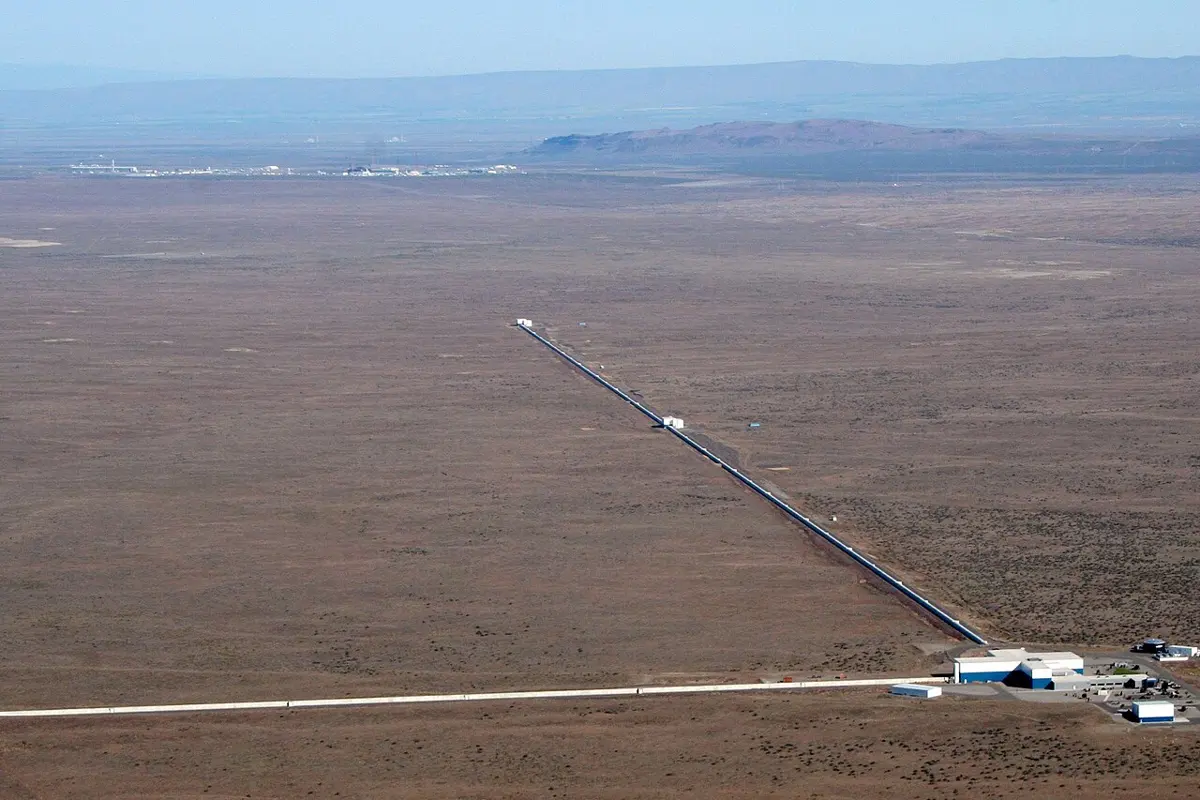
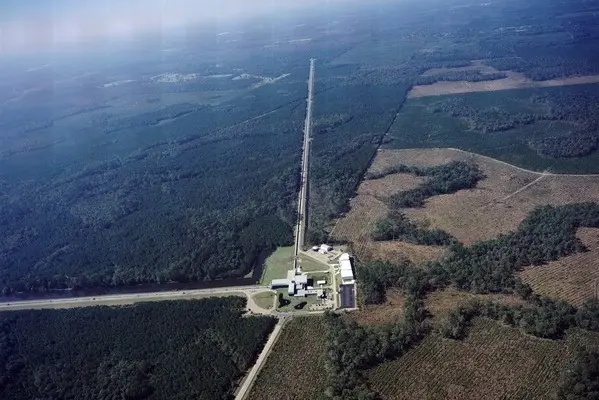
- The building. Under him, the two LIGO observatories were built: one near Hanford, in Washington state, and one near Livingston, in Louisiana, about 3,000 km apart.
- The long game. The first LIGO detectors listened from 2002 to 2010 and heard nothing. That was expected: Barish had planned from the start for a second, much more sensitive version, Advanced LIGO, built into the same tunnels.
14 September 2015: the chirp
- Advanced LIGO had just been switched on for testing. Its official start was still a few days away.
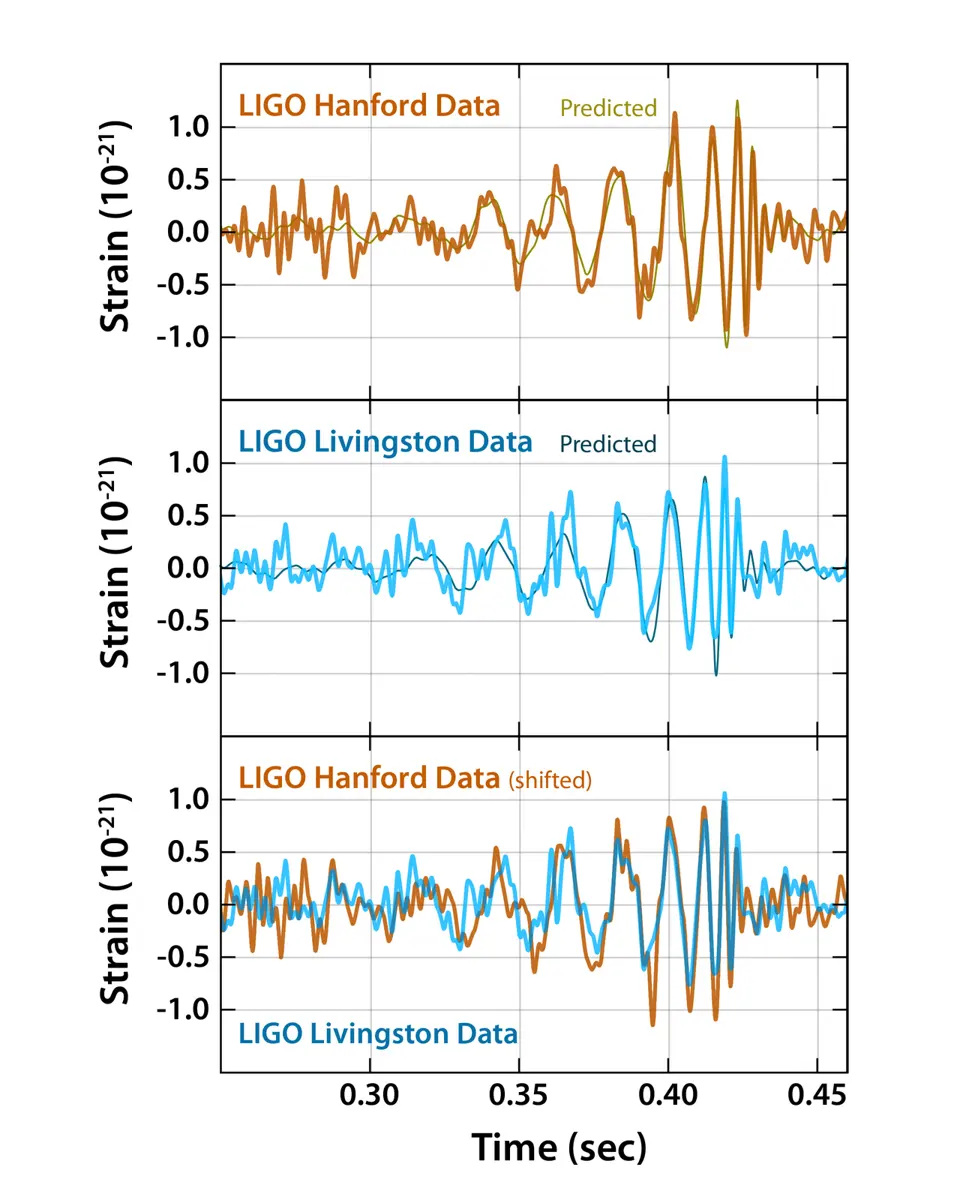
- At 09:50 world time (11:50 in Germany, 3:35 in the afternoon in Nepal), a wave passed through the Earth. It reached Livingston first and Hanford 7 milliseconds later: as long as it takes light to cross most of the distance between them.
- In the USA it was the middle of the night. In Hannover, Germany, a young physicist, Marco Drago, was about to go for lunch when the computer showed him the signal. It looked exactly like the patterns Thorne’s group had predicted. At first many people thought it must be a test signal, put in secretly to check the team. It was not.
- The team spent five months checking every possible mistake before telling the world, on 11 February 2016.
The signal had come from two black holes, about 36 and 29 times as heavy as the Sun, that had been circling each other faster and faster until they crashed together and became one black hole of about 62 Suns. The missing mass, about three times the mass of the Sun, had turned into the energy of the gravitational waves, all in a fraction of a second. This happened about 1.3 billion years ago, when the only life on Earth was very simple. The waves had been traveling towards us ever since.
Why did LIGO build two detectors 3,000 km apart, rather than one?
Pick an answer to see why.
How LIGO works
Waves that cancel
Throw two pebbles into a still pond, a little apart. Where the ripples from the two meet, you see places where the water rises higher, and places where it hardly moves at all: there, the crest of one ripple arrives with the trough of the other, and they cancel. This adding and canceling of waves is called interference. Light is a wave too, so two beams of light can cancel each other in the same way (Waves that cancel).
The L-shaped machine
- A powerful laser sends a beam of light to a beam splitter, a half-silvered mirror that sends half the light down each arm of the L.
- At the end of each 4-km arm, the light hits a mirror and comes back. (In fact it bounces back and forth about 280 times before it returns, which makes each arm act like one more than a thousand kilometers long.)
- The two beams meet again at the beam splitter and go on to a light detector.
- The arms are set so that, when nothing disturbs them, the two returning beams arrive crest against trough and cancel: the detector stays dark.
- When a gravitational wave passes, one arm gets a tiny bit longer while the other gets a tiny bit shorter, then the other way round. The beams no longer cancel exactly, and a little light flickers on the detector, in time with the wave.
Keeping out the shaking
- The mirrors hang at the bottom of a chain of four pendulums, one below the other, on platforms that sense shaking and move to cancel it. Each mirror is a block of very pure glass weighing 40 kg.
- The tubes are empty. The light travels through steel tubes from which the air has been pumped out, one of the largest vacuums on Earth, so that no air can jiggle the light.
- Two sites. A signal counts only if both detectors see it, the same shape, a few milliseconds apart.
When no gravitational wave is passing, what does LIGO’s light detector see?
Pick an answer to see why.
In your life today
Gravitational waves don’t power anything in your house, and LIGO doesn’t make a product. What it gives is a new way of finding out about the universe: until 2015, almost everything we knew about space came from light of one kind or another (radio waves, visible light, X-rays). Black holes give out no light at all, but they shake space, and now we can listen.
- The gold in your jewelry. In August 2017 LIGO and its European partner Virgo heard two neutron stars, the crushed cores of dead stars, crash together. Telescopes all over the world then saw the flash of light from the same place. It showed that such crashes make heavy elements such as gold and platinum (In a flash, when dead stars collide). The gold of a tilhari at a wedding in Nepal was very probably made that way, billions of years ago.
- Einstein in your phone. The same theory that predicts gravitational waves is used every day: the clocks in GPS satellites run slightly fast, because gravity is weaker up there, and the system corrects for it. Without that correction, the map on your phone would be wrong by kilometers within a day.
What came next
- Hundreds of signals. By the end of LIGO’s fourth observing run in November 2025, LIGO, Virgo (in Italy) and KAGRA (in Japan) had found more than 200 confirmed signals, and about as many more were still being checked. Most come from pairs of black holes.
- A detector in India. LIGO-India, in the Hingoli district of Maharashtra, began to be built in April 2026 and is planned to start work around 2030 (as of 2026). With detectors spread around the globe, scientists can tell much more exactly where in the sky a signal comes from.
- Detectors in space. Europe is planning LISA: three spacecraft millions of kilometers apart, to hear the slower waves from giant black holes at the centers of galaxies.
An open question: where do these pairs of heavy black holes come from? Some of them are heavier than astronomers expected black holes made by a single dying star could be. Did they form from stars in pairs, or were they built up by black holes merging again and again in crowded clusters of stars? Each new signal is a clue.
In your science books
- Grade 9: transverse waves, wave velocity, the death of a star, neutron stars and black holes and the light-year.
- Grade 10: Newton’s law of gravitation and the importance of gravity in the universe.
- Going Further: Waves that cancel (interference, the idea behind LIGO), Why is gravity so weak? and Where did the atoms in your body come from?
Learn more
- The Nobel Prize’s own explanation: Cosmic chirps (nobelprize.org).
- The three laureates’ Nobel lectures: Weiss, Barish and Thorne.
The official reason
The prize was given “for decisive contributions to the LIGO detector and the observation of gravitational waves.”