
How your cells sense oxygen
Nobel Prize in Physiology or Medicine, 2019: William G. Kaelin Jr., Sir Peter J. Ratcliffe, and Gregg L. Semenza
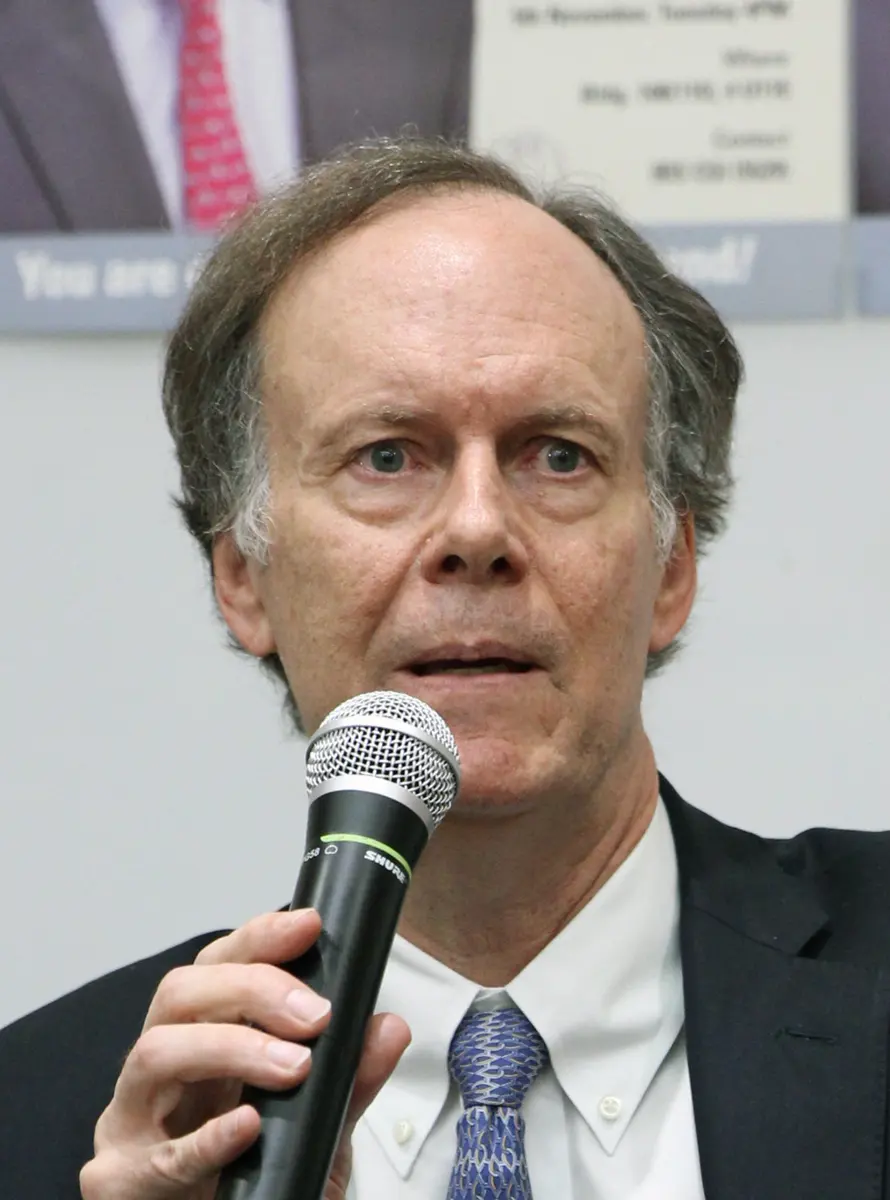
William G. Kaelin Jr.
born 1957 in the United States
A cancer doctor. His first research teacher gave him a C− and wrote that his future lay “outside the laboratory”.
Photo: Rickinasia, CC BY-SA 4.0
-
Sir Peter J. Ratcliffe
born 1954 in the United Kingdom
A kidney doctor who wondered how the kidney knows when the blood is short of oxygen, and learned a whole new kind of science to find out.

Gregg L. Semenza
born 1956 in the United States
A children’s doctor turned gene scientist. The top journals sent back his most famous paper without even reviewing it.
Photo: US Embassy Sweden, CC BY 2.0
Fly from Kathmandu to Lukla and walk up towards Everest Base Camp. Above about 3,000 meters, each breath brings in less and less oxygen; at Base Camp, only about half as much as at sea level. On the first days you may get a headache and feel out of breath on every slope. Guides tell you to go slowly and to sleep only a little higher each night.
Then, over a few days and weeks, your body changes. It starts making more red blood cells, so that your blood can carry more oxygen. This is part of acclimatization. But how does your body know that oxygen is short? Something inside you must be measuring it. In 2019 the Nobel Prize in Physiology or Medicine went to three scientists who found that measuring device, and found that almost every cell in your body has one.

The problem: how does a cell know?
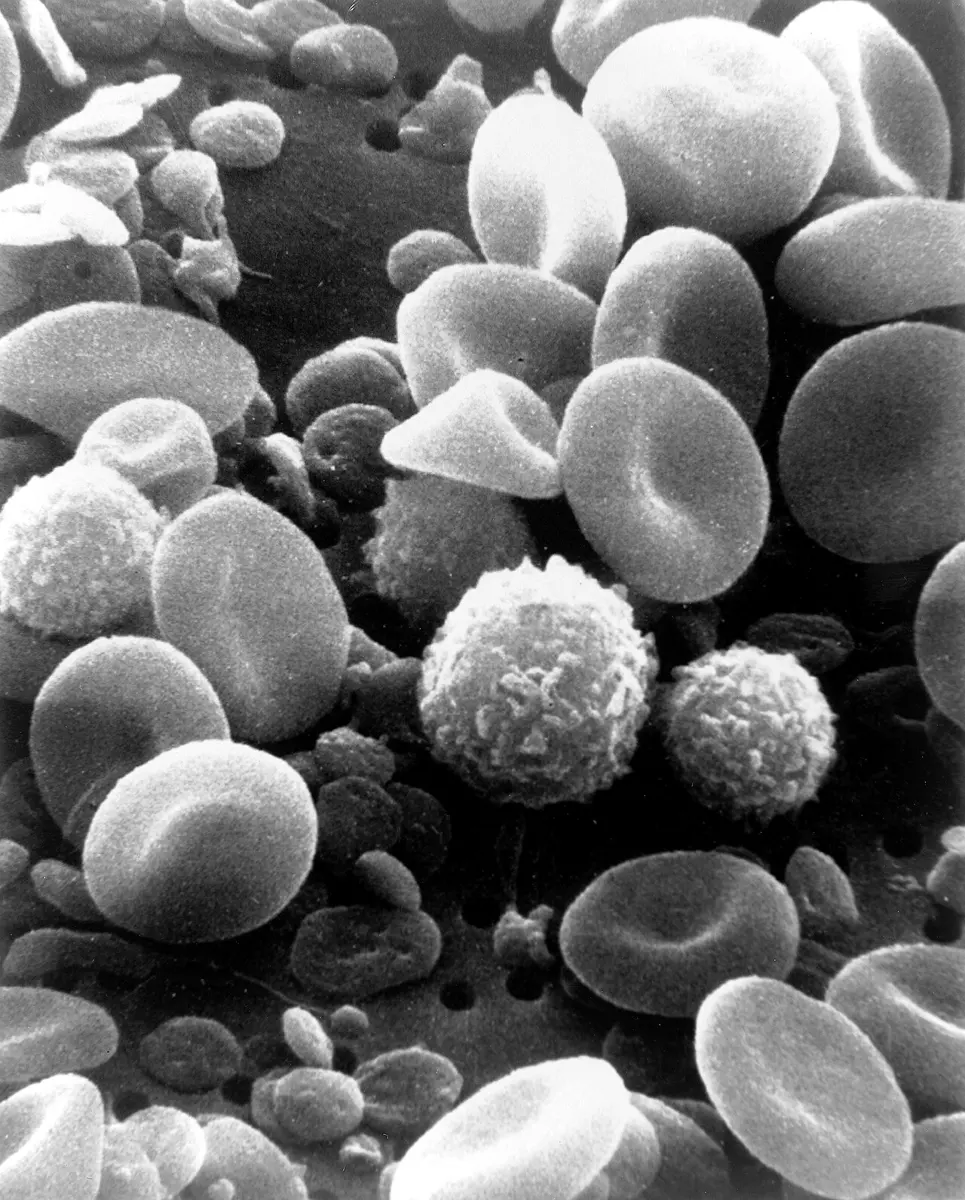
Almost every cell in your body needs oxygen, all the time. Inside each cell, small parts called mitochondria use oxygen to release energy from food, as in a slow, controlled fire (Energy from food, with oxygen). Oxygen makes up about a fifth of the air. Your lungs take it in and your red blood cells, packed with the red protein hemoglobin, carry it to every part of the body Grade 10: Red blood cells.
But oxygen often runs short somewhere. In muscles that work hard (a sprint up the stairs), in a wound, high on a mountain, or in a fast-growing lump of cancer cells. A body that couldn’t notice this and react would be in trouble.
By the middle of the 20th century, doctors knew two of the body’s reactions:
- Breathing faster. Small groups of cells beside the big blood vessels in your neck sense oxygen in the blood and tell the brain to breathe faster. (This won the 1938 Nobel Prize.) It works in seconds.
- Making more blood. When the blood carries too little oxygen, the kidneys release a hormone, a chemical messenger carried in the blood Grade 9: Hormones. It is called erythropoietin, or EPO for short. EPO travels to the bone marrow, the soft inside of big bones, where red blood cells are made, and tells it to make more. This works over days and weeks.
But how does a kidney cell feel that oxygen is low, and how does that make it release EPO? Nobody knew.
How cells switch genes on and off
To follow the story, you need one idea about genes.
Every cell in your body (except red blood cells, which have no nucleus) carries the same set of about 20,000 genes, in its DNA Grade 10: DNA. Each gene is a recipe for one protein (Genes are recipes for proteins). The EPO gene is the recipe for EPO.
But a cell doesn’t use every recipe all the time. A muscle cell and a nerve cell have the same genes; they are different because they switch on different ones. Next to each gene is a stretch of DNA that works like a switch. Special proteins, called switch proteins (scientists say transcription factors), sit on that stretch and turn the gene on.
So the question became: which switch protein turns on the EPO gene when oxygen is low, and how does it know?
Every cell in your body has the EPO gene. Why do only some kidney cells make EPO, and only when oxygen is low?
Pick an answer to see why.
Why it was hard
- Oxygen is everywhere and invisible. A cell can’t “see” oxygen. Something inside it must react with oxygen and change, and nobody knew what.
- People looked in the wrong place. Most scientists thought only the special EPO-making cells of the kidney could sense oxygen, so they looked for a rare, special sensor in a few hard-to-grow cells.
- Tiny amounts. The switch protein is present in a cell in very small amounts, and when oxygen is normal it almost disappears. That makes it very hard to catch and study.
What they did, step by step
Three teams, working separately, put the answer together like pieces of one puzzle.
Gregg Semenza: finding the switch (1991–1995)
Gregg Semenza, at Johns Hopkins University in the USA, studied how the EPO gene is controlled.
- The switch in the DNA. Using genetically modified mice (mice given extra pieces of human DNA), his team found a short stretch of DNA, beside the EPO gene, that makes the gene respond to low oxygen. It was published in 1991.
- The protein that sits on it. In cells grown in the laboratory, he found a protein that grips this stretch of DNA only when oxygen is low. He called it HIF, for hypoxia-inducible factor. (Hypoxia means “too little oxygen”.)
- Catching it. His team first tried to fish out the gene for HIF one way for a long time, without success. So they changed method completely and purified the protein itself from huge numbers of cells. In 1995 they showed that HIF is made of two parts and found the genes for both. The main part, the one that responds to oxygen, is called HIF-1α (“HIF-1 alpha”).
Peter Ratcliffe: the sensor is everywhere (1990s)
Peter Ratcliffe was a kidney doctor at Oxford University. He wondered how the kidney could react so precisely to oxygen, and he set out to find out, though he knew almost nothing about genes at first.
- A control experiment that went “wrong”. He planned to move genes from oxygen-sensing cells into other cells that make no EPO, which he expected could not sense oxygen. But first he checked those other cells, as a control. To his surprise, they already responded to low oxygen just as well.
- Everywhere. Ratcliffe’s and Semenza’s teams showed that the same oxygen-sensing system works in almost every kind of cell, not just in the kidney. It controls not only EPO, but also genes for growing new blood vessels and for getting energy from sugar without oxygen.
William Kaelin: a clue from a rare cancer (1990s)
William Kaelin was a cancer doctor at the Dana-Farber Cancer Institute in Boston, USA. He studied a rare disease that runs in families, von Hippel–Lindau disease, or VHL disease. People with it get tumors in the kidneys, eyes, brain and spine, and these tumors are full of blood vessels, as if the cells thought they were short of oxygen.
- 1993: other scientists found the gene that is faulty in VHL disease, and Kaelin made it his focus.
- Kaelin showed that the VHL gene makes a protein that protects against cancer. Cancer cells with a broken VHL gene switch on the low-oxygen genes all the time, even with plenty of oxygen. When he put a working VHL gene back into them, they behaved normally again. So VHL was somehow part of the oxygen system.
Putting the pieces together (1999–2001)
- HIF is destroyed every minute. Cells make HIF-1α all the time. With normal oxygen, it is broken down almost as fast as it is made, by the cell’s protein shredder (the proteasome). With low oxygen, it survives.
- 1999: VHL is the link. Ratcliffe’s team showed that the VHL protein grabs HIF-1α and marks it for shredding. Without VHL, HIF is never removed: that is what goes wrong in VHL disease.
- 2001: the oxygen tag. But how does VHL know when to grab? In 2001, Kaelin’s and Ratcliffe’s teams published at the same time, side by side in the journal Science, the answer. When oxygen is present, an enzyme (a protein that speeds up a chemical change) uses oxygen to stick small oxygen tags (OH groups) onto two places on HIF-1α. VHL grabs only tagged HIF. No oxygen, no tags; no tags, no grabbing; so HIF survives and switches genes on.
- Soon after, Ratcliffe’s team and others found the enzymes that add the tags. They are the real oxygen sensors.
How it works now
Put together, the oxygen switch works like this, in almost every cell of your body:
- Enough oxygen: the tagging enzymes have oxygen to work with. HIF gets tagged, VHL grabs it, and it is shredded within minutes. The low-oxygen genes stay off.
- Too little oxygen: the enzymes can’t tag HIF. It survives, builds up, moves into the nucleus and switches on hundreds of genes: EPO for more red blood cells, signals for new blood vessels, and enzymes for getting energy from sugar without oxygen.
The clever part is that the sensor is very fast. Because HIF is made and destroyed all the time, the cell can react within minutes when oxygen falls, and switch off again just as quickly when oxygen returns.
A person is born with a broken VHL gene in some of their cells. What happens in those cells?
Pick an answer to see why.
In your life today
- Trekking and climbing. The oxygen switch is what makes your body produce more EPO, and then more red blood cells, when you go up to Namche Bazaar or Base Camp and stay there. Going up slowly gives it time to work.
- Sherpas and Tibetans. Many Sherpa and Tibetan people carry a special version of a gene called EPAS1. It is the recipe for HIF-2α, a close relative of the HIF-1α that Semenza found, and part of the same switch. With this version, their bodies react less strongly to thin air: their blood doesn’t get too thick with extra red cells, which can strain the heart. Another gene common in Tibetans, EGLN1, is the recipe for one of the tagging enzymes (Harmful, neutral or beneficial?).
- Kidney disease. Damaged kidneys make too little EPO, so many people with kidney failure, including those on dialysis, have anemia: too few red blood cells, and they feel tired and weak. For years they needed injections of EPO. New medicines, the first approved in China in December 2018, are tablets that stop the tagging enzymes, so HIF survives, and the body makes more of its own EPO.
- Cancer. A tumor grows faster than its blood supply, so its middle is short of oxygen. Cancer cells use HIF to call for new blood vessels. In 2021 a medicine that blocks HIF-2α was approved in the USA for tumors caused by VHL disease.

What came next
- More medicines. Tablets that keep HIF switched on are now used for anemia in kidney disease in several countries, including Japan and the European Union. Scientists are testing whether switching HIF on or off can help other illnesses too: heart attacks, strokes, healing wounds and some cancers (as of 2026).
- Other oxygen sensors. The HIF switch works over minutes to hours. The cells in your neck that make you breathe faster react in seconds, and exactly how they sense oxygen is still being worked out.
An open question: oxygen levels are different in different parts of the body, and even in different parts of one organ. How does each kind of cell set its own idea of “too little”? And why do some cancers become so good at living with very little oxygen? Each answer could lead to new medicines.
In your science books
- Grade 9: hormones and the endocrine glands and blood as a tissue.
- Grade 10: blood, red blood cells and DNA.
- Going Further: Genes are recipes for proteins and the EPAS1 gene on the mountain (Harmful, neutral or beneficial?); Can life run without oxygen? (what cells do when oxygen runs out), How does a gene make a protein? and the feedback loop (how the body keeps itself steady).
Learn more
- The Nobel Prize’s own explanation: the press release (nobelprize.org).
- The three laureates’ Nobel lectures: Kaelin, Ratcliffe and Semenza.
The official reason
The prize was given “for their discoveries of how cells sense and adapt to oxygen availability.”