
Reading the DNA of the Neanderthals
Nobel Prize in Physiology or Medicine, 2022: Svante Pääbo

Svante Pääbo
born 1955 in Sweden
As a student he secretly tried to read DNA from Egyptian mummies. He spent the next thirty years learning to do it properly.
Photo: The Royal Society, CC BY-SA 4.0
Many families in Nepal keep a bansawali, a family record that lists fathers and grandfathers back through many generations. But no family tree goes back 50,000 years. To learn about our ancestors that far back, scientists had only bones and stone tools, and bones cannot tell you who had children with whom.
Your body carries a better record: your DNA. Svante Pääbo found a way to read DNA from bones tens of thousands of years old. He read the DNA of the Neanderthals, close relatives of ours who died out long ago, discovered a lost group of humans from one tiny finger bone, and found that both left pieces of their DNA in people alive today. For this he received the 2022 Nobel Prize in Physiology or Medicine.
The problem: cousins we only knew from bones
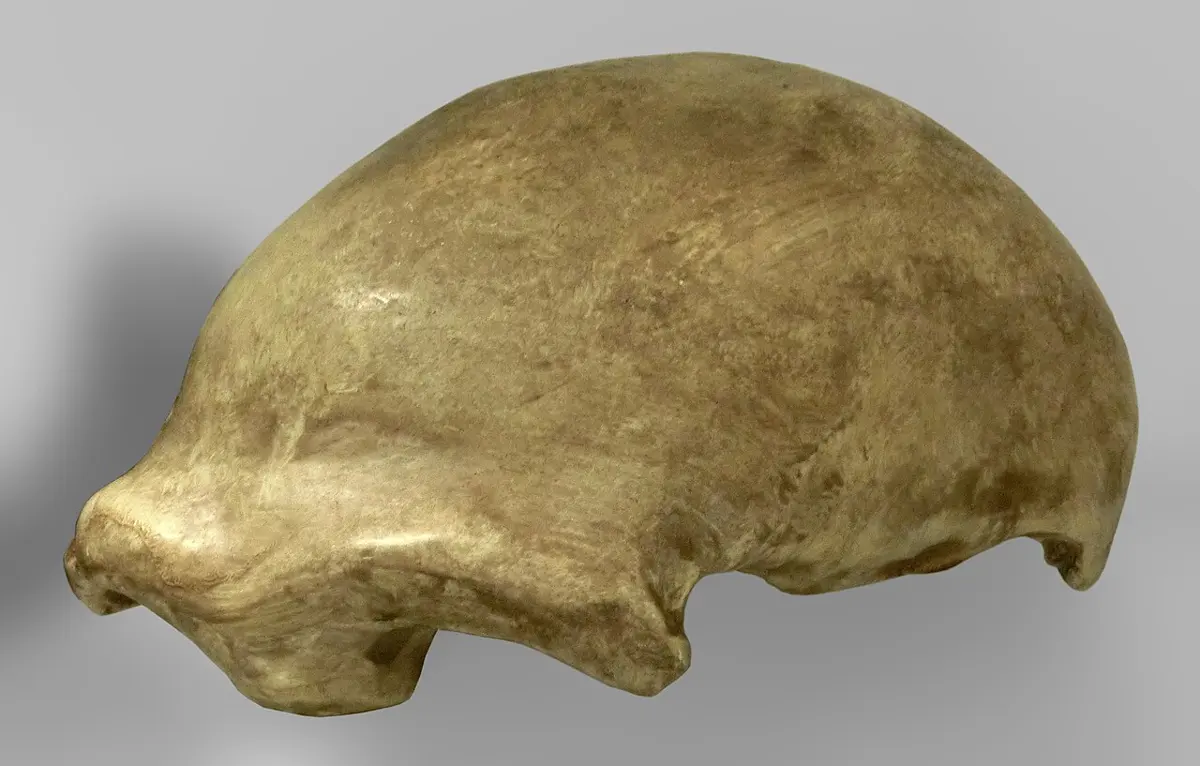
People like us, Homo sapiens, first appeared in Africa about 300,000 years ago. Our closest known relatives, the Neanderthals, lived in Europe and western Asia from about 400,000 years ago until about 30,000 years ago, and then disappeared. Their bones were first recognized in 1856, in the Neander Valley (Neandertal in German) in Germany, which gave them their name.
About 70,000 years ago, groups of Homo sapiens moved out of Africa into the Middle East, and from there spread across the world. So for tens of thousands of years, our ancestors and the Neanderthals lived in the same lands.
That raised big questions. How closely related were we? Did the two groups ever have children together? And what makes us different from them? Bones could not answer. DNA could, if it could be read.
How DNA keeps a record
DNA is the long molecule in our cells that carries the instructions for building and running the body Grade 10: DNA. Its instructions are written in a code of four chemical letters, A, T, G and C, about 3 billion letters long in a human cell.
Each time DNA is passed from parents to children, a few letters change by mistake. These small changes add up over thousands of generations Grade 9: Variation and mutation. So the more letters two groups share, the more closely related they are, and the number of differences hints at how long ago they separated.
A cell keeps its DNA in two places:
- Nuclear DNA, in the nucleus, holds almost all the instructions. There are only two copies of it in each cell, one from each parent.
- Mitochondrial DNA is a much smaller piece found inside the mitochondria, the cell’s energy factories. It holds only a little information, but each cell has thousands of copies of it.
Pääbo first tried to read mitochondrial DNA from Neanderthal bones, not nuclear DNA. Why was that a good place to start?
Pick an answer to see why.
Why it was hard
When a living thing dies, its DNA starts to fall apart.
- Broken into scraps. Over thousands of years the long DNA molecules break into very short pieces, often only a few dozen letters long, and the chemical letters themselves get damaged.
- Almost none left. In a 40,000-year-old bone, only a tiny amount of the animal’s own DNA remains.
- Contamination. Most of the DNA in an old bone comes from bacteria and fungi that lived in it after death. Worse, every person who has touched the bone, including the scientists, leaves a little of their own DNA on it. Since Neanderthal DNA is very similar to ours, a scientist’s own DNA could easily be mistaken for a Neanderthal’s.
What he did, step by step
- 1984, mummies in secret. As a young student in Uppsala, Sweden, Pääbo tried in secret, without telling his professor, to read DNA from Egyptian mummies, using a 2,400-year-old mummy among others. His results drew attention around the world, but he soon saw how easily old DNA is confused with modern contamination.
- Strict rules. He spent years working out how to do it reliably: clean rooms in which old samples are handled in protective suits, repeating every result, and checking that the DNA has the kind of damage only old DNA has.
- 1997, the first Neanderthal DNA. As a professor in Munich, Germany, his team read a stretch of mitochondrial DNA from the first Neanderthal bones ever recognized, those from the Neander Valley, about 40,000 years old. It was clearly different from the DNA of every living person and from chimpanzees. For the first time, we had DNA from an extinct relative.
- A new institute. In the late 1990s he moved to the new Max Planck Institute for Evolutionary Anthropology in Leipzig, Germany, and began on the far bigger task: the Neanderthals’ nuclear DNA.
- 2010, the Neanderthal genome. New machines could read millions of short pieces of DNA quickly. Working with experts around the world, Pääbo’s team read the Neanderthal genome, all of its DNA, from bones found in a cave in Croatia.
The method is like rebuilding a torn page of a book. The machines read millions of short scraps, most of them from bacteria. A computer then lays each scrap against the human genome, a complete copy of a very similar “book”. Scraps that don’t fit anywhere in it are bacterial and are set aside. Scraps that fit, but differ from us in a letter or two, show where the Neanderthal’s DNA was its own. Fitted together, the scraps gave most of the Neanderthal genome.
The Neanderthals in us
Pääbo’s team compared the Neanderthal genome with the DNA of people living today in different parts of the world. The result surprised many scientists. Neanderthal DNA was more like the DNA of people from Europe and Asia than that of people from Africa.
The explanation: when Homo sapiens left Africa and met the Neanderthals, some of them had children together. Those children grew up among Homo sapiens, and pieces of Neanderthal DNA have been passed down ever since. Today, people whose ancestors came from outside Africa carry a small part of Neanderthal DNA, around 2% (estimates range from about 1% to 4%). Most people whose ancestors stayed in Africa carry much less.
Why do people whose ancestors lived in Europe and Asia carry more Neanderthal DNA than most people whose ancestors stayed in Africa?
Pick an answer to see why.
A lost people from a finger bone
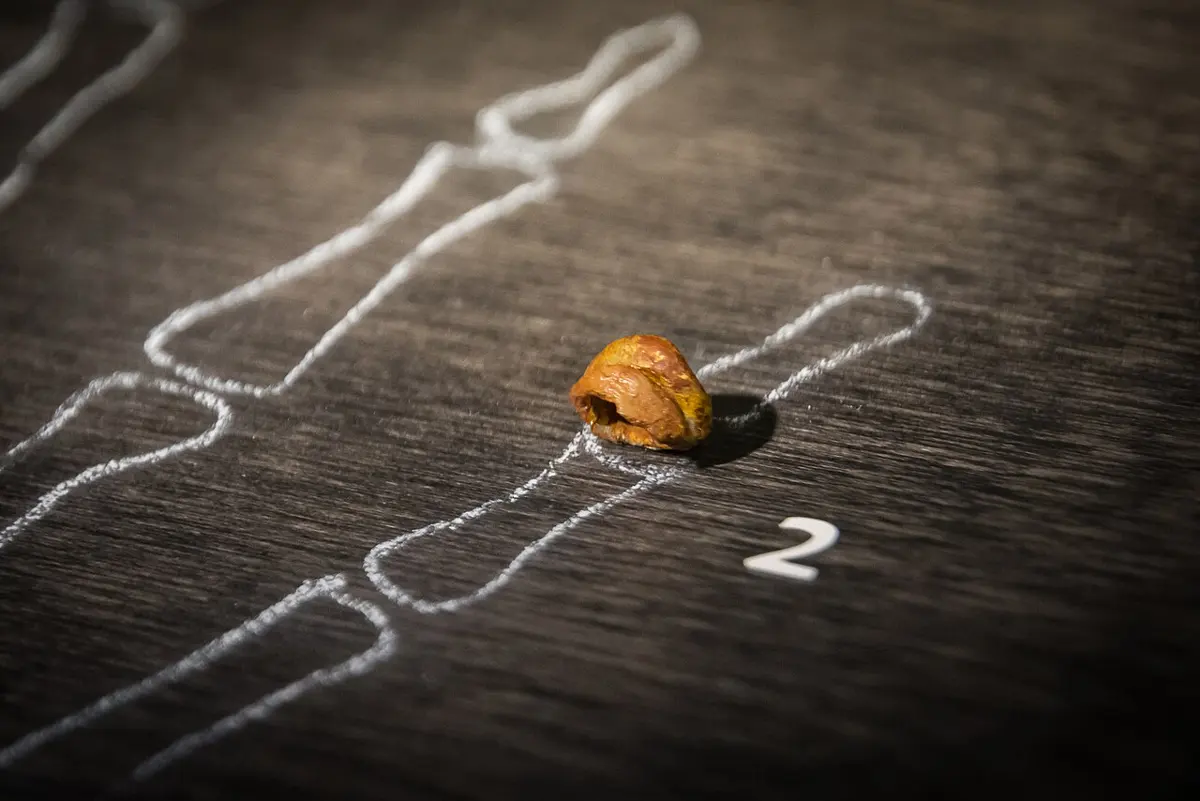
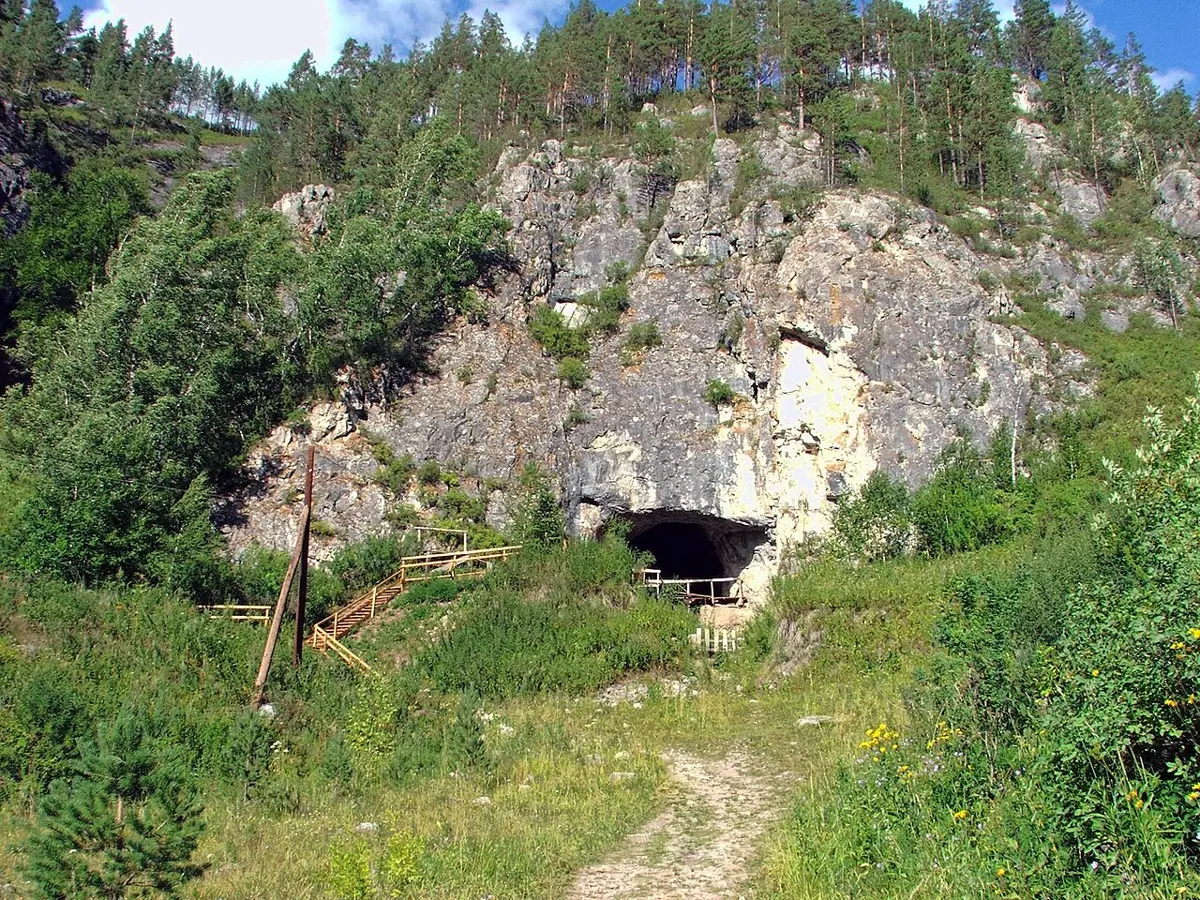
- 2008, a tiny bone. Russian scientists found a small piece of a finger bone, about 40,000 years old, in Denisova Cave in the Altai Mountains of southern Siberia. It came from a girl. Its DNA was unusually well kept.
- 2010, someone new. Pääbo’s team read its DNA. It was not Homo sapiens, and it was not a Neanderthal. It was a group of humans nobody had known about. They were named the Denisovans, after the cave.
- Denisovans in us too. Some people today carry Denisovan DNA, most of all in Papua New Guinea and nearby islands in the Pacific, where it can be up to about 6%. So Homo sapiens met and had children with the Denisovans too, further east.
How it fits together now
Pääbo’s work started a new science, paleogenomics: reading the genomes of people and animals that died long ago. His team and others have since read many more ancient genomes, and the picture of our family has become much clearer.
When Homo sapiens left Africa, at least two other groups of humans lived in Europe and Asia: Neanderthals in the west and Denisovans in the east. Our ancestors met both. Then both groups disappeared, but not entirely: their DNA lives on in billions of people.
In your life today
- Life on the roof of the world. At high altitude, each breath brings in less oxygen. Most people’s bodies react by making more red blood cells, which can make the blood thick and sticky Grade 10: Red blood cells. Many Tibetans carry a version of a gene called EPAS1 that keeps this reaction milder. That version came from the Denisovans. Later studies found it in Sherpas and other peoples of the Himalaya too: some of the people who live and climb in Nepal’s mountains carry a gift from a lost human group.
- Denisovans in the Himalaya. In 2019, scientists showed that a jawbone found in a cave on the Tibetan Plateau, about 3,300 m above sea level and at least 160,000 years old, belonged to a Denisovan. They had lived high in the mountains long before Homo sapiens arrived.
- Our immune system. Some genes we got from Neanderthals affect how our bodies fight infections. In 2020, Pääbo and a colleague showed that one stretch of Neanderthal DNA makes people more likely to become seriously ill with COVID-19.
What came next
- More ancient genomes. Scientists now read DNA from thousands of ancient people, and even from the soil of caves where no bones are left. In 2025 a skull found near Harbin in China was shown, from its proteins and from DNA in the hardened plaque on its teeth, to be Denisovan: the first time scientists could see what a Denisovan head looked like.
- What makes us human? Pääbo’s team has listed small differences in the DNA that all people alive today share but Neanderthals and Denisovans did not. Some affect how the brain develops. Neanderthals had big brains, lived in groups and used tools, but their tools changed little over hundreds of thousands of years, while Homo sapiens made art, crossed seas and spread over the whole Earth. Which of these DNA differences, if any, explain that is still an open question.
- Africa’s missing genomes. DNA breaks down fastest in hot places, so no genome has yet been read from an extinct human relative in Africa, where our story began.
In your science books
- Grade 10: DNA, the molecule Pääbo read; chromosomes; red blood cells, which the Denisovan gene version keeps in check at altitude.
- Grade 9: evolution; evidence from fossils; variation and mutation.
- Going further: reading the differences and from differences to a family tree.
Learn more
- The Nobel Prize’s own explanation: the press release (nobelprize.org), written for everyone, with pictures.
- Svante Pääbo’s Nobel lecture.
The official reason
The prize was given “for his discoveries concerning the genomes of extinct hominins and human evolution.”