
Releasing the brakes to fight cancer
Nobel Prize in Physiology or Medicine, 2018: James P. Allison and Tasuku Honjo
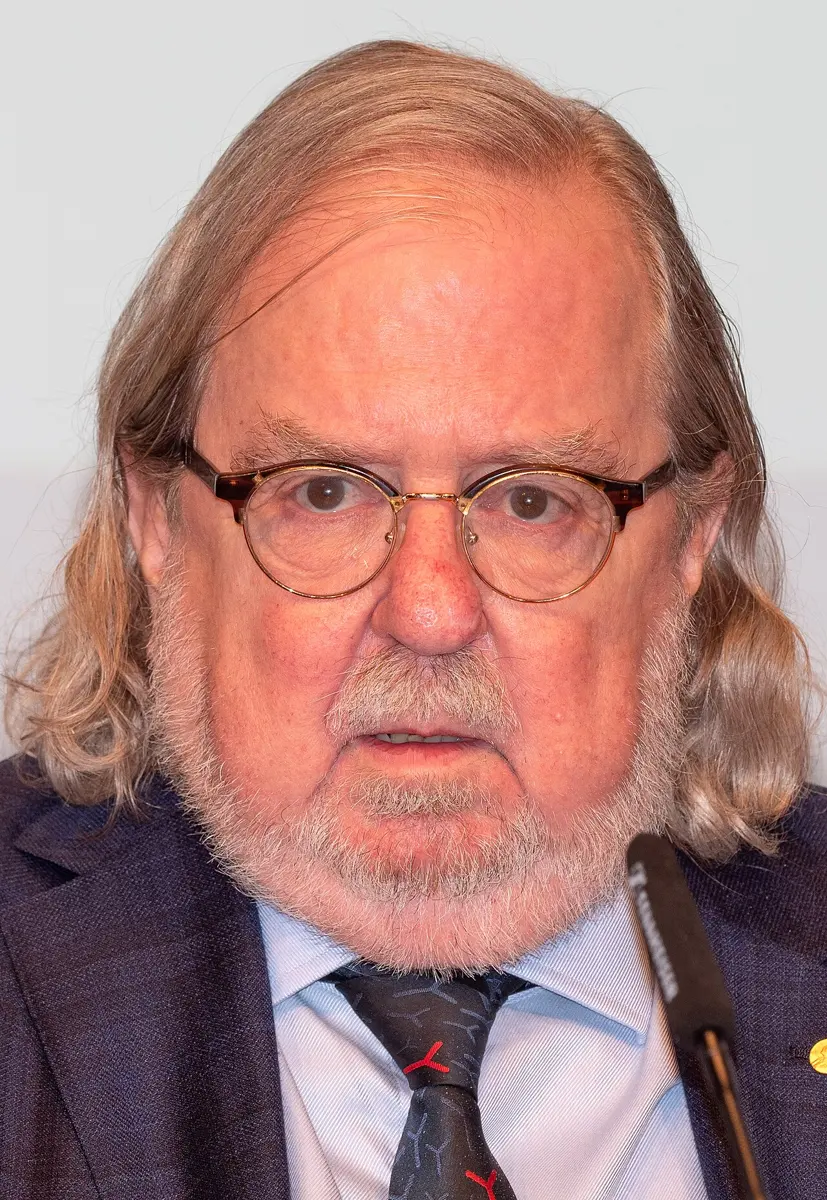
James P. Allison
born 1948 in the United States
A Texan who lost his mother to cancer when he was eleven. He plays the harmonica in a band of cancer scientists called The Checkpoints.
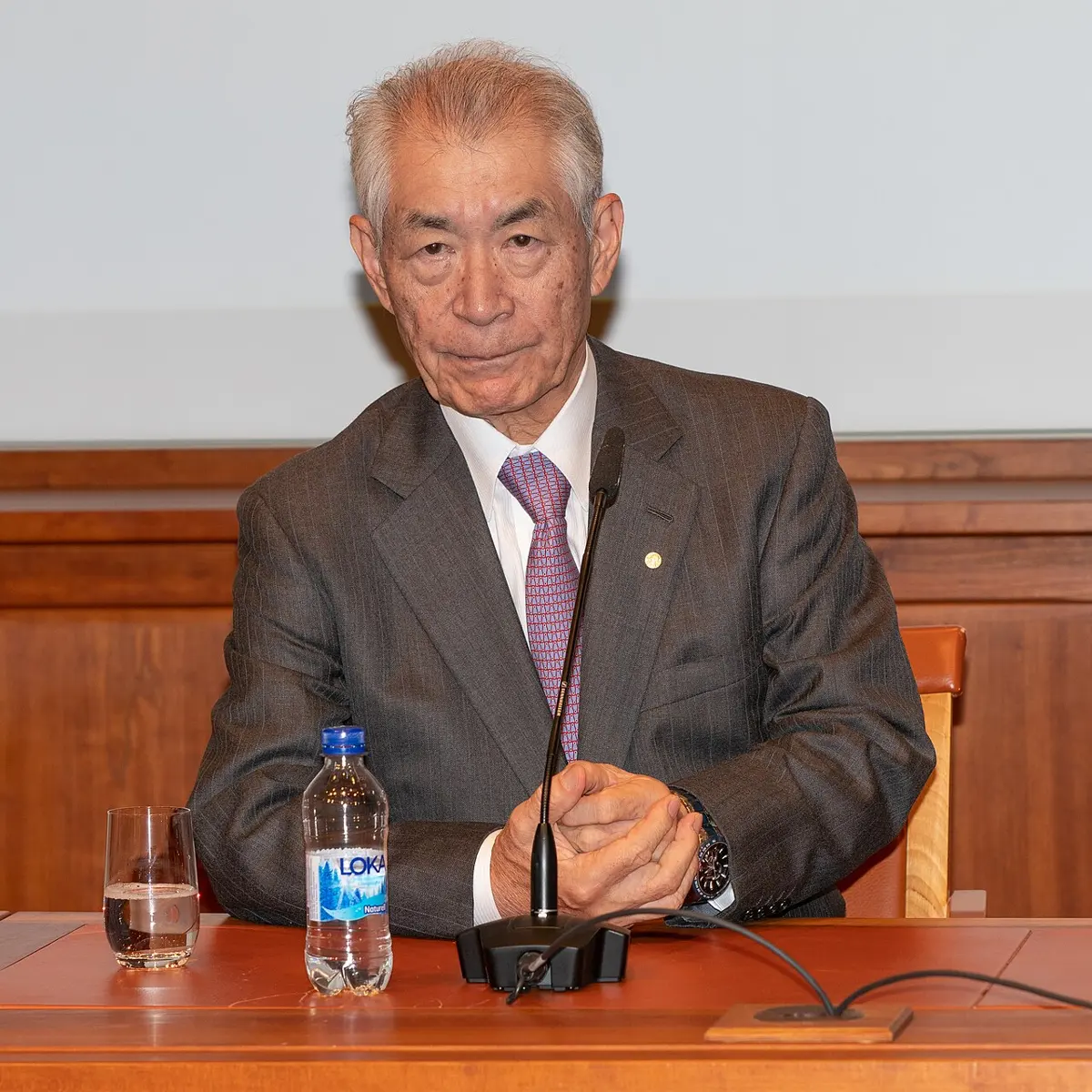
Tasuku Honjo
born 1942 in Japan
A professor at Kyoto University who studied one unknown molecule for almost ten years before he knew what it did.
Your body is already fighting cancer, every day. Each time a cell divides, it copies its DNA, and now and then a copy goes wrong. Most faulty cells are found and killed by your white blood cells before they can do harm. But sometimes a faulty cell escapes, keeps dividing, and grows into a lump.
For a hundred years doctors hoped to help the body’s own defenses finish the job. It never worked well, until two scientists, working on opposite sides of the world, found out why. Our defenses have brakes, and cancer can press on them. In 2018 the Nobel Prize in Physiology or Medicine went to James Allison and Tasuku Honjo, who showed how to release the brakes.
The problem: cells that won’t stop dividing
Your body is made of about 30 million million cells, and many of them divide again and again to replace old ones Grade 10: Mitosis. Normally each cell divides only when the body needs it, and stops when it should.
Cancer is what happens when cells keep dividing when they should stop. They pile up into a lump, a tumor. Worse, some of the cells can break away, travel in the blood, and start new tumors in other organs. When a cancer has spread like this, it is very hard to treat. In 2018 about 18 million people in the world were told they had cancer, and more than 9 million died of it.
Doctors had three main weapons:
- surgery, to cut the tumor out;
- radiation (radiotherapy), beams that damage the cancer cells;
- chemotherapy, medicines that kill cells that divide fast.
These save many lives. But once a cancer has spread through the body, surgery can’t reach it all, and radiation and chemotherapy also harm healthy cells. For some cancers, such as melanoma (a cancer of the skin cells that make its dark color), most patients whose cancer had spread died within a year or two.
An old idea that kept failing
In the 1890s a surgeon in New York, William Coley, gave cancer patients bacteria on purpose, to wake up their defenses. A few got better; most did not. Over the next hundred years many others tried to make the body’s defenses fight cancer. Again and again it worked in a few patients and failed in most. By the 1990s most doctors thought it was a dead end.
What makes a group of cells a cancer?
Pick an answer to see why.
How your body’s defenses work
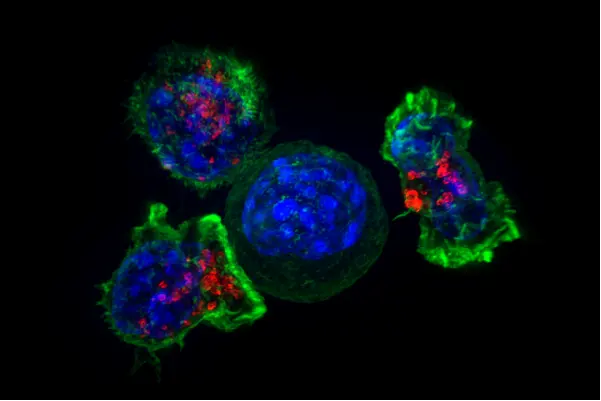
Your immune system is everything in your body that fights germs and faulty cells. Its soldiers are the white blood cells Grade 10: White blood cells. One kind, the lymphocytes, includes the T cells, which can find and kill a body cell that has gone wrong, such as a cell full of viruses or a cancer cell.
How does a T cell know which cells to kill? On its surface it has a receptor, a protein shaped to fit one particular marker. Each T cell has a different receptor. Most of them fit nothing in a healthy body. But a cancer cell often carries changed proteins that a healthy cell doesn’t have, and a few T cells have receptors that fit pieces of them.
Fitting is not enough, though. Think of a motorbike. Before a T cell starts an attack:
- its receptor must fit a marker: the key is in the ignition;
- an accelerator protein on the T cell must be pressed too, by a partner on another immune cell (a messenger cell that brings it pieces of what it has found);
- then the T cell switches on. It divides into thousands of copies, all with the same receptor, and they travel through the blood, killing every cell that carries that marker.
Why the immune system needs brakes
An attack that is too strong, or that never stops, is dangerous too. Sometimes T cells attack the body’s own healthy parts. This is called an autoimmune disease. In type 1 diabetes, T cells destroy the cells in the pancreas that make insulin.
So T cells also have brakes: proteins that slow them down or switch them off. By the 1990s scientists had found several. The brakes keep the attack under control. But they also help cancer: a cancer is made of the body’s own cells, and the brakes stop T cells from attacking it hard enough.
Why does a T cell have brakes at all?
Pick an answer to see why.
Why it was hard
Most scientists who tried to use the immune system against cancer tried to push the accelerator: they gave patients vaccines made from cancer cells, or chemicals that wake immune cells up. To do this, you first had to find which marker the T cells should look for on each cancer, and every cancer is different.
Nobody had thought of releasing the brakes instead. It also sounded risky. If you take the brakes off the immune system, won’t it attack the whole body? Mice born without one of these brakes, CTLA-4, died within a few weeks, their organs swamped by T cells. Using it as a medicine looked dangerous.
What they did, step by step
Allison: the CTLA-4 brake (1987–2011)
James Allison grew up in Alice, a small town in Texas. His mother died of a cancer of the lymph glands (lymphoma) when he was eleven. Later his brother and two uncles died of cancer too. He became an expert on T cells at the University of California, Berkeley.
- 1987: a new protein. A team in France, led by Pierre Golstein, found a protein on T cells and called it CTLA-4. Nobody knew what it did. It looked like the accelerator, so most scientists guessed it was another accelerator.
- 1993–1994: it’s a brake. Allison’s team and an American scientist, Jeffrey Bluestone, showed the opposite: CTLA-4 is a brake. It grabs the same partner as the accelerator, but more strongly, so the accelerator can’t be pressed.
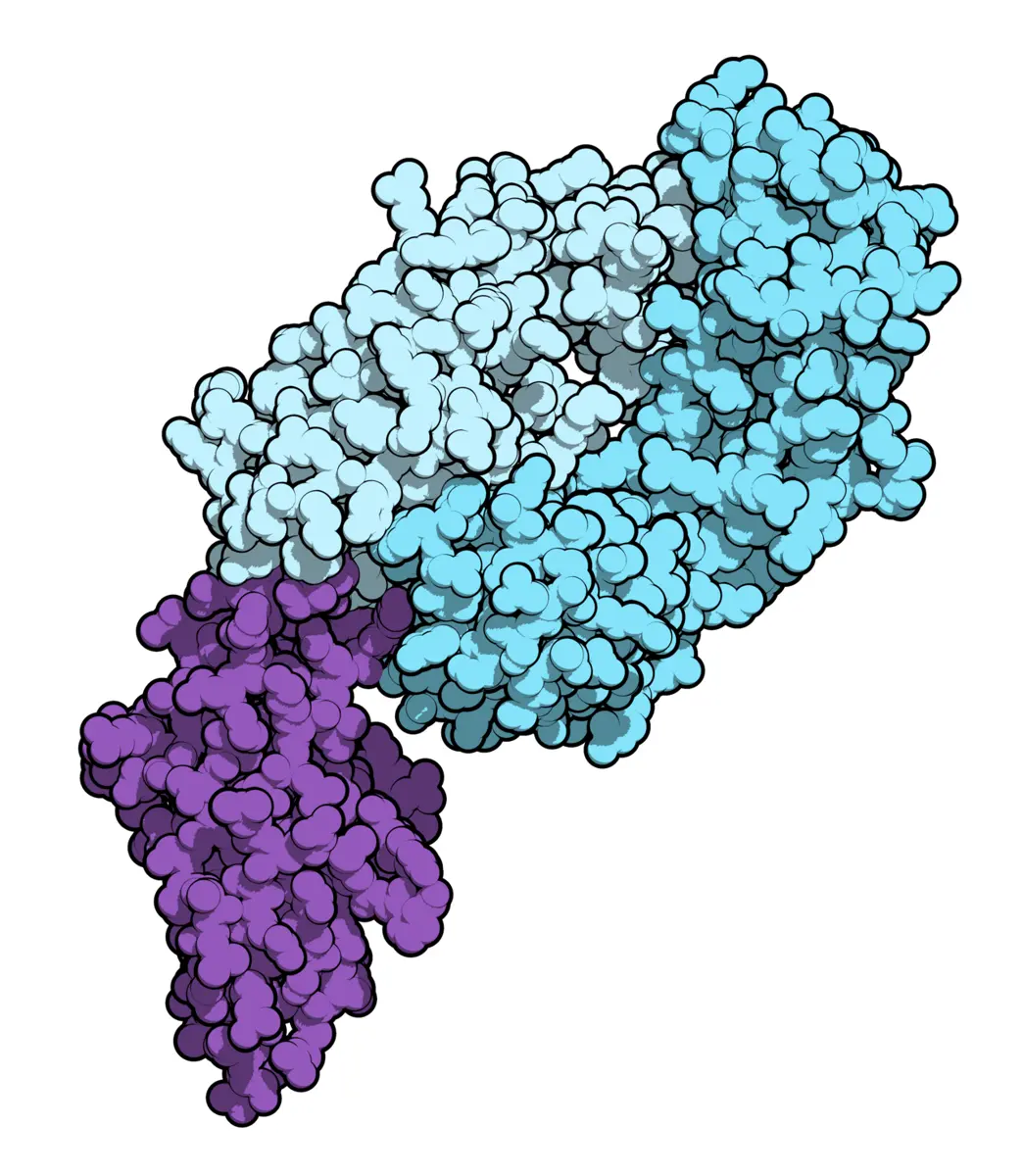
- An idea nobody else had. Other teams wanted to use CTLA-4 to calm the immune system in autoimmune diseases. Allison asked the opposite question: what if we block the brake? He made an antibody that sticks to CTLA-4 and covers it. (An antibody is a Y-shaped protein that grips one particular molecule very tightly; the body makes them to grip germs.)
- End of 1994: the mice. A young scientist in his lab, Dana Leach, gave tumors to mice and treated some of them with the antibody. The tumors in the treated mice shrank and disappeared. It seemed too good to be true, so they repeated the test over the Christmas holidays, without Allison knowing which mice had had the antibody. For two weeks every tumor grew. Then, around day 14, some stopped growing, and over the next days they shrank away. Every mouse that got better had received the antibody.
- 1996. They published the result. It worked on several kinds of tumor, and mice that had been cured could fight off the same cancer when it was given to them again.
- 1999–2011: into people. Drug companies weren’t interested at first. Allison kept trying, and in 1999 a small company, Medarex, made a human version of the antibody, later named ipilimumab. In 2010 a big trial in patients with advanced melanoma showed that it made patients live longer, and some had no sign of cancer left. Such results had never been seen in melanoma before. Ipilimumab was approved as a medicine in 2011.
Honjo: the PD-1 brake (1991–2014)
Tasuku Honjo was born in Kyoto in 1942. As a boy he wanted to be an astronomer, after seeing the rings of Saturn through a small telescope at school. Then he read the life of a famous Japanese germ hunter, Hideyo Noguchi, and chose medicine instead. He became a scientist at Kyoto University.
- 1991–1992: a gene with the wrong name. Honjo’s student Yasumasa Ishida was looking for genes that are switched on in T cells as they die. He found one and called it PD-1, for “programmed cell death 1”. As it turned out, it has nothing to do with death, but the name stuck.
- 1990s: what does it do? To find out, the team bred mice without the PD-1 gene. At first the mice seemed almost normal. Only as they grew old did they slowly get autoimmune diseases, much milder than in mice without CTLA-4. It took almost ten years to be sure: PD-1 is a brake on T cells, but a different one, which works more gently and in a different way.
- 2000: the partner. With teams in the United States led by Gordon Freeman and Clive Wood, they found the protein that presses the PD-1 brake, PD-L1. They noticed that some cancer cells carry PD-L1 on their surface. A cancer cell can press the T cell’s brake itself, and switch off the T cell that has come to kill it.
- 2002–2005: the mice. Blocking PD-1 or PD-L1 with antibodies let mice fight off tumors. In some tests it worked even better than blocking CTLA-4, with milder side effects.
- 2006–2014: into people. A Japanese company, Ono, almost gave up because no bigger partner wanted to help. Then Medarex, the company that had made Allison’s antibody, offered to work with them. The anti-PD-1 antibody nivolumab was tested on patients from 2006. In 2012 a trial of 296 patients with advanced cancers of the skin, lung and kidney showed that the tumors shrank in about one patient in four or five, and in most of them the effect lasted. Nivolumab was approved in Japan in 2014, the first in the world; the United States approved it and a similar medicine, pembrolizumab, the same year.
Some cancer cells carry PD-L1 on their surface. How does that help the cancer?
Pick an answer to see why.
How these medicines work
The medicines are called checkpoint inhibitors: the brakes are “checkpoints”, and an “inhibitor” blocks something. They are antibodies, made in factories by living cells, and given through a drip into a vein every few weeks.
They are very different from the old cancer medicines:
- They don’t touch the cancer cells at all. They act on the T cells, and the T cells do the killing.
- They work against many kinds of cancer, because they don’t depend on which marker each cancer carries.
- When they work, the effect can last for years. T cells remember, so if the cancer comes back, they are ready for it.
- They can be combined. Since CTLA-4 and PD-1 work in different ways, blocking both together works even better for melanoma, though the side effects are stronger.
But they don’t work for everyone. In many cancers only some patients respond, and doctors are still working out why. And there are side effects of a new kind: with the brakes off, T cells can attack healthy organs, such as the gut, the skin, the thyroid gland or the lungs. Usually doctors can calm this with other medicines, but it can be serious, even deadly.
Doctors give a patient a medicine that covers the PD-1 brake. Which side effect might they watch for?
Pick an answer to see why.
In your life today
- Patients who were given months to live. Before these medicines, most people whose melanoma had spread died within two years. Now many live for years, and some are still free of cancer more than five years later. Checkpoint inhibitors are now used against cancers of the lung, kidney, bladder, head and neck, and against Hodgkin lymphoma, and the list grows every year.
- A president. In 2015 Jimmy Carter, a former president of the United States, aged 90, was found to have melanoma that had spread to his liver and his brain. He was treated with radiation and pembrolizumab, and four months later his scans showed no sign of the cancer. He lived to be 100.
- In Nepal and nearby. These medicines are very expensive: a year of treatment costs far more than most families earn. Some cancer hospitals in Nepal now give them. In India, doctors at Tata Memorial Hospital in Mumbai tried a much smaller dose of nivolumab, with cheap chemotherapy tablets, for advanced cancers of the mouth and throat, which tobacco makes common in South Asia. In their 2023 trial, patients who also got the small dose lived longer. Ways like this could bring the medicines to many more people.
What came next
- More brakes. T cells have other brakes besides CTLA-4 and PD-1, and medicines that block some of them are being tested. A medicine that blocks a brake called LAG-3, given together with nivolumab, was approved for melanoma in 2022.
- Teaching T cells. In CAR-T therapy, doctors take a patient’s own T cells, give them a new receptor that fits the cancer, grow millions of them and put them back. It has saved some children with leukemia.
- The open question. Why does a checkpoint inhibitor make the cancer disappear in one patient and do nothing in another? Tumors with many DNA faults, which carry many changed markers, tend to respond better, and even the bacteria in a patient’s gut seem to matter. Finding out who will be helped, and how to help the rest, is one of the biggest questions in cancer research now.
In your science books
- Grade 10: white blood cells, the soldiers of the body, and mitosis, the cell division that goes out of control in cancer.
- Grade 9: blood, a fluid connective tissue.
- Going further: how a gene makes a protein, and what one wrong letter in a gene can do.
Learn more
- The Nobel Prize’s own summary: Press release: the 2018 Nobel Prize in Physiology or Medicine (nobelprize.org).
- The two laureates’ Nobel lectures: Allison and Honjo.
The official reason
The prize was given “for their discovery of cancer therapy by inhibition of negative immune regulation.”