
A neighbor’s tortoiseshell cat, patched black and ginger, has four kittens. One is black, one is ginger, one is striped like a little tiger, and one is black and white like nobody in particular. Same mother, born on the same night, and no two alike. Look at your own family and you see the same thing: you may have your mother’s eyes and your father’s laugh, while your brother has neither.
Now go to an apple farm in Jumla. A farmer plants a seed from her sweetest apple, and years later the new tree gives small, sour apples. Her neighbor cuts a twig from the same sweet tree and grafts it onto a young rootstock, and that tree gives exactly the same sweet apples as the old one. A twig makes a copy; a seed doesn’t. Why? In this topic you will open the recipe book that every living thing carries in its cells, see what happens when a recipe changes, and find out why a cutting is a copy and a seed is a new mix.
Recipes in every cell
You learned in Grade 8 that the nucleus of a cell holds the chromatin: long, thin threads of DNA wound round proteins. Each human body cell has 46 of these threads, in 23 pairs, and when the cell divides they coil up into chromosomes you can see under a microscope Grade 8: Grade 8: Nucleus. Through them, the characters of the parents pass to their young. But what is it in a chromosome that makes your eyes brown or a rabbit’s ears dark?
Genes are recipes for proteins
A chromosome is one enormously long molecule of DNA. Along it, one after another, are genes. A gene is a stretch of DNA that carries the instructions, the recipe, for making one protein. A human has about 20,000 of these recipes, spread over the 23 pairs of chromosomes; a long chromosome carries a couple of thousand of them, a short one only a few hundred or fewer.
Why proteins? Because proteins do almost all the work in a living thing. They are its building materials and its tools:
- Keratin is the tough protein of your hair and nails, and of a bird’s feathers and a buffalo’s horns.
- Hemoglobin in your red blood cells carries oxygen from your lungs to every part of you.
- Amylase in your saliva cuts the starch in rice into sugar: chew plain rice for a minute and it starts to taste sweet.
- A protein in your skin and hair makes melanin, the dark-brown pigment that colors them. We’ll call it the pigment-making protein (its name is tyrosinase).
A protein is a long chain of small building blocks, amino acids, joined end to end. The chain folds itself up into a particular shape, and its shape decides its job: which molecules it can hold, cut or join. Change the order of the blocks and the chain may fold differently, and then it may do its job differently, or not at all. In Grade 8 you met the ribosomes, the cell’s protein factories, which build proteins by following instructions copied from the DNA Grade 8: Grade 8: Ribosomes. The instructions they follow are the genes.
So there is a chain from the genes to what you can see:
gene (the recipe) → protein (built from it) → trait (what the body is like)
A trait is any feature of a living thing: the color of its fur, its blood group, how tall it can grow, whether its body can digest milk. Many traits come from the work of many proteins together, and from the surroundings too (you saw in Why Do Two Plants from the Same Field Grow So Differently? that food and light matter as much as the seed). But some traits hang mostly on one protein, and those are the easiest to follow.
What does a gene carry?
Pick an answer to see why.
When a recipe changes
Every time a cell divides, it copies all its DNA, about 6 billion letters of it in a human cell, so that each new cell gets a full set. The copying is astonishingly accurate, and the cell checks and repairs its work, but now and then a mistake gets through. DNA can also be damaged from outside: by the ultraviolet light in strong sunshine, by X-rays, and by some chemicals, such as those in tobacco smoke. A change in the DNA is called a mutation.
You met mutations in Grade 9, as sudden changes that bring a new character, like an extra finger Grade 9: Grade 9: Variation and mutation. Here is why a tiny change in a long thread of DNA can change a whole body. If the change falls inside a gene, the recipe now says something slightly different, and the cell may build a slightly different protein. Then there are three possibilities:
- The protein comes out the same, or just as good. Nothing changes for the body. The mutation is neutral. Most mutations are like this, partly because most of our DNA isn’t recipes at all: only about 1 or 2 letters in every 100 are inside the parts of genes that are recipes.
- The protein works worse, or not at all. The body may be harmed. The mutation is harmful.
- The protein works differently in a way that helps. The mutation is beneficial: helpful to the living thing, in its surroundings.
Which of the three it is depends on the protein, on the change, and, as you will see, on where the living thing lives.
Three versions of one gene
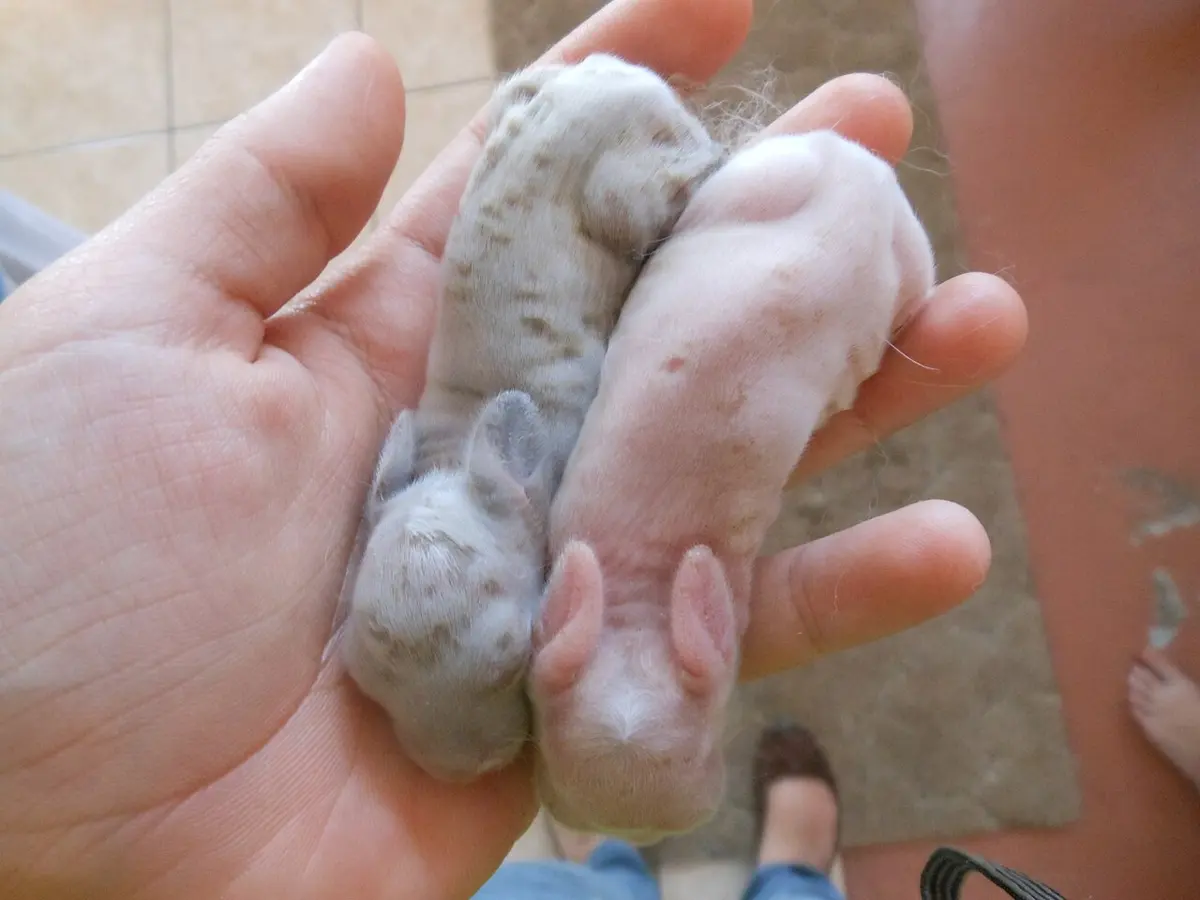
Rabbits have a gene for the pigment-making protein, and it comes in several versions. The usual version makes a protein that works all over the body: the rabbit is fully colored (black, brown or gray, depending on other genes). A rabbit with two copies of the albino version makes no working pigment protein at all: it is pure white, with pink eyes.
A Himalayan rabbit has two copies of a third version. (Despite its name, nobody knows for sure that the breed came from the Himalaya.) Its protein has one small change that makes it fragile: it works in cool skin, but at the warmth of most of the body it doesn’t. So a Himalayan rabbit is white, except for the coolest parts of its body, the parts that stick out and lose heat: its ears, nose, feet and tail. Those are dark.
The ice-pack experiment shows something important. The Himalayan rabbit’s genes didn’t change when its back was cooled. The protein they made was the same as always. What changed was the temperature the protein worked at. A gene decides what protein a cell can make; the surroundings can still decide whether it works.
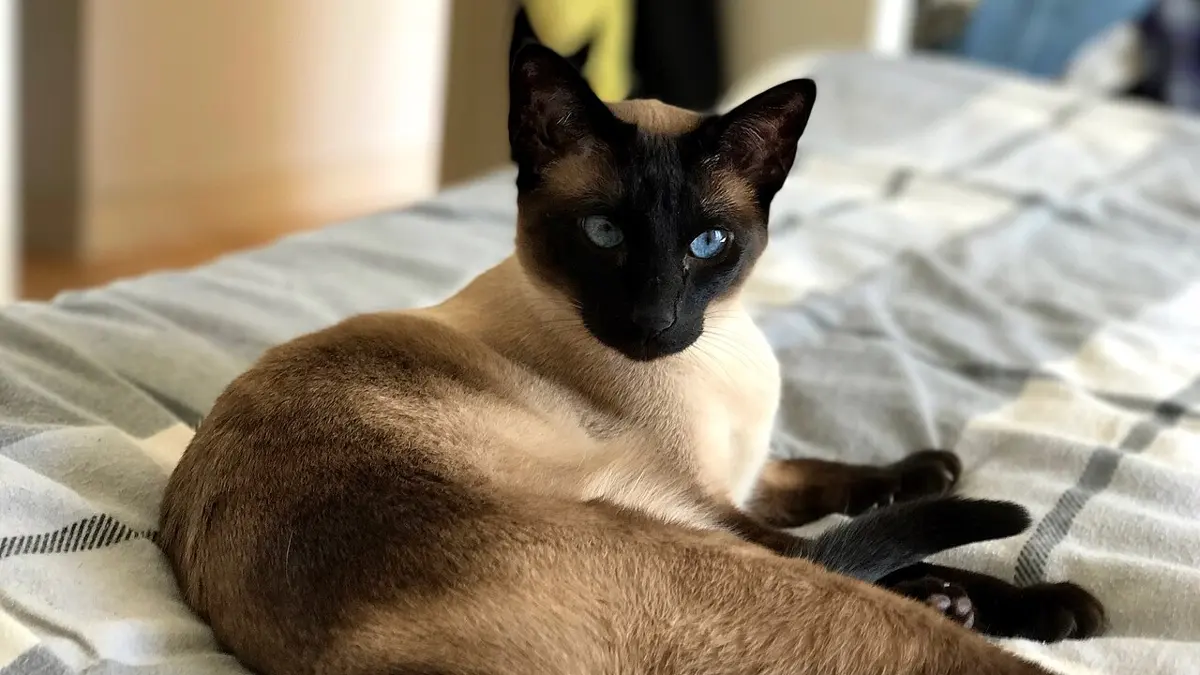
Siamese cats have the same kind of change in the same gene. Siamese kittens are born almost white, because the mother’s womb is warm all over; their face, ears, legs and tail darken over the first weeks, as those parts cool. Siamese cats kept in a cold house grow darker coats.
People have this gene too, and changes in it cause one kind of albinism: little or no melanin in the skin, hair and eyes. That is harmful. Without melanin, the skin burns easily in sunlight and is much more likely to get skin cancer, and the eyes don’t develop normally, so most people with albinism see poorly. Same gene, different changes, different effects: one change breaks the protein completely, another makes it fussy about temperature, and many changes do nothing at all.
A Himalayan rabbit is kept outdoors through a cold winter. When it molts (sheds its fur and grows new fur), the new fur on its body comes out grayer than before. Why?
Pick an answer to see why.
Harmful, neutral or beneficial?
| Change in the gene | Change in the protein | Effect on the living thing |
|---|---|---|
| a change outside the recipe parts, or one that leaves the protein the same | none | neutral: nothing changes |
| albino version of the pigment gene, in people | no working pigment-making protein | harmful: sunburn, skin cancer, poor eyesight |
| Himalayan version, in rabbits | works only in cool skin | dark points; neutral for a pet rabbit |
| the Tibetan version of the EPAS1 gene (below) | the body reacts less strongly to thin air | beneficial high in the mountains |
Notice that the same version of EPAS1 that helps at 4,000 m makes little difference in Kathmandu or the Terai. Whether a change is beneficial or harmful often depends on the surroundings. A dark coat that hides a rabbit in a forest gives it away on snow.
A man works outdoors all his life, and the sunlight causes many mutations in his skin cells. What do they mean for his children?
Pick an answer to see why.
Cuttings are copies
You learned in Grade 8 that in asexual reproduction one parent alone makes young, and that the young are copies of the parent, with the same genes Grade 8: Grade 8: Asexual reproduction. Here is why.
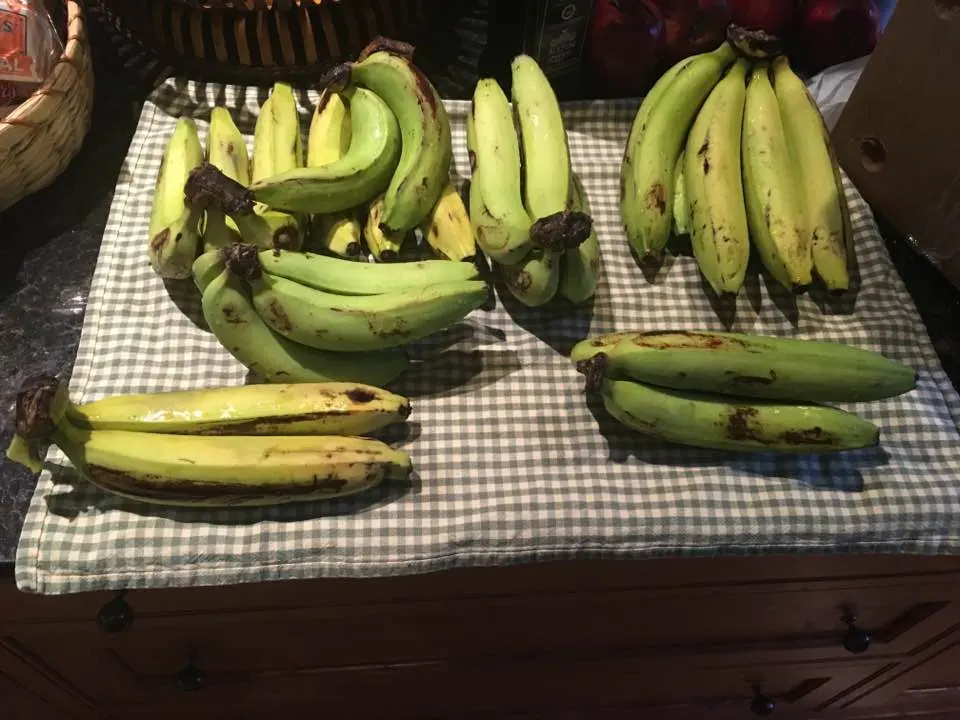
A cutting, a potato’s tuber, a banana’s sucker or a grafted twig is a piece of the parent’s body. All its cells were made by cell division, and before a cell divides, it copies every chromosome, and each new cell gets one full copy of the lot. (In Grade 10 this is called mitosis: Grade 10: Mitosis.) So the new plant grows with exactly the same chromosomes, and the same genes, as the parent. Living things with exactly the same genes are called clones. A row of banana plants grown from suckers, or a field of potatoes from one potato’s tubers, is a field of clones.
That is why farmers and gardeners use cuttings and grafting: it is the only sure way to keep a good variety exactly as it is. Every sweet apple of a named variety, every tree in an orchard of that variety, grew from a twig of the same first tree.
A gardener has one marigold plant with unusually large, deep orange flowers. She wants twenty plants exactly like it. What should she do?
Pick an answer to see why.
Seeds are mixes
In sexual reproduction, a male gamete and a female gamete fuse, and the young show variation: each is a new mix of its two parents Grade 8: Grade 8: Sexual reproduction. Here is how the mix is made.
Two copies of every gene
Your chromosomes come in pairs. In each pair, one chromosome came from your mother and one from your father. The two of a pair carry the same genes, in the same order: the same recipes. So you have two copies of almost every gene, one from each parent. (The X and Y chromosomes that make boys boys are the exception.)
The two copies needn’t be the same version. A rabbit may have one usual pigment gene and one Himalayan. The different versions of a gene are called alleles. One copy may be the usual allele and the other a different one; each makes its own version of the protein.
One of each pair goes into each egg or sperm
When a body makes eggs or sperm (in a plant, ovules and pollen), it doesn’t share out the chromosomes in the usual way. Each egg or sperm gets one chromosome of every pair, so only half the full number: a human egg has 23, not 46. Which one of each pair goes into a particular egg is decided by chance, for each pair separately, like tossing a coin for each.
At fertilization, an egg with one of each of the mother’s pairs fuses with a sperm carrying one of each of the father’s. The fertilized egg has pairs again, one of each pair from each parent, and it grows into a new living thing with a mix that never existed before.
How many different eggs?
With one pair of chromosomes, an egg can get either of 2. With two pairs, it can get either of the first pair and either of the second: 2 × 2 = 4 kinds. Each extra pair doubles the number.
And the real numbers are bigger still. Before the chromosomes of a pair separate, they lie side by side and swap pieces, so an egg gets chromosomes that are themselves new mixes of the grandparents’. That is why, out of all the children who have ever been born, almost certainly no two brothers or sisters have had the same genes, unless they were identical twins.
Two brothers have the same mother and father. Why don’t they have the same genes?
Pick an answer to see why.
Predicting the mix
If each egg and sperm gets one of each pair by chance, you can work out the chances of each kind of young, before any are born. You will do this properly in Grade 10, with Mendel’s peas Grade 10: Grade 10: Mendel’s experiment. Here is the idea.
Dominant and recessive
Take a rabbit with one usual pigment allele and one Himalayan allele. It has one copy of the recipe for the usual protein, and the usual protein works everywhere, so the rabbit is fully colored. One working copy is enough. Its Himalayan allele is hidden.
- An allele that shows its trait even when there is only one copy is dominant. We write it with a capital letter: C for the usual (full color) allele.
- An allele that shows only when both copies are that allele is recessive. We write it with the small letter: c for the Himalayan allele. (Rabbit breeders write it cʰ, and keep c for the albino version.)
So a CC rabbit and a Cc rabbit both look fully colored; only a cc rabbit looks Himalayan. A Cc rabbit carries the Himalayan allele without showing it, and it can pass it on.
The Punnett square
To see what two parents can have, write the alleles one parent can put into its eggs along the top, and the alleles the other can put into its sperm down the side. Then fill in each box with one from the top and one from the side. This is a Punnett square, named after the British geneticist Reginald Punnett, who started using it in the early 1900s. Each box is an equally likely kit.
Questions
Two colored rabbits have a Himalayan kit. What is the most likely explanation?
Pick an answer to see why.
Which of these is reproduction that makes young with exactly the parent’s genes?
Pick an answer to see why.
A mutation changes a gene, but the protein made from it works exactly as before. What is the effect on the living thing?
Pick an answer to see why.
Use the chain gene → protein → trait to explain why an albino rabbit stays white even when its skin is kept cool, but a Himalayan rabbit’s fur grows back dark there.
Answer
The fur’s color (the trait) comes from melanin, which is made by the pigment-making protein, built from the recipe in the pigment gene.
- a.The albino rabbit’s two copies of the gene are a version whose recipe gives no working protein. With no working protein, no melanin is made, whatever the temperature, so its fur stays white.
- b.The Himalayan rabbit’s version makes a protein with a small change: it works in cool skin but not in warm skin. Cooling the skin lets this protein work, so melanin is made and the fur grows back dark.
So the gene decides which protein can be made; the temperature decides whether that particular protein works.
A farmer in Ilam wants a whole hillside of tea bushes exactly like her best bush, which gives fine leaves and resists a disease. Should she plant its seeds or take cuttings? Explain with what happens to the chromosomes, and give one risk of her choice.
Answer
Cuttings. The cells of a cutting were made by ordinary cell division, in which every chromosome is copied and each new cell gets the full set, so each cutting has exactly the genes of the best bush, and grows into a bush with the same leaves and the same resistance. Seeds would each get one of each pair of chromosomes from her bush and one of each pair from whatever bush the pollen came from, picked by chance, so the young bushes would differ, and many would lose the good traits.
The risk: the whole hillside would be clones. If a new disease came that could kill her best bush, it could kill every bush on the hillside, because none would have different genes that let it survive (like the Gros Michel bananas).
Using a Punnett square, show the kits you would expect from a Cc rabbit and a Cc rabbit, and give the ratio of colored to Himalayan. Why might a real litter of 4 kits have no Himalayan kits at all?
Answer
| C | c | |
|---|---|---|
| C | CC, colored | Cc, colored |
| c | Cc, colored | cc, Himalayan |
Colored : Himalayan = 3 : 1, so each kit has a 1 in 4 chance of being Himalayan.
A litter of 4 needn’t have one: each kit is a separate chance, and the chance that a kit is colored is ¾ each time. The chance that all 4 are colored is ¾ × ¾ × ¾ × ¾ ≈ 0.32, almost a third of litters. The 3 : 1 ratio shows only when many kits are counted.
A mutation happens in a cell of a woman’s skin, and another in a cell in her ovary that will become an egg. Which one could her child inherit? Explain.
Answer
Only the one in the ovary cell. A child grows from one egg and one sperm, so it gets only the DNA in that egg and sperm. The mutation in the egg-making cell can be in the egg, and then it would be in every cell of the child. The skin cell’s mutation is copied only into the skin cells that grow from it, and never reaches an egg, so it ends with her.
In people, the gene for hemoglobin, the protein that carries oxygen in the blood, has a version called the sickle-cell allele. A person with two copies has sickle-cell disease: their red blood cells bend into stiff crescents that block small blood vessels, causing pain and serious illness. A person with one copy is usually healthy, and is much less likely to die of malaria. Is the sickle-cell allele harmful, beneficial or neutral? Explain.
Answer
It depends on how many copies a person has and where they live, which is why a single word doesn’t fit.
- a.With two copies it is harmful: the changed hemoglobin makes the red blood cells sickle, which causes sickle-cell disease.
- b.With one copy, in a place with malaria, it is beneficial: the person stays healthy and is protected against the worst of malaria.
- c.With one copy, in a place without malaria, it is close to neutral.
This is why the allele is common in places where malaria was common for a long time: people who carried one copy were more likely to survive and have children.
Sherpas whose families have lived high in the mountains for many generations often carry a version of the EPAS1 gene that is rare in lowland people. Suggest why this version became common high in the mountains but not in the lowlands.
Answer
In the thin air of the mountains, the EPAS1 version helps: people who carry it react less strongly to the lack of oxygen, so their blood doesn’t get too thick, and they stay healthier there. Over many generations, people with it were more likely to stay healthy and have children, and each child had a chance of inheriting it, so it became more and more common. In the lowlands there is plenty of oxygen, so it makes little difference there, and carriers had no advantage: it stayed rare. Whether a version of a gene is beneficial depends on the surroundings.
Where to go next
- How Do Snow Leopards Come to Fit the Mountains? Every young is a little different; why some differences get passed on more than others, generation after generation, until a whole species fits its home.
- How Did Farmers Make Our Crops? Farmers chose which plants would be the parents of the next generation, for thousands of years; now laboratories can change genes directly.
- Why Do Two Plants from the Same Field Grow So Differently? The genes set what a plant can become; food, water, light and space decide how much of it it does: read it.
Going further still: in Going Further, Grades 9–12, How Does a Gene Make a Protein? reads the four-letter code of DNA and builds a protein from it, and Why Aren’t You Exactly Like Your Brother or Sister? works out how much DNA brothers and sisters really share.