
The clock inside every cell
Nobel Prize in Physiology or Medicine, 2017: Jeffrey C. Hall, Michael Rosbash, and Michael W. Young
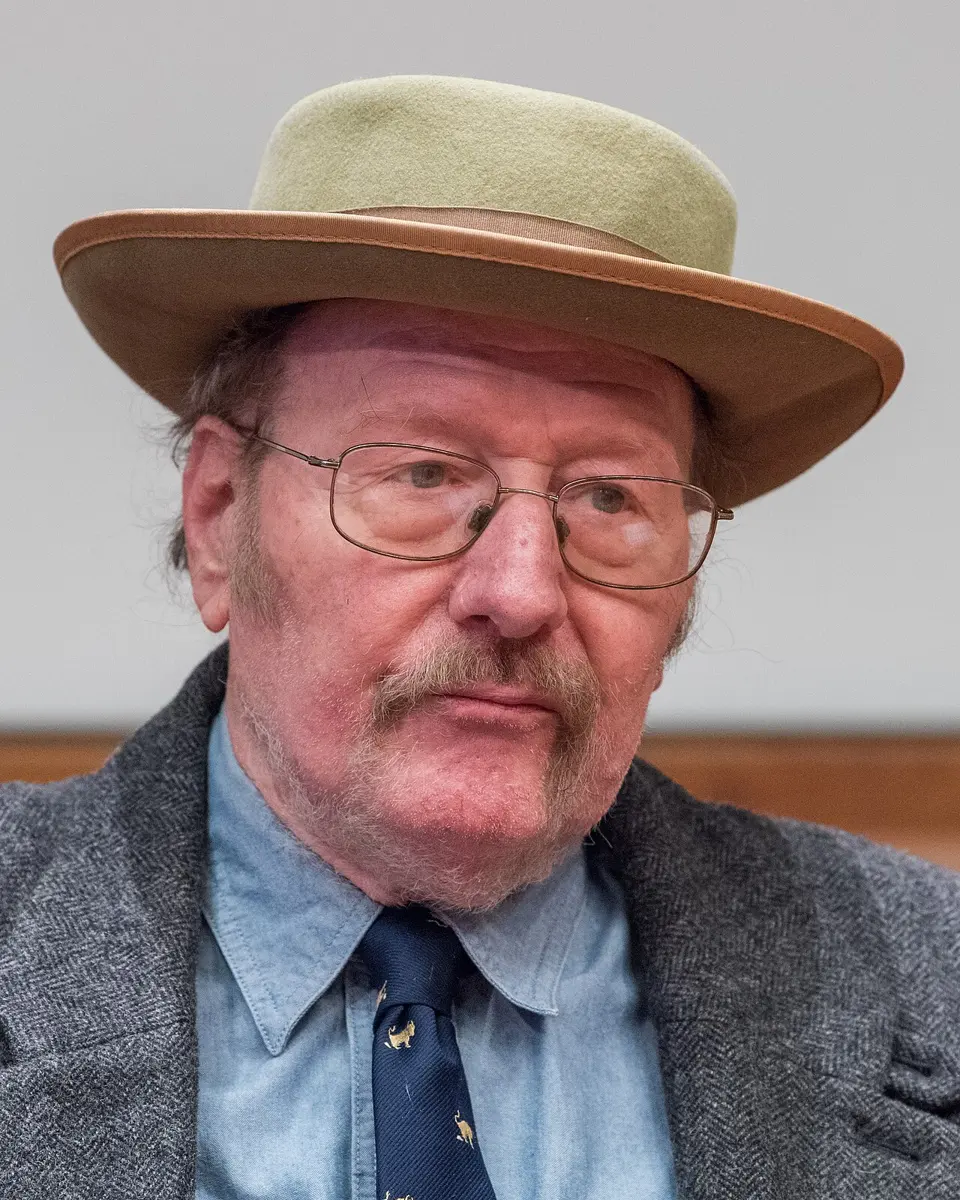
Jeffrey C. Hall
born 1945 in the United States
A fruit-fly geneticist at Brandeis University, near Boston. He and Rosbash teamed up there for years to take the fly’s clock apart.
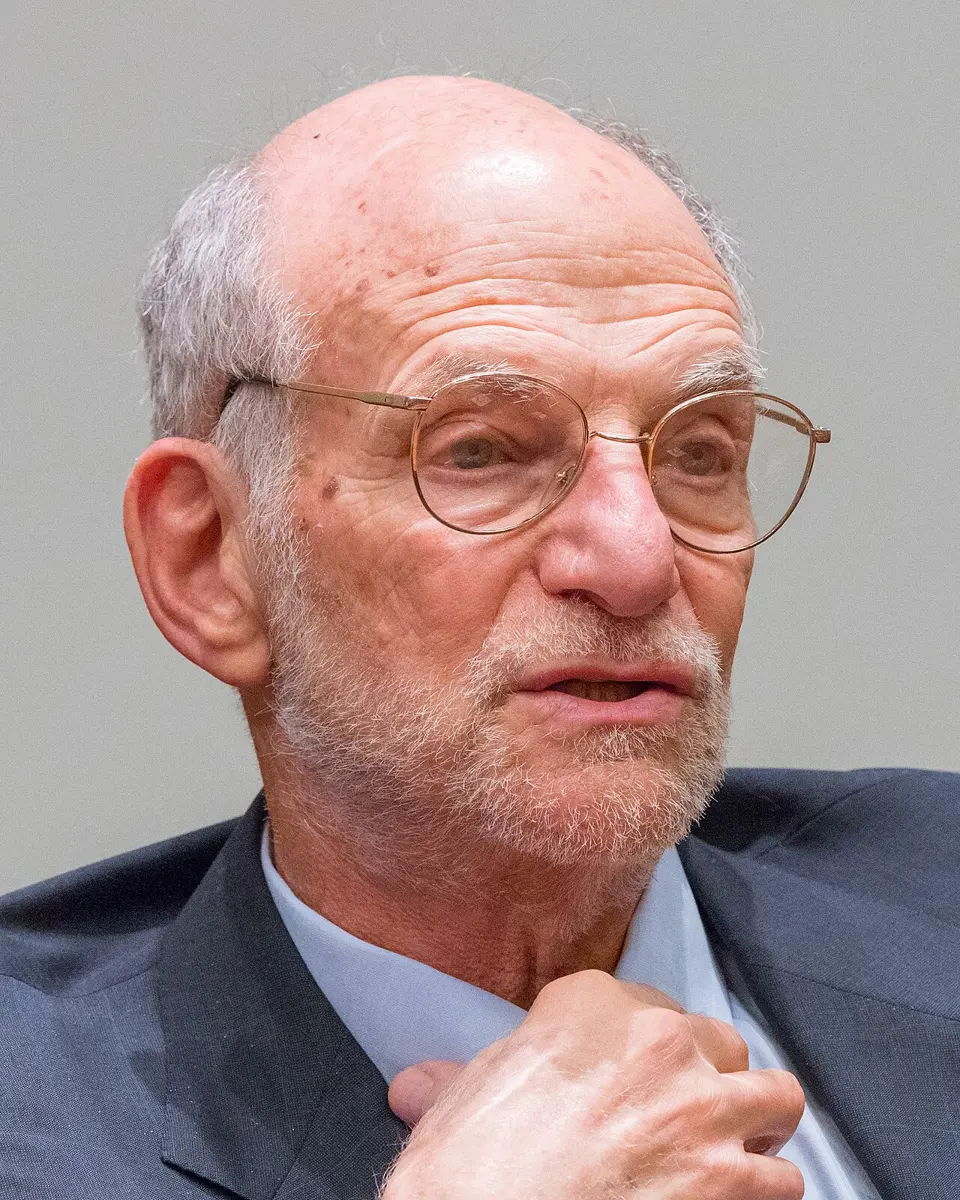
Michael Rosbash
born 1944 in the United States
His parents were Jewish refugees who escaped from Nazi Germany; his father found work as a cantor, a singer of prayers, in Kansas City, where Michael was born.
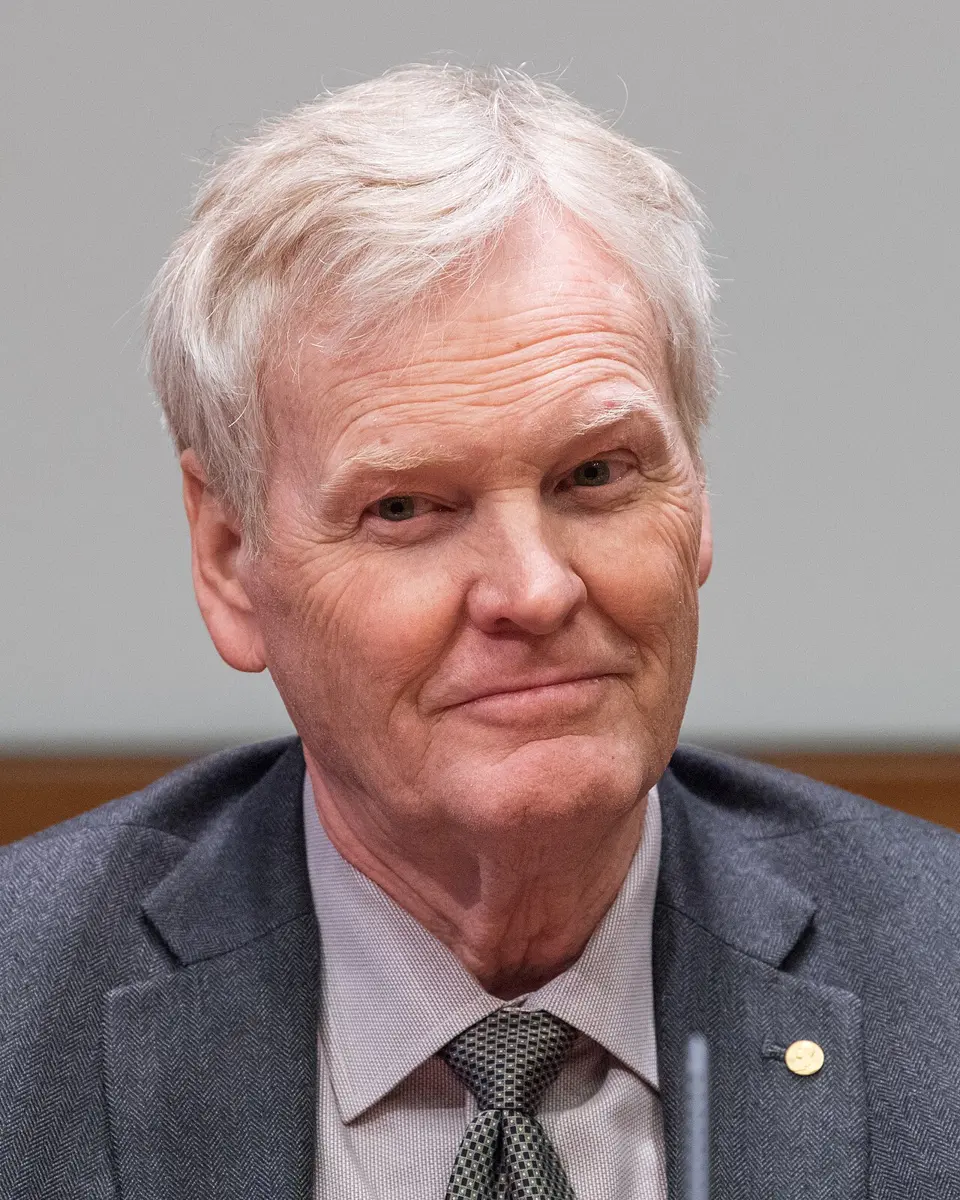
Michael W. Young
born 1949 in the United States
At eleven or twelve he read that migrating birds steer by a clock in their heads, and wondered how such a clock could work.
You probably wake up at about the same time every day, even without an alarm. You get sleepy at night, hungry at mealtimes. If you fly from Kathmandu to New York, where the clock is about ten hours behind, you will be wide awake at 3 in the morning and drowsy at lunch for days. Something inside you is keeping time.
That something is a biological clock, and you don’t have just one: almost every cell in your body has its own. In 2017 the Nobel Prize in Physiology or Medicine went to three American scientists who found out how the clock works, using the tiny fruit flies that hover around ripe bananas.
The problem: a clock nobody could find
Plants that keep time in the dark
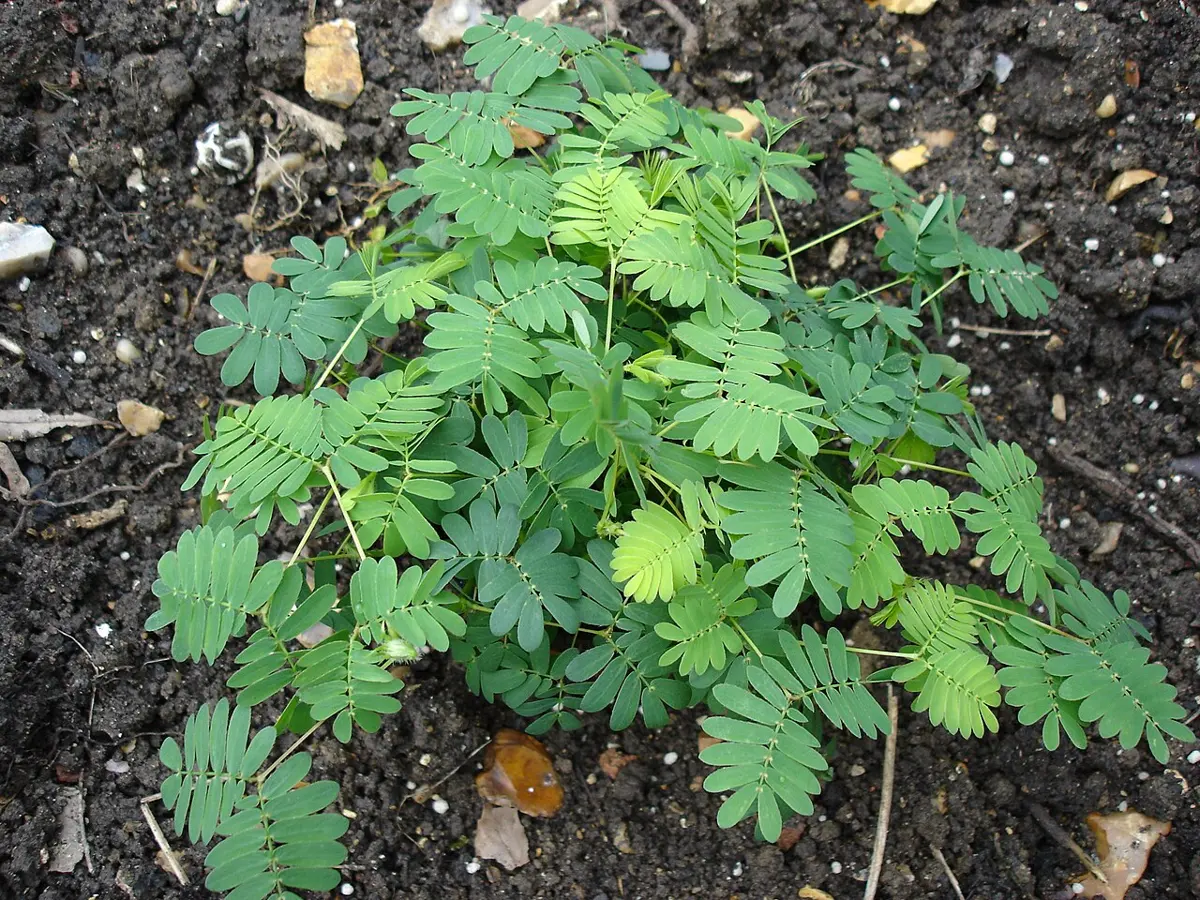
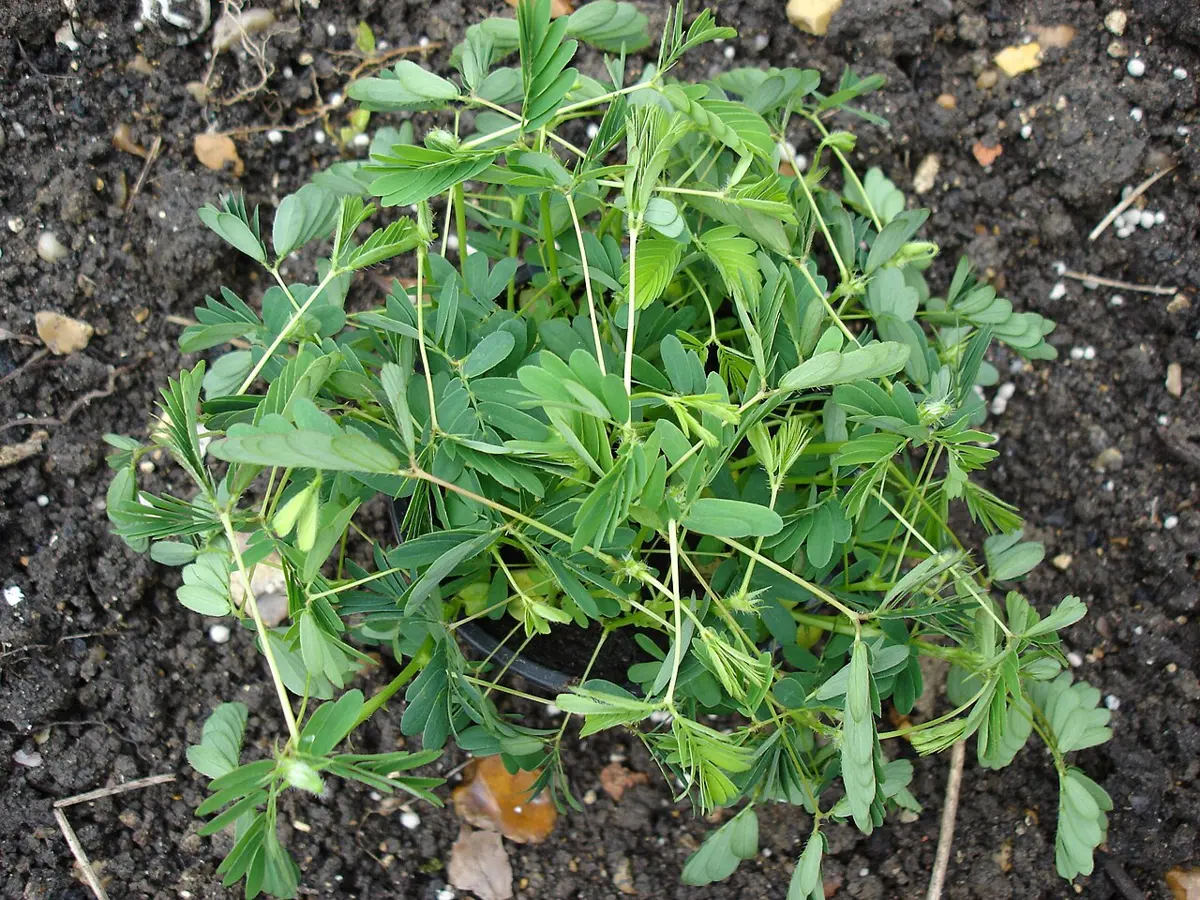
Look at a lajjawati plant (the touch-me-not, Mimosa pudica), common in the Terai and in gardens. Touch it and its leaflets fold up. But it also folds its leaves by itself every evening, and opens them every morning.
In 1729 a French astronomer, Jean-Jacques d’Ortous de Mairan, wondered whether the plant was simply reacting to the light. He put one in a dark place, away from the sunlight. Day after day, in total darkness, the leaves still opened in the morning and closed in the evening. The plant was not just following the sun. It had its own clock.
Clocks everywhere
Over the next two hundred years, scientists found daily rhythms almost everywhere: in animals, in fungi, even in single-celled bacteria. A rhythm that repeats about every 24 hours, even without light or dark to guide it, is called a circadian rhythm, from the Latin circa, “about”, and dies, “day”.
In people, the clock sets a daily rhythm for much of the body:
- Sleep. In the evening a small gland deep in the brain releases a hormone, melatonin, which makes you sleepy. Light, especially the blue light from screens, holds it back.
- Body temperature is lowest in the early morning, before you wake.
- Hormones rise and fall at set times Grade 9: hormones, and so do blood pressure and the way your body handles food.
But how does a living thing count the hours? There are no gears and springs in a cell. By the 1970s nobody knew.
de Mairan’s plant kept opening and closing its leaves in the dark. What did this show?
Pick an answer to see why.
The fruit fly: a gene for time
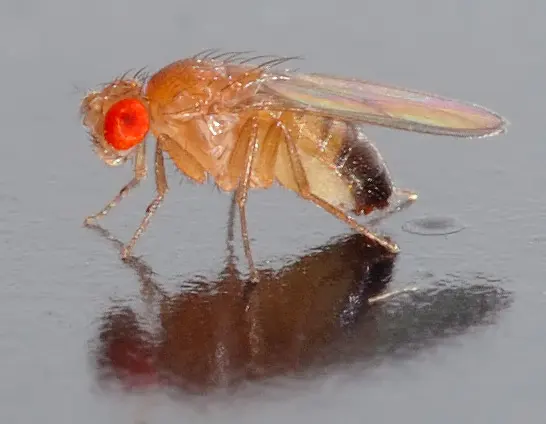
The first clue came from fruit flies (Drosophila), the little flies that gather on ripe fruit. They are about 3 millimeters long, easy to keep in bottles, and a new generation hatches every two weeks or so, so scientists have studied their genes for more than a hundred years Grade 10: genetics.
Fruit flies keep time too. They are busiest around dawn and dusk, and young flies come out of their pupa cases mostly around dawn.
In the early 1970s, Seymour Benzer and his student Ronald Konopka, in California, treated flies with chemicals that cause random changes in genes (mutations), then searched thousands of their offspring for flies with strange timing. In 1971 they reported three kinds:
- flies with no rhythm at all, active at random times;
- flies whose day was only 19 hours long;
- flies whose day was 28 hours long.
All three changes were in the same gene. They called it period. A single gene could change the length of a day. But what did it do? With the tools of the 1970s, nobody could find out.
Why it was hard
A gene is a stretch of DNA, the long molecule in the nucleus of every cell that holds the instructions for making proteins Grade 10: DNA. To learn what a gene does, you have to find it on the DNA, read it, and then find the protein it makes and watch what the protein does.
In 1971 none of that was possible. Ways of cutting out a single gene and copying it (gene cloning) were only invented in the mid-1970s. Even then, finding one gene among the fly’s roughly 14,000 meant a slow “walk” along the DNA, one piece at a time. And a clock has no single moment to look at: whatever was happening in the cell had to be measured again and again, around the clock, day and night.
What they did, step by step
Two teams worked on the problem, side by side and in competition: Jeffrey Hall and Michael Rosbash together at Brandeis University, near Boston, and Michael Young at Rockefeller University in New York.
Hall, Rosbash and Young: finding period (1984)
- 1984: the gene. Both teams found the period gene on the fly’s DNA and cut it out.
- Putting it back. They put the gene into flies whose own copy was broken, flies with no rhythm. The flies got their daily rhythm back. This was the first time a single gene had been added to an animal to restore a behavior.
Hall and Rosbash: a protein that comes and goes (1988–1990)
- 1988: PER rises at night. Hall and Rosbash made antibodies that stick to PER, the protein made from the period gene, so that they could see it in the fly’s brain. The amount of PER rose during the night and fell during the day, every day.
- 1990: a loop. The gene’s messenger (its mRNA, the working copy of a gene that carries the instructions out of the nucleus to where proteins are made) also went up and down, but it peaked several hours before the protein. Hall and Rosbash proposed a simple idea: PER switches off its own gene. When there is little PER, the gene works and makes more. As PER builds up, it goes into the nucleus and turns the gene off. Then the old PER is slowly broken down, the gene switches back on, and the cycle starts again.
Young: the partner and the brake on the clock (1994–1998)
The loop had a gap. Genes are in the nucleus, but proteins are made outside it, in the cytoplasm. How did PER get back in to switch its gene off?
- 1994: timeless. Michael Young found a second clock gene, timeless, which makes a protein called TIM. TIM and PER join together, and only as a pair can they get into the nucleus. Flies without TIM had no rhythm.
- 1998: doubletime. If the loop ran at full speed, it would take a few hours, not 24. Young found a third gene, doubletime. Its protein, DBT, marks PER for breaking down, so PER builds up more slowly. This delay is a big part of what stretches the loop to about a day.
- 1998: the switches and the light. Hall and Rosbash found the proteins (CLOCK and CYCLE) that switch the period gene on, and, with others, how light resets the clock: in the fly, light causes TIM to be destroyed, so a bright morning pushes the clock back into step with the sun.
In the fly clock, what does the PER protein do to its own gene?
Pick an answer to see why.
The same clock in you
Hunting for the same genes in mice and people, scientists found them: humans have three period genes (PER1, PER2, PER3), a CLOCK gene, and genes like the fly’s others. The pieces are not all identical, but the idea is the same: a loop of proteins switching off their own genes, which takes about a day to go round.
- A master clock. In people, a tiny cluster of about 20,000 nerve cells deep in the brain, just above where the two nerves from the eyes cross, acts as the master clock. Special cells in the eyes tell it when it is light, and it keeps the clocks in the rest of the body in step.
- Clocks everywhere. The liver, the heart, the skin and other organs each have their own clock. Meals, exercise and temperature help set them.
- Not quite 24 hours. Kept in a room with no clues about the time, most people’s clocks run a little longer than 24 hours. Morning light resets them every day.
- Clock genes and sleep. In a few families, a small change in a period gene makes people fall asleep early in the evening and wake long before dawn. Other changes make people natural “night owls”.
In your life today
- Jet lag. Fly across many time zones and your clock is suddenly out of step with the sun. It moves only an hour or so a day, so after a long journey it can take several days to feel right. Nepal’s clock is 5 hours and 45 minutes ahead of Greenwich time; see all the world’s time zones on our Time Zones map.
- Teenagers. During the teenage years the body clock shifts later: teenagers naturally feel sleepy later at night and want to sleep later in the morning. It is not just laziness. Early school starts mean many teenagers don’t get enough sleep.
- Screens at night. Bright, bluish light late in the evening holds back melatonin and pushes the clock later. Turning screens down or off an hour before bed helps you fall asleep.
- Night work. Nurses, drivers and factory workers on night shifts live against their clocks. Studies link years of night work with a higher risk of some illnesses, such as diabetes and heart disease.
- Medicines. Some medicines work better, or harm less, at certain times of day, because the body handles them differently through the day.
What came next
- Clocks in medicine. Doctors are studying “chronotherapy”: giving treatments such as cancer medicines or blood-pressure tablets at the time of day when they work best.
- Clocks in plants and crops. Plants use their clocks to know the season, from the length of the day, and so when to flower. Plant scientists breed crops whose clocks suit the day length where they are grown, from the Terai to high mountain valleys.
- The open question. The body has a master clock and thousands of smaller ones. How do they all stay together, and what exactly goes wrong in the body when they drift apart, as they do for a night-shift worker? This is one of the busiest questions in biology today.
A student flies from Kathmandu to New York, about ten hours behind. On the first night there, why does she lie awake at 2 in the morning?
Pick an answer to see why.
In your science books
- Grade 9: hormones and the glandular system, and the brain.
- Grade 10: DNA, RNA, and genetics.
- Going further: how a gene makes a protein, and how your body stays at 37 °C, another of the body’s feedback loops.
Learn more
- The Nobel Prize’s own summary: Press release: the 2017 Nobel Prize in Physiology or Medicine (nobelprize.org).
- The three laureates’ Nobel lectures: Hall, Rosbash and Young.
The official reason
The prize was given “for their discoveries of molecular mechanisms controlling the circadian rhythm.”