
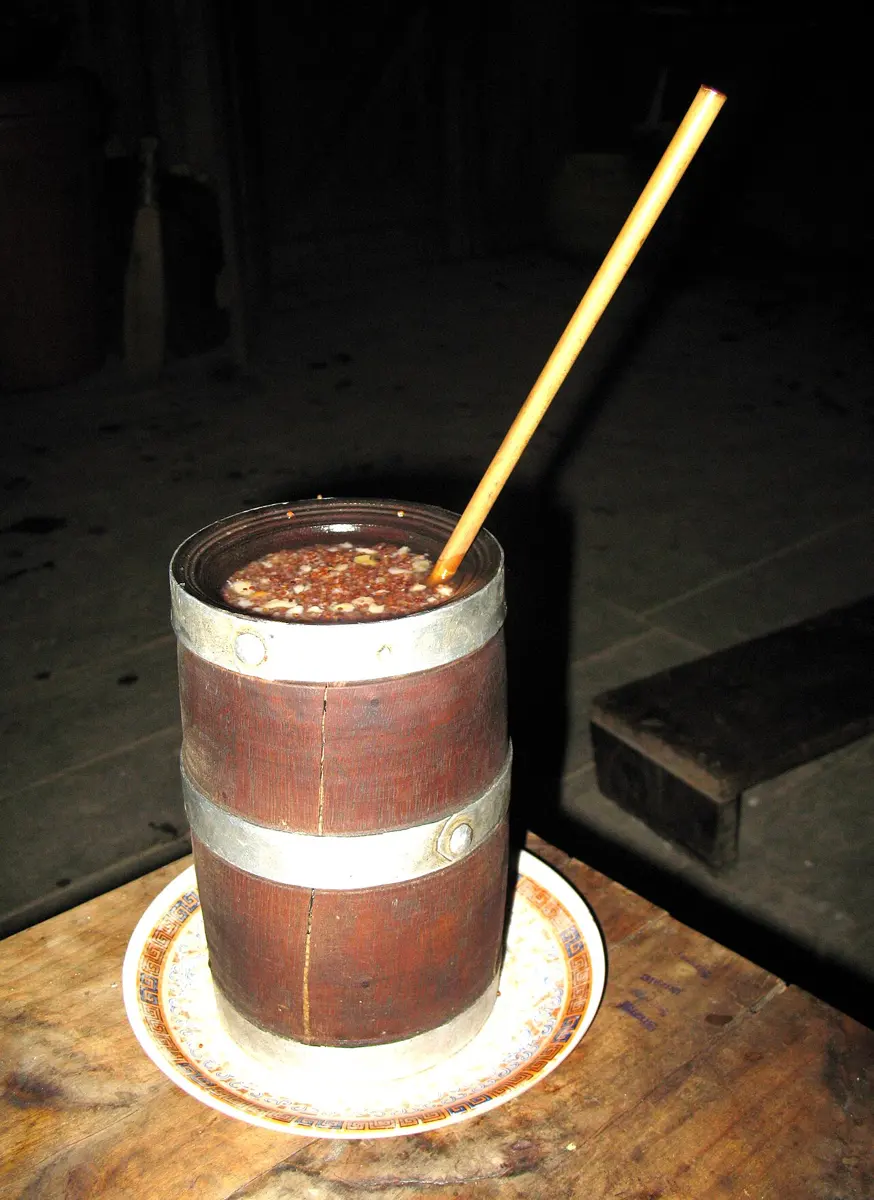
In a village kitchen in the eastern hills, a pot of cooked millet mixed with crumbled marcha sits under a lid for a few days. Nobody stirs it and no air gets in, yet something inside is alive and busy: the millet turns sweet, then sour, then warm, fizzy and alcoholic. It becomes jaand, ready for a tongba.
At the same moment, a runner on a school track is in the last 100 meters of a race. Her heart and lungs are working as hard as they can, but her leg muscles are using energy faster than oxygen can reach them. And in a flooded paddy in the Terai, a farmer’s foot sinks into the mud and bubbles rise to the surface: gas made by microbes that have never met oxygen, and would die if they did.
You learned that living things need oxygen to release the energy in their food. So how does any of this work? Can life really run without oxygen? It can, and much of the world’s life does. This topic shows how, what it costs, and what it means for the way matter and energy move through an ecosystem.
Energy from food, with oxygen
Every cell needs a steady supply of energy, to move, to grow, to build and to repair. It gets it from food, mostly from sugar (glucose). You know the reaction from Grade 8, where it happens in the mitochondria Grade 8: Mitochondria:
In Grade 9 you met it again as an exothermic reaction, one that gives out energy, like burning Grade 9: Exothermic reaction. Respiration and burning sugar in a flame start and end with the same substances, and give out the same total energy: about 2,800 kJ for every 180 g of glucose. The difference is that the cell releases it in many small steps, and catches part of it in a ready-to-use energy carrier, ATP, instead of losing it all as a flash of heat.
Respiration that uses oxygen is called aerobic respiration (aero = air). It breaks the sugar down completely, to carbon dioxide and water: small molecules with almost no chemical energy left in them. That is why it releases so much. (How the cell does it, step by step, and how it uses the energy to build itself, is the topic How Does Food Become Energy, and Become You?)
But what if there is no oxygen?
Breaking food down without oxygen
Without oxygen, a cell can still break glucose apart, but only part of the way. The products are still fairly big molecules with plenty of energy left in them. Releasing energy from food without oxygen is called anaerobic respiration (an = without). When the products are things like alcohol or lactic acid, it is also called fermentation. (Biologists sometimes keep the name “anaerobic respiration” for microbes that use another substance in place of oxygen, such as the sulphate behind the rotten-egg smell of mud. In school, and in this topic, it means any way of releasing energy from food without oxygen.)
There are three kinds you can meet in Nepal in a single day.
Yeast, the single-celled fungus in marcha and in bread dough, makes ethanol (the alcohol in jaand and raksi) and carbon dioxide. You met this reaction in Grade 10 Grade 10: Ethyl alcohol:
Lactic acid bacteria in milk turn it into curd (dahi); in mustard and radish leaves packed tightly into a sealed jar, they make gundruk. They make lactic acid, which gives curd and gundruk their sour taste:
Your own muscle cells do the same as the bacteria in curd when they run short of oxygen: they make lactic acid.
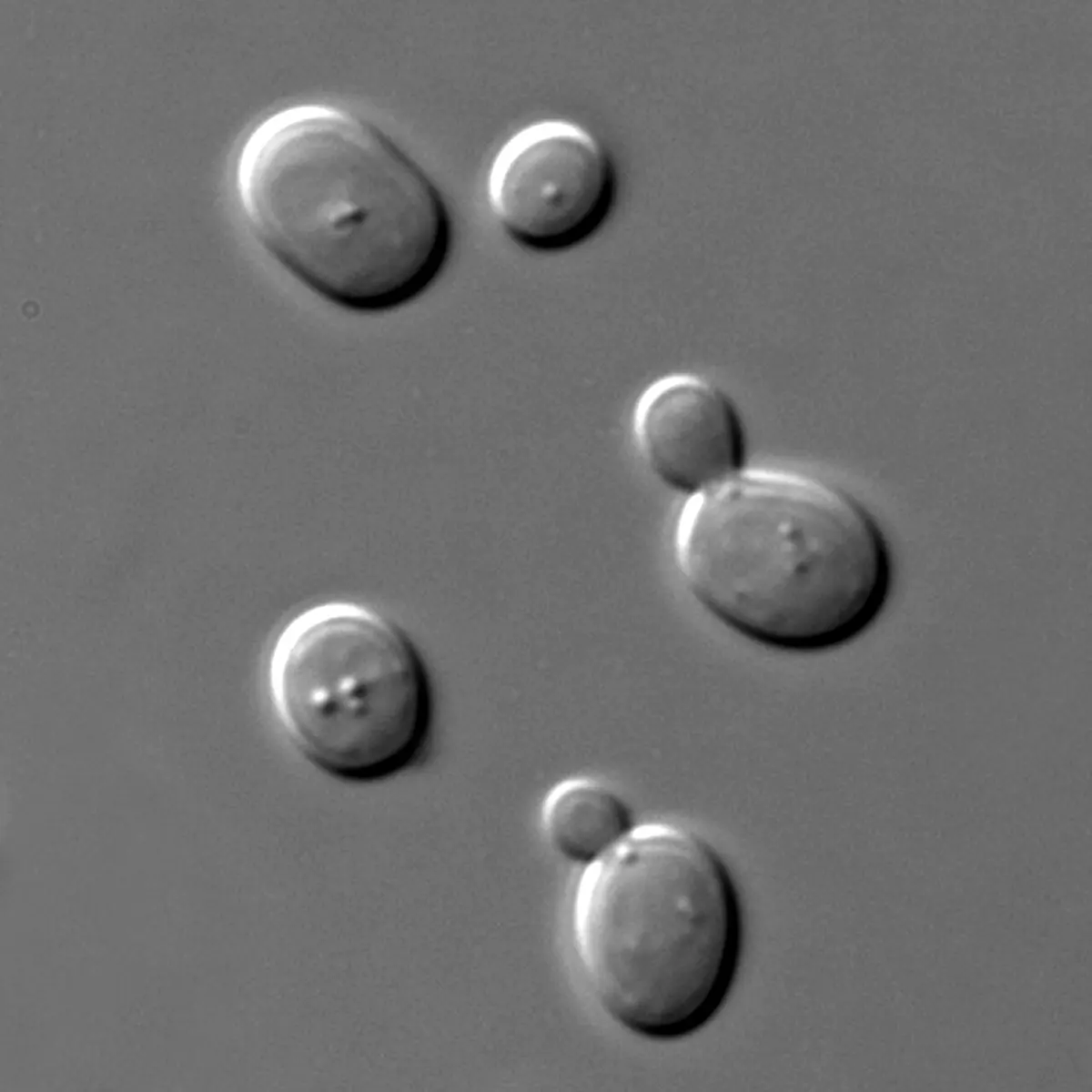
Yeast is a good example of a living thing that can do both. With plenty of air, it uses oxygen, breaks its sugar down completely, and grows and multiplies quickly. Without air, it ferments. That is why the pot of jaand is closed: the yeast keeps making alcohol, and other microbes that need air, which would turn the alcohol into vinegar, can’t grow.
A jar of gundruk is packed tight and sealed for a week. What is happening inside?
Pick an answer to see why.
How much energy, without oxygen?
Remember that every 180 g of glucose holds about 2,800 kJ. With oxygen, the cell releases all of it. Without oxygen, where does it go?
The answer is that most of it is still in the products. Ethanol burns: that is why raksi catches fire, and why ethanol is used in spirit lamps. Lactic acid can be burned too, and so can methane, the gas that some microbes make. Burn the products, and you get back almost all the energy that was in the sugar.
That small share is all the cell has to live on. A cell catches the energy it releases in ATP. With oxygen, one glucose molecule gives the cell about 30 ATP; without oxygen, only 2. So to get the same energy, a fermenting cell must get through about 15 times as much sugar. That is why Pasteur saw yeast without air eat sugar so fast, and why a fermenting pot gets warm.
Without oxygen, yeast gets only 2 ATP from each glucose molecule, instead of about 30. Why?
Pick an answer to see why.
Your muscles in a sprint
Stand up and run up three flights of stairs as fast as you safely can. At the top you are gasping, and you keep breathing hard for a minute or two after you stop. Why, if you have stopped using the energy?
Your muscles can switch from resting to full effort in a second. Your breathing and heart can’t: they take a minute or more to speed up, and even at their fastest they can deliver only so much oxygen. While oxygen runs short, the muscles make up the difference without oxygen: first from a small store of a ready-made energy chemical, then by turning glucose into lactic acid. The shortfall is called the oxygen deficit.
When you stop, your breathing stays fast for a while. The extra oxygen you take in is used to refill the muscles’ energy store and to deal with the lactic acid: much of it is used as fuel with oxygen, by the heart and other muscles, and some is turned back into glucose by the liver. This extra oxygen after exercise used to be called the oxygen debt.
How much of a race runs without oxygen depends on how long and hard it is. In a 100 m sprint, most of the energy is made without oxygen. In an all-out effort lasting a little over a minute, roughly half. In a 5,000 m race or a long walk up to a hill village, almost all of it comes with oxygen, because those muscles work only as hard as oxygen can keep up with.
A student runs 400 m as fast as she can, then sits down. Her breathing stays fast for several minutes. Which explanation fits the evidence best?
Pick an answer to see why.
Where oxygen runs out
Your body runs short of oxygen only for minutes. But large parts of the living world have no oxygen at all, all the time. In each of them, life goes on without it.
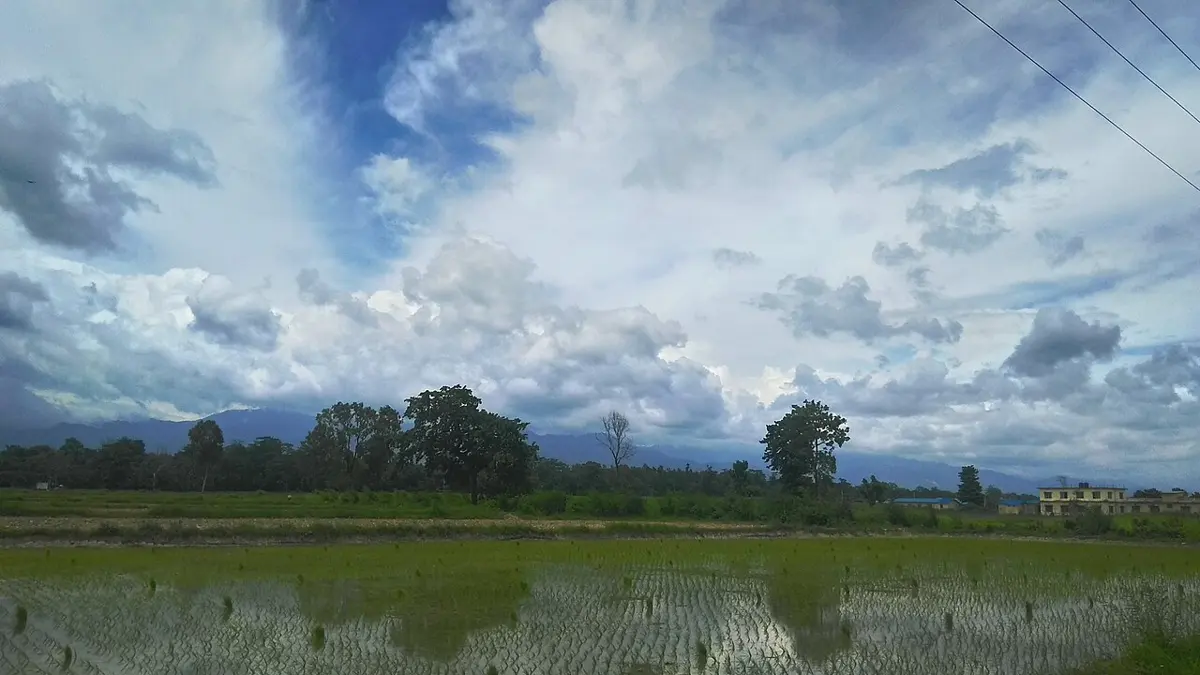
Why would a place have no oxygen? Air is about 21% oxygen, but water holds very little: a liter of water at 20 °C holds only about 9 mg of oxygen, while a liter of air holds about 280 mg, some 30 times as much. And oxygen moves through water about 10,000 times more slowly than through air. So wherever there is water and a lot of food for microbes, the microbes use up the oxygen faster than it can come in, and it runs out.
- Flooded paddy fields. A few days after a field is flooded for planting, the soil below the top few millimeters has no oxygen.
- The mud at the bottom of ponds, lakes and rivers, and swamps and marshes. When you stir it, it smells of rotten eggs: hydrogen sulphide, made by microbes without oxygen.
- Guts. Your large intestine has almost no oxygen; its bacteria ferment the fiber you can’t digest. A buffalo’s or cow’s rumen, its huge first stomach, is a fermenting tank where microbes break down grass and straw without oxygen, making acids and methane. The buffalo then absorbs the acids and uses them, with oxygen, for most of its energy.
- A biogas digester and the inside of a heap of rubbish or dung, as you know from Grade 9 Grade 9: Biogas.
- Deep in the soil and in the sediments under the sea, sometimes hundreds of meters down.
The living things in these places are of three kinds:
| Kind | With oxygen | Without oxygen | Examples |
|---|---|---|---|
| need oxygen | live and respire aerobically | die | you as a whole, rice plants, most animals |
| can do either | respire aerobically and grow fast | ferment and grow slowly | yeast, E. coli in your gut, your muscle cells for a short time |
| can’t stand oxygen | are harmed or killed | live and respire anaerobically | the microbes that make methane; Clostridium, which causes tetanus |
The microbes that make methane are not even bacteria: they belong to a separate group of single-celled life, the archaea, and most of them are killed by even a little oxygen.
Why does the mud at the bottom of a pond have no oxygen, when the air above the pond is 21% oxygen?
Pick an answer to see why.
Matter and energy without oxygen
You saw in Grade 9 how an ecosystem works Grade 9: Ecosystem: producers capture the Sun’s energy in food; consumers eat it; decomposers break down dead bodies and wastes Grade 9: Decomposers; materials go round and round, and energy flows through. Now you can say more about that last step, because it happens in two different ways.
With oxygen, as on the floor of a dry forest, decomposers break dead matter down completely, to carbon dioxide, water and minerals. A single microbe can break its food all the way down. The carbon goes back into the air within months or a few years, and the energy is all released, ending up as heat.
Without oxygen, as in a flooded field or pond mud, no single microbe can finish the job. It takes a team. Some microbes ferment the dead matter into acids, alcohols and hydrogen, taking a little energy for themselves. Others use those products, taking a little more. The last in line, the methane makers, turn what is left into methane and carbon dioxide. Each gets only a small share of the energy, so they all grow slowly, and decay is slow.
This has three big results for an ecosystem.
- Dead matter builds up. Where decay is slow, dead plants pile up faster than they rot. Over thousands of years, wet places store huge amounts of carbon as peat, and long ago swamps buried the plants that became coal.
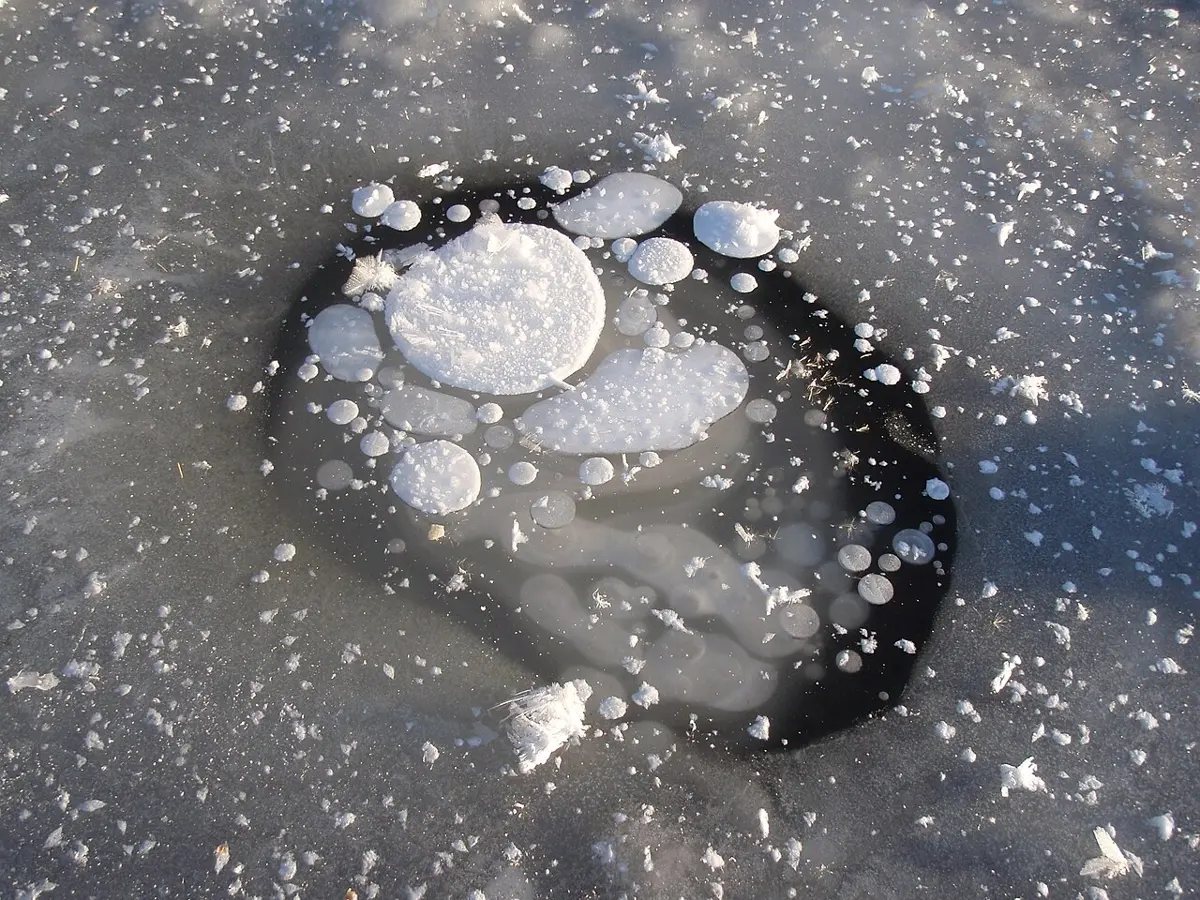
- Energy leaves as methane. Most of the energy in the dead matter is still there, in the methane. If the methane bubbles up through water where there is oxygen, other microbes, methane eaters, use it as food, with oxygen, and the energy is released there. If it escapes into the air, the energy leaves the ecosystem, and the methane traps heat in the atmosphere: molecule for molecule, it warms the Earth much more than carbon dioxide does, though it lasts only about a decade in the air.
- Matter still cycles. Carbon in methane is not lost: in the air, methane slowly reacts with oxygen to form carbon dioxide, which plants take in again. Without oxygen the carbon cycle runs more slowly, and by a different road.
Rice plants live with their roots in mud with no oxygen. They manage because they have air channels running from their leaves down their stems to their roots, carrying oxygen down. The same channels carry methane up, and it leaves through tiny pores low on the stems: most of the methane from a paddy field escapes through the rice plants. Rice fields produce roughly a tenth of all the methane that human activity releases. Farmers who drain their fields for a few days now and then during the season, letting air back into the soil, cut the methane by about half (results vary from field to field), usually with the same harvest.
Investigate: yeast without air
Questions
Which of these is not an example of respiration without oxygen?
Pick an answer to see why.
Without oxygen, which of these is true?
Pick an answer to see why.
Copy and complete the table.
| Aerobic respiration | Anaerobic respiration in yeast | Anaerobic respiration in muscle | |
|---|---|---|---|
| Is oxygen used? | |||
| Products | |||
| Energy given out from 180 g of glucose |
Answer
| Aerobic respiration | Anaerobic respiration in yeast | Anaerobic respiration in muscle | |
|---|---|---|---|
| Is oxygen used? | yes | no | no |
| Products | carbon dioxide and water | ethanol and carbon dioxide | lactic acid |
| Energy given out from 180 g of glucose | about 2,800 kJ | about 70 kJ | about 115 kJ |
A biogas plant in Bhaktapur is cracked, and air leaks into the digester. The family finds that it makes much less gas that burns, though the dung still disappears. Explain why, using what you know about microbes with and without oxygen.
Answer
The methane makers in the digester can live only without oxygen, so the air harms or kills them. Microbes that use oxygen then grow in the slurry instead. They break the dung down completely, to carbon dioxide and water, releasing its energy as heat in the digester. So the dung still disappears, but its energy is no longer left in methane that the family can burn, and the gas that collects is mostly carbon dioxide (with the air that leaked in). The digester must be sealed so that no air gets in.
A student says: “Microbes can’t live in the mud at the bottom of a pond, because there is no oxygen there. So dead leaves that sink into the mud never decay.” Use evidence from this topic to correct the explanation.
Answer
The first part is wrong: many microbes live without oxygen, and some, like the methane makers, can live only without it. The evidence is the bubbles of methane that rise when the mud is stirred, and its rotten-egg smell of hydrogen sulphide, both made by microbes in the mud. The second part is partly right: without oxygen, a chain of microbes is needed and each gets only a little energy, so decay is much slower, and dead matter builds up. But the leaves do decay in the end, into methane and carbon dioxide. A better explanation: “In the mud there is no oxygen, so the leaves are broken down by anaerobic microbes. They decay slowly, some of the matter builds up, and most of their carbon and energy leave as methane.”
Here are measurements from a made-up experiment like Pasteur’s. Two flasks each held the same sugar solution and the same amount of yeast at the start.
| Flask | Sugar used in 2 days | New yeast grown |
|---|---|---|
| A: air bubbled through | 20 g | 2.0 g |
| B: sealed, no air | 60 g | 0.5 g |
- a.In which flask did the yeast use more sugar, and in which did it grow more?
- b.Explain both results.
- c.Which flask would smell of alcohol?
Answer
- a.Flask B (no air) used three times as much sugar; flask A (with air) grew four times as much yeast.
- b.With air, the yeast respired aerobically, getting about 30 ATP from each glucose: plenty of energy from little sugar, so it could build a lot of new cells. Without air, it fermented, getting only 2 ATP per glucose. It had to get through much more sugar to stay alive, and still had less energy to spare for growing.
- c.Flask B: the energy missing from the yeast’s share is in the ethanol it made.
During a 200 m race, a runner’s leg muscles use energy about four times as fast as the oxygen her blood brings them could supply it. a. Where does the rest of the energy come from? b. Why does she keep breathing hard after she stops? c. Why couldn’t she keep running at that speed for 10 minutes?
Answer
- a.From energy made without oxygen: first a small store of a ready-to-use energy chemical in the muscles, then breaking glucose down to lactic acid.
- b.To pay back the oxygen deficit: the extra oxygen refills the muscles’ energy store, and the lactic acid is used as fuel with oxygen or turned back into glucose in the liver.
- c.Without oxygen the muscles get only a little energy from each glucose, so they must break sugar down very fast, and the lactic acid and other products build up within a minute or so and tire the muscles. Over 10 minutes she can keep up only a speed her oxygen supply can match, which is much slower.
A forest and a swamp make the same mass of leaves every year. After a hundred years, there is a thick layer of partly rotted leaves under the swamp, but only a thin layer under the forest. Explain the difference, and say where the energy of the forest’s leaves went.
Answer
On the forest floor there is oxygen, so decomposers break the leaves down completely and quickly, to carbon dioxide, water and minerals; little is left to build up. Under the swamp’s water there is almost no oxygen, so the leaves are broken down only slowly, by anaerobic microbes that each get little energy; leaves fall faster than they rot, and the layer grows (in time, it becomes peat). The energy of the forest’s leaves was released by the decomposers, used for their life and given off as heat, which leaves the ecosystem. It isn’t recycled: ecosystems keep needing new energy from the Sun.
Draw a flow diagram showing how carbon from a rice plant in a flooded field can get back into another rice plant. Mark where oxygen is needed and where it isn’t.
Answer
One correct diagram: rice plant (carbon in its sugar) → dead roots, leaves and straw in the mud → fermenting microbes (no oxygen) → acids, alcohols, hydrogen → methane makers (no oxygen) → methane → up through the rice plant’s stems, or bubbling up through the water → into the air, where it slowly reacts with oxygen (or is eaten by methane eaters with oxygen, at the soil’s surface) → carbon dioxide → taken in by a rice plant in photosynthesis. Some carbon also returns as carbon dioxide made directly in the mud. Oxygen is not needed in the mud; it is needed where methane is turned into carbon dioxide.
Why do people seal the pot when making jaand, but leave curd open in a bowl with only a cloth over it?
Answer
Yeast makes alcohol best without air, and with air other microbes (acetic acid bacteria) would turn the alcohol into vinegar; so the jaand pot is closed. Lactic acid bacteria don’t use oxygen, but aren’t harmed by a little of it, and the acid they make soon stops other microbes growing in the milk. Inside the thick, warm milk there is very little oxygen anyway, so curd sets without a sealed pot.
Where to go next
- How Does Food Become Energy, and Become You? Aerobic respiration close up: how a cell releases the energy in food with oxygen, and uses it, and the food’s atoms, to build itself.
- Where Does a Fallen Leaf Go? The whole carbon cycle: how carbon moves between the air, living things, the soil and the sea, and how people are changing it.
- How Many Tigers Can Chitwan Hold? How much life an ecosystem can hold, and what limits it.