
How we feel heat, cold and touch
Nobel Prize in Physiology or Medicine, 2021: David Julius and Ardem Patapoutian

David Julius
born 1955 in the United States
He grew up in Brooklyn, New York, and wondered how chemicals from plants and animals act on our nerves.
Photo: Christopher Michel, CC BY-SA 4.0

Ardem Patapoutian
born 1967 in Lebanon
He left a war-torn Beirut at 18 and delivered pizzas in Los Angeles before he found his way into science.
Photo: Christopher Michel, CC BY-SA 4.0
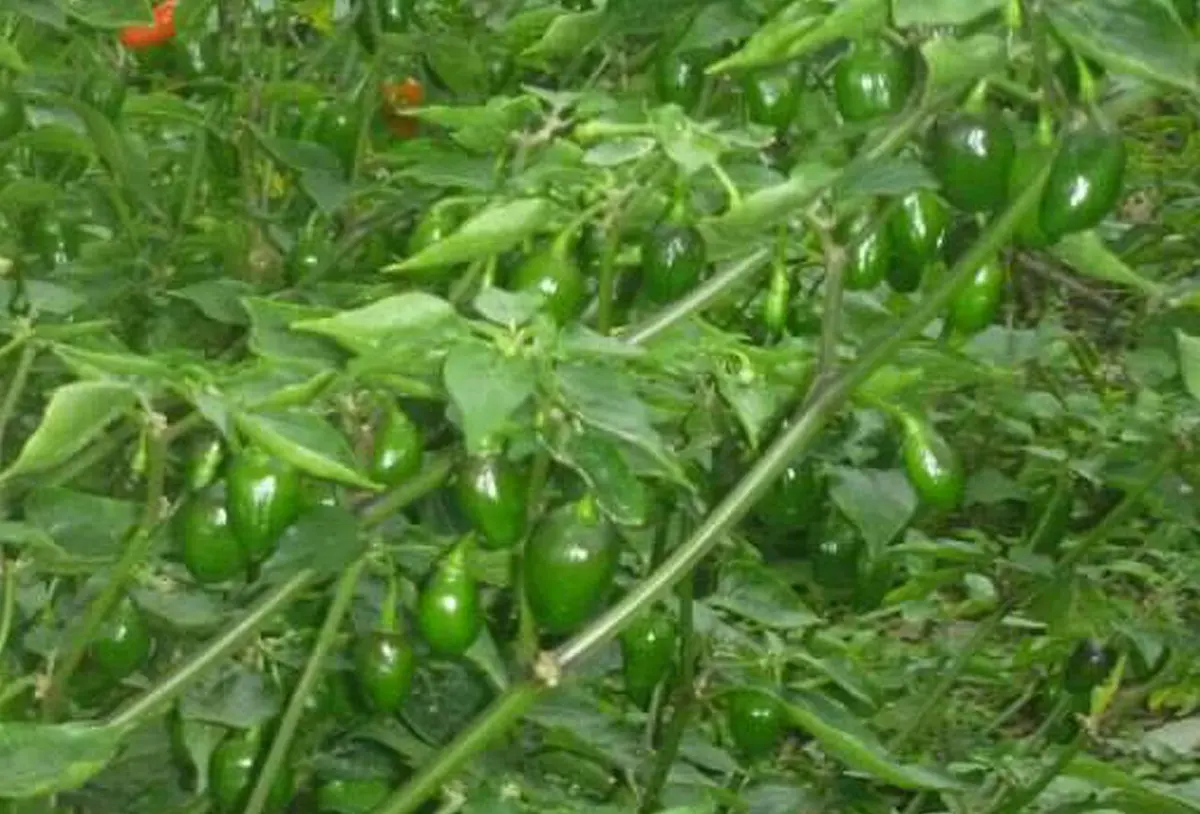
Bite into an akabare khursani and your mouth feels as if it is on fire. Rub a menthol balm on your skin and it feels cold. Yet the chilli is not hot and the balm is not cold: a thermometer would show no change at all. So what is your body really feeling?
In 2021 the Nobel Prize in Physiology or Medicine went to David Julius and Ardem Patapoutian, who found the tiny sensors in our nerves that detect heat, cold and touch. Julius found the first one with the help of chilli.
The problem: from a touch to a signal
You have five well-known senses: sight, hearing, smell, taste and touch. By the 1990s scientists knew a lot about the first four. They had found the molecules in the eye that catch light, and the molecules in the nose and tongue that catch smells and tastes.
But the senses of the skin were still a mystery. Your skin is full of the ends of nerve cells (neurons) Grade 9: Neuron or nerve cell. When you touch a hot pan, these nerve endings send electrical signals along nerves to your spinal cord and brain, and you pull your hand away Grade 9: Reflex action. Scientists had even found that different nerve fibers carry different feelings, such as pain and gentle touch; that discovery won a Nobel Prize in 1944.
The missing piece was the very first step. How does heat, or a push on the skin, turn into an electrical signal in a nerve? Something in the nerve ending had to work like a switch. Nobody knew what it was.
Your hand touches a very hot pan. What happens first?
Pick an answer to see why.
How a nerve ending makes a signal
Every cell is wrapped in a thin skin of its own, the cell membrane Grade 8: The covering of the cell. It keeps some things in and some things out. Outside a nerve cell there are many ions, tiny particles with an electric charge, such as sodium ions (Na⁺).
Set into the membrane are special proteins called ion channels. Each is like a tiny gate or tube through the membrane. Usually the gate is shut. When something opens it, ions rush into the nerve ending. That rush of charge is the start of an electrical signal, which then travels along the nerve.
So the scientists were looking for ion channels that open when they are heated, cooled or pushed. Such a protein, which picks up a signal from outside and passes it on, is called a receptor.
Why it was hard
Our bodies have about 20,000 genes, and each one is the recipe for a protein Grade 10: DNA. The receptor for heat was one protein among thousands in a nerve cell, and it is made in tiny amounts, only in some nerve endings. Nobody knew what it looked like. How do you find something when you don’t know what you are looking for?
You need a way to make the receptor show itself. Julius found one in a chilli.
What they did, step by step
Julius: using chilli to catch a heat sensor
David Julius worked at the University of California, San Francisco. Chilli peppers get their burn from a chemical called capsaicin. Scientists knew that capsaicin acts on pain nerves, but not how. Julius guessed that if he could find the receptor for capsaicin, it might turn out to be the body’s sensor for heat.
- A library of genes. His team made DNA copies of the genes that are switched on in the nerve cells that feel pain, heat and touch. This was a huge collection, millions of DNA pieces. Somewhere in it, they hoped, was the gene for the capsaicin receptor.
- Cells that don’t care about chilli. They put the genes, batch by batch, into cells grown in dishes that normally take no notice of capsaicin. Then they added capsaicin and watched. If a cell suddenly let calcium ions in, it had been given the right gene.
- Narrowing it down. When one batch responded, they split it into smaller batches and tested again, and again, until a single gene was left.
- 1997: TRPV1. The gene made a new kind of ion channel. Today it is called TRPV1. When Julius’s team warmed the cells, the channel opened at about 43 °C, the temperature at which heat starts to hurt. They had found a heat sensor. Chilli burns because capsaicin opens the same gate that real heat does.
- 2000: mice without it. Mice whose TRPV1 gene was removed hardly minded capsaicin, and were much less sensitive to painful heat.
- 2002: a cold sensor. Using menthol, the cooling chemical in mint, Julius and Patapoutian, working separately, each found TRPM8, a channel that opens in the cold, below about 25 °C. That is why mint feels cool.
Patapoutian: poking cells, one gene at a time
Heat and cold were now explained, but touch was still a mystery. Ardem Patapoutian grew up in Beirut, Lebanon, during a long civil war. In 1986 he and his brother left as refugees for the United States, where he worked odd jobs before studying biology. At the Scripps Research institute in California, he set out to find the receptor for touch: a gate that opens when it is pushed.
- A cell that feels a poke. His team found a kind of cell, grown in a dish, that made a small electrical signal when it was poked with a very fine glass tube, a micropipette, thinner than a hair.
- A short list. They guessed that the touch receptor was an ion channel, and listed about 70 genes that might make it.
- Switching genes off, one by one. They turned off each candidate gene in turn and poked the cells again. It was slow, careful work. For gene after gene, the cells still responded.
- 2010: Piezo1. Finally, with one gene switched off, the cells no longer reacted to the poke. The gene made a large, completely new ion channel. They named it Piezo1, from the Greek word for pressure. A very similar gene, Piezo2, was found by its likeness to the first.
- 2014 and 2015: touch and body sense. Patapoutian’s team showed that Piezo2, in the nerve endings of the skin, is what lets mice feel gentle touch. It also turned out to be the receptor for a less famous sense: knowing where your arms and legs are without looking, called proprioception.
How did Patapoutian’s team find the gene for the touch receptor?
Pick an answer to see why.
How it works now
Today we know a whole family of these sensors. TRP channels (such as TRPV1 and TRPM8) cover the range of temperatures, from painful cold through cool and warm to painful heat. Piezo channels feel pushes, pulls and stretches.
| Sensor | Opened by | What you feel |
|---|---|---|
| TRPV1 | heat above about 43 °C; capsaicin in chilli | burning heat |
| TRPM8 | cool, below about 25 °C; menthol in mint | cool or cold |
| TRPA1 | mustard oil, wasabi and other irritants | a sharp sting |
| Piezo2 | pressure on the skin; stretch of muscles | touch; where your body is |
Piezo channels also work inside you, where you never notice them. They help sense how full your bladder is, how much your lungs have stretched as you breathe in, and the pressure of blood in your arteries.

In your life today
- Spicy food. Every time you eat achar or khursani, TRPV1 is at work. The strongest Nepali chillies, such as akabare (dalle) khursani, simply contain more capsaicin.
- Balms and toothpaste. Menthol in mint toothpaste, cough sweets and balms feels cool because it opens TRPM8, not because it cools you.
- Pain medicines. Long-lasting pain, from damaged nerves, arthritis or old injuries, troubles many people. Knowing the exact receptors gives medicine makers clear targets. Skin patches with a strong dose of capsaicin are already used for some kinds of nerve pain: they wear out the pain nerve endings in that patch of skin for weeks.
What came next
- Blocking the heat sensor. Drug companies tested medicines that block TRPV1 to stop pain. Some worked against pain but had a surprise side effect: people’s body temperature rose, and some could no longer feel scalding heat. TRPV1, it turned out, also helps the body control its temperature. This is why receptors are useful targets but tricky ones.
- Animals with special senses. Julius’s team found that pit vipers and rattlesnakes “see” the warmth of their prey in the dark with TRPA1 in the pits on their faces, and that vampire bats find warm blood vessels with a changed form of TRPV1.
- An open question: we now know the sensors, but not yet how the brain turns their signals into the very different feelings of a stroke, a tickle, an itch or a pinch. How the body feels itch, and how to stop long-lasting pain without harming the sense of touch, are still being worked out.
In your science books
- Grade 8: the covering of the cell, the cell membrane.
- Grade 9: neurons, the human nervous system and reflex action.
- Grade 10: DNA, where the recipes for receptors are written.
- Going Further: How does a touch reach your brain? (receptors, and why chilli and mint fool them) and Messages along nerves.
Learn more
- The Nobel Prize’s own explanation: the press release (nobelprize.org), written for everyone, with pictures.
- The two laureates’ Nobel lectures: Julius and Patapoutian.
The official reason
The prize was given “for their discoveries of receptors for temperature and touch.”