
Growing polio in a test tube
Nobel Prize in Physiology or Medicine, 1954: John F. Enders, Thomas H. Weller, and Frederick C. Robbins
-
John F. Enders
1897–1985, born in the USA
He studied English literature before he turned to germs, and led the laboratory at the Children’s Hospital in Boston where the work was done.
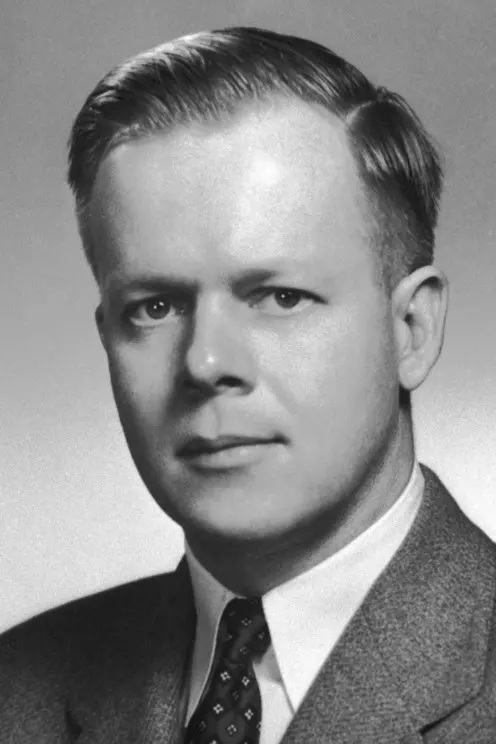
Thomas H. Weller
1915–2008, born in the USA
Interested in worms and parasites since his student days, he prepared the cell cultures that made the first experiment possible.
Photo: Unknown author, Public domain
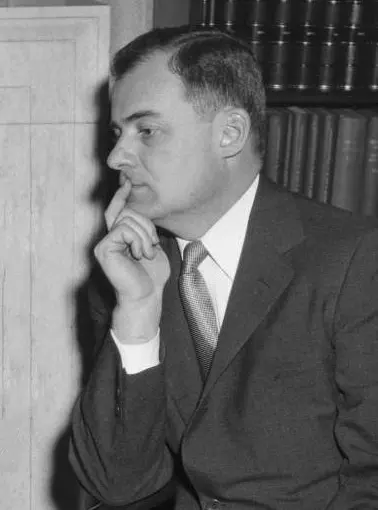
Frederick C. Robbins
1916–2003, born in the USA
A children’s doctor who had hunted germs for the army in Italy during the Second World War, and later taught pediatrics for decades.
Photo: Pauling_and_Robbins_1954.jpg : Unknown, Svenskt Pressfoto derivative work: Materialscientist ( talk ), Public domain
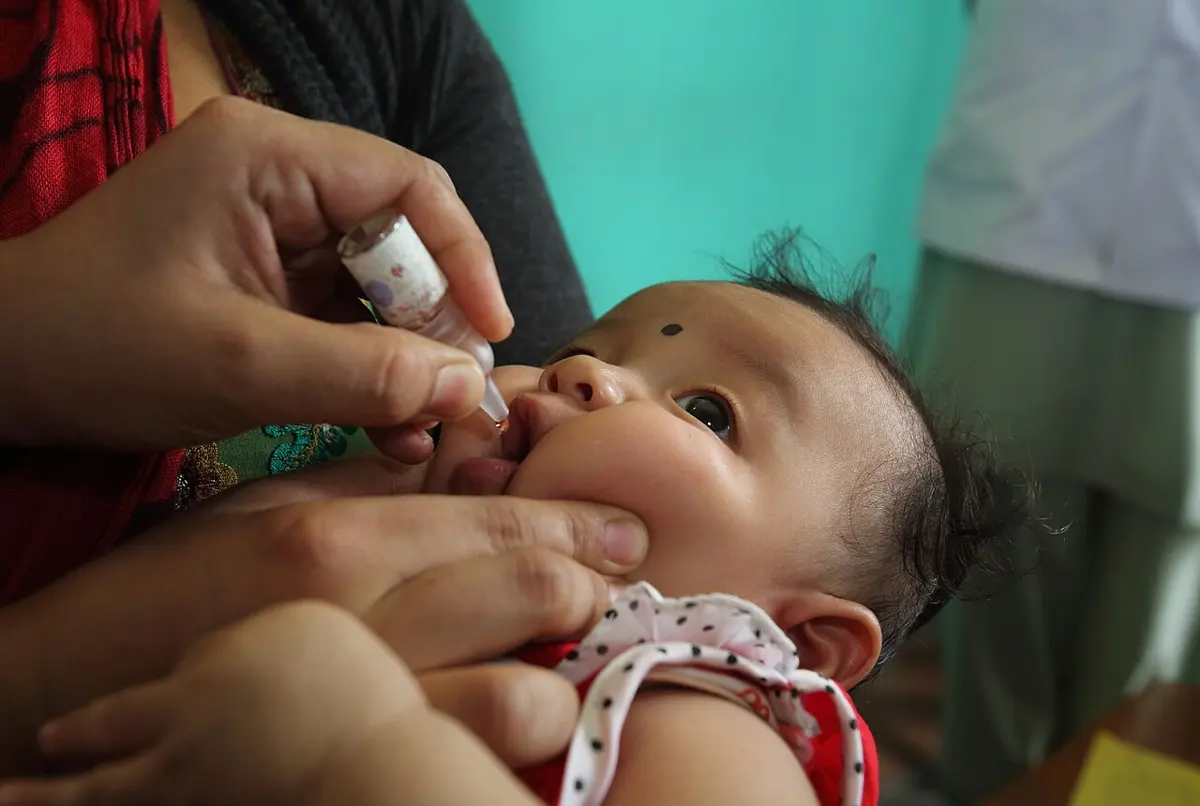
Almost every child in Nepal has had polio drops: two drops of liquid from a small plastic bottle, squeezed into the mouth at a health post or during a vaccination campaign. Those drops are a vaccine against polio, a disease that once crippled hundreds of thousands of children every year. Nepal’s last case of polio was in Rautahat District in August 2010.
The drops and the polio injection exist because of an experiment done in 1948 in Boston, in the United States. Three doctors, John Enders, Thomas Weller and Frederick Robbins, found a way to grow the polio virus in test tubes of human cells. In 1954 they shared the Nobel Prize in Physiology or Medicine.
The problem: a disease that paralyzed children
Polio (short for poliomyelitis) is caused by a virus. It spreads from person to person mainly through feces: from unwashed hands, or from water or food made dirty by sewage. The virus is swallowed and multiplies in the gut. Most infected people have no illness at all, or a mild fever. But in about one infection in 200, the virus reaches the spinal cord, the thick bundle of nerves inside the backbone Grade 9: The spinal cord. There it kills the nerve cells that tell the muscles to move. The muscles they worked can no longer move: they are paralyzed, usually in a leg, for life. If the muscles for breathing are paralyzed, the patient may die.
In the first half of the 20th century, polio epidemics grew worse every few years in Europe and North America, and the disease was feared everywhere. At the Nobel ceremony in 1954, the Swedish professor who presented the prize said that in Sweden polio was causing almost one fifth of all deaths from sudden infections.
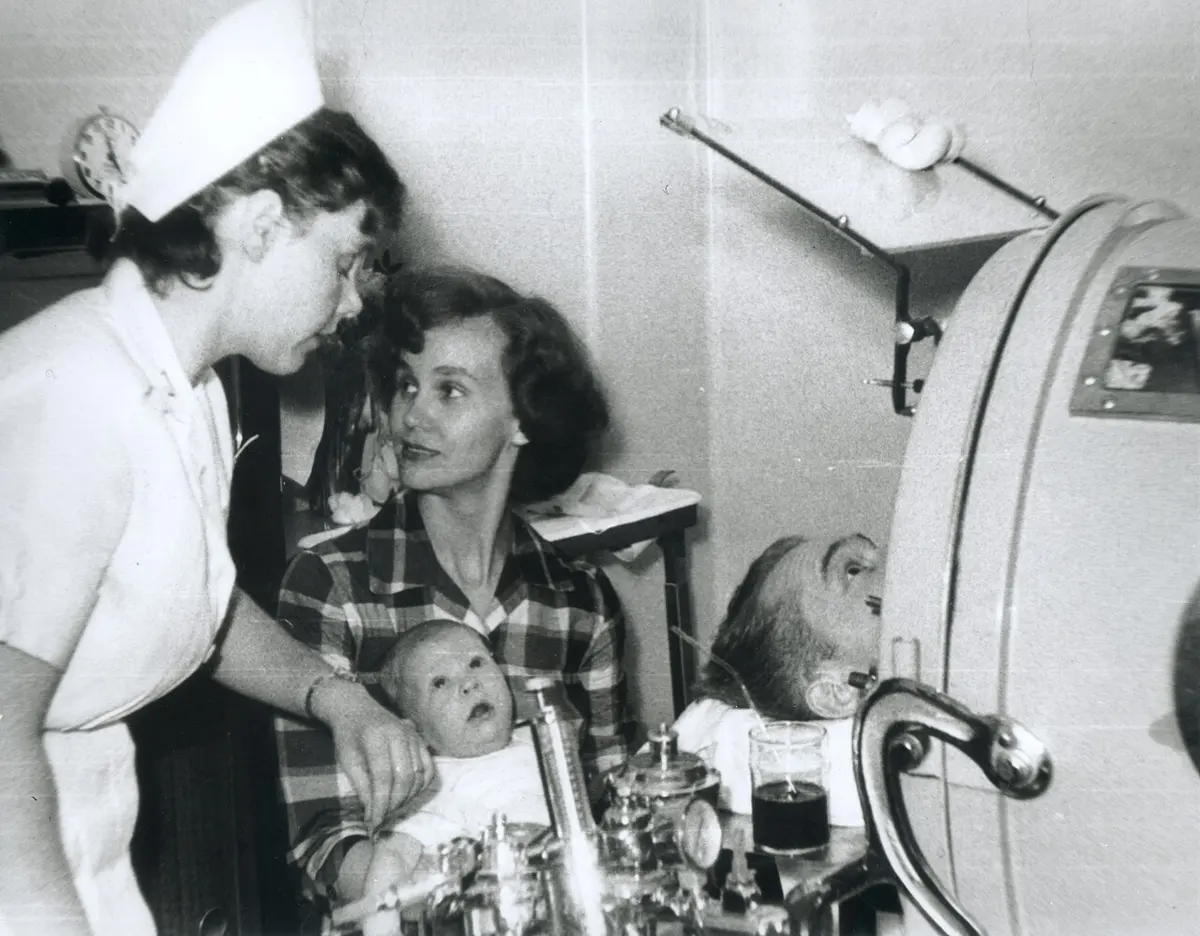
Patients whose breathing muscles were paralyzed were kept alive in an iron lung: a metal tank that covered the whole body except the head. A pump lowered and raised the air pressure inside, so that the chest was pulled out and pushed in, and air flowed into and out of the lungs Grade 10: Pressure in liquids and air.
Polio spreads mainly through feces. Which of these does the most to stop it spreading?
Pick an answer to see why.
How a virus multiplies
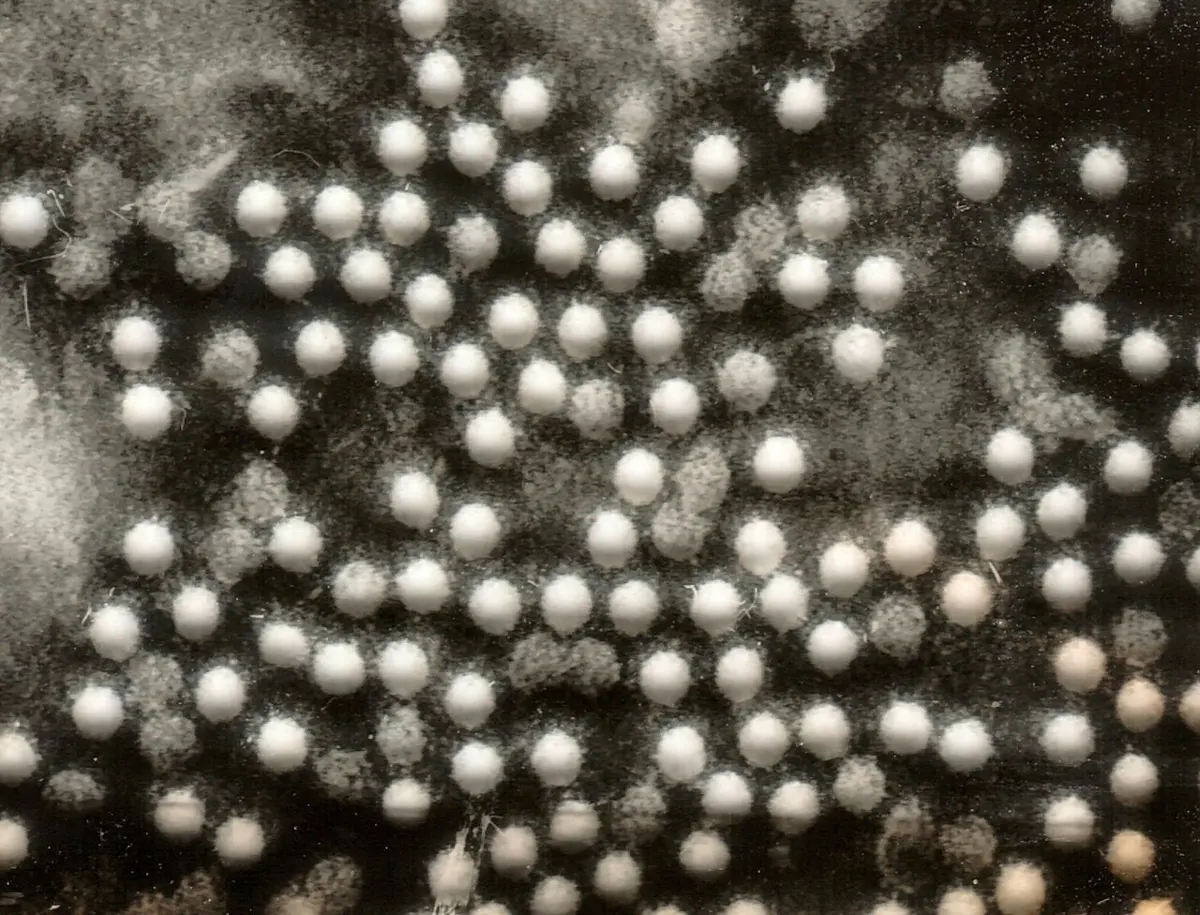
A virus is far smaller than a bacterium, and it is not a cell Grade 8: Virus. The polio virus is a tiny ball of protein, about 30 nanometers across (a hair is more than 2,000 times wider), with a short piece of genetic material inside.
On its own, a virus can’t eat, grow or multiply. It has to get inside a living cell and take over the cell’s machinery to make copies of itself. Within hours, one infected cell can make hundreds or thousands of new viruses, and it usually dies.
This was the great difficulty. Bacteria can be grown on a dish of jelly or in a flask of broth; scientists had done this since the 1870s, and it let them study each germ, test medicines on it and make vaccines. A virus can only be grown where there are living cells. So to study polio, scientists had to give it to monkeys, because almost no other animal catches it. Every test needed monkeys: to find out whether a sample from a patient held the virus, which type it was, or whether a person’s blood could fight it. Monkeys were expensive and slow to work with, and only a few laboratories in the world could keep enough of them.
Why it was hard
There was another way to give a virus living cells: tissue culture. Small pieces of tissue taken from a body can be kept alive, and even made to grow, in a glass vessel with the right liquid food. (Plant growers in Nepal use the same idea, called tissue culture, to grow many plants from tiny pieces of one: Tissue culture.) But by the 1940s, growing polio this way seemed hopeless.
- Germs got in. Bacteria and molds grow much faster than human cells. A single bacterium falling into a culture could take it over and kill the cells. Scientists who worked with tissue cultures followed long, strict rituals to keep them clean, and still often failed.
- The cultures didn’t last. Most methods kept the cells alive only for a few days, too short for a slow virus to build up.
- Everyone thought polio grew only in nerve cells. In 1936 two respected American scientists, Albert Sabin and Peter Olitsky, had tried to grow polio in cultures of many kinds of tissue. It seemed to survive only in tissue from the human brain. So most scientists believed polio could multiply only inside nerve cells, which are the hardest of all cells to grow outside the body.
What they did, step by step
Enders, Weller and Robbins in Boston
In 1946 John Enders was asked to set up a new laboratory for infectious diseases at the Children’s Hospital in Boston. Thomas Weller, who had learned tissue culture as Enders’s student, joined him, and so did Frederick Robbins, back from the army. Their first experiments in the new laboratory began in April 1947.
- 1947, a better culture. Working first with the mumps virus, they changed one thing. Instead of moving the cells to a fresh vessel every three or four days, they kept the same tissue and simply poured off the old liquid food and added fresh liquid every few days. This way the cells stayed alive for 30 days or longer, giving a slow virus plenty of time to multiply.
- 1948, a lucky cupboard. Weller had set up cultures of human skin and muscle tissue, hoping to grow the chickenpox virus in them. Some were spare. In the storage cabinet nearby was a sample of the polio virus (a kind called the Lansing strain, which can also infect mice). The three decided to try it in the spare cultures, although skin and muscle contain no nerve cells.
- Proof that it grew. Every few days they took some liquid from the cultures and put it into fresh cultures, again and again. Each time, the original sample was diluted more, so if the virus was still there, it must have multiplied. Mice injected with the liquid fell ill with polio. Liquid from the third round of cultures, given to monkeys, paralyzed their legs. The polio virus had grown in cells that were not nerve cells.
- 1949, the paper. They reported it in January 1949 in the journal Science. They soon grew all three known types of polio virus, in tissue from the gut, kidney, heart, lung and many other organs. This also explained a puzzle: why patients’ feces were full of virus. The virus multiplies in the gut, not only in nerves.
Seeing the virus at work, without animals
Growing the virus was only half the discovery. To be really useful, the team needed to see in the tube itself whether the virus was there, without injecting monkeys.
- The cells die. Under the microscope, cells infected with polio rounded up, shrank and fell apart, while cells without the virus stayed healthy. They called this damage the cytopathic effect (“cyto” for cell, “pathic” for harm). In roller tubes, test tubes turning slowly with a sheet of cells growing on the glass, it showed within three to five days.
- The liquid stays less acidic. Living cells slowly make the liquid around them more acidic. In cultures where the virus had killed the cells, this didn’t happen. A simple measurement of the liquid’s pH showed whether the virus was there.
- Antibodies protect the cells. When blood serum containing antibodies against one type of polio was added along with the virus, the cells stayed healthy. So the same tubes could show which type of polio a patient had, and whether a person’s blood could fight it.
- Samples from patients. By adding the antibiotics penicillin and streptomycin to samples of feces, they killed the bacteria in them without harming the virus. Then they could grow polio straight from a patient’s sample, and when there was plenty of virus, find it within 48 hours.
The team added the liquid from one culture to a fresh culture, again and again. Why did this prove that the virus was multiplying, and not just surviving?
Pick an answer to see why.
How it works now: the polio vaccines
A vaccine trains the body’s defenses before the real germ arrives. It contains the germ in a harmless form. The body makes antibodies and special white blood cells against it Grade 10: White blood cells, and it remembers. If the real virus ever comes, it is stopped quickly.
To make a polio vaccine, you need enormous amounts of polio virus. Once Enders, Weller and Robbins had shown how, it could be grown in bottles of cells instead of in living monkeys. Two vaccines followed:
- The injection. Jonas Salk grew polio virus in cultures of monkey kidney cells and killed it with a chemical, formalin. In 1954 his vaccine was tested on about 1.8 million American schoolchildren, one of the largest medical trials ever. On 12 April 1955 it was announced that the vaccine worked.
- The drops. Albert Sabin made a live, weakened vaccine, given by mouth. It was given to millions of children in the Soviet Union from 1959, and licensed in the United States in 1961. Drops are cheap and easy to give, and the weakened virus multiplies in the gut, just as wild polio does, so it also protects the gut.
In your life today
- Polio is gone from Nepal. Thanks to vaccination, Nepal has had no polio since 2010. In March 2014 the World Health Organization certified its whole South-East Asia Region, including Nepal and India, free of polio.
- Your own vaccines. Babies in Nepal are given polio drops and a polio injection as part of the national immunization program, along with vaccines against measles, rubella and other diseases. Most of these vaccines are made, or were first developed, using viruses grown in cell cultures.
- Testing for viruses. Laboratories still grow viruses in cell cultures to identify them, to study new ones and to make vaccines. When the COVID-19 virus appeared in 2020, it was grown and studied in cultures of cells within weeks Grade 9: How a vaccine is tested.
What came next
- Measles. In 1954 Enders and Thomas Peebles grew the measles virus in cell cultures, from a sick boy named David Edmonston. Enders’s laboratory turned it into a measles vaccine, and measles vaccines were licensed in the United States in 1963.
- More viruses. Weller was the first to grow the chickenpox virus, and in 1962 his team was one of two that found the rubella (German measles) virus. Within a few years of 1949, cell cultures had found hundreds of viruses that nobody had known about.
- Almost wiped out. In 1988, polio paralyzed about 350,000 people in more than 125 countries. Since then, cases of wild polio have fallen by more than 99%. Of the three types of wild polio virus, type 2 was declared wiped out in 2015 and type 3 in 2019.
An open question: wild polio type 1 is still found in two countries, Afghanistan and Pakistan. And in places where too few children are vaccinated, the weakened virus in the drops can, very rarely, change back into a form that paralyzes and spreads. Can the world vaccinate every last child and end polio for good, the second human disease after smallpox to be wiped out?
In your science books
- Grade 8: viruses and the harmful effects of microorganisms; tissue culture in plants.
- Grade 9: the spinal cord, nerve cells and skeletal muscle, and the steps of scientific learning.
- Grade 10: white blood cells, which make antibodies.
Learn more
- The prize at nobelprize.org: The Nobel Prize in Physiology or Medicine 1954, with the presentation speech.
- The three laureates’ joint Nobel lecture, “The cultivation of the poliomyelitis viruses in tissue culture”, which tells how the experiment began.
- The World Health Organization’s fact sheet on polio.
The official reason
The prize was given “for their discovery of the ability of poliomyelitis viruses to grow in cultures of various types of tissue.”