
Vitamins: what was missing from white rice
Nobel Prize in Physiology or Medicine, 1929: Christiaan Eijkman and Frederick Gowland Hopkins
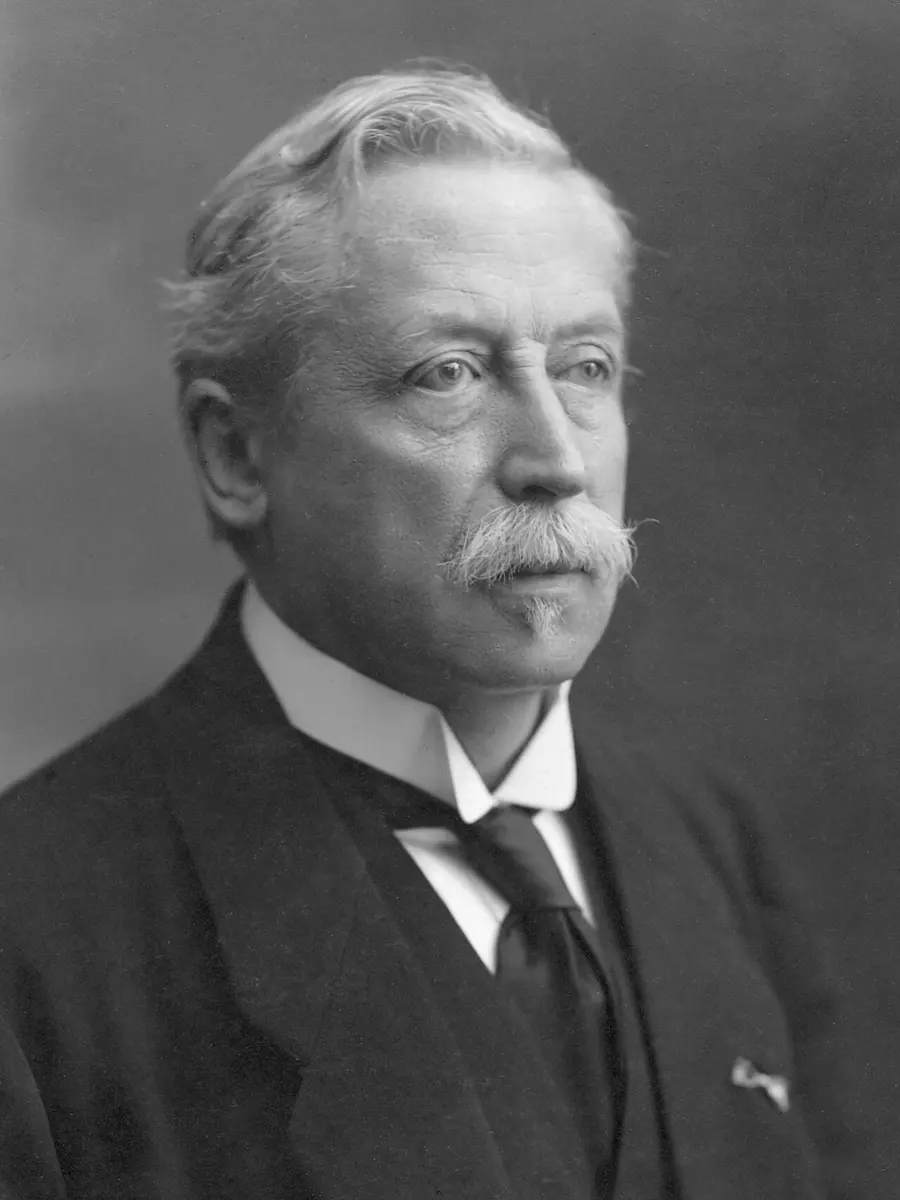
Christiaan Eijkman
1858–1930, born in the Netherlands
An army doctor who caught malaria in Java, then went back to study a disease that was killing soldiers and prisoners. He was too ill to travel to Stockholm for his prize, and died the next year.
Photo: Unknown author, Public domain
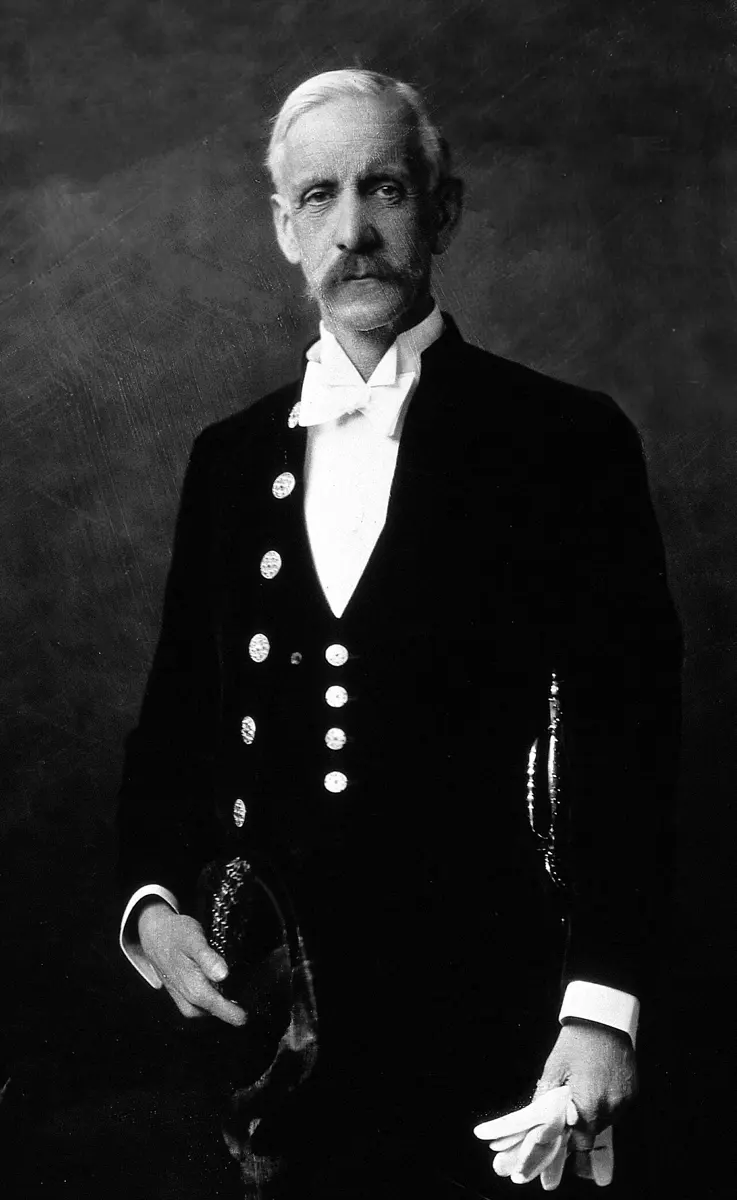
Frederick Gowland Hopkins
1861–1947, born in England
Left school at 17 and worked as an insurance clerk before he became a chemist. He built up biochemistry, the chemistry of living things, at Cambridge.
Photo: F.A. Swaine Ltd., CC BY 4.0
Think of a plate of dal bhat: rice, dal, tarkari, a little achar. Now imagine eating only the white rice, day after day, for months. You would get enough energy. But after a few months your legs would start to feel numb and weak, and your heart might start to fail.
That is a disease called beriberi. In the 1800s it killed many thousands of people in Asia, and nobody knew why. The answer, found by watching sick chickens in Java, led to one of the most useful ideas in all of medicine: that food must contain tiny amounts of special substances, which we now call vitamins. In 1929 the Nobel Prize in Physiology or Medicine went to two of the people who found them.
The problem: a disease nobody could explain
Beriberi attacks the nerves, the long threads that carry messages between your brain and your muscles. The legs become numb and weak until a person can hardly walk; in some people the legs swell with water and the heart gives way.
In the 1800s beriberi was common in Asia wherever people ate mostly rice. In the Dutch East Indies (today’s Indonesia), which the Netherlands ruled at the time, it was a disaster. It struck soldiers, sailors, prisoners and plantation workers: people who ate what they were given. In the Dutch army’s long war in Aceh, in Sumatra, newly recruited local soldiers were often unfit to fight after about six weeks.
In 1886 the Dutch government sent a team of doctors to Java to find the cause. This was the time when scientists such as Louis Pasteur and Robert Koch were showing that germs cause many diseases, such as tuberculosis and cholera. So the team looked for a germ, and they thought they had found one. They were wrong.
Why did the doctors sent to Java in 1886 look for a germ as the cause of beriberi?
Pick an answer to see why.
The discovery: sick chickens in Batavia
Christiaan Eijkman and the chicken house
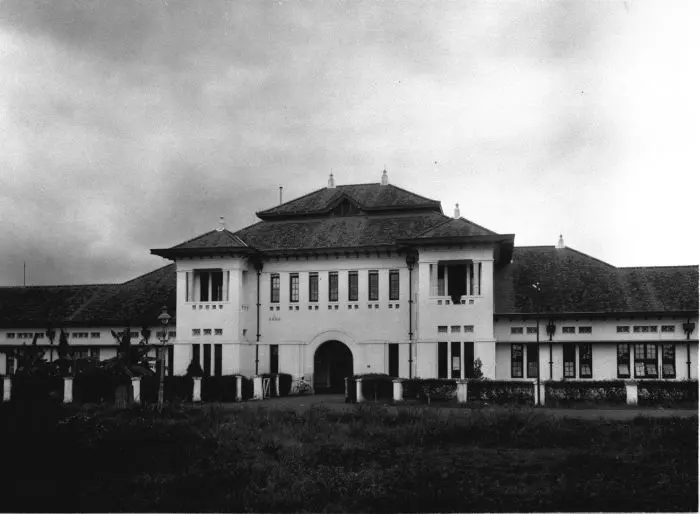
Christiaan Eijkman was a young Dutch army doctor who had joined the team. When the others went home in 1887, he stayed on as the first director of the new medical laboratory in Batavia (today’s Jakarta). He kept searching for a beriberi germ, without success.
- The chickens fall ill. Then a strange illness broke out among the chickens kept at the laboratory. The birds began to walk unsteadily, had trouble perching, and finally lay on their sides, unable to stand or lift their heads. Many died. Eijkman saw at once that it looked very like beriberi, and under the microscope their nerves were damaged in the same way. He called it polyneuritis, a disease of many nerves.
- No germ. He tried to pass the disease from sick chickens to healthy ones. But even the chickens kept apart, as a control, fell ill. He could find no germ.
- The chickens get better. Then, after some months, the illness suddenly disappeared. The sick chickens recovered, and no new ones fell ill.
- The clue: a new cook. Eijkman found out why. The laboratory was in a military hospital. To save money, the man who looked after the chickens had been feeding them leftover cooked white rice from the hospital kitchen, rice meant for the soldiers. Then a new cook arrived and refused to let military rice go to “civilian” chickens. The chickens went back to cheaper, unpolished rice. Eijkman worked out the dates: the chickens had eaten polished rice from 17 June to 27 November; the illness had begun on 10 July and ended in the last days of November.
- The experiment. Now Eijkman tested the idea on purpose. He fed some chickens cooked polished rice and others unpolished rice, with everything else the same. The chickens on polished rice fell ill after three or four weeks; those on unpolished rice stayed healthy. Sick chickens could often be cured just by changing their food.
- It’s in the outer layers. He then fed the birds the rice bran, the dust that polishing rubs off the grain. Bran prevented and cured the disease. Chickens fed only other starchy foods, such as sago and tapioca, fell ill just like those on white rice. Whatever protected them was in the outer skin and the germ of the grain, and it could be washed out of the bran with water or alcohol.
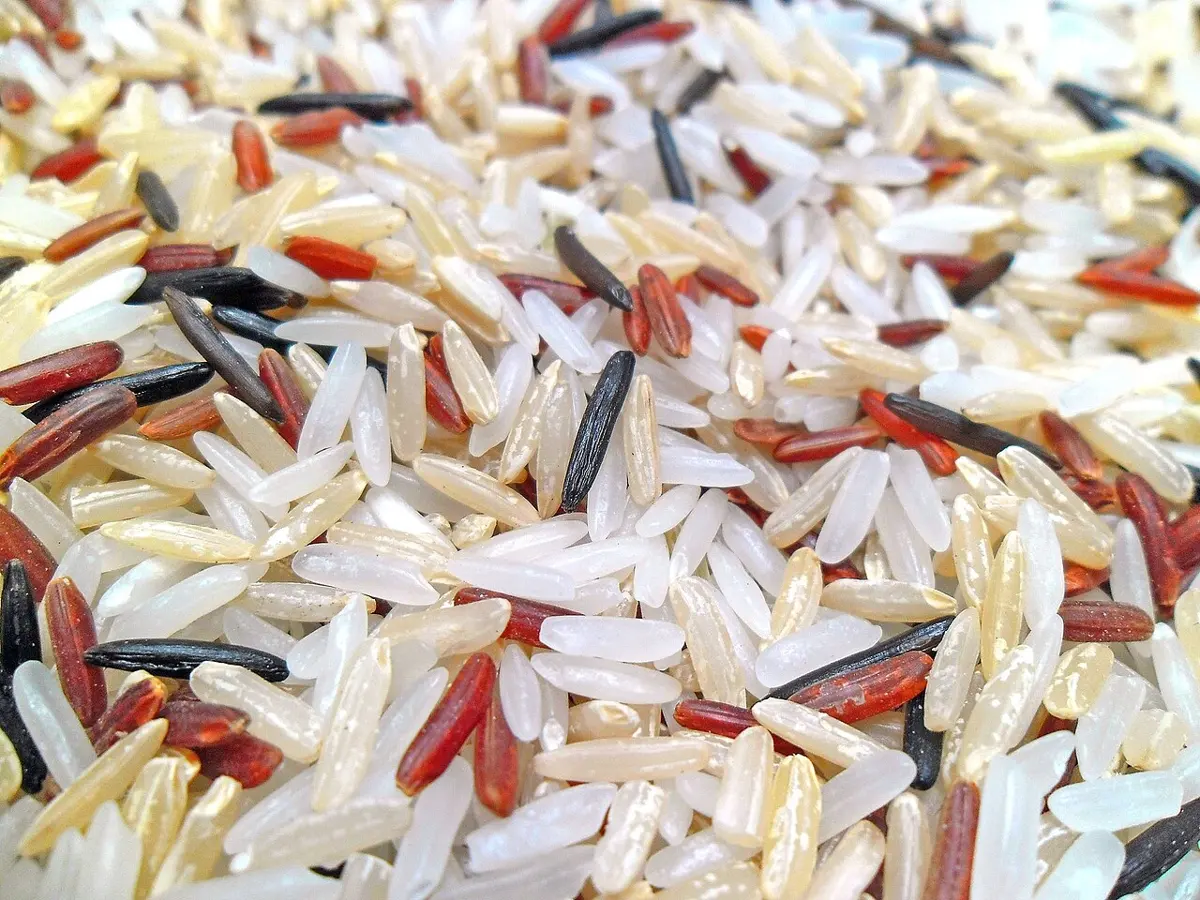
You met the parts of a seed in Grade 8: the seed coat, the embryo, and the endosperm, the food store Grade 8: Structure of a seed. White rice is almost all endosperm.
A test in 101 prisons
Was the same true of people? A medical inspector in Java, Adolphe Vorderman, knew that prisons in different parts of Java fed their prisoners differently, following local custom: some gave polished rice, others rice that had only been pounded to remove the husk, so it kept most of its bran. At Eijkman’s request he studied 101 prisons with almost 300,000 prisoners. Beriberi turned out to be about 300 times as common in the prisons that served polished rice as in those that served unpolished rice. His results were published in 1897.
In Vorderman’s survey, why was it important that prisons in different places used different rice?
Pick an answer to see why.
Something missing, not a poison
What did the bran actually do? At first Eijkman thought white rice contained a poison, or that too much starch caused a harm, and that something in the bran canceled it out. His successor in Batavia, Gerrit Grijns, came to a different view in 1901: nothing in the white rice is harmful; the bran contains a substance the body needs, and beriberi is what happens when that substance is missing. Eijkman later agreed. This was a new kind of idea: a disease caused not by something present, but by something absent. Today we call such a disease a deficiency disease.
Why it was so hard to accept
- Germs were the fashion. Doctors expected every outbreak to have a germ behind it.
- Chickens are not people. Many doctors did not believe that a disease of chickens told them anything about people.
- The amount was tiny. Food was thought of as protein, fat, carbohydrate, minerals and water. Nobody expected a substance to matter in such tiny amounts.
- People liked white rice. It looks clean, cooks soft and keeps much longer than brown rice, whose oily bran goes bad. Even in 1929, the presentation speech admitted, beriberi had not fallen as much as hoped.
The other half: milk and young rats
Frederick Gowland Hopkins in Cambridge
Eijkman’s work was about one disease. Frederick Gowland Hopkins, a chemist at the University of Cambridge in England, asked a bigger question: is a diet of pure protein, fat, carbohydrate and minerals enough for any animal to grow?
- Pure food. Hopkins made food for young rats from purified ingredients: casein (the main protein of milk), starch, lard (a fat), sugar and minerals. All of it had been washed with alcohol to remove anything else. On this food, the rats stopped growing.
- A few drops of milk. Then he gave some of the rats a tiny amount of milk each day: 2 to 3 milliliters, less than a spoonful. That was only about 1–2% of the energy in their food, too little to matter as food. Yet those rats grew normally.
- Swapping the milk. In his best-known experiment he used 16 young male rats in two groups of eight. One group got the pure food and 3 milliliters of milk each a day; the other got the pure food alone. On the 18th day he swapped: the milk went to the group that had been without it. The rats that had stopped growing started to grow again, fast, and the rats that lost their milk stopped growing.
- Not just eating less. Hopkins measured how much each group ate. The rats without milk were eating plenty of food; their bodies just couldn’t use it to grow.
- Published in 1912. He had described the idea in short form in 1906 and in lectures in 1909, and published the full experiments in 1912. He called the missing substances accessory food factors: things needed in tiny amounts besides the main parts of food.
A name: vitamin
In 1912, the year of Hopkins’s paper, a Polish chemist working in London, Casimir Funk, suggested a name for these substances: vitamine, a “vital amine”, because he thought they were all chemicals of a kind called amines. Not all of them are, so the final “e” was later dropped. Hopkins said in his Nobel lecture that nobody can be called the discoverer of vitamins, but his experiments made scientists everywhere take the idea seriously.
How vitamin B₁ works
The substance in rice bran was finally made pure in 1926, in Eijkman’s old laboratory in Batavia, by Barend Jansen and Willem Donath. Eijkman tested their crystals on pigeons and young chickens: a tiny amount prevented and cured the disease. Today it is called vitamin B₁, or thiamine.
Your cells get energy by breaking down food, mainly the sugar glucose, in a long chain of chemical steps (respiration). A few of those steps need thiamine: some of the body’s enzymes (proteins that speed up chemical reactions in cells) cannot work without it. Nerve cells, including those of the brain, get almost all their energy from glucose, and the heart muscle never stops working. So the nerves and the heart are the first to suffer when thiamine runs short. That is why beriberi attacks the nerves and the heart.
Thiamine dissolves in water, and the body keeps only a small store of it. Cooked brown rice has about four or five times as much thiamine as plain white rice. A person who eats almost nothing but white rice can show signs of beriberi within two or three months. An adult needs only about 1 milligram a day, about a thousandth of a gram, but needs it every day.
Why does a lack of vitamin B₁ damage the nerves and the heart first?
Pick an answer to see why.
In your life today
- A whole family of vitamins. After 1912 scientists found one vitamin after another. Lack of vitamin C causes scurvy (bleeding gums), lack of vitamin D causes rickets (soft, bent bones), and lack of vitamin A causes night blindness Grade 10: Night blindness. Today we know of thirteen vitamins.
- Brown, parboiled and pounded rice. Rice that is pounded in a dhiki or okhal, or lightly milled, keeps much of its bran. Parboiled rice (usina chamal), which is soaked and steamed before milling, keeps much of its thiamine even when it looks white, because the steaming drives the vitamin from the bran into the grain.
- Dal bhat works. Rice with dal, vegetables, and sometimes meat, eggs or milk, gives plenty of thiamine. Beriberi strikes people who eat white rice with very little else.
- It can still happen in Nepal. In September 1993 beriberi broke out in the camps in Jhapa and Morang where refugees from Bhutan lived on food rations of mostly polished rice. The aid agencies replaced the polished rice with parboiled rice and added a mixed flour to the rations, and the number of new cases fell sharply.
What came next
- The chemistry. The structure of thiamine was worked out in the 1930s, and the American chemist Robert R. Williams, who had spent years fighting beriberi in the Philippines, made it in the laboratory in 1936. Making vitamins in factories made them cheap enough to add to food.
- More vitamins, more prizes. Several later Nobel Prizes were for vitamins: vitamin C (Albert Szent-Györgyi in Medicine and Norman Haworth in Chemistry, both 1937), vitamin K (Medicine, 1943), and the shape of vitamin B₁₂ (Dorothy Hodgkin, Chemistry, 1964).
- An open question. We know which vitamins prevent which diseases. Much harder is how much is best for health, and whether vitamin tablets help people who already eat a varied diet. Large studies have mostly found little benefit, and some vitamins (such as A and D) are harmful in very large amounts.
In your science books
- Grade 8: Structure of a seed and the endosperm, the part that white rice is made of.
- Grade 9: Mushrooms as a source of vitamins, including thiamine (B₁).
- Grade 10: Night blindness, caused by a lack of vitamin A, and Genetic technology, with golden rice, made to fight a lack of vitamin A.
- Going further: How does food become energy, and become you?
Learn more
- The prize at nobelprize.org: The Nobel Prize in Physiology or Medicine 1929, with the presentation speech that tells the story.
- Eijkman’s Nobel lecture, with the chicken house and the prison survey in his own words, and Hopkins’s Nobel lecture, on who really discovered vitamins.
The official reason
The prize was given “for his discovery of the antineuritic vitamin.”
The prize was given “for his discovery of the growth-stimulating vitamins.”