
PCR and changing genes one letter at a time
Nobel Prize in Chemistry, 1993: Kary Mullis and Michael Smith
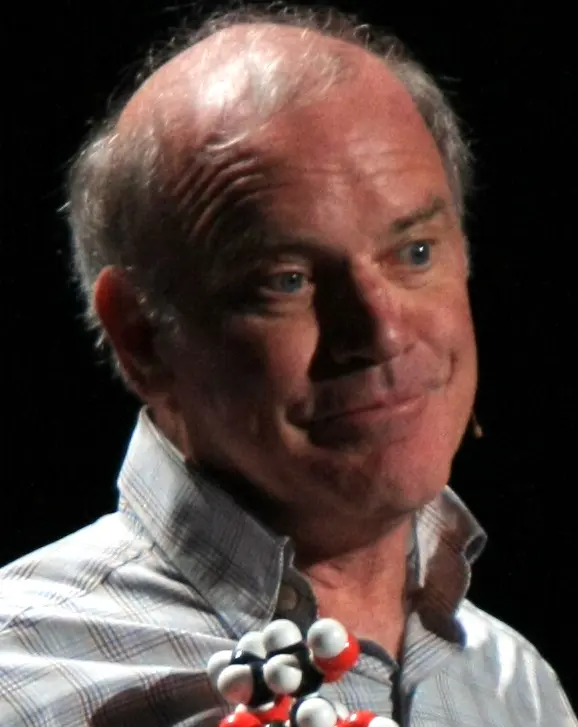
Kary Mullis
1944–2019, born in the United States
A chemist who made short pieces of DNA for a living, and thought of PCR while driving at night.
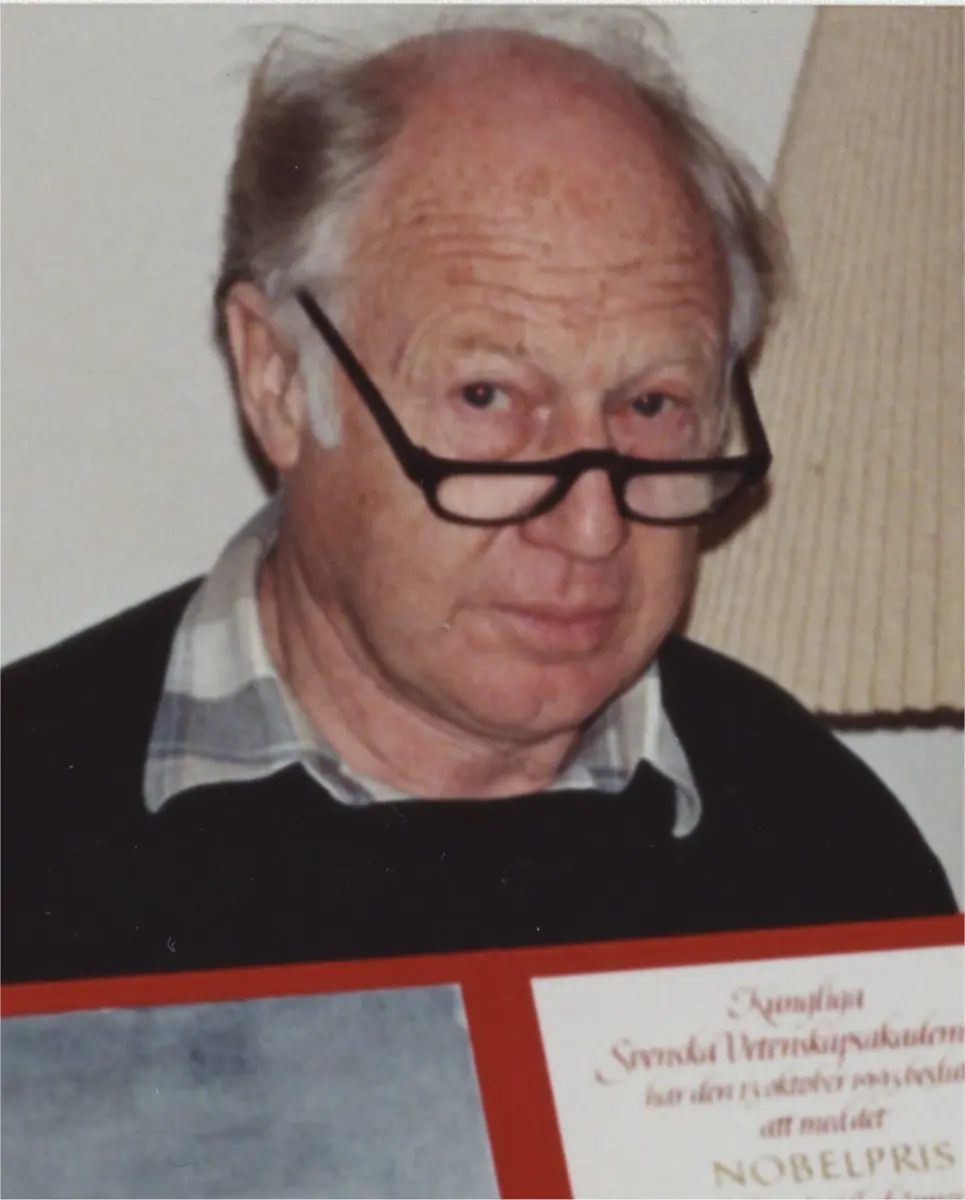
Michael Smith
1932–2000, born in the United Kingdom
A chemist from Blackpool who moved to Canada and spent his life learning to build DNA by hand.
In 2020, when COVID-19 reached Nepal, people with a fever queued at hospitals to have a long, thin swab pushed into their nose. The swab went to a laboratory, and a day or two later came the answer: positive or negative. That test was a PCR test.
A swab picks up only a tiny amount of a virus: far too little to see, or to find directly. PCR copies a chosen piece of the virus’s genes over and over, until there are billions of copies, enough to detect. In 1993 the Nobel Prize in Chemistry went to Kary Mullis, who invented PCR, and to Michael Smith, who found how to change one chosen letter in a gene. Between them they turned DNA into something a chemist can copy and edit in a small tube.
The problem: too little DNA, and no way to change it
Every cell in your body carries DNA, the long molecule that holds your genes Grade 10: DNA. DNA is a chain of four kinds of building block, written with the letters A, T, G and C. It has two strands, twisted round each other like a ladder, and the letters always pair the same way: A with T, G with C. So if you know one strand, you know the other.
A gene is a stretch of DNA that holds the recipe for one protein. Every three letters stand for one amino acid, and the chain of amino acids folds up into the protein (how a gene makes a protein). Proteins do most of the work in a living thing: they digest food, carry oxygen and build muscle.
By the 1970s, scientists faced two big problems.
- Finding one gene among billions of letters. Your DNA has about 3 billion letter pairs. A gene of interest might be a thousand of them. To study it, scientists needed many copies of just that piece. The only way was to put the gene into bacteria and let them multiply, which took weeks of careful work. And a drop of blood, a hair or a nose swab holds far too few cells to start from.
- Changing a gene on purpose. Scientists wanted to know what each amino acid in a protein does. The obvious test is to change one and see what happens. Changes in DNA, called mutations, happen in nature Grade 9: mutation, but they happen at random. Scientists could make more of them with chemicals or radiation, but never choose which letter changed.
Why did scientists need to make many copies of a gene before they could study it?
Pick an answer to see why.
How a cell copies DNA
Both inventions borrow the cell’s own way of copying DNA, so first see how that works.
- The two strands come apart. The letters across the ladder are held together only weakly. In a cell, special proteins pull them apart. In a test tube, heat does it: at about 95 °C the two strands separate. Scientists call this melting the DNA, although nothing turns liquid.
- A short starter piece sticks on. The enzyme that builds new DNA, DNA polymerase, cannot start from nothing. It needs a short piece of DNA already stuck to the strand it is copying, called a primer. A primer only sticks where its letters pair exactly with the strand: A opposite T, G opposite C.
- The polymerase builds a new strand. Starting from the end of the primer, it reads the old strand and adds the matching letter, one after another, using loose building blocks floating around it.
An enzyme is a protein that speeds up a chemical reaction without being used up: a catalyst made by a living thing Grade 10: catalysts.
By 1980 there were machines that could make short pieces of DNA, about 10 to 30 letters long, with any letters you typed in. These short pieces are called oligonucleotides (say OL-i-go-NEW-klee-o-tides; oligo means “a few”). Both laureates’ ideas start from them.
Why it was hard
- DNA was thought to be the cell’s business. For a long time, said the Nobel presentation speech, DNA seemed “outside the realm of the chemical laboratory”: only a living cell could copy or change it.
- Copying in a tube was slow and small. One round of copying turns one piece into two. That is not much, and nobody had seen an easy way to keep going.
- Choosing a letter needs a way in. A cell copies its DNA very faithfully. To change one letter on purpose, you had to trick the cell into copying a mistake you had made yourself.
What they did, step by step
Kary Mullis: copy, and copy again
- 1979, a job making DNA. Kary Mullis was a chemist at Cetus, a young biotechnology company in California. His laboratory made oligonucleotides for the company’s scientists, and by 1981 its machine was making them faster than anyone could use them.
- 1983, a drive at night. One Friday night, Mullis was driving through the mountains to his cabin in the woods, thinking about a test for spotting a changed letter in DNA. He imagined using two primers instead of one: one stuck to each strand, at the two ends of the piece he wanted, facing each other. The polymerase would copy the piece from both ends. Then heat would separate the strands, and both the old strands and the new copies could be copied again. Every round would double the number of copies.
- The sums on the roadside. He stopped the car and worked it out on paper from the glove box: 2 multiplied by itself 10 times is about a thousand, 20 times about a million, 30 times about a billion. A billion is close to the number of letter pairs in human DNA. Thirty rounds would make the piece he wanted as common as all the rest of the DNA put together.
- Nobody had tried it. In the library he found that every step was well known, but nobody had put them together. His colleagues were not excited.
- 16 December 1983, it works. His first attempts, on human DNA, failed. He switched to an easier target, a short piece from a small ring of bacterial DNA, and on 16 December 1983 he saw it multiply.
- 1985, the first paper. Mullis and his colleagues at Cetus, among them Randall Saiki and Henry Erlich, used PCR to copy part of the gene for hemoglobin, the protein that carries oxygen in red blood cells, and test it for the change that causes sickle-cell anemia.
There was one tiresome problem. Heating to 95 °C destroyed the polymerase, so after every round someone had to open the tube and add fresh enzyme by hand, thirty times.
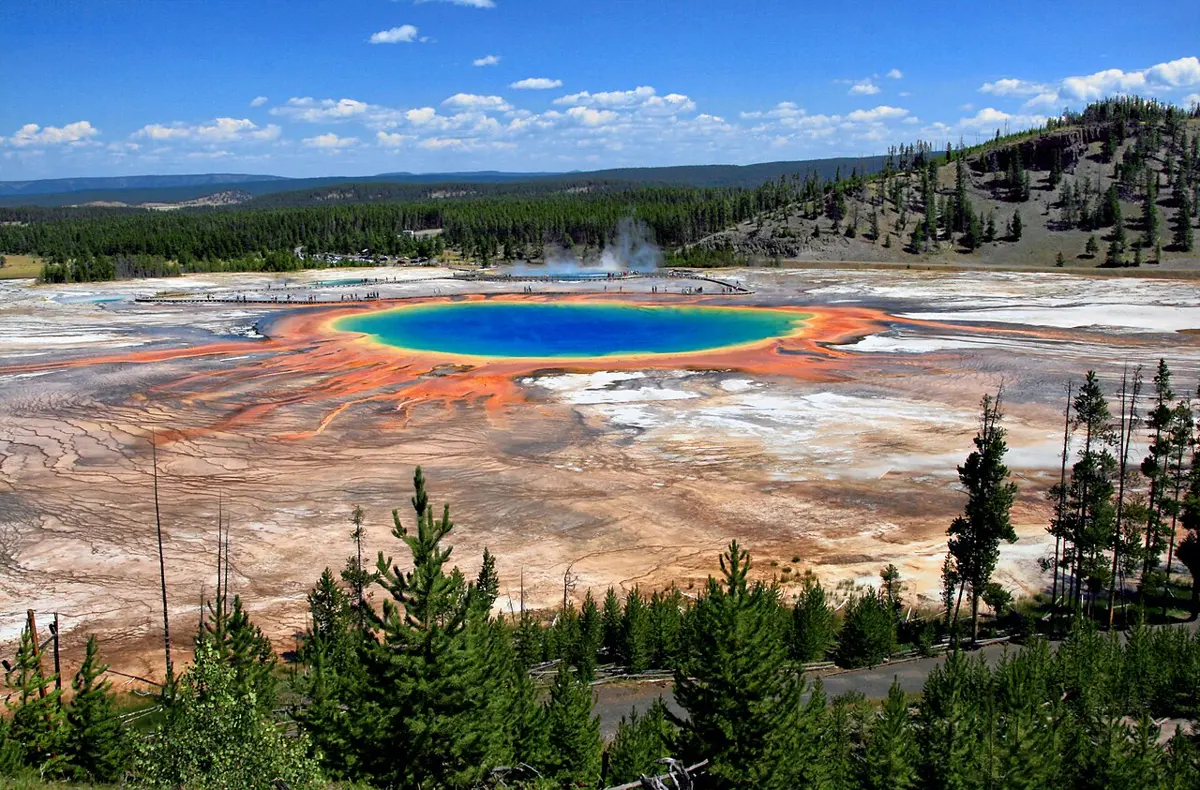
The answer came from a hot spring. In 1969, Thomas Brock and Hudson Freeze had described a bacterium living in a hot spring in Yellowstone National Park in the United States, and named it Thermus aquaticus (“hot water”). Its enzymes work in water hot enough to scald you. Its polymerase, called Taq polymerase, survives the 95 °C step. From 1986 the Cetus team used it, so the enzyme had to be added only once, and a machine could do the heating and cooling.
Michael Smith: one wrong letter, on purpose
- 1956, learning to build DNA. Michael Smith grew up in Blackpool, a seaside town in England, the son of a market gardener. After his studies in Manchester he went to Vancouver, in Canada, to work with Har Gobind Khorana, a chemist from India who was learning to make pieces of DNA by chemistry. (Khorana won the Nobel Prize in Physiology or Medicine in 1968.) Smith learned to join DNA letters one by one.
- The 1970s, an idea over coffee. Smith spent a year in Cambridge, in England, in the laboratory of Frederick Sanger, who was finding ways to read DNA. The story goes that the idea came up over a coffee break. Smith had found that a short made-up piece of DNA with one wrong letter still stuck to the right place on a longer strand. So: make a primer that matches a gene except for one letter you choose, stick it on, and let a cell copy it. The cell would copy your mistake too.
- 1978, the first changed gene. With Clyde Hutchison, who had worked beside him in Sanger’s laboratory, Smith did it in a small virus that infects bacteria, called φX174 (say phi-X-one-seven-four). Its DNA is a single strand, joined in a ring. They changed one letter on purpose. They also took a natural mutant of the virus, one with a wrong letter, and put it right.
- 1982, a changed protein. Smith and his colleagues made a large amount of an enzyme with one amino acid changed, chosen in advance, for the first time.
Smith’s method is called site-directed mutagenesis: “making a mutation at a chosen site”.
In Smith’s method, how does the chosen change get into the gene?
Pick an answer to see why.
How PCR works today
A PCR test needs a small plastic tube holding the sample, two primers made to match the piece wanted, the four DNA building blocks, Taq polymerase, and salty water. The tube goes into a machine called a thermal cycler, which heats and cools it again and again. Each round, a cycle, has three steps and takes a minute or two.
The temperatures matter. At 95 °C the strands separate. At about 55 °C (it varies from 50 to 65 °C, depending on the primers), the primers stick, and only where their letters match exactly. At 72 °C Taq polymerase works fast, adding more than a thousand letters a minute.
Then the cycle starts again, and every copy is copied. The number doubles each time:
A PCR machine starts with 5 copies of a piece of DNA and runs 3 cycles. If every copy is copied each time, how many are there at the end?
Pick an answer to see why.
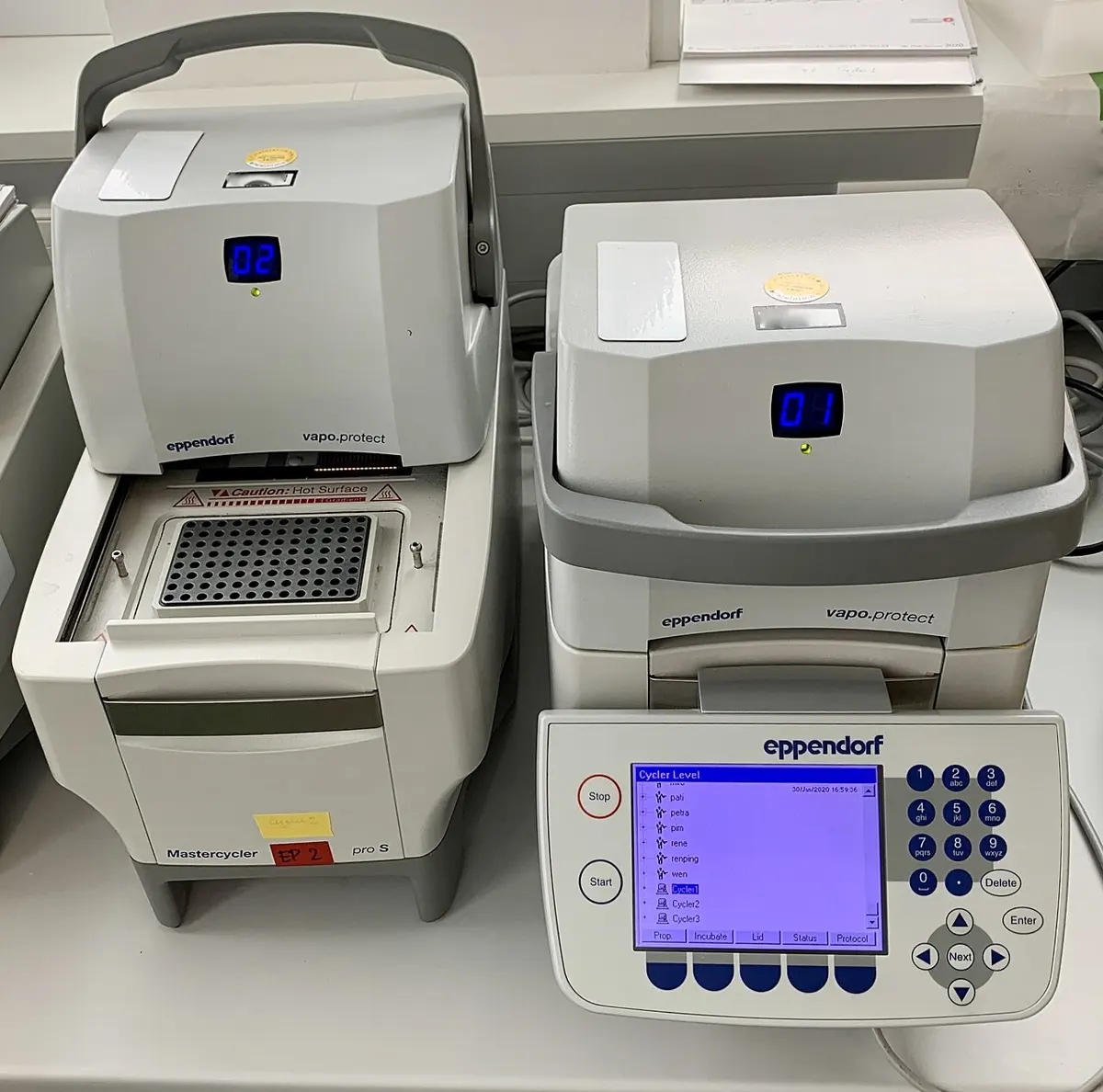
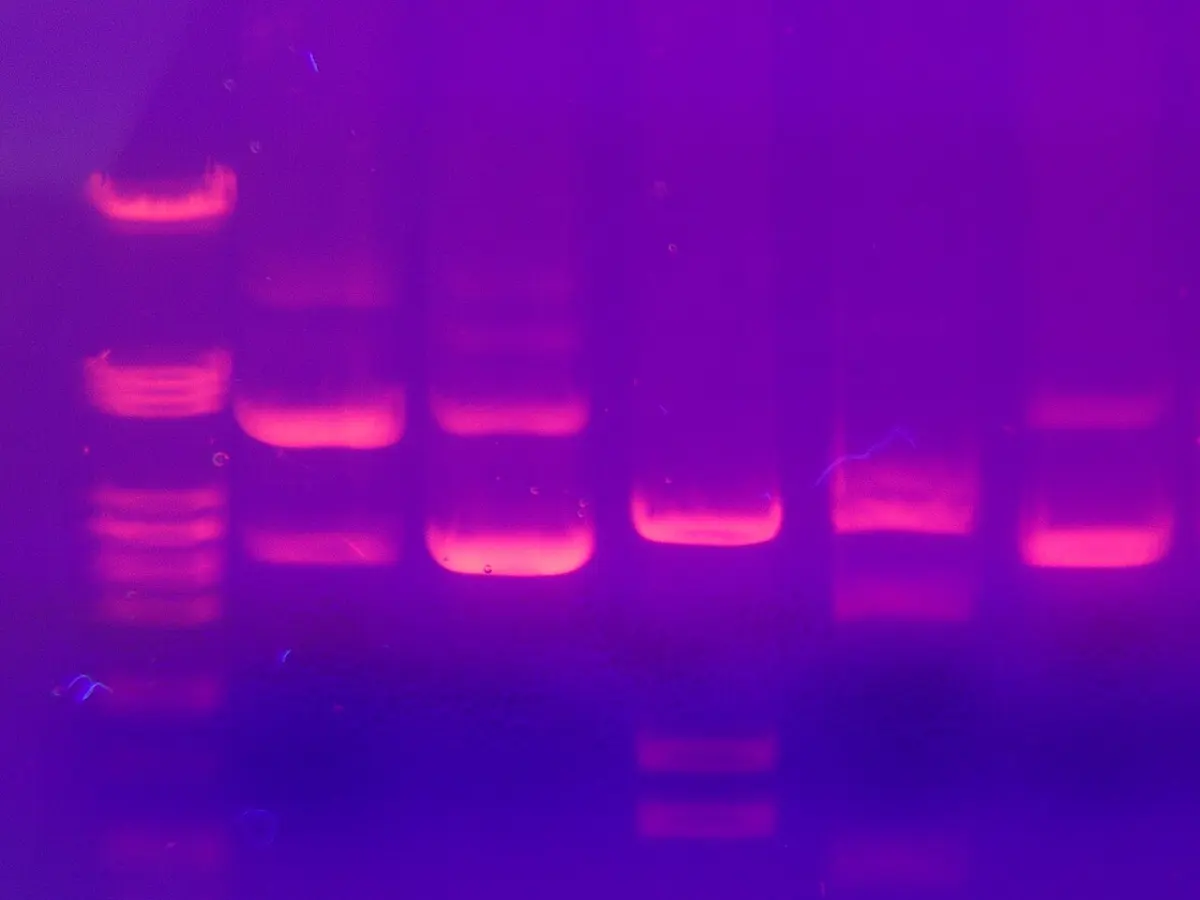
To see the copies, scientists first ran them through a jelly-like slab in an electric field, called a gel, where pieces of one length gather in a sharp band. Today’s tests add a dye that glows only when bound to the copies. The machine watches the glow: the sooner it appears, the more virus was in the sample.
A virus such as the one that causes COVID-19 keeps its genes in RNA, DNA’s cousin Grade 10: RNA, not in DNA. So the test first uses another enzyme to make a DNA copy of the virus’s RNA, and PCR then copies that.
In your life today
- Testing for disease. PCR tests find the viruses and bacteria behind COVID-19, tuberculosis, HIV and hepatitis, often before a person feels ill, without waiting days to grow the germs in a dish. In 2020 laboratories across Nepal set up PCR machines to test for COVID-19.
- Solving crimes. A drop of blood or a single hair left at a crime scene holds enough DNA for PCR Grade 10: DNA testing in investigations. It can also show who a child’s parents are, or name the victims of a disaster.
- Medicines. Many people with diabetes inject insulin Grade 10: diabetes. Some fast-acting insulins are human insulin with two amino acids swapped, made by changing the gene in Smith’s way. They act sooner after a meal.
- Washing powder. The enzymes in many washing powders, which break down food and blood stains, have had amino acids changed on purpose so that they keep working in hot, soapy water.
What came next
- Reading whole genomes. Together with machines that read DNA, PCR made it possible to read every letter of human DNA. The Human Genome Project finished in 2003.
- Designing proteins. Once scientists could change any amino acid, they could ask what each one does and design new proteins. Frances Arnold won the 2018 Nobel Prize in Chemistry for evolving better enzymes, and in 2020 Emmanuelle Charpentier and Jennifer Doudna won it for CRISPR, which changes letters in the DNA of living cells, even in plants and people.
- DNA from the past. PCR can copy DNA from bones and frozen remains: Neanderthals, Egyptian mummies, mammoths. In 1993 people hoped to get DNA from insects trapped in amber for millions of years, as in the film Jurassic Park. Those results turned out to be contamination: modern DNA that had got into the samples. DNA breaks down slowly over time. The oldest read so far, from soil in Greenland, is about two million years old. How old can DNA be and still be read? Nobody knows yet.
In your science books
- Grade 8: viruses.
- Grade 9: mutation.
- Grade 10: DNA, its two strands and pairs of letters; RNA; DNA testing in investigations; catalysts.
- Going further: how a gene makes a protein and what one wrong letter does; insulin from bacteria.
Learn more
- The Nobel Prize’s press release, which explains both methods.
- Kary Mullis’s Nobel lecture, The Polymerase Chain Reaction, the story of the night drive in his own words, and Michael Smith’s life, in his own words.
The official reason
The prize was given “for his invention of the polymerase chain reaction (PCR) method.”
The prize was given “for his fundamental contributions to the establishment of oligonucleotide-based, site-directed mutagenesis and its development for protein studies.”