
Pick up a stalk of rice in a field in Chitwan at harvest time and shake it. The grains stay put. You can carry a bundle of cut rice all the way home, beat it on a stone to get the grain off, and hardly lose any on the way. Now find a wild rice plant growing at the edge of a pond in the Terai. As each grain ripens it falls off at the lightest touch, into the water and the mud, where it can grow next year. For a wild plant that is the whole point. For a farmer it would be a disaster: by the time the field was ripe, half the harvest would be on the ground.
Nobody designed the rice in your dal bhat. Twelve thousand years ago it didn’t exist, and neither did maize, wheat, mustard or cauliflower. There were only wild plants, with small seeds that fell off and scattered. Farmers turned them into crops, a little each year, mostly without knowing how they were doing it. Today scientists can do in a few years what took farmers thousands, and some can change a plant’s genes directly. How did farmers make our crops, and what are the new ways doing to the world?
Wild plants and farm plants
Put a wild plant beside the crop that came from it and the difference is startling. The best-known pair is maize and its wild ancestor, a Mexican grass called teosinte. A teosinte ear is a few centimeters long, with only about 5 to 12 seeds, each sealed in a stony case that a person can hardly bite through. When ripe, the ear breaks apart and the seeds scatter. A maize cob is many times longer, with hundreds of soft kernels in rows, held so tightly that they never fall off by themselves.
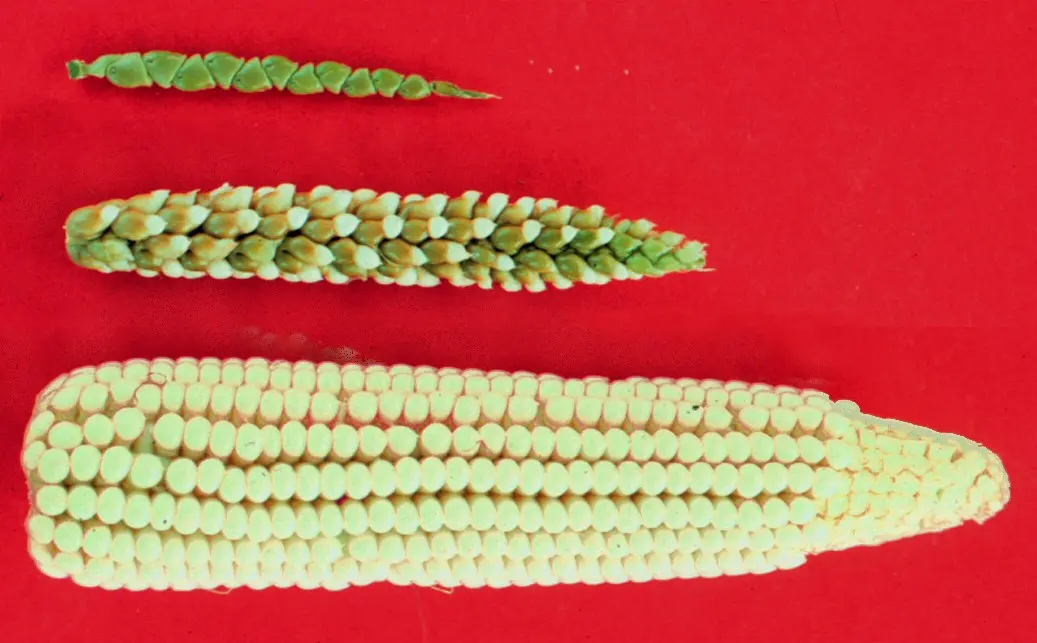
The same story is told by almost every crop. Look at the changes farmers made, crop after crop:
| A wild plant… | Its crop… | Why the farmer wanted it |
|---|---|---|
| drops its seeds as they ripen | holds them until it is cut | the harvest waits for the farmer |
| has small seeds | has big seeds or grain | more food for the same work |
| has seeds that wait years before they sprout | has seeds that all sprout at once when sown | the whole field grows and ripens together |
| often has hard cases, bitter tastes or spines | is softer, less bitter, easier to eat | food that is easy to cook and eat |
| ripens a few seeds at a time | ripens all at once | one harvest instead of many |
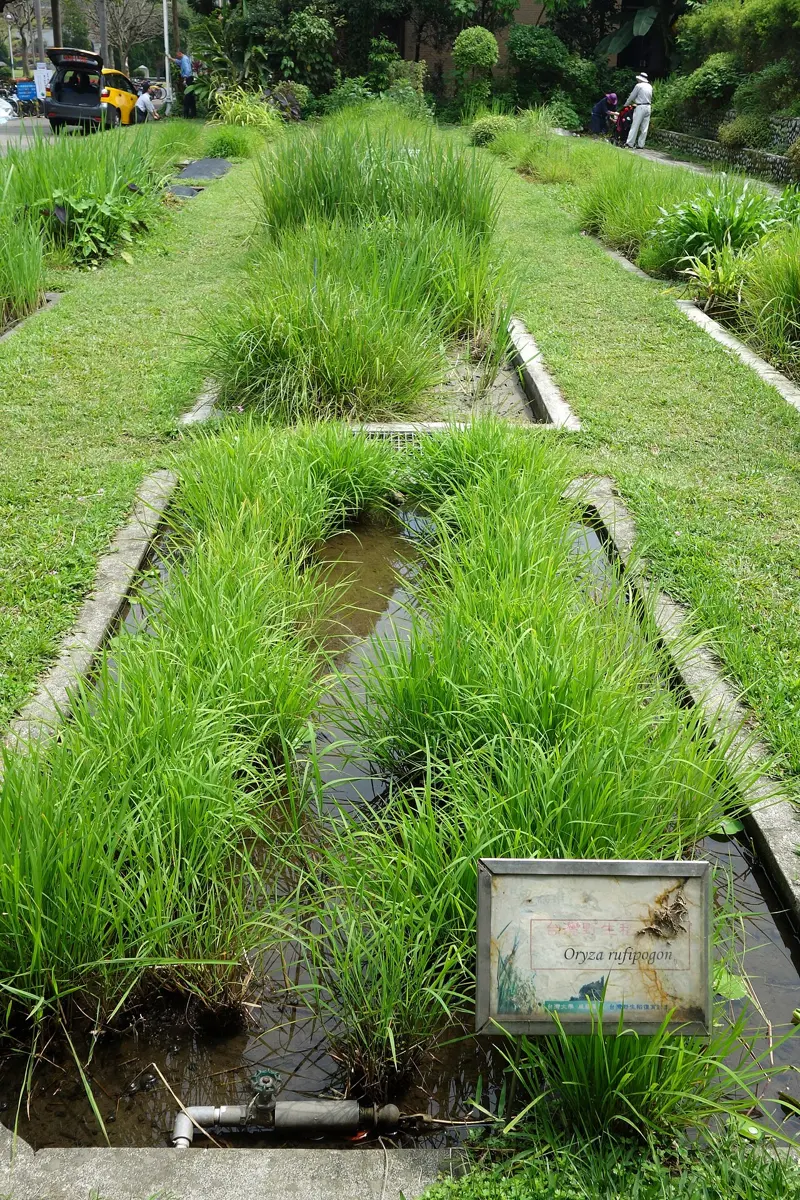
Turning a wild plant or animal into one that lives with people and depends on them is called domestication. Wheat and barley were domesticated in western Asia, maize in Mexico, potatoes in the Andes of South America. Asian rice, the rice of Nepal, came from a wild rice of southern and eastern Asia. One of the clearest records of the farm kind taking over comes from the Yangtze valley of China, about 7,000 years ago; rice was gathered and sown there for a long time before that.
Copies and mixes
You learned in Grade 8 that gardeners keep a good plant by artificial vegetative propagation: a cutting, a layer, a gootee, a graft or tissue culture grows into a copy of the parent Grade 8: Grade 8: Artificial vegetative propagation. A copy has exactly the parent’s genes, so it can keep a good variety, but it can never make a new one. New varieties come from seeds, and every seed is a new mix of genes from two parents (Why Do You Look Like Your Parents, but Not Exactly?). Most of what farmers did to make crops, they did by choosing which seeds to sow.
A farmer wants a new kind of mustard, with bigger seeds than any mustard she has. Which is the only way that could work?
Pick an answer to see why.
Choosing without meaning to
How could farmers who knew nothing about genes have turned shattering wild rice into rice that holds its grain? The surprising answer is that they probably didn’t mean to.
In a big field of wild rice, a few plants now and then have a small change, a mutation, in one of the genes that make the grain break off (When a recipe changes). In rice, scientists have found that a change of a single letter in one gene, called sh4, is enough to make the grain hold on much more tightly. In the wild, such a plant is a failure: its grain doesn’t fall to the ground, so it doesn’t sow itself.
Now think of the first farmers. They cut the ripe rice with a sickle, carried it home, and next year sowed some of what they had harvested. Which grain was in the harvest? Hardly any from the plants that had already dropped theirs, and all of it from the rare plants that held on. Without meaning to, the farmers were choosing those plants to be the parents of the next crop.
The ratio is multiplied by 1.43 again next year, and the year after: the same shortcut you met with snow leopards (A shortcut: the ratio). Starting from 1 : 99, it reaches about 1 : 1 after 13 years (1.43 multiplied by itself 13 times is about 104), and nearly every plant holds its grain within about 25 years.
In 1990 two British archaeobotanists, Gordon Hillman and Stuart Davies, worked this out for wild wheat and barley, using measurements from their own trials of harvesting wild wheats. Their answer was that the farm kind could take over in as little as 20 to 30 years, and within about 200, if farmers cut their crop when it was nearly ripe and sowed it in new ground each year.
In the widget, why does nothing change when the rice is cut while it is still green?
Pick an answer to see why.
Choosing on purpose: selective breeding
Once people began farming, they also chose on purpose. Every farmer in Nepal knows the rule: keep the best for seed. A farmer who saves seed only from the plants with the longest ears, the biggest grains or the sweetest fruit, and eats the rest, is changing the crop. Choosing which plants or animals become parents, so that the next generation has more of a quality people want, is selective breeding, also called artificial selection: people do the selecting, instead of nature. In Grade 10 you’ll meet its methods and their names Grade 10: Grade 10: Selective breeding.
Selective breeding has made astonishing differences: that Grade 10 section shows how one wild plant became cabbage, cauliflower, broccoli, kohlrabi and kale. And it works on animals too: raising and breeding farm animals is called animal husbandry, and choosing which animals become parents is a big part of it.
Genes or soil?
There is a catch, and you know it from Why Do Two Plants from the Same Field Grow So Differently?: a plant may be big because of its genes, or because it had a good patch of soil, more light or more water. Seed carries the genes, not the soil. If a farmer keeps seed from a plant that was big only because it grew near the compost heap, its seed will grow ordinary plants.
So when the chosen plants are better than average, only part of their advantage is passed on: the part that came from their genes. Breeders have a rule for it, called the breeder’s rule:
The share of the differences between plants that comes from their genes is called heritability. It is a number from 0 to 1. If it is 0, all the differences are from the soil and the weather, and choosing does nothing; if it is 1, they are all from genes, and the next crop is as good as the chosen parents.
A farmer chooses her tallest buffaloes as parents, but the calves are hardly taller than the herd’s average. What is the most likely reason?
Pick an answer to see why.
A rice for Jumla
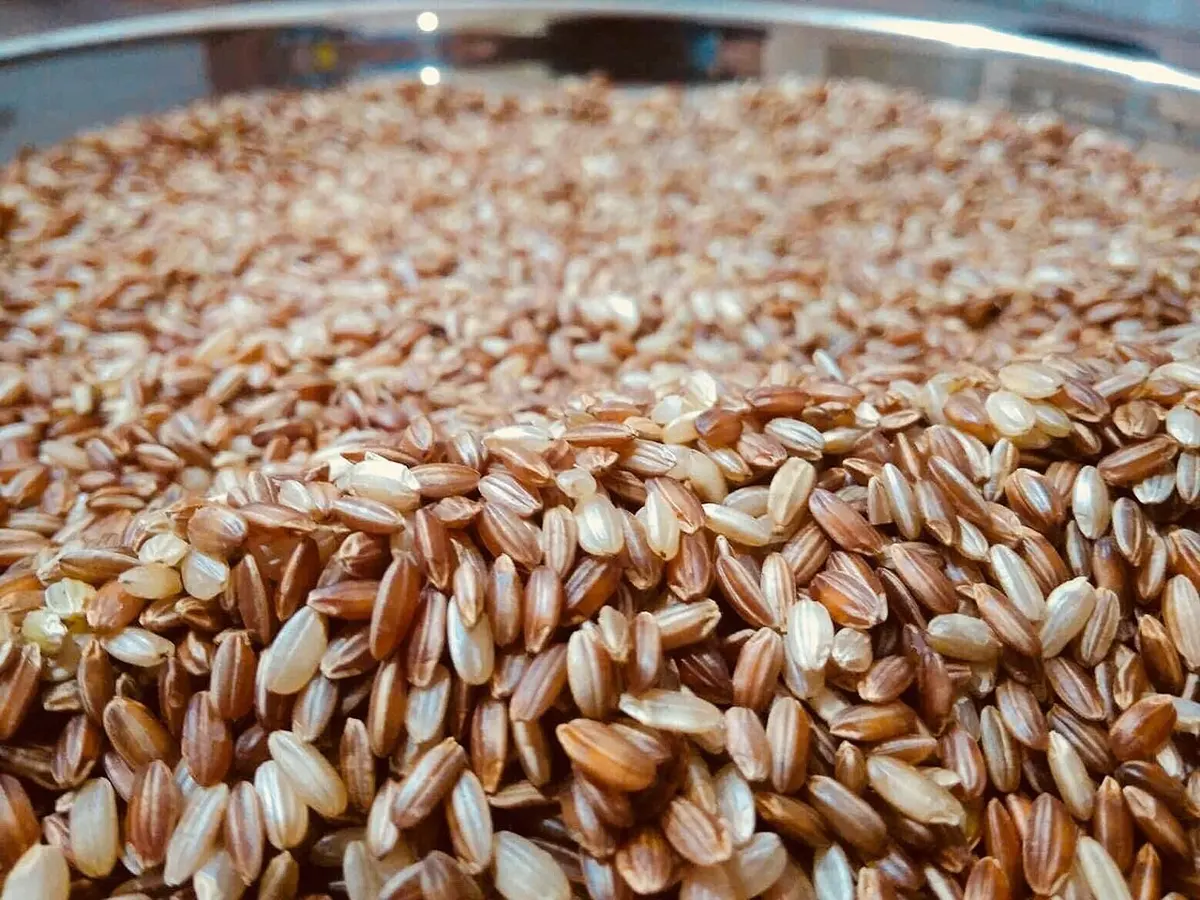
High in Karnali, in the fields of Jumla, farmers grow rice at about 3,000 m above sea level, among the highest rice fields in the world. They grow a red rice called Jumli Marshi, which their families have kept for hundreds of years by saving its seed, because it survives cold nights that kill other rice.
Crossing two varieties to bring a quality from one into the other is crossbreeding, and checking seedlings’ DNA to choose the parents is marker-assisted breeding. It is still selective breeding, but with a new tool: breeders can now see a gene before they can see the trait.
The Green Revolution
In the 1950s and 1960s, many people feared that India, Pakistan and other poor countries would soon face famine: their populations were growing faster than their harvests. Feeding wheat more fertilizer didn’t help much, because the tall old wheats grew heavy heads and then fell over in the wind and rain, a problem called lodging.
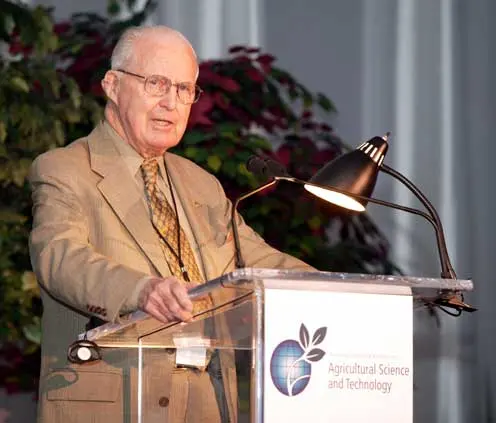
The new varieties saved many millions of people from hunger. But they came with costs that are still being argued about:
- They gave their big harvests only with plenty of fertilizer, water and pesticides, which cost money, can pollute rivers and soils, and helped richer farmers more than poorer ones.
- Farmers everywhere grew the same few varieties, and stopped growing thousands of local ones. A field of plants with the same genes can be wiped out by one new disease, as happened to Ireland’s potatoes in 1845–1849, when about a million people died, and to the world’s favorite banana in the 1950s (The banana that disappeared).
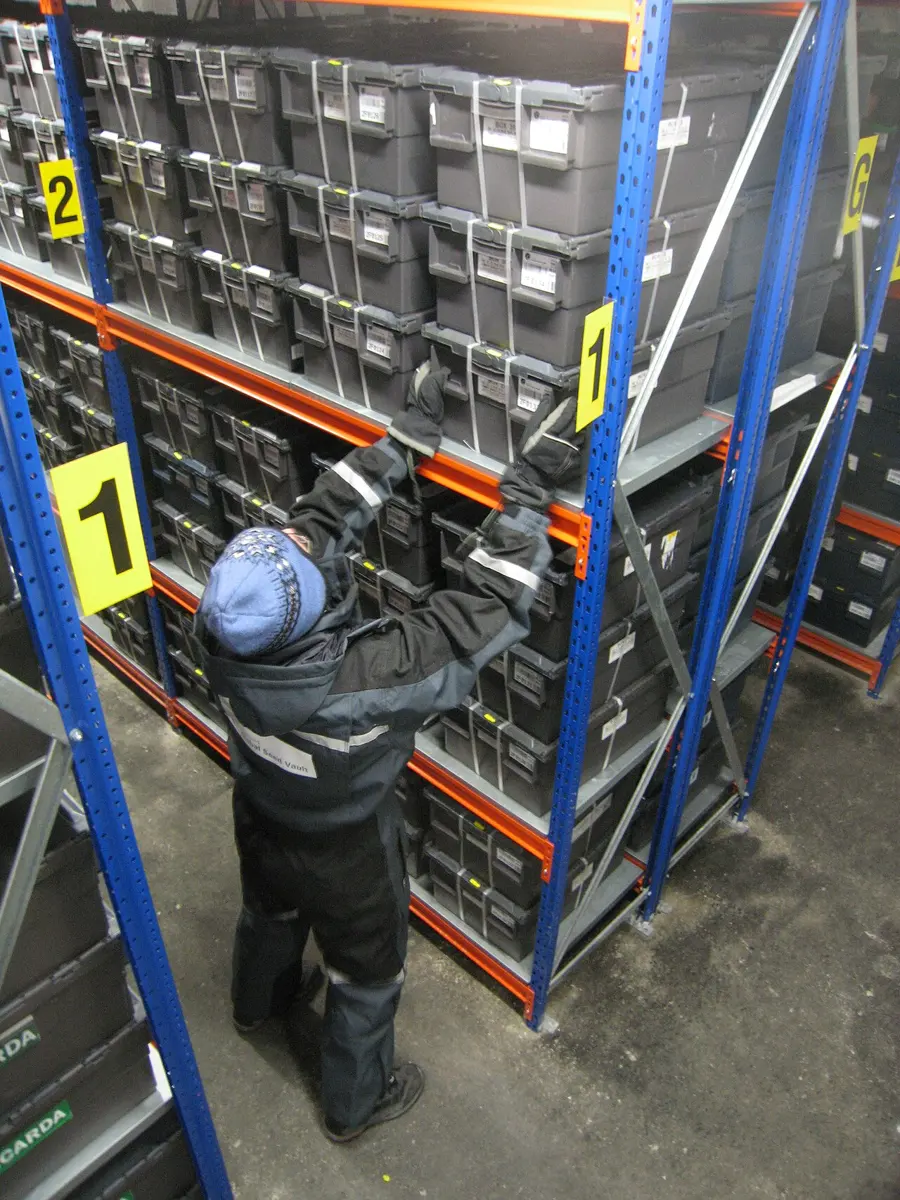
The old local varieties carry genes that may be needed one day: for a new disease, a hotter climate, a drought. So countries now keep their seeds in gene banks, cold stores where seeds stay alive for decades. Nepal’s national gene bank, at Khumaltar in Lalitpur, opened in 2010 and keeps more than 10,000 samples of the seeds of Nepal’s crops and their wild relatives. A spare copy of the seeds of gene banks from all over the world is kept deep in a frozen mountain in Svalbard, near the North Pole: about 1.38 million samples, as of the end of 2025.
Why do plant breeders want to keep old local varieties that give smaller harvests?
Pick an answer to see why.
Changing genes directly
Selective breeding can only choose among the genes a plant or animal already has, or can get from a relative it can breed with. A rice plant can’t breed with a bacterium. Since the 1970s, scientists have been able to move a gene from one living thing into another directly, in the laboratory. This is genetic engineering, also called genetic modification; a living thing changed this way is a genetically modified organism, or GMO.
It works because every living thing uses the same kind of DNA, written in the same four letters, and reads it the same way. A gene from a bacterium, put into a plant cell, is read by the plant’s cell just as it would be in the bacterium, and the plant makes the bacterium’s protein. In Grade 10 you’ll meet genetic engineering again, with more examples Grade 10: Grade 10: Genetic technology.
Insulin from bacteria
People with type 1 diabetes need injections of insulin, a protein that controls the sugar in their blood. Until the 1980s, it came from the pancreases of cattle and pigs from slaughterhouses. In 1978 scientists put the human insulin gene into bacteria, and the bacteria made human insulin. In 1982 it became the first medicine made by genetic engineering to be sold. Today most insulin is made by genetically modified bacteria or yeast, in big steel tanks.
Bt cotton
A soil bacterium called Bacillus thuringiensis, Bt for short, makes a protein that kills certain caterpillars, such as the bollworms that eat cotton bolls, but is harmless to people, birds and most other animals. Organic farmers have sprayed Bt for decades. Scientists took the gene for this protein and put it into cotton.
Step 3 is the tissue culture of Grade 8: a whole plant grown from a few cells. Without it, there would be no way to turn one changed cell into a plant.
In India the gene was then crossed into Indian cottons by ordinary breeding: the two kinds of technology work together. India began growing Bt cotton in 2002, and within about ten years it was over 90% of India’s cotton. Farmers sprayed much less insecticide against bollworms, and harvests rose. But one bollworm, the pink bollworm, evolved resistance: by about 2010 there were pink bollworms in India that Bt cotton no longer killed. In a field where every plant makes the poison, the rare caterpillar that can survive it has every advantage: natural selection, exactly as in How Do Snow Leopards Come to Fit the Mountains?
Golden Rice
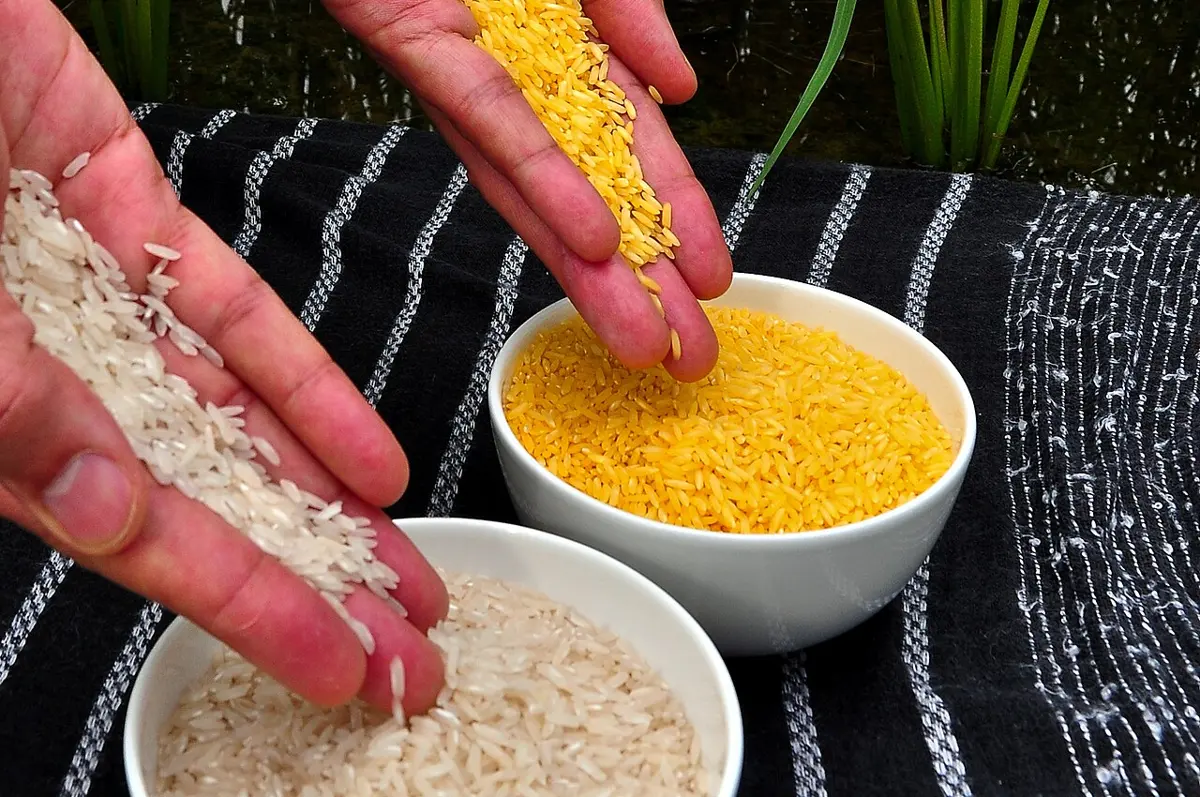
Lack of vitamin A blinds hundreds of thousands of young children every year in poor countries, and weakens their resistance to disease. Golden Rice was given genes, from maize and from a bacterium, that make the grain store beta-carotene, the orange substance in carrots, which the body turns into vitamin A. It took more than 20 years of testing before the Philippines, in 2021, became the first country to approve it for growing. In 2024, a court in the Philippines stopped it again, after a case brought by farmers’ groups and campaigners who argued its safety hadn’t been proved.
Gene editing
Since 2012 there has been a newer tool, CRISPR. Bacteria use it to cut up the DNA of viruses that attack them; Emmanuelle Charpentier and Jennifer Doudna showed how to aim it at any DNA we choose, and won the Nobel Prize in Chemistry in 2020 for it. It works like a find-and-replace: it can be sent to one exact place in a cell’s DNA and cut it there, so that scientists can switch a gene off or change a single letter. This is gene editing. Often nothing from another species is added: the change could have happened by itself as a mutation, only faster and in exactly the right place.
Why can a bacterium’s gene work inside a cotton plant?
Pick an answer to see why.
What people argue about
Genetic engineering is one of the most argued-about technologies in the world. The arguments are of different kinds, and it helps to keep them apart:
- Is the food safe to eat? Every GM crop is tested before it is approved. Large reviews by scientific bodies, such as the US National Academies of Sciences in 2016, found no evidence that the approved GM crops were less safe to eat than ordinary crops. That is a conclusion about the crops tested, not a promise about every future one, which is why each new one is tested.
- What does it do to the environment? Bt crops cut insecticide spraying, but pests can evolve resistance. Genes can spread by pollen to wild relatives or to neighbors’ fields.
- Who owns the seeds? A new variety can be patented, and farmers may have to buy new seed every year instead of saving their own. That is a question about money and law, not about biology.
- Who decides? Each country makes its own rules, and they differ a lot, as Golden Rice in the Philippines shows.
Changing genes in people
Some diseases come from a harmful version of one gene. One of them is sickle-cell disease: the gene for hemoglobin, the protein that carries oxygen in red blood cells, has a one-letter change that makes the red cells bend into stiff sickle shapes, which block small blood vessels and cause terrible pain. In Nepal it is found mostly in the western Terai.
Treating a disease by changing the genes in a patient’s own cells is gene therapy. The first was given in 1990, to a four-year-old girl in the USA, Ashanti DeSilva, whose body couldn’t fight infections because of one faulty gene. In 2023 Britain and then the USA approved the first gene-editing treatment, for sickle-cell disease: doctors take blood-making cells from the patient’s bone marrow, use CRISPR to break a genetic switch that, after birth, turns off the gene for the kind of hemoglobin a baby makes before birth. With the switch broken, that gene comes back on, and its hemoglobin isn’t affected by the disease. Then the cells are put back. Most patients treated in the trials stopped having pain crises. As of 2025, it costs about two million US dollars per patient.
Gene therapy changes cells of the body, such as blood cells, not eggs or sperm, so the change is not passed on to the patient’s children. Changing the genes of an embryo would change every cell of the person, including their eggs or sperm, and so every generation after them. In 2018 a Chinese scientist, He Jiankui, announced that he had done this to twin girls before they were born. Scientists around the world condemned it as unsafe and wrong, and he was sent to prison. Many countries forbid it by law.
A patient’s blood cells are changed by gene therapy, and she is cured. Will her children inherit the change?
Pick an answer to see why.
How we learned to do it
Each of these technologies rests on discoveries, and many of the discoveries came from new tools:
| When | What happened |
|---|---|
| about 11,000 years ago | farmers in several parts of the world begin to sow seeds, and crops begin to change |
| 1866 | Gregor Mendel publishes his experiments with peas: traits are passed on as separate units, later called genes |
| 1900s–1930s | breeders begin to use Mendel’s laws to plan crosses, and make the first hybrid maize |
| 1953 | Rosalind Franklin’s X-ray photographs of DNA help James Watson and Francis Crick find its structure, the double helix |
| 1973 | Herbert Boyer and Stanley Cohen put a gene from one living thing into a bacterium, using enzymes from bacteria that cut DNA at exact places: one of the first feats of genetic engineering |
| 1982 | human insulin made by bacteria goes on sale |
| 1990 | the first gene therapy |
| 1996 | the first GM crops grown widely, in the USA |
| 2003 | the whole human genome, all 3 billion letters of our DNA, is read |
| 2012 | CRISPR gene editing |
| 2023 | the first gene-editing treatment approved, for sickle-cell disease |
Notice how the tools come first. Nobody could find DNA’s shape until X-ray photographs could show how the atoms in its fibers were arranged. Nobody could move a gene until enzymes were found that cut DNA at exact places. And CRISPR was found by scientists studying how bacteria fight off viruses: they were not looking for a tool at all.
Finding out for yourself
You will hear many claims about crops, seeds and genes: on the news, from seed sellers, from neighbors. “Hybrid seed gives double the harvest.” “GM food causes cancer.” “Our old rice is healthier.” Some are true, some partly true, some false. Here is how scientists check a claim, and how you can.
- Who says it, and how would they know? A research institute or university that measured something knows more than someone repeating what they heard.
- Do they gain from your believing it? A company selling seed, or a group raising money against GM food, may be right, but check with someone who gains nothing.
- What is the evidence? Look for measurements: how many fields, how many years, compared with what.
- Do other reliable sources agree? One study can be wrong. When national science academies, the FAO (the United Nations’ farming organization) and many studies say the same, it is probably true.
- How old is it? Rules, prices and the facts about a new variety change quickly. Look for the date.
Questions
Which change did farmers make in almost every grain crop?
Pick an answer to see why.
A breeder chooses goats whose milk yield is 2 liters a day above the herd’s average. The heritability of milk yield is 0.25. By how much should the daughters’ yield be above the old average?
Pick an answer to see why.
Explain why grafting can keep a good mango variety, but can never produce a new and better one.
Answer
A graft is a piece of the parent tree, and all its cells were made by cell division, which copies the chromosomes exactly. So the grafted tree has exactly the parent’s genes and gives the same fruit: good for keeping a variety. But a new variety needs new combinations of genes, and those arise only in seeds, where genes from two parents are mixed (and now and then a mutation appears). Selective breeding chooses among those new mixes; a graft has none.
Early farmers did not know about genes. Explain how their way of harvesting could still have changed wild rice into rice that holds its grain.
Answer
In wild rice, a rare mutation makes some plants hold their ripe grain. If farmers harvested the field when it was ripe, the ordinary plants had already dropped some of their grain, while the rare plants still had all of theirs. So the rare kind made up a bigger share of the harvest than of the field. If next year’s field was sown from the harvest, and the dropped grain didn’t come up there, a bigger share of the plants held their grain. Repeated every year, this made the non-shattering kind more and more common until almost every plant held its grain, without anyone choosing it on purpose.
A farmer keeps seed from his best maize plants every year, but his crop hardly improves, while a research station that does the same in an even, well-watered field makes steady progress. Use the idea of heritability to explain why.
Answer
Only the part of a plant’s advantage that comes from its genes is passed on in its seed. In the farmer’s uneven field, many plants are big because they grew in a good patch, with more manure or water, so most of the differences come from the soil: the heritability is low, and his chosen plants pass on little advantage. In the station’s even field, the plants all have nearly the same soil and water, so more of the differences between them come from their genes: the heritability is higher, and the same choosing gives a bigger gain each generation.
The ratio of non-shattering to shattering plants in a field is 1 : 49. Each year at harvest the shattering plants have lost 2 grains in 10.
- a.By how many times is the ratio multiplied each year?
- b.What is the ratio after 2 years, and what percentage of the plants then hold their grain?
Answer
- a.A shattering plant gets 8 in 10 of its grain into the harvest, a holder all of it: the ratio is multiplied by 10 ÷ 8 = 1.25 each year.
- b.After 2 years: 1 × 1.25 × 1.25 = 1.5625, so 1.56 : 49. Percentage: = 0.031, about 3.1%, up from 2%.
Bt cotton was made by genetic engineering, and the semi-dwarf wheats of the Green Revolution by selective breeding. Describe one difference in how they were made, and one way in which both changed farming.
Answer
Difference: the semi-dwarf wheats were made by crossing wheats with each other and choosing the best offspring over many generations, so their genes all came from wheat. Bt cotton was made by putting a gene from a bacterium, Bacillus thuringiensis, into cotton cells in the laboratory, carried by Agrobacterium, and growing the changed cells into plants by tissue culture; that gene could never have come from crossing.
How both changed farming (any one): both raised harvests a lot; both spread quickly until most farmers grew a few new varieties instead of many local ones; both brought new costs (fertilizer and water for the wheats, buying new seed every year for Bt cotton) and new risks (disease spreading through uniform fields, pests evolving resistance to Bt).
Why is a gene-therapy treatment for sickle-cell disease not passed on to the patient’s children, while editing the genes of an embryo would be?
Answer
The treatment changes only blood-making cells from the patient’s bone marrow. Children inherit only the genes in the egg and sperm, which are not changed, so they can still inherit the harmful version. An embryo’s edited cells divide to make every cell of the body, including the cells that make eggs or sperm, so the change would pass to the person’s children and to every generation after.
A seed seller tells farmers in your village, “This new hybrid maize gives twice the harvest of your local maize.” Describe how you would check whether this is true, and what you would want to know before believing it.
Answer
A good answer covers several of these:
- Who says it: the seller gains if farmers believe it, so look for a source that gains nothing, such as NARC’s trials, the district agriculture office or a university study.
- The evidence: twice the harvest in what conditions? With how much fertilizer and water? Over how many fields and years? Compared with which local variety, grown the same way?
- Other sources: do farmers who have grown it, and other trials, find the same?
- What else matters: hybrid seed doesn’t breed true, so new seed must be bought every year; it may need more fertilizer; does it resist the local diseases, and does it taste as people like?
A fair test would be to grow the new maize and the local maize side by side, in the same field, with the same care, for more than one year.
Where to go next
- How Do Snow Leopards Come to Fit the Mountains? The same kind of selection with nobody choosing at all: how small differences in survival shape animals to where they live.
- Why Do You Look Like Your Parents, but Not Exactly? The genes that breeders choose among: how they pass from parents to young, and why every seed is a new mix.
- Why Do Two Plants from the Same Field Grow So Differently? Seed and soil: how genes and surroundings together decide how a plant grows.