
CRISPR: scissors for DNA
Nobel Prize in Chemistry, 2020: Emmanuelle Charpentier and Jennifer A. Doudna
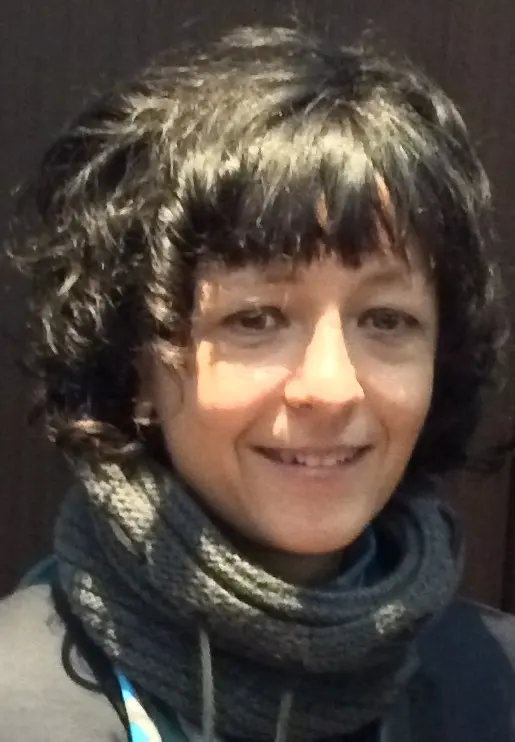
Emmanuelle Charpentier
born 1968 in France
A microbiologist who studied one dangerous germ for years and found the missing piece of its defense.
Photo: Carries mum, CC BY-SA 4.0

Jennifer A. Doudna
born 1964 in the United States
Grew up in Hawaii, where a book about the discovery of DNA’s shape, left on her bed by her father, made her want to do science.
Photo: Duncan.Hull, CC BY-SA 4.0
Think of a word processor on a computer. You can find one word in a long document, delete it, and type a better one. Every cell in your body carries a document too: its DNA, a set of instructions about three thousand million letters long. For a long time, scientists had no good way to find one exact spot in it and change it.
Now they have one. It is called CRISPR (say “crisper”), and people call it genetic scissors. In 2020 the Nobel Prize in Chemistry went to Emmanuelle Charpentier and Jennifer Doudna, who discovered how it works and turned it into a tool. It was the first science Nobel Prize shared by two women only.
The problem: DNA that was hard to change
Your DNA is a long chain made of four kinds of building blocks, shown by the letters A, T, G and C. The order of the letters is a set of instructions, like the order of letters in a recipe Grade 10: DNA. A stretch of DNA that holds the instructions for one protein is a gene.
DNA has two strands, twisted round each other like a ladder. The letters pair across the ladder: A always pairs with T, and G always pairs with C. So if you know one strand, you know the other.
Scientists wanted to change genes for two big reasons:
- To understand them. What does a gene do? Switch it off in a mouse, a plant or a cell, and see what goes wrong.
- To fix them. Some diseases come from one wrong letter in one gene. Sickle-cell disease is one: a single changed letter in the gene for hemoglobin, the protein that carries oxygen in red blood cells, makes the cells stiff and curved (One wrong letter).
Before 2012 there were ways to change genes, but they were slow and costly. Making a tool for one new spot in the DNA could take months of work, and in many plants and animals it hardly worked at all.
A stretch of one DNA strand reads A T G C. What does the other strand read, opposite it?
Pick an answer to see why.
Where the scissors come from: a germ’s war with viruses
Bacteria get sick too. They are attacked by viruses called bacteriophages, or phages for short (the word means “bacteria eaters”). A phage sticks to a bacterium and injects its own DNA. The phage’s DNA takes over the cell and makes it build new phages, until the bacterium bursts open and releases them Grade 8: Virus.
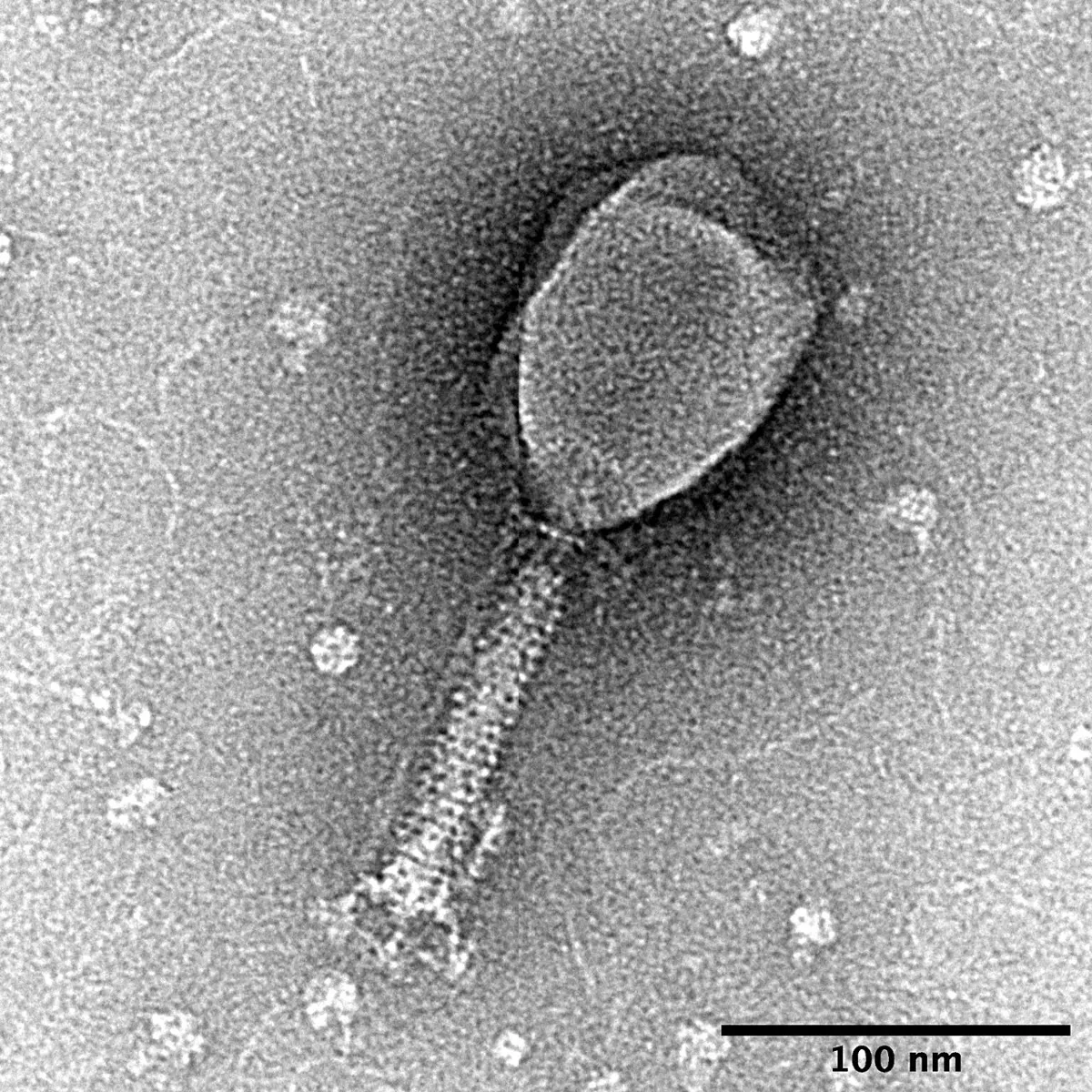
In the 1980s and 1990s, scientists reading the DNA of bacteria noticed something strange. In one part of it, the same short piece of DNA was repeated again and again, and between the repeats were pieces that were all different. This pattern was named CRISPR, from its long English name, “clustered regularly interspaced short palindromic repeats”. Close by were genes that seemed to belong with it, called the cas genes (CRISPR-associated).
Then came the surprise. The different pieces between the repeats matched the DNA of phages. A bacterium that had survived an attack had kept a little piece of the virus’s DNA, filed between two repeats, like a photograph of a criminal kept on the wall of a police station.
The bacterium uses its collection to recognize the same phage if it attacks again, and to cut that phage’s DNA to pieces. CRISPR is a kind of immune system for bacteria: it remembers.
What they did, step by step
Charpentier: a missing piece (2011)
Emmanuelle Charpentier, a French microbiologist, had studied for years a dangerous germ, Streptococcus pyogenes. It is the germ behind many sore throats and skin infections, but it can also cause deadly blood infections. Every year it infects millions of people.
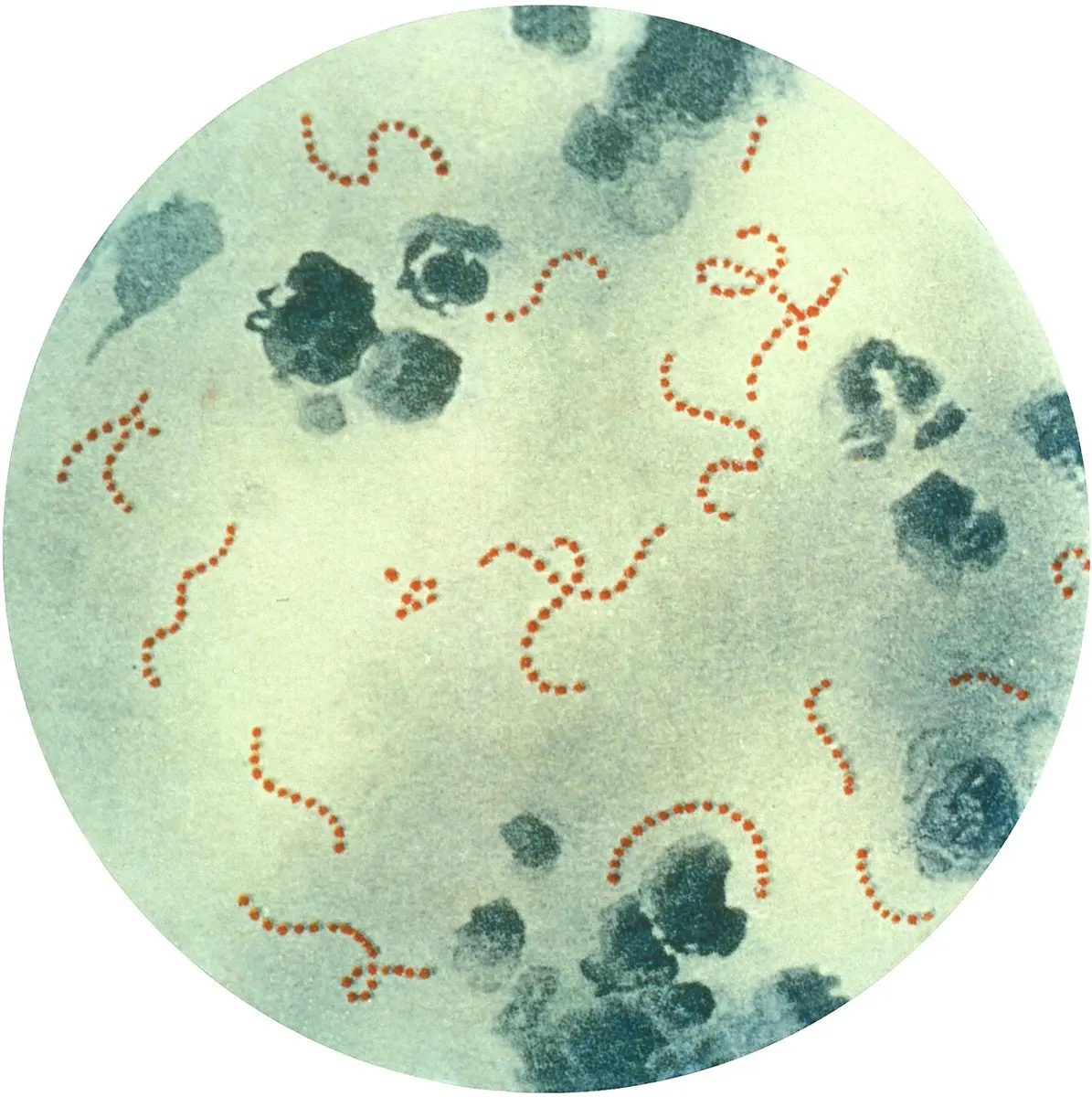
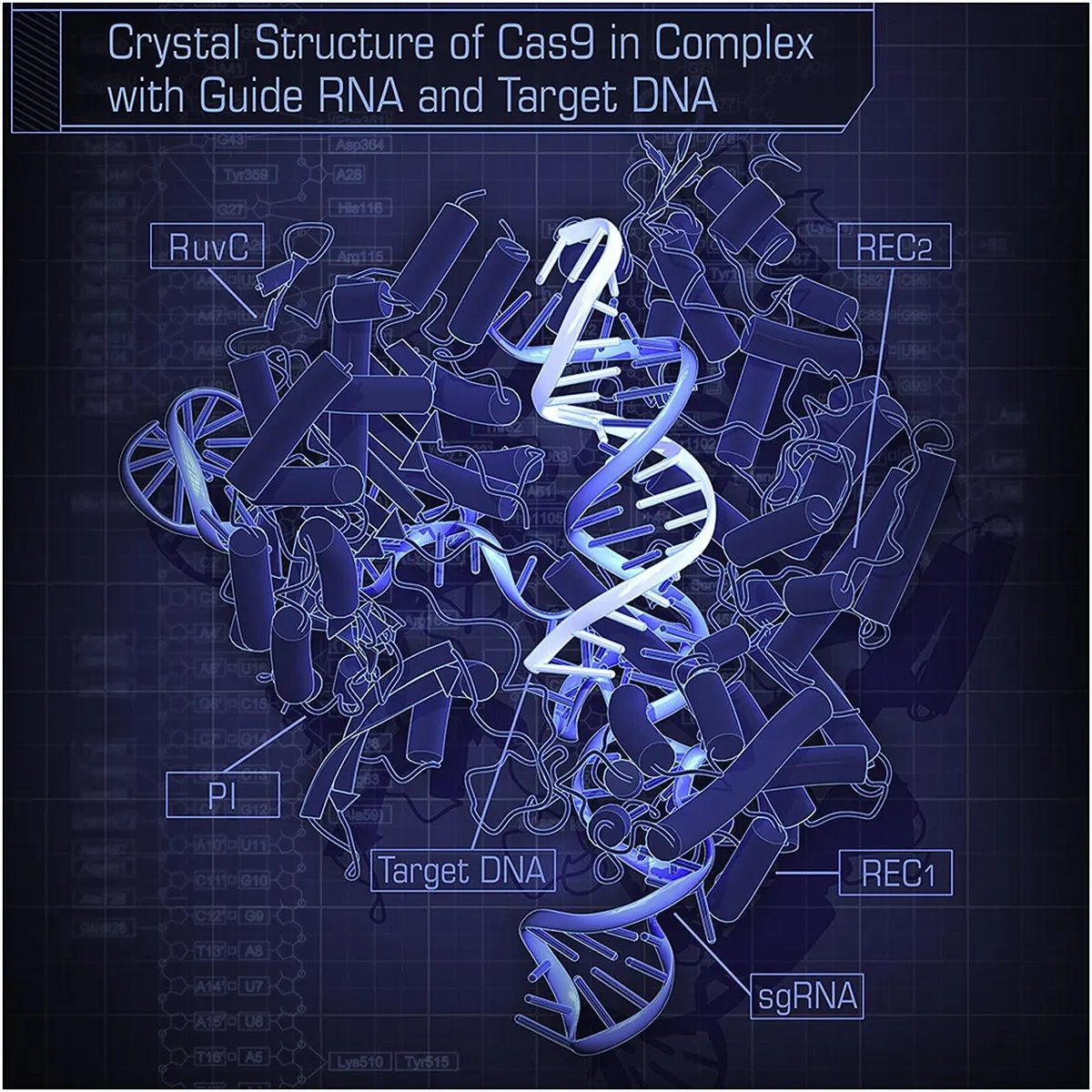
In S. pyogenes, the CRISPR system is a simple one: it needs only one Cas protein, called Cas9, to cut a phage’s DNA. Charpentier, then working at Umeå University in the north of Sweden, was studying the small RNA molecules in the germ. (RNA is DNA’s single-stranded cousin, with the letter U in place of T; RNA.)
One small RNA was there in large amounts and nobody knew it. Part of its letters matched the CRISPR repeats exactly, like two pieces of a jigsaw. Charpentier showed it was needed for the CRISPR system to work, and named it tracrRNA. She published the discovery in March 2011.
A meeting in Puerto Rico (2011)
Charpentier wanted to know exactly how Cas9 cuts. For that she needed an expert in the chemistry of RNA and proteins. Jennifer Doudna, at the University of California, Berkeley, was one of the best. She had worked with RNA for twenty years and had already been studying other CRISPR systems.
In 2011 both were at a conference in Puerto Rico, and a colleague introduced them in a café. The next day they walked through the old streets of the capital, talking about Cas9. By the end of the walk they had agreed to work together, Charpentier’s team in Europe and Doudna’s in California, meeting over the internet.
Doudna and Charpentier: the scissors in a test tube (2012)
The teams put Cas9 in a test tube with phage DNA and the CRISPR RNA, the RNA copied from one spacer. They expected Cas9 to cut the DNA. Nothing happened.
After many failed tries, they added Charpentier’s tracrRNA as well. This time the DNA was cut in two. So the scissors need three parts:
- Cas9, the protein that does the cutting;
- CRISPR RNA, which carries the letters of the target, the “wanted” photograph;
- tracrRNA, which holds the CRISPR RNA in place inside Cas9.
Then came the great idea. The teams joined the two RNAs into one molecule and called it a guide RNA. Now there were only two parts: Cas9 and a guide. And if the guide carries the letters of the target, why must the target be a phage? Why not any DNA at all?
They took a gene from the freezer in Doudna’s laboratory and chose five places in it. For each place they made a guide RNA with matching letters. Each time, Cas9 cut the DNA exactly where they had chosen. They published the result in June 2012. Within months, other laboratories used the scissors to change the DNA in human and mouse cells.
How the scissors work now
To change a gene, a scientist first writes down the gene’s letters (they can look up most genes in a computer) and picks a spot. They then make a guide RNA with 20 letters that match that spot. That is all that must be made new; Cas9 is the same every time.
- Searching. Cas9, holding the guide, moves along the DNA. It stops wherever it finds a short signal of the letters GG (with any letter before it). Only next to such a signal does it look further.
- Checking. Cas9 opens the two strands of the DNA a little. The guide’s letters try to pair with one strand: A with T (U in RNA), G with C. If all 20 letters pair, this is the spot.
- Cutting. Cas9 cuts both strands, cleanly, right there.
A cut in DNA is an emergency for a cell, so the cell mends it at once. The scientist uses the mending:
- To switch a gene off, they let the cell glue the two ends back together. The glue is sloppy: often a few letters are lost or added. A gene with letters missing usually no longer works.
- To write new letters in, they also give the cell a short piece of DNA with the letters they want. The cell copies it into the gap as it mends the cut.
What decides where Cas9 cuts the DNA?
Pick an answer to see why.
A scientist wants to switch off one gene in a rice plant. Which method fits?
Pick an answer to see why.
In your life today
- In laboratories everywhere. CRISPR is now an everyday tool in biology. Scientists use it to find out what genes do, by switching them off one at a time in cells, mice, flies and plants.
- Better crops. Plant scientists have used it to make crops that resist pests and disease or stand dry weather better. One team changed the genes in rice that take up poisonous metals from the soil, so the grain has less cadmium and arsenic in it.
- The first CRISPR medicine. In late 2023, first the United Kingdom and then the United States approved a CRISPR treatment for sickle-cell disease, and soon after for a related blood disease, beta thalassemia. Doctors take blood stem cells from the patient, edit them in a laboratory, and put them back. The edit doesn’t mend the sickle gene itself: it switches on a different gene, for the kind of hemoglobin a baby makes before birth, which works well and doesn’t sickle.
What came next
- Others close behind. Many scientists found parts of the CRISPR story. In Lithuania, Virginijus Šikšnys’s team showed in 2012, at the same time, that Cas9 could be aimed with RNA. In early 2013 teams in the United States, including Feng Zhang’s, showed that CRISPR works in human cells. Who should own the right to the invention has been argued over in courts for years.
- Sharper tools. Newer versions don’t cut both strands at all. Base editors change one letter into another, and prime editors write a short new stretch, both with fewer mistakes.
- A line that was crossed. In 2018 a scientist in China, He Jiankui, announced that he had edited the DNA of two baby girls before they were born. Scientists around the world condemned it, and he was sent to prison. Changes made in an embryo pass to all of a person’s children and grandchildren, and nobody knows all the effects. Most countries forbid it.
The open question is the hardest one: now that we can change the DNA of any living thing, which changes should we make, and who decides?
In your science books
- Grade 8: viruses and bacteria.
- Grade 9: mutation, a sudden change in a gene.
- Grade 10: DNA, RNA, chromosomes, and genetic technology.
- Going further: gene editing and changing genes in people, and how a gene makes a protein.
Learn more
- The Nobel Prize’s own explanation: Genetic scissors: a tool for rewriting the code of life (nobelprize.org).
- The laureates’ Nobel lectures: Charpentier and Doudna.
The official reason
The prize was given “for the development of a method for genome editing.”