
Working backwards to make a molecule
Nobel Prize in Chemistry, 1990: Elias James Corey
-
Elias James Corey
born 1928 in Methuen, USA
His mother changed his name from William to Elias after his father died, when the boy was a year and a half old. He made about a hundred of nature’s molecules in his laboratory.
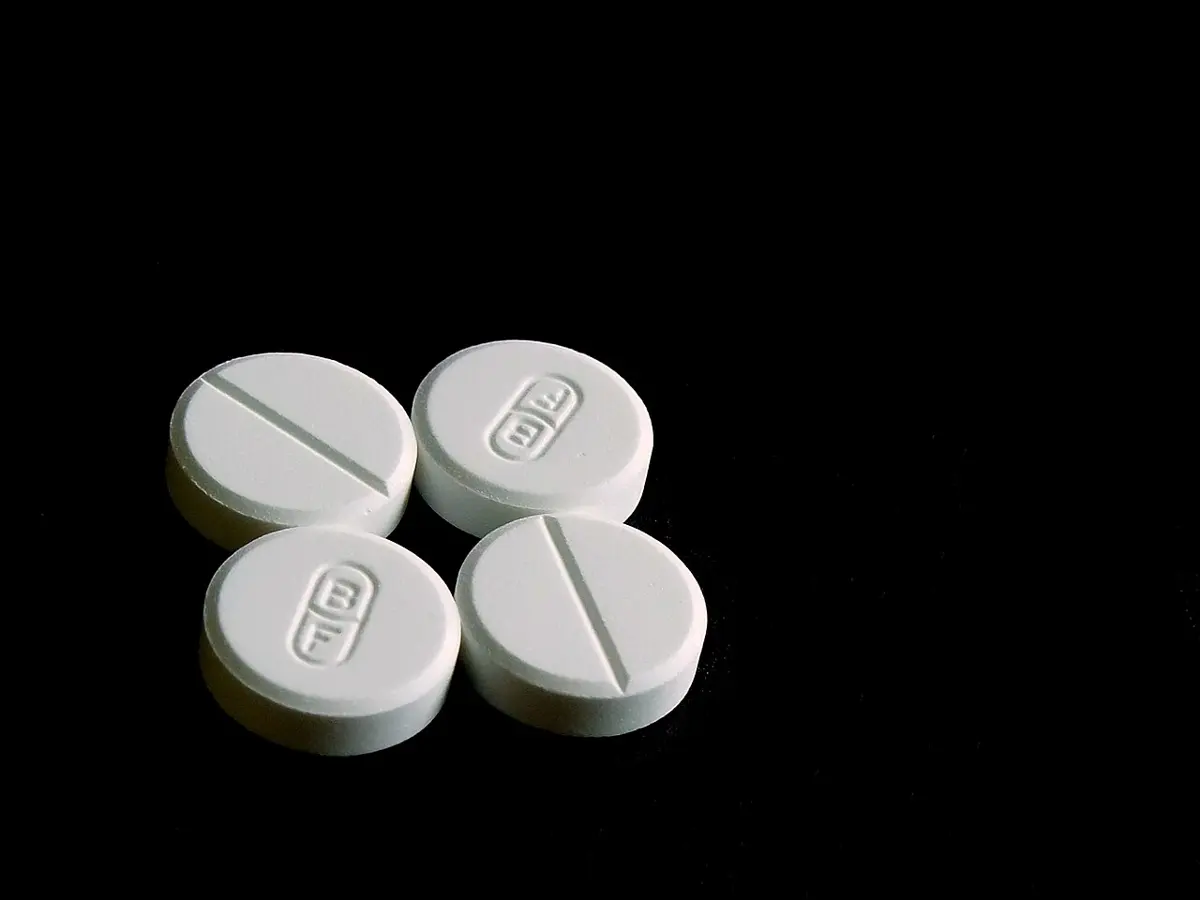
When you have a fever, someone at home may give you a paracetamol tablet. It comes from a factory, not from a plant. Somewhere, a chemist turned simple, cheap chemicals into paracetamol, one step after another.
Paracetamol is a small molecule, and its recipe is easy. But many medicines are large, complicated molecules, first found in plants, fungi or the human body. How do you make one in a laboratory? Where do you even begin? In 1990 the Nobel Prize in Chemistry went to Elias James Corey, who gave chemists a way to answer that question: start at the end, and work backwards.
The problem: nature’s molecules are hard to copy
Until the 1820s, many people believed that the substances of living things, such as sugar or the urea in urine, could only be made by living things, with the help of a special “life force”. In 1828 the German chemist Friedrich Wöhler made urea in his laboratory from a non-living salt, ammonium cyanate. The idea of a life force began to fall apart.
The compounds of living things are mostly organic compounds: compounds of carbon, usually with hydrogen, and often with oxygen and nitrogen Grade 10: What an organic compound is. Carbon atoms can join to each other in long chains and rings, so there is almost no limit to how big and how complicated these molecules can be Grade 9: Catenation.
Making a compound from simpler ones is called synthesis. Making a complicated natural molecule all the way from simple, cheap chemicals is called a total synthesis. Why bother, if nature already makes it?
- Some useful molecules are found only in tiny amounts. You might need tonnes of leaves to get a few grams.
- Some are unstable and break down soon after they are made in the body, so they can’t be collected at all.
- A chemist who can make a molecule can also make small changes to it, and perhaps find a better medicine.
Why did Wöhler’s experiment in 1828 matter so much?
Pick an answer to see why.
How a molecule is built
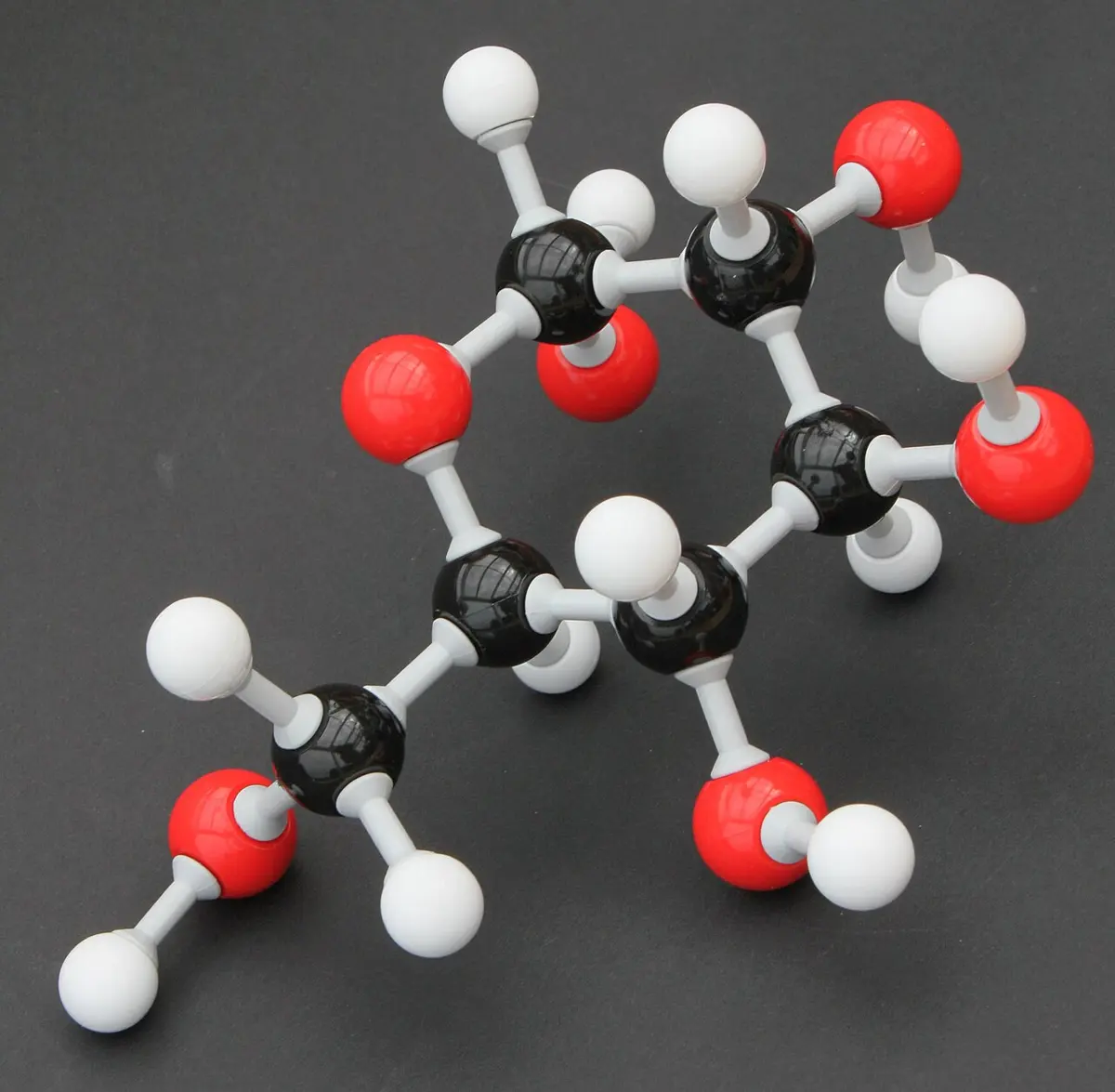
A chemist can’t pick up atoms one by one and snap them into place, like the balls and sticks of a model kit. Atoms are far too small. Instead, the chemist mixes chemicals in a flask, and a reaction changes some of the bonds between atoms. A good reaction changes one part of a molecule and leaves the rest alone.
Different parts of an organic molecule behave in different ways. A group of atoms that gives a molecule its typical reactions is called a functional group, such as the –OH group of an alcohol Grade 10: Functional groups. Most reactions act on one functional group: they join two pieces together at it, or change it into another group.
So a large molecule is made in many steps, sometimes thirty or more. Each step needs its own reaction, at the right temperature, in the right liquid, often with a catalyst, a substance that speeds up a reaction without being used up Grade 10: Catalyst. After each step the product must be separated from everything else in the flask and purified, before the next step can begin.
Why it was hard
- Too many choices. By 1990, more than 35,000 useful reactions had been described by chemists. At every step there are many possible ones, and each has its own strengths and weaknesses. The presentation speech compared planning a synthesis to a game of three-dimensional chess with 40 pieces on each side, in which new moves keep being invented during the game.
- Every step loses some. No reaction turns all of its starting chemical into the product. Some is lost in side reactions, some during purifying. The losses multiply, step after step (see the example below).
- The wrong part reacts. A reaction meant for one functional group may also attack another one somewhere else in the molecule. That part must be protected: covered with a temporary group of atoms, like masking tape on a wall you are painting, and uncovered afterwards. Corey invented several of the protecting groups chemists still use.
- Left hand or right hand. Many molecules come in two forms that are mirror images of each other, like your left and right hands: the same atoms, joined in the same order, but one cannot be laid exactly on top of the other. In the body, the two forms can act very differently. A good synthesis must make the right one.
Before Corey, great chemists such as Robert Burns Woodward (Nobel Prize 1965) planned brilliant syntheses, but much of the planning happened in their heads. The presentation speech said that asking a chemist how he chose his starting chemicals was, for many of those syntheses, like asking the painter Picasso why he painted as he did. It was hard to teach.
What Corey did, step by step
Elias James Corey was born in 1928 in Methuen, a town near Boston in the United States. His grandparents had come to America from Lebanon. He went to the Massachusetts Institute of Technology (MIT) at sixteen, planning to study engineering, but his first chemistry teachers won him over.
- 1950s, a young professor. He taught at the University of Illinois, and became a full professor there in 1956, at only 27.
- 1957, the idea. On a visit to Harvard University, in October 1957, the key ideas for a logical, general way of planning a synthesis came to him. He tried them on a molecule called longifolene, found in the resin of the chir pine (khote salla), the pine of Nepal’s middle hills, and showed his plan to Woodward, who liked it.
- 1959, Harvard. He moved to Harvard and began teaching a course on synthesis. With his method, he said, first-year research students could learn to plan complicated syntheses in just three months.
- 1960s, a name and some rules. He coined the term retrosynthetic analysis (“retro” means backwards) and wrote down its rules: start from the finished molecule, the target, and ask which bonds could have been made last. Break those bonds on paper, one at a time, to get simpler molecules. Then do the same to each of those. Stop when you reach chemicals that can be bought or are easy to make. Each paper break, the reverse of a real reaction, is called a disconnection.
- 1969, prostaglandins. Prostaglandins are substances that the body makes in tiny amounts and that act in many processes, from childbirth to blood clotting and pain. They break down quickly. In 1969 Corey’s group made several of them in the laboratory, from one carefully planned in-between molecule, which chemists still call the Corey lactone.
- 1969, a computer. Because his rules were logical, Corey showed that a computer could be taught to use them. With W. Todd Wipke he described one of the first computer programs for planning a synthesis, published in 1969; it grew into a program called LHASA.
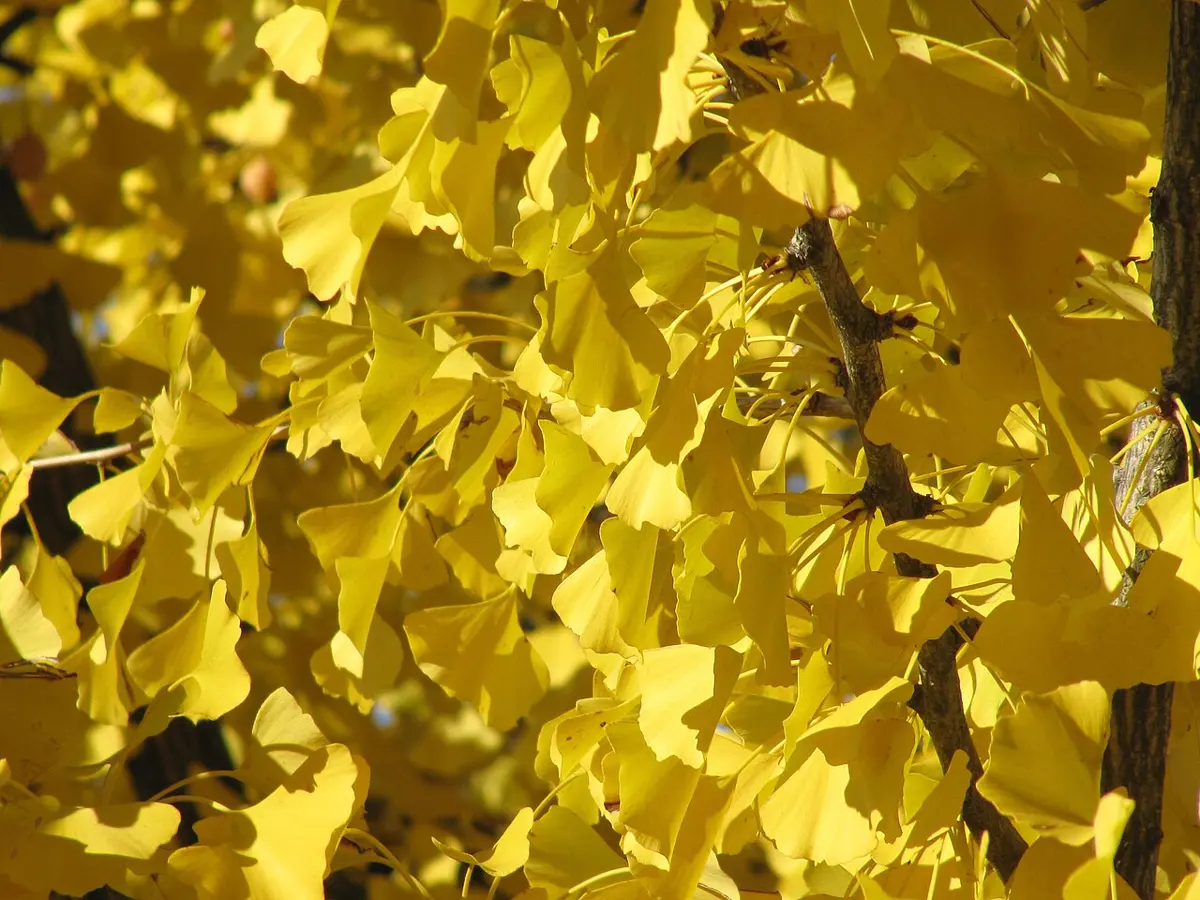
- 1978 and 1988, more of nature’s molecules. In 1978 his group made gibberellic acid, a plant hormone that makes stems grow longer. In 1988 they made ginkgolide B, a molecule from the leaves of the ginkgo tree, built of six rings joined into a cage; the press release called it “a formidable challenge” to any chemist.
- New tools along the way. When no known reaction could do a step, his group invented one: by 1990 about fifty new or much improved reactions, as well as protecting groups and catalysts that give only one of the two mirror-image forms.
In retrosynthetic analysis, where does the chemist start?
Pick an answer to see why.
Working backwards: paracetamol
Corey used his method on molecules with dozens of steps, but it can be seen in a small one. Here it is for paracetamol.
A paracetamol molecule has a ring of six carbon atoms, a benzene ring, drawn as a hexagon. At one end of the ring is an –OH group, as in an alcohol. At the other end is a nitrogen atom joined to a two-carbon acetyl group (–COCH₃).
- Which bond was made last? The bond between the nitrogen and the acetyl group. Break it on paper, and you get 4-aminophenol (the ring with –OH and –NH₂) and an acetyl piece. A real chemical that gives an acetyl group is acetic anhydride, made from the acid in vinegar.
- Where did the –NH₂ come from? An –NO₂ (nitro) group can be turned into –NH₂ with hydrogen and a catalyst. So go back to 4-nitrophenol.
- Where did the –NO₂ come from? Phenol (the benzene ring with just –OH) reacts with nitric acid to give nitrophenol. And phenol is a cheap chemical, made in huge amounts from oil.
Now read the plan forwards, and you have a recipe in three steps: phenol, then nitrophenol, then aminophenol, then paracetamol. This is one of the ways paracetamol has really been made in factories.
For a big molecule, the same questions give not one path but a tree of possible paths, branching at every disconnection. Corey’s rules help the chemist choose which bonds are worth breaking, the strategic bonds: ones that make the molecule much simpler, with known reactions that can join them again.
A synthesis has to change one –OH group in a molecule, but the molecule has a second –OH group that the reaction would also change. What does the chemist do?
Pick an answer to see why.
In your life today
- Medicines. Almost every medicine in a pharmacy, from paracetamol to the newest cancer drugs, was planned by chemists who learned Corey’s way of thinking. The press release said that thanks to his work, many medicines based on prostaglandins could be made and sold. Such medicines are used, for example, to help start labor in childbirth and in eye drops for glaucoma, an eye disease that can lead to blindness.
- Teaching. Retrosynthesis is now taught to every chemistry student at university.
- Farming. Gibberellic acid is used by fruit growers, for example to make grapes grow bigger. The gibberellic acid sold is made by growing a fungus, which is cheaper than a laboratory synthesis, but making it by hand showed chemists how to build such cage-like molecules.
What came next
- Mirror-image chemistry. Catalysts that make only one of the two mirror-image forms became a big field. Nobel Prizes went to it in 2001 (Knowles, Noyori and Sharpless) and 2021 (List and MacMillan).
- Computers that plan. For years, computer programs like LHASA were used by few chemists, because good chemists still planned better. Since about 2018, programs that learn from millions of published reactions, a kind of artificial intelligence, have begun to suggest routes that chemists find useful, and companies now sell them.
- An open question. Can a computer plan a synthesis of a completely new, complicated molecule as well as the best human chemist, and also invent the new reaction it needs on the way, as Corey’s group so often did? Nobody knows yet.
In your science books
- Grade 9: catenation, why carbon can build so many compounds, and organic and inorganic compounds.
- Grade 10: what an organic compound is, functional groups, chemical equations and catalysts.
- Going Further: four ways to show a molecule, medicines chemists make from nature, and how catalysts lower the hill.
Learn more
- The Royal Swedish Academy’s press release and the presentation speech (nobelprize.org).
- Corey’s Nobel lecture, The logic of chemical synthesis, and his own life story.
The official reason
The prize was given “for his development of the theory and methodology of organic synthesis.”