
Cutting, joining and reading DNA
Nobel Prize in Chemistry, 1980: Paul Berg, Walter Gilbert, and Frederick Sanger
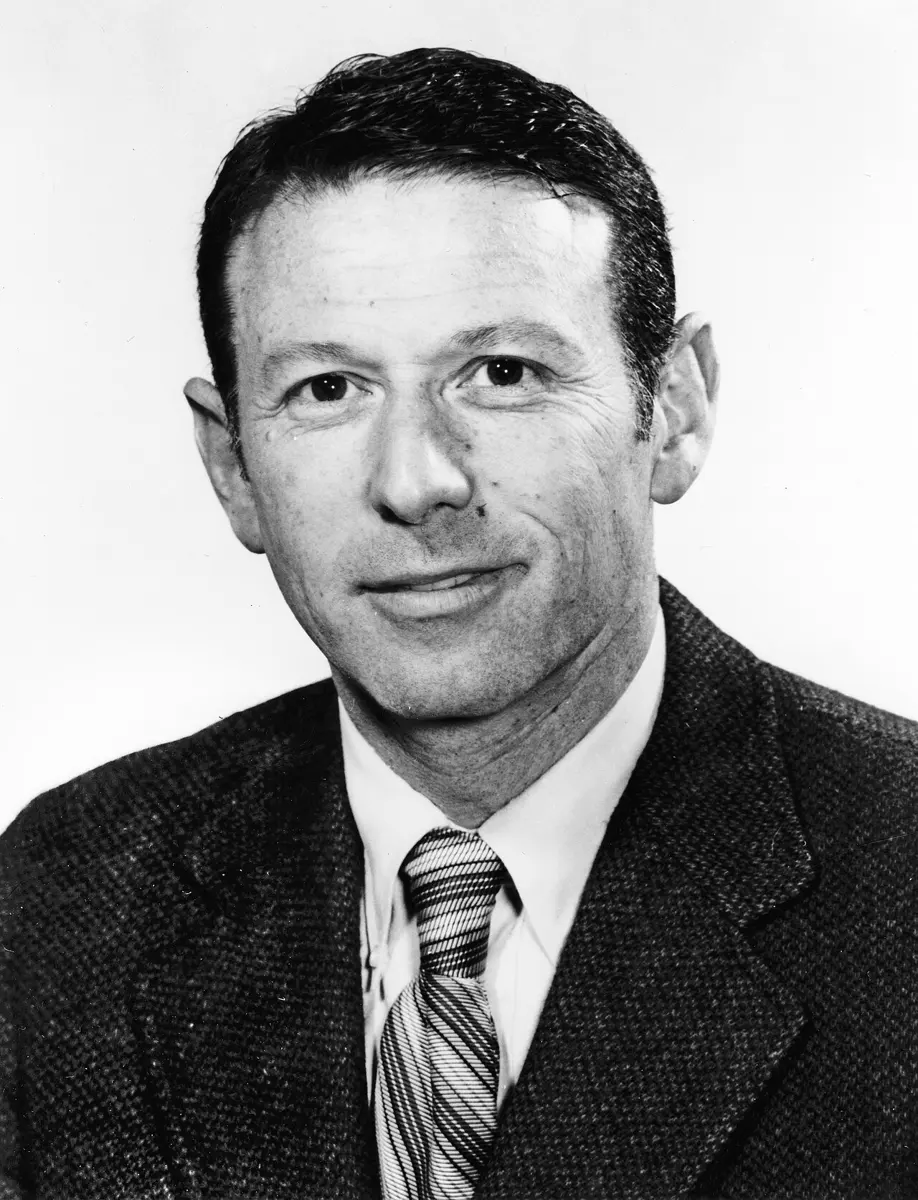
Paul Berg
1926–2023, born in New York, USA
A teacher who ran a school stockroom started his love of science: she answered his questions by telling him to find out for himself.
Photo: Unknown author, Public domain
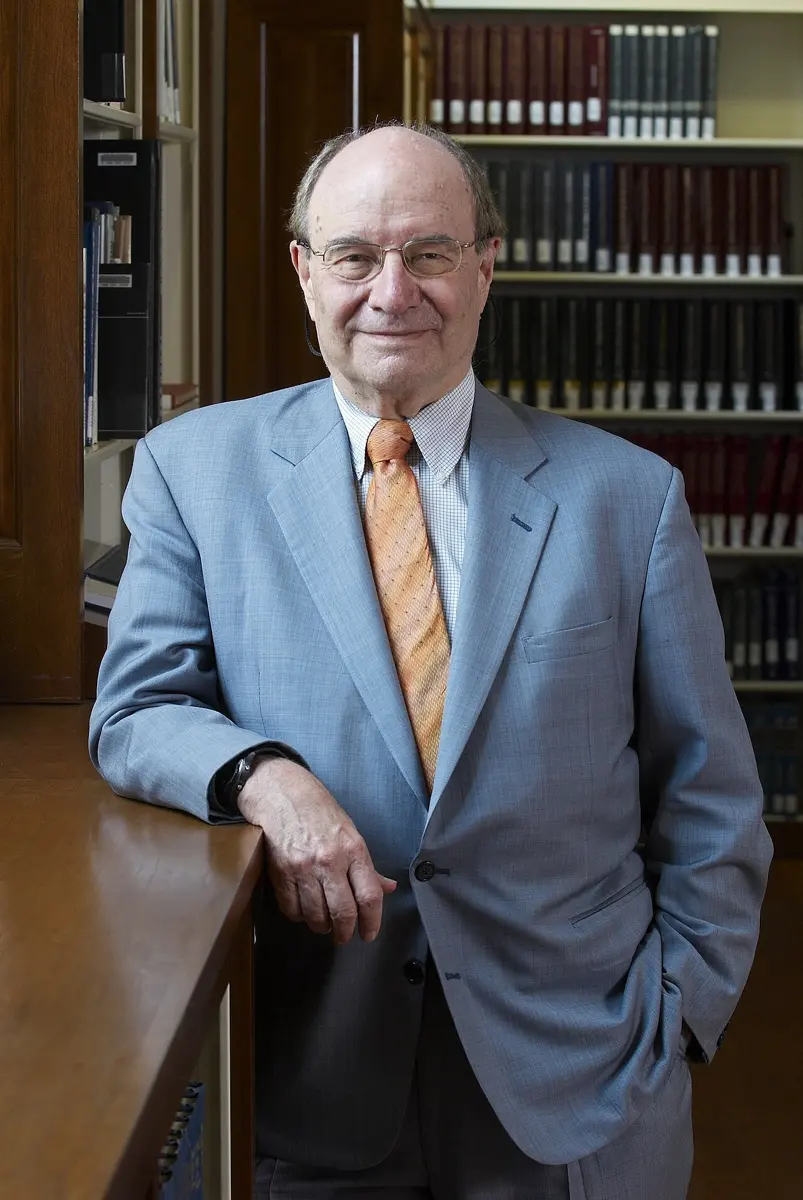
Walter Gilbert
born 1932 in Boston, USA
He began as a physicist working on the particles inside atoms, and switched to biology in his late twenties.
Photo: Douglas A. Lockard, CC BY-SA 3.0
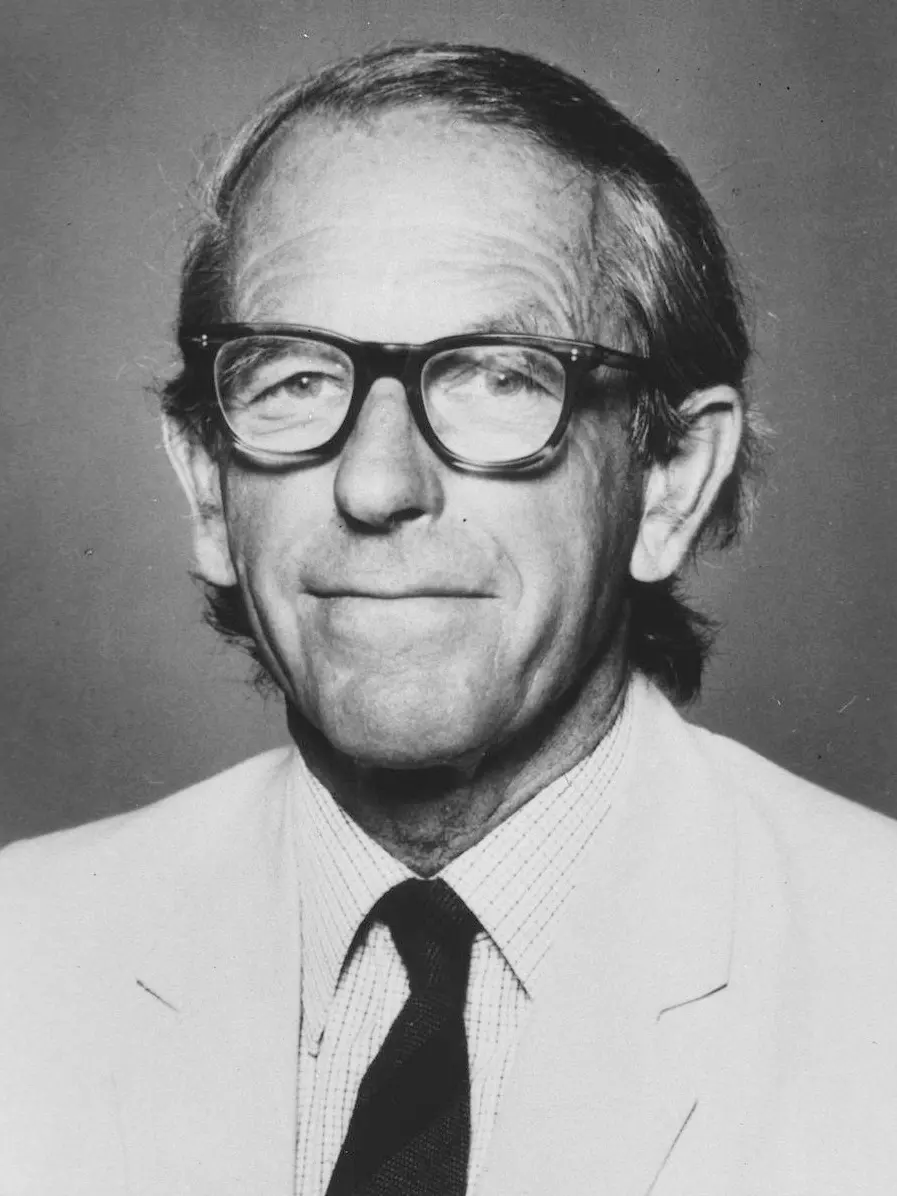
Frederick Sanger
1918–2013, born in Rendcomb, England
A quiet scientist who called himself “just a chap who messed about in a lab”. He won the Chemistry prize twice.
Photo: Wikimedia Commons, Public domain
Walk into any pharmacy in Nepal and ask for insulin, the medicine that people with diabetes inject every day. Almost every vial on the shelf was made by microbes: bacteria or yeast that carry a copy of a human gene and make human insulin for us.
How do you put a human gene into a bacterium? And how do you even find the gene, among the billions of letters of DNA in a human cell? In 1980 the Nobel Prize in Chemistry went to three scientists who made both possible. Paul Berg was the first to join DNA from two different kinds of living things. Walter Gilbert and Frederick Sanger, working separately, found ways to read DNA, letter by letter.
The problem: a message nobody could read
Every cell carries a set of instructions, its DNA. A DNA molecule is a very long chain of small units called nucleotides Grade 10: DNA. Each nucleotide carries one of four bases, written by their first letters: A (adenine), T (thymine), G (guanine) and C (cytosine). DNA has two strands twisted round each other, and the bases pair up across the middle: A always with T, G always with C.
The order of the letters is the message. A stretch of DNA that carries the instructions for one protein is a gene (how a gene makes a protein). Insulin, hemoglobin, the enzymes that digest your dal bhat: each is made from a gene.
By 1970 scientists knew all this. But they could not read the message. The letters are far too small to see, even with the best microscope, and the four of them are chemically very alike. A human cell holds about 3 billion letters. In 1970 nobody had read even a few hundred of them in a row.
They also could not move a gene. If you wanted to study one human gene, you had to find it in a cell full of thousands of others. It would help to take it out and put it somewhere simple, like a bacterium, which would copy it every time it divided.
In DNA, which base always pairs with G (guanine)?
Pick an answer to see why.
What they did, step by step
Berg: joining two kinds of DNA (1972)
Paul Berg worked at Stanford University in the United States. He was studying a small virus that infects monkeys, called SV40 Grade 8: viruses. A virus works by getting its DNA into a cell, which then follows the virus’s instructions instead of its own. Berg had an idea: if he could add a new gene to the virus’s DNA, the virus might carry that gene into an animal cell, like a postman delivering a letter.
SV40’s DNA is a small closed ring of about 5,000 letter pairs. Here is what his team did:
- Cut. They opened the SV40 ring at one place with a restriction enzyme, a protein made by bacteria that cuts DNA only where it finds one particular short row of letters. It works like scissors that cut only at one word.
- The other DNA. They took a second ring of DNA from a virus that infects the bacterium E. coli. It carried three genes of E. coli (for using a sugar called galactose). They opened it the same way.
- Sticky tails. To make the two pieces stick, they added a short tail of A letters to the ends of one, and a tail of T letters to the ends of the other. Since A pairs with T, the tails held on to each other.
- Seal. Another enzyme, a ligase, sealed the joins, like glue.
The result was one ring containing the DNA of a monkey virus and the genes of a bacterium. It was the first recombinant DNA: DNA put together from two different species.
Then Berg stopped. His plan was to put the new DNA into E. coli, but SV40 can cause tumors in some animals, and E. coli lives in the human gut. Other scientists asked: what if bacteria carrying a cancer virus’s genes escaped from the laboratory? Berg could not be sure they wouldn’t, so he never did that step.
Other teams soon put joined DNA into bacteria, which copied it every time they divided. This is genetic engineering Grade 10: genetic technology.
Sanger: reading DNA with copies that stop (1975–1977)
Frederick Sanger worked at the Medical Research Council’s laboratory in Cambridge, England. He had already won a Nobel Prize in 1958, for reading the order of the 51 amino acids in insulin, the first protein ever read. Then he turned to DNA.
His best method came in 1977. It uses the way a cell copies its DNA. An enzyme called DNA polymerase moves along a single strand and builds the partner strand, one letter at a time, following the pairing rule.
- Start the copying in a test tube: the DNA to be read, the enzyme, and plenty of all four letters.
- Add a few faulty letters. Sanger also added a small amount of a changed A, called a dideoxy A. The enzyme puts it in like an ordinary A, but nothing can be joined after it. The copy stops there.
- Copies of every length. Each time the enzyme needs an A, it usually picks a normal one, but now and then a faulty one. So the tube fills with copies that stop at every place where an A belongs.
- Four tubes. He did the same in three more tubes, with faulty T, G and C.
- Sort by length. The copies were put on a slab of jelly called a gel, and an electric current pulled them through it. Short pieces slip through the jelly fastest; long ones move slowly. The copies were made slightly radioactive, so they showed up as dark bands on X-ray film.
- Read the ladder. Start with the shortest piece, the band that moved furthest. Which lane is it in? That is the first letter. The next band up, one letter longer, gives the second letter, and so on up the ladder.
With an earlier version of his method, his team read the whole DNA of a virus that infects bacteria, called φX174 (say phi-X-one-seven-four). It was the first complete set of genes written in DNA ever read, published in 1977: about 5,400 letters (the Nobel committee gave 5,375; a few letters were added when the reading was checked later, making 5,386).
In Sanger’s method, why do the copies in the “A” tube have many different lengths?
Pick an answer to see why.
Gilbert: reading DNA by breaking it (1977)
At Harvard University in the United States, Walter Gilbert and his colleague Allan Maxam found a different way, using chemistry instead of an enzyme.
Gilbert was studying a protein that switches a gene of E. coli off by sitting on the DNA. To see exactly where it sat, he used a chemical that attacks the letter G and lets the DNA break there. Where the protein covered the DNA, the chemical could not reach. Looking at the broken pieces on a gel, he realized the pieces told him more: the positions of every G in the DNA.
- Label one end. They made one end of the DNA strand radioactive.
- Break it gently. In one tube, a chemical broke the strand at a G, but only rarely, about once per strand. In other tubes, other chemicals broke it at other letters.
- Sort and read. On a gel, the labeled pieces showed how far each break was from the end. Reading them from the shortest gave the letters in order, just as in Sanger’s method.
Both methods were published in 1977. For a few years Maxam and Gilbert’s method was used more, but Sanger’s was easier to make automatic, and it became the one used everywhere.
How it works now
Today the four faulty letters each carry a dye of a different color instead of radioactivity, so all four can go into one tube. The copies run through a thin glass tube instead of a slab of jelly, and a laser makes the dyes glow as they pass. A camera notes the color of each piece as it comes out: green for A, blue for C, and so on. A computer turns the colors into letters.
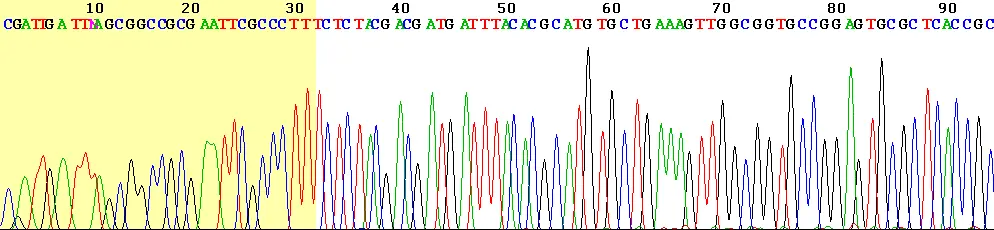
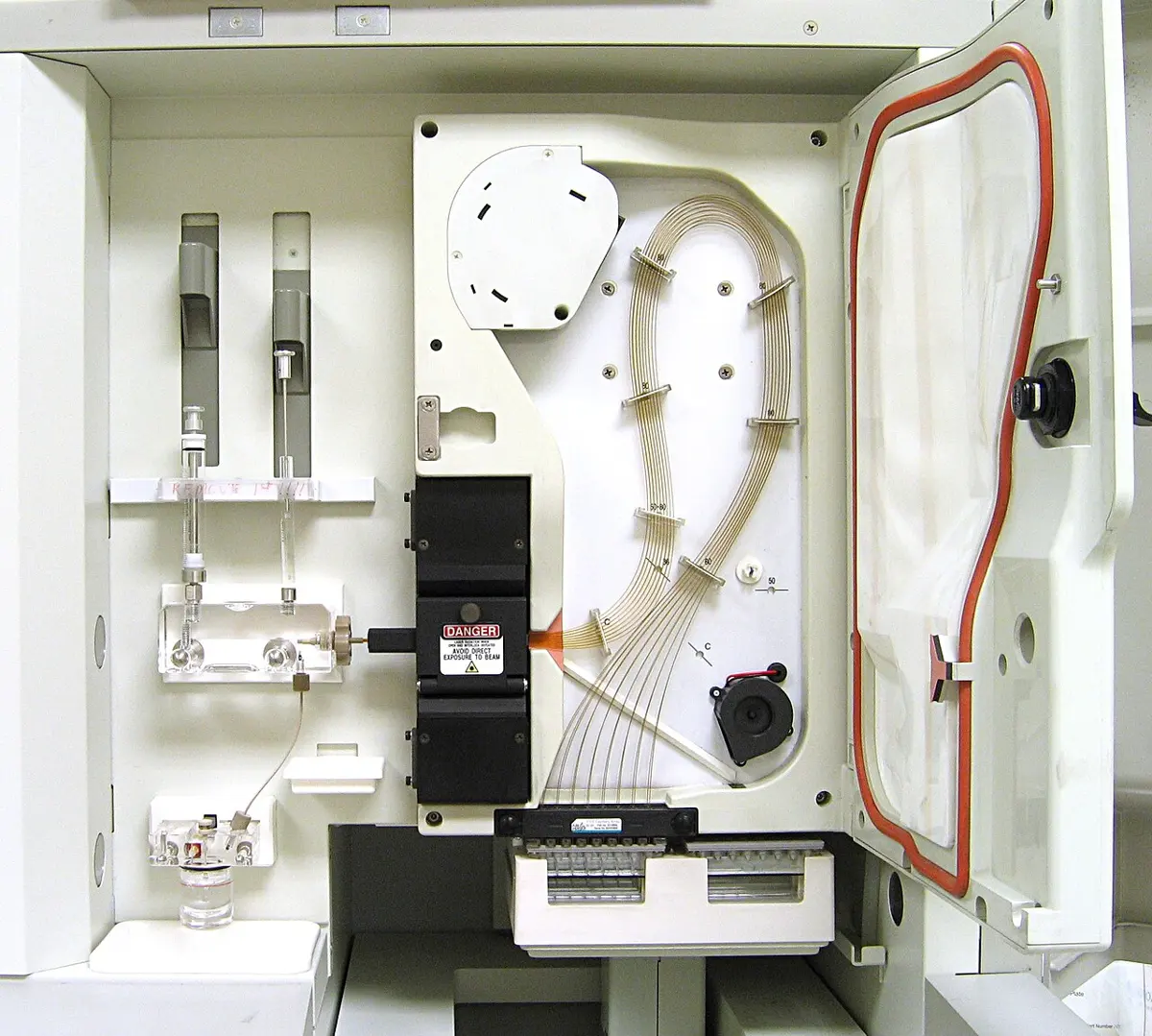
Machines like this read the first human genome, the 3 billion letters in a human cell. The international Human Genome Project took 13 years and finished most of it in 2003. Newer machines read millions of short pieces at the same time, and a whole human genome can now be read in a day or two, for less than US$1,000.
In your life today
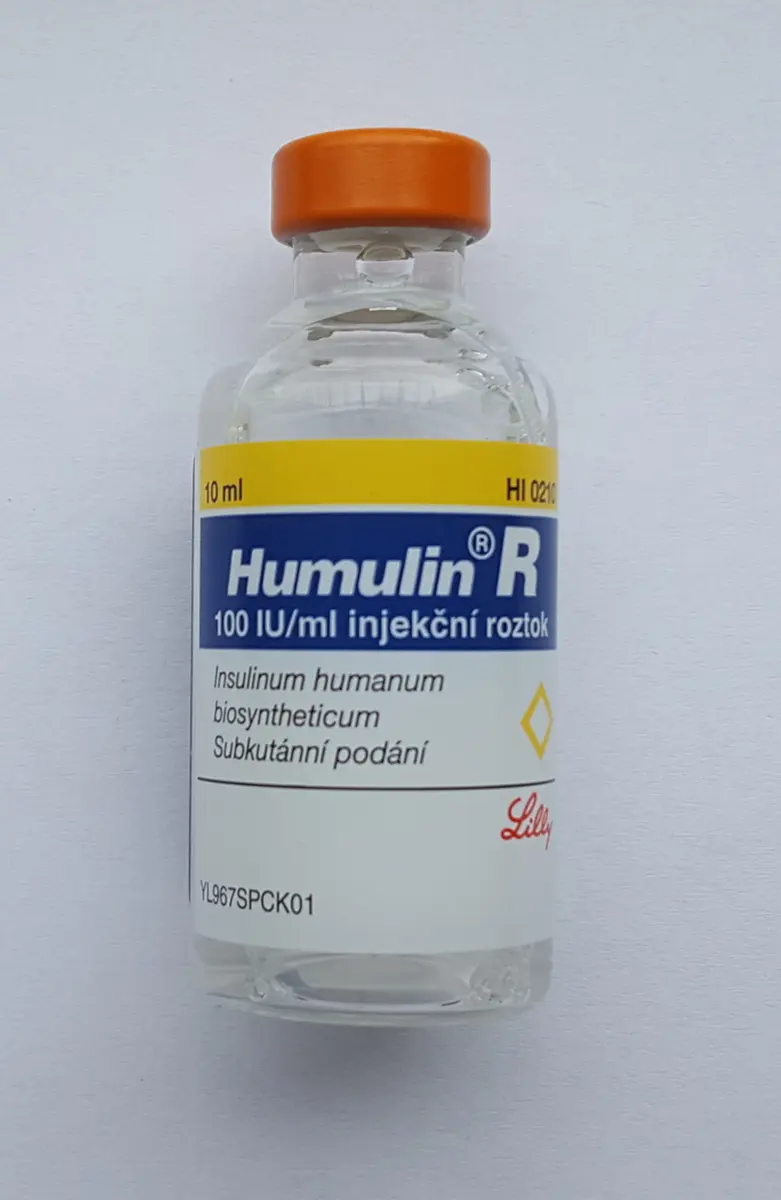
- Medicines made by microbes. Human insulin made by bacteria went on sale in 1982, the first medicine made by genetic engineering. Before that, insulin came from the pancreas of cows and pigs. Hepatitis B vaccines, growth hormone for children who need it, and many other medicines are made the same way Grade 10: diabetes.
- DNA tests. A few spots of blood or a hair can show who a person is, who their parents are, or who was at the scene of a crime Grade 10: DNA testing in investigations.
- Following germs. During the COVID-19 pandemic, laboratories around the world, including in Nepal, read the genes of the virus from patients, to find out which new forms of it were spreading.
- Diagnosis. Doctors can read a patient’s genes to find the change that causes an inherited disease, or the changes inside a tumor, and choose a treatment for it.
What came next
- Making and changing DNA. In 1978 Michael Smith found how to change one chosen letter in a gene, and in the 1980s Kary Mullis invented a quick way to make millions of copies of a piece of DNA (our page on their prize).
- Editing genes. In 2012 Emmanuelle Charpentier and Jennifer Doudna found a much easier pair of “scissors” that can be pointed at any place in DNA (our page on CRISPR).
- Reading everything. Scientists have now read the DNA of thousands of kinds of plants, animals and microbes. A complete human genome, with the last hard-to-read stretches filled in, was published only in 2022.
In your science books
- Grade 8: viruses and bacteria.
- Grade 10: DNA, chromosomes, genetic technology, DNA testing in investigations and diabetes.
- Going further: how a gene makes a protein and how DNA shows that all life is related.
Learn more
- The Nobel Prize’s press release and presentation speech for 1980.
- The laureates’ Nobel lectures: Berg, Gilbert and Sanger.
The official reason
The prize was given “for his fundamental studies of the biochemistry of nucleic acids, with particular regard to recombinant-DNA.”
The prize was given “for their contributions concerning the determination of base sequences in nucleic acids.”