
Frontier orbitals: which reactions go
Nobel Prize in Chemistry, 1981: Kenichi Fukui and Roald Hoffmann
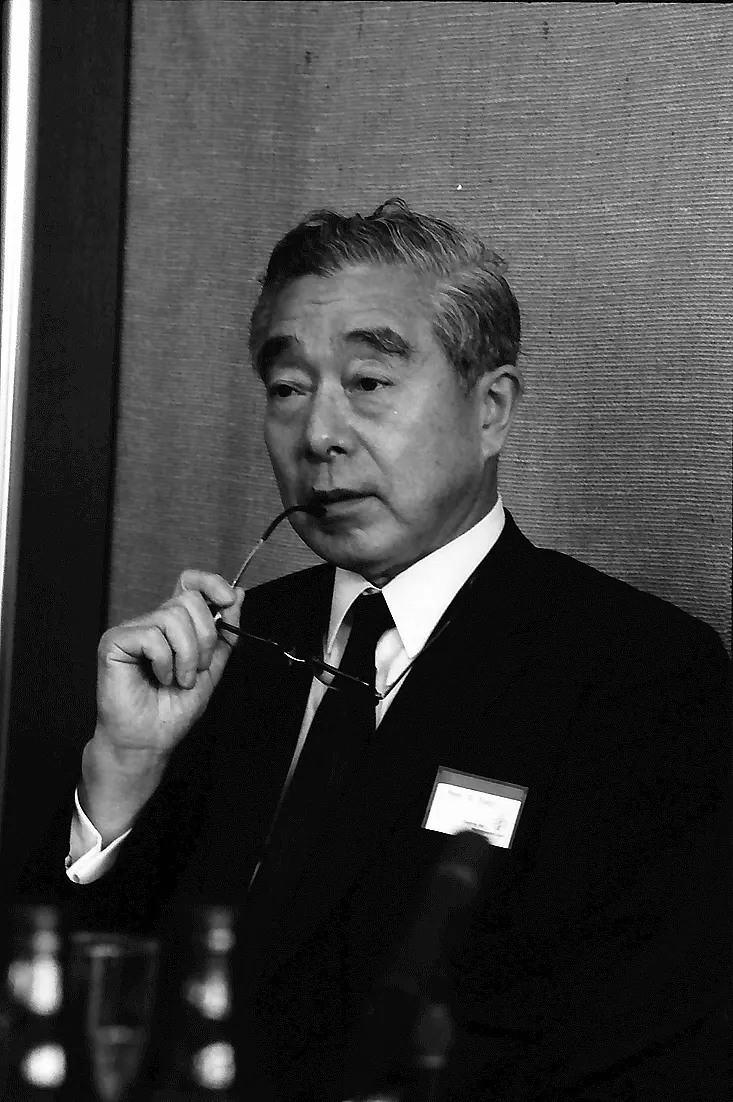
Kenichi Fukui
1918–1998, born in Japan
He began as an experimental chemist making fuels, and found that out of all the electrons in a molecule, only a few at the “frontier” really matter. The first person from Asia to win the Chemistry prize.
Photo: Willy Pragher, CC BY 4.0
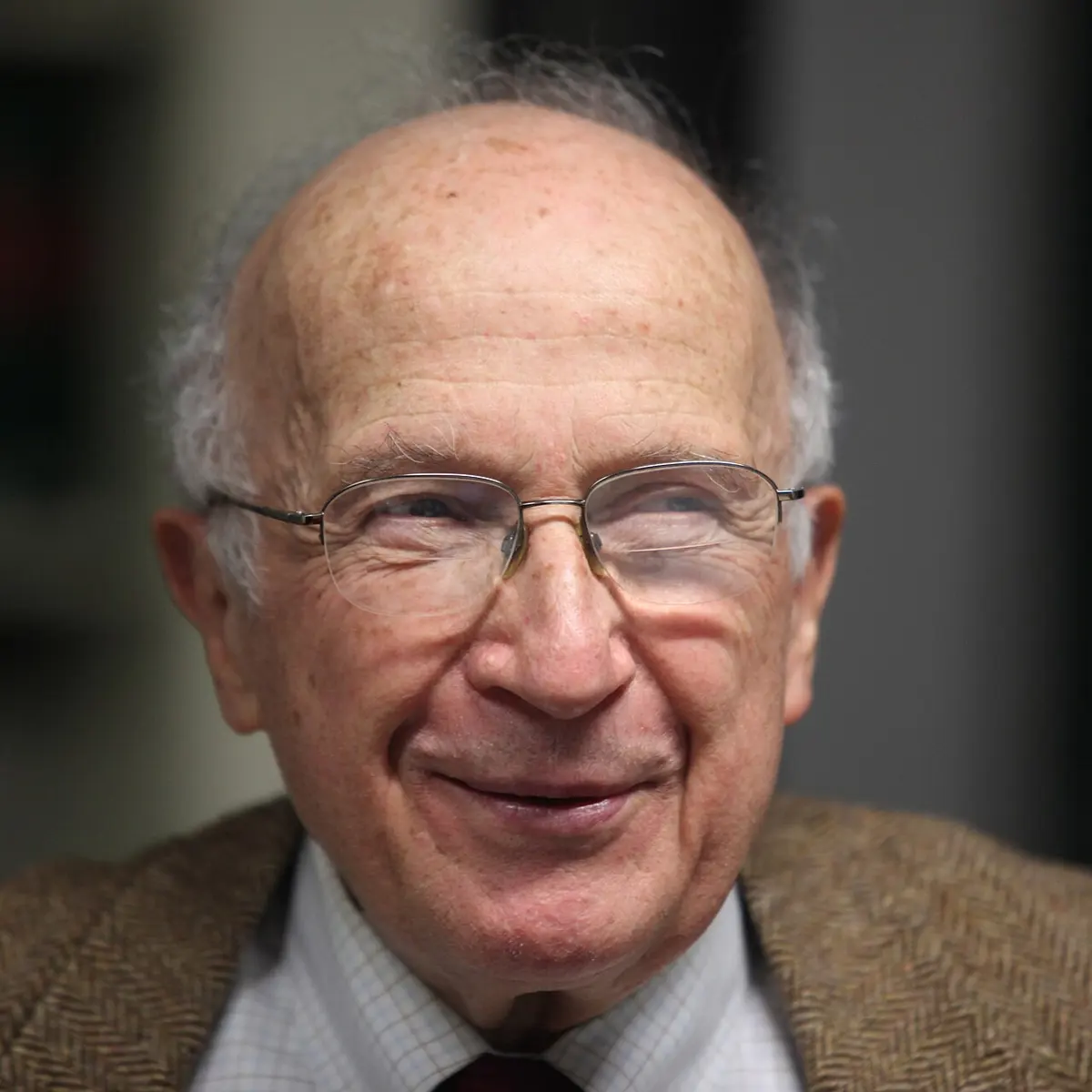
Roald Hoffmann
born 1937 in Złoczów, Poland (now Zolochiv, Ukraine)
As a small boy he survived the Second World War hidden in a school attic. Besides chemistry, he writes poems and plays.
Photo: Kuebi = Armin Kübelbeck, CC BY-SA 3.0
Light a match and hold it to a candle, and the wax burns. But leave a candle on the shelf for a year, and nothing happens, even though there is air all around it. Cook an egg and it sets in minutes. Iron rusts too, but over months.
Every chemical reaction has its own story: some go at once, some need a push, some need heat, and some happen only in light. In 1981 the Nobel Prize in Chemistry went to two scientists who showed how to predict that story from the electrons in the molecules. Kenichi Fukui in Japan and Roald Hoffmann in the United States worked separately, but they found the same key: only a few electrons, at the very edge of a molecule, decide what happens.
The problem: chemists knew the start and the end, not the road
By the 1950s, chemists could make thousands of reactions happen, and they knew a great deal about the substances they started with and the substances they ended with. What they could not do well was say how one turned into the other, or which of several possible products would form.
Think of a trek over a mountain pass. You start in one valley and end in another, lower valley. To get there, you must first climb to the pass. A reaction is like that. The new molecules have less energy than the old ones, so overall the reaction goes “downhill”. But on the way, old bonds have to start breaking before new ones are made, and that costs energy: the reaction has to climb a hill first. The height of that hill is called the activation energy (what makes a reaction go faster).
A low hill, and the reaction is quick even at room temperature. A high hill, and almost no molecules get over it, so the reaction hardly happens. Chemists knew a lot about the two valleys, but very little about the passes between them. Working them out from the laws of physics meant following every electron in every molecule, a sum far too big for anyone in the 1950s.
A candle doesn’t burn on its own, even though burning wax gives out a lot of energy. Why not?
Pick an answer to see why.
Where the electrons live
The electrons in an atom are found in orbitals Grade 10: shells, subshells and orbitals. Think of an apartment building: the floors are the energy levels, and each room on a floor is an orbital, which holds at most two electrons. Electrons fill the rooms from the ground floor up.
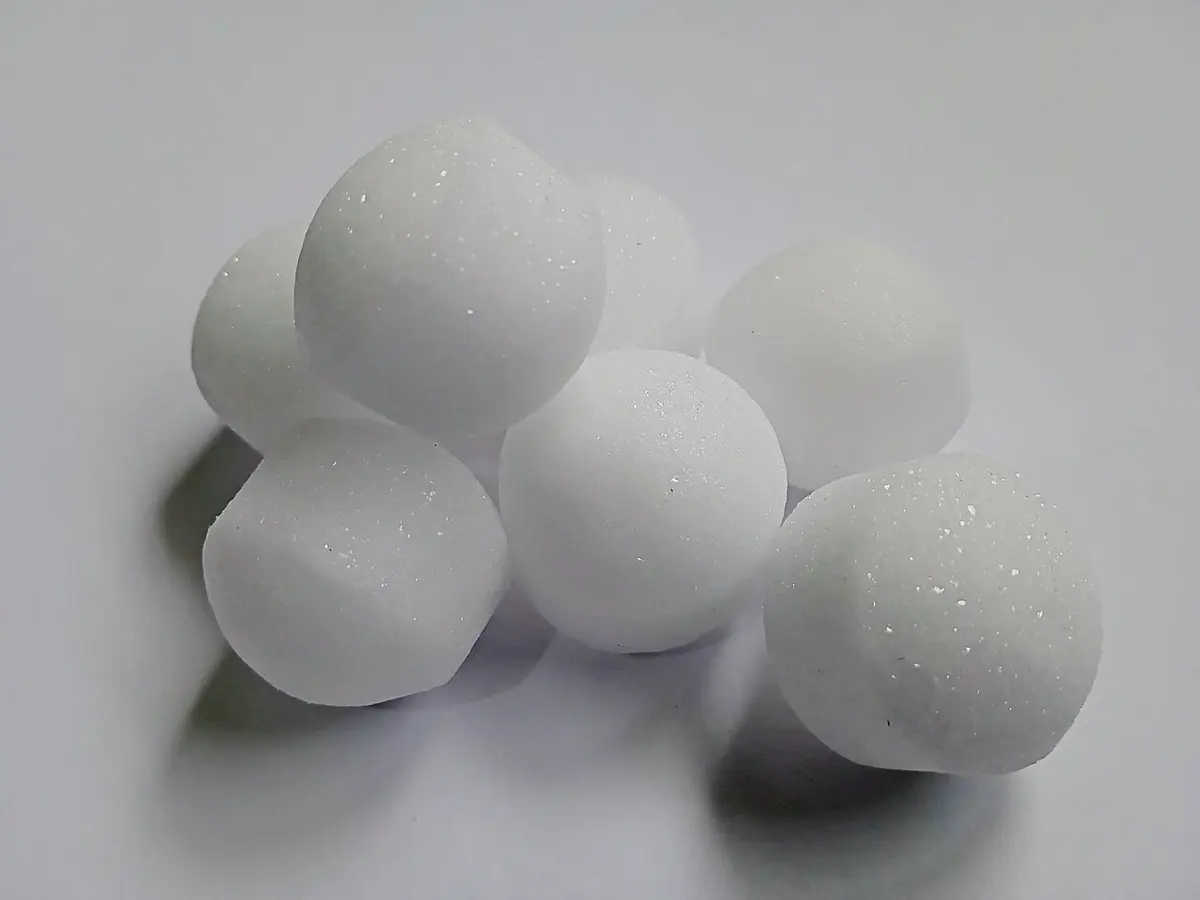
When atoms join into a molecule, their electrons are shared Grade 9: covalent bond, and they move in new rooms that spread over the whole molecule, called molecular orbitals. A molecule like the one in a mothball has dozens of electrons in dozens of these rooms. That is why the full sum was so hard.
What they did, step by step
Fukui: only the frontier matters
Kenichi Fukui was born in Nara, Japan, in 1918. Chemistry was not his favorite subject at school, but a family friend, a professor at Kyoto, advised his father to send him to study it. In the Second World War he worked on making fuels. Then, as a professor at Kyoto University, he turned to theory.
- 1952, a puzzle in a mothball. Old-style mothballs are made of naphthalene, a molecule of two joined rings of carbon atoms with eight hydrogen atoms around the edge. When naphthalene reacts, those hydrogen atoms can be swapped for other atoms. But the four at the “corners” of the molecule are swapped much more easily than the other four. Nobody could say why.
- The idea. Fukui and his co-workers argued that when two molecules meet, the deep electrons hardly matter. What counts are the electrons in the highest filled room, the ones held least tightly, and the lowest empty room, where new electrons could come in. He called these two the frontier orbitals. Chemists today call them the HOMO (highest occupied molecular orbital) and the LUMO (lowest unoccupied molecular orbital).
- The test. He worked out where the electrons of naphthalene’s highest filled orbital spend most of their time. They are thickest at the four corner positions: exactly the ones that react fastest.
Why should the frontier matter most? Think of two crowds walking towards each other: it is the people at the front who meet first. The highest filled electrons are the easiest to share, and the lowest empty room is the easiest one for them to move into. So as two molecules come together, electrons from the HOMO of one begin to flow into the LUMO of the other, and that is where the new bond starts.
At first, few chemists paid attention, and some criticized the idea as too simple. Fukui and his group kept testing it on more and more reactions, and it kept working.
Which electrons did Fukui say decide how a molecule reacts?
Pick an answer to see why.
Hoffmann and Woodward: the shape of the frontier
Roald Hoffmann was born in 1937 in Złoczów, then in Poland. His family was Jewish, and in the Second World War the Nazis sent them to a labor camp. In early 1943 his father got him and his mother out, and until June 1944 a kind Ukrainian neighbor hid them in the attic of a village schoolhouse. His father stayed behind in the camp and was killed. In 1949 Hoffmann and his mother reached the United States. He studied at Columbia and Harvard, and learned to use the new computers to work out the orbitals of molecules.
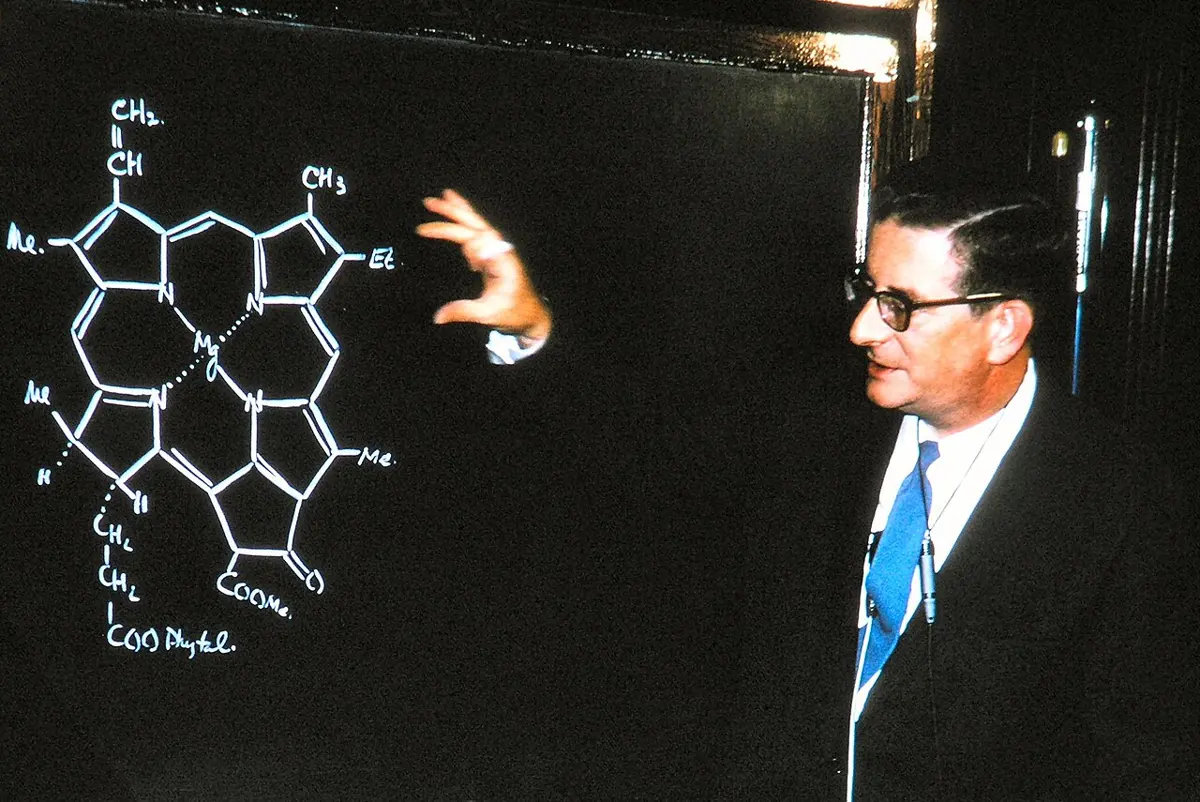
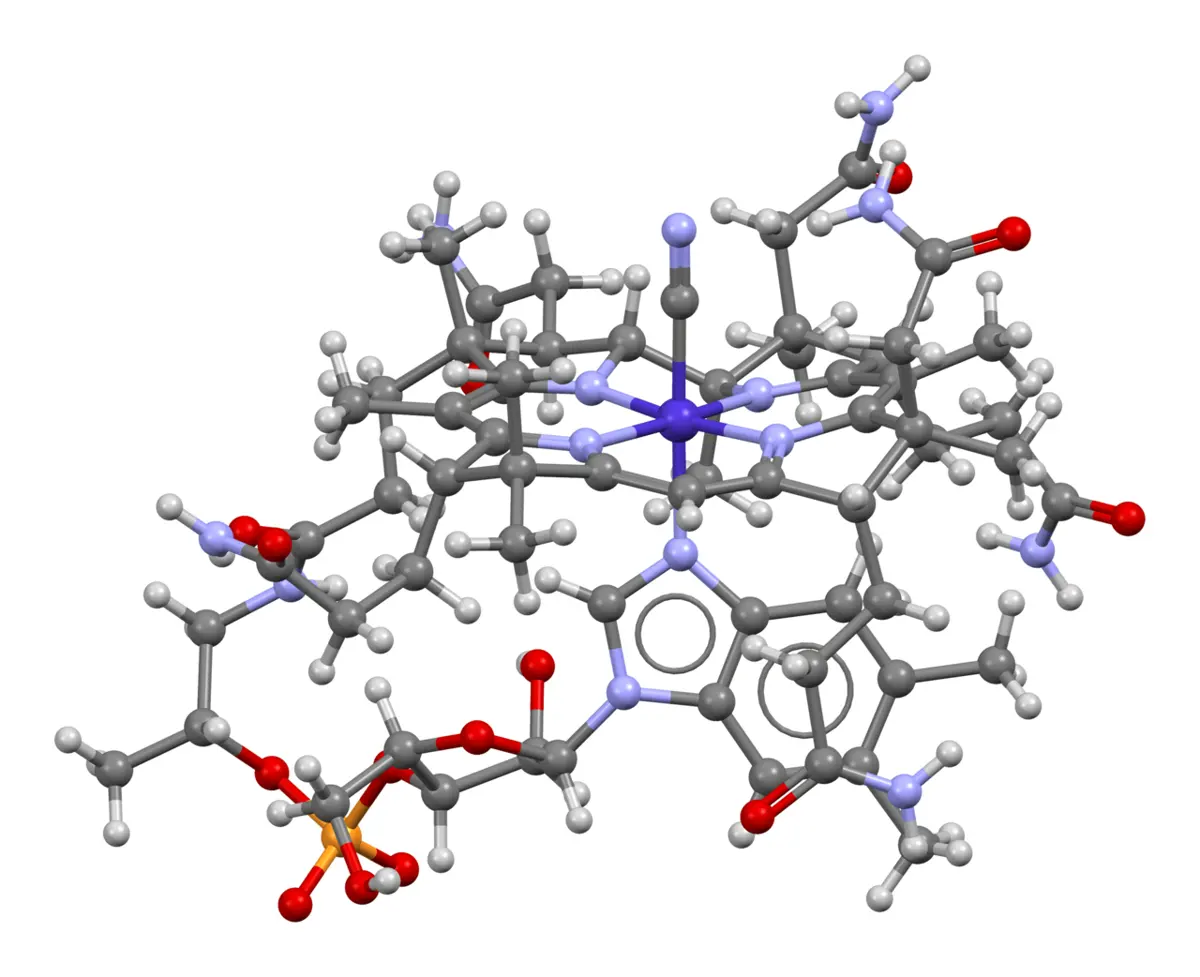
- 1964, a question from a great chemist. At Harvard, Robert Burns Woodward was leading a huge project to make vitamin B₁₂ in the laboratory, one of the most complicated molecules in nature. In one step, a chain of carbon atoms closed into a ring, and the product came out with a 3D shape that nobody could predict or explain. In the spring of 1964 he asked Hoffmann about reactions like it.
- The answer: the orbitals have a “sign”. Electrons behave like waves Grade 9: what moves in a wave. A wave on a rope has parts that go up and parts that go down. An orbital is the same: it has two parts of opposite sign, usually drawn shaded and unshaded. When two orbitals overlap and their parts have the same sign, they add up and make a bond, like two crests joining into a bigger crest. If the signs are opposite, they cancel, and no bond forms there.
- 1965, the rules. Woodward and Hoffmann showed that for a whole family of reactions, in which a ring opens or closes, or two molecules join at both ends at once, the signs of the orbitals must match all the way along. If they match, the reaction goes easily with gentle heat. If they don’t, the reaction can’t go that way with heat. But light can lift an electron into the next room up, which has a different pattern of signs. So a reaction that heat can’t start, light often can. Their rules are called the conservation of orbital symmetry, or the Woodward–Hoffmann rules.
Look at Figure 4. On the left is the Diels–Alder reaction, discovered in 1928 and used to build rings of six carbon atoms in medicines and plastics. It goes easily. On the right, two molecules of ethene try to join in the same way to make a ring of four. It looks just as simple, but with heat it hardly ever happens. Shine ultraviolet light on such molecules, though, and the ring of four forms. Before 1965 this was a mystery. The orbital signs explain it.
Two molecules come together. At one end the signs of their frontier orbitals are the same, at the other end opposite. What happens when they are gently heated?
Pick an answer to see why.
Hoffmann did the calculations; Woodward knew hundreds of real reactions to test them on. In just a few years they showed that their rules explained reactions chemists had puzzled over for decades, and predicted new ones that were then made in the laboratory. Fukui, at the same time, showed that his frontier orbitals give the same answers in a simpler way: look only at the HOMO and LUMO, and check their signs where the new bonds will form.
How chemists use it now
The great strength of both theories was that they were simple. A chemist could draw a few orbitals on paper, shade their parts, and see in a minute whether a reaction should go with heat or with light, and what shape the product would have. The speech at the prize ceremony said they had made “beautiful generalizations” through “drastic simplifications”.
Today, computers can calculate the orbitals of molecules with hundreds of atoms. But chemists still think in Fukui’s and Hoffmann’s pictures: the HOMO and LUMO, and whether their signs match. They use them to plan the steps for making new medicines, and to design molecules for new materials.
The gap between the HOMO and the LUMO also explains something you can see: color. A molecule takes in light whose energy is just enough to lift an electron from the HOMO to the LUMO. A big gap needs ultraviolet light, so the substance looks white or clear, like naphthalene. A smaller gap takes in visible light, so the substance looks colored. Chemists who make dyes, and the colored molecules in the screens of some phones (OLED screens), choose the gap they need.
In your life today
- Vitamin D from the sun. In Nepal, babies are often massaged in the morning sun. Your skin makes vitamin D in sunlight Grade 9: ultraviolet rays, and the first step is just the kind of reaction Woodward and Hoffmann explained: ultraviolet light opens one ring of a molecule in your skin. Heat alone can’t open it this way. The next step then goes slowly with your body’s warmth. Mushrooms dried in the sun make vitamin D in the same way.
- Medicines. Many medicines contain rings of carbon atoms built with reactions such as the Diels–Alder reaction. Chemists plan those steps with frontier orbitals.
- Colors. The colors of dyes in clothes, and of the colored molecules in some phone screens, are set by the gap between the HOMO and the LUMO.
What came next
- Computers. In 1998 Walter Kohn and John Pople won the Chemistry prize for methods that let computers calculate orbitals for big molecules. Fukui himself worked out, in 1970, how to follow the exact path a reaction takes over the pass.
- Hoffmann’s next step. Hoffmann went on to use the same simple ideas for metals, crystals and surfaces, where most of the world’s catalysts work.
- An open question. Frontier orbitals tell a chemist which reactions should go. But they can’t yet tell, for any molecule at all, the fastest and cleanest way to make it. Computers and artificial intelligence are now being trained to plan such routes. Can a computer one day work out, before anyone tries, how to make any molecule we want?
In your science books
- Grade 9: covalent bonds and double and triple bonds, chemical reactions, and ultraviolet rays.
- Grade 10: shells, subshells and orbitals, why reactions happen at all: collisions, light and the rate of reaction, and alkenes, the molecules with double bonds.
- Going further: energy diagrams and lowering the hill: catalysts.
Learn more
- The Nobel Prize’s summary of the 1981 Chemistry prize, with the press release and the speech at the ceremony (nobelprize.org).
- The two Nobel lectures: Fukui, “The role of frontier orbitals in chemical reactions” and Hoffmann, “Building bridges between inorganic and organic chemistry”.
The official reason
The prize was given “for their theories, developed independently, concerning the course of chemical reactions.”