
Liquid crystals, plastics and soft matter
Nobel Prize in Physics, 1991: Pierre-Gilles de Gennes

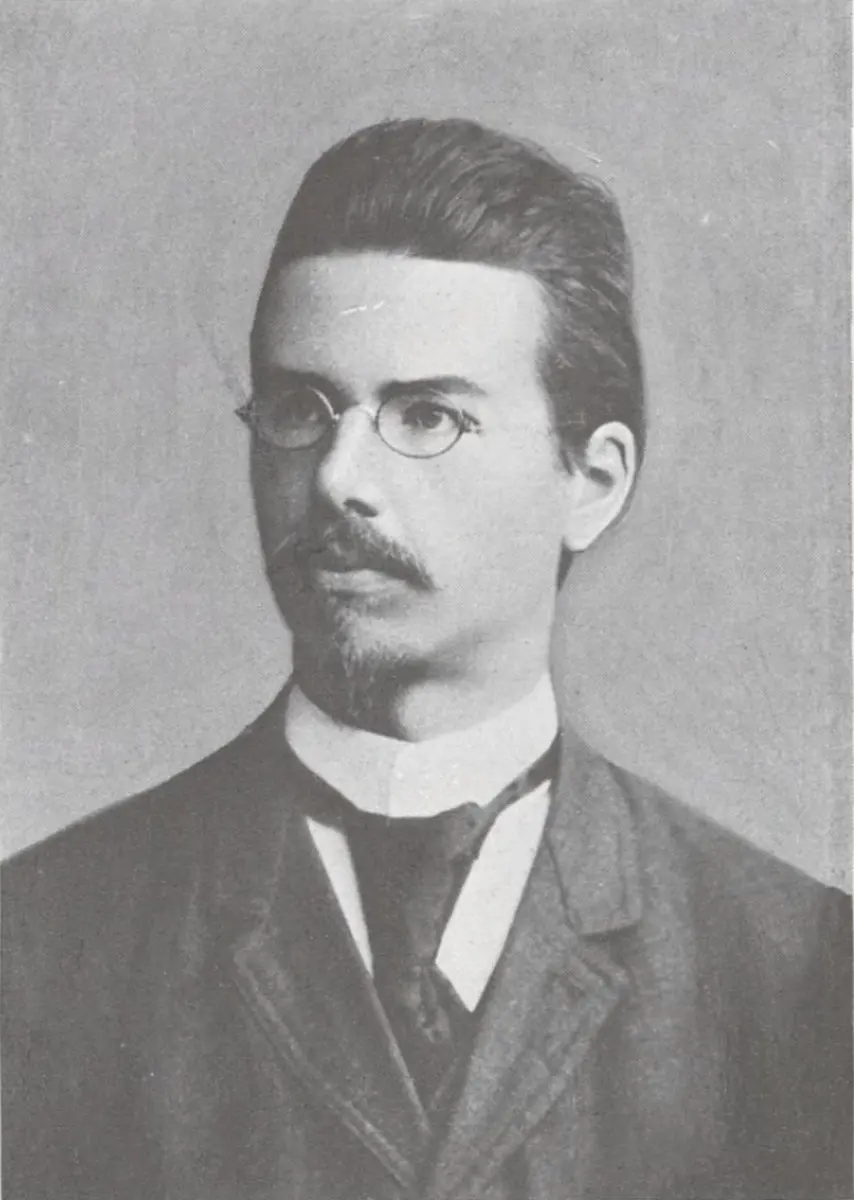
Pierre-Gilles de Gennes
1932–2007, born in France
A theorist who liked to work next to experimenters, and who made physics out of soap, glue, rubber and plastics. After his Nobel Prize he spent two years visiting about 200 secondary schools to talk to students about science.
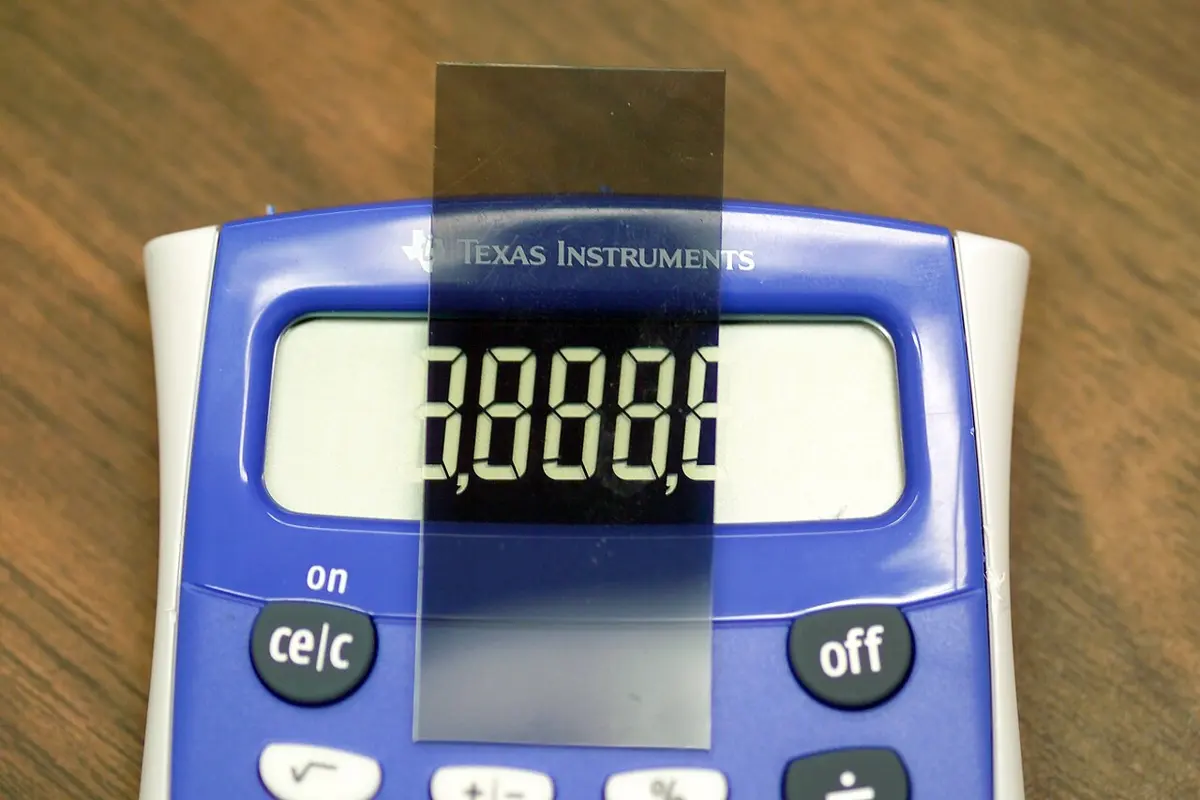
Look closely at the numbers on a calculator, or on a cheap digital watch. Each number is made of a few dark strips that switch on and off. The dark strips are not printed and not lit: they are a thin film of a strange material that is neither quite a liquid nor quite a solid, a liquid crystal.
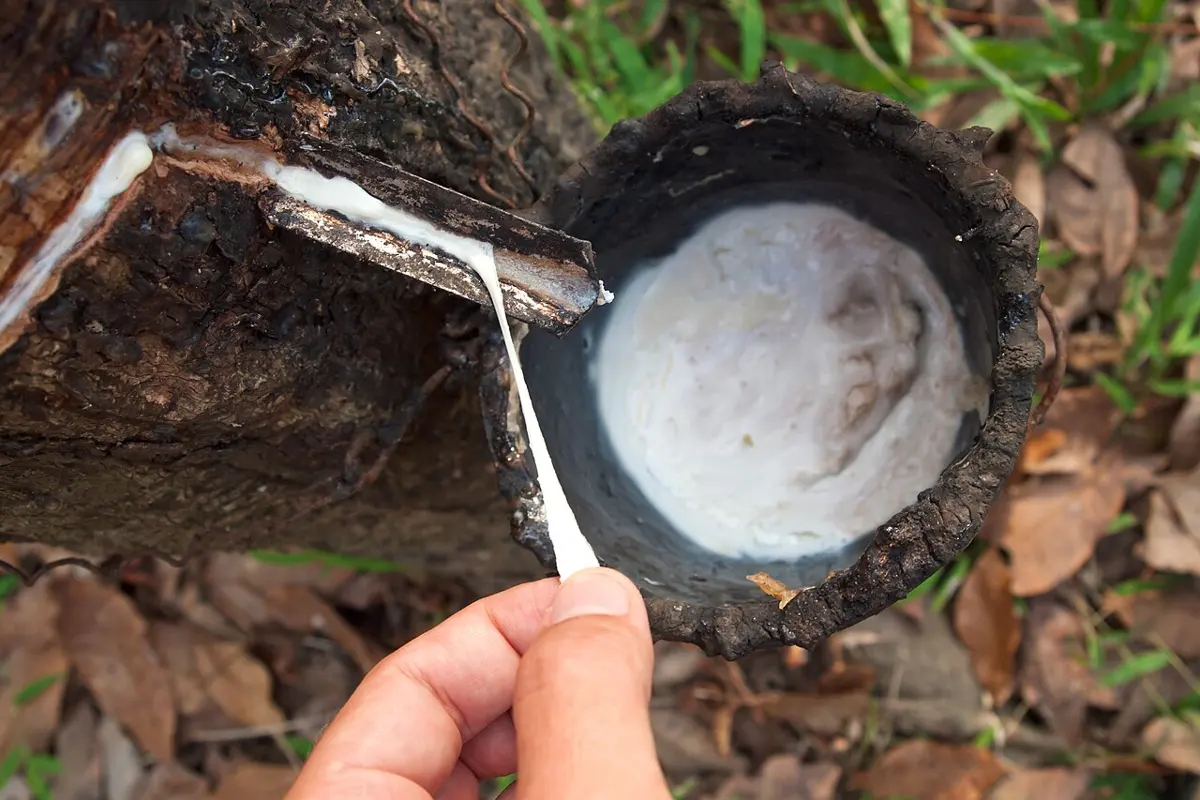
Long ago, people in the Amazon forest collected the milky sap of the rubber tree, spread it on their feet, and let it dry for a short while. Then they had a boot. Pierre-Gilles de Gennes began his Nobel lecture with this story. A small chemical change had turned a liquid into a tough, stretchy solid: rubber.
Liquid crystals, rubber, plastics, soap, glue: physicists used to think these materials were too messy to study with simple rules. In 1991 the Nobel Prize in Physics went to Pierre-Gilles de Gennes, who showed that the same simple rules that describe a magnet also describe them.
The problem: physics liked things tidy
You know three states of matter. In a solid such as salt, the particles sit in fixed places in a regular pattern. In a liquid such as water, they move about in no order at all. In a gas they are far apart and fly about freely.
Physicists had been very successful with simple, “clean” systems: a perfect crystal, a pure gas, a single kind of atom. One thing they understood well was how order turns into disorder. A good example is a magnet.
A magnet is made of countless tiny atomic magnets. In a magnetized piece of iron, most of them point the same way Grade 8: Molecular theory of magnetism. Heat it, and the atoms jiggle harder. At a certain temperature, called the Curie temperature (770 °C for iron), the jiggling wins: the tiny magnets point every which way, and the iron is no longer a magnet Grade 8: Heating the magnet. Such a sudden change from one state to another at a fixed temperature is called a phase transition. Melting and boiling are phase transitions too.
But materials made of big, floppy, complicated molecules looked hopeless. Each was different, and each seemed to need its own theory.
How liquid crystals and polymers work
Liquid crystals: a liquid that keeps a direction
In 1888 an Austrian botanist, Friedrich Reinitzer, was studying a substance made from cholesterol. He noticed that it seemed to have two melting points. At 145.5 °C it melted into a cloudy liquid; at 178.5 °C the cloudy liquid suddenly became clear. A German physicist, Otto Lehmann, looked at the cloudy liquid under a microscope and found that it flowed like a liquid but bent light like a crystal. He called such substances liquid crystals.
The secret is the shape of the molecules. They are long and thin, like grains of rice or matchsticks. In the cloudy state they can slide past each other and flow, as in a liquid, but they keep pointing roughly the same way, as in a crystal (Figure 1). This in-between state is called nematic, from the Greek word for a thread. Heat it more, and the rods point every way: an ordinary, clear liquid.
There are other liquid-crystal states, too. In a smectic one (from the Greek for soap), the rods also stand in layers, which can slide over each other like the pages of a book.
Polymers: molecules like cooked noodles
A polymer is a very long molecule made by joining many small units, called monomers, into a chain. The plastic of a polythene bag is a polymer: chains of thousands of carbon atoms Grade 9: Catenation. Rubber, nylon, silk, wool, starch, the proteins in your body and the DNA in your cells are polymers too.
A polymer chain can be tens of thousands of units long, with each unit about a nanometer (a millionth of a millimeter). Such a chain doesn’t lie straight. It bends and turns at random and curls up into a loose ball, like one long cooked noodle dropped into a bowl. In a melted plastic, or a thick solution, the chains are all tangled together, like a bowl full of noodles.
A substance flows like a liquid, but its molecules all point roughly the same way. What is it?
Pick an answer to see why.
Why it was hard
Liquid crystals had a puzzle that no one had solved. A thin layer of nematic liquid crystal scatters light very strongly, a million times more than an ordinary liquid, which is why it looks cloudy. Every early explanation failed.
Polymers had their own puzzles. How big is a tangled chain of 10,000 units? How does one chain wriggle through a tangle of others? Mathematicians had tried to count all the possible shapes a chain can take, with the rule that two parts of a chain can never be in the same place at once. It was a hard problem, and it seemed to have nothing to do with magnets or liquid crystals.
What de Gennes did, step by step
Pierre-Gilles de Gennes was born in Paris in 1932. As a young researcher he studied magnets, using neutrons to look inside them, and then superconductors, materials that lose all electrical resistance when very cold. That background gave him a toolkit for order and disorder that he carried into new fields.
- 1968, a new field. At Orsay, near Paris, he switched to liquid crystals and formed a group of theorists and experimenters working side by side. It soon became one of the leading groups in the world.
- The cloudy light, explained. De Gennes saw that the direction of the rods is never perfectly steady: it wobbles a little from place to place, all the time. These wobbles behave just like the wobbles of the tiny magnets in iron close to the Curie temperature, and they scatter light strongly. In a magnet this only happens near one temperature; in a nematic liquid crystal it happens at every temperature. That explained the cloudiness.
- Unexpected cousins. He showed that a liquid crystal changing from one of its states to another behaves, in the mathematics, much like a metal becoming a superconductor. His book The Physics of Liquid Crystals (1974) became the standard work.
- 1971, the snake. He turned to polymers and asked how one chain can move through a tangle of others. His answer was called reptation, from the Latin for crawling, like a reptile (Figure 5).
- 1972 onwards, simple rules for chains. He found that the counting problem for a polymer chain is, mathematically, a kind of magnet problem in disguise. That gave him simple rules, called scaling laws: if you know how one property changes with the length of the chain, you can predict others. His book Scaling Concepts in Polymer Physics came out in 1979. Experiments that bounce neutrons off polymers confirmed his predictions.
- 1980s, soft matter. He went on to glue, wetting (how a drop spreads on a surface), soap films and gels. He called this whole family soft matter, the title of his Nobel lecture.
What did de Gennes see in common between a nematic liquid crystal and a magnet?
Pick an answer to see why.
How it works now
A calculator display
The numbers on a calculator use a twisted nematic liquid crystal, invented around 1970 by other scientists, in Switzerland and the United States. De Gennes didn’t invent the display, but his theory explained how the liquid crystal behaves inside it.
Light is a wave, and in ordinary light the waves vibrate in every direction across their path (Light is an electromagnetic wave). A polarizing filter lets through only light vibrating in one direction. Two such filters turned at right angles to each other block the light completely.
In each segment of the display, a liquid-crystal layer a few thousandths of a millimeter thick is held between two such filters, turned at right angles. The rods are arranged to twist through a quarter turn from the bottom of the layer to the top, and as light passes through, its vibration turns with them. So it gets through the second filter, and the segment looks light. Put a small voltage across the segment, and the rods stand up along the electric field. The twist is gone, the light is not turned, and the second filter stops it: the segment looks dark (Figure 3).
A few volts from a tiny battery or a solar cell are enough to switch it, and almost no current flows, which is why a calculator battery lasts for years. A flat-screen TV or laptop screen uses the same idea, with millions of tiny segments (pixels) and color filters, lit from behind.
The snake in the tube
Now picture one polymer chain in a melted plastic. The other chains hem it in on every side. It can’t move sideways through them, any more than you could pull one noodle sideways out of a tangled bowl. But it can slide along its own length, forwards and backwards, like a snake moving through grass. The other chains form a kind of tube around it, and the chain slowly creeps out of its tube, end first (Figure 5).
From this picture de Gennes worked out how the time a chain needs to escape its tube depends on its length. His answer: twice as long a chain takes about eight times as long (2 × 2 × 2), because it has twice as far to go and moves twice as slowly. Measurements of how thick melted plastics are come close: they rise a little faster still, which later work explained with more details of how chains move. This is why long-chain plastics are so thick and slow when melted, and why their chain length matters so much in factories.
According to the reptation picture, how does a long polymer chain move through a tangle of other chains?
Pick an answer to see why.
In your life today
- Screens. The display of every calculator and digital watch, the screens of many laptops, computer monitors and TVs, and the small screens on washing machines and fuel pumps are liquid-crystal displays (LCDs). Many newer phones use a different kind of screen (OLED), but LCDs are still everywhere.
- Plastics. Every plastic bucket, water pipe, bag and bottle is a tangle of polymer chains, and the rules de Gennes found help engineers decide how long the chains should be (From oil to a plastic bucket). Plastic waste is also a problem in Nepal (Plastic in Nepal): the same long, tough chains that make plastic useful are why it lasts so long.
- Bullet-proof vests. Kevlar, the fiber in bullet-proof vests and some ropes, is spun from a polymer solution that is a liquid crystal: its rod-like chains line up as they are pulled through the spinning holes, which makes the fiber very strong.
- Soap and your cells. Soap and detergent molecules line up side by side Grade 10: How soap cleans; in strong solutions they form liquid-crystal layers, the smectic state named after soap. The thin skin around every cell in your body is built of molecules lined up in the same way.
What came next
- Soft matter is now a large part of physics, joining physics, chemistry and biology. It studies foams, gels, glues, paints, toothpaste, chocolate, and the jelly-like inside of living cells.
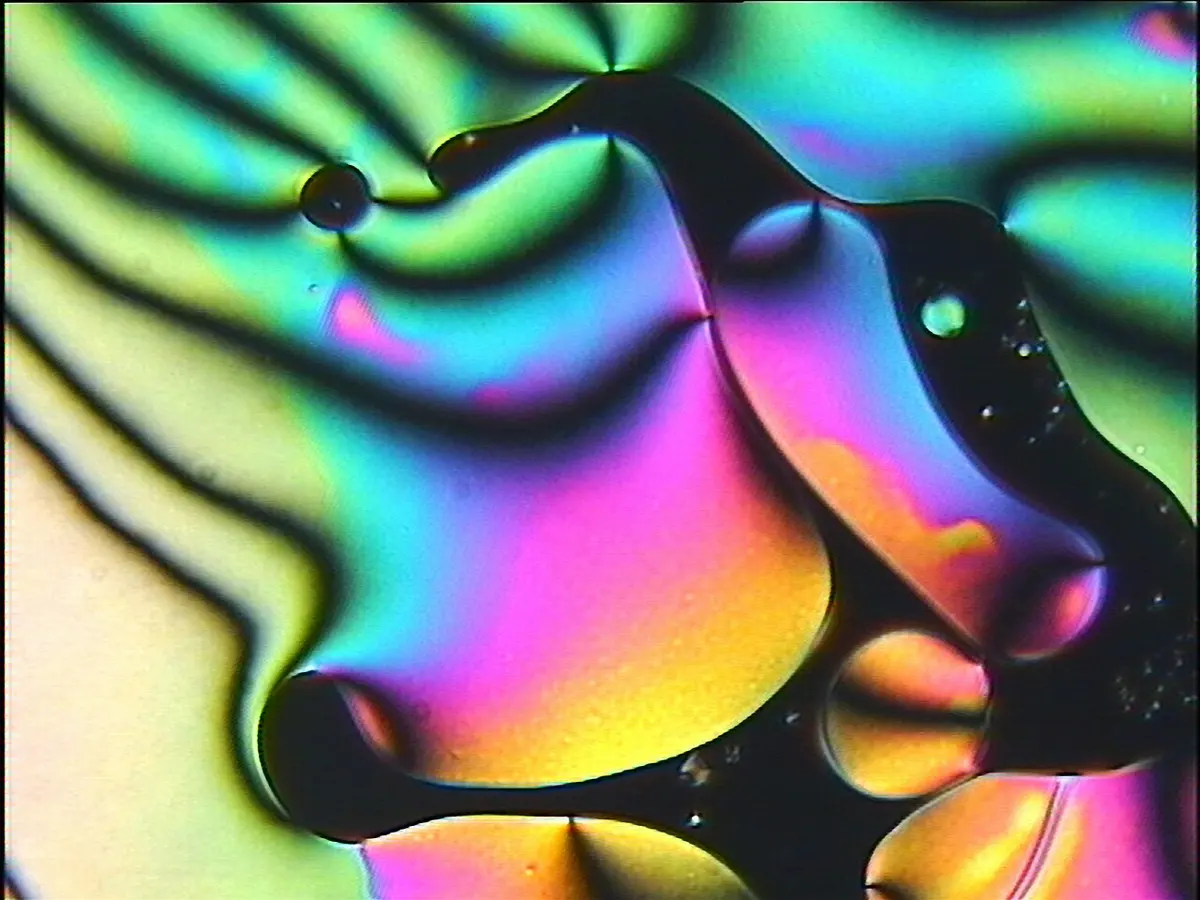
- Living liquid crystals. Biologists have found that cells crowded in a thin layer, such as the skin-like layers that line our organs, often line up like the rods of a nematic liquid crystal, with the same kinds of defects as the points in the photo above. Experiments suggest that these defects help decide where cells are squeezed out of the layer. Whether nature uses this on purpose, and how, is a question being studied now.
- Better screens. Engineers keep improving liquid crystals to switch faster and use less power, while new kinds of screens compete with them.
In your science books
- Grade 8: the molecular theory of magnetism and heating a magnet (order and disorder in a magnet).
- Grade 9: catenation, the long carbon chains of polythene and PVC.
- Grade 10: how soap cleans, and ethene, the raw material of polythene.
- Going further: light is an electromagnetic wave, oil is made of chains, and plastic in Nepal.
Learn more
- The Nobel Prize’s press release for 1991, with pictures of magnetic order, liquid crystals and the “blob” model of a polymer.
- De Gennes’s Nobel lecture, Soft matter, which begins with the rubber boot, and his own short life story (nobelprize.org).
The official reason
The prize was given “for discovering that methods developed for studying order phenomena in simple systems can be generalized to more complex forms of matter, in particular to liquid crystals and polymers.”