
Quarks: the hard grains inside the proton
Nobel Prize in Physics, 1990: Jerome I. Friedman, Henry W. Kendall, and Richard E. Taylor
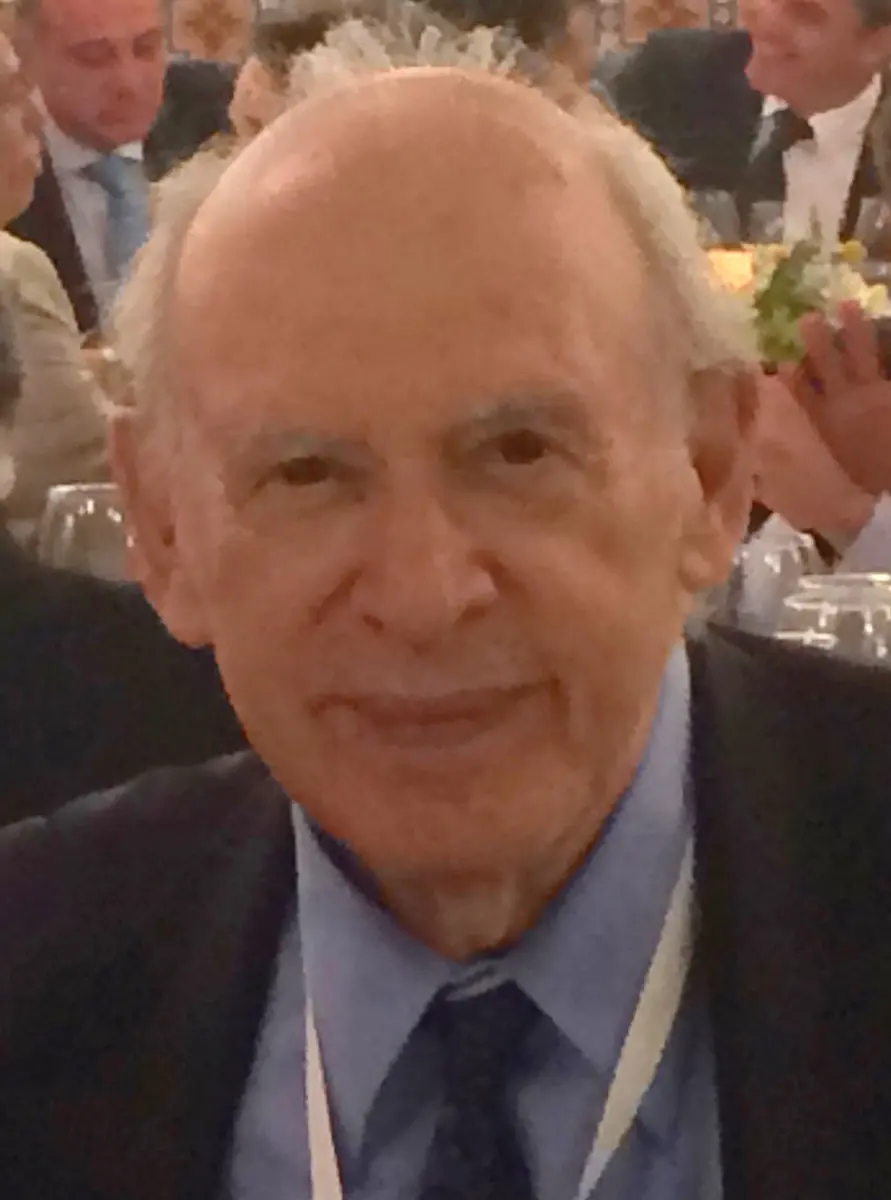
Jerome I. Friedman
born 1930 in Chicago, United States
The son of immigrants from Russia, he studied in a special art program at high school, and still loves to paint.
Photo: Betsy Devine, CC BY-SA 4.0
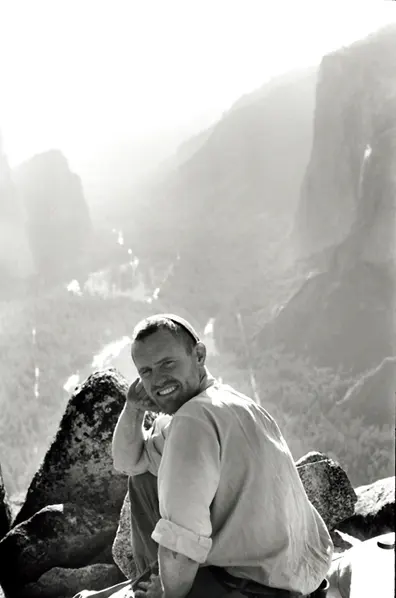
Henry W. Kendall
1926–1999, born in Boston, United States
A mountaineer and diver who climbed in the Andes and visited the Himalaya, and who spent much of his life warning about the dangers of nuclear weapons.
Photo: Tom Frost, CC BY-SA 3.0
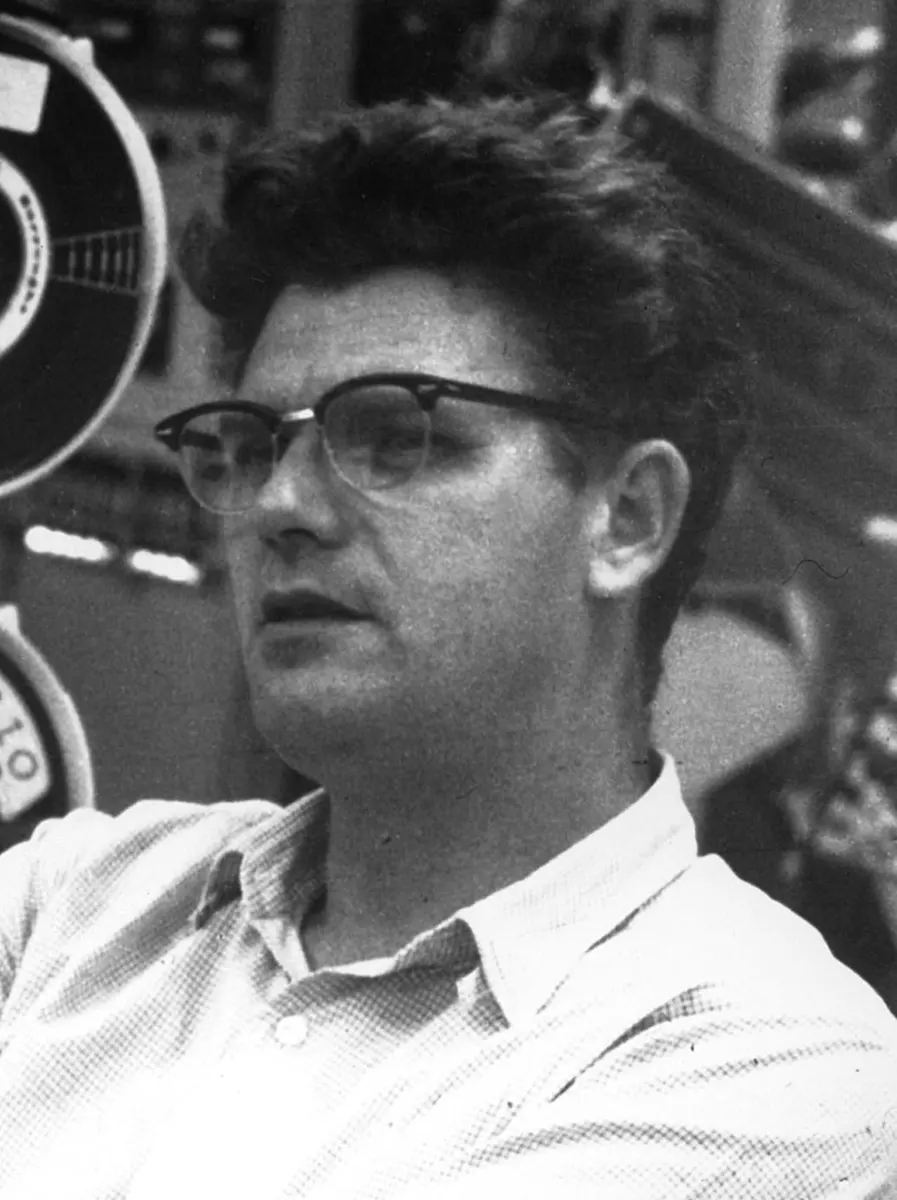
Richard E. Taylor
1929–2018, born in Medicine Hat, Canada
As a teenager he blew three fingers off his left hand playing with explosives. He went on to build the giant machines of the experiment.
Photo: ENERGY.GOV, Public domain
In Grade 8 you learn that every atom is made of three kinds of particle: protons and neutrons in the nucleus, and electrons around it Grade 8: Structure of an atom. Your desk, your dal bhat, the air, the Himalaya: all of it is protons, neutrons and electrons. But are those three the smallest things there are? Or is a proton made of something even smaller?
At the end of the 1960s, three physicists and their team in the United States, Jerome Friedman, Henry Kendall and Richard Taylor, found the answer. They fired electrons at protons with a machine 3.2 km long, and found that a proton has hard little grains inside it. Those grains are called quarks. For this they shared the 1990 Nobel Prize in Physics.
The problem: a zoo of particles
By the 1930s, scientists thought they had found nature’s building blocks: the proton, the neutron and the electron. Then they kept finding more. Machines that smashed particles together, and rays from space, produced new, short-lived particles that were cousins of the proton and the neutron. By the early 1960s there were dozens of them, a whole “zoo”. Could they all be basic building blocks? That seemed unlikely.
In 1964 two physicists, Murray Gell-Mann and George Zweig, each found a way to bring order to the zoo. Suppose, they said, that the proton, the neutron and all their cousins are made of just three kinds of smaller particle. Gell-Mann called them quarks, after a line in a novel by the Irish writer James Joyce: “Three quarks for Muster Mark!”
But quarks had a very strange property: their electric charges would be fractions. Every particle ever found had a charge of 0, +1 or −1 (or a whole number), in units of the electron’s charge. Quarks would have charges of +⅔ or −⅓. People searched for such strange particles in sea water, in meteorites, in rays from space and in accelerators. Nobody found a single one. So many physicists thought quarks were only a clever piece of mathematics, a way of keeping the list tidy, not real things.
How to see inside something too small to see
You can’t look at a proton with a microscope. It is about a millionth of a billionth of a meter across: a hundred thousand times smaller than an atom. So physicists do what Rutherford did to find the nucleus. They fire small fast particles at it, and watch how they bounce.
Imagine a big haystack, and you can’t see inside it. Throw small stones into it. If the haystack is only hay, every stone goes in or passes through, barely turned aside. But if some stones fly back out at a sharp angle, there must be something hard hidden inside, perhaps a rock.
In 1909, in Ernest Rutherford’s laboratory in England, alpha particles fired at thin gold foil did exactly that: a few bounced back. Rutherford worked out that each atom has a tiny, hard nucleus Grade 9: Structure of an atom. (He had already won the Nobel Prize in Chemistry in 1908, for his work on radioactivity: Chemistry 1908.)
There is one more rule. To see fine detail, you need a short wavelength. Ordinary light, with wavelengths around 500 nanometers, can’t show anything much smaller than that. Fast particles behave like waves too, and the more energy they have, the shorter their wavelength. To see inside a proton, you need electrons with an enormous amount of energy.
In the 1950s, Robert Hofstadter at Stanford University fired electrons at protons and measured their size. He found the proton’s charge spread out over a soft, fuzzy ball (Nobel Prize 1961). His electrons bounced off it as if it were soft all the way through.
Why did physicists need electrons with very high energy to look inside a proton?
Pick an answer to see why.
Why it was hard
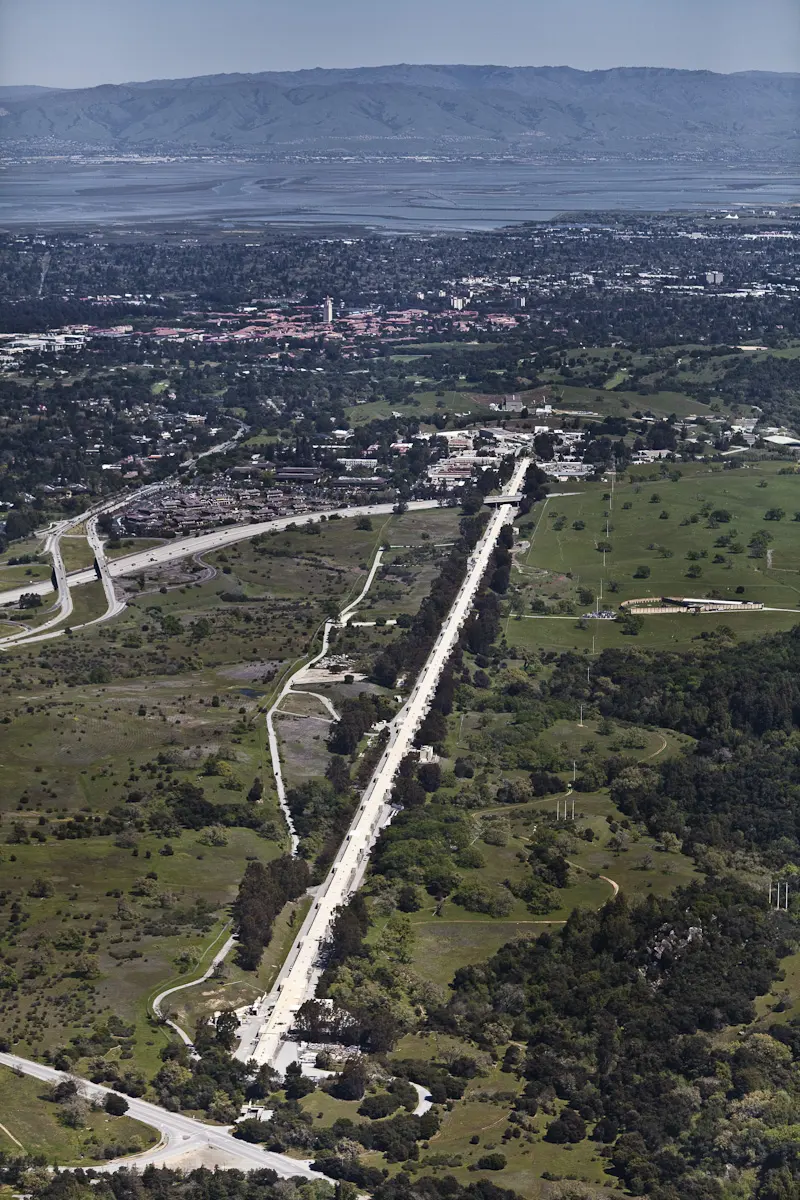
- A giant machine. The energy needed was far beyond any electron machine of the 1950s. A new one was built in California: the Stanford Linear Accelerator, a perfectly straight tube about 3.2 km (two miles) long, which began working in 1966. Along its length, powerful microwaves push the electrons faster and faster, until they move at all but a tiny fraction of the speed of light, with energies of up to about 20 GeV: as much as an electron would gain from a battery of 20 thousand million volts.
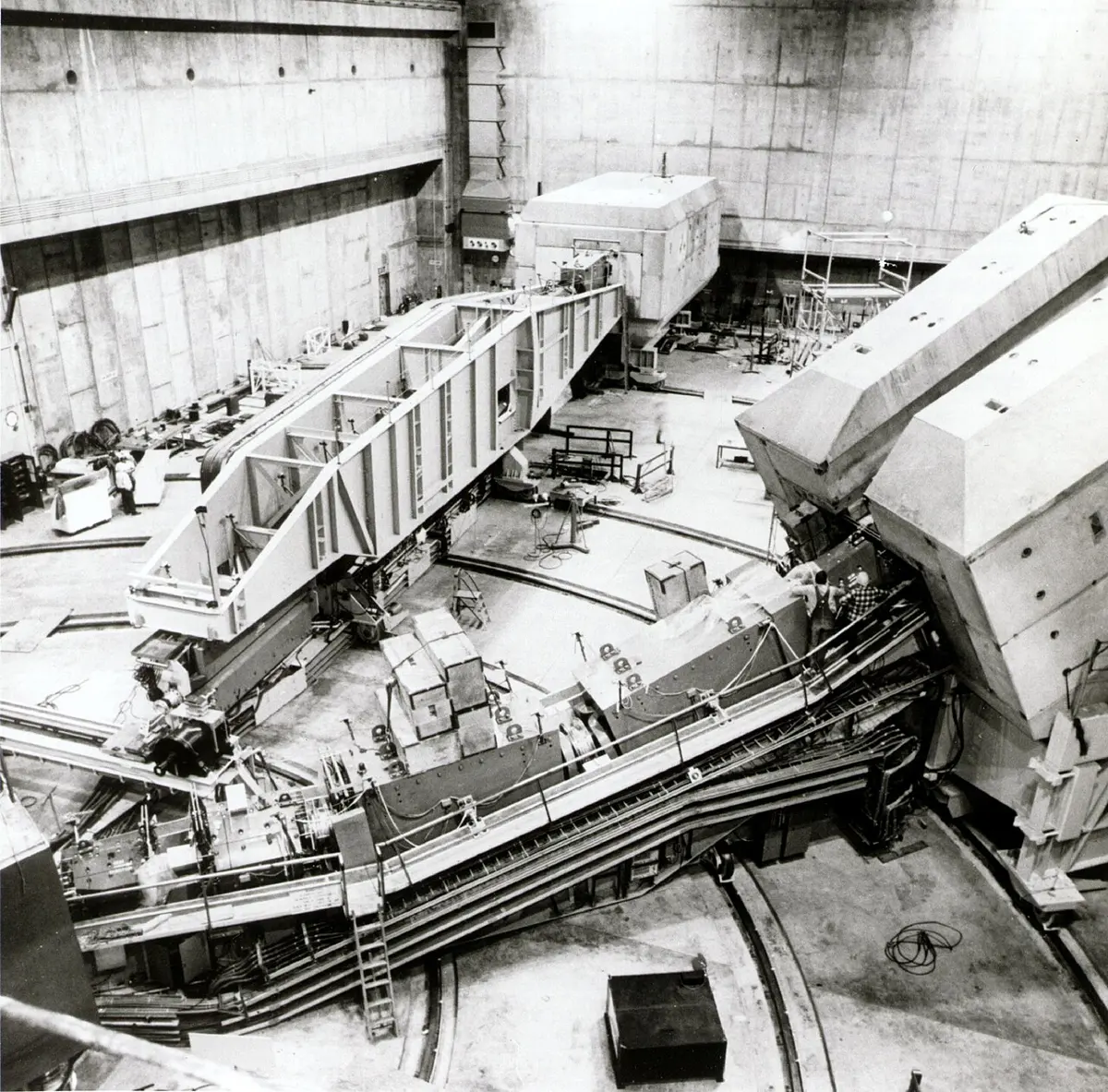
- Giant detectors. To catch the electrons that bounced off, and measure their angle and energy, the team built spectrometers: huge magnets and detectors, each as big as a house, standing on rails so they could be turned around the target.
- Nobody expected anything. The experiment was seen as routine: a check of Hofstadter’s soft proton at higher energy. Collisions in which the electron lost a lot of energy and bounced off at a big angle were expected to be so rare that they were hardly worth measuring.
What they did, step by step
Friedman, Kendall and Taylor: the SLAC–MIT experiment
Friedman and Kendall were professors at the Massachusetts Institute of Technology (MIT) near Boston. Taylor worked at SLAC, the new accelerator’s laboratory. They had met as young researchers at Stanford’s physics laboratory, where Hofstadter worked. In the mid-1960s, while the accelerator was being built, they joined forces, traveling back and forth across the country for years.
- Building it. Taylor led the work on the magnets and the heavy machinery of the spectrometers; Friedman and Kendall designed the detectors that recorded the electrons. The target was a small can of liquid hydrogen, whose nuclei are single protons.
- 1967, nothing new. First they measured collisions in which the electron simply bounced off the whole proton, like one rubber ball off another. The results agreed with Hofstadter’s soft proton.
- 1967–1968, the surprise. Then they looked at the violent collisions, where the electron lost much of its energy, flew off at a large angle, and the proton was smashed into a spray of new particles. There were far more of these than anyone had expected. And as they went to higher energies, the number didn’t fall away as it should for a soft ball.
- Checking, and checking again. At first the team thought they had made a mistake. Perhaps the electrons were giving off light that they hadn’t seen, making their energies look wrong. They spent a long time working out such corrections. The surprise stayed.
- 1968–1969, the meaning. Two theorists explained it. James Bjorken showed that the results followed a simple pattern, as if the electrons were hitting tiny, hard points inside the proton. Richard Feynman called these points partons, “parts of the proton” (Physics 1965). It was Rutherford’s experiment again, one level deeper.
- To about 1975, protons and neutrons. The team went on to fire electrons at deuterium, heavy hydrogen, whose nuclei contain a neutron as well as a proton, so they could compare the two. The results, together with other experiments in Europe, fitted hard points with the fractional charges of quarks. The partons were quarks.
Why did the results surprise everyone?
Pick an answer to see why.
How it works now
Today, physicists picture a proton as three quarks held together by gluons. There are two kinds of quark in ordinary matter:
- the up quark, with charge +⅔;
- the down quark, with charge −⅓.
A proton is two up quarks and one down: +⅔ + ⅔ − ⅓ = +1. A neutron is one up and two down: +⅔ − ⅓ − ⅓ = 0. The fractions that seemed so strange add up to exactly the charges you learn in Grade 8.
Why does nobody ever find a quark on its own? Because the pull of the gluons gets stronger as quarks move apart, like a rubber band. Pull hard enough and the energy you put in makes a new pair of quarks, so you get new particles, never a lonely quark. That is the spray of particles the SLAC experiment saw. The theory of how gluons hold quarks, which also explains why the quarks looked almost free to the SLAC electrons, was worked out in 1973 (Physics 2004).
In your life today
- You are made of quarks. More than 99% of the mass of everything around you, including you, is quarks and gluons. The little that is left is electrons.
- Accelerators in hospitals. The same technology, much smaller, is used in hospitals: a linear accelerator a meter or two long speeds up electrons and turns them into X-rays to treat cancer. Cancer hospitals in Nepal use them.
- Physics in the Himalaya. Henry Kendall loved mountains. He climbed in the Andes, made trips to the Himalaya, and took large cameras into the mountains to photograph them.
What came next
- More quarks. Physicists have since found four more kinds: charm (1974), bottom (1977) and top (1995), plus the strange quark that Gell-Mann already had in 1964. There are six kinds in all. Only the up and down quarks are in ordinary matter.
- Deeper looks. Bigger machines, such as HERA in Germany and the Large Hadron Collider near Geneva, have looked inside the proton far more closely. They find a busy place: besides the three quarks, there is a sea of gluons and short-lived pairs of quarks, appearing and disappearing.
- The open question. Physicists are sure quarks can never be pulled out alone, and computers confirm it. But nobody has yet proved it from the equations of the theory. A closely related problem is one of the seven “Millennium Prize Problems” in mathematics, with a reward of a million US dollars for its solution.
In your science books
- Grade 8: the structure of an atom, and the proton, the neutron and the electron.
- Grade 9: the structure of an atom, with Rutherford’s gold foil experiment, and nuclear stability.
- Going further: what is inside a nucleus, beta decay, and mass into energy.
Learn more
- The Swedish Academy’s press release, its illustrated presentation of the experiment, and the presentation speech (nobelprize.org).
- The three Nobel lectures, which tell the story of the experiment in order: Taylor’s, Kendall’s and Friedman’s.
The official reason
The prize was given “for their pioneering investigations concerning deep inelastic scattering of electrons on protons and bound neutrons, which have been of essential importance for the development of the quark model in particle physics.”