
Masers and lasers: light marching in step
Nobel Prize in Physics, 1964: Charles H. Townes, Nikolay Basov, and Aleksandr Prokhorov
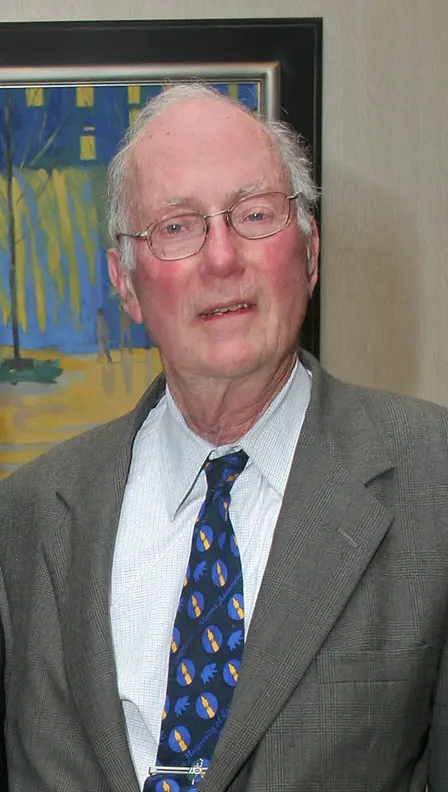
Charles H. Townes
1915–2015, born in the United States
A radar engineer turned physicist, who got his big idea on a park bench and lived to be 99. This photo is from 2007.
Photo: NIBIB (US National Institutes of Health), Public domain
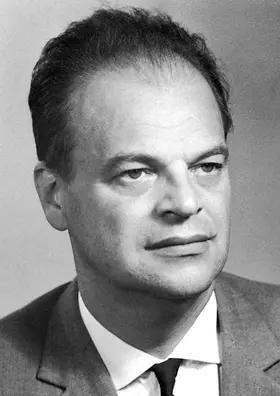
Nikolay Basov
1922–2001, born in Russia
A wartime army medical assistant who went on to build some of the first lasers made from semiconductors.
Photo: Nobel foundation, Public domain
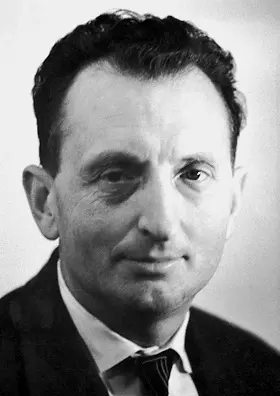
Aleksandr Prokhorov
1916–2002, born in Australia
Born to Russian parents in Queensland, Australia; his family went back to the Soviet Union when he was seven. Wounded twice in the Second World War.
Photo: Nobel foundation, Public domain
At the supermarket checkout, the cashier passes your biscuits over a window and a thin red line flickers across the barcode: beep. A teacher points at the board with a little red dot. The videos on your phone reach Nepal along glass threads under the ground, carried by flashes of light. All three use a laser, a kind of light that no candle, bulb or Sun can give: one pure color, in a beam that hardly spreads, with all its waves marching in step.
The laser grew out of the maser, which does the same with microwaves. The Nobel Prize in Physics for 1964 went to the three people who first worked out how to make atoms and molecules give out light like this: Charles Townes in the United States, and Nikolay Basov and Aleksandr Prokhorov in the Soviet Union, working separately.
The problem: light that is a jumble
Think of how ordinary light is made. In a bulb filament, a flame or the Sun, countless atoms are each given energy and each gives it out again as a tiny packet of light, a photon, whenever it happens to, in any direction, and in many colors. The light that comes out is a jumble, like a crowd of people all talking at once. It spreads out in all directions, and its waves are not in step with each other.
Engineers could already make pure, in-step waves of a different kind. A radio transmitter or a radar set makes electrons swing back and forth in a circuit, all together, so the waves they send out march in step, at one exact frequency. During the Second World War, radar pushed this down to microwaves a few centimeters long. But to make still shorter waves, the circuits had to be smaller than the waves themselves. For wavelengths of a millimeter or less, nobody could build them. Light, with wavelengths of less than a thousandth of a millimeter, was out of the question.
Townes wanted short microwaves for his own work: they are the best way to study how molecules are built. Where could you find something small enough to make them? Molecules and atoms themselves.
How light and atoms meet
You may know that an electron in an atom can have only certain energies, like the steps of a staircase, and that it gives out a photon when it drops down a step (Bohr’s atom). In 1917, Albert Einstein worked out that there are three ways in which light and an atom can meet.
- Absorption. An electron on a low level takes in a photon of just the right energy and jumps up.
- Spontaneous emission. An electron on a high level drops down by itself, at a random moment, and gives out a photon in a random direction. This is how bulbs and flames make light.
- Stimulated emission. A photon of just the right energy passes an electron that is already up on the high level. It makes the electron drop, and the electron gives out a second photon that is an exact copy of the first: the same energy (so the same color), the same direction, and in step. One photon goes in, two come out.
Stimulated emission is the key. Two photons can make four, four make eight, and so on, like an avalanche. The light amplifies itself, and all of it is copies of the first photon. The words maser and laser say so: microwave (or light) amplification by stimulated emission of radiation.
In stimulated emission, a photon passes an atom whose electron is on the higher level. What comes out?
Pick an answer to see why.
Why it was hard: the atoms are in the wrong place
For almost forty years, stimulated emission was only an idea on paper. The trouble is that in any ordinary material, almost all the atoms sit on the lower level. A photon passing through is far more likely to meet a low atom and be absorbed than to meet a high atom and be copied. So light passing through matter always gets weaker, never stronger.
To make light grow, you need the opposite: more atoms up on the high level than down on the low one. This upside-down state is called a population inversion. Nature doesn’t make it; atoms that are pushed up drop back down within a tiny fraction of a second. Nobody knew how to make an inversion and keep it.
Why does a beam of light passing through ordinary matter get weaker, not stronger?
Pick an answer to see why.
What they did, step by step
Charles Townes: the ammonia maser
Charles Townes had worked on radar during the war, and then at Columbia University in New York he used microwaves to study molecules.
- 1951, a park bench. One morning in Washington, where he had come for a meeting, sitting on a bench in Franklin Park, Townes saw how it could be done. Take a stream of ammonia molecules, use electric fields to sort out the ones with extra energy from the ones without, and send only the excited ones into a small metal box, a cavity, whose size is matched to the waves they give out. Inside, the excited molecules would copy each other’s microwaves.
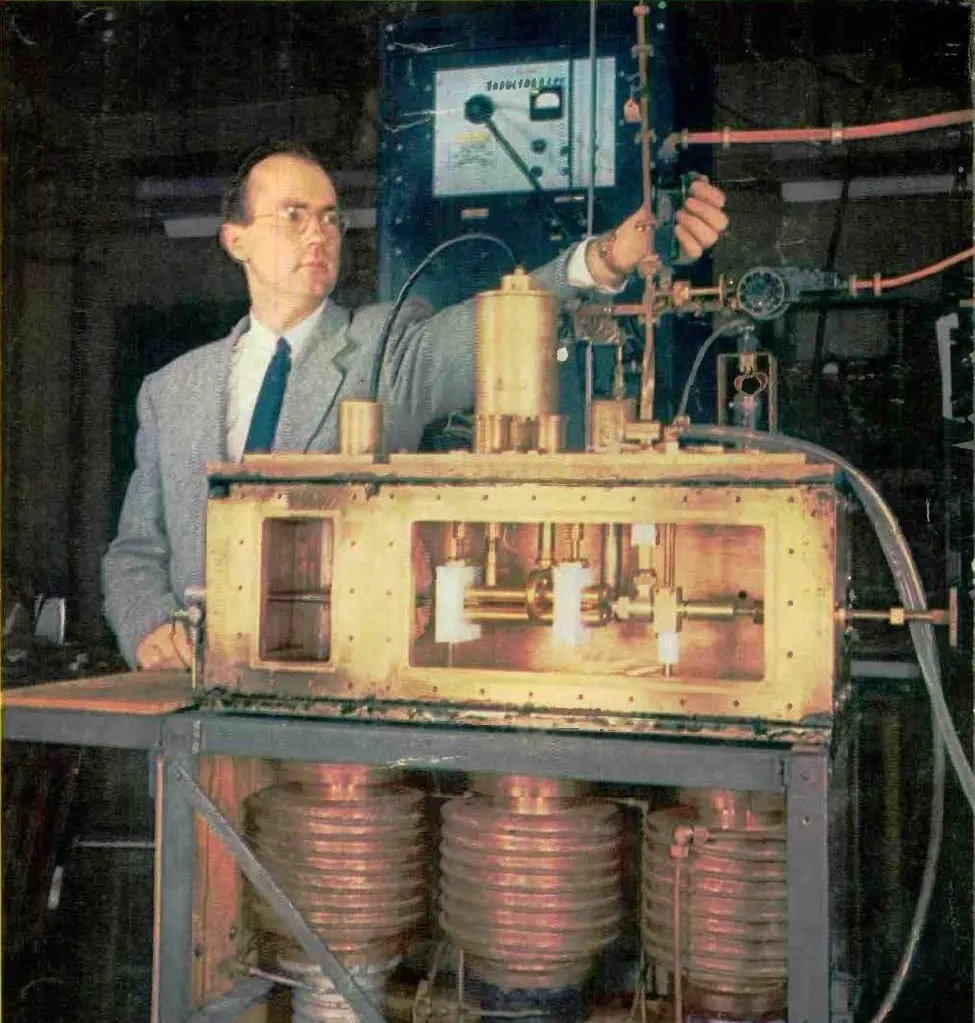
- 1951–1954, building it. With his student James Gordon and a young physicist, Herbert Zeiger, he built it. It took more than two years.
- Early 1954, it works. The device gave out microwaves at one extremely pure frequency, about 24,000 million vibrations per second (a wavelength of 1.25 cm). Townes and his students named it the maser.
Basov and Prokhorov: the same idea in Moscow, and the pump
Aleksandr Prokhorov and his young colleague Nikolay Basov were studying the microwave spectra of molecules at the Lebedev Physical Institute in Moscow. Both had fought in the Second World War.
- 1952–1954, the molecular generator. Working without knowing of Townes’s work, they arrived at the same idea. They described it at a conference in Moscow in 1952, published their theory in 1954, and built their own ammonia maser, which they called a molecular generator.
- 1955, the pump. Sorting out excited molecules works for a gas, but not for most materials. Basov and Prokhorov found a better way to get a population inversion: use three energy levels. Shine in strong light (or another source of energy) that lifts electrons from the bottom level to the top one. They drop quickly to a middle level and stay there. Soon more electrons are on the middle level than on the bottom one: an inversion. This is called pumping, and nearly every laser today is pumped in some such way.
From maser to laser
- 1958, mirrors instead of a box. Light waves are far too short to fit a matched box round them. Townes and his brother-in-law Arthur Schawlow worked out that two mirrors facing each other would do instead: light bouncing back and forth between them passes through the material again and again, and grows each time. Prokhorov proposed the same open, two-mirror design in Moscow the same year. Every laser since has some version of it.
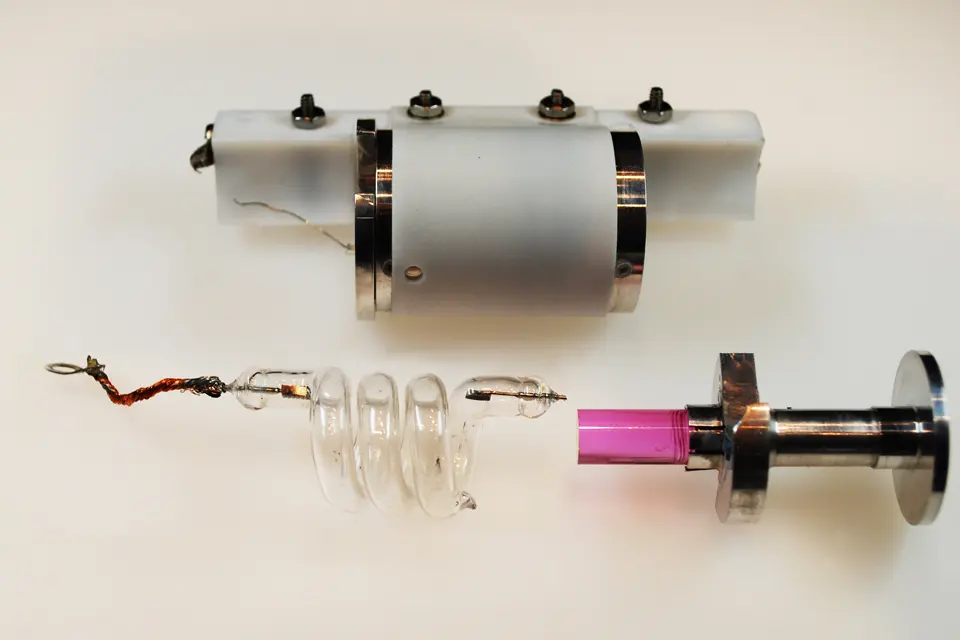
- 16 May 1960, the first laser. Theodore Maiman in California got there first, with a small rod of ruby: aluminium oxide with a little chromium, which gives ruby its red color and does the lasing. A flash lamp coiled round the rod pumped it, and both ends were coated with silver, one end thinly enough to let some light out. It gave a flash of deep red light, 694 nm.
- 1960–1963, many more. By the end of 1960, Ali Javan and his colleagues had made a gas laser, of helium and neon, that shone continuously. In 1962–63, teams in the United States and in Basov’s laboratory in Moscow made lasers from tiny semiconductor chips, the kind in every laser pointer and barcode scanner today.
How a laser works now
Every laser, from the chip in a barcode scanner to a giant research laser, has the same three parts:
- a material with the right energy levels, a crystal, a gas or a semiconductor, called the gain medium;
- a pump that keeps a population inversion going: a flash lamp, an electric current or another laser;
- two mirrors, one of them letting a little of the light out, so that the light passes back and forth through the material and builds up.
Because all the light comes from copying, laser light is special in three ways:
- it is one color (one wavelength);
- its waves are in step, which scientists call coherent;
- it travels in a narrow beam that hardly spreads, because only light that runs straight along the line between the mirrors keeps bouncing and growing.
In your life today
- The internet. Most of the internet’s data, including what reaches Nepal from the rest of the world, travels as flashes of laser light along optical fibers Grade 10: Optical fibers in telecommunication.
- Barcodes and printers. Supermarket scanners read barcodes with a laser line, and a laser printer draws each page on its drum with a laser Grade 8: Printer.
- Eye surgery. Surgeons reshape the cornea with lasers to correct short sight, and use them to seal leaking blood vessels at the back of the eye Grade 10: Laser eye surgery.
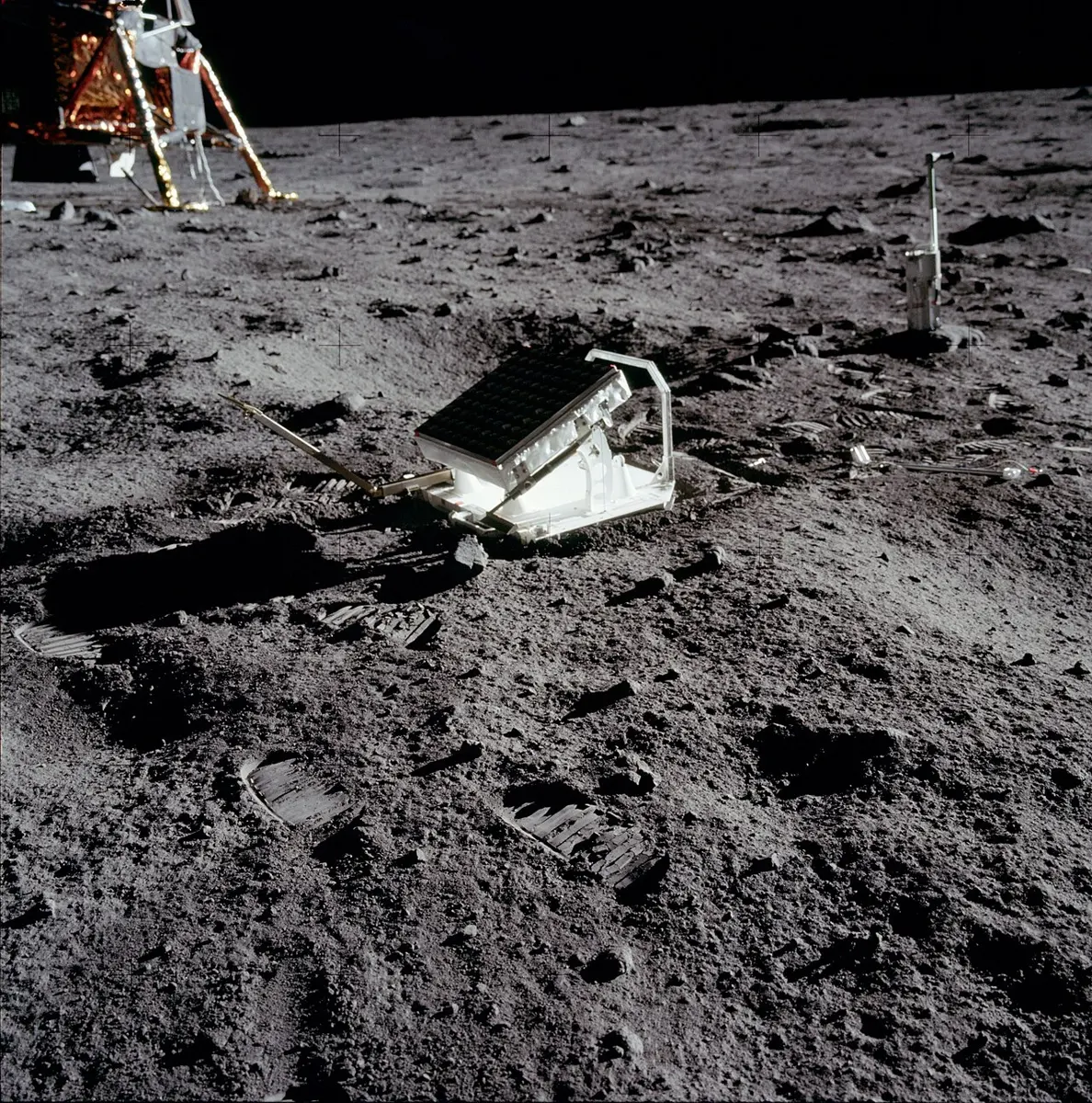
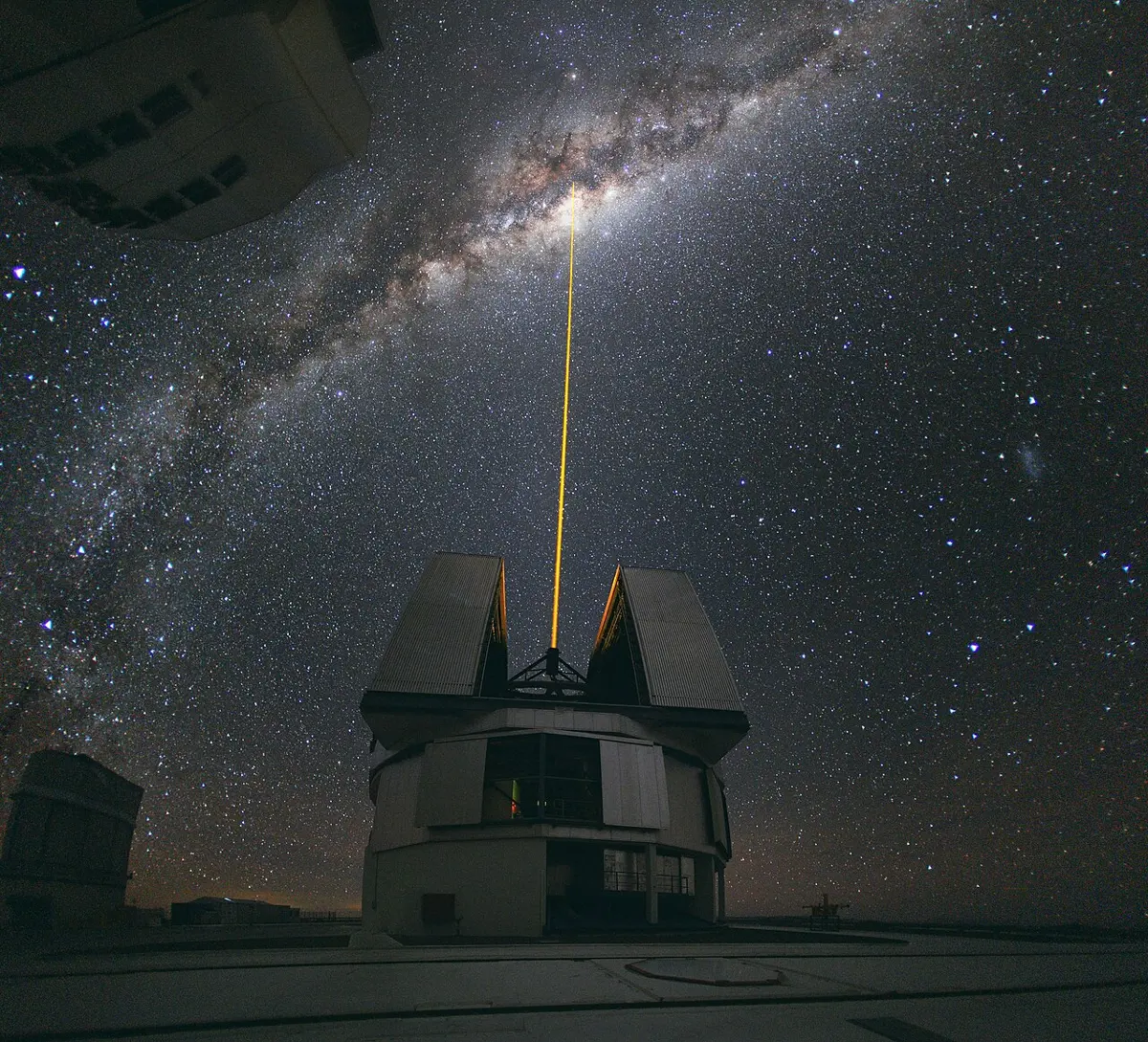
- Measuring. Surveyors, builders and mountaineers’ rangefinders measure distances with laser pulses. Astronomers fire lasers at mirrors that the Apollo astronauts left on the Moon, and time the echo to measure the distance to the Moon to within a few millimeters.
What came next
The Nobel committee said in 1964 that the laser was “essentially a new invention”, and that its use as a “death ray” over long distances was “wholly unrealistic”. That still holds. But the laser became one of the most useful tools in science: laser light has since helped win many more Nobel Prizes, from cooling atoms to within a millionth of a degree of absolute zero, to detecting gravitational waves in 2015, to holding single cells with beams of light.
- Townes turned to astronomy: his team found the first complex molecules in space and weighed the black hole at the center of our galaxy.
- Basov led work on powerful lasers, including using them to heat tiny pellets of fuel to start nuclear fusion.
- Prokhorov became a professor at Moscow State University and led laser research in Moscow for decades; an institute there now carries his name.
An open question: can lasers give us power stations? In December 2022, scientists at the National Ignition Facility in California fired 192 laser beams at a pellet smaller than a peppercorn and, for the first time, got more energy out of the fusion than the lasers put in. But the lasers themselves used far more electricity than that, and a power station would need to do it many times a second. Nobody yet knows whether laser fusion can ever be made practical.
In your science books
- Grade 8: the laser printer and mechanical and electromagnetic waves.
- Grade 9: the electromagnetic spectrum, microwaves and shells and their energy.
- Grade 10: optical fibers, total internal reflection and laser eye surgery.
- Going Further: two slits and a laser and photons at work.
Learn more
- The presentation speech, December 1964, a clear short account of how masers and lasers work (nobelprize.org).
- The Nobel lectures, all on 11 December 1964: Townes, Production of coherent radiation by atoms and molecules; Basov, Semiconductor lasers; Prokhorov, Quantum electronics.
The official reason
The prize was given “for fundamental work in the field of quantum electronics, which has led to the construction of oscillators and amplifiers based on the maser-laser principle.”