
At a Dashain gathering, when the whole family is together for tika, look around at the brothers and sisters. They have the same mother and the same father. Yet one is tall and one is short; one has curly hair and one straight; one has their grandmother’s nose and the other doesn’t. A neighbor may say “she looks just like her father” about one child and “he is his mother’s copy” about the other.
If both children got their genes from the same two people, why aren’t they the same? And how different can they be? This topic answers both questions with numbers. You will see where the differences come from, how much DNA brothers and sisters really share, and how chance turns a few rules of inheritance into the whole range of people around you.
Three sources of difference
You already know the main ideas. In Grade 10 you saw that eggs and sperm are made by meiosis, which halves the number of chromosomes and mixes them up Grade 10: Meiosis, and that Mendel’s pea plants passed on their characters in pairs of genes Grade 10: Mendel’s experiment. In Grade 9 you met variation and mutation Grade 9: Variation and mutation.
Put those together and there are three ways a child can come to carry DNA that is different from either parent’s, and that the child can pass on in turn. These differences are called inheritable genetic variation.
- New combinations made in meiosis. Each egg and each sperm carries a new mixture of the parent’s chromosomes, and pieces of them. Nothing new is made; the old genes are dealt out in new hands.
- Copying errors. Before every cell division, a cell copies all its DNA, letter by letter. Very rarely a mistake slips through. If it happens in a cell that will become an egg or a sperm, the child gets a brand new change.
- Damage from outside. Ultraviolet light, X-rays and some chemicals can damage DNA and cause mutations. Again, only damage to the cells that make eggs and sperm can be passed on.
Scientists don’t just say this; they have measured how much each one contributes. In this topic you will look at the evidence for each, and use it to decide which matters most.
Shuffling: a new hand every time
Think of a pack of cards. You can deal the same 52 cards again and again and almost never get the same hand twice. Meiosis works like that.
You have 23 pairs of chromosomes. In each pair, one came from your father and one from your mother. When you make eggs or sperm, each one gets one chromosome of every pair, and which one it gets is decided separately for each pair, like tossing a coin 23 times. This is called independent assortment: the pairs are sorted independently of each other. Mendel saw its result in his peas, as his law of independent assortment, long before anyone had seen a chromosome Grade 10: Mendel’s laws.
Crossing over: cutting the cards
Independent assortment deals out whole chromosomes. But in Grade 10 you saw that, before the first division of meiosis, the two chromosomes of each pair lie side by side and swap pieces: crossing over. The place where two chromatids cross is called a chiasma (plural chiasmata).
So a chromosome in your egg or sperm is usually not your father’s or your mother’s, but a patchwork of both. How many swaps are there? Geneticists can count them by comparing the DNA of parents and children. A sperm carries about 26 crossovers on average, spread over its 22 non-sex chromosomes, and an egg about 41. Almost every chromosome pair has at least one crossover in meiosis, and long ones usually several.
With crossing over, no two of the sperm you made were the same: the number of possible patchworks is so large that it has no useful meaning, and two the same would almost never happen. A man makes millions of sperm every day, and practically every one is different.
A man’s chromosome 7 came from his mother. Ignoring crossing over, what is the chance that one of his sperm carries it?
Pick an answer to see why.
How much do brothers and sisters share?
Now think about two children of the same parents. For each chromosome pair, each child got one of the father’s two versions, chosen by chance. So there is a 1 in 2 chance that they got the same one. The same goes for the mother. On average, then, brothers and sisters get the same version of their parents’ DNA for about half of their genome.
But “on average” hides something. Coin tosses don’t always come out half and half. Toss a coin 10 times and you may well get 7 heads. So some brothers and sisters must share more than half, and some less. How much more, and how much less, depends on how finely the chromosomes are cut up by crossing over: more crossovers means more, smaller pieces, which averages out better, like tossing more coins.
This was measured in 2006, when a team in Australia led by the geneticist Peter Visscher tested the DNA of 4,401 pairs of brothers and sisters at hundreds of places along every chromosome. The pair that shared least had 37.4% of their DNA from the same grandparents; the pair that shared most, 61.7%. The average was 49.8%.
This is how scientists use data to test an idea. With crossing over, the model’s pairs fall almost all inside the real range. Without it, they spread about twice as wide, from below 30% to above 70%, and about one pair in seven falls outside the range seen in thousands of real families. So the real data are evidence that crossing over happens, and about as often as the counts in parents and children say. (The model is slightly more spread out than the real families, because in a real chromosome one crossover makes another nearby less likely; the model ignores that.)
Identical twins are the exception. They come from one fertilized egg that split into two early embryos (How Does One Cell Become a Whole Person?), so no shuffling happened between them. Fraternal twins, from two eggs and two sperm, are just brothers and sisters born on the same day: they share about half, like any others.
Two sisters share 55% of their DNA. Their cousin, a girl of the same age, says this proves the sisters must be twins. Is she right?
Pick an answer to see why.
Copying errors: something new in every child
Shuffling only deals out what is already there. Something new needs a change in the DNA itself.
Every time a cell divides, it first copies its DNA: about 6 billion letters (two sets of 3 billion). The enzymes that copy DNA are very accurate, and they check their own work, and other enzymes check again and repair mistakes. Altogether, roughly one wrong letter gets through for every billion or ten billion copied. But a body copies a great deal of DNA, so a few always get through. A change that survives the checks, doesn’t kill the cell, and gets copied from then on is a viable copying error. If it happens in the line of cells that leads to an egg or a sperm, it becomes a new mutation in the child (geneticists call it a de novo mutation, “from new”).
How many? Since about 2010, scientists have been able to read the whole DNA of a mother, a father and their child, and find the letters the child has that neither parent has. In one large study, in 2017, the Icelandic company deCODE genetics read the DNA of 1,548 families. On average each child had about 70 new mutations. Out of 6 billion letters, that is about one letter in 85 million.
You, too, almost certainly carry around 70 changes that neither of your parents had. Most of them are in the long stretches of DNA between genes, where they do nothing that anyone has found; on average about one changes the code for a protein. Very occasionally, a new mutation changes a protein badly and causes a condition that no one in the family has had before. You saw how much one changed letter can do in the topic on proteins (One wrong letter).
The same study found a pattern, and it tells us where the errors come from. About 80% of a child’s new mutations came from the father. And the older the father, the more there were.
Why should fathers pass on more? A girl is born with all the egg cells she will ever have; they stopped dividing before she was born. But a man makes sperm all his adult life, from stem cells in the testes that divide again and again, roughly 23 times a year. Every division means another copy of the DNA, and another chance for an error. A sperm from a 40-year-old man comes at the end of hundreds more divisions than one from a 20-year-old. So the father’s line is good evidence that copying matters: his new mutations build up as the copies are made. It isn’t the whole story. A mother’s eggs are not copied again, yet her share still rises a little with her age: some new mutations come from damage that builds up in a cell between copies, which is why scientists are still measuring how much of each there is.
Mutations from outside
The third source is damage. In 1927 the American geneticist Hermann Muller gave X-rays to fruit flies, then bred them and counted the new mutations in their young. The flies that had been X-rayed passed on far more new mutations than the others, and the bigger the dose, the more mutations. It was the first proof that something in the environment could change genes, and it won him the Nobel Prize in 1946. Since then, many mutagens have been found: X-rays and gamma rays, ultraviolet light, and many chemicals, including some in tobacco smoke.
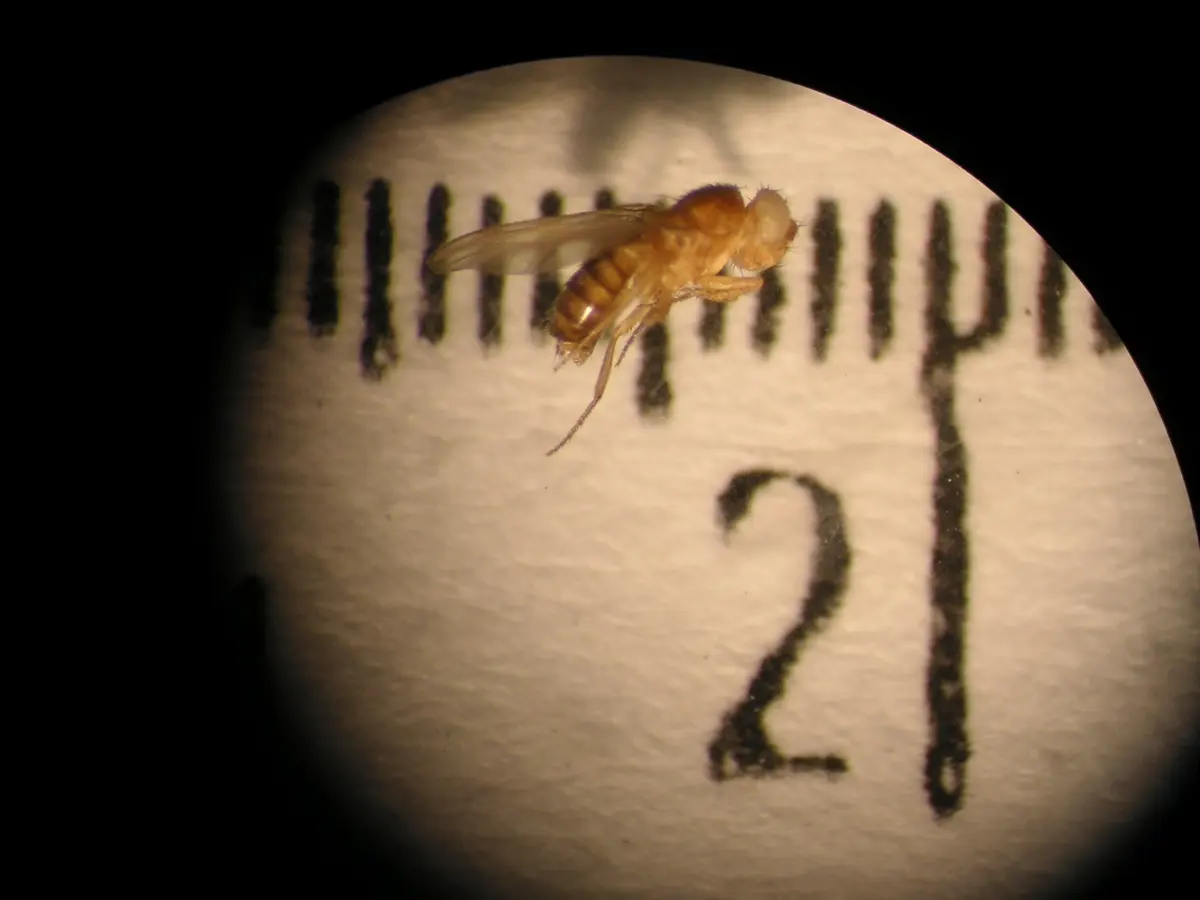
So do mutagens add much to the variation passed on in people? Here the data are surprising.
- Tobacco smoke does great damage to the cells it touches. A study of 5,243 cancers in 2016 estimated that smoking a packet of cigarettes a day adds about 150 mutations to each lung cell every year. But those are lung cells, not germ cells: they harm the smoker and are not passed on.
- After the atomic bombs of 1945, scientists in Japan followed about 77,000 children born in Hiroshima and Nagasaki, to survivors and, for comparison, to parents who had not been exposed. They found no clear increase in inherited disorders: any effect on the children was too small to measure reliably.
- In 2021 a team led by the US National Cancer Institute read the DNA of 130 children born, between 1987 and 2002, to clean-up workers and people evacuated after the Chernobyl nuclear accident of 1986, and of their parents. The children had no more new mutations than other children, however much radiation their parents had received.
So in people, at the doses these families received, damage from outside adds too little to the 70 or so new mutations in every child to be measured. Radiation still does harm, mainly to the person exposed, which is why X-ray staff stand behind a screen; but the evidence says new mutations in children come mainly from inside the body, above all from the everyday copying of DNA.
A fisherman in Pokhara gets sunburned every day for years and develops a skin cancer caused by mutations. Will his children inherit those mutations?
Pick an answer to see why.
Chance and the ratios of inheritance
Mendel’s 3 : 1 is easy to remember. But what does it mean for one family?
A ratio can be read as a probability. When two parents are both Tt, each child has a 1 in 4 chance of being tt, whatever has happened to their other children. And in a cross of two hybrids, each child has a 3 in 4 chance of showing the dominant character. Each child is a new toss of the coins: the chances for the next child don’t depend on the ones before. That is why a family with three daughters still has very nearly a 1 in 2 chance of a son next time Grade 10: Sex determination in humans.
When things happen independently, the chance of all of them happening is found by multiplying their chances. This is the product rule. Coin tosses, seeds and children all follow it.
Because each child is a separate chance, small families rarely show the ratio exactly. In families of four children with two carrier parents, the chances of 0, 1, 2, 3 or 4 children with the disease are 81, 108, 54, 12 and 1 in 256. The most likely result, 1 in 4 children, happens in only 108 of every 256 such families, about 42%. The 3 : 1 ratio shows clearly only when you count many, as Mendel did with thousands of seeds.
A couple, both carriers of a recessive condition, have had three children, none with the condition. What is the chance that their fourth child has it?
Pick an answer to see why.
Traits that come in every size
Mendel chose characters that come in clear kinds: tall or dwarf, round or wrinkled. Most of your traits aren’t like that. Line up your class by height and you won’t find two kinds of student, tall and dwarf; you’ll find every height in between, with most in the middle and a few very tall or very short. A trait like this, with a smooth range instead of separate kinds, is a continuous trait. Height, weight, skin color and how fast you can run are all continuous.
There are two reasons. First, height isn’t made by one gene with two alleles, but by many genes, each with versions that add or take away a little. A study of 5.4 million people in 2022 found 12,111 places in the DNA that each make a small difference to height. Second, the environment matters too: food, illness, sleep and exercise while you are growing.
To see why many genes give a smooth range, think of tossing coins again. One coin gives two results. Ten coins tossed together can give anything from 0 to 10 heads, and the middle results are much more common than the ends, because there are many more ways to get them. Getting all 10 heads has only one way, a chance of 1 in 1,024. A trait made by many genes behaves the same way: most people get a mixture of versions that add and versions that take away, and so end up near the middle. Plot the numbers and you get a shape like a bell: a bell curve, also called a normal distribution.
Genes load the dice; the environment rolls them
How much of the difference in height between people is due to genes? In well-fed populations, studies of twins put it at about 80%: identical twins, who have the same genes, end up much closer in height than fraternal twins. But that number belongs to a population in particular surroundings, not to a person, and it changes when the surroundings change.
Nepal shows this clearly. In 1996, 57% of Nepal’s children under five were stunted, too short for their age, mostly from too little food and too much illness. By 2022, 25% were (Nepal Demographic and Health Surveys). The genes of Nepal’s people can’t change much in 26 years, about one generation. Better food, cleaner water and better health care made the difference. Genes set what a body can reach; the environment decides how much of it is reached.
In a country, children today are on average several centimeters taller than their grandparents were at the same age. Which is the best explanation?
Pick an answer to see why.
Investigate: the shape of your class
Questions
Which of these can a person pass on to their children?
Pick an answer to see why.
A rabbit’s body cells have 44 chromosomes. Ignoring crossing over, how many kinds of gamete can it make?
Pick an answer to see why.
Explain why two children of the same parents are almost never genetically identical, but identical twins are.
Answer
Each child grows from a different egg and a different sperm. Each egg and sperm gets one chromosome of every pair by chance (independent assortment, 2²³ kinds) and its chromosomes are patchworks made by crossing over, so every gamete is different, and two children get different combinations. The chance that two children get the same chromosomes even without crossing over is (½)⁴⁶, about 1 in 70 million million. Identical twins come from a single fertilized egg that split into two embryos, so they have the same DNA (apart from the few mutations, about 5 on average, that arose in the first cell divisions).
Visscher’s team found that 4,401 pairs of brothers and sisters shared between 37.4% and 61.7% of their DNA, with an average of 49.8%.
- a.Why is the average about 50%?
- b.Why isn’t every pair at exactly 50%?
- c.How do these data show that crossing over happens?
Answer
- a.For each stretch of chromosome, each child got one of the father’s two versions, with a chance of ½ that it is the same one as the other child got; the same for the mother. So on average half is shared.
- b.Which version each child gets is chance, like tossing coins, and chance results spread around the average. Some pairs happen to get the same version more often, others less.
- c.Without crossing over, each whole chromosome would be one “coin toss”, only 46 of them, and the shares would spread much more widely (in a model, about one pair in seven falls outside the real range). Crossing over cuts the chromosomes into many more pieces, so there are many more “tosses” and the shares stay closer to 50%. The narrow real spread fits a model with crossing over at the measured rate, and doesn’t fit a model without it.
In the Icelandic study, a child’s number of new mutations rose by about 1.5 for each extra year of the father’s age, but by only about 0.4 for each year of the mother’s. Use this evidence to argue whether most new mutations are copying errors or damage from the environment.
Answer
Mostly copying errors, made inside the body. A man’s sperm are made all his life by stem cells that keep dividing, about 23 times a year, so the DNA in his sperm has been copied more times the older he is; a woman’s eggs were formed before she was born and are not copied again. If the mutations came mainly from copying, they should rise steeply with the father’s age and hardly at all with the mother’s. The father’s share does rise about four times as fast, which points to copying as the main source. (The mother’s small rise, with no copying, shows that some come from damage building up in her eggs.) Damage from outside, such as radiation, would be expected to affect both parents’ germ cells alike. The studies of children of people exposed to radiation at Hiroshima, Nagasaki and Chernobyl found no clear rise, which also points to copying as the main source.
A father is 25 and a mother 25 when their child is conceived. Using the lines from the Icelandic study (father: 6.05 + 1.51 × age; mother: 3.61 + 0.37 × age), estimate the number of new mutations in the child, and the share from each parent.
Answer
Father: 6.05 + 1.51 × 25 = 6.05 + 37.75 = 43.8. Mother: 3.61 + 0.37 × 25 = 3.61 + 9.25 = 12.9. In all, about 43.8 + 12.9 = 57 new mutations: 43.8 ÷ 56.7 × 100% ≈ 77% from the father and 23% from the mother.
Albinism is caused by a recessive allele. Two parents who both have normal coloring are both carriers (Aa).
- a.What is the chance that their first child has albinism?
- b.What is the chance that both of their first two children have albinism?
- c.Their first two children don’t have albinism. What is the chance that the third does?
Answer
- a.aa needs a from each parent: ½ × ½ = ¼.
- b.The children are independent: ¼ × ¼ = 1/16.
- c.Still ¼: each child is a new chance, not affected by the others.
Explain why the heights of 1,000 students of the same age form a bell-shaped curve, while Mendel’s pea plants were either tall or dwarf.
Answer
The height of Mendel’s peas was controlled by one gene with two alleles, one dominant, so there were only two kinds of plant: tall (TT or Tt) and dwarf (tt). Human height is controlled by thousands of genes, each with versions that add or take away a little, and each person gets a random mixture of them. Most people get some of each, which puts them near the middle; very few get nearly all “taller” or all “shorter” versions, as getting all heads in many coin tosses is rare. So there are many possible heights in small steps, most of them in the middle. Differences in food and health then blur the steps into a smooth curve.
In 1996, 57% of Nepal’s children under five were stunted; in 2022, 25% were. A student says this shows that Nepali people’s genes for height have changed. Evaluate the claim.
Answer
The claim is unlikely to be right. 26 years is about one generation, and genes in a population of millions change far too slowly to make such a big difference so quickly; meiosis only reshuffles the versions already there, and new mutations are few. The change is much better explained by the environment: during those years, food, clean water, vaccination and health care improved, so more children reached the height their genes allow. Height depends on both genes and environment, and a big change in a short time points to the environment.
Where to go next
- Why Do Antibiotics Stop Working? New mutations plus selection, watched generation by generation in bacteria.
- How Does DNA Show That All Life Is Related? Mutations build up over time, so the differences between DNA are a record of who is related to whom.
- How Do New Species Begin, and End? When variation and a split in the land work together, one species can become two.