
How chemistry picks a hand
Nobel Prize in Chemistry, 2026: Henri B. Kagan and Kenso Soai
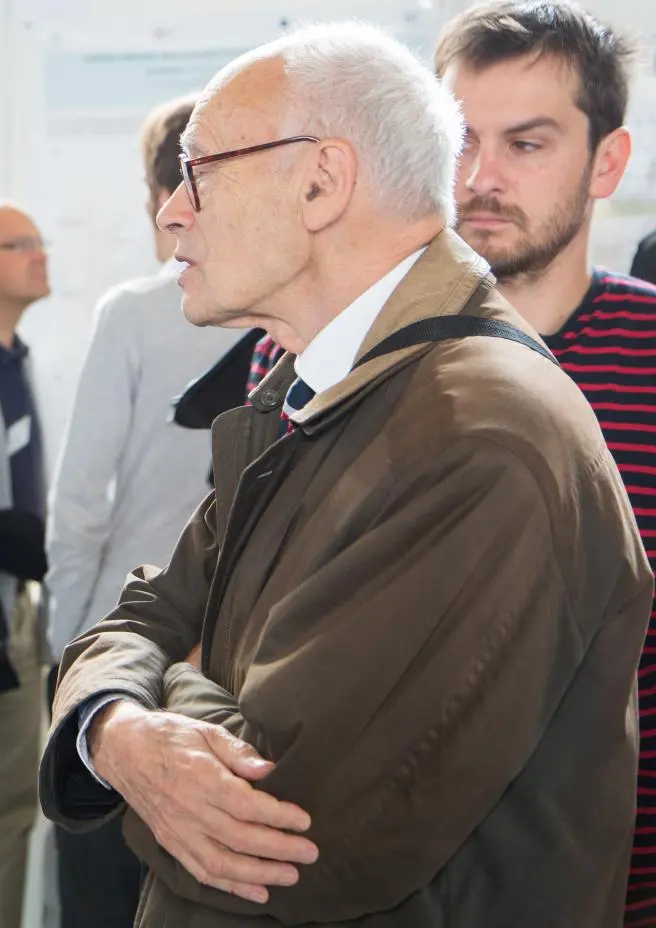
Henri B. Kagan
born 1930 in France
Questioned a rule everyone took for granted, and found that a catalyst can be more one-handed in its effect than in itself.
-
Kenso Soai
born 1950 in Japan
Spent years searching for a molecule that makes copies of itself, and found one that picks a hand all on its own.
Put your hands together, palm to palm. They match. Now try to lay your left hand exactly on top of your right, both palms down. You can’t: the thumbs end up on opposite sides. Your hands are mirror images of each other, and no turning or twisting will make one into the other. A left glove will never fit a right hand properly.
Many molecules are like this too. They come in a left-handed and a right-handed form, made of exactly the same atoms. And living things are fussy: they use only one hand. In 2026 the Nobel Prize in Chemistry went to Henri Kagan and Kenso Soai, who showed how a chemical reaction can come to prefer one hand, and even end up almost entirely one-handed, all by itself.
Molecules with hands
A carbon atom forms four bonds, and they point to the four corners of a tetrahedron, a pyramid with a triangle for its base (Molecules have shapes). If the four things joined to a carbon atom are all different, the molecule can be built in two ways that are mirror images of each other. Like your hands, the two can’t be laid one on top of the other.
Such a molecule is called chiral, from the Greek word for “hand”. Its two mirror forms are called enantiomers. They have the same formula and almost all the same properties: the same melting point, the same boiling point, the same color. That is what makes them so hard to tell apart and to separate.
When can a carbon atom make a molecule “handed” (chiral)?
Pick an answer to see why.
How Pasteur found the hands of molecules
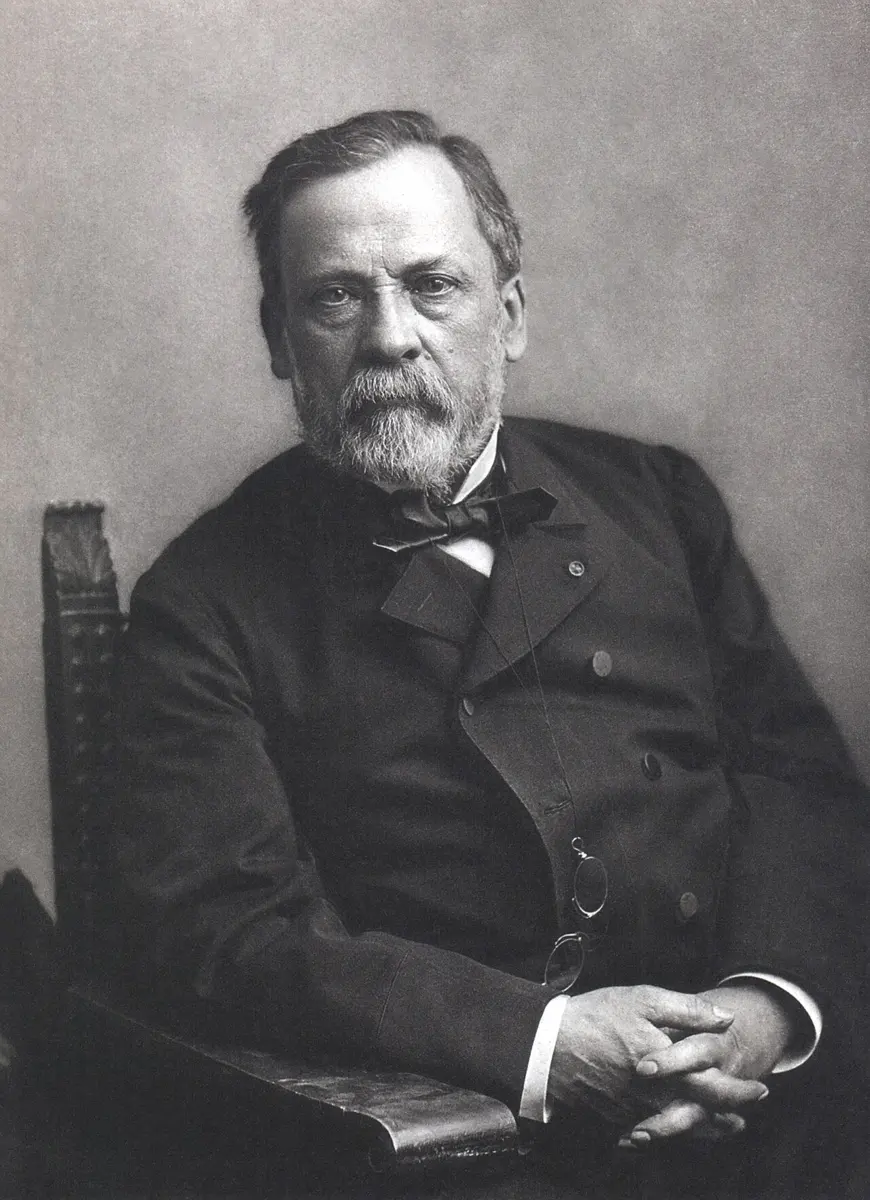
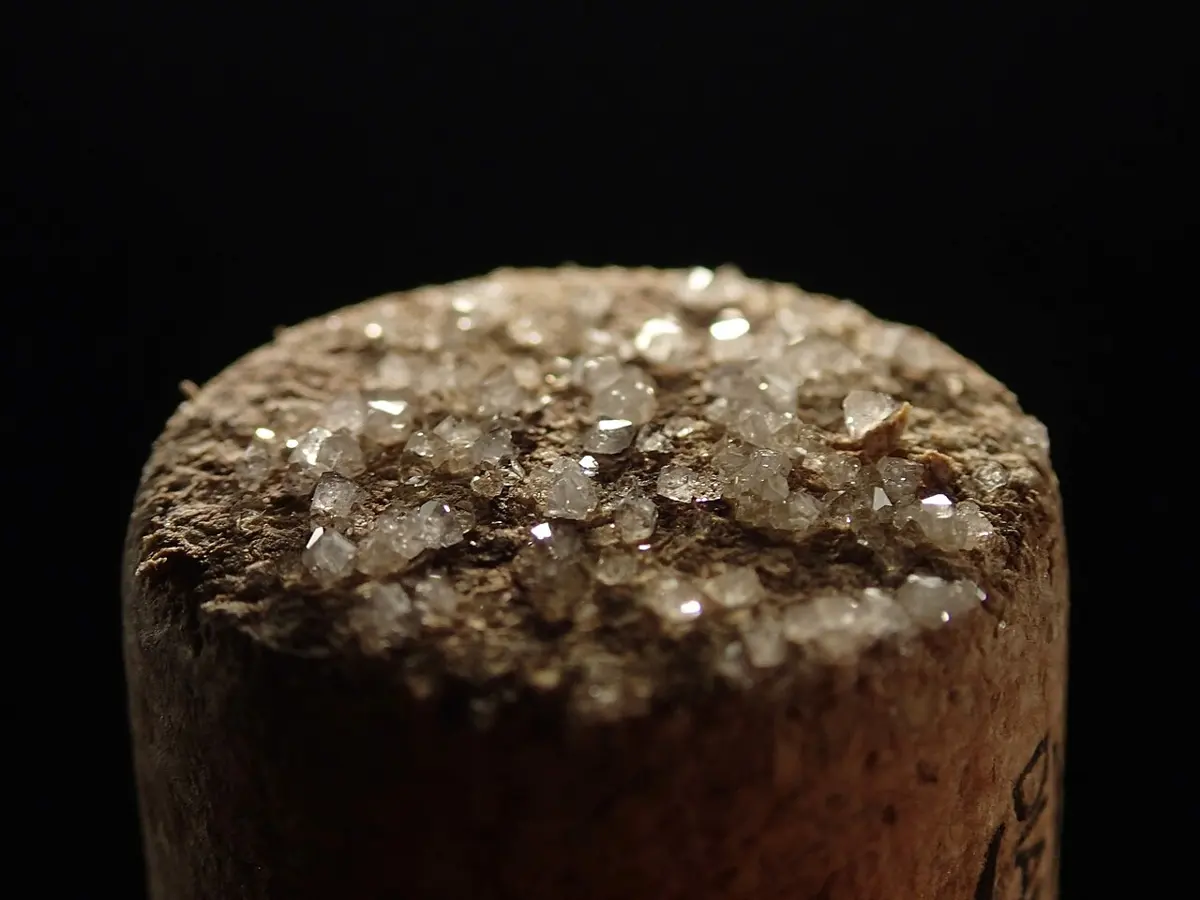
In 1848 the young French chemist Louis Pasteur looked through a microscope at crystals of a salt of tartaric acid, a substance found in grapes and wine. He saw that some crystals had a little sloping face on one side and some had it on the other: mirror-image crystals. With tweezers, he sorted them into two heaps, by hand, and dissolved each heap in water.
He then shone polarized light through each solution: light whose waves all vibrate in one direction, like light through polarizing sunglasses. One solution turned the direction of vibration to the right, the other to the left, by the same amount; mixed, they did nothing. The molecules themselves, he realized, must be mirror images.
A few years later Pasteur found that living things could tell them apart: microbes fed on a mixture of the two used up one form and left the other untouched. Life, it seemed, has a hand.
The puzzle: life uses only one hand
All but one of the 20 amino acids that build our proteins are chiral (the exception, glycine, is not), and every protein in every living thing uses only the left-handed forms. The sugar in DNA is chiral too, and DNA uses only the right-handed form Grade 10: DNA. Scientists call this homochirality: “same hand”.
This matters because the body works by fitting. An enzyme or a receptor in a cell is itself made of one-handed amino acids, so it has a one-handed pocket, like a glove. Only the matching hand of a molecule fits properly (Medicines shaped to fit).
But when chemists made chiral molecules in a flask from simple starting materials, they always got exactly half of each hand: nothing in the flask prefers left to right. So two questions puzzled chemists for more than a century:
- How did life end up one-handed? If the first building blocks were made by ordinary chemistry, they should have been half and half.
- How can a chemist make just one hand? For medicines, this was a practical problem.
Why it was so hard
To make more of one hand, chemists use a catalyst that is itself one-handed: a chiral catalyst Grade 10: Catalyst. In the early 1900s a German chemist, Willy Marckwald, was the first to get a little more of one hand than the other this way. The difference was tiny, but it showed it was possible. Later chemists made such catalysts very good, and won the Nobel Prizes of 2001 and 2021 for it.
But the catalyst’s own hand had to come from somewhere, usually a natural one-handed molecule. And everyone believed a simple rule: the product can be no more one-handed than the catalyst. A 50–50 catalyst gives a 50–50 product; plot one against the other, and you should get a straight line.
In 1953 a British physicist, Charles Frank, worked out on paper how a chemical system could end up one-handed by itself. It needed three things:
- a chiral catalyst that makes more of one hand;
- some way for the two hands to hold each other back;
- autocatalysis: the product must be the catalyst for its own reaction, so each new molecule helps make more molecules of its own hand.
Then a small head start for one hand would snowball. Frank ended his paper: “A laboratory demonstration may not be impossible.” For more than forty years, nobody managed it.
What they did, step by step
Henri Kagan: the curve that should have been straight (1986)
Henri Kagan, born in 1930, worked at the Université Paris-Sud, near Paris. He was one of many chemists making chiral catalysts in the early 1980s. Many of these catalysts are built from a metal atom (the part that does the chemistry) holding one-handed molecules around it (the part that gives it a hand).
- A question nobody asked. Kagan wondered what really happens around the metal. A metal atom usually holds more than one of those one-handed molecules. If it holds two, and both hands are in the flask, there are three kinds of catalyst: left–left, right–right, and left–right.
- The odd one out. Left–left and right–right are mirror images, and work equally well, each making its own hand. But the mixed left–right catalyst is a different thing altogether: it need not behave like either.
- The test (1986). Kagan ran reactions with catalysts made from different mixtures of the two hands, and plotted his results. The line was not straight. In one reaction, the product came out more one-handed than the catalyst, something everyone had thought impossible. He described this non-linear effect in three different reactions.
- The reason. The mixed left–right catalyst worked far more slowly. So it quietly took one left and one right molecule out of action, in equal numbers. What was left over, working fast, was mostly the hand that had been in excess. The two hands were holding each other back: Frank’s second condition.
Kenso Soai: a molecule that copies its own hand (1990–2003)
Kenso Soai, born in 1950 in Hiroshima, worked at the Tokyo University of Science. He studied reactions that add a zinc compound to a molecule called an aldehyde, making an alcohol that is chiral. He noticed that the alcohol formed looked a lot like the catalysts used to make it. Could the product be its own catalyst?
- A first try (1990). He found such a reaction: the product did catalyze its own formation, keeping its own hand. But each round the product came out less one-handed than the catalyst he started with. The hand faded.
- Searching (1990–1995). He tried molecule after molecule, until he found one, an alcohol built on a ring called pyrimidine, for which it worked the other way.
- Amplification (1995). He started with an alcohol that was only slightly more one hand than the other (an excess of 5 %). He used it as the catalyst; the new alcohol came out with an excess of 55 %. He used that as the catalyst for the next round: 87 %. After a few rounds it reached about 90 %. All three of Frank’s conditions were met at last. This is now called the Soai reaction.
- From almost nothing. Later his team started with a catalyst whose excess was only 0.00005 %: about 2,000,001 molecules of one hand for every 1,999,999 of the other. After three rounds, the product was more than 99.5 % one hand.
In the Soai reaction, why does a tiny head start for one hand grow into a big one?
Pick an answer to see why.
A hand from nowhere (2003)
The last test was the hardest. What if you start with no chiral catalyst at all, from molecules that have no hand? In 2003 Soai’s team, and independently the American chemist Daniel Singleton, did exactly that.
Even in a perfectly balanced mixture, chance means that at some moment there are a few more molecules of one hand than the other, just as ten tosses of a coin seldom give exactly five heads. The Soai reaction is so sensitive that it picks up this tiny, random lead and amplifies it. In Soai’s 37 experiments, 18 came out left-handed and 19 right-handed, with the winning hand ahead by between 15 % and 91 %. Which hand won was chance, but one hand always won. Apart from life itself, no one had ever seen a chemical system choose a hand by itself.
Soai’s team also found that almost anything with a hand can tip the balance: a left- or right-handed quartz crystal, or circularly polarized light (light whose vibration turns like a corkscrew). A tiny push decides which hand takes over the whole flask.
How it is used now
- Better medicines. One-handed medicines, flavors, scents and farm chemicals are made with chiral catalysts. Kagan’s non-linear effects are now a standard tool: whether a reaction’s curve is straight or bent tells chemists how its catalyst really works, and helps them improve it.
- Clues to the origin of life. The Soai reaction does not use the molecules of life, and it does not work in water, so it is not how life got its hand. What it proves is that a one-handed world can arise from a balanced start through ordinary chemistry. Chemists around the world are now looking for reactions like it with amino acids and sugars.
In your life today
- Medicine packets. The names of some medicines sold in Nepal’s pharmacies tell you their hand. Levocetirizine, for allergies, is just one hand of the older medicine cetirizine (“levo” means it turns polarized light to the left). Esomeprazole, for stomach acid, is one hand of omeprazole (the “S” form, written “es”). One-handed versions can work with a smaller dose.
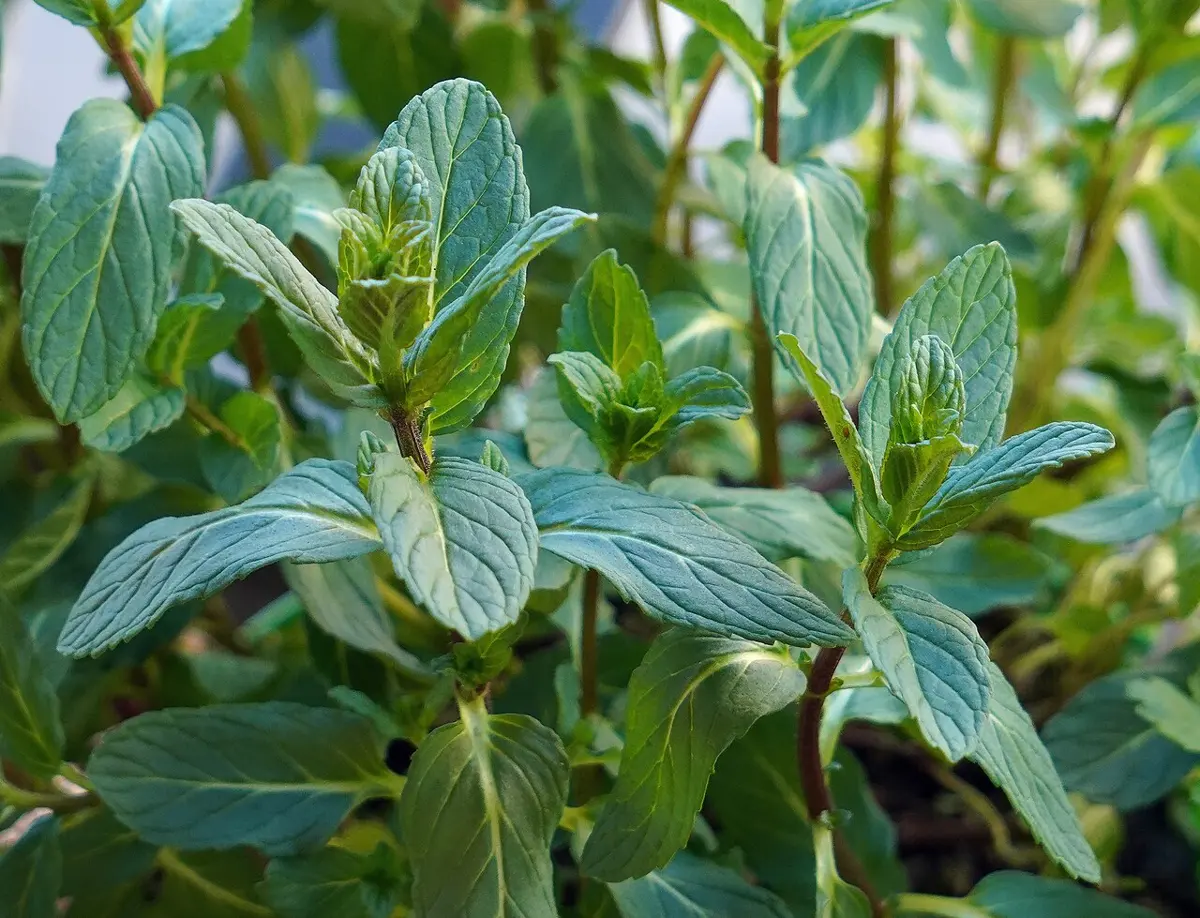
- Mint and caraway. Much of the smell of spearmint, a common kind of pudina, comes from a molecule called carvone, in one hand. Its mirror twin smells of caraway seeds. Your nose, built from one-handed proteins, can tell the two hands apart.
What came next
- Chemists are searching for an autocatalytic reaction, like Soai’s, that works with amino acids or sugars in water, as life’s chemistry does.
- Some amino acids found in meteorites, rocks from space, have a small excess of the left hand. Could the hand of life have started in space, with a tiny push that was then amplified on Earth? As of October 2026, no one knows.
In your science books
- Grade 9: organic compounds and catenation (why carbon makes so many molecules).
- Grade 10: what an organic compound is, catalysts and DNA.
- Going further: molecules have shapes (the tetrahedron), isomers, amino acids, catalysts and medicines shaped to fit.
Learn more
- The Nobel Prize’s own explanation: They solved chemistry’s asymmetric mystery (nobelprize.org).
The official reason
The prize was given “for the discovery of non-linear effects and autocatalysis in asymmetric organic synthesis.”