
Evolution in a test tube
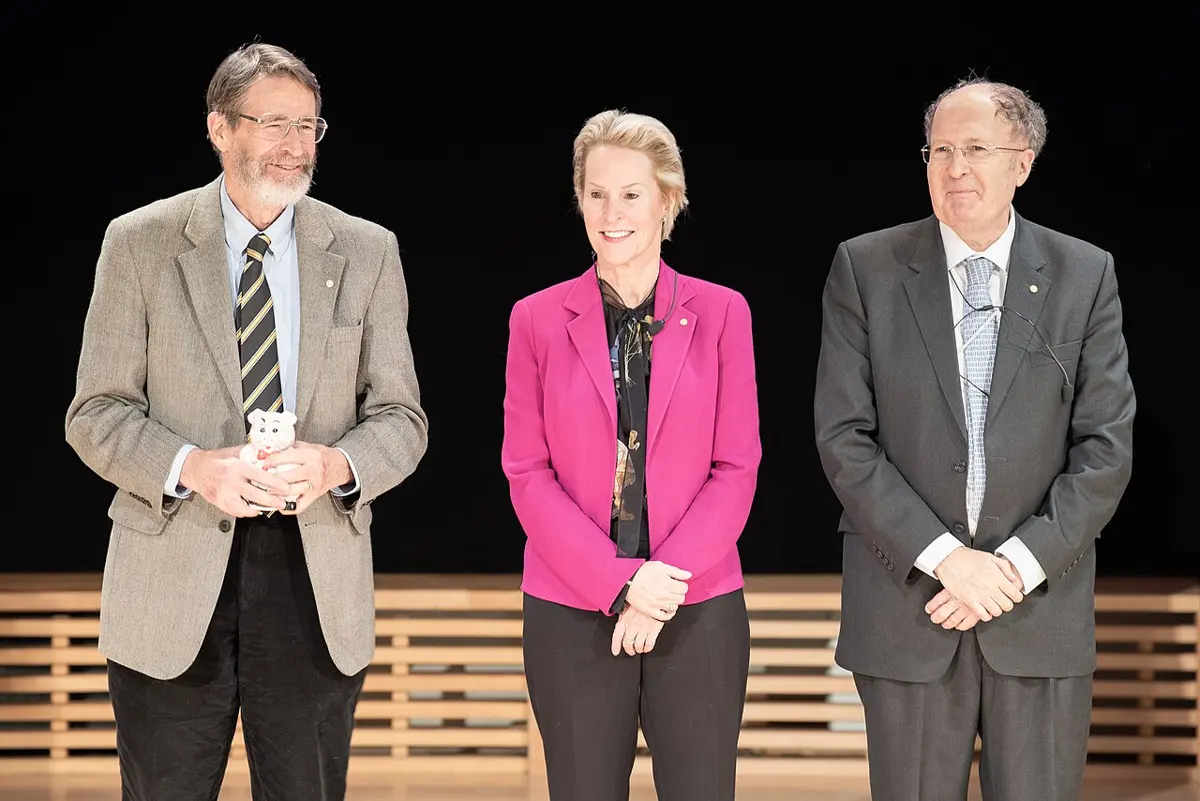
Nobel Prize in Chemistry, 2018: Frances H. Arnold, George P. Smith, and Gregory P. Winter
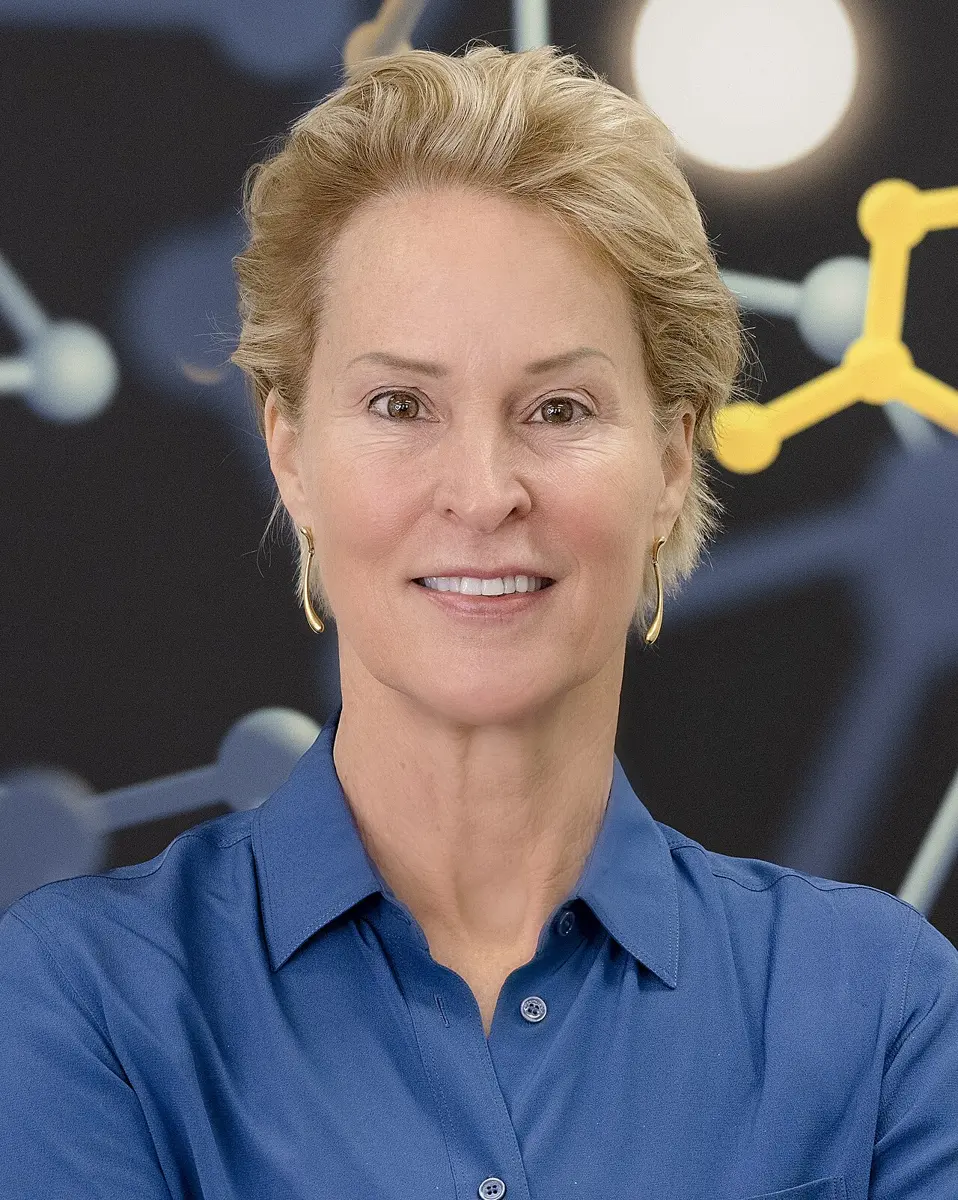
Frances H. Arnold
born 1956 in the United States
Trained as an engineer, she stopped trying to design enzymes and let evolution do it instead.
Photo: Christopher Michel, CC BY-SA 4.0

George P. Smith
born 1941 in the United States
Found a way to tie a protein to its own gene, using a virus that infects bacteria.
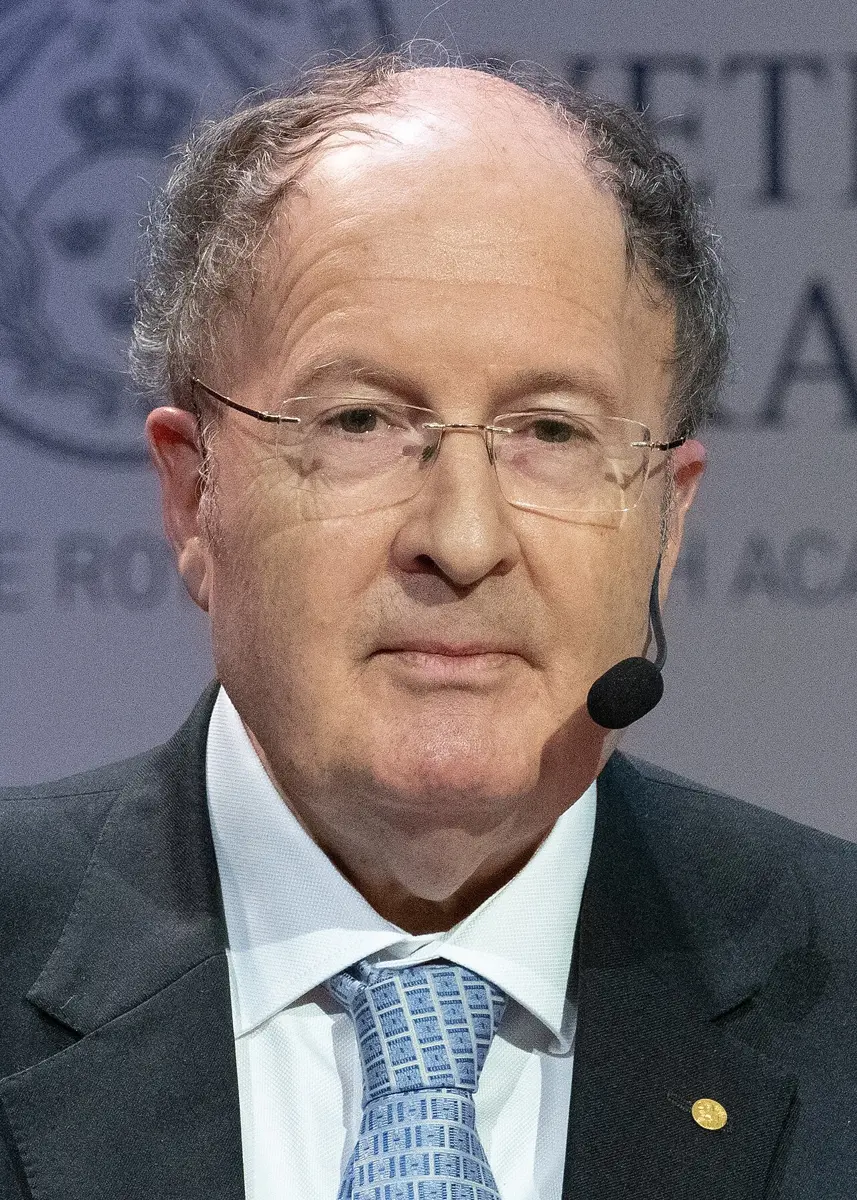
Gregory P. Winter
born 1951 in the United Kingdom
Used Smith’s method to make human antibodies in the laboratory, the start of a new kind of medicine.
Farmers in Nepal have improved their crops for thousands of years without knowing anything about genes. They kept the seed of the best rice plants, sowed it, kept the seed of the best again, and over many years the rice got better. This is selective breeding, and it works because no two plants are quite the same.
Nature does the same thing on its own, much more slowly: that is evolution. In 2018 the Nobel Prize in Chemistry went to three scientists who brought evolution into the laboratory and made it work in weeks instead of millions of years. Frances Arnold used it to make better enzymes. George Smith and Gregory Winter used it to make antibodies that work as medicines.
The problem: tools that nature made for other jobs
Every living thing is full of proteins. A protein is a long chain of small building blocks called amino acids. There are 20 kinds of amino acid, and a protein may have hundreds of them in a row. The chain folds up into a particular 3D shape, and the shape decides what the protein can do. The order of the amino acids is written in the protein’s gene, a stretch of DNA Grade 10: DNA.
Two kinds of protein matter in this story:
- Enzymes are proteins that speed up chemical reactions inside living things. They are catalysts: they make a reaction go faster without being used up Grade 10: Catalyst. The enzymes in your saliva start breaking down the starch in your rice while you chew.
- Antibodies are Y-shaped proteins made by white blood cells. The tips of the Y grab one particular thing, such as a germ, very tightly, and mark it to be destroyed Grade 10: White blood cells.
Factories that make medicines, plastics and fuels often need strong acids, poisonous solvents and heavy metals. Enzymes do similar chemistry in water, at body temperature, with little waste. And an antibody that grabs one harmful molecule in the body could be a medicine with few side effects. But nature’s proteins were made for nature’s jobs: an enzyme from a bacterium may stop working in a factory’s solvent, and the body won’t make antibodies against whatever a doctor chooses. The proteins had to be changed.
Why it was so hard
Why not simply work out which amino acids to change? Imagine a protein of 300 amino acids. You could change any one of them into any of the 19 others: that is already 5,700 ways to change just one. To change two at once, there are about 16 million ways. And nobody can work out from the order of the amino acids exactly how the chain will fold, or what one small change will do to the shape.
In the 1980s many scientists tried to redesign enzymes by careful reasoning, with little success. Frances Arnold later called it a “somewhat arrogant approach”. Nature never plans: it makes random changes and keeps whatever works.
Why was it so hard to improve an enzyme by planning each change?
Pick an answer to see why.
What they did, step by step
Frances Arnold: directed evolution of enzymes
Frances Arnold was born in Pittsburgh, in the United States, in 1956. She trained as an engineer and first worked on solar energy. In the 1980s she turned to the new science of changing genes, at the California Institute of Technology (Caltech).
- Choosing a job (around 1990). She took an enzyme called subtilisin, which bacteria use to cut up proteins (it breaks down casein, the protein in milk). Normally it works in water. She wanted it to work in a solvent called DMF (dimethylformamide), in which it hardly worked at all.
- Making random changes. Instead of planning the changes, she made random mistakes in the enzyme’s gene: random mutations Grade 9: Mutation. She put the changed genes into bacteria, and the bacteria made thousands of slightly different versions of subtilisin.
- Testing them all. She tested which versions broke down casein best in a mixture with DMF, and kept the best one. In nature this is natural selection: the fittest survive Grade 9: Natural selection. In the laboratory the scientist decides what “fittest” means.
- Again, and again (1993). She made random changes in the winner’s gene, tested again, and kept the new winner. After three rounds she had a subtilisin that worked 256 times better in DMF than the natural enzyme. It had ten changes in its chain, and no one could have worked out in advance that this combination would help.
This cycle, change at random, test, keep the best, repeat, is called directed evolution. It is selective breeding for molecules: the scientist plays the farmer, and the bacteria grow the crop.
In 1994 a Dutch scientist, Willem Stemmer, added one more trick from nature: mixing. Just as a child gets some genes from each parent, he cut several good versions of a gene into pieces and joined them into new mixtures. This DNA shuffling combines the good changes of different winners. (Stemmer died in 2013; the prize is never given after death.)
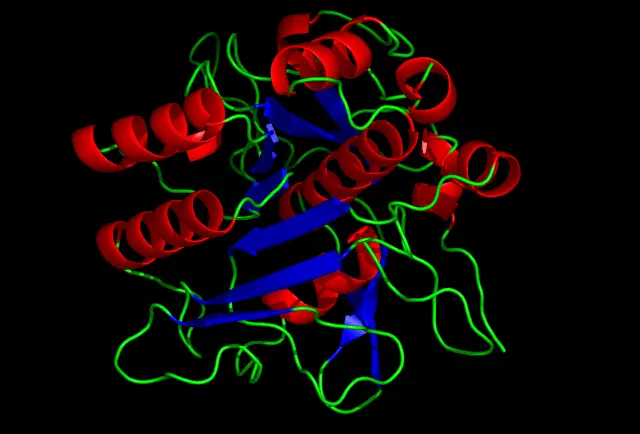
George Smith: phage display (1985)
George Smith was born in 1941 in Norwalk, in the United States, and worked at the University of Missouri. He studied bacteriophages (phages for short): viruses that infect bacteria. A phage is simple. It is a small piece of genetic material wrapped in a coat of proteins Grade 8: Virus. It injects its genes into a bacterium, and the bacterium is forced to make new phages.
Smith used a thread-shaped phage that infects the gut bacterium E. coli. His idea was this:
- Join a gene to the phage’s coat gene. Put a piece of some other gene into the gene for one of the phage’s coat proteins.
- The new protein ends up on the outside. When the bacterium makes new phages, the extra piece of protein sits on the phage’s surface, as part of its coat, while its gene sits inside the same phage.
- Fish it out. Use something that sticks to that protein, an antibody, as a bait, to catch the phages that carry it.
In 1985 he showed that it worked: he put a short piece of protein (a peptide) on a phage, and used an antibody to fish that phage out of a mixture of many others. This is phage display: catch the protein on the outside, and you have caught its gene inside too.
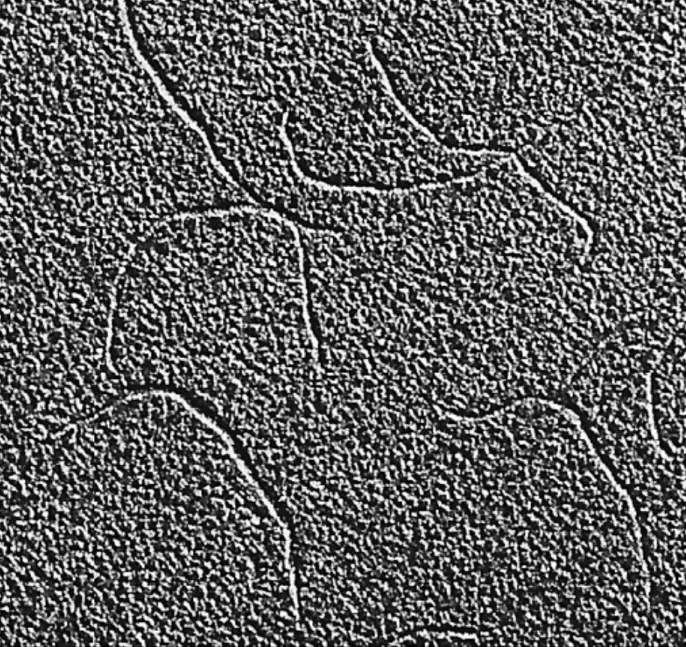
Gregory Winter: antibodies from phages (1990 onwards)
Gregory Winter was born in 1951 in Leicester, in the United Kingdom, and worked at the Laboratory of Molecular Biology in Cambridge.
In the 1970s scientists learned to make antibodies in mice: inject the mouse with the target, and collect the antibodies it makes. But a human body treats a mouse antibody as foreign and attacks it, which destroys the medicine and can cause side effects. Winter wanted human antibodies, made without animals.
- Antibodies on phages (1990). Winter took the genes for just the tips of an antibody, the part that grabs, and joined them to a phage’s coat gene, as Smith had done with peptides. The antibody tips appeared on the phages’ surface. To test it, he fished one phage carrying a known antibody out of a mixture of about four million other phages.
- A library of billions. He then built a library: billions of phages, each carrying a different human antibody tip. To find an antibody against any target, you fish in the library with the target as bait, and keep the phages that stick.
- Evolve the winners. He made random changes in the genes of the best antibodies, built a new library from them, and fished again, for antibodies that grip even more tightly: directed evolution again. In 1994 his team used it to make antibodies that stick very precisely to cancer cells.
In phage display, why does it matter that each phage carries the gene for the protein on its surface?
Pick an answer to see why.
The first medicine: adalimumab
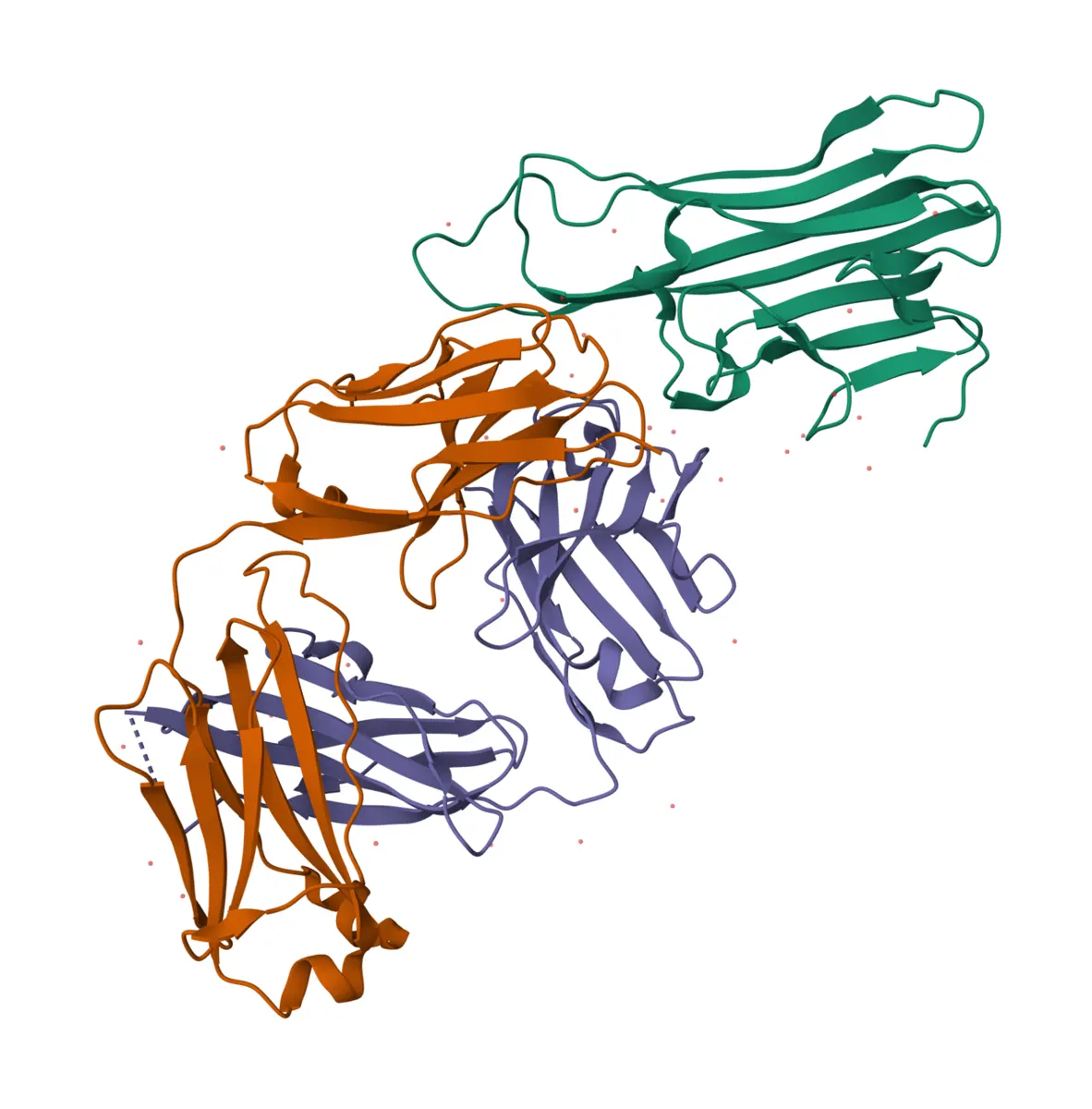
Winter and his colleagues started a company, Cambridge Antibody Technology. In the 1990s, working with the German company BASF, they found a fully human antibody against TNF-alpha, one of the body’s alarm signals: it switches on inflammation (swelling, redness, heat and pain). In autoimmune diseases the body keeps sounding this alarm against itself, and the inflammation slowly damages the joints, skin or gut.
The antibody, adalimumab, grabs TNF-alpha and stops it working. In December 2002 it was approved in the United States for rheumatoid arthritis, a disease that inflames the joints of the hands and feet. It was the first medicine made entirely from a human antibody. It is now also used for psoriasis (patches of thick, red skin) and inflammatory diseases of the gut. For years it was one of the best-selling medicines in the world.
In your life today
- Medicines made with enzymes. Sitagliptin, a medicine for diabetes Grade 10: Diabetes, used to be made with a catalyst containing the rare metal rhodium. In 2010 chemists at Merck and Codexis described an evolved enzyme, with 27 changes, that does the same step with less waste and no heavy metal.
- Washing powder. Many washing powders contain enzymes (look for “enzymes” or “protease” on the packet) that break down stains of blood, egg and milk. Many of them have been improved by protein engineering, directed evolution among it, to survive soap and bleach.
- Antibody medicines. Phage display has given medicines against cancer (one kind frees the body’s own killer cells to attack a tumor), against the poison of anthrax bacteria, and against lupus, an autoimmune disease. They are given by injection and are expensive, but cheaper copies (biosimilars) of adalimumab are now made by many companies, including in India.
- Chemistry that nature never did. In 2016 Arnold’s team evolved an enzyme that joins carbon to silicon, a bond no living thing was known to make, and her team’s enzymes turn sugars into isobutanol, a fuel for cars and airplanes.
What came next
- Faster evolution. Scientists now let the whole cycle run by itself: bacteria and phages that change and select a protein continuously, going through dozens of rounds in a single day.
- Computers join in. Since about 2020, computer programs, including the AI behind the 2024 Chemistry prize, can suggest which changes are worth trying, so fewer have to be tested. Directed evolution is still used to finish the job, because the computer’s guesses are often not quite right.
In your science books
- Grade 8: viruses (what a phage is) and bacteria.
- Grade 9: mutation, variation and heredity and natural selection: the three steps that directed evolution copies.
- Grade 10: DNA, selective breeding, white blood cells (which make antibodies) and catalysts.
- Going further: how a gene makes a protein, catalysts, and how farmers made our crops.
Learn more
- The Nobel Prize’s own explanation: A (r)evolution in chemistry (nobelprize.org).
- The laureates’ Nobel lectures: Arnold, Smith and Winter.
The official reason
The prize was given “for the directed evolution of enzymes.”
The prize was given “for the phage display of peptides and antibodies.”