
Chemistry inside a computer
Nobel Prize in Chemistry, 2013: Martin Karplus, Michael Levitt, and Arieh Warshel
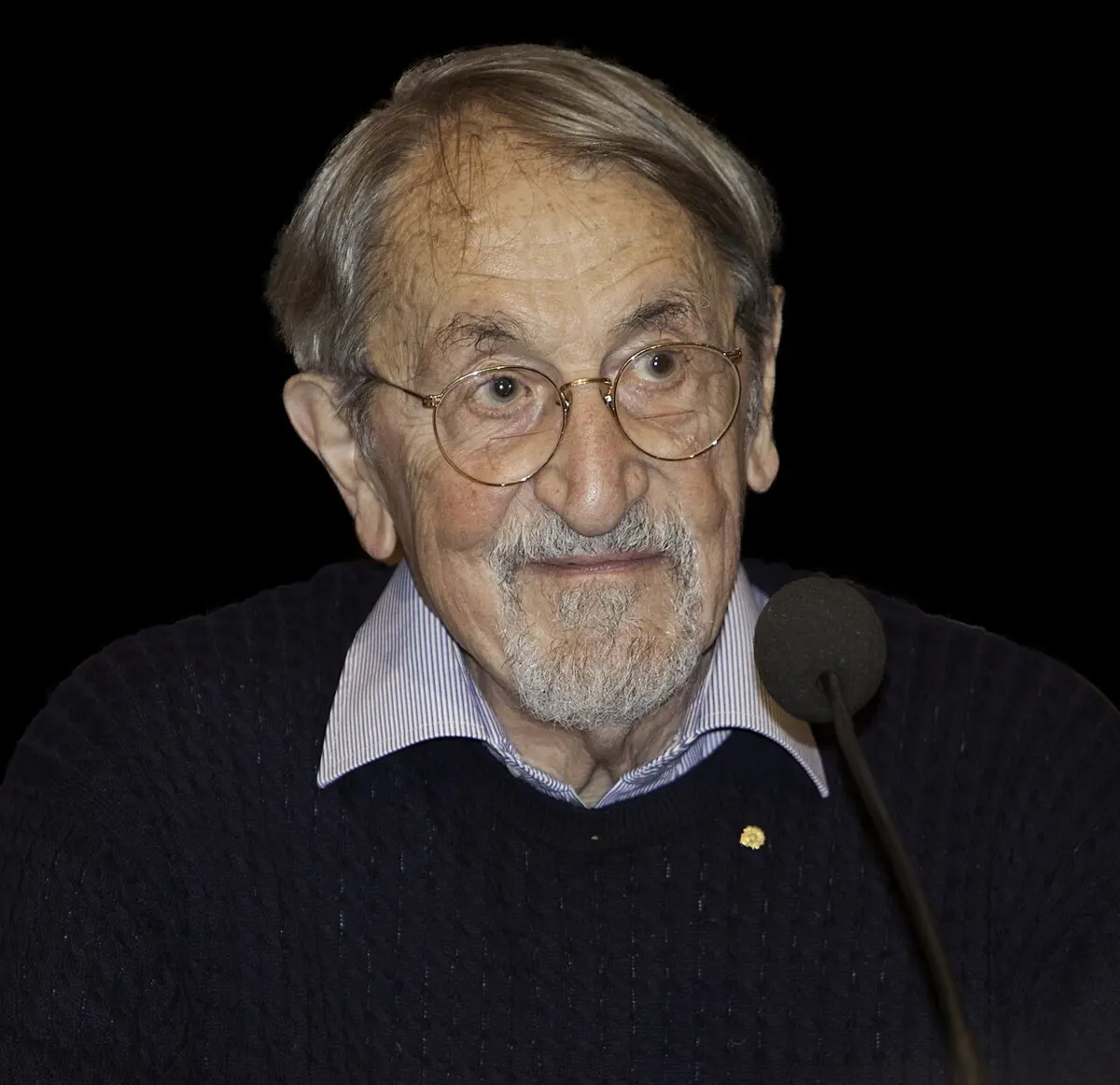
Martin Karplus
1930–2024, born in Austria
At eight he fled Vienna with his family when the Nazis took over Austria, and grew up near Boston.
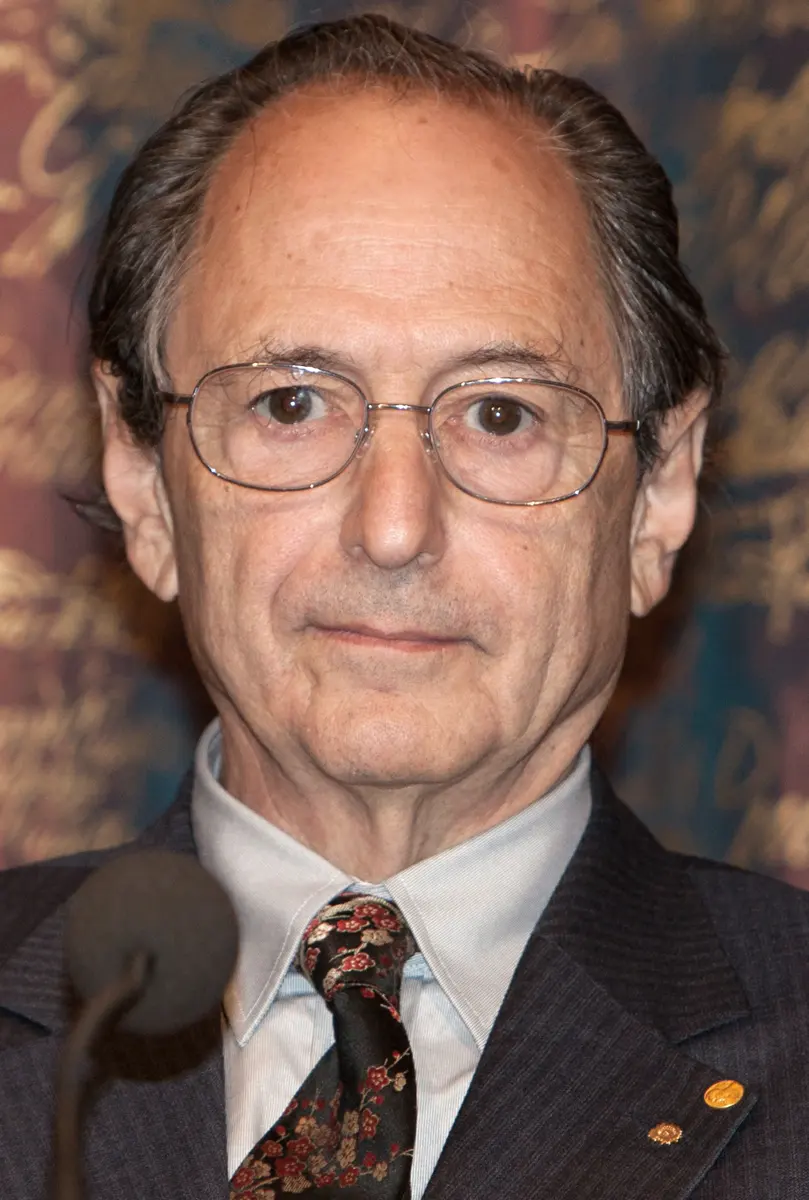
Michael Levitt
born 1947 in South Africa
He raced through his last two years of school in one summer in Pretoria, and moved to London at sixteen. A year in Israel, in 1967, set his course.
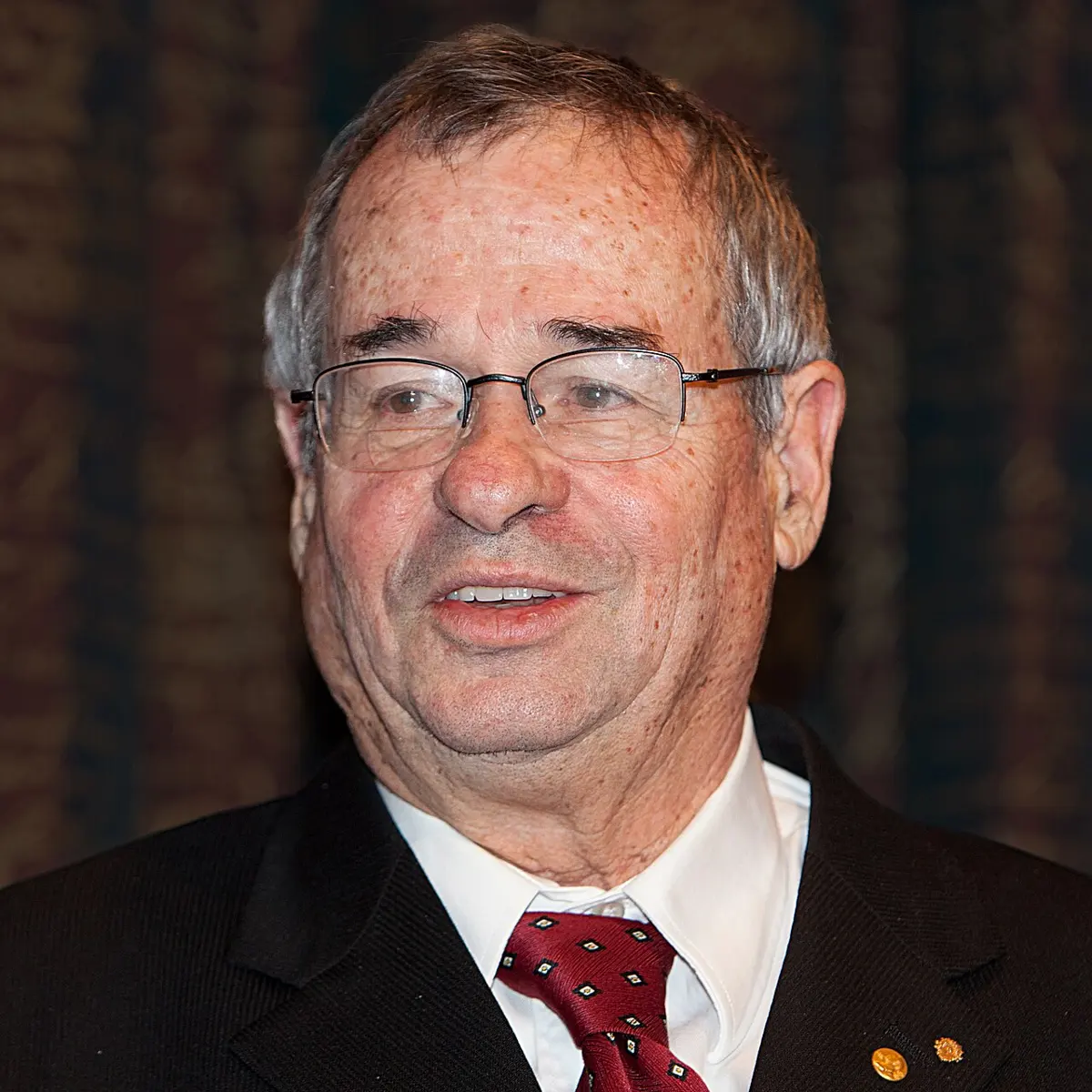
Arieh Warshel
born 1940 in Israel
He grew up on a kibbutz, a farming village where children slept together in a “kids’ house”, and served as an army officer before studying chemistry.
Photo: Bengt Nyman, CC BY 2.0
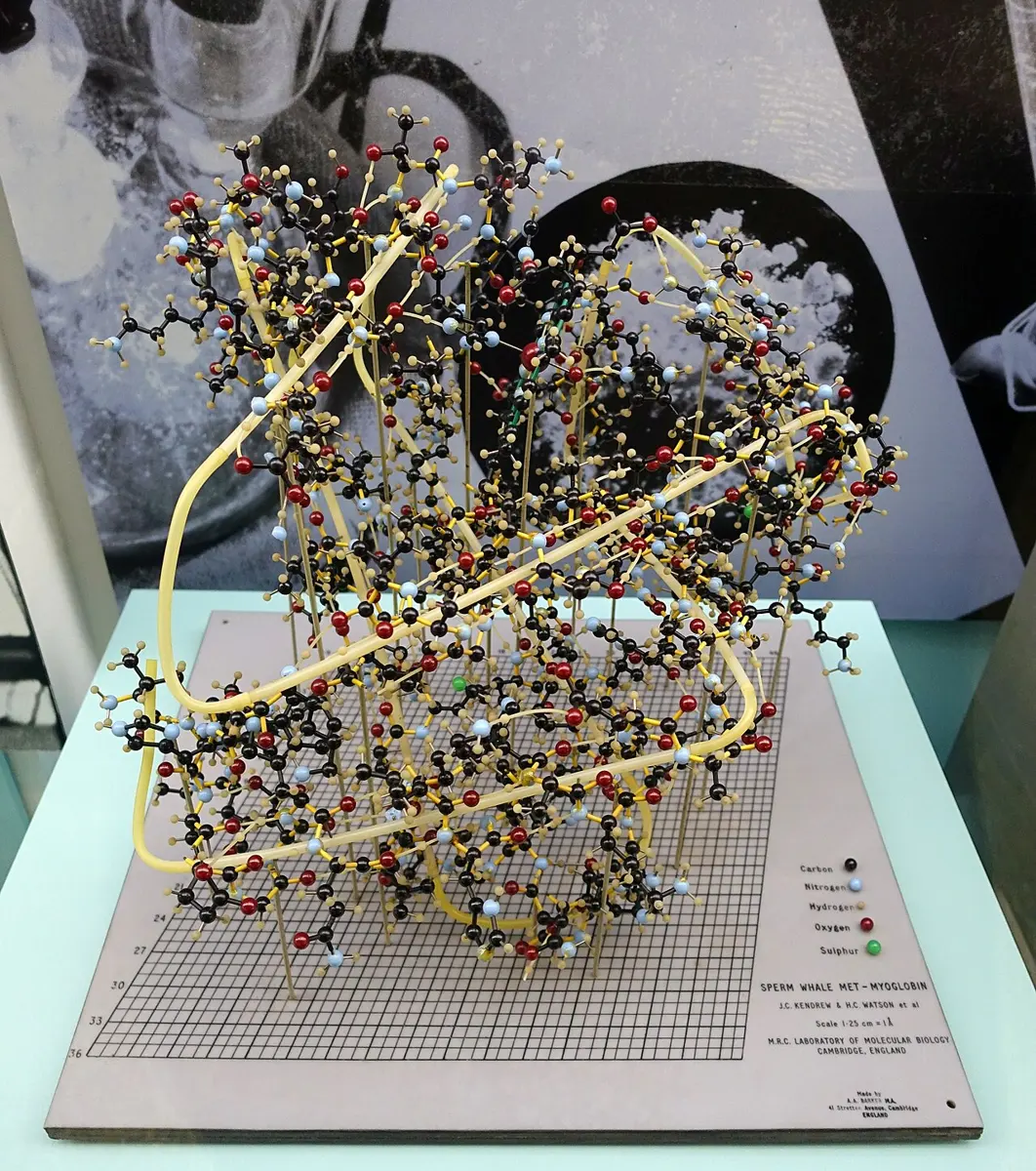
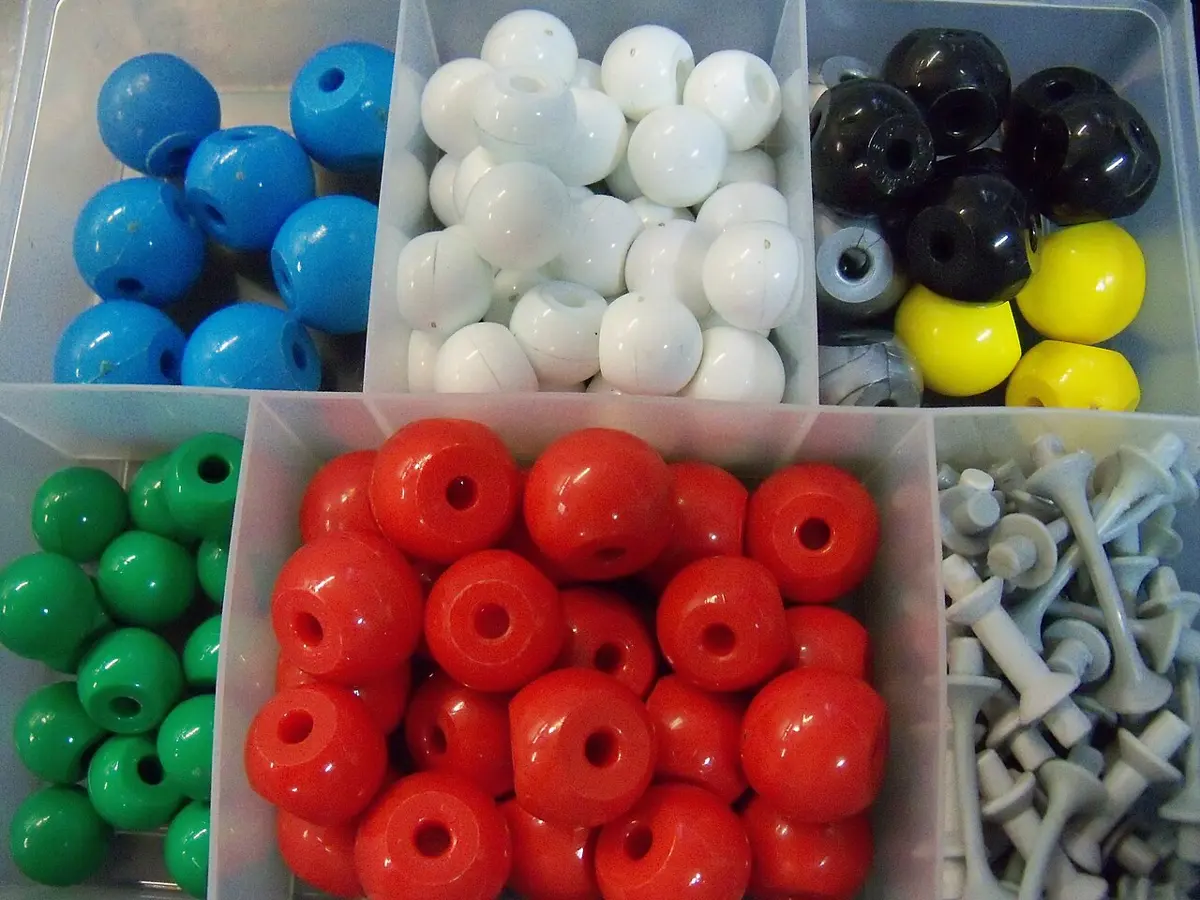
In your chemistry class you may have built a molecule out of balls and sticks: a red ball for oxygen, two white ones for hydrogen, and you have water. Such a model shows where the atoms are. But it can’t show a chemical reaction, when bonds break and new ones form.
Today chemists do much of this on computers. Before they mix anything in a test tube, they let a computer work out how the atoms will move, and which bonds will break. In 2013 the Nobel Prize in Chemistry went to three scientists who, in the 1970s, built the methods that made this possible.
The problem: reactions you can’t watch
Chemists want to know how a reaction happens, step by step: which atom moves first, which bond breaks, which new one forms. That is hard to see.
- It is too small. Atoms are far too small to watch, even with the best microscope that uses light.
- It is too fast. Electrons jump from one atom to another in a tiny fraction of a millisecond. Most experiments can only see what you start with and what you end with.
- The molecules of life are huge. Many reactions in your body are helped along by enzymes: proteins that speed up chemical reactions without being used up, just as a catalyst does in a laboratory Grade 10: Catalyst. The enzyme in your saliva that starts breaking down the starch in rice is one. An enzyme is made of thousands of atoms, and it sits in water, which adds thousands more.
Pictures of an enzyme taken with X-rays show where its atoms are, but they are like a photograph: frozen, at rest. They don’t show what the atoms do during the reaction.
Two kinds of physics
To put a molecule into a computer, you need rules for how its atoms push and pull on each other. In the 1960s there were two kinds of rules, and each had a big weakness.
Newton’s way: balls and springs
The first way uses the classical physics of Isaac Newton, the same laws of force and motion you use for a ball or a bus. Each atom is treated as a ball, and each bond as a spring that can stretch and bend. Push two atoms too close and the spring pushes back; pull them apart and it pulls them together.
This is simple, so a computer can do it quickly, even for a molecule with thousands of atoms. But the model has no electrons, and chemical bonds are made of shared electrons Grade 9: Covalent bond. In a ball-and-spring model a bond can never break, and so there can be no chemical reaction.
The quantum way: electrons as clouds
The second way uses quantum physics, the physics of the very small. It works out where the electrons are likely to be: not as tiny dots going round in circles, but spread out around the atoms like clouds. A bond is a cloud of electrons shared between two atoms. When the clouds shift, bonds break and new ones form. So quantum physics can follow a reaction.
The trouble is the amount of work. The computer has to deal with every electron and every nucleus, and the work grows very fast as the molecule gets bigger. In the 1970s, quantum calculations could only be done for small molecules, without the water around them, even though most real reactions happen in water.
Why couldn’t a ball-and-spring model of a molecule show a chemical reaction?
Pick an answer to see why.
Why it was hard
The obvious idea is to use both: quantum physics for the part of the molecule where the reaction happens, and balls and springs for the rest. But the two kinds of physics describe atoms in completely different ways. Where they meet, at the edge between the quantum part and the ball-and-spring part, the two descriptions have to fit together, and the atoms on each side still pull on each other. Getting this right, without the computer going wrong at the join, took years.
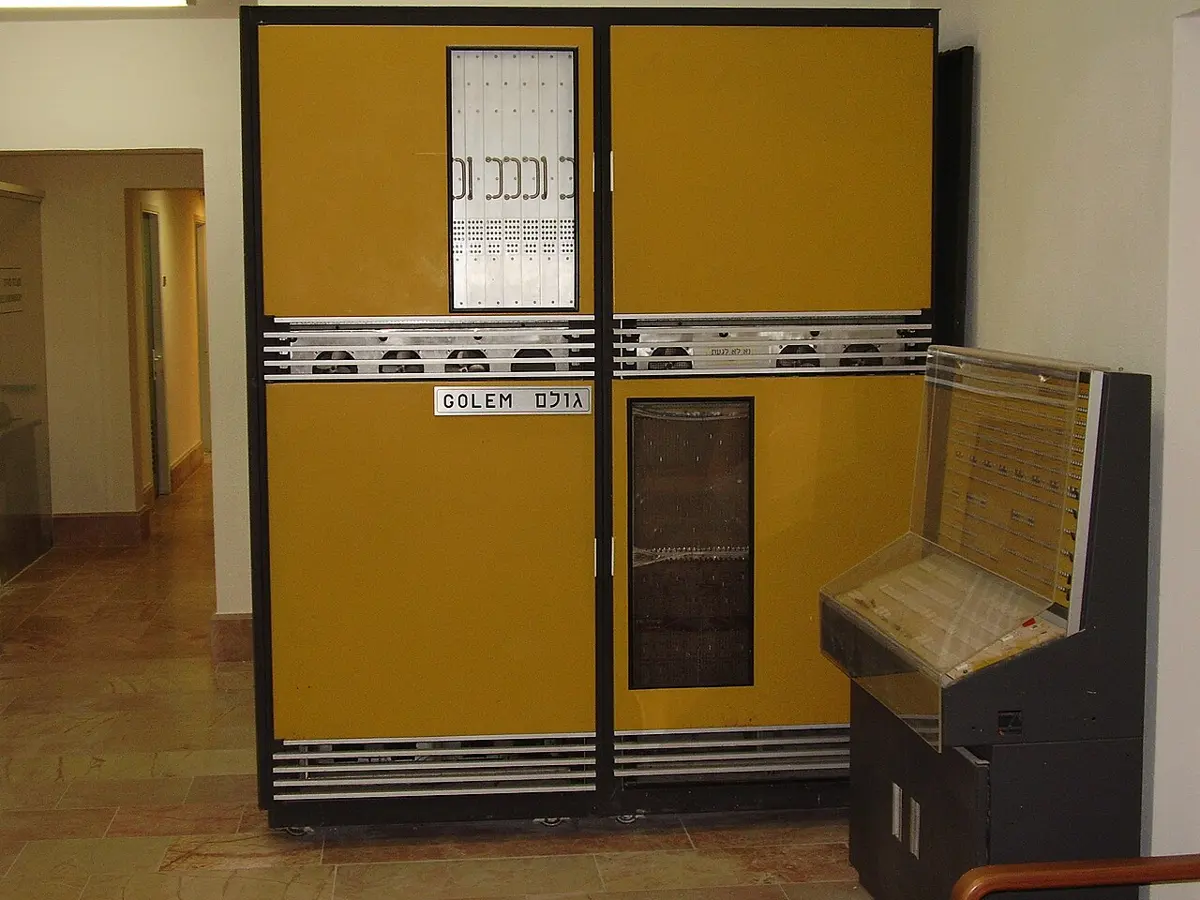
The computers were also very slow. At the Weizmann Institute of Science in Israel, where the story starts, the computer was called Golem, after a creature of clay from Jewish folk tales, and it was far less powerful than a phone today.
What they did, step by step
Warshel and Levitt: a program for any molecule (1967–1968)
Arieh Warshel was a student at the Weizmann Institute, working with Shneior Lifson. In October 1967 a young student from Britain, Michael Levitt, came to work with them for a year.
- Balls and springs for any molecule. Together, Warshel and Levitt wrote a classical computer program, run on Golem, that could take any molecule, even a large protein, and work out the most comfortable positions for its atoms. It also worked out how the atoms vibrate.
- Then they went separate ways. Levitt went to Cambridge, in England, to study proteins for his doctorate. Warshel finished his doctorate in Israel.
Karplus and Warshel: half quantum, half classical (1970–1972)
Martin Karplus, at Harvard University near Boston, was an expert in quantum physics. He had long wondered about a molecule in your eye called retinal. When light falls on retinal, the molecule changes shape, and that is the very first step of seeing.
- 1970. Warshel joined Karplus at Harvard, bringing his classical program with him.
- Splitting the electrons. In a molecule like retinal, some electrons are free to move along a chain of atoms. It is these electrons that soak up light. Karplus and Warshel wrote a program that used quantum physics for those free electrons and classical physics for all the other electrons and the nuclei.
- 1972. They published it: the first time classical and quantum physics had been made to work together in a useful chemical model. It had one limit: it only worked for molecules with a mirror symmetry, the same on both sides.
Levitt and Warshel: an enzyme at work (1976)
Warshel and Levitt met again, first in Israel and then in Cambridge. They had a bigger aim: an enzyme reaction.
- Any molecule. They made the join between the quantum part and the classical part work for any molecule, with no need for symmetry.
- The water too. They included the effect of the water and the rest of the enzyme around the reaction site.
- 1976, lysozyme. They published the first computer model of a reaction inside an enzyme. They chose lysozyme, an enzyme found in tears, saliva and egg white, which kills some bacteria by cutting through their walls. The model showed that electric charges in the enzyme steady a short-lived, charged in-between form of the molecule being cut, and that this is what makes the reaction go faster.
- Fewer atoms where it doesn’t matter. In 1975 Levitt and Warshel had also shown that, far from the action, a group of atoms can be treated as one bigger ball. With far fewer balls to move, the computer could even try to follow a whole protein chain folding up.
Karplus: proteins that wobble (1977)
- 1977. With his team, Karplus used Newton’s laws to follow every atom of a small protein as it moved, a tiny step at a time. This is called a simulation.
- A surprise. The protein was not a stiff, frozen object, like in its X-ray picture. Its atoms were always jiggling and wobbling, and that movement turns out to matter for how proteins work.
- Not in the citation. Karplus counted these simulations among his most important work, and in the life story he wrote for the Nobel Foundation he said he found it curious that the committee’s background did not mention them. Today they are one of the main uses of the prize-winning methods.
How it works now
Today’s computer models of large molecules are built the way the laureates showed, in layers, putting the hard work only where it is needed. That is what the prize calls multiscale models.
- The heart of the action. The few dozen atoms where the reaction happens get quantum physics, so the computer can follow their electrons as bonds break and form.
- The rest of the protein. Thousands of atoms around them get balls and springs. They still matter: they hold the reacting molecule in place and push and pull on it.
- Far away. The water and anything else far away can be treated as a smooth background, or atoms can be grouped into bigger balls.
The computer then moves every atom a tiny step forward in time, works out the new forces, and moves them again. Each step is about a femtosecond, a millionth of a billionth of a second, because atoms vibrate so fast. Millions of steps make a short film of the molecule at work.
The test is always an experiment. When a simulation says that changing one part of an enzyme will make it slower, chemists make that change in the lab and check. The computer and the test tube now work together.
In a multiscale model of an enzyme, which part is worked out with quantum physics?
Pick an answer to see why.
In your life today
- Medicines. Most medicines work by fitting into a protein in the body, like a key in a lock. Chemists use computer models to see how a possible medicine fits and holds on, before they spend months making it.
- Cleaner cars and factories. The catalytic converter in a car’s exhaust uses metal catalysts to turn poisonous gases into less harmful ones. Computer models help chemists understand and improve catalysts like these.
- Solar energy. Plants split water using sunlight in photosynthesis. Chemists are trying to copy this to make fuel from sunlight, and computer models help them work out the steps, which happen far too fast to watch.
- Proteins of all kinds. The same methods are used to study how proteins fold, how enzymes work, and how a change in one gene can make a protein go wrong.
What came next
- Bigger and faster. Computers today are millions of times more powerful than Golem. Simulations now follow systems with millions of atoms, such as a whole virus shell.
- Proteins from their sequence. In 2024 the Nobel Prize in Chemistry went to work on predicting the shape of a protein from its chain of amino acids, using computers and artificial intelligence (the 2024 prize). It built on decades of computer models like these.
- A living cell in a computer? Michael Levitt has written of a dream: to simulate a whole living organism, atom by atom. A single cell has many billions of atoms, all moving and reacting. Whether we will ever manage that, nobody knows.
In your science books
- Grade 9: covalent bonds, bonds made of shared electrons, and the chemical bond.
- Grade 10: the rate of a chemical reaction and catalysts.
- Going Further: catalysts lower the hill and a protein chain that folds.
Learn more
- The Nobel Prize’s own explanation: Taking the experiment to cyberspace (nobelprize.org).
- The three Nobel lectures: Karplus, Levitt and Warshel.
The official reason
The prize was given “for the development of multiscale models for complex chemical systems.”