
Surface chemistry: where gas meets metal
Nobel Prize in Chemistry, 2007: Gerhard Ertl
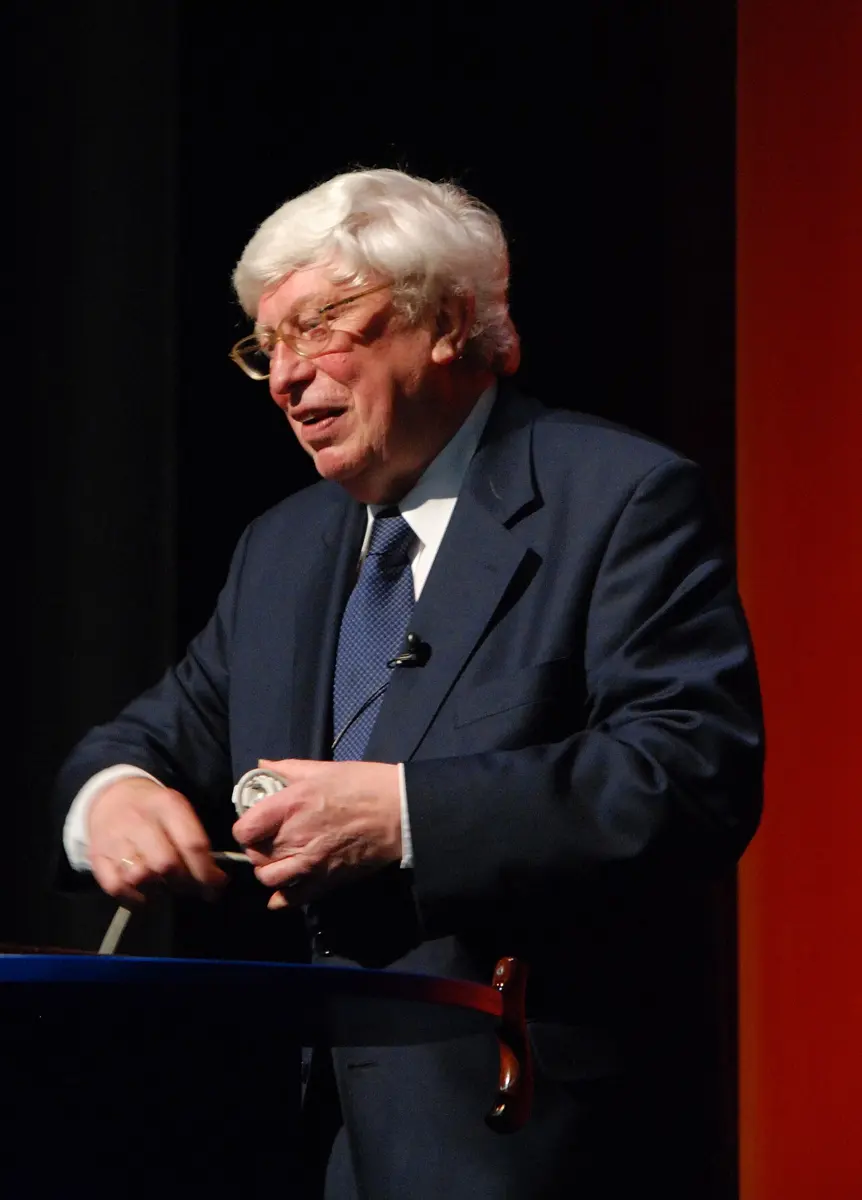
Gerhard Ertl
born 1936 in Bad Cannstatt (Stuttgart), Germany
As a boy he did chemistry experiments in his bedroom until the smells and bangs worried his mother. He then took up radios and physics, and played the piano in a band to earn money as a student.
Photo: Prolineserver, CC BY-SA 3.0
Look at an old tin roof, or an iron gate left out in the rain. The rust starts on the surface, where the iron meets the air and the water. Now think of the white urea fertilizer that farmers in Nepal spread on their rice and maize. The nitrogen in it came from the air, and it was joined to hydrogen on the surface of tiny grains of iron in a factory.
Many of the most important reactions in the world do not happen in a test tube full of liquid. They happen on a solid surface, in a layer only one atom thick. For a long time, chemists could not see what went on there. Gerhard Ertl found out how to watch, and in 2007 he won the Nobel Prize in Chemistry. The prize was announced on 10 October 2007, his 71st birthday.
The problem: reactions nobody could see
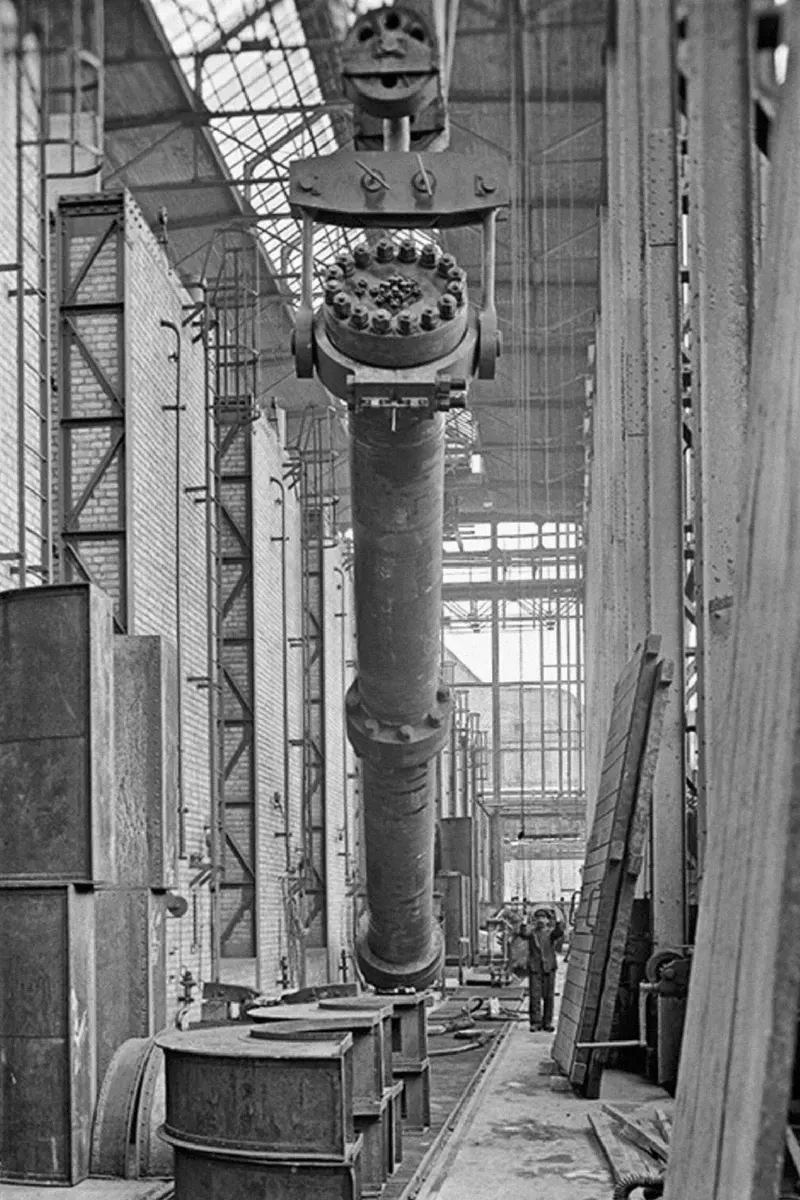
You already know one big example. In 1909 Fritz Haber found how to make nitrogen from the air combine with hydrogen to make ammonia, using high pressure, heat and iron to help. Carl Bosch turned it into a giant factory process, the Haber–Bosch process:
Most of this ammonia becomes fertilizer. Roughly half the people alive today eat food grown with its nitrogen Grade 10: Uses of ammonia.
The iron is a catalyst: a substance that speeds up a reaction without being used up itself Grade 10: Catalyst. Factories had used it for sixty years. But how did it work? What did the nitrogen and hydrogen actually do on the iron? Did the nitrogen molecule break apart first, or did hydrogen attack the whole molecule? Chemists had argued about this for decades, and their experiments could not decide.
The same was true of the catalytic converter in a car’s exhaust pipe, where poisonous carbon monoxide (CO) is turned into carbon dioxide (CO₂) on a surface of platinum. It worked, but nobody could say exactly how.
How a surface helps a reaction
A catalyst like the iron in the Haber–Bosch process is a solid, while the substances that react are gases. Everything happens where the two meet. In outline:
- Sticking. Gas molecules land on the metal and stick to it. This sticking to a surface is called adsorption (with a d; it is not the same as absorption, where something soaks right in).
- Breaking. The pull of the metal’s atoms weakens the bonds inside the stuck molecules, and some break apart into single atoms.
- Meeting. The atoms move about on the surface, meet and join up into new molecules.
- Leaving. The new molecules let go of the surface and fly off. The metal is left as it was, ready for more.
This is why catalysts are often made as fine powders or thin coatings on a honeycomb: the more surface there is, the more places for molecules to land Grade 10: Surface area.
Why is the iron catalyst in an ammonia factory made of very small grains instead of one big block?
Pick an answer to see why.
Why it was hard
Studying a surface sounds easy. It is not.
- A surface is very thin. Only one layer of atoms takes part. Almost all the atoms in a piece of metal are inside it, doing nothing. So any signal from the surface is tiny.
- Dirt arrives instantly. In ordinary air, a clean metal surface is covered by a layer of gas molecules almost at once. Even a trace of something else would sit on the surface and spoil the result. To keep a surface clean for hours, scientists must pump almost all the air out of a steel chamber, until the pressure is less than a million-millionth of normal air pressure. This is called an ultra-high vacuum.
- One method is never enough. No single instrument can tell you everything: which atoms are on the surface, how they are bonded, how they are arranged and how fast they react. You have to combine several.
When Ertl started his research in the early 1960s, ultra-high vacuum equipment was just becoming possible, thanks to the electronics industry, which needed very clean surfaces to make computer chips. His first apparatus was a sealed glass system that had to be heated to 450 °C to drive out the last traces of gas. He called it “a real adventure”.
Seeing atoms you can’t see
Ertl’s main tools worked by firing tiny particles at the surface and watching what came back.
- Electron diffraction. A beam of slow electrons bounces off the surface atoms and makes a pattern of bright spots on a screen. Just as the pattern of a net’s shadow tells you how its knots are spaced, the pattern of spots tells you how the atoms on the surface are arranged, and how they change when gas molecules land.
- Electron spectroscopy. Light or electrons knock electrons out of the surface atoms, and the energy of each one is measured. The energy tells which element it came from, and whether that atom is alone or joined to another in a molecule.
What he did, step by step
Ertl was trained in both physics and chemistry. His teacher, Heinz Gerischer, told him: “If you really want to enter a field on which we know only little… think what you could find out about the solid/gas interface.” He did.
The ammonia puzzle (from the mid-1970s)
- Hydrogen first. Ertl had already studied how hydrogen behaves on metals. On iron, hydrogen molecules stick and split into single hydrogen atoms.
- Does nitrogen split? (1977) The nitrogen molecule, N≡N, has a triple bond, one of the strongest bonds known. Many chemists thought the iron could never break it. Using electron spectroscopy on a very clean iron surface, Ertl showed that it does: there were single nitrogen atoms on the iron.
- Is it the right picture? (1979) He studied a real catalyst from a factory and showed that, under working conditions, its surface is mostly iron with some potassium: the clean crystals in his vacuum chamber were a fair model of it.
- The test with hydrogen. He measured how many nitrogen atoms there were on the surface while he let in more and more hydrogen. The more hydrogen he added, the fewer nitrogen atoms were left. So hydrogen was reacting with the single nitrogen atoms, not with whole N₂ molecules.
- Finding the slowest step. He showed that the slowest step of the whole process is the splitting of the nitrogen molecule. Everything after it is fast. It is like a single slow traffic light in a city, which holds up all the traffic behind it: to make ammonia faster, that is the step you must speed up.
- Why potassium helps. Factories had found by trial and error that adding a little potassium made the iron catalyst work better. Ertl showed why: potassium gives some of its electrons to the iron atoms nearby, which helps nitrogen molecules stick and split.
- Running it backwards (1983). The steps after the splitting happened too fast to see. So Ertl ran the reaction in reverse: he let ammonia land on the iron and watched it break down, one hydrogen at a time, into NH₂, NH and N. Using heavy hydrogen, a form of hydrogen whose atoms are twice as heavy and can be told apart, he measured how fast the hydrogen atoms came and went. By 1983 he could draw the energy of every step of the reaction, from N₂ and H₂ to NH₃.
The car exhaust (1980s and 90s)
Next Ertl studied how carbon monoxide becomes carbon dioxide on platinum: oxygen molecules land and split into single oxygen atoms, carbon monoxide molecules land, and a CO meets an O to make CO₂, which flies off.
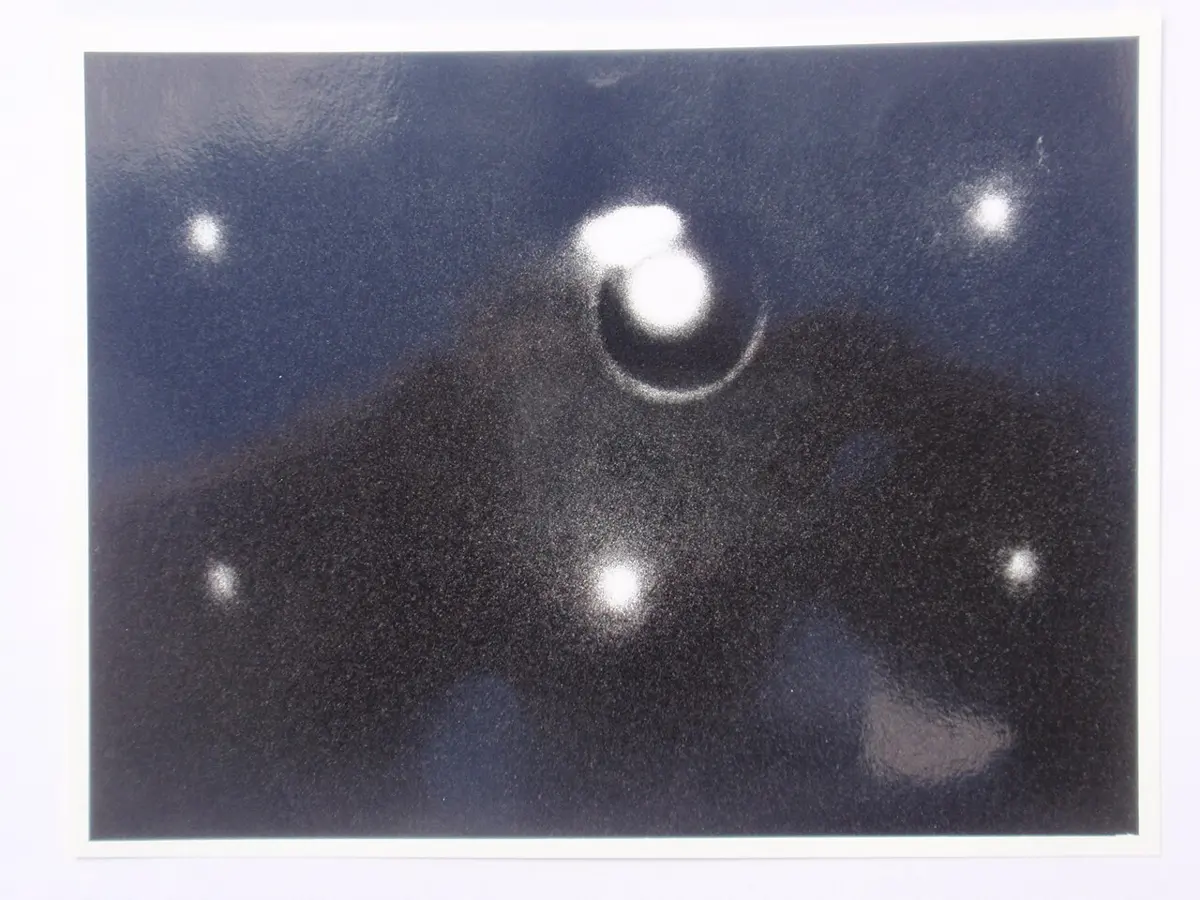
It sounds simple, but Ertl found that the speed of the reaction rises and falls again and again by itself, like a heartbeat. The reason is that the platinum atoms at the surface shift their arrangement when enough CO lands on them, which changes how well oxygen sticks, which changes how fast the CO is used up. With a special microscope he filmed the platinum surface and saw areas covered by CO and areas covered by oxygen chase each other across it in moving spirals and waves, each a fraction of a millimeter across. The presenter of the prize said the pictures were so beautiful that they reminded him of modern art.
In the Haber–Bosch process, which step did Ertl find to be the slowest?
Pick an answer to see why.
Why his method mattered
Ertl did not invent the Haber–Bosch process or the catalytic converter. What he gave chemists was a way of working: take a messy real-world reaction, set up a clean, simple model of it in a vacuum chamber, check that the model behaves like the real thing, then pull the reaction apart into single steps and measure each one with every method that fits. The prize committee said that he founded a whole “school” of experimental surface chemistry. Today the same approach is used to design better catalysts in industry and to study surfaces of all kinds.
In your life today
- Fertilizer. Nepal has no urea factory of its own (as of 2026): the urea farmers queue for each planting season is imported, made abroad from Haber–Bosch ammonia Grade 9: Nitrogenous fertilizers.
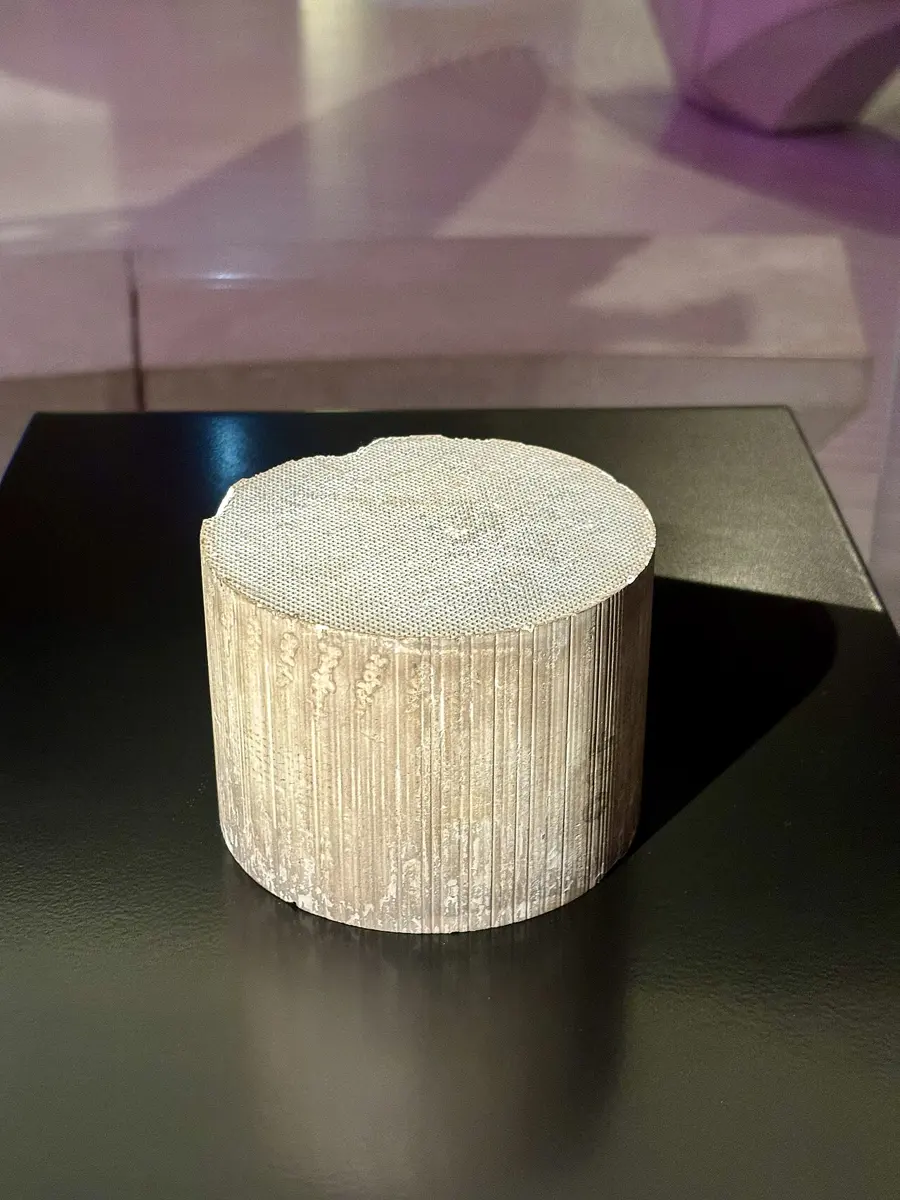
- Cleaner exhaust. Modern cars and many motorbikes have a catalytic converter, with a thin coating of platinum and other metals on a ceramic honeycomb. It turns carbon monoxide into carbon dioxide and removes other harmful gases.
- Rust. Rusting is also a surface reaction between iron, oxygen and water. Understanding surfaces helps engineers protect bridges, pipes and roofs.
- Fuel cells and the ozone layer. Fuel cells make electricity from hydrogen through reactions on a catalyst’s surface. Even the hole in the ozone layer depends on surface chemistry: key steps happen on the surfaces of tiny ice crystals in the clouds high over Antarctica.
What came next
- Better catalysts by design. With Ertl’s methods, and later with computers, chemists can now predict which metal surfaces will speed up a reaction, instead of testing thousands by trial and error, as Haber’s and Bosch’s teams did.
- Ammonia without fossil fuel. The hydrogen for ammonia is usually made from natural gas or coal, and the process uses about 1–2% of all the energy used in the world. Chemists are working on making it with hydrogen from water and electricity from the sun, wind or rivers.
- The open question: bacteria in the roots of beans and lentils turn nitrogen from the air into ammonia at the temperature of the soil, with no high pressure at all. Could we build a catalyst that does the same, cheaply? Nobody has managed it yet.
What was Ertl’s most important contribution, according to the Nobel committee?
Pick an answer to see why.
In your science books
- Grade 9: nitrogen gas and its chemical properties (the Haber process) and nitrogenous fertilizers.
- Grade 10: the rate of a chemical reaction, catalysts and surface area; ammonia and its uses.
- Going further: What makes a reaction go faster? and making ammonia in a factory.
Learn more
- The Nobel Prize’s own explanation: From artificial fertilizers to clean exhaust (nobelprize.org).
- Gerhard Ertl’s Nobel lecture: Reactions at surfaces: from atoms to complexity.
The official reason
The prize was given “for his studies of chemical processes on solid surfaces.”