
Watching molecules collide, one at a time
Nobel Prize in Chemistry, 1986: Dudley R. Herschbach, Yuan T. Lee, and John C. Polanyi
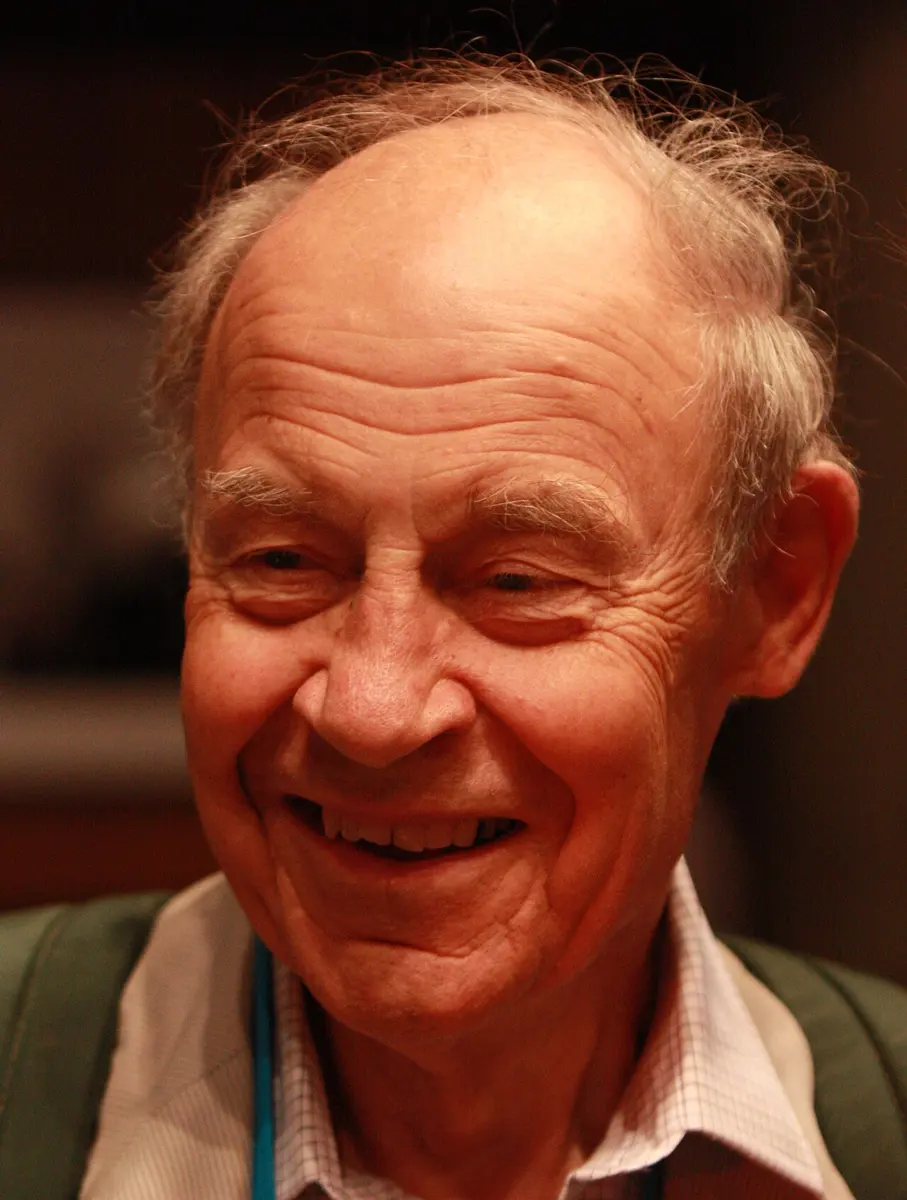
Dudley R. Herschbach
born 1932 in the United States
He grew up on a farm in California, milking a cow and picking fruit, and turned down a football scholarship for a place to study science. He later wondered whether football had prepared him for a life of studying collisions.
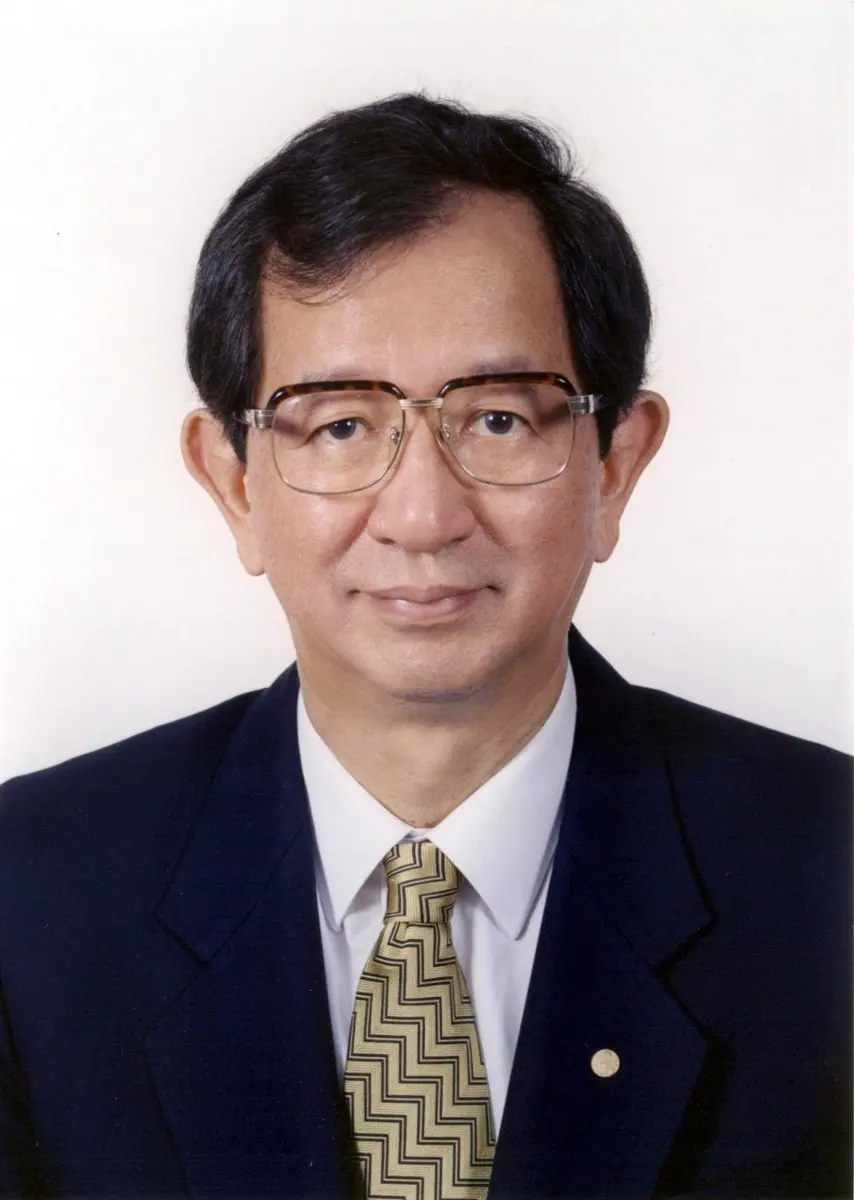
Yuan T. Lee
born 1936 in Taiwan
He chose science after reading a life of Marie Curie as a schoolboy. He built the machine that took crossed beams “beyond the alkali age”, and was the first person from Taiwan to win a Nobel Prize.
Photo: Douglas A. Lockard, CC BY-SA 3.0
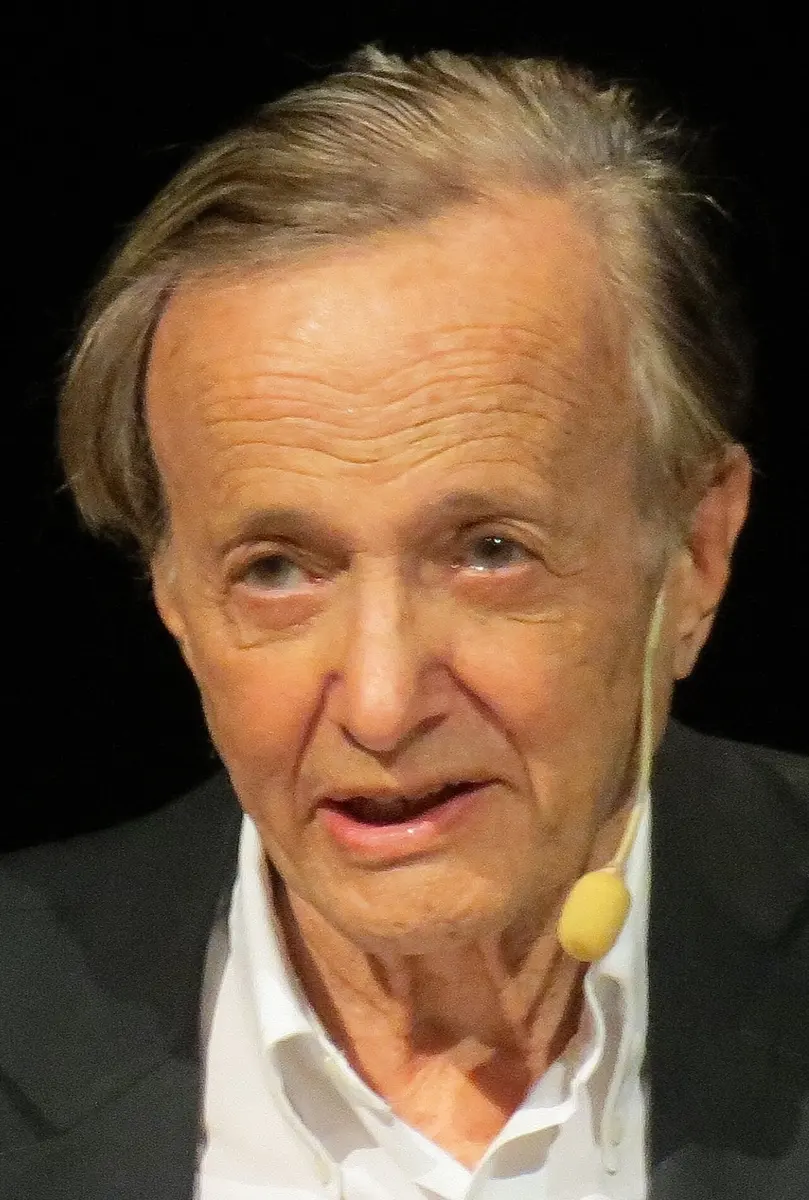
John C. Polanyi
born 1929 in Germany
Sent to Canada as a boy of 11 to escape the bombing of Britain in the Second World War, he once thought of becoming a poet. He has spent much of his life campaigning against nuclear weapons.
Photo: Vogler, CC BY-SA 4.0
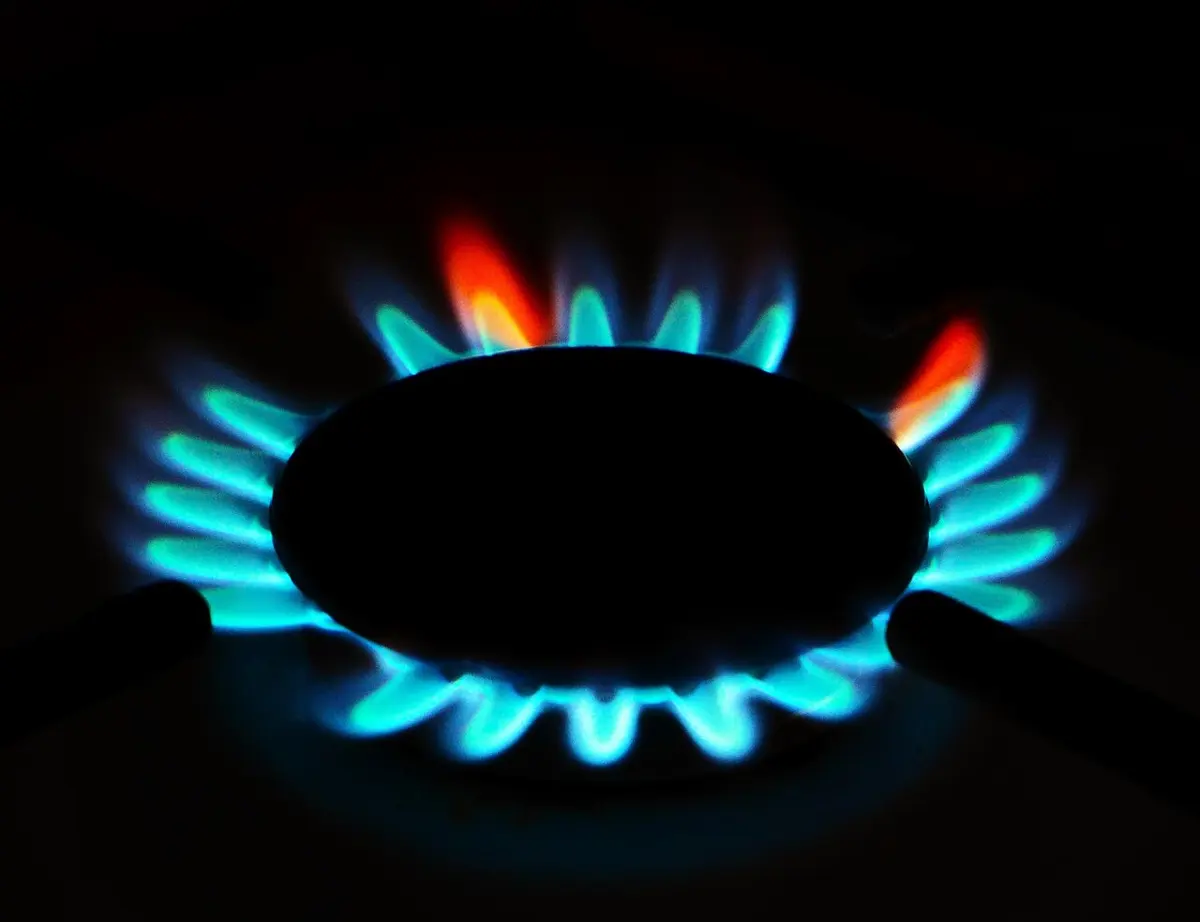
Strike a match and hold it to a gas stove. With a soft whump the gas catches, and a ring of blue flame appears. That flame is a chemical reaction: the gas joins with oxygen from the air and gives out heat and light.
But a flame is not one reaction. It is dozens, or even hundreds, happening side by side. Molecules break into pieces, the pieces hit other molecules, and the products of one reaction become the starting materials of the next. Each tiny event is over in about a picosecond, a million-millionth of a second.
For a long time, chemists could only see the start and the end of a reaction. The 1986 Nobel Prize in Chemistry went to three people who found ways to watch what happens in the middle: in a single collision between two molecules.
The problem: a crowd, not a collision
The molecules of a gas are never still. In the air around you, each molecule is moving at about 500 m/s, nearly one and a half times the speed of sound, and it bumps into another one billions of times every second. A reaction happens when the right two molecules collide in the right way.
Before the 1960s, chemists studied reactions in a flask. They mixed two gases and measured how fast the products appeared. This is called chemical kinetics (from a Greek word for motion), and it tells you the rate: how quickly a reaction goes, and how heat or crowding speeds it up.
But inside the flask, billions of collisions happen at once, at every possible speed and from every possible direction. What you measure is an average of all of them, blurred together. You cannot tell what happened in any one collision.
The man who presented the prize compared it to watching a play, Hamlet, of which you are shown only the first scene and the very last one. At the start you meet the characters. The curtain falls. When it rises again, the stage is covered with bodies and a few survivors. Working out what happened in between is not easy.
Why couldn’t chemists see what happens in a single collision by mixing two gases in a flask?
Pick an answer to see why.
What happens in one collision
To follow the story, picture a reaction between two molecules as a short event in three parts.
- Approach. Two molecules fly towards each other. Usually they need a certain minimum energy to react, the activation energy. Think of it as a hill: they must hit hard enough to get over the top.
- The meeting. For an instant, the atoms are close together. Old bonds stretch and break; new bonds form.
- Leaving. The new molecules, the products, fly apart.
A reaction that gives out heat, like burning gas, has energy left over. That energy has to go somewhere. It can go into three things:
- moving: the products fly apart fast;
- vibrating: the two atoms of a new molecule stretch and squeeze, as if the bond between them were a spring;
- spinning: the new molecule tumbles round and round.
Chemists wanted to know: which way do the products fly out? How fast? How much of the energy goes into vibrating, and how much into moving? These questions are called reaction dynamics: not just how fast a reaction goes, but how it happens, step by step. The answers depend on the forces between the atoms during that one picosecond, and those forces decide everything about the reaction.
A reaction gives out energy. Which of these is not one of the ways the new molecules can carry it away?
Pick an answer to see why.
Why it was hard
To see single collisions, you need molecules that collide only once, with each other and nothing else. That meant working in a vacuum, a space with almost all the air pumped out. In the vacuum, you send a thin stream of molecules, all moving in one direction, called a molecular beam.
Three things made this very difficult:
- Very few collisions. A beam is thin, so only a tiny number of its molecules ever meet a molecule of the other beam, and only some of those react. The products are a whisper.
- Finding the products. The new molecules fly out in every direction. You must catch and count them, and tell them apart from the far greater number of beam molecules that didn’t react.
- No good detector. In the early days, the only way to count molecules was with a hot metal wire. It worked for compounds of the alkali metals (sodium, potassium, cesium), but almost nothing else.
Some scientists even doubted that collisions would happen in crossed beams at all.
What they did, step by step
Herschbach: crossing two beams
Dudley Herschbach began planning beam experiments at Harvard in the late 1950s, and built his first machine with students at the University of California, Berkeley, after 1959.
- The machine. In a vacuum chamber, a beam of potassium atoms from a small oven crossed a beam of another gas at right angles. A hot-wire detector could be swung round the crossing point to count the products in each direction.
- The first surprise: rebound. He tried potassium with methyl iodide (CH₃I). The new potassium iodide (KI) flew out backwards, the way the potassium had come. The potassium had to hit the iodine end of the molecule hard and head-on, and the product bounced back like a ball off a wall. He called this a rebound reaction. About half the energy given out went into the products’ speed.
- The second surprise: stripping. In 1963 he moved back to Harvard and tried potassium with bromine (Br₂). This time the new potassium bromide (KBr) flew out forwards, carrying on in the direction the potassium had been going. And the potassium reacted even when it passed the bromine molecule at a distance, much farther away than the two needed to touch. He called this stripping: the potassium snatched one bromine atom as it flew past.
- The harpoon. Why from so far away? A potassium atom holds its outer electron loosely. As it nears a bromine molecule, that electron jumps across. Now the potassium is a positive ion and the bromine a negative one, and opposite charges pull together strongly. The potassium “harpoons” the bromine with its electron and hauls it in.
Lee: a machine for any molecule
Yuan T. Lee joined Herschbach at Harvard in February 1967. The hot-wire detector limited the experiments to the alkali metals. Lee set out to build a machine that could see any product.
- 1967, the “supermachine”. With Herschbach’s team and the workshop, Lee built it in just ten months. Its detector was a mass spectrometer: it knocks an electron off each molecule that enters, and sorts the charged pieces by their mass. That works for any molecule, not just alkali compounds.
- A deep vacuum. For the detector to pick out a few product molecules, the stray gas around it had to be pumped away, stage after stage. The pressure where the beams met was less than a billionth of the pressure of the air around you, and around the detector it was lower still.
- Late 1967, the first test. Chlorine atoms with bromine molecules (Cl + Br₂), the first reaction of this kind with no alkali metal at all. It worked.
- The 1970s and 80s. First in Chicago and then back at Berkeley, Lee built better machines and studied reactions that matter in real life: oxygen and fluorine atoms with carbon compounds, the kinds of reactions that happen in flames and in the air high above us. For one reaction, fluorine with hydrogen (F + H₂), his machine could tell how hard the new HF molecules were vibrating from how fast they flew off.
Polanyi: reading the glow
At the same time, at the University of Toronto in Canada, John Polanyi found a different way in. Instead of catching the products, he listened to the light they gave out.
- 1958, a faint glow. With his student Kenneth Cashion, he let hydrogen atoms react with chlorine (H + Cl₂ → HCl + Cl) at low pressure. The new HCl molecules gave out a very faint infrared light. Infrared is light with a longer wavelength than red, which our eyes can’t see; we feel it as heat.
- Why it glowed. Each new HCl molecule is born vibrating hard, because much of the reaction’s energy goes into its bond. A vibrating molecule can only have certain fixed amounts of vibration energy, like the rungs of a ladder. As it calms down, it steps down the ladder, and each step gives out one packet of infrared light.
- Reading the ladder. Each step down gives light of its own wavelength. So by splitting the faint glow into its wavelengths, with a spectrometer (an instrument that spreads light out like a prism), Polanyi could tell how many molecules had been born on each rung. That showed where the reaction’s energy went.
- The rules. Polanyi worked out how the shape of the energy “hill” decides where the energy goes. If the hill comes early, while the molecules are still approaching, the energy given out tends to go into the vibration of the new molecule. If it comes late, as they leave, it tends to go into speed. And, the other way round, some reactions are helped more by making the starting molecules vibrate than by making them move faster. Chemists still call these Polanyi’s rules.
Polanyi’s new HCl molecules gave out infrared light. What did the light tell him?
Pick an answer to see why.
How it works now
Herschbach and Lee’s beams and Polanyi’s glow answer the same question from two sides. The beams show where the products go and how fast. The glow shows how hard they vibrate and spin. Put together, they give a picture of the forces between the atoms during the collision, which chemists describe as an energy landscape: a map of hills and valleys the atoms move across as old bonds break and new ones form.
Today, such experiments use lasers. A laser can make a molecule vibrate in exactly one way before it collides, or check exactly which rung each product is on. And computers can now calculate the energy landscape of small reactions from the laws of physics, then check the result against beam experiments. In the simplest reactions, such as a hydrogen atom with a hydrogen molecule, theory and experiment agree in fine detail.
In your life today
- Flames and engines. Engineers who design cleaner stoves, engines and power stations use computer models of burning. These models need the rate and the products of each of the many small reactions in a flame, measured or worked out by the methods of reaction dynamics.
- The air above us. The ozone layer, which protects us from the Sun’s ultraviolet light, is made and destroyed by small reactions between single atoms and molecules high in the air Grade 9: Ozone. Lee studied reactions of oxygen atoms for this reason. Models of air pollution, including the smog that settles over the Kathmandu valley in winter, are built from rates of reactions like these.
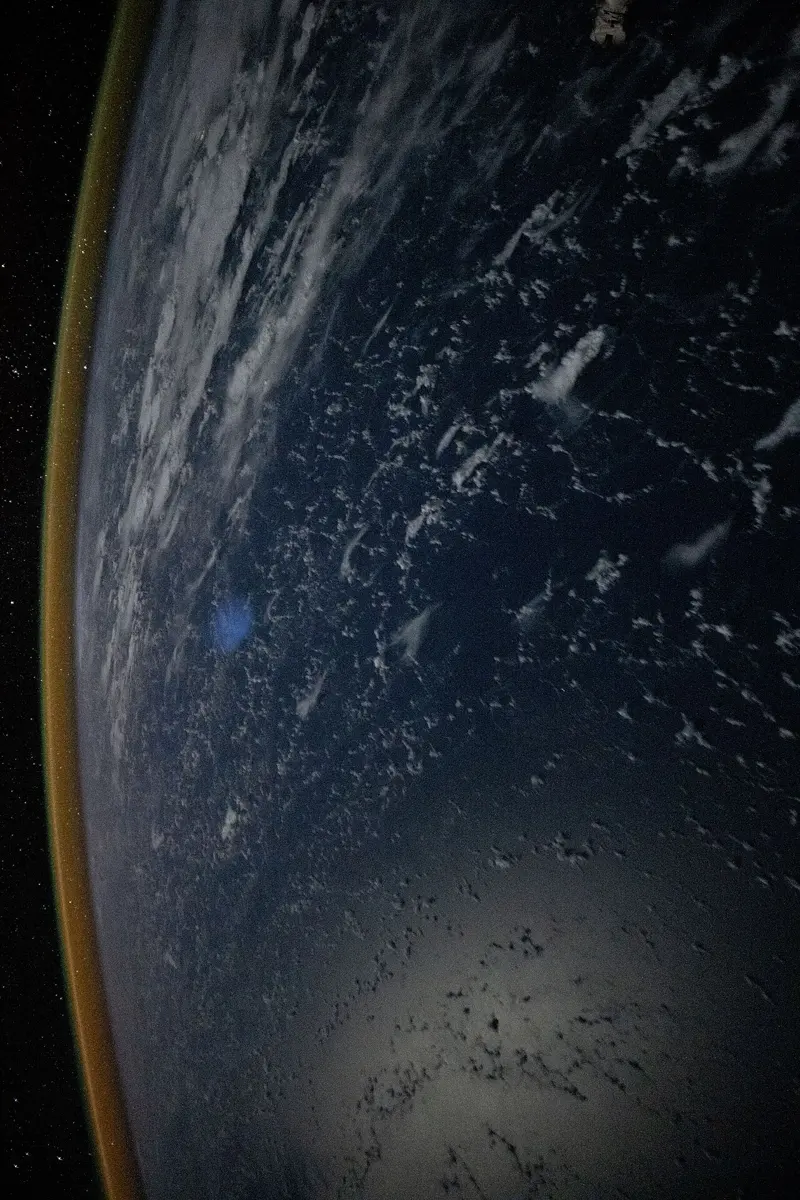
- The night sky’s faint glow. High in the atmosphere, reactions go on all night and give out a faint light called airglow. Some of it comes from molecules born vibrating, just like Polanyi’s HCl, and is infrared.
What came next
- Watching the middle. Beams and the glow still showed only the start and the end of a collision, very precisely. In the 1980s, Ahmed Zewail used flashes of laser light a few femtoseconds long (a thousandth of a picosecond) to film the meeting itself, as the bonds break. He won the Nobel Prize in Chemistry 1999.
- Reactions on surfaces. Polanyi later used microscopes that can see single atoms to study how molecules react on a metal surface, one atom at a time.
- Steering reactions. If making a molecule vibrate can help it react, could we use a laser to break one chosen bond and leave the others alone, and make exactly the product we want? It works in a few simple cases. For most molecules the energy spreads through the whole molecule too quickly. How to steer reactions this way is still an open question.
In your science books
- Grade 8 and 9: what an atom is, ions and the electrovalent bond: why potassium gives up its electron so easily.
- Grade 9: exothermic reactions, infrared rays and the ozone layer.
- Grade 10: why reactions happen at all: collisions and heat and the rate of reaction.
- Going further: a billion bumps a second, energy diagrams and a bond is a pull.
Learn more
- The Nobel Prize’s press release for 1986, with a drawing of crossed beams.
- The three Nobel lectures: Herschbach’s Molecular dynamics of elementary chemical reactions, Lee’s Molecular beam studies of elementary chemical processes and Polanyi’s Some concepts in reaction dynamics (nobelprize.org).
The official reason
The prize was given “for their contributions concerning the dynamics of chemical elementary processes.”