
Every cell in your body, from the root of a hair to a white blood cell, carries the same DNA, about two meters of it coiled into each nucleus. And apart from an identical twin, nobody else who has ever lived has had exactly your DNA. A speck of dried blood on a door handle or the root of one hair caught in a jacket is enough for a laboratory to say whose it is, or, just as important, whose it is not.
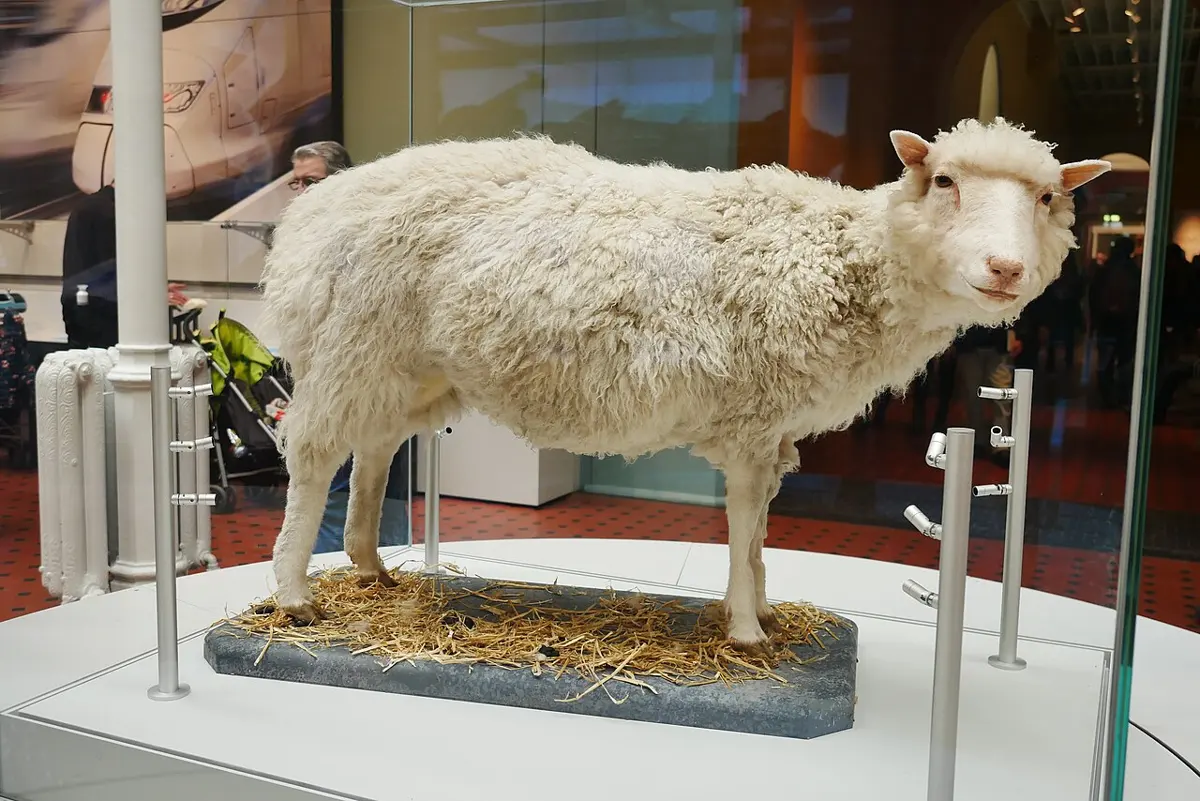
What can be done with knowledge like that? A sheep has been copied from a single cell of another sheep’s udder. Bacteria now make the insulin that keeps millions of diabetics alive. A kidney taken from one person can work for years inside another, and Nepal’s own transplant center in Bhaktapur does this well over a hundred times a year. The same knowledge has also been turned, in the past, to making disease into a weapon. This unit is about what we can do with the science of life, and the hard questions about what we should do.
5.1 DNA fingerprinting: introduction and importance
Introduction
About 99.9% of the DNA of any two people is the same: it is the recipe for a human being. The remaining 0.1% is where people differ, and some stretches of it differ a great deal. In certain places on our chromosomes, a short piece of DNA is repeated again and again, one copy after another, like a word written many times: GATA GATA GATA GATA… The number of repeats at each place varies from person to person. One person may have 8 repeats at a place on one chromosome and 11 on its partner; another may have 9 and 14. Because we get one chromosome of each pair from each parent, these numbers are inherited like any other gene.
These repeated pieces are called tandem repeats (tandem: one behind the other). Short ones, of 2 to 6 bases repeated, are short tandem repeats (STRs). Count the repeats at enough places and the set of numbers belongs to one person only.
DNA fingerprinting (also called DNA profiling or a DNA test) is a method of identifying a person, or finding out how people are related, from the pattern of their DNA, mainly the lengths of the repeated pieces at chosen places on their chromosomes.
It is called a fingerprint because, like the lines on a fingertip, the pattern is different for every person; but it is far more useful, because it can be read from almost any part of the body, even from a few cells, and it shows family relationships, which fingerprints don’t.
How a DNA fingerprint is made
- Collecting a sample. Any cells with a nucleus will do: blood (its white cells), saliva or a cheek swab, the root of a hair, skin cells, semen, bone, teeth. Red blood cells have no nucleus, and a cut hair without its root has very little DNA.
- Extracting the DNA. The cells are broken open with chemicals and the DNA is separated from the proteins and fats.
- Cutting or copying. In the first method (Jeffreys’, 1984), the DNA was cut with restriction enzymes, proteins from bacteria that cut DNA wherever they find one particular short sequence. The pieces holding the repeats come out longer or shorter depending on the number of repeats. Today the repeat regions are instead copied millions of times by a method called PCR (polymerase chain reaction), so that even a few cells are enough.
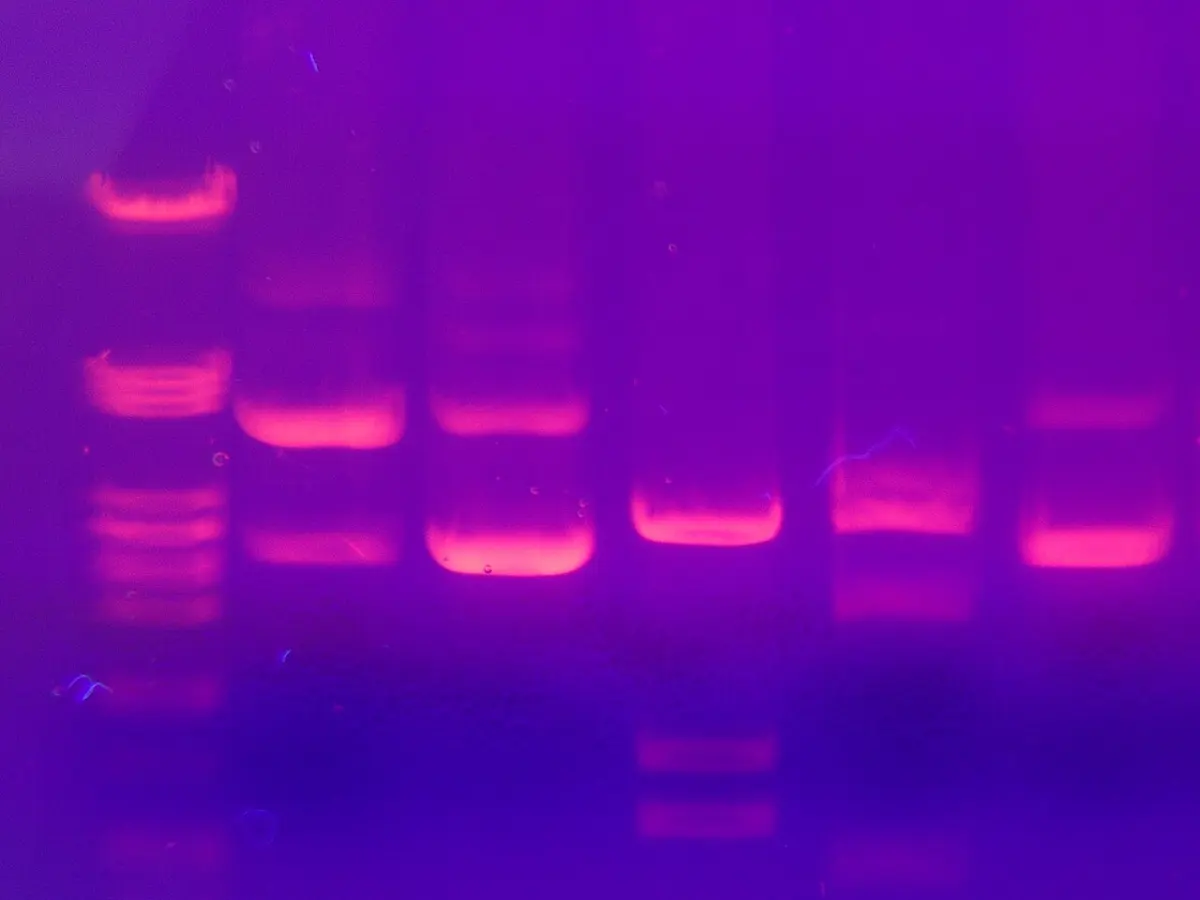
- Separating the pieces by size: gel electrophoresis. The DNA pieces are put in small wells at one end of a slab of jelly (a gel, made from agarose, a substance from seaweed) soaked in a salt solution, and a voltage is applied across it. DNA carries a negative charge (from the phosphate groups of its backbone), so every piece moves through the gel towards the positive electrode. The gel is a mesh of fibers: small pieces slip through it quickly and travel far, big pieces are held back and travel only a little. So after an hour or so, the pieces are spread out along the gel in order of size, smallest farthest.
- Making the pieces visible. The pieces are invisible. They are stained with a dye that glows under ultraviolet light, or marked with radioactive or fluorescent labels that stick only to the repeat regions. Each group of pieces of the same size shows up as a band.
- Comparing. The pattern of bands of one sample is compared with another’s, lane beside lane. If every band matches, the two samples very probably came from the same person.
How sure is a match?
Modern laboratories don’t look at one or two places but at 15 to 24 places on different chromosomes (the United States uses 20 core places, Britain 17). Because the places are on different chromosomes, they are inherited independently, and the chances can be multiplied.
Importance of DNA fingerprinting
- Solving crimes. DNA from blood, hair, skin or saliva left at a crime scene can be matched with a suspect’s, or can show that a suspect was not there. It has freed hundreds of people around the world who had been jailed for crimes they didn’t commit.
- Finding parents (paternity and maternity tests). A child gets half its bands from its mother and half from its father, so every band in the child’s pattern must be found in one parent or the other. This settles disputes about who the parent of a child is, in families, in courts and in claims for inheritance.
- Identifying the dead. After an earthquake, flood, plane crash or war, bodies that can’t be recognized are identified by matching their DNA with that of their relatives.
- Reuniting families. Children lost or trafficked, and families separated by disaster or migration, can be reunited through DNA matches with their relatives.
- Protecting wildlife. DNA from seized rhino horns, tiger skins and bones can show which animal, and which place, they came from. Scientists also count tigers, rhinos and snow leopards in Nepal from the DNA in their droppings, without ever seeing the animals.
- History and ancestry. DNA from old bones shows how people moved across the world, and who was related to whom.
- Medicine and food. The same methods diagnose inherited diseases, find which germ is causing an infection, and catch food sold under the wrong name (cheap fish labeled as dear fish, buffalo meat as mutton).
Limitations and concerns
- A sample can be contaminated by DNA from the person collecting it, or from another sample, so collection and storage must be done with gloves, sealed bags and careful records.
- A sample that is old, burnt or tiny may give only part of a pattern, and a mixed sample (from several people) is hard to read.
- Identical twins can’t be told apart.
- A match only shows whose DNA was at the scene, not who committed the crime: DNA can be left there innocently, or carried there.
- Databases of people’s DNA raise questions of privacy: DNA tells about a person’s relatives and their risk of diseases, and could be misused by employers, insurers or governments.
In gel electrophoresis, DNA pieces move towards the positive electrode because:
Pick an answer to see why.
A child’s DNA fingerprint has a band that is found in neither the mother’s nor the man said to be the father. This shows that:
Pick an answer to see why.
5.2 Cloning and genetic engineering: concept and related ethical issues
Cloning
A potato left in a dark corner grows shoots from its eyes; planted, each piece grows into a new plant that is exactly like the plant the potato came from. Every new plant has the same genes as the parent, because it grew by mitosis alone, with no meiosis and no fertilization.
A clone is an organism, or a group of organisms, with exactly the same genes as the single parent it was produced from by asexual reproduction. Cloning is the process of producing such genetically identical copies, naturally or artificially. (The word comes from the Greek klon, a twig: a twig cut from a plant and planted grows into a clone of it.)
Natural clones
- Bacteria and amoebas split in two (binary fission): a colony grown from one bacterium is a clone.
- Plants that reproduce vegetatively: potato tubers, onion and garlic bulbs, the runners of strawberries and doob grass, the suckers of bananas, the rhizomes of ginger, turmeric and bamboo. A whole clump of bamboo may be one clone.
- Identical twins are natural clones of each other (though not of either parent): they come from one fertilized egg that split into two embryos.
Artificial cloning in plants
Farmers have cloned plants for thousands of years: cuttings (sugarcane, roses, mint), grafting (most mango, apple and citrus trees: a twig of a good variety is joined onto a sturdy root) and layering. The modern method is tissue culture (micropropagation): a few cells from the tip of a shoot are grown on a jelly of nutrients and plant hormones in a sterile bottle. They grow into a small mass of cells, which can be divided again and again; each piece then grows roots and shoots. Thousands of identical, disease-free plantlets can be grown from one plant in a few months. Bananas, potatoes, orchids, strawberries and many ornamental plants are produced this way, in Nepal too.
Artificial cloning in animals
Animals can’t be grown from a cutting. There are two ways to clone them:
- Embryo splitting (artificial twinning). An early embryo, a ball of a few cells, is split into two or more parts, and each part is placed in a mother’s womb to grow. This makes identical twins (or quadruplets) artificially; it is used in cattle breeding. The clones are copies of one another, not of an adult.
- Somatic cell nuclear transfer (SCNT). The nucleus of an ordinary body cell (a somatic cell) from the adult to be copied is put into an egg cell whose own nucleus has been removed. The egg, now with a full set of the adult’s chromosomes, grows into an embryo, which is placed in a surrogate mother’s womb. The baby is a clone of the adult that gave the nucleus. This is how Dolly was made.
Dolly, step by step
Katy Lawler, CC0, via PhyloPic
Laura Barbero-Palacios, CC0, via PhyloPic
- The cell to be copied. Cells from the udder (mammary gland) of a six-year-old Finn Dorset ewe, a white-faced breed, were grown in a dish and then starved of nutrients, so that they stopped dividing and rested.
- An empty egg. An unfertilized egg cell was taken from a Scottish Blackface ewe, a black-faced breed, and its nucleus was sucked out with a very fine glass needle.
- Joining them. The udder cell was placed beside the empty egg and a small electric pulse was passed. The pulse made the two cells fuse into one, and started it dividing, as a fertilized egg does.
- The embryo. The cell divided by mitosis into a small ball of cells over about a week.
- The surrogate mother. The embryo was placed in the womb of another Scottish Blackface ewe, who carried it to birth.
- The clone. On 5 July 1996, at the Roslin Institute in Scotland, a white-faced lamb was born. Her genes were not those of the black-faced ewes that gave the egg and carried her, but those of the white-faced ewe whose udder cell gave the nucleus. She was named Dolly, and announced to the world on 22 February 1997.
Dolly had three mothers: one gave the nucleus (her genes), one the egg, and one carried her. She had no father.
Since Dolly, scientists have cloned cattle, pigs, goats, horses, dogs, cats, camels and monkeys. Cloning is used to copy farm animals with valuable qualities, to make copies of animals engineered to produce medicines in their milk, and has been tried for saving endangered species.
Reproductive cloning aims to produce a whole new animal (as with Dolly). Therapeutic cloning would make a cloned embryo only to take stem cells from it, which could grow into tissues to repair the body of the person who gave the nucleus, without rejection. Many countries ban human reproductive cloning by law.
Characteristics of clones
- They have the same genes (the same DNA in their nuclei) as one another and as the parent the nucleus came from.
- They are of the same sex as the parent, and have the same blood group and the same inherited features (eye color, a breed’s coat color, an inherited disease).
- They are not perfect copies. A cloned animal’s mitochondria, which carry a little DNA of their own, come from the egg, not from the nucleus donor. And genes are switched on and off differently in different individuals, in the womb and through life, by chance and by what they eat and meet.
- They grow up differently. A clone is born as a baby, much younger than its parent; it has none of the parent’s memories, and it grows up in different surroundings, with different food, illnesses and experiences.
- They are all equally at risk from a disease or pest that one of them can’t resist, because none of them has different genes to fight it (5.4).
- Cloned animals were often unhealthy in the early years: many cloned embryos died, and some clones were born unusually large or had faults of the heart, lungs or immune system. Methods have improved, and a study of 13 cloned sheep in 2016, four of them from the same cell line as Dolly, found them aging normally.
A clone made by somatic cell nuclear transfer gets its nuclear genes from:
Pick an answer to see why.
Genetic engineering
Cloning copies an organism’s genes as they are. Genetic engineering changes them.
Genetic engineering (also called genetic modification or recombinant DNA technology) is the direct change of an organism’s DNA in the laboratory: adding a gene, often from a different species, removing a gene, or changing it. The new DNA, made by joining DNA from two sources, is called recombinant DNA, and an organism that carries it is a genetically modified organism (GMO) or a transgenic organism.
It is possible because DNA is the same chemical in every living thing, and every living thing reads it with the same genetic code: a human gene put into a bacterium is read by the bacterium, and it makes the human protein.
The tools of genetic engineering:
- Restriction enzymes, the “molecular scissors”: enzymes from bacteria, each of which cuts DNA wherever a particular short sequence occurs. Many leave short single-stranded ends, called sticky ends, which pair with the matching ends of any other DNA cut by the same enzyme.
- DNA ligase, the “molecular glue”: an enzyme that joins the backbones of two pieces of DNA.
- A vector, a carrier that takes the new gene into the host cell: usually a plasmid, a small ring of DNA found in bacteria apart from its main chromosome, which copies itself in the bacterium (viruses are also used as vectors).
- A host, the organism that takes in the gene and makes its product: often the bacterium Escherichia coli (E. coli) or yeast.
Making human insulin in bacteria
People with type 1 diabetes can’t make insulin, the hormone that lets their cells take in sugar from the blood, and must inject it every day. Until the 1980s, insulin was taken from the pancreases of cattle and pigs from slaughterhouses: thousands of pancreases for a little insulin, and some patients were allergic to it.
Bacteria’s DNA: Mariana Ruiz Villarreal, LadyofHats, Public domain, via Wikimedia Commons
- The gene for human insulin is obtained (today, made in the laboratory from its known sequence).
- A plasmid is taken out of a bacterium.
- The plasmid and the gene are cut with the same restriction enzyme, so they have matching sticky ends.
- The gene is mixed with the opened plasmids; their sticky ends pair, and DNA ligase seals the joins. The result is a recombinant plasmid.
- The recombinant plasmids are put back into bacteria.
- The bacteria are grown in huge steel tanks (fermenters). Each one divides about every 20 minutes or more, copying the plasmid each time, and reads the human gene: it makes human insulin.
- The insulin is separated from the bacteria, purified and packed.
In 1978 the company Genentech made human insulin in E. coli; it was approved for sale in 1982, the first medicine ever made by genetic engineering. Now nearly all the insulin used in the world is made this way.
Other uses of genetic engineering:
- Medicines: human growth hormone, the hepatitis B vaccine (made in yeast), blood-clotting factors for people with hemophilia, and many antibodies used against cancer.
- Crops: Bt cotton and Bt brinjal, given a bacterial gene for a protein that kills certain caterpillars, so less pesticide is sprayed; Golden Rice, given genes to make beta-carotene, against vitamin A deficiency; crops that resist drought, viruses or weedkillers.
- Animals: goats that make medicines in their milk; salmon that grow faster.
- Gene therapy: a working copy of a gene delivered into a patient’s cells to treat an inherited disease. With the gene-editing tool CRISPR, an exact spot in DNA can now be cut and changed; its discoverers Emmanuelle Charpentier and Jennifer Doudna won the 2020 Nobel Prize in Chemistry.
- Research: mice and bacteria with genes switched on or off show what each gene does.
Ethical issues
Ethics is about what is right and wrong. New powers over life bring hard questions, on which thoughtful people disagree.
About cloning:
- Animal welfare. Most cloned embryos die, and many clones born were sick or deformed, so animals suffer for each healthy clone.
- Human cloning. Cloning a person would risk the child’s health, as it did in animals, and raises deep questions: whose child is a clone, what would it be like to be the copy of someone else, and could people be made for a purpose, like spare parts? Many countries ban it by law.
- Identity and dignity. Many feel that each person has a right to genes of their own, an open future not set by someone else’s life.
- Less variety. Large numbers of identical animals or plants are at risk from one disease (5.4).
- Religious and cultural views. Some believe life should be created only in the natural way, and that cloning is “playing God”.
About genetic engineering:
- Safety of food. People ask whether GM foods are safe to eat. Every major scientific review so far has found the approved GM foods as safe as ordinary ones, but each new crop must be tested.
- Effects on nature. Genes can spread from GM crops to wild relatives; pests and weeds can become resistant to Bt crops and weedkillers; insects that are not pests could be harmed.
- Ownership and fairness. Companies patent GM seeds; farmers may have to buy new seed every year, and poor farmers and countries may depend on a few big companies.
- Changing humans. Editing a person’s body cells to cure a disease affects only that person; editing an embryo would pass the change to all their descendants, without their consent. In 2018 a scientist in China announced the birth of twin girls whose genes he had edited as embryos; scientists around the world condemned it, and he was sent to prison.
- Choice and labeling. Many people want GM food labeled so they can choose.
In genetic engineering, the gene and the plasmid are cut with the same restriction enzyme so that:
Pick an answer to see why.
5.4 Minimization of variation in organisms due to cloning and evaluation of its effects
Why clones don’t vary
In sexual reproduction, every child gets a new mixture of genes: meiosis shuffles each parent’s chromosomes and crossing over swaps pieces of them, and fertilization joins one of millions of different sperm with one of many eggs. Brothers and sisters differ, and a population of plants grown from seed is full of differences.
Cloning skips all of that. A clone is made by mitosis alone, which copies the chromosomes exactly. So every clone has the same genes as its parent and as every other clone. Plant a whole field from cuttings of one sugarcane plant, or tubers of one potato plant, and the whole field is genetically one plant. The only new variation comes from rare mutations, mistakes in copying DNA. Cloning minimizes variation: that is its purpose, and also its danger.
Evaluation of its effects
Benefits of having no variation:
- The good qualities are kept exactly. A mango tree with sweet, large fruit gives seedlings whose fruit may be sour and small; grafted twigs of it give fruit exactly like the parent’s. Seedless bananas and grapes can only be grown as clones.
- Uniform crops. Plants that are all alike grow, flower and ripen together, so they are easy to look after, harvest and sell.
- Fast multiplication. Tissue culture gives thousands of plants from one in months, without waiting for seeds.
- Disease-free stock. Plants grown from virus-free shoot tips start healthy.
- Saving rare plants and animals. A rare plant, or the last trees of a variety, can be multiplied without losing what makes it special, and cloning has been tried for endangered animals.
- Copying the best farm animals, such as a cow that gives very much milk, or an animal engineered to make a medicine.
Harms of having no variation:
- One disease can wipe out all of them. If a new disease or pest arrives that one clone can’t resist, none of them can: they all have the same genes. In a varied population, some individuals usually have genes that let them survive.
- They can’t adapt. Without variation, a population can’t change over generations as its surroundings change, with a new climate, new pests or new diseases. Variation is the raw material of evolution.
- Harmful genes are kept too. A clone copies the parent’s faults along with its good points, including hidden harmful genes.
- Less biodiversity. When farmers everywhere plant a few cloned varieties, hundreds of local varieties, each with genes for surviving local droughts, pests and soils, are lost.
How the harm is reduced
- Grow several varieties, not just one, in a field, a village or a country.
- Keep seed banks and gene banks, which store seeds and tissue of many varieties, including old local ones. Nepal’s national gene bank at Khumaltar, Lalitpur, stores seeds of local rice, maize, millet and other crops.
- Keep breeding new varieties by sexual reproduction, crossing plants to make new mixtures of genes, then cloning the best.
- Watch for diseases and stop infected planting material from spreading.
| Effect of cloning’s lack of variation | Good | Bad |
|---|---|---|
| Qualities | Good qualities kept exactly | Harmful genes kept too |
| Crop | Uniform, easy to grow and sell | All plants at risk from one disease |
| Future | Reliable now | Can’t adapt to new conditions |
| Diversity | — | Local varieties and biodiversity lost |
A farmer plants a field entirely with cuttings from one sugarcane plant. Why is this field more at risk from a new disease than a field grown from seed?
Pick an answer to see why.
5.5 Bio-weapons
Introduction
In many wars of the past, disease killed more soldiers than battle did. Some governments and groups have tried to turn that power into a weapon.
Bio-weapons (biological weapons) are living microorganisms (bacteria, viruses, fungi), or poisonous substances (toxins) made by living things, used deliberately to cause disease or death in people, animals or crops. Their use in war is called biological warfare, and their use to frighten or harm people for a political aim is called bioterrorism.
Bio-weapons are counted, with nuclear and chemical weapons, among the weapons of mass destruction, because they could harm huge numbers of people.
History
- Long ago. There are old reports of armies throwing sick bodies into besieged cities, as at the siege of Caffa on the Black Sea in 1346, and of poisoning wells with dead animals. How much harm these did is not known.
- 1925. After the poison gas of the First World War, the Geneva Protocol banned the use of chemical and biological weapons in war, but not making or keeping them.
- 1930s–1945: Unit 731. During its war with China, Japan’s army ran a secret unit, Unit 731, at Pingfang near Harbin, in what is now north-east China. It deliberately infected thousands of prisoners, most of them Chinese civilians, with diseases, killing them, and spread disease in Chinese towns and villages, where many thousands more died. It is one of the worst crimes of the Second World War.
- 1940s–1990s. Several countries, including the United States (until 1969, when it ended its program) and the Soviet Union (until at least 1992), ran large programs to develop biological weapons.
- 1972: a ban. The Biological Weapons Convention was agreed, and came into force in 1975.
- 1979: Sverdlovsk. In April 1979, in the Soviet city of Sverdlovsk (now Yekaterinburg in Russia), germs escaped by accident from a secret military laboratory, and more than 60 people died of anthrax in the town downwind. The Soviet government said the deaths came from bad meat; only in 1992 did Russia’s president admit the truth.
- 2001: the anthrax letters. In the United States, letters containing anthrax germs were posted to news offices and to two senators. Five people died and seventeen more fell ill.
The Biological Weapons Convention
The Biological Weapons Convention (BWC), agreed in 1972, bans countries from developing, producing, stockpiling, acquiring or transferring biological weapons, and requires them to destroy any they have. It was the first treaty to ban a whole kind of weapon of mass destruction. Almost every country in the world is now party to it. Nepal signed it in 1972 and ratified it (made it binding on itself) in 2016. Using disease as a weapon is today a crime under international law.
The convention does not stop peaceful research: studying germs to make vaccines, medicines and tests is allowed, and is how the world protects itself against both natural outbreaks and deliberate ones.
Advantages and disadvantages
The “advantages” are the reasons governments once claimed made biological weapons attractive. They are reasons why they were sought, not reasons for anyone to make or use them.
What was claimed for them (their supposed advantages):
- They were thought to be cheap compared with nuclear weapons.
- An attack was thought to be hard to detect at first, since illness appears only days later and can look like a natural outbreak.
- It was thought that it might be hard to tell who had caused it.
- It was claimed that they would harm people without destroying buildings, roads and factories.
Their disadvantages:
- They can’t be controlled. Once released, a germ spreads with the wind, water, animals and people, and does not know which side anyone is on. It can come back to strike the attacker’s own soldiers and people.
- They strike civilians. Children, the old and the sick are hit hardest; it is impossible to aim them only at soldiers.
- Unpredictable. Weather and the germ’s own changes decide where it goes and how many fall ill; an outbreak may spread round the world.
- Banned and a crime. They are forbidden by the Biological Weapons Convention and the Geneva Protocol, and their use is a war crime. A country found using them would face the anger of the whole world.
- Accidents. Even keeping them is dangerous, as the Sverdlovsk leak showed.
- They poison trust in science, making people fear the research that gives us vaccines and medicines.
- They destroy food and farms when aimed at crops and animals, causing hunger long after.
The Biological Weapons Convention:
Pick an answer to see why.
5.6 Organ transplantation: introduction and importance
Introduction
Some organs can fail beyond repair: kidneys destroyed by diabetes or high blood pressure, a liver scarred by hepatitis or alcohol, a heart weakened by disease, a cornea clouded by an infection. Medicines can only slow the damage. The answer, for many, is a new organ.
Organ transplantation is the moving of a healthy organ or tissue from one body (the donor) into another (the recipient), to replace an organ or tissue that has failed or is damaged. The organ or tissue moved is called a graft or transplant.
Organs and tissues that are transplanted: kidneys, liver (often part of a liver, which grows back), heart, lungs, pancreas and intestines; and tissues such as the cornea, skin, bone, heart valves and bone marrow.
Kinds of transplant, by donor:
| Kind | From | Example | Rejected? |
|---|---|---|---|
| Autograft | one part of the same person’s body to another | skin from the thigh to a burn | no: it is the person’s own tissue |
| Isograft | an identical twin | the first successful kidney transplant, 1954 | no: the same genes |
| Allograft | another person | most kidney, liver and cornea transplants | yes, unless medicines prevent it |
| Xenograft | another species | pig heart valves; in 2024, a gene-edited pig’s kidney into a living man | strongly, unless the animal’s genes are changed |
Donors may be living (a person can give one of their two kidneys, or part of their liver, and live a normal life) or deceased: a person whose brain has died completely (brain death), though the heart is kept beating by machines, can give their heart, lungs, liver, kidneys, pancreas and corneas, and save up to eight lives.
Rejection
The body’s immune system attacks anything it recognizes as foreign, like a germ. Every person’s cells carry marker proteins on their surface, called HLA (human leukocyte antigens), which are almost as different from person to person as DNA fingerprints. A transplanted organ carries the donor’s markers, so the recipient’s white blood cells and antibodies attack it: rejection. To reduce it:
- Donor and recipient must have matching blood groups (as in a blood transfusion).
- Their tissue types (HLA) are matched as closely as possible; close relatives are often good matches.
- A crossmatch test mixes the recipient’s blood serum with the donor’s cells, to check the recipient has no antibodies ready to attack the organ.
- After the transplant, the recipient takes immunosuppressant medicines every day, for as long as the organ works, which calm the immune system. They also make infections and some cancers more likely, so the recipient is checked regularly.
Importance of organ transplantation
- It saves lives that nothing else could save, as when the heart or liver fails.
- It gives a better life. A person with a new kidney is freed from dialysis; a corneal transplant gives back sight.
- It lets people work again, support their families and live normally, which also helps society.
- It costs less over the years than lifelong treatment such as dialysis.
- Donation turns a death into life for others. A deceased donor’s organs can save several people and restore sight to two.
- It moves medicine forward, in surgery, in understanding the immune system and in making new medicines.
5.7 Process and importance of kidney transplantation
When the kidneys fail
The two kidneys, each about the size of a fist, sit high at the back of the abdomen. They filter the blood again and again through the day, take out wastes such as urea, and balance the body’s water and salts. When both kidneys fail, slowly over years (most often from diabetes or high blood pressure, or from long inflammation of the kidneys) or suddenly, wastes and water build up in the blood. This is kidney failure (end-stage kidney disease), and without treatment it kills.
There are two treatments:
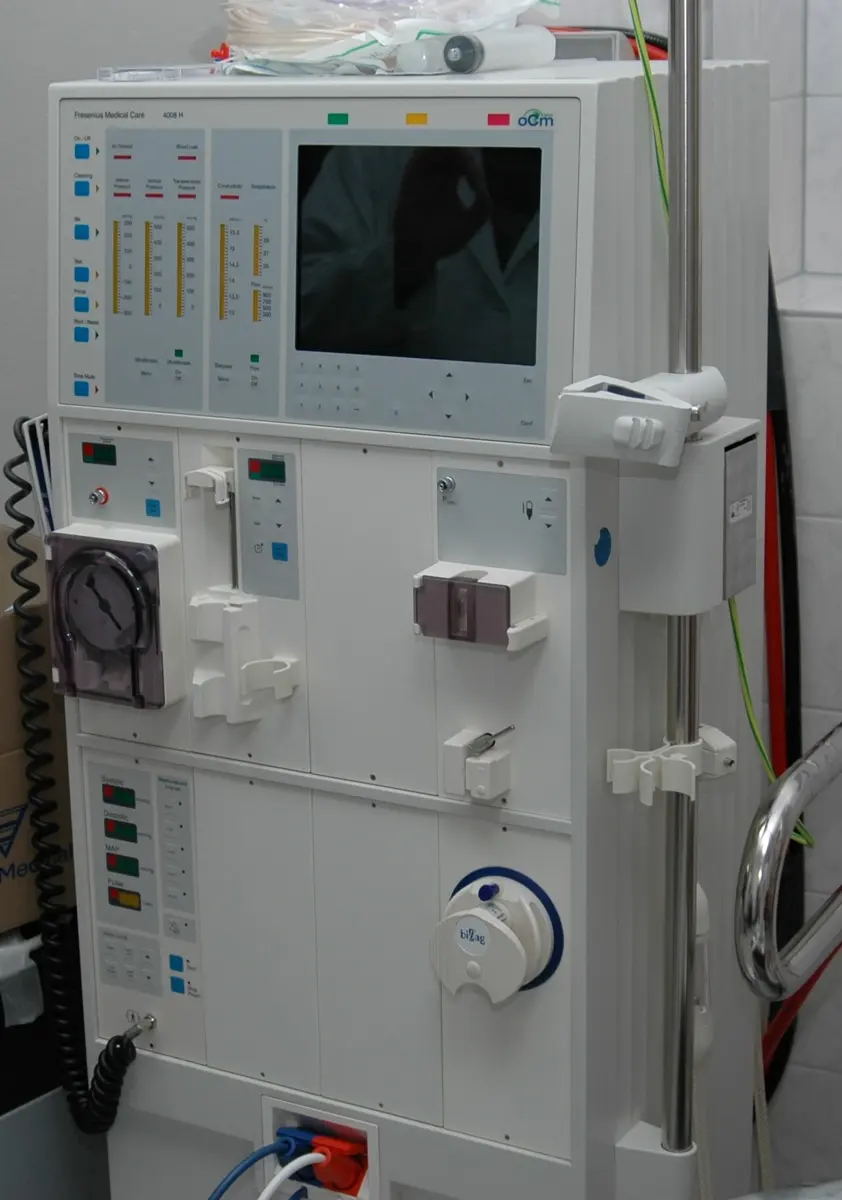
- Dialysis: a machine filters the blood instead (hemodialysis), usually for about four hours, three times a week, for the rest of the patient’s life; or a fluid in the abdomen is changed several times a day (peritoneal dialysis).
- A kidney transplant: one healthy kidney from a donor does the work of two.
The process
- Assessment of the patient. Doctors check that the patient is fit for an operation: the heart, any infections or cancer, and the patient’s blood group and tissue type.
- Finding a donor. A living donor (in Nepal, a close family member who is willing and healthy), or a deceased donor (a brain-dead person whose family agrees). The donor is examined carefully: both kidneys must be healthy, and giving one must not harm them.
- Matching. The blood groups must match (or be compatible), the tissue types (HLA) are compared, and a crossmatch is done just before the operation. A positive crossmatch means the recipient’s antibodies would attack the kidney at once, and that donor can’t be used.
- Removing the donor’s kidney. The surgeon removes one kidney with its artery, vein and a length of its ureter, today often by keyhole surgery through small cuts. The donor goes home in a few days and lives normally with the other kidney, which grows a little to do more work.
- Placing the new kidney. The new kidney is not put where the old ones are. It is placed lower down, in the front of the abdomen just above the groin (the iliac fossa), where it is easy to reach and big blood vessels pass close by. Its renal artery is joined to the recipient’s external iliac artery, its renal vein to the external iliac vein, and its ureter to the urinary bladder. The patient’s own failed kidneys are usually left in place, because taking them out adds risk and they do no harm.
- After the operation. A kidney from a living donor often starts making urine at once. The patient stays in hospital for about a week, then takes immunosuppressant medicines every day for life, and has regular blood tests (of creatinine, a waste the kidney removes) to check that the kidney is working and not being rejected.
BodyParts3D, © The Database Center for Life Science, CC BY 4.0
Importance of kidney transplantation
- Longer life. People with kidney failure who get a transplant live, on average, many years longer than similar patients who stay on dialysis.
- A better life. No more hours tied to a machine three times a week; more energy, fewer limits on food and drink, and patients can work, study, travel and, in many cases, have children.
- Less cost over time. After the first year, a transplant costs much less each year than dialysis.
- More dialysis places for others, since each transplant frees a dialysis machine.
- A living donor can give safely. A healthy person can live a full life with one kidney.
In a kidney transplant, the new kidney’s renal artery is usually joined to the recipient’s:
Pick an answer to see why.
Exercise
1. Choose the correct option
a. DNA fingerprinting is based on differences between people in:
Pick an answer to see why.
b. In gel electrophoresis, the DNA pieces that travel farthest are the:
Pick an answer to see why.
c. Dolly the sheep was produced by:
Pick an answer to see why.
d. The enzyme used to join pieces of DNA in genetic engineering is:
Pick an answer to see why.
e. A plasmid is:
Pick an answer to see why.
f. Which of these is a natural clone?
Pick an answer to see why.
g. The Biological Weapons Convention came into force in:
Pick an answer to see why.
h. A skin graft from a person’s own thigh to a burn on their arm is an:
Pick an answer to see why.
i. Medicines given after a transplant to prevent rejection are called:
Pick an answer to see why.
2. Give reasons
DNA fingerprinting can be done from a drop of blood but not from red blood cells alone.
Hint
Answer
Identical twins can’t be told apart by a standard DNA test.
Hint
Answer
Dolly had the white face of a Finn Dorset sheep, although she was born to a Scottish Blackface ewe.
Hint
Answer
The same restriction enzyme is used to cut both the plasmid and the gene in genetic engineering.
Hint
Answer
A crop grown entirely as clones is at great risk from a new disease.
Hint
Answer
Biological weapons are banned.
Hint
Answer
A kidney transplant patient must take immunosuppressant medicines for life.
Hint
Answer
The failed kidneys are usually left in place during a kidney transplant.
Hint
Answer
3. Differentiate between
Cloning and genetic engineering
Hint
Answer
Reproductive cloning and therapeutic cloning
Hint
Answer
Living donor and deceased donor
Hint
Answer
Allograft and xenograft
Hint
Answer
4. Answer the following questions
What is DNA fingerprinting? Describe the steps by which a DNA fingerprint is made.
Hint
Answer
Write any four uses of DNA fingerprinting.
Hint
Answer
Describe how Dolly was cloned, with a labeled diagram.
Hint
Answer
What are the characteristics of clones?
Hint
Answer
Explain how human insulin is made by genetic engineering.
Hint
Answer
Discuss the ethical issues of cloning and genetic engineering.
Hint
Answer
How does cloning minimize variation? Evaluate its effects.
Hint
Answer
What are bio-weapons? Write briefly about their history, and their advantages and disadvantages.
Hint
Answer
What is organ transplantation? Write its importance.
Hint
Answer
Describe the process of kidney transplantation, with a labeled diagram of where the new kidney is placed.
Hint
Answer
5. Numerical problems
At four places on different chromosomes, a crime-scene DNA profile has repeat numbers shared by 1 in 5, 1 in 10, 1 in 12 and 1 in 20 people. What is the chance that a person chosen at random matches at all four places?
Hint
Answer
Of 277 cells fused with eggs, 29 grew into embryos and 1 became a living lamb. What percentage of the fused cells became embryos, and what percentage of the embryos became a lamb?
Hint
Answer
A colony of bacteria carrying the insulin gene doubles every 20 minutes. Starting from one bacterium, how many will there be after 4 hours, if nothing stops them?
Hint
Answer
Printable PDFs
- The unit as a book (A5) 30 pages Answers as an A4 booklet, 8 sheets
- Study notes 3 pages
- Worksheet 5 pages Answer key
- Harder practice questions 4 pages Answer key
Practice every question in the book, and keep track of the ones you miss →
Found a mistake? Please tell us.