
Diphtheria serum: the first Medicine prize
Nobel Prize in Physiology or Medicine, 1901: Emil von Behring
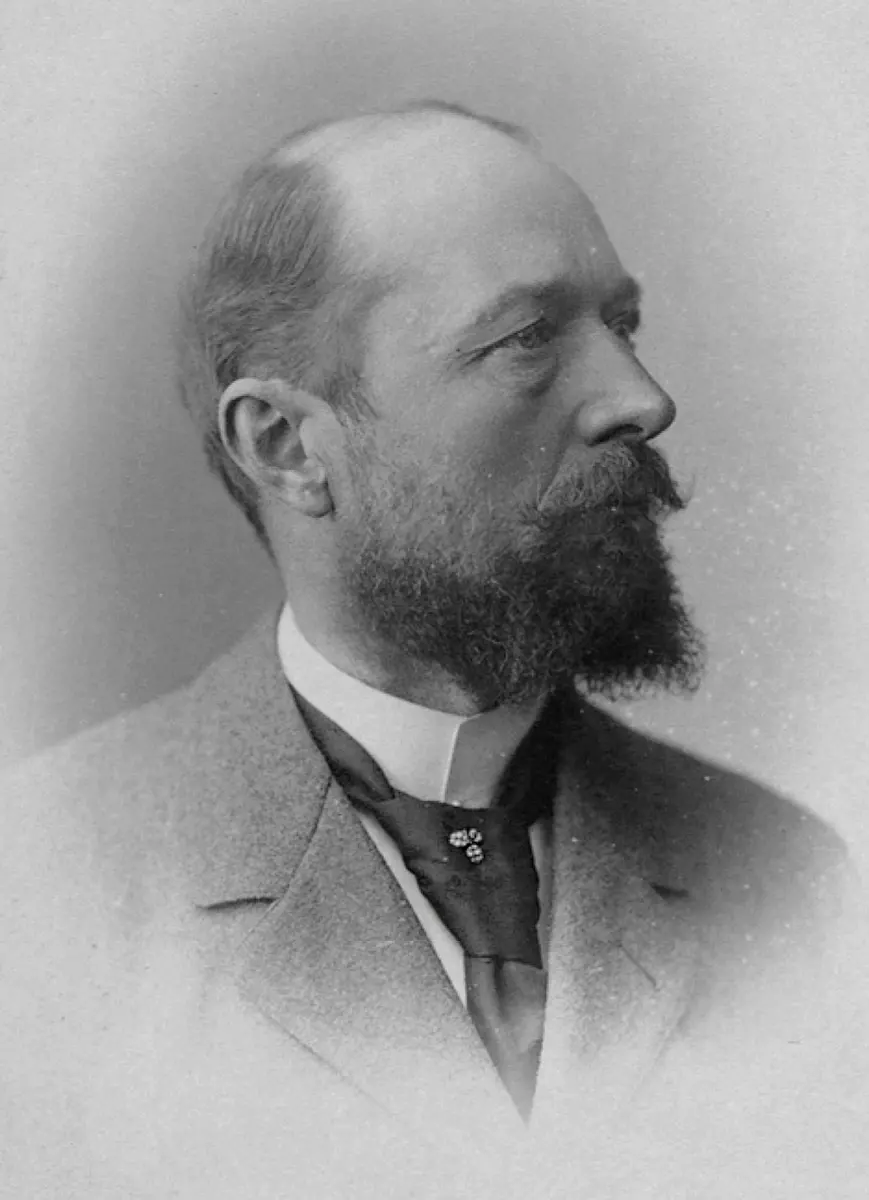
Emil von Behring
1854–1917, born in Prussia (now Poland)
A village schoolteacher’s son, one of thirteen children, who became an army doctor because the army would pay for his studies.
Photo: L. Lamarra, Neapel, Public domain
When a baby in Nepal is six weeks old, she is taken to the health post for an injection called the pentavalent vaccine. She gets it again at ten weeks and at fourteen weeks. “Penta” means five: the vaccine protects against five diseases. The first of them is diphtheria.
Most parents in Nepal today have never seen diphtheria. A hundred and thirty years ago, every parent in Europe feared it. It killed children by choking them. The first step in beating it was a strange idea: take the blood of an animal that has survived the disease, and inject it into a sick child. The man who showed that this works, Emil von Behring, received the very first Nobel Prize in Physiology or Medicine, in 1901.
The problem: a disease that choked children
Diphtheria begins like an ordinary sore throat, with a fever. But in a bad case, a tough, gray-white skin grows over the back of the throat. The disease’s name comes from the Greek word for leather. The skin can spread down into the windpipe and block it, so that the child can’t breathe. Doctors sometimes cut a hole in the windpipe to let air in.
Even children who could breathe were not safe. Days or weeks later, many died of damage to the heart, or were paralyzed for a time.
In Germany alone, more than 50,000 children died of diphtheria every year before Behring’s work. The presentation speech at his prize described “the terror which it caused and the despair left in its trail in families from which it tore one member after another”.
What was known before Behring
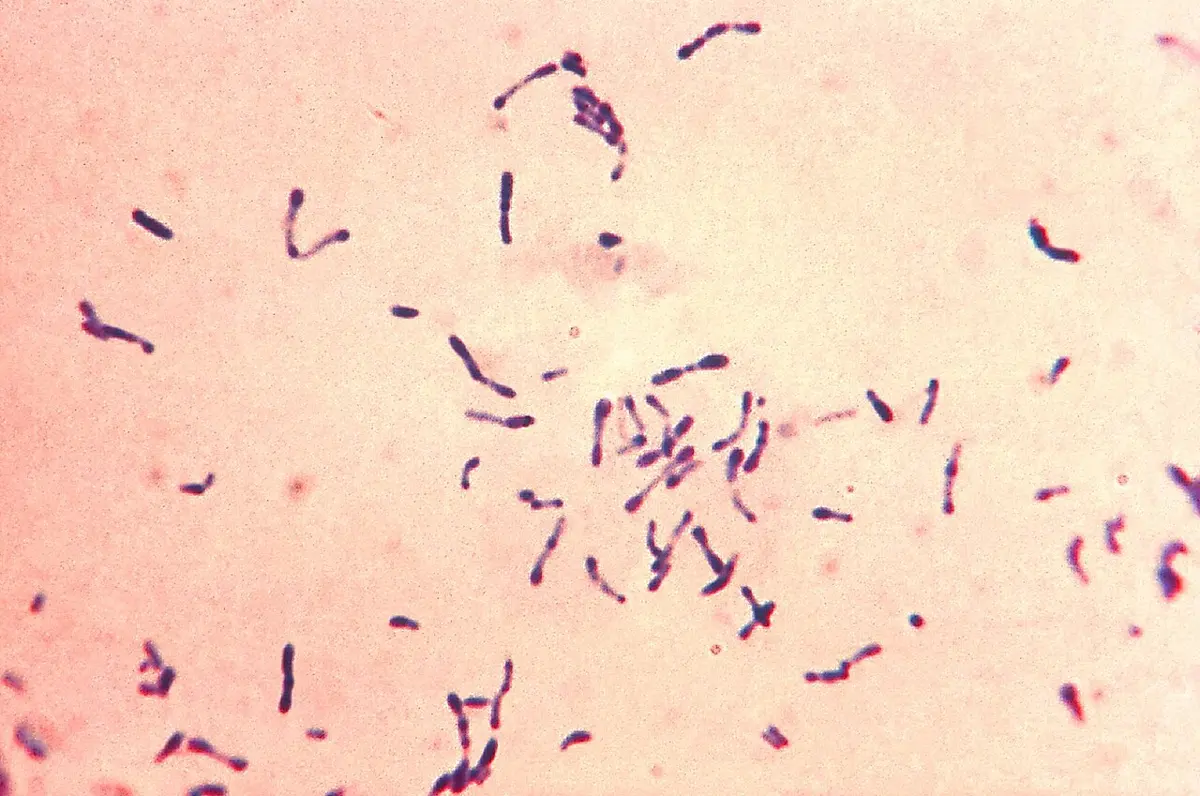
- A germ in the throat (1883–1884). The German doctors Edwin Klebs and Friedrich Löffler found a rod-shaped bacterium in the throats of children with diphtheria. Löffler grew it in his laboratory and showed it caused the disease in animals. Today it is called Corynebacterium diphtheriae Grade 8: Bacteria.
- A puzzle. Löffler noticed something strange. The bacteria stayed in the throat. They were not found in the heart or the nerves, yet those were damaged. Something must be traveling from the throat through the blood.
- A poison (1888). In Paris, Émile Roux and Alexandre Yersin grew the bacteria in a broth and then passed the broth through a fine filter that held back every bacterium. The clear liquid, with no bacteria in it, still killed animals with the signs of diphtheria. The bacteria make a poison, a toxin, that does the damage.
So diphtheria is really a poisoning. The bacteria sit in the throat and give out a toxin, which spreads through the body in the blood.
Why it was so hard
Doctors could see the bacteria, and now they knew about the toxin. But:
- Nothing killed the bacteria inside the body. There were no antibiotics. The strong chemicals that kill bacteria on a table also kill the body’s own cells.
- Even killing the bacteria wasn’t enough. By the time a child was ill, the toxin was already in the blood. A cure had to make the toxin harmless, too.
- Nobody knew how the body fights back. Some children, and some animals, recovered from diphtheria and never caught it again. They had become immune. But nobody knew what had changed inside them.
What they did, step by step
Behring and Kitasato: something in the blood (1890)
Behring was an army doctor who had been sent to work in Berlin, in the institute of Robert Koch, the most famous germ scientist of the day. Since his early years in the army he had wondered whether the body could be “disinfected from the inside”. Working beside him was Kitasato Shibasaburō, a doctor from Japan who in 1889 had become the first person to grow the tetanus bacterium on its own in a laboratory. Tetanus, too, kills with a toxin.
- Making animals immune. They gave animals (guinea pigs, rabbits and others) small doses of the bacteria or their toxin, weakened with heat or chemicals, and then larger and larger doses. Animals treated this way survived doses that would kill an ordinary animal. They had become immune.
- The key step: the serum. They took blood from an immune animal and let it clot. The pale yellow liquid left over is called serum Grade 10: Plasma. They injected this serum into an ordinary animal that had never met the bacteria. Now that animal, too, could survive the bacteria or the toxin.
- A cure, not just protection. Serum given to an animal that was already ill cured it.
- The toxin made harmless. When the serum was mixed with the toxin in a test tube and then injected, the toxin did nothing. Something in the serum made the poison harmless. Behring called it antitoxin.
On 4 December 1890, Behring and Kitasato published a short paper on tetanus, which mentioned diphtheria briefly. A week later, Behring published his results with diphtheria in guinea pigs. A new kind of treatment had been born: serum therapy.
What did Behring and Kitasato give a healthy animal to protect it?
Pick an answer to see why.
From guinea pigs to children (1891–1894)
- The first children (1891–1892). The first children with diphtheria were treated with serum in Berlin in 1891 and 1892. The results were mixed. The serum from small animals was too weak, and nobody could tell how strong one batch was compared with the next. (Sources differ on how well the very first treatments went; most agree that serum began to save many lives only from 1894.)
- Measuring the strength. Another scientist in Koch’s institute, Paul Ehrlich, worked out how to make the serum stronger and how to measure its strength exactly, so that a doctor knew how much to give.
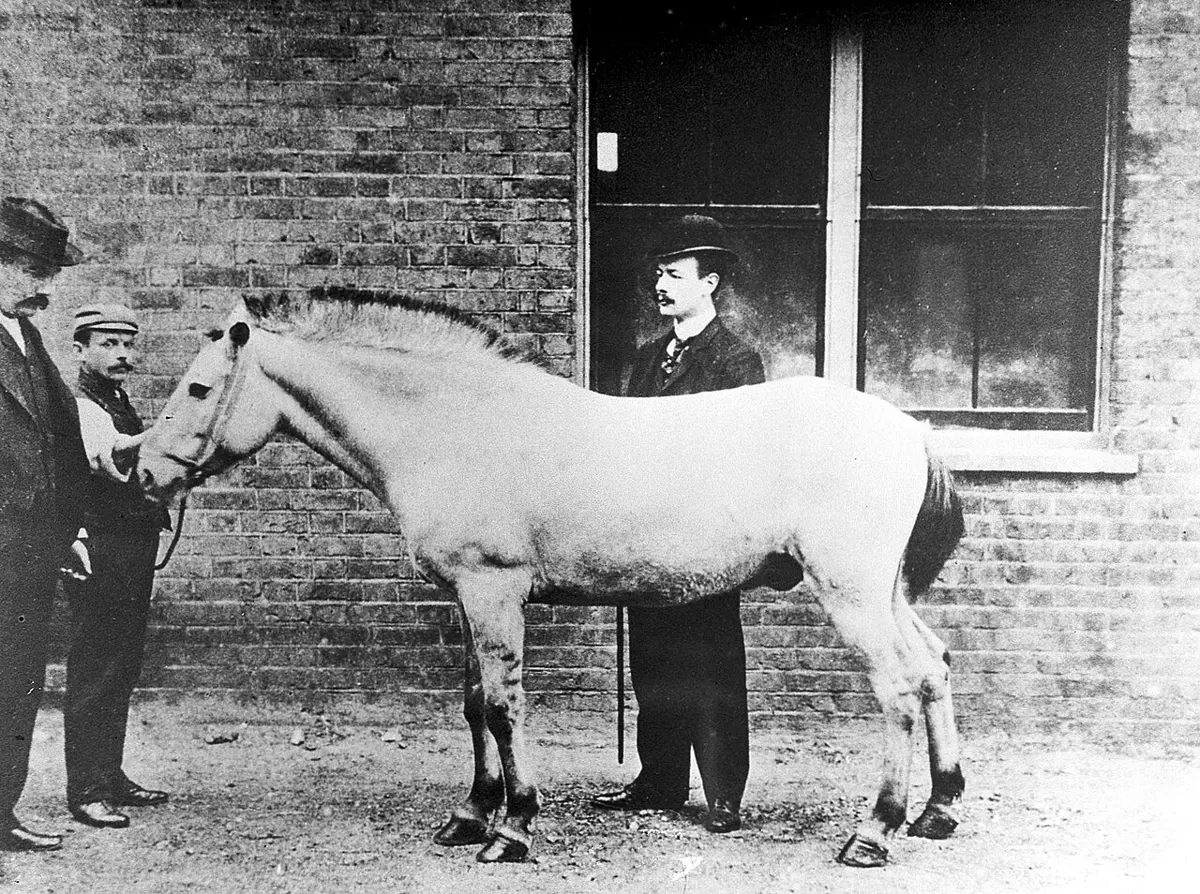
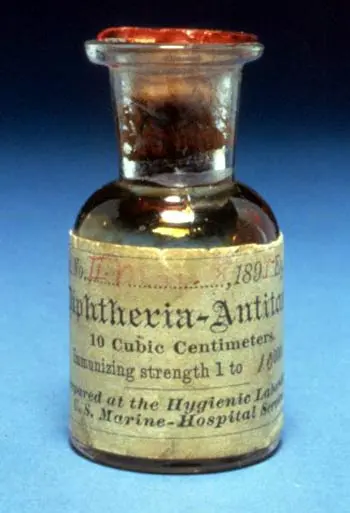
- Bigger animals. To make enough serum, Behring and Ehrlich used first sheep and then horses. A horse has a lot of blood and can give some every few weeks, the way a person gives blood at a blood bank. From 1894 the chemical company Hoechst made Behring’s serum in large amounts.
- The proof in Paris (1894). Émile Roux, in Paris, made horse serum too. In September 1894 he reported to doctors from all over the world: in one Paris hospital, about half of the children with diphtheria had died over the five years before; with the serum, in 1894, about a quarter died. Hospitals everywhere began to use it.
How serum therapy works
Today we know what Behring’s antitoxin really is. When your body meets something foreign, such as a germ or its toxin, some of your white blood cells start making antibodies Grade 10: White blood cells. An antibody is a Y-shaped protein whose tips fit one particular thing, the way a key fits one lock. Antibodies against diphtheria toxin stick to the toxin and cover the part it uses to get into your cells. The toxin is still there, but it can no longer do harm. Behring’s antitoxin was a serum full of these antibodies.
There are two ways to become immune:
- Active immunity: your own body makes the antibodies, after an illness or a vaccine. It takes a week or two to build up, but it can last for years.
- Passive immunity: you are given antibodies that another body made. This is what Behring’s serum did. It works at once, which is what a choking child needs, but it fades within a few weeks, because the borrowed antibodies are slowly cleared away.
A child already has the gray skin of diphtheria in her throat. Why give her serum quickly, rather than a vaccine?
Pick an answer to see why.
In your life today
- The vaccine. In the 1920s scientists learned to turn diphtheria toxin into a harmless toxoid, by treating it with formalin and gentle warmth. A toxoid can’t poison you, but your body still learns to make antibodies against it: active immunity. This is the “D” in the DPT and pentavalent vaccines. In Nepal, babies get the pentavalent vaccine at 6, 10 and 14 weeks, and pregnant women are given the Td vaccine (tetanus and diphtheria).
- Antivenom. Snakebite kills many people in the Terai every year. Antivenom, the medicine given at hospitals and health posts, is made the way Behring made his serum: horses are given small, growing doses of snake venom, and the antibodies in their blood are purified into the medicine. It is Behring’s idea, still saving lives.
- Diphtheria hasn’t gone. Where many children miss their vaccines, diphtheria comes back. Antitoxin is still made from horses and kept for these outbreaks.
What came next
- A whole new science. Behring’s work showed that the blood carries the body’s defenses. This started the science of immunology. Ehrlich soon suggested how antibodies might fit what they catch, like keys in locks.
- Serum for other diseases. Serum from immune animals was soon used against tetanus, and later against snake venom and other poisons.
- The vaccine Behring wanted. Behring knew serum protects only for a few weeks. In 1913 he made a vaccine from a mixture of toxin and antitoxin, to make the body produce its own antitoxin. It was later replaced by the safer toxoid, but he called it the crowning success of his life’s work.
- The open question. Antitoxin made from horses can cause reactions in some people, because their bodies treat the horse proteins as foreign. Scientists are working on antitoxins made from human antibodies grown in the laboratory. Could such medicines one day replace horse serum for snakebite and diphtheria everywhere, at a price poor countries can afford?
In your science books
- Grade 8: bacteria and the harmful effects of microorganisms, the diseases they cause.
- Grade 10: plasma, where serum is explained, and white blood cells, which make antibodies.
- Grade 9: the steps of scientific learning, from a question to experiments on animals and then on people.
Learn more
- The prize at nobelprize.org: The Nobel Prize in Physiology or Medicine 1901, with the presentation speech and a short explanation.
- Behring’s own Nobel lecture, and an article about his life from the Behring archive in Marburg.
The official reason
The prize was given “for his work on serum therapy, especially its application against diphtheria, by which he has opened a new road in the domain of medical science and thereby placed in the hands of the physician a victorious weapon against illness and deaths.”