
The world’s smallest machines
Nobel Prize in Chemistry, 2016: Jean-Pierre Sauvage, Sir J. Fraser Stoddart, and Bernard L. (Ben) Feringa

Jean-Pierre Sauvage
born 1944 in Paris, France
Saw, in a model on his desk, a way to link two molecular rings like a chain.
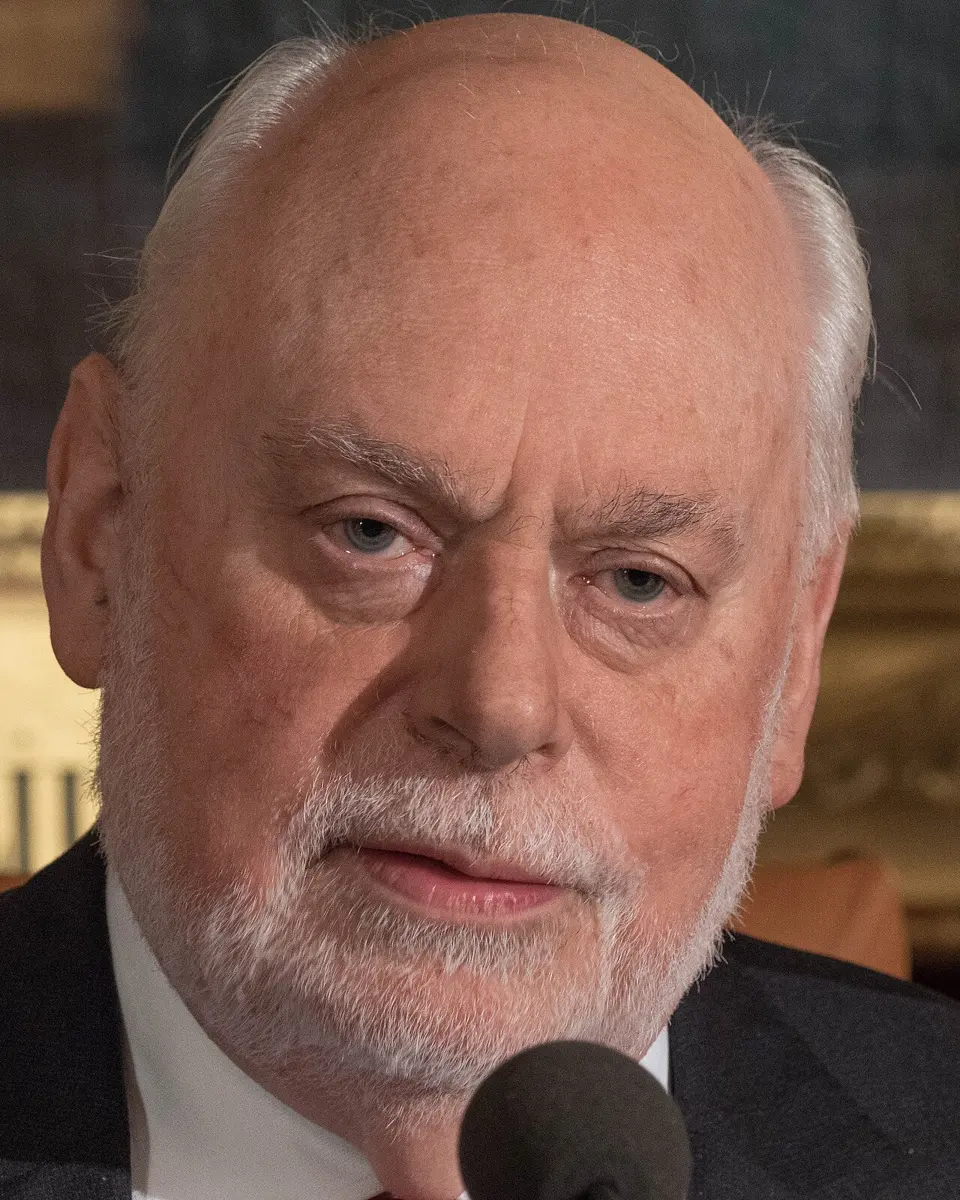
Sir J. Fraser Stoddart
1942–2024, born in Edinburgh, United Kingdom
Grew up on a farm in Scotland, loving jigsaw puzzles, and became a builder of molecules that fit together like puzzle pieces.
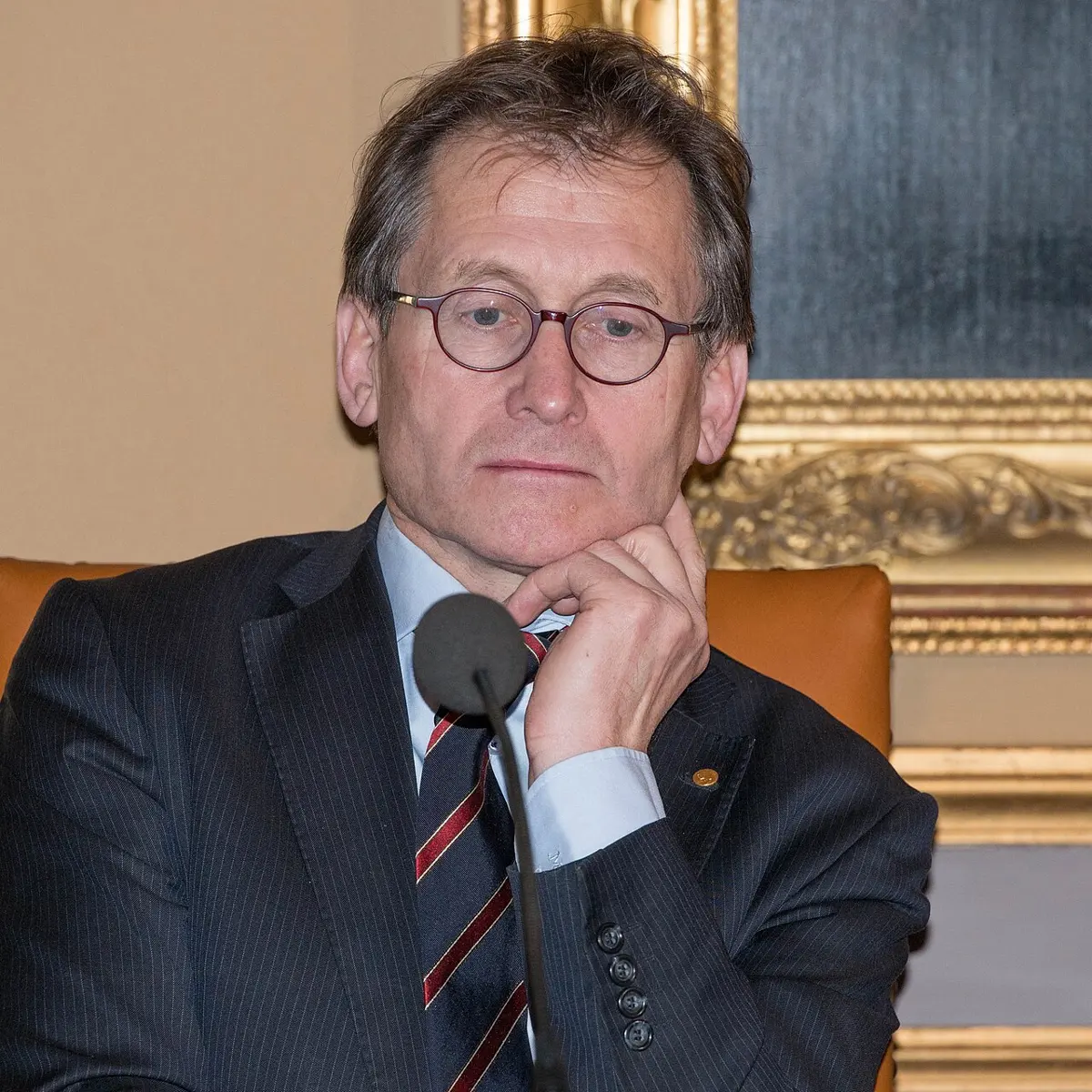
Bernard L. (Ben) Feringa
born 1951 in the Netherlands
The second of ten children on a farm near the German border. He built the first motor made of one molecule.
Think of the smallest machine you have held: perhaps the gears inside a wristwatch, or the tiny motor that makes a phone buzz. Now imagine a machine so small that a thousand of them side by side would still be thinner than one of your hairs.
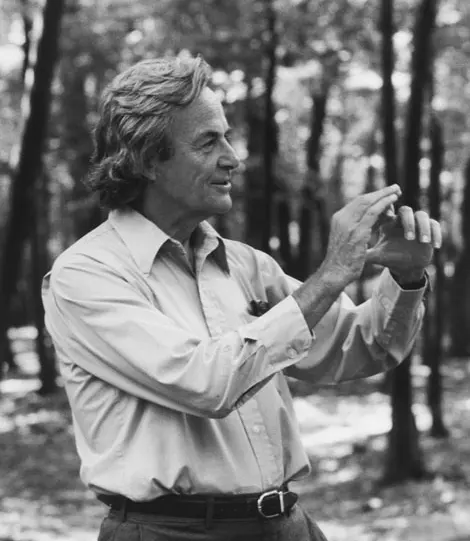
In 1984 the famous physicist Richard Feynman told an audience that such machines should be possible, and that in 25 to 30 years someone would find a use for them. He didn’t know that the first step had already been taken. The 2016 Nobel Prize in Chemistry went to the three chemists who built the first molecular machines: machines in which each moving part is a single molecule.
The problem: how do you build with molecules?
A molecule is a group of atoms held together by chemical bonds. In most molecules these are covalent bonds: two atoms share a pair of electrons, and that holds them tightly together Grade 9: Covalent bond. Chemists are good at joining atoms this way, to make medicines, plastics and dyes.
But a machine needs parts that move relative to each other: a wheel that turns on an axle, a piston that slides in a cylinder. If every part is bonded tightly to the next, nothing can move. So chemists dreamed of a different kind of joining: a mechanical bond. Picture two links of a bicycle chain. They are not stuck together, yet you can’t pull them apart. If two ring-shaped molecules could be linked like that, they could move freely and still stay together.
There was a second problem. Molecules never sit still. In a liquid, every molecule is bumped billions of times a second by the molecules around it, so it jiggles and tumbles at random (Particles that never stop). A molecular machine has to work in that storm. Random jiggling goes left as often as right, so it gets nowhere. A machine must make its parts move one way, on purpose, and for that it needs energy put in, as light, heat or a chemical.
Why can’t an ordinary molecule, with all its atoms held by covalent bonds, work as a machine with moving parts?
Pick an answer to see why.
Why it was hard
Since the 1950s chemists had tried to make two molecular rings linked like a chain. The trouble is that you have to close a ring while it is passing through another ring, and molecules floating in a liquid almost never happen to be in that position. The few groups who managed it got only tiny amounts, a few molecules in every hundred at best, by very long and complicated routes. By the early 1980s many chemists thought linked rings were a curiosity and had given up.
What they did, step by step
Sauvage: a copper ion holds the pieces in place
Jean-Pierre Sauvage worked at the University of Strasbourg, in France, on molecules that capture energy from sunlight. One day he looked at a model of one of them and noticed that two of its parts wound round a central copper ion (a copper atom that has lost electrons), crossing each other like the strands of a chain.
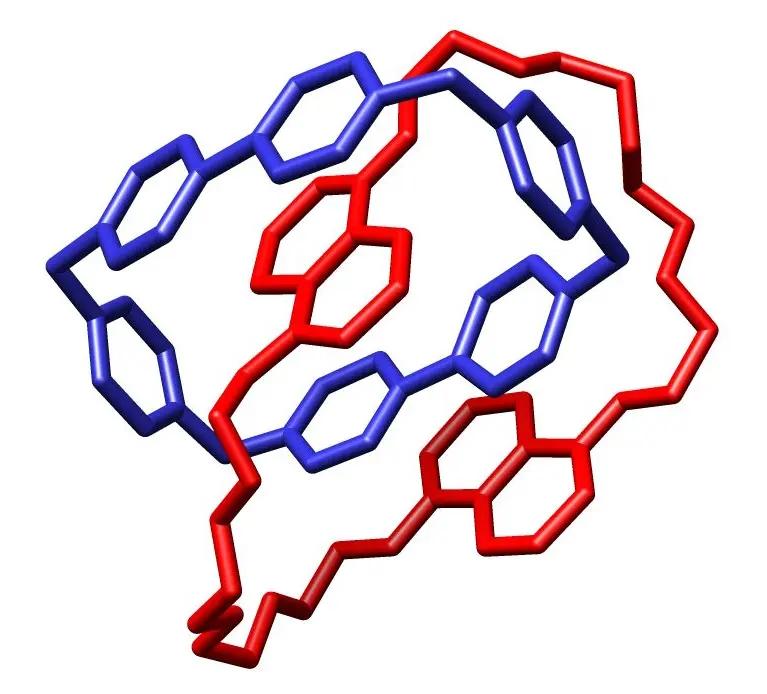
- 1983, the first chain. His group made one ring-shaped molecule and one shaped like a crescent (an open ring). Both are attracted to a copper ion, so the copper held them crossed, with the crescent threaded through the ring. Then they closed the crescent into a second ring, and finally took the copper away. Two rings, linked: a catenane (from the Latin catena, a chain).
- The yield. About 42% of the starting molecules became linked rings, where earlier methods had managed a few per cent at best. Suddenly linked rings could be made in useful amounts.
- 1994, controlled turning. His group made a catenane in which one ring turned once round the other each time energy was added. It was the first small step towards a molecular machine.
Stoddart: a ring that shuttles along a rod
Fraser Stoddart, working in England at the University of Sheffield and then Birmingham, used a different pull to put molecules together: some parts of molecules are short of electrons, others are rich in them, and the two attract each other.
- 1991, threading. His group made an open ring that was short of electrons, and a long rod-shaped molecule, an axle, with two electron-rich places on it. In a solution the ring threaded itself onto the axle. They then closed the ring and put a bulky stopper on each end of the axle, so the ring could never slip off. A ring trapped on an axle is a rotaxane.
- The shuttle. Warmed a little, the ring jumped back and forth between the two electron-rich places, the two stations, like a shuttle between two towns.
- 1994, control. By changing one station (with a chemical, or with electricity), they could make the ring move to the other station when they chose, and back again. The movement was no longer random.
From rotaxanes Stoddart’s group built a molecular lift (2004) that raises itself 0.7 nanometers (0.7 millionths of a millimeter), and a molecular muscle (2005) that could bend a very thin sheet of gold. With others, he used them in a computer memory chip that stored 20 kilobytes.
Feringa: a motor that turns one way
A motor must turn continuously in one direction. Many groups tried in the 1990s. Ben Feringa, at the University of Groningen in the Netherlands, was first.
- 1999, the motor. His molecule had two flat halves, like two blades, joined by a double bond between two carbon atoms Grade 9: Double and triple bonds. A double bond normally can’t turn, but a flash of ultraviolet light lets one half flip half a turn (180°) round it.
- The ratchet. Small side groups on each half get in each other’s way. After the flip they are squeezed; a little heat lets them snap past each other, always forwards. Another flash, another half turn; heat, another snap. Like the clicking ratchet in a bicycle’s back wheel, it can only go one way.
- Faster and stronger. By 2014 his group had made such a motor turn at 12 million turns a second. In 2006 they mixed a few motors into a thin film of liquid crystal and used them to spin a glass rod 28 micrometers long, 10,000 times bigger than the motors. In 2011 they built a nanocar: four motor “wheels” on one molecular frame, which crept across a copper surface when given small electric pulses.
What makes Feringa’s motor turn in one direction, rather than jiggling back and forth?
Pick an answer to see why.
How it works now: machines driven by energy
All three laureates did the same deep thing: they pushed molecules away from rest. Left alone, a chemical system settles into a calm, lowest-energy state and stays there. Their machines are fed energy, as light, heat, electricity or a chemical, and use it to do one controlled movement after another.
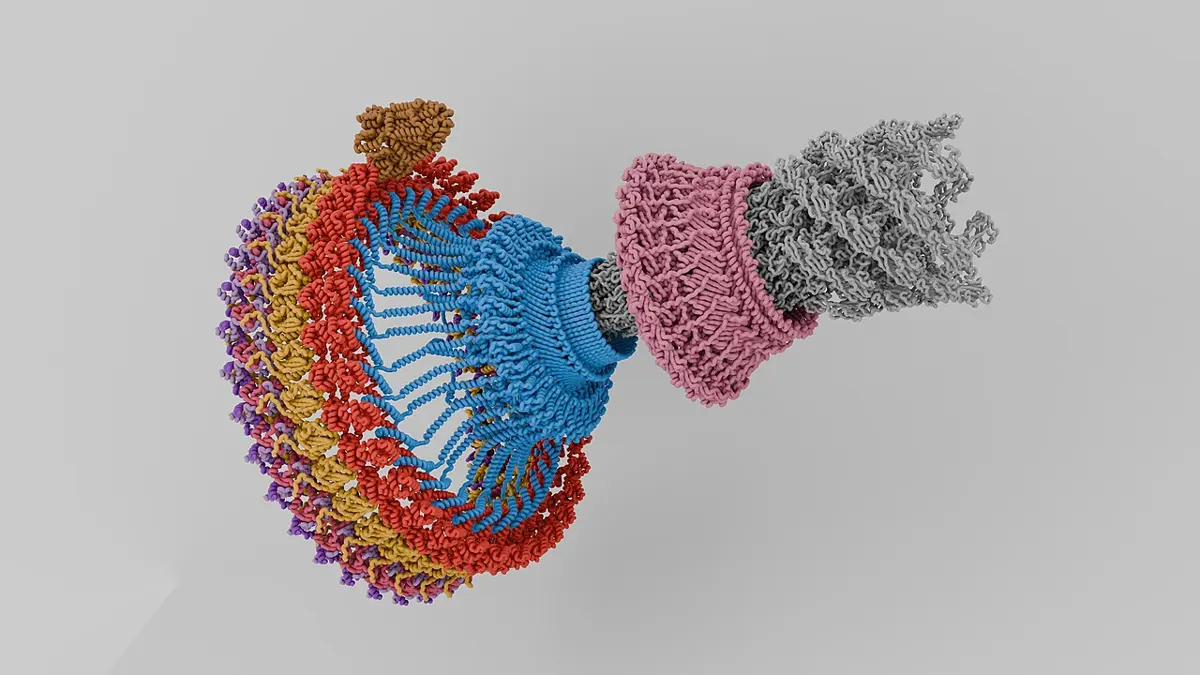
Your body has been doing this all along. Inside every cell are natural molecular machines. One, called ATP synthase, spins like a turbine to make the molecule that stores energy from your food. Others walk along fibers inside the cell carrying loads. Bacteria swim with a tail turned by a tiny rotary motor, the very example Feynman gave in 1984. The 2016 laureates showed that chemists can build machines like these for themselves.
In your life today
Honestly: not yet. There is no molecular machine in your phone or your kitchen. The Nobel committee said the molecular motor is where the electric motor was in the 1830s, when scientists showed off spinning wheels and cranks in their laboratories, with no idea that they would one day lead to fans, washing machines and mixers Grade 10: The electric motor.
What already exists is a toolbox: linked rings, shuttles and motors that chemists around the world now use as parts for new designs.
What came next
- Molecular robots. In 2013 another team used a rotaxane to build a molecular machine that picks up building blocks of proteins, one at a time, and joins them in order.
- Drilling into cells. In 2017 Feringa and other chemists showed that light-driven motors, attached to a cell, can spin fast enough to open a hole in its outer layer. One day this might help deliver medicines, or destroy harmful cells.
- Smart materials. Motors built into plastics make materials that bend, shrink or change shape when light shines on them, and might one day store energy or sense light.
- An open question: how do you make millions of molecular machines work together, in step, to do something useful at our size, the way the machines in a muscle add up to lifting your arm?
In your science books
- Grade 9: the covalent bond and double and triple bonds, and catenation, carbon’s chains (from the same Latin word as catenane).
- Grade 10: the electric motor.
- Going Further: what a molecule looks like, and particles that never stop moving.
Learn more
- The Nobel Prize’s own explanation: How molecules became machines (nobelprize.org).
- The laureates’ Nobel lectures: Sauvage, Stoddart and Feringa.
The official reason
The prize was given “for the design and synthesis of molecular machines.”