
A farmer with almost nothing gives water, a place to rest and three days of food to a man he has never met. He doesn’t ask for anything back. Then the stranger points at a stone by the river. What is under it, and why does the farmer first say no?
This unit is about offers: how to hold out help or a cup of tea in English, and how to say yes, please or no, thanks. You will read the story Naresh and the Stranger and From a Railway Carriage, a poem you can hear as a train. You will learn the passive voice in every tense (The pot was opened. The money has been taken), say contractions the way people really say them, listen to a friend’s visit, and write a reply to an offer and a reply to an invitation.
Getting started: what are they offering?
The unit opens with four pictures: a boy reaching down his hand to a girl who has fallen; a schoolboy holding out a small book to a girl; a woman stepping up to a man whose stack of boxes is about to slip; and a boy holding two heavy bin bags beside a bent old man with a stick, and a little girl.
To offer something is to ask if a person would like to have it, or would like you to do it for them. It is a kind of question, and the person is free to say no.
Study the pictures. What are the people offering? What might each one say?
Model answers
Reading I: Naresh and the Stranger
Before you read
The picture shows a man in a bright head cloth, sitting on his heels at the edge of a green field.
Who do you think the man in the picture is?
A model answer
Does he look poor or rich? Why do you think so?
A model answer
What kind of text it is
This is a short moral tale: a simple story that teaches a lesson. Tales like this don’t give their people much detail. We never learn the village’s name or the stranger’s. What matters is what each person does, and what comes of it. Read it as a chain: a man in need, a kindness that costs something, and a reward nobody asked for.
The story, part by part

A man who can’t earn enough. Naresh is simple and honest, and he has six people to feed: his wife, his three children, and his father and mother. His wife has to look after the family, so she can’t go out to work. That leaves his income alone, and it is insufficient (not enough). He keeps asking himself when he will earn enough to buy food, and how the children will grow strong without nutritious food (food that is good for the body).
A man who talks to his oxen. He works in the field from morning till night. His only friends are his oxen, so he tells them his worries. Sometimes the neighbors hear him. They laugh, but they also feel sorry about his condition (the state he is in).
The stranger at the river. One day, Naresh goes to the river to fetch water (go and bring it back). He has just filled his pot when a tired, ill-looking man walks up. The man is a stranger, someone he has never met. Before the man can say a word, Naresh asks if he needs help. This is the story’s first offer. The stranger asks for a drink and a place to rest, and Naresh gives him water, then makes a second offer: come home with me, and leave when you feel better.
The wife’s tears. At home, Naresh’s wife asks who this man is. He takes her aside, explains, and asks her to look after him. She starts to cry. She isn’t cruel: they don’t have enough food for themselves. Naresh answers that God will help them if they help others, and tells her to feed the guest.
The stone and the pot. On the third day, the stranger feels better. Before he leaves, he invites Naresh to come to the river. There he points at a big stone and tells him to lift it and dig the ground beneath it (under it). Naresh finds a big pot and passes it to him. The stranger opens it and pulls out a bag full of money.
Three offers at the end. The stranger says the money is for Naresh’s family, because he was kind when the man was ill and alone. Naresh is surprised, and he says no: he didn’t help for money. The stranger offers again, saying it would make him very happy. Only then does Naresh take it. And now look at what Naresh does, even with the bag in his hands: he asks where the man is going and offers him food for the road. The stranger smiles and says that with friends like Naresh he needs nothing. He says goodbye and leaves.
Every step of the story is an offer. Here they are, with what became of each one.
| Who offers | What | The answer |
|---|---|---|
| Naresh | help, by the river | The stranger accepts: water and a place to rest. |
| Naresh | to come home and rest | The stranger accepts and thanks him. |
| The stranger | to come to the river | Naresh goes. |
| The stranger | the money | Naresh declines, then accepts when the offer is made again. |
| Naresh | food for the journey | The stranger thanks him and declines. |
Why does Naresh’s wife cry?
Pick an answer to see why.
Why does Naresh say no to the money at first?
Pick an answer to see why.
Words from the text
Words linked here open in English Vocabulary, where you can see an example and practice them in the word game. The meanings below are the ones the words have in this text.
| Word | Meaning here |
|---|---|
| insufficient | not enough |
| nutritious | good for the body; full of what you need to grow and stay well |
| condition | the state a person or thing is in |
| fetch | to go and bring something back |
| stranger | a person you have never met |
| beneath | under |
| surprised | feeling something you didn’t expect has happened |
| kindness | the quality of being kind |
| independent | able to manage on your own, without help from others |
A. Find the words
Find the words from the text and complete the following sentences.
- a.Nilima found her lost purse ……… a pile of leaves.
- b.……… means ‘the quality of being kind’.
- c.She is a/an ……… and hard-working girl. She tries to stand on her own.
- d.There is a complete ……… sitting at my desk. I have never seen or met him before.
- e.We need to eat ……… food to help our body to grow.
Answer
B. Who said it?
These sentences are from the story above. Who said them to whom?
- a.Do you need some help?
- b.Will you come home with me?
- c.Would you like to come with me to the river?
- d.The money is for you and your family. Take it.
- e.I shall be very happy if you take it.
- f.Let me give you some food to eat.
Answer
C. Answer the questions
Why could Naresh’s wife not earn any money?
Answer
What was Naresh worried about when he talked to his oxen?
Answer
Why did Naresh’s wife cry when she knew the stranger would stay in their home?
Answer
Why do you think the stranger wanted to give money to Naresh?
A model answer
Did the stranger take anything from Naresh when he left? Why?
Answer
What lesson did you learn from the story?
A model answer
D. Tell it as Naresh
Imagine you are Naresh. Tell the story to your friends in your own words.
Hint
A model answer
Pronunciation: contractions
A contraction is two words squeezed into one: I am becomes I’m, and could not becomes couldn’t. Some letters drop out, and an apostrophe (’) stands exactly where they were. Contractions are normal in everyday speech, and the full forms can sound slow or very firm.
| Contraction | Full form | Say it | Dictionary |
|---|---|---|---|
| stranger’s | stranger is / has | STRAYN-jerz | /ˈstreɪndʒəz/ |
| Naresh’s | Naresh is / has | NA-resh-iz | /ˈnʌreʃɪz/ |
| I’m | I am | AIM | /aɪm/ |
| they’d | they had / would | THAYD | /ðeɪd/ |
| she’ll | she will | SHEEL | /ʃiːl/ |
| can’t | cannot | KAHNT (British), KANT (American) | /kɑːnt/, /kænt/ |
| she’s | she is / has | SHEEZ | /ʃiːz/ |
| they’ve | they have | THAYV | /ðeɪv/ |
| Neil’s | Neil is / has | NEELZ | /niːlz/ |
| couldn’t | could not | KOOD-nt | /ˈkʊdənt/ |
| aren’t | are not | AHNT (British), AHRNT (American) | /ɑːnt/, /ɑːrnt/ |
| mustn’t | must not | MUSS-nt | /ˈmʌsənt/ |
Three things are worth listening for:
- The first t of mustn’t is silent. Say MUSS-nt, never must-unt.
- Couldn’t and mustn’t keep two beats, but the second is only a quick -nt. Aren’t has one beat in most British speech: it sounds like aunt.
- ’s follows the rule you learned for -s in Unit 6. After a hushing sound, it becomes a new beat: Naresh’s is NA-resh-iz. After a voiced sound, it is /z/: Neil’s.
“The stranger’s left already.” What does stranger’s mean here?
Pick an answer to see why.
Which contraction has a silent letter that the spelling still shows?
Pick an answer to see why.
Speaking: making and answering offers
An offer in English is built one of two ways. It depends on what you are holding out: a thing, or an action you will do.
| You are offering | Say | Example |
|---|---|---|
| a thing, such as food or a drink | Would you like…? How about…? Can I get you…? | Would you like some coffee? |
| to do something for someone | Shall I…? Would you like me to…? Can I…? | Shall I carry that bag? |
| something you are sure they’ll want | Let me… I’ll… if you like. | Let me get the door. I’ll wash up if you like. |
| any help at all | Can I help you? Is there anything I can do? | Is there anything else I can do? |
To answer, say the small words. Yes, please and No, thanks are the usual replies. A bare Yes or No sounds cold.
| Accepting | Declining |
|---|---|
| Yes, please. | No, thanks. |
| Yes, please. That would be great. | No, thanks. I’m fine. |
| That’s very kind of you. | That’s kind of you, but I can manage. |
| Thanks, that would be a big help. | Thanks, but I’ll do it myself. |
The way to say no kindly is the same as for an invitation: thank the person, say no gently, and give a short reason. You saw it in How to say no kindly.
Your neighbor’s arms are full, and you want to open her gate. What do you say?
Pick an answer to see why.
“Would you like me to wash your clothes?” You’d rather do it yourself. What do you say?
Pick an answer to see why.
A. Match the offers
Match the offers in the left column to the appropriate responses in the right column. Practice saying them in pairs.
| Offers | Responses |
|---|---|
| a.Can I help you? | i.Yes, please. I’m dying for a coffee. |
| b.Shall I get you something to drink? | ii.No, thanks. I’ll wash them myself. |
| c.Would you like some coffee? | iii.Yes. Can I have orange juice, please? |
| d.Would you like me to wash your clothes? | iv.Yes, please. There’s no one to help me with them. |
| e.How about some juice? | v.No, nothing. Thank you. |
| f.Shall I help you with the chores? | vi.Yes, please. I can’t lift the luggage. |
| g.Is there anything else that you’d like me to do? | vii.Yes. That would be nice. I’m very thirsty. |
Answer
B. Make the offers
Work in pairs. Make offers in the following situations and respond to them.
- a.Your friend is at your home. You want to give him a cup of tea.
- b.It is raining outside. You want to offer your neighbor your umbrella.
- c.Your friend is sweating. You want to open the window of the classroom.
- d.Your father is carrying two heavy bags. You want to help with one bag.
- e.You want to donate some money to an orphanage.
Model conversations
Grammar I: active and passive
A. Match the pairs
Here are six sentences from the story, each said in two ways. Before any rules, see if you can pair them.
Match the active sentences in column A with their passive counterparts in column B.
| Column A | Column B |
|---|---|
| a.Naresh gave him some water to drink. | i.He was taken to the riverbank by the stranger. |
| b.The stranger thanked him. | ii.The money was taken by Naresh. |
| c.The stranger took him to the riverbank. | iii.He was given some water to drink by Naresh. |
| d.The stranger opened the pot. | iv.He was heard talking to his oxen by the neighbors. |
| e.Naresh took the money. | v.The pot was opened by the stranger. |
| f.The neighbors heard him talking to his oxen. | vi.He was thanked by the stranger. |
Answer
What the passive is
Every sentence with an action has a doer and often a receiver, the one the action happens to. English gives you two ways to arrange them.
In the active voice, the subject is the doer: The stranger opened the pot. In the passive voice, the subject is the receiver: The pot was opened by the stranger. The news is the same. What changes is what the sentence is about: the stranger, or the pot.
To change active to passive, follow four steps:
- Find the object of the active sentence (the pot), and make it the subject.
- Put be in the same tense as the active verb, and make it agree with the new subject (opened is past, one pot: was).
- Add the past participle of the main verb (opened).
- Move the doer behind by, or leave it out.
So the only verb that changes its tense is be. The past participle stays the same in every tense: is opened, was opened, has been opened, will be opened.
Many common verbs have an irregular past participle, and a passive is wrong without it. These are worth learning by heart.
| Verb | Past simple | Past participle |
|---|---|---|
| take | took | taken |
| give | gave | given |
| steal | stole | stolen |
| write | wrote | written |
| build | built | built |
| buy | bought | bought |
| make | made | made |
| see | saw | seen |
Which is the passive of “Simran cleaned the room”?
Pick an answer to see why.
“They ……… the road next year.” Which active verb goes with the passive “The road will be built next year”?
Pick an answer to see why.
B. Every tense
Here are the pairs to study, put in order of tense. Some pairs have the passive first, so read each one in both directions.
| Tense | Active | Passive |
|---|---|---|
| Present simple | She plays the piano. | The piano is played by her. |
| Present continuous | My father is repairing the radio. | The radio is being repaired by my father. |
| Present perfect | Someone has stolen my pen. | My pen has been stolen. |
| Past simple | She made that table. | That table was made by her. |
| Past continuous | Nitesh was painting the wall. | The wall was being painted by Nitesh. |
| Past perfect | Somebody had picked up the oranges for them. | The oranges had been picked up for them. |
| Future simple | He will buy the guitar. | The guitar will be bought by him. |
| Future perfect | John will have finished the project work. | The project work will have been finished by John. |
| With a modal | He must complete this task on time. | This task must be completed on time. |
Look down the last column. Each passive is be in some form, then a past participle. In the continuous tenses, the word being comes in. In the perfect tenses, been does. After a modal, be stays plain.
When to use the passive
The active is the plain way to speak, so English uses it most. Choose the passive when:
- you don’t know who did it: My pen has been stolen.
- it is obvious, or it doesn’t matter: Apples are grown in Dolpa. (By farmers, of course.)
- the receiver is what you are talking about: Bread is made from flour.
In all three, the doer is left out. Very often a passive has no by at all. Keep by only when the doer is news: Muna Madan was written by Laxmi Prasad Devkota.
Words such as someone, somebody, people and you tell us nothing, so we drop them: People grow rice here → Rice is grown here.
Which sentence is best with the doer left out?
Pick an answer to see why.
C. Change to the passive
Change the following sentences into passive.
- a.The dentist pulled out my tooth.
- b.The police are questioning him.
- c.The waitress serves breakfast at 7 o’clock.
- d.Students from our class collected the rubbish.
- e.You should take these tablets before meals.
- f.The teacher has sent him out of the classroom.
- g.You must wash colored clothes separately.
- h.The mayor will inaugurate the new sports center next month.
- i.Somebody has stolen Nabina’s bicycle recently.
- j.People grow apples in Dolpa.
Hint
Answer
Writing I: replying to an offer
The company’s email
The email comes from an online shop, Nepal Sunglass House in Tinkune, Kathmandu, and it is signed by its Managing Director, Sukla Devkota. It goes to a regular customer, Mr. Dangol. Its subject line says About the New Offer.
The offer itself is short: two pairs of sunglasses for the price of one. It is a seasonal offer for this week only, so the customer is told to order as soon as possible. The website is given for more details.
How to reply
You practiced replying to an email in Unit 2. A reply to an offer is formal, because it goes to a business. It has the same parts, whether you accept or decline.
| Part | Accepting | Declining |
|---|---|---|
| Subject | Re: About the New Offer | Re: About the New Offer |
| Greeting | Dear Sukla Devkota, | Dear Sukla Devkota, |
| Thanks | Thank you for your email about… | Thank you for your email about… |
| Your answer | I would like to take up your offer. | I’m afraid I won’t be able to accept it at this time. |
| Next step or reason | what you want, and any question | a short reason; a polite hope for later |
| Close and name | With best regards, Sameer Dangol | With best regards, Sameer Dangol |
Don’t guess at a title. If you can’t tell from a name whether to write Mr. or Ms., use the whole name, as the models below do.
Here is an email written by an online marketing company to a regular customer. Read it carefully and write a reply to it. You can accept or decline the offer.
A model reply: accepting
A model reply: declining
Listening: a friend comes to visit
A girl arrives at her friend’s house. Read the questions in B first, then listen, as many times as you need. The recording is CDC’s, and it lasts about a minute; the answers are hidden under the questions.
Words to know: coat (a warm outer jacket), mobile (a mobile phone), fridge (short for refrigerator).
A. Before you listen
Look at the following picture and answer these questions. (The picture shows a girl at the top of some steps, with her back to us, at a green front door with a plant in a pot on each side.)
- a.What is the girl doing?
- b.Have you ever visited your friend’s house? Why?
Model answers
B. Answer the questions
Listen to the audio and answer these questions.
- a.Who is the visitor?
- b.How is her dress?
- c.Why does Lora like to keep the bag with her?
- d.Where does Lora sit?
- e.Why does she not eat cake?
- f.What are they planning to do?
Answer
Count the offers in the recording: there are five. Lora accepts three and declines two, and she is polite each time. Listen again and find which ones she declines.
C. A day with your best friend
Recall an event when you spent time with your best friend and write what you did together.
Hint
A model answer
Reading II: From a Railway Carriage
Before you read
What is your favorite means of traveling? Why?
A model answer
How do you try to make your journey more interesting?
A model answer
The poet and the poem
Robert Louis Stevenson (1850–1894) was born in Edinburgh, Scotland. He was often ill as a child, with coughs and fevers, and his nurse, Alison Cunningham, looked after him and read to him. He grew up to write Treasure Island and Strange Case of Dr Jekyll and Mr Hyde. He died on the island of Upolu in Samoa, far across the world.
This poem comes from A Child’s Garden of Verses (1885), his book of 64 poems for children, which he dedicated to that nurse. He first planned to call it Penny Whistles.
A railway carriage is one of the cars of a train that people sit in. So the title tells you where we are. We are sitting by the window of a moving train, and everything outside is rushing past.

The poem has four stanzas of four lines each. Its lines rhyme in pairs, called couplets (witches, ditches; battle, cattle).
The poem, part by part
Stanza 1: faster than magic
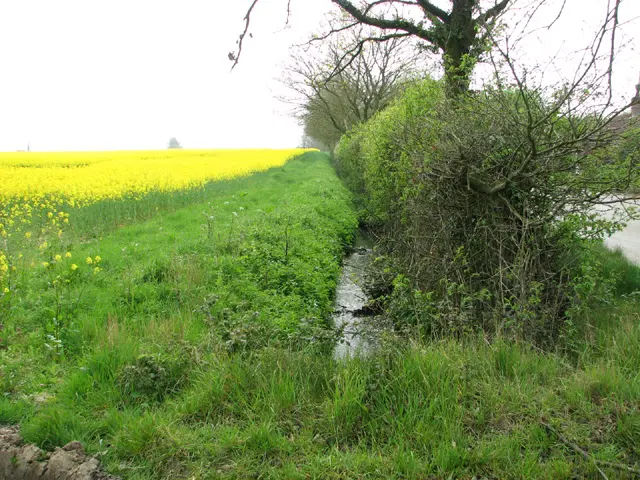
The poem begins with speed. The train goes faster than fairies and witches, and fairy tales can’t go faster than that. Bridges and houses, hedges and ditches fly past in a simple list, with no verb at all, as if there is no time for one. A hedge is a row of bushes grown as a fence, and a ditch is a narrow channel dug along a field or road. Out in the meadows (grassy fields), horses and cattle seem to charge along like troops (soldiers) in a battle.
Stanza 2: thick as rain
Everything on the hills and the plains flies past as thick as driving rain (rain blown hard by the wind). Again and again, in the wink of an eye (a moment, as quick as one wink), painted stations go by with a whistle. The whistle really comes from the train, but the poem makes it sound as if the stations are the ones moving.
Stanza 3: little pictures
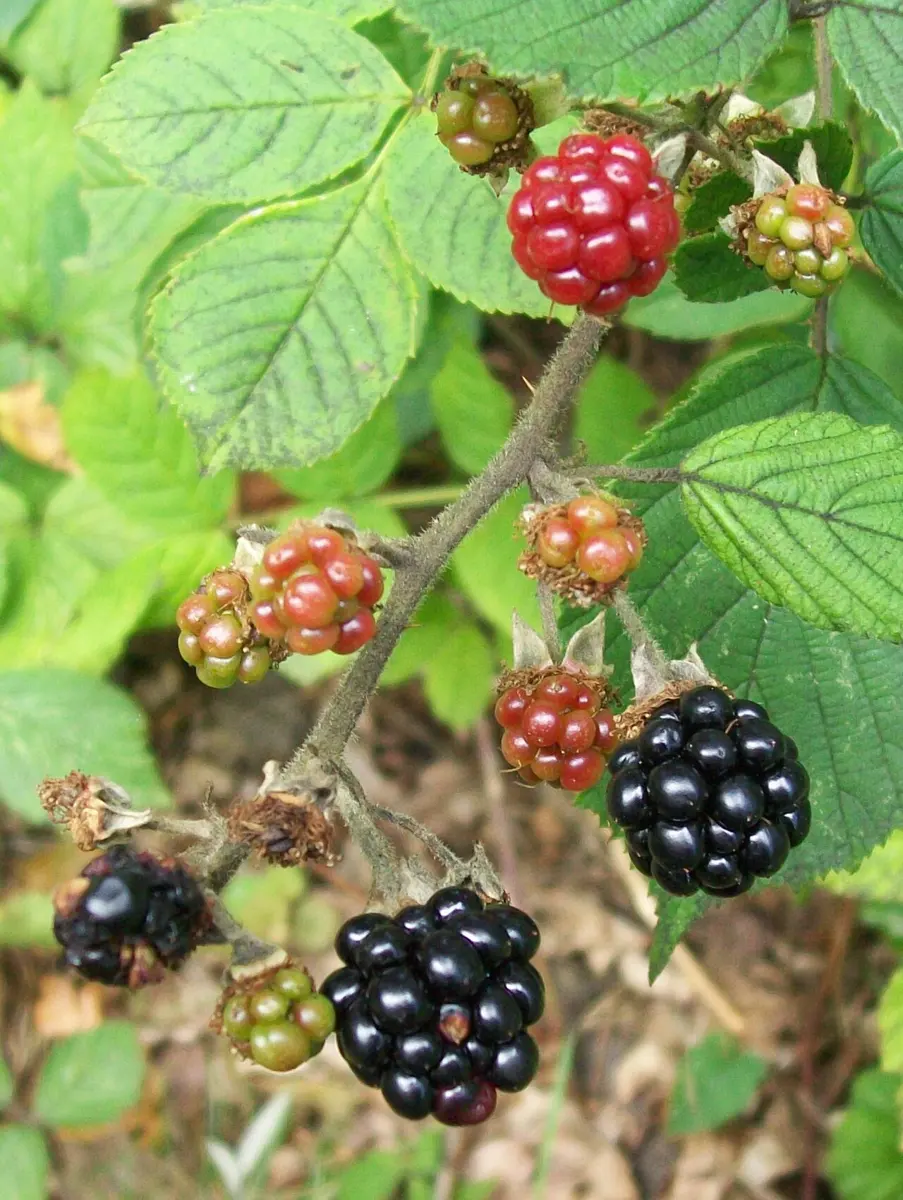
Now the eye catches single people, each just for a second. A child clambers and scrambles (climbs up with hands and feet), alone, gathering brambles (the prickly plants that give blackberries). A tramp (a homeless person who walks from place to place) stands and gazes (looks for a long time). And there is the green (a village’s open piece of grass), where people string daisies into chains.
Stanza 4: gone forever
A cart has run away in the road, lumping along (moving heavily and clumsily) with a man and his load. Then a mill, then a river. And the last line ties the whole poem up: each one was just a glimpse (a very short look), and now it is gone forever.
The poet’s devices:
- Simile (a comparison with like or as): horses and cattle charge like troops in a battle; the sights fly as thick as driving rain.
- Comparison with magic: faster than fairies, faster than witches.
- Alliteration (words near each other starting with the same sound): faster, fairies; hedges, houses.
- Rhyme: couplets, aa bb cc dd.
- Lists: the sights pile up with hardly any verbs, just as they do in the window.
- Rhythm: the beat of the lines, which you can hear below.
Hear the train
Read the poem aloud, and you will hear how it runs. Each line has four strong beats, steady and quick, and the rhythm of the lines echoes the rhythm of the train. Meanwhile, the view keeps changing. That is the poem’s trick: a steady beat under a world that never stands still.
Who or what “charges along like troops in a battle”?
Pick an answer to see why.
What does “Each a glimpse and gone forever” mean?
Pick an answer to see why.
Words from the poem
| Word | Meaning here |
|---|---|
| fairies | small magical beings in old stories |
| witches | women with magic powers in old stories |
| hedge | a row of bushes planted close together as a fence |
| ditch | a narrow channel dug at the side of a field or road, to carry water away |
| troop(s) | soldiers |
| meadow | a field of grass |
| wink | a quick closing and opening of one eye; in the wink of an eye, in a moment |
| clamber | to climb with difficulty, using hands and feet |
| scramble | to climb or move quickly and awkwardly |
| bramble | a wild, prickly bush that gives blackberries |
| tramp | a homeless person who walks from place to place |
| gaze | to look at something for a long time |
| string | to thread things on a line, like beads |
| daisy | a small wild flower, with white petals around a yellow middle |
| lump (along) | to move heavily and clumsily; as a noun, a lump is a solid piece with no clear shape |
| glimpse | a very short look at something |
A. Word meanings
Consult a dictionary and find the meanings of the following words.
- a.hedge
- b.ditch
- c.troop
- d.wink
- e.glimpse
- f.tramp
- g.lump
- h.bramble
Answer
B. The summary
Complete the summary of the poem with the correct words/phrases from the box.
so quickly, describes, experiences, a child, faster, crosses, amazement, speedy, daisy flowers, glimpse, battlefield
The poet presents his (a) ……… of traveling in a train. He (b) ……… the sights that he notices while traveling in the train. The train moves (c) ……… than fairies and witches. It runs like soldiers on the (d) ……… . The (e) ……… train leaves behind bridges, houses, fences, and the green fields.
The poet mentions that the train (f) ……… all the scenes as quickly as drops of rain. In one scene, the train passes railway stations that look like a painted picture. The poet also sees (g) ……… climbing a steep slope and collecting berries. Further, he sees a homeless person who looks at the train with (h) ……… . As the train moves forward, he sees some people in a village making garlands with (i) ……… .
The poet then sees a cart moving along the road. It is full of load, and the driver is sitting on top of the load. He also gets a (j) ……… of a mill and a river by its side. All these objects appear and disappear (k) ……… .
Answer
C. Answer the questions
What is the movement of the train compared with?
Answer
What does the speaker see in the meadows?
Answer
What is the child trying to do while climbing the hill?
Answer
Why do you think the poor man looks at the train with amazement?
A model answer
What is the theme of the poem?
A model answer
D. Recite it
Recite the poem in a group.
How to do it well
Writing II: replying to an invitation
In Unit 10, you wrote an invitation. Now you are on the other side. An invitation is an offer too, so your reply follows the same plan. A letter to a friend is informal, and it has these parts:
| Part | What it says | Example |
|---|---|---|
| Address and date | where you are, and when, at the top | Baglung Bazaar, Baglung; 12 Falgun |
| Greeting | the friend’s first name | Dear Rabina, |
| Thanks and good wishes | thank them, and say why you are pleased | Congratulations on your results! |
| Your answer | yes or no, clearly | Of course I’ll come. |
| The details | repeat the date, or say what you will bring or do | I’ll be there by 4 p.m. on Saturday. |
| A warm close | something friendly, then your name | See you soon! With love, Lochan |
A success party is held to celebrate something good: results, a prize, a place at a college.
Imagine one of your friends has invited you to attend his/her success party. Write a reply letter to him or her.
Hint
A model letter: accepting
A model letter: declining
Project work: collecting offers
Extra bit: the passive voice chart
Here is every passive in this unit in one table, to keep. Add one example of your own to each row.
| Tense | Example | Structure |
|---|---|---|
| Present simple | Bread is made from flour. | am/is/are + past participle |
| Present continuous | The road is being built. | am/is/are being + past participle |
| Present perfect | Apples have been grown in Mustang for a long time. | has/have been + past participle |
| Past simple | The goat was killed in an accident. | was/were + past participle |
| Past continuous | The house was being painted. | was/were being + past participle |
| Past perfect | His house had been burned down. | had been + past participle |
| Future simple | The work will be finished next month. | will/shall be + past participle |
| Future perfect | They will have been sent to the city. | will/shall have been + past participle |
| Modal verbs | The ceiling can be touched. | modal verb + be + past participle |
Which is the past continuous passive?
Pick an answer to see why.
Which is right after a modal?
Pick an answer to see why.
Exercise
Practice on this unit in the style of the final exam. Try each one as in the exam, then open the answer.
Read Naresh and the Stranger again and write whether the following statements are True or False.
- a.Naresh’s wife went out to work every day.
- b.The neighbors sometimes heard Naresh talking to his oxen.
- c.The stranger stayed in Naresh’s house for a week.
- d.The pot was found under a big stone.
- e.Naresh took the money the first time it was offered.
Answer
Read From a Railway Carriage again and complete the sentences with the correct words.
- a.The poet is traveling by ……… .
- b.The sights fly as thick as driving ……… .
- c.The child is gathering ……… .
- d.The tramp stands and ……… .
- e.Each sight is only a ……… .
Answer
Read the story and answer the questions.
One cold evening, a bus broke down on the road above Mugling. The passengers had nowhere to stay. A shopkeeper called Roshni saw them shivering. “Would you like some tea?” she asked. She had little money, but she boiled all the tea she had and gave her blankets to the children. In the morning, the bus was repaired, and the passengers tried to pay her. “No, thanks,” she said. “Anyone would do the same.” A month later, a letter came from one of the passengers, the head of a school in Chitwan. Fifty students were coming on a trip, and they would stop at her shop for lunch.
- a.Where did the bus break down?
- b.What did Roshni give the children?
- c.When was the bus repaired?
- d.Why did she refuse the money?
- e.How was she rewarded?
Answer
Change into the passive voice.
- a.Tashi feeds the cows every morning.
- b.Workers are building a new bridge at Mulghat.
- c.Someone has broken the window.
- d.They will open the shop at nine.
- e.You must keep this medicine in a cool place.
Answer
Choose and copy the best answer for the numbered blanks below.
Pema’s neighbor is very old, (a) ……… (so/but/although) she often helps him. Yesterday, she saw him with (b) ……… (a/an/the) heavy bag at the foot of the hill. “(c) ……… (Shall/Must/Do) I carry that for you?” she asked. “Thank you,” he said. “If you carry it, I (d) ……… (would give/will give/would have given) you some tea.” They walked slowly (e) ……… (to/on/of) his house.
Answer
Identify ten errors in the given paragraph. Rewrite the paragraph by correcting the errors.
naresh met a stranger at the river on monday he didnt know the mans name but he offered him water wasnt that kind
Answer
Write a short story from these clues. Give it a title.
a tired old woman at a bus park … a student offers to carry her bag … she says no at first … the student insists … she thanks him … next day, a surprise at school
A plan
Your uncle has offered to pay for you to join a computer class during the holidays. Write a letter to him, accepting the offer and thanking him.
Hint
A plan
Printable PDFs
- Study notes 2 pages
- Harder practice questions 3 pages Answer key
Practice every question in the book, and keep track of the ones you miss →
A companion to your textbook, not a replacement for it: study from the book your school uses, and where the two differ, follow your teacher. Found a mistake? Please tell us.