
Every day there is news of another road accident, and every day people blame the road. Is that fair? A writer in a Nepali newspaper says it isn’t. Who is right? That depends on your opinion, and on what you can say to back it up.
This unit is about asking for and giving opinions. You will read an article, Road accidents in Nepal: Are poor roads solely to blame?, and learn to tell a fact from an opinion. You will read Long Life, a poem that says life is both too short and long enough. You will learn to agree, disagree and agree only partly, keep your verbs in step with hard subjects, and use too and enough, which say the same thing in two opposite ways. You will write two opinion essays, compare Sweden and Canada by ear, and run a small survey of your friends.
Getting started: what do you think?
An opinion is what you think or feel about something. Another person may think differently, and neither of you has to be wrong. So an opinion is more useful when it comes with a reason.
Four pictures start this unit. A man holds a phone to his ear at the wheel of a car. A girl claps while a boy plays a madal. A person sits cross-legged in meditation, dark against a huge orange sun. A man in a shirt and tie sits on a block, reading a newspaper.
Look at the pictures carefully and talk about them with your opinion.
Model answers
Each answer has the same two parts: an opening that shows it’s an opinion, then a reason. Keep that pattern for the whole unit.
Reading I: Road accidents in Nepal
Before you read
The text comes with a picture of a junction. A rider in a yellow jacket is leaning hard to one side on a motorbike, right beside a blue car that is coming out across his way.
What do you think is going to happen?
A model answer
What precautions should be taken on the road while driving? Share your opinions.
A model answer
What kind of text it is
This is an opinion article by Sugam Gautam, adapted from The Himalayan Times. It is the kind of piece a newspaper prints for its writer to argue a case. A news report tells you what happened. An opinion article tells you what the writer thinks about it, and tries to win you over.
The clue is in the title. It is a question, and the word solely (only, and nothing else) gives away the answer. The writer’s whole point is: no, poor roads aren’t the only cause. Everything else in the article is a reason for that answer.
The article, part by part
Paragraph 1: the question. Every day we scroll through the news on a phone (move the screen up with a finger), or flip through a newspaper (turn the pages quickly), and we witness news of an accident. Then we curse the people in power and those who built the road badly. But if we delve into the causes (look into them deeply), says the writer, we will see that the government and the road department aren’t the only ones to blame. Infrastructure means the basic things a country builds for everyone to use, such as roads and bridges.
Paragraph 2: the driver. The first cause is the driver’s negligence (not taking proper care). The writer believes that safety depends more on the driver than on anyone else, because driving is a personal thing.
The box. A sentence is printed in a box, on its own. Newspapers do this with an important line to catch your eye. It is called a pull quote, and the same words come back in the text a little later.
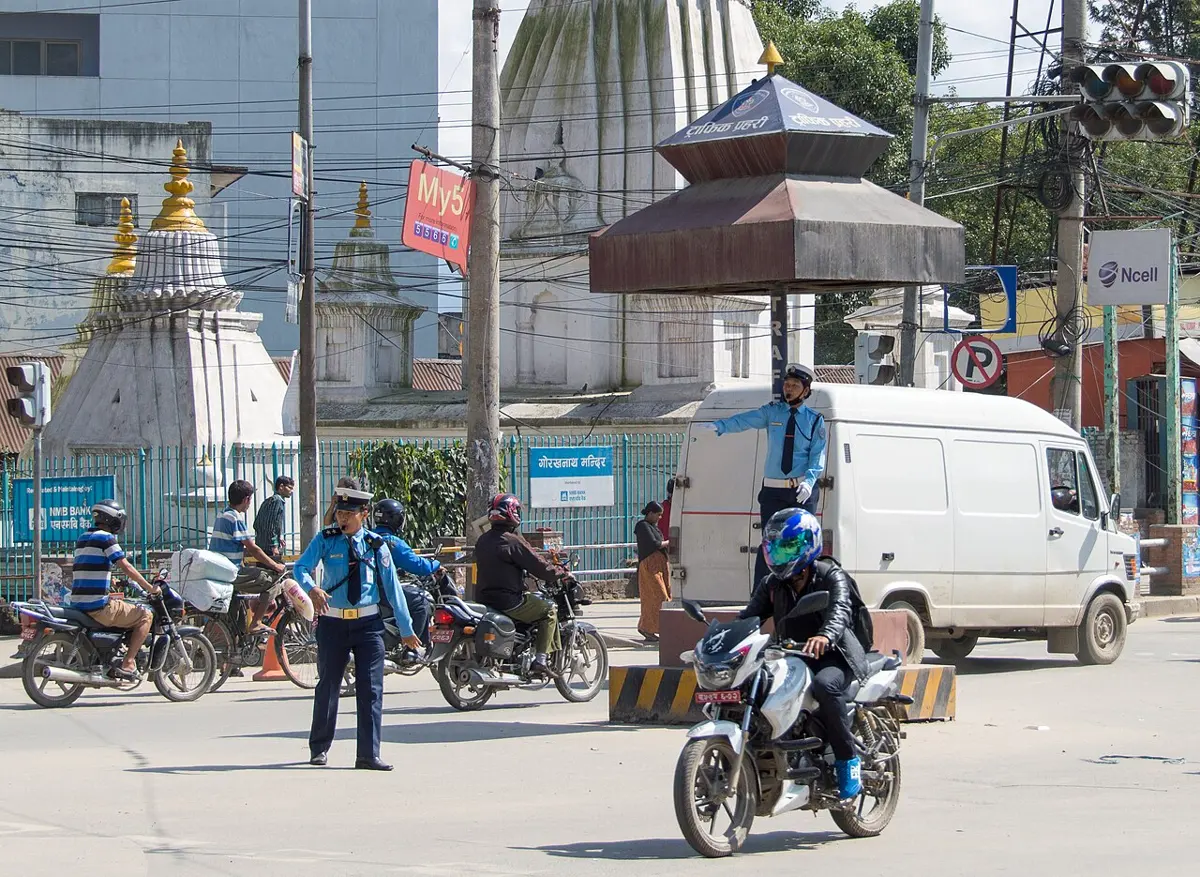
Paragraph 3: why motorbikes? Motorbikes are the most popular vehicles in Nepal, and in countries like ours they outnumber cars (there are more of them). There are two reasons. They cost less, and they can maneuver through congestion (move skillfully through crowded traffic). Most riders, says the writer, are between 18 and 40, an age when people may not control their feelings well, and many young people ride very fast.
Paragraph 4: the age of the driver. Safe driving needs discipline, experience and maturity (thinking and acting like a grown-up). The writer says that these traits (qualities of a person) are what young people lack. So the minimum age for a license should go up from 16 to 20 or more. Schools and colleges could stop students from riding until they are 20, and parents shouldn’t hurry to buy their children a motorbike. Young people should get a vehicle only when they are mature enough.
Paragraph 5: drink-driving. At night, there are drivers who have been drinking. Driving needs great concentration, and a small mistake can cause serious injury or death. A responsible driver simply doesn’t drink before driving.
Paragraph 6: the law. From the perspective of the law (its point of view), a person who drinks and drives must be punished, so that it doesn’t happen again. Checking must be strict, and enough traffic officers should be deployed (sent to where they are needed) to catch the culprits (the people who did wrong).
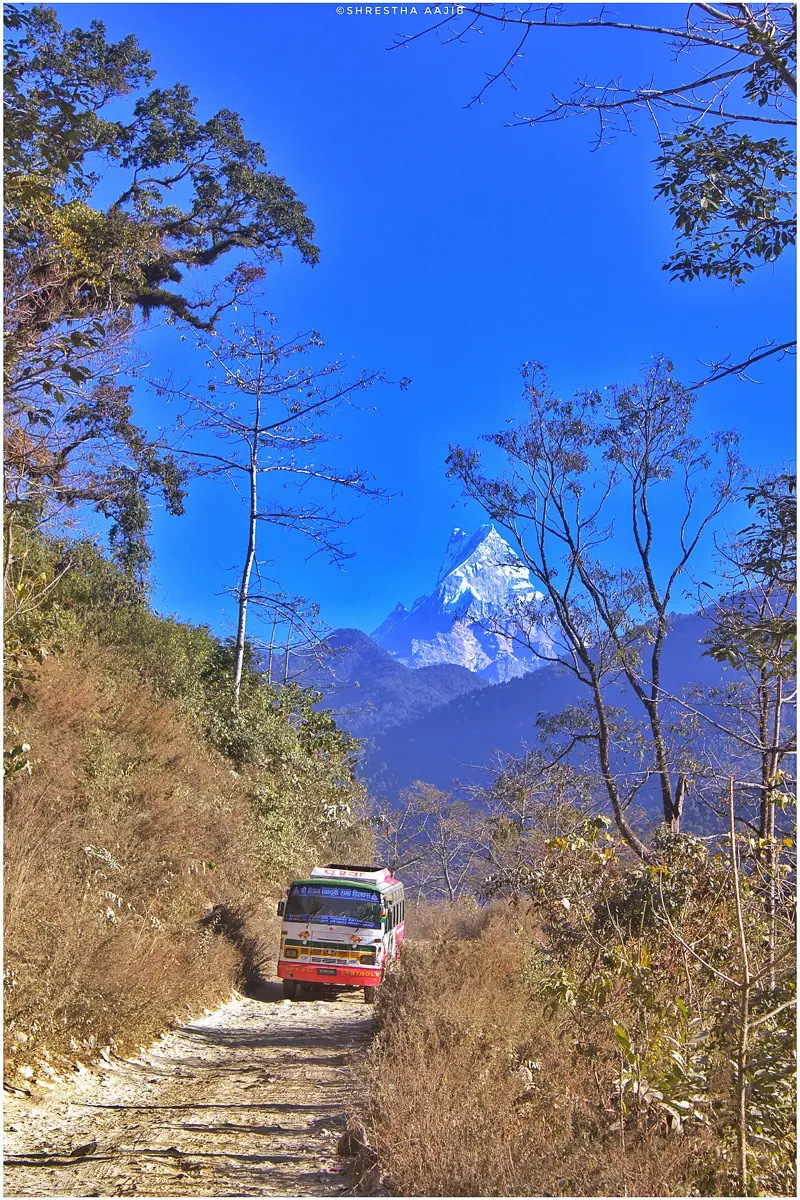
Paragraph 7: at last, the roads. Now the writer comes to the roads, and agrees that they can’t be overlooked (ignored). Narrow lanes and potholes (holes in the road) cause accidents. Some roads are too narrow for two vehicles to pass. In the monsoon, hill roads are blocked by landslides for days, and travel becomes such an ordeal (a very hard, painful experience) that people choose to stay at home.
Paragraph 8: the answer. Poor roads do lead to accidents. To build better ones, the Department of Roads and the Department of Transport Management should coordinate (work together in an organized way). Then, says the writer, we will see fewer accidents.
Here is the writer’s argument as a table. Look how much of the article is about the people, and how little about the road.
| The cause | Who should act | What they should do |
|---|---|---|
| careless drivers | drivers | take responsibility for safety |
| young riders, high speed | the government, parents, schools | raise the license age; don’t hurry to buy a bike; restrict riding |
| drink-driving | drivers, the law, traffic police | don’t drink before driving; punish it; check strictly |
| poor roads | the two departments | coordinate and build better roads |
What is the writer’s main point?
Pick an answer to see why.
Why does the writer think the license age should go up?
Pick an answer to see why.
Fact or opinion?
An article like this mixes two kinds of sentence, and a careful reader tells them apart.
| How to test it | Example | |
|---|---|---|
| Fact: something that can be checked | Can you find it in a record or count it? | Landslides block some hill roads in the monsoon. |
| Opinion: what someone thinks | Could a sensible person disagree? | The license age should be 20. |
Watch for the words that give an opinion away: should, must, might, I think, the best, the main, and sweeping words like all young people. Young people lack maturity sounds like a fact, but it is the writer’s opinion: plenty of 19-year-olds are careful, and some 50-year-olds are not.
Which of these is a fact?
Pick an answer to see why.
An opinion gets stronger when facts stand behind it. Here is one month of real figures from a Nepal Police report, as The Kathmandu Post gave them in January 2025.
Words from the text
Words linked here open in English Vocabulary, where you can see an example and practice them in the word game. The meanings below are the ones the words have in this text.
| Word | Meaning here |
|---|---|
| scroll | to move what you see on a screen up or down |
| flip | to turn over quickly |
| delve into | to look into something deeply |
| infrastructure | the basic things a place needs, such as roads and bridges |
| outnumber | to be more in number than |
| maneuver | to move skillfully through a tight place (manoeuvre in British spelling) |
| congestion | too much traffic in one place |
| trait | a quality of a person |
| perspective | a point of view |
| deploy | to send people to a place to do a job |
| culprit | a person who has done something wrong |
| ordeal | a very hard or painful experience |
| coordinate | to get people or groups to work together well |
A. Complete the sentences
Complete the sentences with the correct words given below.
perspective, witnessed, congestion, infrastructure, ordeal, coordination
- a.A car hit a boy. People ……… the accident.
- b.The earthquake destroyed the ……… of the building.
- c.An excessive number of motorbikes and violations of traffic rules cause traffic ……… .
- d.As we judge others from our ………, we fail to understand their problems.
- e.Good ……… among the staff builds a healthy relationship.
- f.Anusha looks sad because she has faced a/an ……… .
Answer
B. Answer the questions
According to the writer, who do we curse for road accidents?
Answer
Why are motorbikes popular in Nepal?
Answer
Why should parents and educational institutions monitor the youngsters?
Answer
What measures should be taken to stop drink-driving?
Answer
What is the main cause of road accidents in your opinion?
A model answer
C. Make the roads safer
What measures can be taken to maximize road safety in Nepal? Discuss.
Some points to discuss
Pronunciation: words of the road
Long words are easier when you know which beat is strong. In the table the strong beat is in capitals. Say each word slowly, then at normal speed.
| Word | Say it | Watch out |
|---|---|---|
| congestion | con-JES-chun | The -tion after s sounds like “chun”, not “shun”. |
| infrastructure | IN-fra-struc-chur | The strong beat is the very first. |
| witness | WIT-ness | Two beats. |
| pedestrian | pe-DES-tri-an | Four beats. A pedestrian is a person walking. |
| maneuver | ma-NOO-ver | British books spell it manoeuvre. It is said the same way. |
| jaywalking | JAY-walk-ing | The l is silent, as in walk. |
| mishap | MIS-hap | It is mis + hap, so the s and the h stay apart: not “mi-shap”. |
| motorways | MO-tor-ways | British for highways. |
| transport | TRANS-port | As a noun. The verb is trans-PORT. |
| safeguarding | SAFE-guard-ing | Safe + guard: the u is silent. |
Where is the strong beat in pedestrian?
Pick an answer to see why.
Listen to your teacher, or to a dictionary’s sound, and practice pronouncing these words: congestion, infrastructure, witness, pedestrian, maneuver, jaywalking, mishap, motorways, transport, safeguarding.
Hint
Speaking: asking, giving, agreeing
The words you need
| To do this | Say this |
|---|---|
| ask for an opinion | What do you think about…? Don’t you think…? How do you feel about…? What’s your opinion of…? |
| give an opinion | In my opinion, … I think… I believe that… It seems to me that… As far as I know, … |
| ask for a reason | What makes you think that? Why do you say so? |
An opinion also gets an answer, and there are more than two. Between yes and no there is a useful middle: agreeing partly. You accept one part, and then you add a but.
To some extent means “partly, but not completely”. It is the phrase to reach for when both sides have a point: I agree with you to some extent, but…
I don’t quite agree is a soft way to say no. Quite makes it gentler. Saying You are wrong is clear, but it is likely to start a fight. The polite form leaves room for the other person.
A good way to disagree has three steps: say something kind about the other view, say your view, give a reason. That’s a good point, but I don’t quite agree. A phone also helps us to learn.
Your friend says, “Homework is a waste of time.” You think it helps, but that there is often too much. What do you say?
Pick an answer to see why.
A. Two conversations
Act out the following conversation in pairs.
Conversation I
Manoj: What do you think about working until midnight?
Sundar: In my opinion, working until midnight is very bad for health.
Manjila: I think working until midnight helps one meet deadlines.
Pratik: I don’t think so. Some people are unlikely to utilize their time properly.
Conversation II
Seema: Don’t you think social media is making us less social?
Anil: That’s a good point. People hardly talk to each other face to face because of social media.
Anita: I agree with you to some extent. But it helps us get updated.
Vim: I don’t quite agree with you. Without social media, we’d have been unable to keep in touch with people.
What each line is doing
B. Your opinion
How do you feel about the following statements? Give your opinion.
- a.Celebrities earn too much money.
- b.All children should be able to access school.
- c.We should not eat too much fast food.
- d.Watching television is necessary for schoolchildren.
- e.The internet is a good source of learning.
Model answers
Grammar I: subject–verb agreement again
You learned the rule in Unit 6: a singular subject takes a singular verb, and a plural subject takes a plural verb. Here we look at the cases that catch students out. The first job is always the same: find the real subject, and ask whether it is one thing or many.
A. Study the sentences
Study the following sentences. Notice how subject and verb agree with each other.
- a.Games and sports are part and parcel of our regular life.
- b.There is lots of research.
- c.Participating in sports reduces our stress and makes our mood better.
- d.Some of our food habits are also risking our lives.
What to notice
The cases to watch
| The subject | The verb | Example |
|---|---|---|
| A and B | plural | Tashi and her brother ride to school. |
| there + noun | agrees with the noun after it | There is a pothole. There are two potholes. |
| a noun + who / that + words | the verb after them agrees with the first noun | The riders who wear a helmet are safer. |
| everyone, everybody, each, nobody | singular | Everybody wants a safe road. |
| pair words: trousers, scissors, shoes | plural | My shoes are muddy. |
| some of + noun | agrees with the noun | Some of the milk is sour. Some of the buses are late. |
| one of + plural noun | singular: the subject is one | One of the buses is late. |
| an amount of money, distance or time | singular: one amount | Twenty liters is enough. |
| A or B | agrees with the nearer one | Rizwan or his sisters are coming. |
| words ending in -ics: physics, mathematics | singular | Physics is hard. |
“The students who live near the highway ……… to school early.” Which fits?
Pick an answer to see why.
“One of the riders ……… a helmet.” Which fits?
Pick an answer to see why.
B. Choose the correct words
Choose the correct words from the brackets to complete the sentences.
- a.My uncle and aunt ……… to my house every Friday. (come/comes)
- b.There ……… time to watch the movie. (is/are)
- c.My friends who are in the band ……… me to play a musical instrument. (wants/want)
- d.Everyone ……… time to relax. (needs/need)
- e.Your trousers ……… new. (looks/look)
- f.Some of the books on the shelf ……… missing. (is/are)
- g.One of my friends ……… living in that house. (was/were)
- h.One hundred rupees ……… not enough for me. (is/are)
- i.Five kilometers ……… a long distance to travel. (is/are)
- j.You or he ……… responsible for that job. (is/are)
- k.Linguistics ……… her favorite subject. (is/are)
Answer
Writing I: an opinion essay in three parts
In Unit 15, you wrote an opinion essay that gave one side and then the other. This one has three parts, and the task tells you what goes in each.
| Part | What it does | Useful words |
|---|---|---|
| Introduction | says what the topic is, with a definition and examples, then gives your opinion in one sentence | … means … such as … In my opinion, … |
| Body | gives the importance, then the challenges, a paragraph for each | First, … Also, … However, … Another problem is … |
| Conclusion | sums up, in new words, and gives no new points | To sum up, … So, I believe that … |
An extracurricular activity is one that students do at school but outside the lessons: extra (beyond) + curriculum (the course of study). Sports, music, debate, scouts and science clubs all count. Exam marks aren’t the point of them.
Do you think extracurricular activities are important for students? Write an essay giving your opinions. Divide the essay into the following parts.
- a.Introduction: definition and examples of extracurricular activities
- b.Body: importance and challenges of extracurricular activities
- c.Conclusion: summing up ideas
A model essay
Which sentence belongs in the conclusion?
Pick an answer to see why.
Listening: Sweden or Canada?
Two people are talking about the best place in the world to live. Read the gaps in B first, then listen, as many times as you need. The recording is CDC’s, and it lasts just over a minute; the answers are hidden under the questions.
Words to know: voted (chosen by people), reasonable (not too expensive), outgoing (friendly and happy to talk to people).
Listen as well for how they talk. One speaker says in my opinion, and the other asks What makes you think that? You met both in Speaking.
A. Before you listen
Look at the picture and answer these questions. (The picture shows two small flags, crossed. One is blue with a yellow cross. The other has a red band on each side, and a red maple leaf on white in the middle.)
- a.What countries do these flags belong to?
- b.What are these countries famous for?
Model answers
B. Fill in the gaps
Listen to the audio and fill in the gaps with correct words. Use one word only.
- a.Sweden was voted the best place in the world for being safe and ……… .
- b.Canada is also considered the best place to live because it has got lots of ……… and nature.
- c.It is okay to live in Canada but it is really ……… there.
- d.The ……… time is the perfect time to live in Canada.
- e.Hotels and restaurants in Canada were not very ……… .
- f.Canadians are really ……… and outgoing as well.
- g.One of the speakers wants to ……… to Canada.
Answer
C. Your turn to talk
If you were asked to choose between Sweden and Canada, which country would you choose to visit? Why? Talk to your friends.
A model answer
Reading II: Long Life
Before you read
The poem comes with a picture of a field of red poppies, stretching away under a low, golden sun.
How would you feel if you were there in the picture?
A model answer
What do you think: is life short or long?
A model answer
What kind of text it is
This is a short modern poem by Tricia Mae Chua. It has no regular beat, and only one pair of lines rhymes (another and brother). Its music comes from repetition: two stanzas start the same way, and then two more start another way. A stanza is a group of lines in a poem, like a paragraph in prose.
Look at the title, Long Life. Everyone says that life is short. The poem says it is too short for some things and long enough for others, and the title quietly takes the side of long.
The poem, part by part
The poem has four stanzas, in two pairs. It is built from one small piece of grammar, which you will study in Grammar II.
Stanza 1: too short for regret. Life is too short to spend griping (moaning, going on complaining). The poet lists four things we moan about: the past, what we don’t have, the places we haven’t seen and the things we haven’t done. Notice that all four are things we lack, or that are already over. Moaning changes none of them.
Stanza 2: too short for bitterness. Life is also too short to hold grievances against someone (complaints about being treated badly, kept inside us). Nor should we go looking for a fault in a brother, or keep count of the wrongs done to us. Keeping count is the sharp picture here: it is as if a person kept a list, year after year.
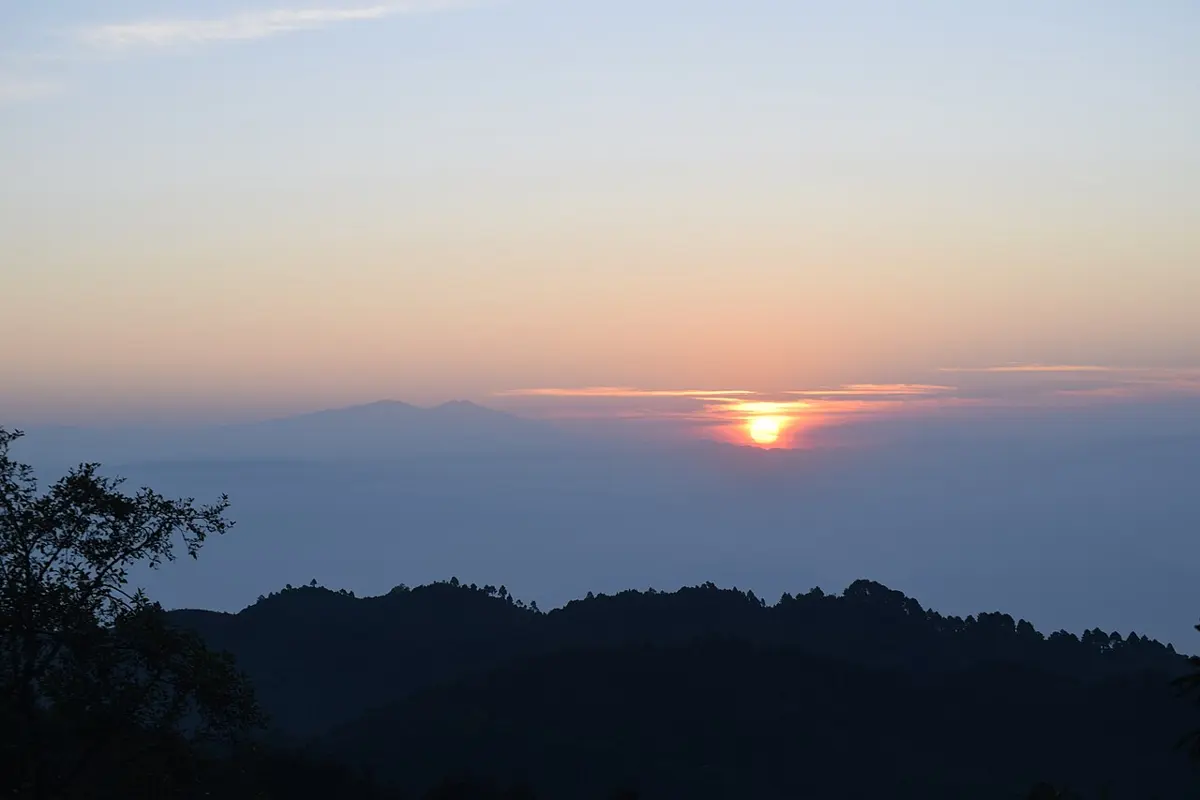
Stanza 3: long enough for small joys. Now the turn comes: life is just long enough. It is long enough for a sunrise, the smell of wet earth and the sound of people laughing after a long day’s work. Each is free, and each comes to anyone. In Nepal, the smell of wet earth is the smell of the first monsoon rain on dry ground. The stanza uses three senses: sight, smell and hearing.
Stanza 4: long enough for kindness. Life is just long enough to practice compassion (feeling for others) and generosity (giving freely). And then come three things to do: comfort people who are grieving (full of sorrow), give strength to the fainthearted (those who lack courage), and show direction to people who are lost. The poem ends by turning towards other people.
| Life is too short for… | Life is just long enough for… | |
|---|---|---|
| Yourself | moaning about what you lack (stanza 1) | enjoying simple beauty (stanza 3) |
| Other people | holding on to anger and blame (stanza 2) | kindness and help (stanza 4) |
The table shows how neatly the poem is made. The second half answers the first, stanza by stanza.
What do the things in stanza 3 have in common?
Pick an answer to see why.
Why does the poet repeat Life is too short and Life is just long enough?
Pick an answer to see why.
Words from the poem
| Word | Meaning here |
|---|---|
| griping | moaning; complaining again and again |
| grievance | a complaint about being treated unfairly |
| fault | a mistake or a weak point in someone |
| compassion | a kind feeling for people who suffer |
| generosity | being ready to give time, help or money |
| grieving | feeling deep sorrow, usually after a death |
| fainthearted | lacking courage |
A. Match the words
Match the words in column A with their meanings in column B.
| Column A | Column B |
|---|---|
| a.griping | i.sympathy and concern for others’ feelings |
| b.grievances | ii.feel intense sorrow |
| c.fault | iii.complaints |
| d.compassion | iv.kindness with giving time, help, money, etc. |
| e.generosity | v.lacking courage |
| f.fainthearted | vi.moaning about something |
| vii.error, defect, flaw |
Answer
B. The summary
Complete the summary of the poem with the suitable words given below.
past, compassion, faults, waste, beauty, enjoy
Life could be both short and long depending on how you perceive it. It is too short to ……… our time in worrying about the ………, finding others’ ……… and wrongdoings. But it is long enough to ……… nature-made ……… and have ……… and kindness for the needy.
Answer
C. Answer the questions
How do people make their lives short?
Answer
What can we do with our life if it is long enough?
Answer
Who does the word ‘you’ refer to?
Answer
How would you like to live your life?
A model answer
D. Your opinion
Do you agree with the poet’s views about life? Give your opinion.
A model answer
Grammar II: too and enough
The poem’s whole idea sits in two small words. You can say one fact in two ways, and this is what the exercises ask for.
Too: more than is good
Too + adjective + to + verb means more than the limit, so it can’t happen.
The rope is too short to reach the water. (The rope doesn’t reach it.)
Too isn’t the same as very. Very only makes a word stronger, and too has a no inside it. The tea is very hot, but I can drink it is fine. The tea is too hot, but I can drink it makes no sense.
Enough: as much as is needed
Adjective + enough + to + verb means up to the limit, so it can happen.
The rope is long enough to reach the water. (It does reach it.)
Enough comes after an adjective or an adverb, and before a noun: strong enough, fast enough, but enough money. Enough strong is a common mistake.
To say who does the action, add for + person before to: The river is too deep for us to cross.
And when the subject is the thing acted on, don’t repeat it at the end. It is The bag is too heavy to carry, not to carry it. But She is too young to wear it is right, because she isn’t the thing being worn.
The flip
Here is the idea of the whole section. Each sentence has a twin with the opposite adjective, and the not moves.
| It can’t happen | It can’t happen, said the other way |
|---|---|
| too hot to drink | not cool enough to drink |
| too short to reach | not long enough to reach |
| It can happen | It can happen, said the other way |
|---|---|
| cool enough to drink | not too hot to drink |
| long enough to reach | not too short to reach |
So the flip has two steps: change the adjective to its opposite, and add or remove not.
Which sentence means the same as “The water is too cold to swim in”?
Pick an answer to see why.
Which is correct?
Pick an answer to see why.
A. Same or different?
Study the following pairs of sentences. Do they have similar or different meanings?
- a.i. Life is too short to spend on luxuries.
- ii.Life is not long enough to spend on luxuries.
- b.i. Kanchan’s sister is too young to get married.
- ii.Kanchan’s sister is not old enough to get married.
- c.i. It’s not late enough to go to school.
- ii.It’s too early to go to school.
- d.i. The box is heavy enough for them to lift.
- ii.The box is too light for them to lift.
- e.i. The dress is loose enough to wear.
- ii.The dress is not too tight to wear.
Answer
B. Choose the correct words
In these sentences, too and enough go with an adjective, so in each pair, choose the adjective and not the noun or the adverb.
Choose the correct words from the brackets to complete these sentences.
- a.Akash was ……… enough to lift the suitcase. (strong/strength)
- b.They aren’t too ……… to deal with. (sociable/sociably)
- c.My friend is ……… enough to help me with math. (intelligent/intelligence)
- d.Seema is ……… enough to solve the problems. (smartness/smart)
- e.The baby is too ……… to sit. (weakness/weak)
- f.I’m worried. It’s too ……… to buy. (expensive/expense)
Answer
C. Rewrite the sentences
Rewrite the following sentences so that they have similar meanings. Use the words given in the brackets. One example is given.
Example: The tea is too hot to drink. (cold enough) → The tea is not cold enough to drink.
- a.I can’t reach there on time. It’s too far. (near enough)
- b.Samata can’t wear a saree. She is too young to wear it. (old enough)
- c.My bag is light enough to carry. (too heavy)
- d.Sangam is too young to drive a motorbike. (old enough)
- e.Priya isn’t tall enough to reach the ceiling. (too short)
Hint
Answer
Writing II: punctuation and a food essay
A. Punctuate the paragraph
You met the marks in Unit 3 and practiced this task in Unit 5. Read aloud, and stop where your voice stops: that is where a sentence ends. Then look for three more things: a question (?), a list (colon and commas) and speech (comma and quotation marks).
Punctuate the following paragraph correctly.
How do you spend your holiday I usually do a lot of activities clean rooms do shopping visit new places watch movies etc Yesterday I cleaned my room My best friend’s parents like the quality of my cleaning Last year they visited our house and saw my cleaning He said Wow I love the way you decorate your room While I was cleaning I dropped an ink bottle It broke into pieces It was really tough to clean the floor as the floor turned red because of the smashed bottle I wiped a painting which was gifted to me by my uncle on my birthday We celebrated it on January 22, 2023 the day was a memorable one
Answer
B. An essay on food
This task asks what you prefer, so it needs one clear choice. Use the three parts from Writing I. In the body, give two or three reasons for your choice, and then be fair to the other side in one or two sentences.
Some people prefer to have food from restaurants while others prefer homemade food. What is your preference? Write an essay giving your opinion.
A model essay
Project work: an opinion survey
A survey asks several people the same questions and counts what they say. Scientists use surveys too: see Survey in Grade 8 Science.
Extra bit: pronouns in English
A pronoun stands in for a noun, so that you don’t need to keep repeating it. English chooses its pronouns by person (who is speaking, who is spoken to, who is spoken about) and by the job the word does.
| 1st person | 2nd person | 3rd person | |
|---|---|---|---|
| Subject | I / we | you | he / she / it / they |
| Object | me / us | you | him / her / it / them |
| Possessive pronoun | mine / ours | yours | his / hers / theirs |
| Possessive determiner | my / our | your | his / her / its / their |
| Reflexive | myself / ourselves | yourself / yourselves | himself / herself / itself / themselves |
Here is one person in all five jobs:
- Subject (does the action): She rides a bicycle.
- Object (receives the action): The dog followed her.
- Possessive determiner (comes before a noun): That is her bicycle.
- Possessive pronoun (stands alone, with no noun after it): That bicycle is hers.
- Reflexive (the action comes back to the subject): She fixed the chain herself.
“This helmet is ……… . I bought it last week.” Which fits?
Pick an answer to see why.
“The children made the kite ……… .” Which fits?
Pick an answer to see why.
Exercise
Practice on this unit in the style of the final exam. Try each one as in the exam, then open the answer.
Read Road accidents in Nepal again and write True or False.
- a.The writer says that the government alone is to blame for road accidents.
- b.Motorbikes are popular partly because of their low cost.
- c.The writer wants the license age to go down.
- d.Landslides block hill roads during the monsoon.
- e.The writer wants two government departments to work together.
Answer
Read Long Life again and complete the sentences with the correct words.
- a.The poet says we shouldn’t waste our lives ……… about the past.
- b.We should not keep counting the ……… done to us.
- c.The poet likes the smell of ……… earth.
- d.People laugh after a long day’s ……… .
- e.We can help people who are ……… to feel braver.
Answer
Read the short essay and answer the questions.
Walking to School
Every morning, the road outside our school is full of motorbikes and vans. Many parents drop their children at the gate, and the road becomes so crowded that the buses can’t pass. In my opinion, students who live within two kilometers should walk.
Walking keeps us fit. It costs nothing, and it doesn’t pollute the air. A group of friends can walk together, which is safer and much more fun. Some parents say the road is too dangerous for children. That is true in some places, so the municipality must build proper footpaths. But fewer vehicles would make the road safer for everybody.
Rakshya, Grade 8
- a.Who wrote the essay?
- b.What happens to the road in the morning?
- c.Who should walk to school, according to the writer?
- d.What must the municipality do?
- e.Find a word in the text that means “healthy and strong”.
- f.Find one sentence that gives the other side’s opinion.
Answer
Choose the correct options to complete the text.
The students in our club ……… (a. meet / b. meets / c. meeting) every Friday. One of them ……… (a. were / b. are / c. is) from Humla. Everybody ……… (a. listen / b. listens / c. are listening) when she talks about her village. Twenty kilometers ……… (a. is / b. are / c. were) a short walk there. Physics ……… (a. are / b. is / c. were) her favorite subject.
Answer
Rewrite the sentences, using the words in brackets, so that the meaning stays the same.
- a.The bridge is too narrow for trucks. (wide enough)
- b.Prabin is not strong enough to push the cart. (too weak)
- c.The mango is ripe enough to eat. (too green)
- d.It is too dark to read here. (light enough)
- e.The ladder is not long enough to reach the roof. (too short)
Answer
Identify ten errors in the given paragraph. Rewrite the paragraph by correcting the errors.
do you think our school needs a bigger playground i do it is too small for Grade 8 students gopals team cant play football there
Answer
Write a short essay of about 100 words on “Are Exams the Best Way to Test Students?”
A plan
Printable PDFs
- Study notes 3 pages
- Harder practice questions 2 pages Answer key
Practice every question in the book, and keep track of the ones you miss →
A companion to your textbook, not a replacement for it: study from the book your school uses, and where the two differ, follow your teacher. Found a mistake? Please tell us.