
In a famous fable, an ant works all summer while a grasshopper sings, and when winter comes the ant has food and the grasshopper goes hungry. For more than two thousand years, children have been told what that story means: work hard now, and you will be safe later. But what if the grasshopper ended up richer than the ant? A great English storyteller asked exactly that question, and his answer still makes readers laugh, and argue.
This unit reads that story, The Ant and the Grasshopper by W. Somerset Maugham, and a short poem, Leisure, by W. H. Davies, which asks what life is worth if we are too busy to look at the world. You will learn the silent letters in words like qualm, knight and receipt, talk about getting things done (I had my hair cut), and use causative verbs (have, get, make) and the passive voice in every tense. You will describe a bar chart with words like rise, plummet and remain steady, listen to a woman booking her car for a service, write an essay on work and leisure, and turn a survey of your neighbors into a pie chart.
Getting started: what work is for
The unit opens with four sayings about work, each printed on a photo of hills or the sky:
| Saying | Who said it | What it means |
|---|---|---|
| All things are difficult before they are easy. | Thomas Fuller, an English doctor who collected proverbs (1732) | Everything is hard at first: riding a bicycle, typing, algebra. Practice turns hard into easy, so don’t give up at the start. |
| Any time is a good time to start a company. | Ron Conway, an American investor who has helped hundreds of young companies | Don’t wait for the “perfect” moment to begin your own work or business; good and bad times both bring chances. |
| We work to earn our leisure. | Aristotle, the Greek thinker (about 350 BCE) | Work is not the goal of life; we work so that we can have free time for the things that make life good: friends, family, learning, art, rest. |
| Work hard in silence, let your success be your noise. | often credited to Frank Ocean, an American singer, though no record of him saying it has been found | Don’t boast about what you are going to do; do it quietly, and let the result speak for you. |
Read the quotations and discuss what you think they mean.
Model answer
Reading I: The Ant and the Grasshopper
Before you read
The picture shows a cartoon ant waving cheerfully and a green grasshopper sitting on the grass beside a tree, with flowers around them.
- a.What do you think the two insects are doing?
- b.What happens to them when winter comes?
Model answers
What kind of text it is
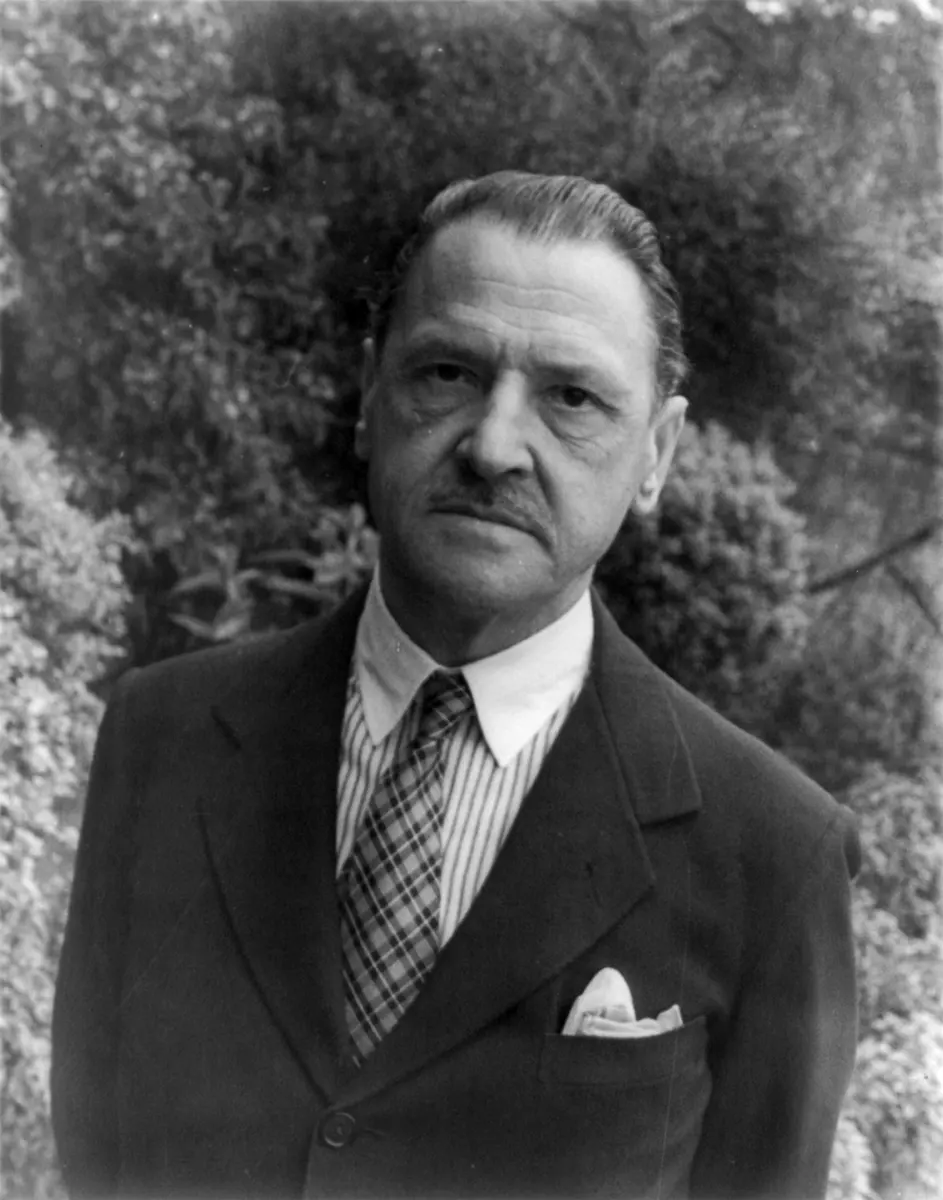
The text is a short story by W. Somerset Maugham (1874–1965), a British writer famous for his clear, witty stories. It was first published in 1924. It is told in the first person: the narrator, “I”, is a man who knows the Ramsay brothers.
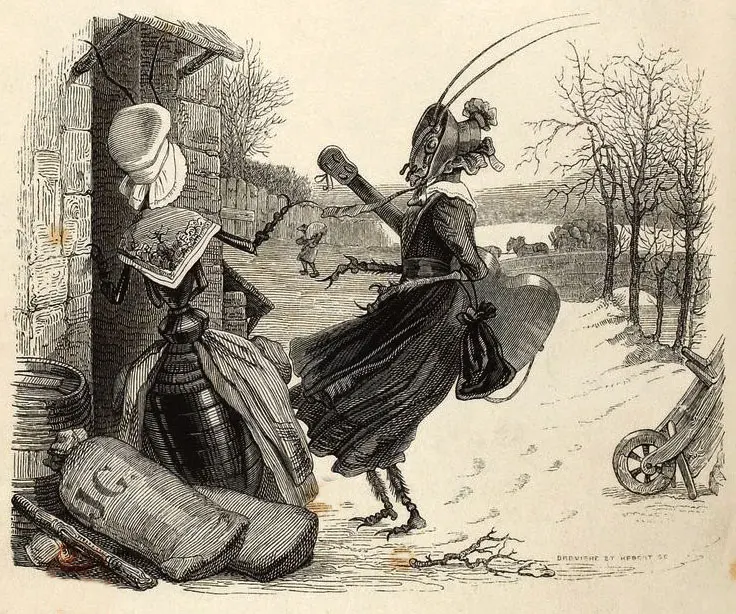
The story is built like a sandwich. It opens with a fable, The Ant and the Grasshopper, which the narrator learned by heart as a small boy from the French poet Jean de La Fontaine (1621–1695), who retold it from the ancient Greek storyteller Aesop. Then it tells a modern story of two brothers: George, the hard-working “ant”, and Tom, the pleasure-loving “grasshopper”. The reader expects the old moral to come true again. Watch for that expectation: Maugham plays with it.
The text, part by part
1. The fable and its moral
As a very small boy, the narrator had to learn some of La Fontaine’s fables (short stories, often about animals, that teach a lesson) by heart, and the moral (the lesson) of each was explained to him. One was The Ant and the Grasshopper, which was devised (made, planned) to teach children that in our imperfect world, industry (hard work) is rewarded and giddiness (silly, careless living for fun) is punished.
In the fable, the ant spends a laborious (hard-working) summer collecting food for the winter, while the grasshopper sits on a blade of grass singing to the sun. When winter comes, the ant has plenty, but the grasshopper has an empty larder (a cupboard or room for storing food). He begs for a little food. The ant asks what he did all summer. The grasshopper says that, if she doesn’t mind his saying so, he sang, day and night. “You sang?” replies the ant. “Then go and dance.” In other words: you had your fun; now suffer for it.
In Maugham’s full story (school extracts often leave this paragraph out), the narrator admits that as a child he could never quite accept the lesson. His sympathies were with the grasshopper, and for a while he never saw an ant without putting his foot on it. It is a joke, and a hint of where the story is going.
2. George in the restaurant
The fable comes back to him when he sees George Ramsay having lunch alone in a restaurant, looking deeply gloomy (sad and hopeless), staring into space as if he carried the weight of the world. The narrator guesses at once: George’s unfortunate brother has been causing trouble again. He goes over and shakes hands. George says he is “not in hilarious (very funny, very cheerful) spirits”: a dry, British way of saying he is miserable. Yes, it is Tom again.
The narrator asks why George doesn’t simply chuck (give up on, throw off) him: he has done everything possible for Tom, who is clearly hopeless. Every family, he thinks, has a black sheep (one member who brings shame on the rest).
3. How Tom went wrong
Tom has been a sore trial (a constant worry and trouble) to George for twenty years. He began life well: he went into business, married and had two children. The Ramsays were respectable (honest, decent, well thought of), and everyone expected Tom to have a useful, honorable career. Then one day, without warning, Tom announced that he didn’t like work and wasn’t suited to marriage. He wanted to enjoy himself. He refused to listen to anyone’s expostulations (strong objections, arguments against it), left his wife and his office, and spent two happy years in the capitals of Europe on the little money he had.
His family heard rumors of his life and were deeply shocked. They wondered what would happen when his money ran out. They soon found out: he borrowed. Tom was charming and unscrupulous (with no sense of right and wrong about how he got things), and the narrator says he had never met anyone it was harder to refuse a loan to. Tom made a steady income from his friends. He used to say that money spent on necessities (things you need) was boring; the fun money was the money spent on luxuries (things you don’t need but enjoy). For luxuries, he depended on George.
4. George pays, again and again
Tom didn’t waste his charm on George, who was serious and insensible to (not moved by) such enticements (temptations, attractions). Once or twice George believed Tom’s promises of amendment (changing for the better) and gave him large sums to make a fresh start. Tom spent them on a motor-car and some very nice jewelry.
When George finally realized that his brother would never settle down and washed his hands of him (refused to be responsible for him any more), Tom, without a qualm (without the slightest feeling of guilt), began to blackmail him (to get money by threatening to do something that would harm or shame him). It was not pleasant for a respectable lawyer to find his brother shaking cocktails behind the bar of his favorite restaurant, or waiting as a taxi driver outside his club. Tom said serving in a bar or driving a taxi was a perfectly decent job, but if George could oblige him (do him the favor) with a couple of hundred pounds, he wouldn’t mind giving it up, “for the honor of the family”. George paid.
5. Cronshaw and Monte Carlo
Once, Tom nearly went to prison. George was terribly upset. Tom had been wild, thoughtless and selfish before, but never dishonest, by which George meant illegal; if he were prosecuted (taken to court), he would certainly be convicted (found guilty). Yet you can’t let your only brother go to gaol (jail). The man Tom had cheated, Cronshaw, was vindictive (wanting revenge): he called Tom a scoundrel (a dishonest person) and was determined to take him to court. It cost George endless trouble and five hundred pounds to settle the matter.
Then came the sting. The narrator has never seen George so angry as when he heard that Tom and Cronshaw went off together to Monte Carlo (a town of casinos and luxury on the south coast of France, in Monaco) the moment they had cashed the cheque. They had a happy month there. Cronshaw had never really been Tom’s victim: the two had tricked George together.
How the story really ends
The extract printed for schools usually stops at Monte Carlo, but Maugham’s story goes on, and the ending is the whole point of it.
For twenty years Tom gambled, danced, dined in the best restaurants and dressed beautifully. At forty-six he looked thirty-five, charming and good company, though everyone knew he was worthless. George, only a year older, looked sixty. He had never taken more than a fortnight’s holiday in a year, was in his office from half past nine every morning and never left before six, was loyal to his wife and a good father to four daughters, and saved a third of his income. He planned to retire at fifty-five to a little house in the country and grow a garden. He was almost glad to be getting old, because Tom was getting old too: soon, George said, they would see whether it really paid better to work or to be idle.
That is why George is so gloomy in the restaurant. Tom has just been engaged to a woman old enough to be his mother. She has died and left him everything: half a million pounds, a yacht, a house in London and a house in the country. George beats his fist on the table and repeats that it is not fair. And the narrator? He bursts out laughing, so hard that he nearly falls off his chair. George never forgives him. Tom, meanwhile, often invites the narrator to excellent dinners at his charming house in Mayfair, the richest part of London, and still borrows a little money now and then, just out of habit.
So the grasshopper wins. The fable promised that hard work is rewarded and idleness punished; real life, Maugham suggests with a smile, is not that tidy.
Why did George give Tom large sums of money “once or twice”?
Pick an answer to see why.
What made George angriest of all in the extract?
Pick an answer to see why.
What is the irony of the story’s full ending?
Pick an answer to see why.
Words from the text
Words linked here open in English Vocabulary, where you can see an example and practice them in the word game. The meanings below are the ones the words have in this text.
| Word | Meaning here |
|---|---|
| fable | a short story, often with animals, that teaches a lesson |
| moral | the lesson a story teaches |
| industry | hard work (here; it also means factories and businesses) |
| giddiness | silly, careless behavior, living only for fun (here; it also means dizziness) |
| larder | a cupboard or small room for storing food |
| hilarious | extremely funny; not in hilarious spirits: not cheerful at all |
| black sheep | a family member who brings shame on the others |
| respectable | honest and decent, so that people think well of you |
| expostulations | strong arguments against what someone is doing |
| unscrupulous | with no sense of right and wrong; ready to cheat |
| enticements | things that tempt or attract you |
| amendment | a change for the better; also a change made to a law |
| qualm | a feeling of doubt or guilt; without a qualm: with no guilt at all |
| blackmail | getting money from someone by threatening to harm or shame them |
| oblige | to do someone a favor |
| vindictive | wanting to hurt someone who has hurt you |
| scoundrel | a dishonest, wicked person |
| gaol | jail (an old British spelling, said the same way) |
A. Replace the words
Choose appropriate words from the box (industry, hilarious, qualm, enticements, obliged, amendments, expostulations) to replace the words in bold.
- a.If your talent combines with diligence, you can excel in your field.
- b.The dessert menu has a lot of delicious temptations.
- c.The house passed the bill without listening to the public objections.
- d.Knowledge of the ill effects of tobacco has led to modifications in smoking behavior.
- e.Without any regret, Yule started spending his father’s inheritance.
- f.Mr. Smith read a humorous story which matched his real life.
Answer
B. Put the events in order
Put the following sentences from the story in the correct order.
- a.Tom began to blackmail his brother for money.
- b.Tom left his wife and his office.
- c.When his money was spent, he borrowed it from friends and spent it on luxuries.
- d.George continued to pay for his brother’s expenses.
- e.Tom bought a motor-car and some very nice jewelry.
- f.Tom took the help of Cronshaw to cheat his brother, and left for Monte Carlo.
- g.Tom promised to make a fresh start.
- h.The Ramsays were perfectly respectable people.
- i.Tom never settled down.
Answer
C. Answer the questions
Why is Tom described as the ‘black sheep’ of the Ramsay family?
Answer
What was a respectable profession for Tom?
Answer
Why was George Ramsay staring into space?
Answer
Why did Tom leave his work and wife?
Answer
How did Tom manage his life when he ran out of money in the beginning?
Answer
How did Cronshaw and Tom cheat George?
Answer
What made George realize that his brother would never settle down?
Answer
What is the moral of the fable ‘The Ant and the Grasshopper’?
Answer
D. A summary
Read the story again and write a brief summary.
Hint
A model summary
E. Ant or grasshopper?
How do you characterize yourself, as the ant or the grasshopper? Rank yourself on the scale from 1 (lazy grasshopper) to 10 (industrious ant).
A model answer
Pronunciation: silent letters
In qualm (KWAHM), the l is written but not said: it is a silent letter. English spelling keeps many letters that people stopped saying hundreds of years ago (the k of knight was once said), or that came with a word from another language (French bouquet, Greek pneumonia). Most silent letters follow patterns:
| Pattern | Silent | Words from this unit |
|---|---|---|
| kn-, gn-, wr-, pn-, ps- at the start | k, g, w, p, p | knave, knight, gnaw, wriggle, pneumonia, pseudo |
| -mb, -mn at the end | b, n | solemn |
| b before t | b | doubt |
| l after a (before k, m) | l | chalk, qualm |
| gh before t; -eigh | gh | light, knight, neighbor |
| -ign | g | feign, resign |
| h at the start of some words | h | heir |
| French ending -et | t | bouquet, buffet |
| others | island, receipt, built, archeology |
Underline the silent letter in the following words and pronounce them: doubt, pneumonia, receipt, chalk, feign, bouquet, light, resign, gnaw, heir, buffet, pseudo, knave, knight, solemn, island, wriggle, built, archeology, neighbor.
Answer
In which word is the first letter silent?
Pick an answer to see why.
Which word has two silent parts?
Pick an answer to see why.
Speaking: getting things done
Some jobs we do ourselves; others we pay or ask someone else to do: the barber cuts our hair, the tailor sews our clothes. To say that someone else did it for us, English uses have or get + the thing + the past participle:
| Who does it | Sentence |
|---|---|
| I do it myself | I cut my hair. (with scissors, in front of a mirror) |
| someone does it for me | I had my hair cut. / I got my hair cut. (at the barber’s) |
Have sounds a little more formal; get is more common in everyday talk. Both mean the same here.
A. Two conversations
Act out the conversations in pairs.
What to notice
B. Conversations from clues
Have similar conversations using the given clues. Use have and get.
- a.hair cut/at New Look Salon
- b.shoes mended/at Modern Shoe Centre
- c.bicycle repaired/at A to Z Repair Centre
- d.dresses sewn/at Laxmi Tailor
- e.eyes checked/at Bhadgaon Optical Centre
- f.teeth scaled/at KMC Dental House
Model conversations
C. What can you get done there?
Say what you can have/get done at the following places. Example: We have mutton sliced at the butcher’s.
veterinary’s, mechanic’s, dry cleaner’s, translator’s, fortune teller’s, beautician’s
Model answers
Grammar I: causative verbs
A causative verb shows that one person causes another person to do something, or causes something to be done. English has a small family of them, and each takes a different form of the verb after it:
| Pattern | Form after it | Example | Meaning |
|---|---|---|---|
| have + person + verb | base form | I had the mechanic repair my scooter. | I arranged it, usually as a service or a job I gave. |
| get + person + to + verb | to-infinitive | I got my brother to help me. | I persuaded or asked them. |
| make + person + verb | base form | The teacher made us rewrite the essay. | They had no choice: it was forced. |
| let + person + verb | base form | Mum let us watch the match. | I allowed it. |
| have / get + thing + past participle | past participle | I had my scooter repaired. She got her hair cut. | Someone else did it to the thing; who did it doesn’t matter. |
| be made + to + verb | to-infinitive | We were made to stand in the sun. | the passive of make: someone forced us |
The key question is: who or what comes after the causative verb, and does it do the job, or is the job done to it?
- A person who does the job → the base form after have, make, let, or to + verb after get.
- A thing that the job is done to → the past participle.
“The principal ……… all the students clean the playground.” Which word fits?
Pick an answer to see why.
Which sentence means that someone else painted the house?
Pick an answer to see why.
A. Make sentences from the table
The table has four columns: subjects (Phoolmaya, Santosh, Biraj, I, They); causative verbs (had, will have, make, gets, has, was/were made); objects (my shoes, me/him/her, Suman, his brother, and to dance); and endings (at the party, repaired last Sunday, write a letter tomorrow, to play with him all the time, wash my clothes, to smoke against my will, dig the field, to type the document, send her the mail).
Make as many sentences as you can from the table.
Hint
Possible sentences
B. have, get or make
Fill in the gaps with the correct form of have, get or make.
- a.Did they ……… you give a speech on behalf of the group?
- b.Instead of buying a new car, why don’t you ……… the old one fixed?
- c.I ……… my hair cut tomorrow morning.
- d.The teacher ……… every one of us to write an essay yesterday.
- e.Ms Shrestha usually ……… her hair dried at the hairdresser’s.
- f.My mum always ……… me clean my room on Saturdays.
- g.I ……… my landlord to fix the broken windowpane this morning.
- h.Suman ……… all the Maths problems solved by the teacher.
Answer
C. Rewrite the sentences
Rewrite the sentences with have, get or make. Example: I painted my house last week. → I had my house painted last week.
- a.She will ask her sister to light the lamp.
- b.I am going to ask the dentist to fill my teeth.
- c.Will you ask the barber to cut your hair?
- d.I can’t design my house myself. So I am going to ask an architect to do it.
- e.The girl asked her mechanic to repair her moped.
- f.The landlady asks the gardener to cut the grass.
Answer
D. Choose the right form
Choose the best alternatives and complete the sentences.
- a.Mina got Shambhu ……… (carry/to carry/carried) her suitcase.
- b.Rita had Ankit ……… (wash/to wash/washed) her clothes.
- c.They got me ……… (dance/to dance/danced) at my brother’s wedding.
- d.Kumari was made ……… (turn on/to turn on/turned on) the television.
- e.Barsha got new books ……… (buy/to buy/bought) for her last week.
- f.Upendra got Mukesh ……… (watch/to watch/watched) his house.
- g.My father is very kind. He never makes us ……… (do/to do/done) heavy work.
- h.The film was very humorous. It made us all ……… (laugh/to laugh/laughed) throughout the film.
- i.His hair was too long. So he had it ……… (cut/to cut/cutting) yesterday.
- j.The manager ……… (made/got/make) his secretary attend the conference.
- k.Mathew made the mechanic ……… (overhaul/to overhaul/overhauling) his car.
- l.Smith had Jacque ……… (fetch/to fetch/fetched) a pail of water.
- m.My maths teacher asked us to remember all the theorems. In other words, we were made ……… (remember/remembered/to remember) all the theorems.
Answer
Writing I: describing a bar chart
A bar chart (or bar graph) shows numbers as bars: the longer the bar, the bigger the number. To describe one in writing, you first say what it shows, then the main trend (going up, going down, staying the same), then the details with numbers, and end with an overall sentence.
A. The chart
The chart, titled Average Daily Attendance, by Month, has the months September to December along the bottom and the number of students (0 to 30) up the side. Read from the bars, the average attendance was about 24 in September, 27 in October, 21 in November and 17 in December.
Study the chart and answer.
- a.What kind of chart is this?
- b.What data does it represent?
Answer
B. Words for trends
A trend is the general direction in which numbers move. Some words describe the direction, and some also tell how big or how fast the change was:
| Size of change | Up | Down |
|---|---|---|
| any change | rise, go up, increase, grow, climb | fall, go down, decrease, decline, drop |
| big and sudden | jump, rocket | plummet, plunge |
To say there was no change: remain (stay) steady/stable/constant, maintain the same level, level off. And to say how much, add an adverb: rose slightly, fell sharply, increased steadily, dropped dramatically.
Put the verbs (drop, steady, plummet, climb, maintain, decline, go down, go up, decrease, grow, increase, jump, rise, rocket, fall, plunge, remain, constant) under the appropriate headings: Upward trend, Downward trend, Stable trend.
Answer
Attendance went from 27 to 26. Which word describes it best?
Pick an answer to see why.
C. Interpret the chart
Interpret the bar chart using appropriate verbs. Make comparisons where applicable. You may use the expressions: The chart shows/illustrates/represents…, According to the chart…, While/on the other hand…, Likewise…, Overall…
Hint
A model answer
Reading II: Leisure
Before you read
The picture shows horses, a mare with her foals, standing and drinking in a clear stream in a sunlit forest, with flowers on the banks and sunbeams coming through the trees.
- a.What do you see in the picture?
- b.How is human life different from the lives of animals?
Model answers
What kind of text it is
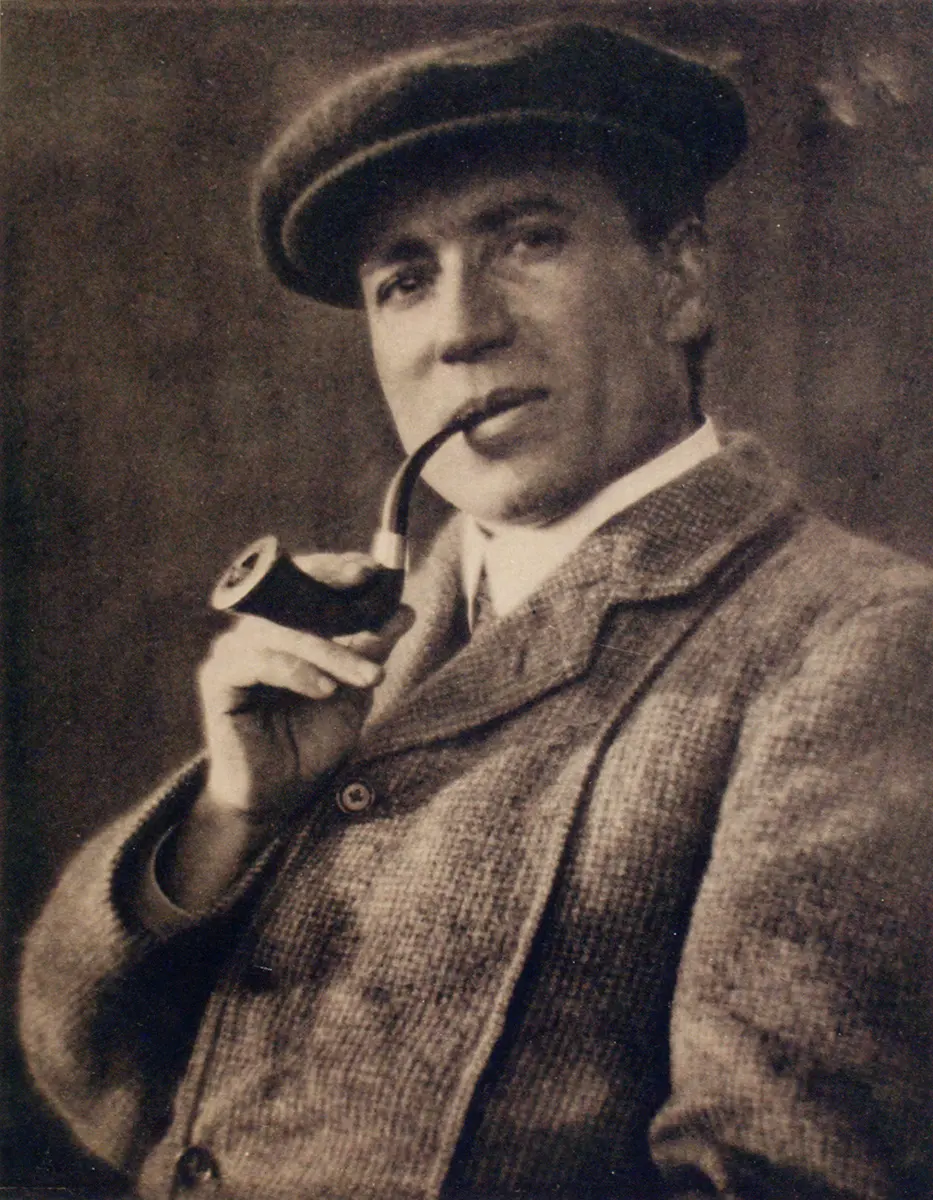
Leisure is a short poem by the Welsh poet W. H. Davies (1871–1940), published in 1911 in his book Songs of Joy and Others. It has seven couplets (pairs of lines that rhyme: care / stare, boughs / cows, pass / grass…), every line with the same quick, regular beat, like a song. It is one of the best-known short poems in English.
The poem, couplet by couplet
- The question. The poem opens with a question: what kind of life is it if we are so full of care (worries, busy-ness) that we have no time to stand and stare (to stop and look at things for a long time)? This question is the poem’s whole idea.
- Under the trees. We have no time to stand under the boughs (big branches) of trees and stare for as long as sheep and cows do. Animals in a field stand still and gaze calmly for hours; busy people never do.
- In the woods. We have no time, when we walk past woods (an area of trees), to watch where squirrels hide their nuts in the grass.
- The stream. We have no time to see, in broad daylight, streams full of stars, like skies at night: the sun sparkles on moving water, so that a stream in the daytime glitters like the night sky. This is a simile (a comparison with like).
- Beauty’s glance. We have no time to turn when Beauty looks at us (a glance is a quick look) and to watch her feet dance. Here beauty is a person: a woman who looks at us and dances. Giving a thing or an idea human qualities is personification.
- Her smile. We have no time to wait until her mouth can enrich (make richer, fuller) the smile that her eyes began. A real smile starts in the eyes and spreads to the lips; if we hurry away, we never see the whole smile.
- The answer. The last couplet repeats the first, with one change: not a question now, but a judgment. It is a poor life if, full of care, we have no time to stand and stare.
How the poem works
| Device | In the poem |
|---|---|
| Repetition (anaphora) | “No time to…” begins five couplets in a row, like the tick of a clock: the reader feels how busy we are. |
| Rhyming couplets | each pair of lines rhymes, which makes the poem easy to remember |
| Simile | streams full of stars, like skies at night |
| Personification | Beauty with a glance, dancing feet, a mouth and eyes |
| Frame (circular structure) | the first and last couplets are almost the same: the question becomes the answer |
| Rhetorical question | the first couplet asks a question that needs no answer |
In the poem, what do the streams look like in broad daylight?
Pick an answer to see why.
What does Beauty stand for in the fifth and sixth couplets?
Pick an answer to see why.
Words from the poem
| Word | Meaning |
|---|---|
| care | worry, anxiety (in the poem: full of care) |
| stare | to look at something for a long time |
| bough | a big branch of a tree |
| beneath | under |
| woods | an area of trees, smaller than a forest |
| glance | a quick look |
| enrich | to make richer or fuller; to improve |
| leisure | free time, when you are not working |
A. Match the words
Match the words with their meanings.
- a.stare b. beneath c. woods d. enrich e. glance
- i.an area of trees ii. to improve the quality of something iii. to look quickly at somebody or something iv. to look at somebody or something for a long time v. under somebody or something
Answer
B. Answer the questions
Why is our life so miserable, according to the poet?
Answer
What do sheep and cows do in nature?
Answer
What do squirrels do in the woods?
Answer
What magic does Beauty perform?
Answer
What is human life like, if observed carefully?
Answer
C. Your leisure time
How do you spend your leisure time? Write a short paragraph.
A model paragraph
Listening: booking a car service
A. Before you listen
The picture shows a man at a desk talking on the telephone, with a computer in front of him, and another man in a work shirt standing behind him.
- a.Who is the man on the telephone talking to?
- b.What is he talking about?
Model answers
The recording
A woman calls a garage to book her car in for a service (a regular check, with the oil changed and the parts looked at). Read the questions in B and C first, then listen, as many times as you need.
B. Fill in the blanks
Listen to the audio and fill in the blanks with correct words or phrases.
- a.The name of the lady is ………
- b.Her car needs a ………
- c.The lady wants her car back by ………
- d.If there is a ……… with the car, the service will take a longer time.
- e.The garage she visited last time ……… her a lot of money.
- f.Fixing the brake pads won’t ……… to the customer.
- g.The mechanic has a ……… So he can return the car as soon as possible.
Answer
C. Answer the questions
- a.What does the lady want to get done?
- b.When did she have her car last checked?
- c.When does the mechanic have a free slot?
- d.How long does a full service normally take?
- e.What makes the lady think that the car has a serious problem?
- f.What is the problem with the rear brake light?
Answer
Notice how the two speak: the woman uses the causative, I want to get my car serviced, and the mechanic makes promises with will: we’ll fix that, we’ll find out what the matter is when you bring the car in. A slot is a free space in a timetable, and a leak is a hole that lets a liquid escape.
D. At a phone repair center
Imagine you are at a mobile phone service center to get your mobile repaired. What might you ask the receptionist or engineer?
Model questions
Grammar II: the passive voice
In an active sentence, the subject does the action: The workers paint the bridge. In a passive sentence, the subject receives the action: The bridge is painted. We use the passive when what happened matters more than who did it, or when we don’t know or don’t need to say who did it.
A. The passive in every tense
The passive is always a form of be + the past participle. The form of be shows the tense; the past participle never changes:
| Tense | Active | Passive |
|---|---|---|
| Present simple | The workers paint the bridge. | The bridge is painted. |
| Past simple | The workers painted the bridge. | The bridge was painted. |
| Future simple | The workers will paint the bridge. | The bridge will be painted. |
| Present continuous | The workers are painting the bridge. | The bridge is being painted. |
| Past continuous | The workers were painting the bridge. | The bridge was being painted. |
| Going to | The workers are going to paint the bridge. | The bridge is going to be painted. |
| Present perfect | The workers have painted the bridge. | The bridge has been painted. |
| Past perfect | The workers had painted the bridge. | The bridge had been painted. |
| Infinitive (have to) | The workers have to paint the bridge. | The bridge has to be painted. |
| Modals | The workers must paint the bridge. | The bridge must be painted. |
To change active to passive: (1) the object becomes the subject; (2) the verb becomes be (in the active verb’s tense, agreeing with the new subject) + past participle; (3) the old subject goes after by, or is left out when it is unimportant (someone, people, they).
Two objects, two passives
Verbs like give, send, show, tell, teach, pay, offer, lend have two objects: a person and a thing. The guide showed the tourists (person) the sights (thing). Either object can become the subject, so there are two passives:
- The person first (more common): The tourists were shown the sights.
- The thing first, with to before the person: The sights were shown to the tourists.
With buy, make, get, cook the person takes for, and the thing-first passive is the usual one: Flowers were bought for the bride.
Two more passives in this unit
- The passive after a modal: can, could, must, should, will, may + be + past participle: The courts can be booked online.
- People believe that… has two passives: It is believed that the center is the largest, or The center is believed to be the largest. The same goes for say, think, know, expect.
“The new road ……… at the moment.” Which fits?
Pick an answer to see why.
Which is the passive of “They gave Ishwori a medal”?
Pick an answer to see why.
B. Change into the passive
Change the following sentences into passive voice.
- a.Someone is helping her with the housework.
- b.The mail-order company sent him a parcel.
- c.My friend sent me an invitation.
- d.The secretary has given the letter to the minister.
- e.The traffic police officer had already fined him for a parking offense.
- f.John gave Elizabeth that beautiful ring.
- g.Her students have sent her flowers.
- h.He must give the message to the right person.
- i.We teach our students English and French.
- j.Someone bought flowers for the bride.
- k.The guide showed the tourists the sights of Pokhara.
- l.They pay her an excellent salary.
Answer
C. Complete the passage
The passage is a short news report about a new sports center in a town, opened by the mayor last week: how big it is, how long it took to build, what it offers, who paid for it, and the opening ceremony next Tuesday.
Fill in the blanks with the correct passive form of the verbs in brackets.
The Mayor inaugurated a sports center in our town last week. The facility (1) ……… (believe) to be one of the largest in the country and experts hope that it (2) ……… (visit) by thousands of amateur and professional athletes over the course of the next few years.
The center (3) ……… (construct) for over 6 years. However, it (4) ……… (not completely finish) yet. Workers are making the final adjustments this week and say that it (5) ……… (complete) by the end of the month.
The center offers various sports facilities including two indoor swimming pools, three large gyms and a ball court. They (6) ……… (can book) online or directly at the administration desk. The equipment (7) ……… (buy) from local companies, which also provided the training programs.
The new center (8) ……… (finance) by government funds as well as grants that (9) ……… (give) to the region by the European Union. Politicians and famous athletes from all over the country (10) ……… (invite) to the official opening ceremony, scheduled for next Tuesday.
Answer
Writing II: an essay on work and leisure
An essay is a piece of writing that explains one topic in an organized way. A good short essay has a title, an introduction (what the topic is, why it matters), a body of two or three paragraphs (one idea each, with examples) and a conclusion (your view, in a sentence or two). Use linking words: first, however, on the other hand, moreover, therefore, in conclusion.
Write an essay on ‘Work and Leisure’ in about 200 words. You can use these prompts: differences, similarities, benefits, balance.
Hint
A model essay
Project work: a survey as a pie chart
A survey collects the same information from many people, so that we can see a pattern. A pie chart shows the result as a circle cut into slices, each slice as big as its share of the whole.
To draw a slice, find its angle: a whole circle is 360°, so
Words ending in ‘-ism’
The ending -ism turns a word into a noun for a belief, a way of behaving, an activity or a condition. It adds a syllable, said “-iz-um” /ɪzəm/: TOUR-ism, OP-ti-mism.
| Word | Meaning |
|---|---|
| optimism | a feeling that good things will happen and that something will succeed (opposite: pessimism) |
| tourism | the business of providing hotels, services and entertainment for people visiting a place for pleasure |
| criticism | saying what is wrong with someone or something; also a careful judgment of a book, film or work of art |
| nationalism | the wish of a people who share a culture, language or history to have their own independent country; also a strong love of one’s nation |
| alcoholism | the illness caused by drinking too much alcohol regularly |
| patriotism | love of your country and the wish to defend it |
| journalism | the work of collecting and writing news for newspapers, magazines, radio, television or news websites |
| terrorism | the use of violence, especially against ordinary people, to achieve political aims |
More: heroism (great courage), Buddhism, Hinduism (religions), socialism, federalism (Nepal is a federal republic), racism (unfair treatment because of race), mechanism (the working parts of a machine).
Which word means “the feeling that things will turn out well”?
Pick an answer to see why.
Exercise
Practice on this unit in the style of the final exam. Try each one as in the exam, then open the answer.
Read the text and write True or False after each statement.
Sonam Lhamu runs a small tea shop at a trekking stop above Namche. She gets up at four every morning, has the water carried up from the spring by a porter, and has her shop open before the first trekkers pass. In the busy season she works fifteen hours a day. But every year, after the last trekkers have gone in December, she closes the shop for a month. “Then I sit on that rock and watch the snow on Ama Dablam,” she says. “If I didn’t, I would be working only to work.”
- a.Sonam carries the water from the spring herself.
- b.Her shop opens before the first trekkers arrive.
- c.She works fifteen hours a day all year round.
- d.She closes her shop for a month after the trekking season.
- e.Sonam thinks rest is part of a good life.
Answer
Complete the sentences with the correct form of the verbs in brackets.
- a.Nima had his phone screen ……… (replace) yesterday.
- b.The teacher made Rizwan ……… (read) the poem aloud.
- c.Junu got her uncle ……… (teach) her to drive.
- d.We were made ……… (wait) outside the office for an hour.
- e.Where do you get your uniform ……… (stitch)?
Answer
Change into the passive.
- a.The municipality is repairing the road to the temple.
- b.Bhim will send the report tomorrow.
- c.Somebody has stolen Pramila’s bicycle.
- d.They should plant more trees along the river.
- e.The principal gave Amrit a certificate.
Answer
The table shows how many visitors came to a small museum in four months. Write a short paragraph describing the trend.
| Month | Visitors |
|---|---|
| January | 1,200 |
| February | 1,250 |
| March | 2,400 |
| April | 900 |
A model answer
Write a paragraph of about 120 words on “How I balance study and leisure.”
A model paragraph
Practice every question in the book, and keep track of the ones you miss →
A companion to your textbook, not a replacement for it: study from the book your school uses, and where the two differ, follow your teacher. Found a mistake? Please tell us.