
A boy who has always traveled with his parents finally persuades them to let him go alone. On the platform, his father hands him an envelope through the train window: open it, he says, if you get scared. Hours later, a big stranger walks into the compartment, and the boy’s hand goes to his pocket. What does the letter say?
This unit is about asking for permission: asking if you may do something, and saying yes or no. You will meet it in a story and in a conversation between two friends, and you will learn the polite ways to ask (Would it be all right if I took…?), why “Not at all” can mean yes, how to turn a statement into a yes/no question, how to build a story from an outline, how to reply to an email, and why the -ed of asked, loved and wanted sounds different in each word.
Getting started: what are they asking?
The unit opens with four pictures. In each one, somebody seems to want to do something and needs another person’s permission: their “yes”.
| Picture | What it shows | What they might be asking |
|---|---|---|
| a small boy peeping round an open door | he has come late, or wants to enter a room | May I come in, please? |
| a girl with her hand up in class; the teacher at the board points to her | she has a question, or knows the answer | May I ask a question, sir? May I answer, sir? |
| a delivery man in a cap at a front door, holding a parcel and a clipboard; a woman stands in the doorway | he has something to hand over | May I leave this parcel here? Could I have your signature, please? |
| a boy beside a closed door, then the same boy pulling it open | he wants to open it and go through | May I open the door? Can I go out? |
Notice what the sentences have in common. They are all questions, and they leave the other person free to say no. That is what makes asking for permission different from telling people what you are going to do.
Reading I: A Father’s Letter to his Son
Before you read
Where do you think the boy in the first picture is?
A model answer
What do you see in the second picture?
A model answer
Some answer keys say the boy in the first picture is at home, looking out of a window. Look at the blurred fields, though: the picture and the story both put him on a train.
What kind of text it is
This is a short story, told in the past tense by a narrator who doesn’t appear in it. It has no names: only the boy, his parents, his father. Much of it is dialogue (the words people say, in quotation marks), and that is where you will find this unit’s language: the boy keeps asking for permission. Watch for Is it okay if…?, May I…? and Would it be alright if…?
The story has one surprise, and it is saved for the last lines.
The story, part by part
1. Holidays with the grandparents
A boy lives in a city with his parents. His grandparents live far away in another city. Every year, during the summer holidays, his parents take him there for fifteen to twenty days. He loves these visits, and it happens the same way year after year.
2. “I can go alone”
The boy grows up, and one day he tells his parents that he is big now and can make the trip by himself. He asks if that is okay, and begs them to let him. At first they refuse (say no). He insists (keeps on demanding it), and in the end they agree. But they are worried about his safety, so they teach him everything he needs to know about traveling alone.
3. What to pack
He wants to enjoy his stay, so he wants to take some of his stuff (his things). He asks his mother if he may take his swimming goggles and swimsuit. She says yes, on one condition: he must always swim with his grandparents. He also wants to take presents for them, and he asks, very politely, if he may take sunglasses and mufflers. She smiles and says it is a good idea.
4. At the station
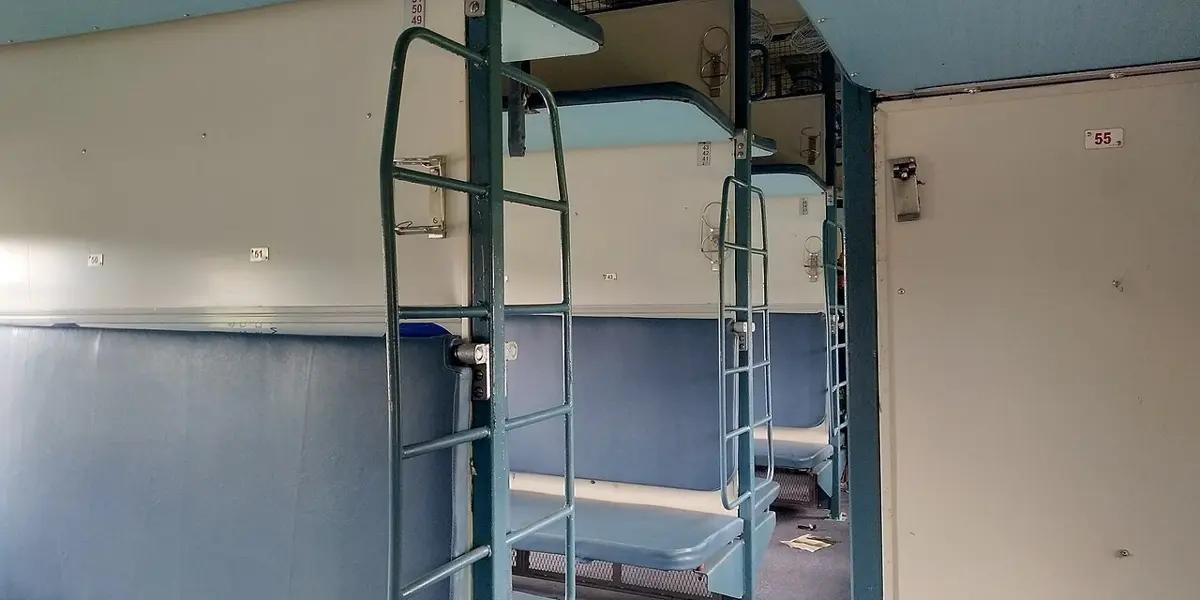
The day comes. His parents go with him to see him off (to say goodbye where he leaves). When he is settled (sitting comfortably) in his berth, his parents get off and wait for the train to depart. His father comes to the window and goes on talking to him. Then he hands the boy an envelope through the window: if the boy feels afraid on the way, he should open it and read it, and it will calm him down.
The boy puts it safely in his pocket and says goodbye. When the departure announcement is made, he smiles and tells his father that he remembers everything, and that he mustn’t worry. The train gets its signal to go.
5. Alone on the train
At every station people get on and off, and the boy watches them. He notices that everyone is with someone, and he starts to feel lonely. At one station, a big man enters the compartment. The boy is scared of him. He tries to sleep and can’t, because he keeps thinking about the man, and he grows more frightened. Then he remembers the letter, and he opens it.
6. The letter
The father has written only a few words: don’t be afraid, I am here with you on this train, in the adjacent compartment (the one next door). As soon as the boy reads this, his face lights up and all his fear vanishes.
What it means. The father keeps his promise to let his son go alone, and he never gets in the way. Yet he can’t quite let go. He lets the boy feel grown up and stays close enough to help. That is the story’s quiet message: parents give us freedom a little at a time, and their care goes on even when we can’t see it. It also shows what a yes can come with. The boy’s parents said yes only when he insisted, and then they made sure he knew everything he needed.
Why did the boy feel lonely on the train?
Pick an answer to see why.
What is the surprise at the end of the story?
Pick an answer to see why.
Words from the story
Words linked here open in English Vocabulary, where you can see an example and practice them in the word game. The meanings below are the ones the words have in this story.
| Word | Meaning here |
|---|---|
| refuse | to say no to something; to say that you won’t do or allow it |
| insist | to demand something firmly, and not accept no |
| stuff | things, especially the things that belong to you (an informal word) |
| goggles | tight glasses that keep water, dust or wind out of your eyes |
| sunglasses | dark glasses that protect your eyes from the Sun |
| muffler | a thick piece of cloth worn round the neck to keep it warm; a scarf |
| see someone off | to go with someone to the place they are leaving from, to say goodbye |
| settle (settled) | to get into a comfortable position |
| berth | a place to sleep on a train or a ship |
| depart | to leave, especially to start a journey |
| departure | leaving; the noun of depart |
| announcement | something said in public to tell people the news; a departure announcement tells passengers that the train is about to leave |
| hand (handed) | to give something to someone with your hand |
| compartment | one of the separate sections of a railway coach |
| adjacent | next to something |
| light up (lit up) | of a face: to become bright with happiness |
| vanish (vanished) | to disappear suddenly |
A. Solve the crossword
B. Who said it, and why?
Write who made these remarks and for what purpose.
- a.Is it okay if I go on my own?
- b.Please let me go by myself.
- c.May I take them, please?
- d.Okay, but always go swimming with your grandparents.
- e.Would it be alright if I took sunglasses and mufflers for them?
Answer
C. Answer the questions
Where did the boy want to visit?
Answer
How long would the boy live with his grandparents?
Answer
Why did the parents not want to let him go alone at first?
Answer
Do you think that the boy was loving and caring? Why?
A model answer
What did the boy tell his father before the train left?
Answer
Why do you think the boy felt relaxed at last?
Answer
D. What else would you take?
If you were the boy, what else would you ask your parents to take with you? Talk to your friends.
A model answer
Pronunciation: the sounds of -ed
The past tense of a regular verb is always written -ed, but it isn’t always said the same way. There are three endings, and the last sound of the base verb decides which one you say.
| The base verb ends in | -ed sounds like | Extra syllable? | Examples |
|---|---|---|---|
| the sound /t/ or /d/ | /ɪd/ | yes | insisted, wanted, handed |
| a voiceless sound: /p/, /k/, /s/, /ʃ/, /tʃ/, /f/ | /t/ | no | asked, stopped |
| a voiced sound: every vowel, and /b/, /g/, /v/, /z/, /m/, /n/, /l/, /r/… | /d/ | no | loved, smiled, agreed |
Voiced or voiceless? Put your fingers on your throat and say a long “zzzz”, then a long “ssss”. With /z/ your throat hums: that is a voiced sound. With /s/ there is only air: voiceless.
The reason is simple. Try saying stopd: your throat has to switch on at the very last moment, so the mouth takes the easy way and says stopt. And after /t/ or /d/ you couldn’t hear a second /t/ or /d/ at all, so English puts a small vowel in between: want-id.
Here is a list of words from the story. Pronounce the words and put them in the correct column based on the last sound: asked, loved, insisted, agreed, lived, worried, wanted, said, smiled, handed, stopped, scared.
Answer
Speaking: asking, giving and refusing permission
When you ask for permission, you ask if you may do something yourself. (When you ask someone else to do something, that is a request.) Here are the common ways, from the most ordinary to the most careful.
| Asking | The verb that follows | Example |
|---|---|---|
| Can I…? | base form | Can I go out, please? |
| May I…? | base form | May I use your pen, please? |
| Could I…? | base form | Could I sit here? |
| Is it okay / all right if I…? | present | Is it okay if I sit here? |
| Do you mind if I…? | present | Do you mind if I switch on the fan? |
| Would you mind if I…? | past form | Would you mind if I used your telephone? |
| Would it be all right if I…? | past form | Would it be all right if I took these? |
| I was wondering if I could… | base form | I was wondering if I could bring my pet here. |
You will also see all right written as alright. Both are common, but all right is the safer spelling in an exam.
To say yes: Yes, of course. Sure. Go ahead. Certainly. No problem. To say no: a polite no usually starts with I’m sorry or I’m afraid, and gives a reason: I’m sorry, I’m using it. A bare No sounds rude.
But there is one trap. Do you mind…? really means “Does it bother you?”, so “No” means yes.
“Do you mind if I open the window?” Which answer refuses politely?
Pick an answer to see why.
Which is correct?
Pick an answer to see why.
A. Match the questions and the responses
Work in pairs. Match the questions in A with the correct responses in B. Then, act them out with your partner.
- a.Can I go out, please?
- b.May I use your pen, please?
- c.Would you mind if I used your telephone?
- d.Is it okay if I sit here?
- e.Do you mind if I read it loudly?
- f.Is it alright if I switch on the fan?
- i.No problem. You can use it.
- ii.Not at all. I like loud reading.
- iii.Yes, you can.
- iv.Yes, it’s hot in here.
- v.I’m sorry. I am doing my classwork.
- vi.Yes. No one is sitting here.
Answer
B. Ask for permission
Work in pairs. Study the situations below. Take turns to ask for permission and respond to them. Use a different way of asking each time.
Example: Kedar: May I use your compass? Nima: I’m sorry. I’m using it.
- a.You want to use your friend’s computer.
- b.You want someone to take your photo.
- c.You want to have a glass of juice.
- d.You want to take your friend’s notebook.
- e.You want to drink water.
- f.You want to take some rest.
Model conversations
Grammar I: Yes/no questions
A yes/no question is a question you can answer with yes or no: Is it raining? Did he catch the train? Every way of asking for permission above is one.
In Nepali you can turn a statement into a question without moving a word: तिमी आयौ becomes तिमी आयौ? or के तिमी आयौ? In English, the order of the words changes. There are two cases.
1. The sentence has a helping verb
Helping verbs (or auxiliaries) are am, is, are, was, were, have, has, had, can, could, will, would, shall, should, may, might, must. If the sentence has one, move it in front of the subject. Nothing else changes.
| Statement | Question |
|---|---|
| The train is leaving. | Is the train leaving? |
| We can open the window. | Can we open the window? |
| You have packed your bag. | Have you packed your bag? |
| We should leave now. | Should we leave now? |
The verb be works the same way even when it is the only verb: You are tired → Are you tired? And in a sentence with there, the verb moves in front of there: There is a berth → Is there a berth?
2. The sentence has no helping verb
Then English adds one: do, does or did, at the front. The main verb goes back to its base form, because do now carries the tense and the -s.
| Statement | Add | Question |
|---|---|---|
| You live near the station. | Do (I, you, we, they) | Do you live near the station? |
| The ticket costs Rs. 50. | Does (he, she, it) | Does the ticket cost Rs. 50? |
| The train left on time. | Did (any subject, past) | Did the train leave on time? |
Have, has and had are helping verbs only when another verb follows, as in You have packed. When one of them is the only verb, it is the main verb, so add do, does or did: He has a bicycle → Does he have a bicycle?
Short answers
Answer a yes/no question with Yes or No, the subject as a pronoun, and the same helping verb:
| Question | Yes | No |
|---|---|---|
| Is she at home? | Yes, she is. | No, she isn’t. |
| Can you swim? | Yes, I can. | No, I can’t. |
| Have you seen the Himalayas? | Yes, I have. | No, I haven’t. |
| Do you like tea? | Yes, I do. | No, I don’t. |
| Did they go? | Yes, they did. | No, they didn’t. |
Which is the correct question?
Pick an answer to see why.
“They took the bus yesterday.” Which is the correct question?
Pick an answer to see why.
A. Match the statements and the questions
Match the statements in column A with their correct questions in column B.
- a.I am late.
- b.I can help you.
- c.She is sleeping.
- d.We have met before.
- e.You work at home.
- f.It costs Rs. 10.
- g.She went home.
- h.They left for the cinema.
- i.Do you work at home?
- ii.Does it cost Rs. 10?
- iii.Did they leave for the cinema?
- iv.Am I late?
- v.Is she sleeping?
- vi.Can I help you?
- vii.Have we met before?
- viii.Did she go home?
Answer
B. Change the statements
Change the following statements into yes/no questions.
- a.He loves this town.
- b.They always play football.
- c.She can fly an airplane.
- d.There are some smart students in the school.
- e.They went to the river yesterday.
- f.She spends her money on books.
- g.He decided to leave the town.
- h.She goes to bed early.
- i.They should rewrite their homework.
- j.He was born in India.
Answer
C. Honest answers
Write honest answers to these questions.
- a.Do you study in Grade VII?
- b.Do you like watching television?
- c.Have you ever been to a zoo?
- d.Does your father cook food?
- e.Did you go to a health post/hospital last month?
- f.Can you draw a picture of a dragon?
- g.Do you have classes on Saturdays?
- h.Does your brother/sister like coffee?
- i.Does your friend wear glasses?
How to answer
Writing I: A story from an outline
An outline (also called a skeleton story) gives you only the bones of a story, in short notes. Your job is to put the flesh on them. Here is how.
- Read the whole outline first, so that you know how it ends.
- Put every note in the past tense, as a full sentence: has tough days → He had tough days.
- Join short notes with and, but, so, when, because.
- Add a little: a time (One evening…), a feeling (He could hardly believe his eyes), a few spoken words.
- Write a title, then read the story through once.
| The outline says | You might write |
|---|---|
| live in a small house | Once upon a time, a poor shoemaker and his wife lived in a small house. |
| runs out of money | One winter, he ran out of money. |
| gets surprised and sells them in market | He was amazed, and he sold them in the market the same day. |
A. The shoemaker and the elves
Develop a story based on the outline given below. Write a suitable title too.
A poor shoemaker and his wife … live in a small house … has tough days to earn his daily bread … always dream of living happily … runs out of money … has a piece of leather to sew shoes … gets up in the morning and finds fine pairs of shoes … gets surprised and sells them in market … buys more leather … cuts it out to make more pairs and leaves on his work-table … finds many pairs there … sells them and becomes rich … continues for some weeks … buys a beautiful house … comes to know about the elves helping them … leaves pairs of beautiful shoes for them … elves never come back again
Hint
A model story
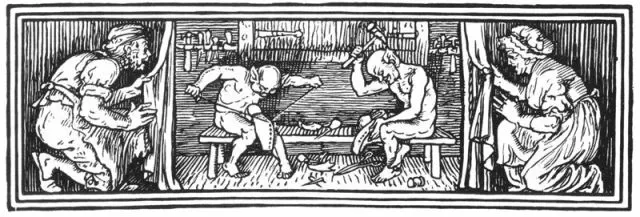
Why do the elves never come back? The outline doesn’t say, and that is one of the pleasures of the tale. Perhaps they only help those who need it, and the shoemaker is rich now. Perhaps, dressed so well, they no longer want to work. A story doesn’t have to explain everything.
B. A story to a given ending
Here you know only the last sentence, so plan backwards. She finally realized her mistake tells you three things: there is a girl or woman, she does something wrong, and for most of the story she doesn’t know it. So ask: what did she do? Who did it hurt? What showed her?
Write a story that ends in “She finally realized her mistake.”
Hint
A model story
Reading II: Changing World
Before you read
What do you see in the picture?
A model answer
Why do you think the man is standing alone? Share your views.
A model answer
What kind of text it is
This is a short poem in four stanzas (a stanza is a group of lines, like a paragraph in a poem). It doesn’t rhyme. It is told by an “I”, a speaker, an old man looking back on his life. Read it aloud slowly, and listen to how it narrows and then widens.
The poem, stanza by stanza
Stanza 1: the young man’s dream
When the speaker was young, he wanted to change the whole world. He found that it was too hard. So he made his goal smaller: his nation.
Stanza 2: a smaller and smaller target
He couldn’t change the nation either. So he turned his attention (he focused) on his town, and he couldn’t change that. As an older man, he tried just his family. The poem doesn’t say so, but we can guess what happened.
Stanza 3: the discovery
Now he is old, and at last he sees that the only thing he can change is himself. Then a second thought hits him suddenly, and it hurts: he could have started there, long ago.
Stanza 4: what might have been
If he had changed himself first, he could have made an impact (had a strong effect) on his family. With his family he could have made an impact on the town. Their impact could have changed the nation. And so he could, indeed (really, truly), have changed the world.
Look at Figure 2.3. The whole poem goes in through its first three stanzas (world, nation, town, family, myself) and comes out through its last stanza (myself, family, town, nation, world). The order of the words is the meaning.
What is the theme of the poem?
Pick an answer to see why.
Why does the poem’s last stanza sound regretful?
Pick an answer to see why.
Words from the poem
| Word | Meaning here |
|---|---|
| change | to make something different; change your mind: to form a new opinion |
| suddenly | quickly and without warning |
| realize | to begin to understand something you didn’t see before |
| focus (on) | to give all your attention to one thing |
| impact | a strong effect on someone or something |
| indeed | really; used to make a statement stronger |
A. Complete the sentences
Complete the sentences using these words from the poem: change, suddenly, realize, focus, impacts, indeed.
- a.Great people always ……… their mistakes.
- b.The meal was very delicious ……… .
- c.Excessive use of electronic devices has negative ……… on our mental health.
- d.Thank you for your offer, but I cannot ……… my mind.
- e.Our exam is approaching, but I cannot ……… on my studies.
Answer
B. Answer the questions
Why do you think the poet wants to change himself?
Answer
Why does the poet feel sorry in the poem?
Answer
What did the poet realize when he grew old?
Answer
If the poet had changed himself, what could have happened?
Answer
Is changing the world easy or tough? Give your opinions.
A model answer
C. How can we change ourselves and society?
How can we change ourselves and the society? Discuss.
A model answer
Listening: may I use your washing machine?
Two friends talk in the morning. One of them has just come back from a long trip, and she needs a few things. Read the questions in B and C first, then listen, as many times as you need. The recording is CDC’s; the answers below are hidden under the questions.
Words to know: starving (very hungry), filthy (very dirty), a jumper (the British word for a sweater), a drawer (a box that slides in and out of a cupboard or chest).
A. Before you listen
Look at the picture and answer these questions. (Two women stand talking; the one in a red saree is saying “May I …?”)
- a.Who do you think the women in the picture are?
- b.What do you think the woman in the red saree is asking for?
Model answers
B. True or false?
The two ladies are talking in the afternoon.
Pick an answer to see why.
The girl is hungry.
Pick an answer to see why.
The girl wants to use the washing machine to wash her clothes.
Pick an answer to see why.
She could use the washing machine the day after.
Pick an answer to see why.
C. One-word answers
Listen to the conversation again and answer these questions. Use one word only.
- a.What does the girl look for?
- b.Which place is relatively hotter?
- c.What clothes does the girl want?
- d.Which drawer contains the clothes?
Answer
D. How many questions can you remember?
Recall the questions you heard on the audio and find who can remember the most.
Answer
Practice listening alone
Writing II: An email asking for permission, and a reply
A. Study the email
The email to study is from Kabir Jha, a student at a school that will celebrate its Platinum Jubilee next month. (A jubilee is a special anniversary; a platinum jubilee usually marks 70 years, sometimes 75, as a silver one marks 25 and a golden one 50.) He has been chosen as coordinator of a short cultural program, and he writes to the head teacher. Here is what each part does.
| Part | In Kabir’s email | Why it is there |
|---|---|---|
| To | the head teacher’s address | Without it, nothing is sent. |
| Subject | Asking for permission to use the hall | It tells the reader what the email is about before she opens it. |
| Greeting | Dear Madam, | Polite and formal, as in a letter. |
| Opening | the Jubilee, the program, his role | Who he is and why he is writing. |
| The request | the participants want to rehearse in the auditorium hall during lunch break | What he wants, exactly: which room, when, and how long. |
| Polite questions | Is it okay if they use the hall? Would it be alright if they practiced there for a couple of days? | This unit’s language. See the past form practiced after Would it be alright if. |
| Closing | I look forward to your positive response. Thank you! With warm regards, | A polite ending, then a sign-off. |
| Name | Kabir Jha | Who wrote it. |
Why does Kabir say Would it be alright if they practiced… and not They will practice…?
Pick an answer to see why.
How to write a reply
An email reply has the same parts as the email, with a few changes:
- Subject: keep the same one, after Re: (“about”), so the reader knows what it answers.
- Greeting: the writer’s name, if you know them: Dear Kabir,
- Thanks: say what you are answering. Thank you for your email about…
- The answer, early and clear: You may use… or I’m afraid you can’t…, with exact days and times.
- Any conditions, or the reason for a no. If you must refuse, offer another way if you can.
- A kind word, the closing, your name and position.
| To give permission | To refuse |
|---|---|
| You are welcome to use… | I’m afraid the hall won’t be free… |
| I am happy to allow… | I’m sorry, but we can’t allow… |
| You may use it, provided that… | Unfortunately, it won’t be possible to… |
B. Reply as the head teacher
Imagine you are the head teacher. Write a reply email responding to the request made by Kabir Jha to use the hall.
Hint
A model reply
Project work
Extra bit: words for asking, giving and refusing
Keep this table: it collects the expressions of the whole unit.
| Asking for permission | Giving permission | Denying permission |
|---|---|---|
| Can I leave at 4 o’clock? | Yes, certainly. | I’m afraid you can’t. |
| Excuse me, do you think I could try this one? | Of course. | I’m afraid not. |
| Would it be possible to open the door? | By all means. | I’m sorry, that’s not allowed. |
| Do you mind if I try these shoes on? | Sure. | I’m sorry. You are not allowed to do that. |
| I was wondering if I could bring my pet here. | That’s okay. | Sorry. |
| Any chance of borrowing your old camera for a few days? | Go ahead. | No way. |
| May I have your permission to use your mobile phone once? | Why not? That seems perfectly acceptable. |
Some notes on using them:
- Any chance of…? and Sure are casual: for friends. May I have your permission to…? and That seems perfectly acceptable are formal: for offices and officials.
- By all means and Why not? both mean a warm yes. Why not? looks like a question, but it isn’t one.
- No way is strong and informal: fine as a joke with a friend, rude to anyone else.
- I was wondering if I could… is a statement that works as a question, so it often ends with a full stop.
You want to ask the manager of a bank if you may take a photo inside. Which is best?
Pick an answer to see why.
Exercise
Practice on this unit in the style of the final exam. Try each one as in the exam, then open the answer.
Read “A Father’s Letter to his Son” again and write True or False.
- a.The boy used to visit his grandparents with his parents every year.
- b.The boy’s mother did not allow him to take his swimming goggles.
- c.The father gave the boy the envelope at home.
- d.The boy was scared of a big man on the train.
- e.The father was in the next compartment.
Answer
Read “Changing World” again and complete the sentences with suitable words.
- a.When he was young, the speaker wanted to change ……… .
- b.After the world and the nation, he tried to change his ……… .
- c.As an older man, he tried to change his ……… .
- d.In old age, he realized that he could change only ……… .
- e.If he had changed himself, he could have had an ……… on his family.
Answer
Read the notice and answer the questions.
Shree Kalika Secondary School, Dhulikhel. Students who want to use the computer lab during the winter break must ask for permission from the office by Friday. The lab will be open from 10 am to 1 pm, Sunday to Thursday. Students must bring their ID cards. Food and drink are not allowed in the lab. — Deepak Rai, Lab Assistant
- a.Who wrote the notice?
- b.By which day must students ask for permission?
- c.For how many hours will the lab be open each day?
- d.What must students bring?
- e.Can a student eat lunch in the lab? Why?
Answer
Rewrite the given sentences as indicated in the brackets.
- a.The train leaves at six. (Change into a yes/no question.)
- b.Susmita has packed her bag. (Change into a yes/no question.)
- c.There is a berth for me. (Change into a yes/no question.)
- d.The passengers heard the announcement. (Change into a yes/no question.)
- e.Sonam can open the window. (Change into a yes/no question.)
Answer
Choose and copy the best answer for each numbered blank.
Pasang wanted to go to the fair with his friends. “(a) ……… (Do, Does, Am) you mind if I go?” he asked his father. “Would it be all right if I (b) ……… (come, came, comes) home at seven?” His father thought for a moment. “(c) ……… (Is, Are, Do) your friends going by bus?” he asked. “Yes, they (d) ……… (is, are, do),” said Pasang. “Then you (e) ……… (may, can to, have) go,” said his father.
Answer
Correct the punctuation and capital letters in this paragraph. There are ten errors.
last sunday my friend tashi came to our house. May I borrow your bicycle he asked. I said yes, but I told him to be careful he rode it to bhaktapur and came back at five oclock.
Answer
Develop a story of about 100 words from this outline, and give it a title.
a crow is thirsty … finds a pot with little water … beak cannot reach … has an idea … drops stones one by one … water rises … drinks and flies away
A model story
Write a letter to your uncle in Dharan asking if you may spend the winter holidays at his house. Say why you want to go and what you would like to do there.
Hint
A plan
Printable PDFs
- Study notes 2 pages
- Harder practice questions 2 pages Answer key
Practice every question in the book, and keep track of the ones you miss →
A companion to your textbook, not a replacement for it: study from the book your school uses, and where the two differ, follow your teacher. Found a mistake? Please tell us.