
“I pulled my tooth out.” “I had my tooth pulled out.” The words are nearly the same, but in the first sentence you are standing bravely at the mirror, and in the second you are sitting in a dentist’s chair. How can one small word move the pliers to another person’s hand?
This unit is about getting things done: the jobs we do ourselves, and the jobs we arrange, ask, allow or force others to do. You will read about wedding customs in four countries, and about three inventions that make hard lives easier. You will learn the causative verbs (make, have, let, get), the rules of subject–verb agreement, how to paraphrase, how the ending -s changes its sound, and which everyday words are different in British and American English.
Getting started: who is doing the work?
The unit opens with four pictures. Look at each one and ask two questions: who wants the job done, and who is really doing it?
| Picture | What it shows | What we can say |
|---|---|---|
| a boy in a pink shirt spreading the sheet on a bed | a child doing a job at home | His parents make him make his own bed. |
| a mother pointing at a bag, shoes, clothes and books lying on the floor, and a boy looking down | a mother telling her son to tidy up | She is getting her son to pick up his things. |
| a man in a cape, with a barber trimming his hair and beard | a visit to the barber | He is having the barber trim his beard. |
| a mechanic bending over the engine of a red car with its hood open | a repair at a garage | The owner is having the car repaired. |
In all four, one person wants something done, and someone else does it. The sentences use a special group of verbs (make, get, have), and this unit is about how they work.
Reading I: Traditional Marriage Customs around the World
Before you read
Look at the pictures given in the text. What is happening in the pictures?
A model answer
When did you last attend a celebration? Share your experience.
A model answer
What kind of text it is
This is a short informative article. It has one topic, and it gives each part of the topic a paragraph of its own: first an introduction, then one country at a time. That plan matters for Exercise C below, because each paragraph has one job. It is also full of the unit’s grammar, as you will see.
The text, paragraph by paragraph
Paragraph 1: what marriage is. Marriage is a relationship between two people that the law recognizes (accepts as real). Society should accept it too, through its norms (the ways of behaving that people expect) and its rituals (sets of actions done in the same way each time). The two married people are called spouses.
The writer then goes back in time. People have held wedding ceremonies for a very long time, and every culture has something of its own. Why did ancient societies start marrying at all? They needed a safe home in which to have offspring (children), and a way to hand their property down to them. Today the rituals still differ from place to place.
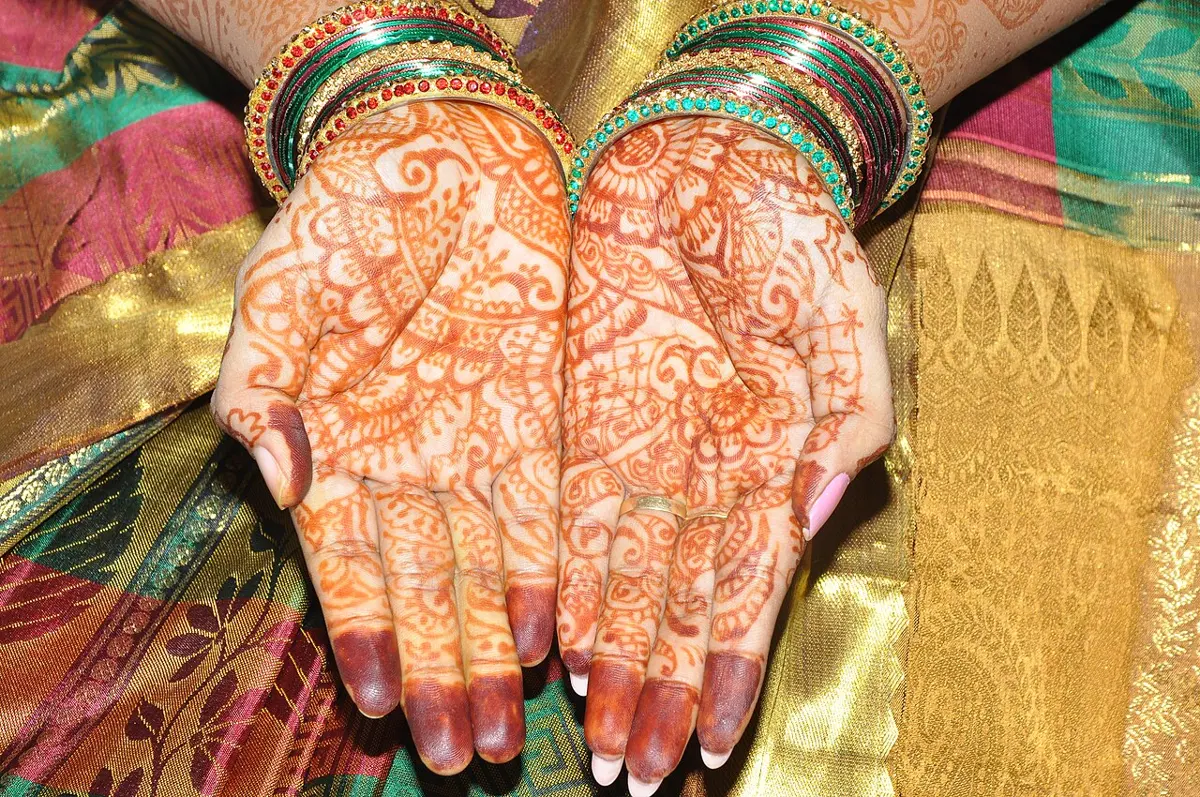
Paragraph 2: India. Indian weddings go on for days, with many rituals and ceremonies, which depend on what the bride and groom like. Two come before the wedding day. At the engagement ceremony, the two exchange rings. At the Mehendi ceremony, the bride has her palms, wrists and feet decorated. On the wedding day, the bride and groom put garlands (rings of flowers) round each other’s necks. This symbolizes (stands for) the bride’s acceptance of her husband.
Paragraph 3: Japan. A Japanese bride has her costume changed several times during the celebration. The couple drink sake, a Japanese alcoholic drink made from rice, as a symbol of their new union. In this ritual, called san-san-kudo, each of them takes three sips from each of three cups, and then their parents do the same, which binds the two families together. Guests give money, wrapped in a special envelope. The couple give small gifts back, such as sweets or candles.
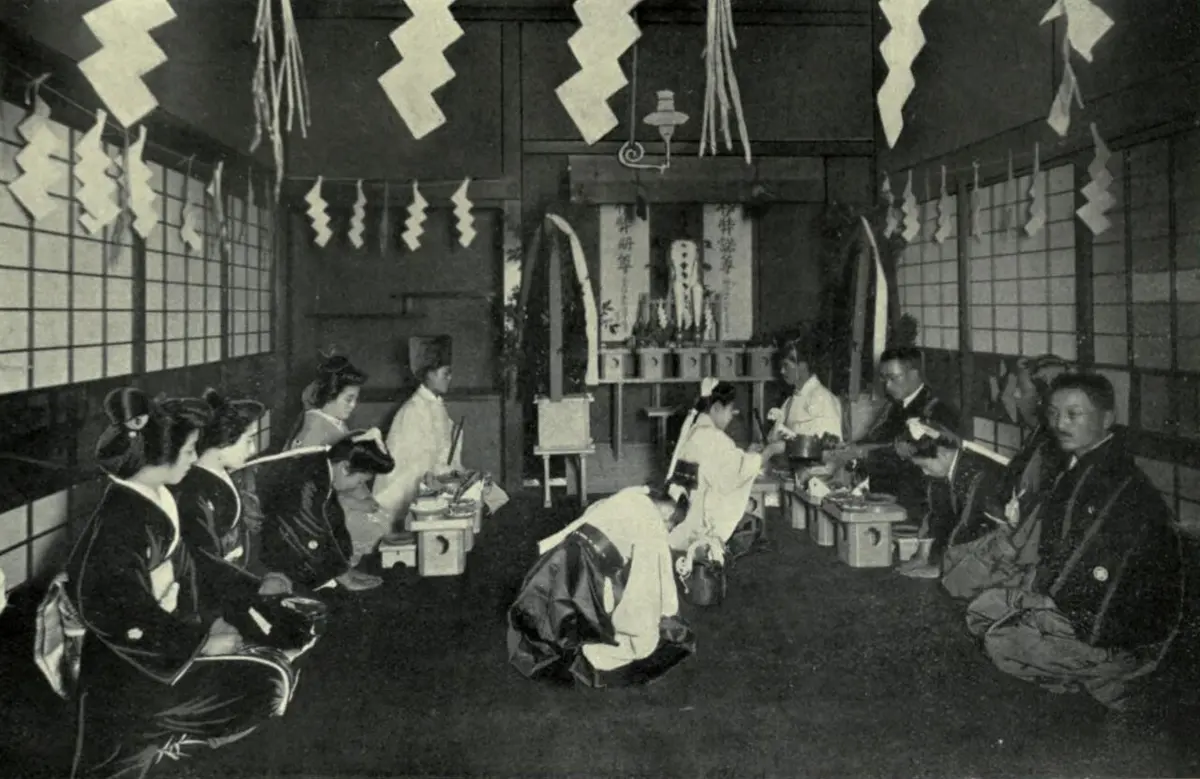
Paragraph 4: Jamaica. Here the wedding belongs to the whole community. Everyone in the village helps to plan it. On the day, people go out into the street to see the bride and review how she looks (judge it, so that it can be made better). She may then go home and improve her appearance. There is a lot of traditional dancing, and the family has the bride serve several cakes, of a traditional black kind made from dark fruits and rum.
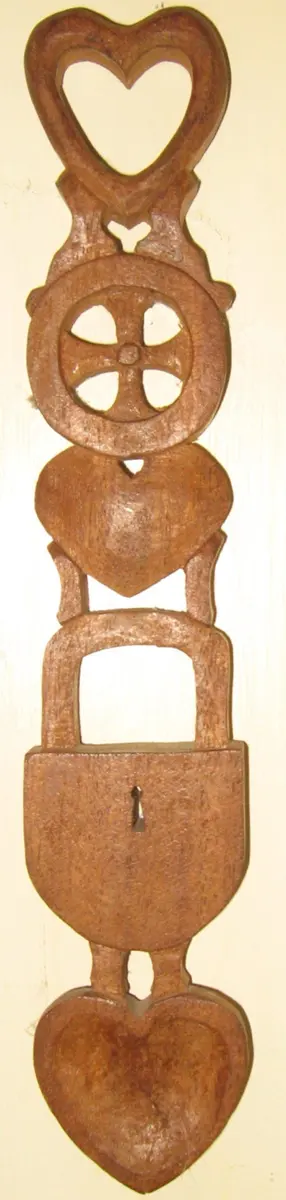
Paragraph 5: Wales. Wales has two customs. A man carves a wooden spoon and gives it to the bride. And in another old custom, the bride’s own family “kidnaps” her shortly before the wedding, and the groom and his family have to find her and get her rescued.
Why does san-san-kudo include the parents?
Pick an answer to see why.
Which custom happens before the wedding day?
Pick an answer to see why.
Words from the text
Words linked here open in English Vocabulary, where you can see an example and practice them in the word game. The meanings below are the ones the words have in this text.
| Word | Meaning here |
|---|---|
| recognize | to accept officially that something is real or legal |
| ritual | a set of actions always done in the same way, often in a ceremony |
| spouse | a husband or wife |
| offspring | a person’s child or children |
| engagement | a formal promise to marry; the ceremony for it |
| garland | a ring of flowers worn round the neck |
| symbol | something that stands for something else |
| symbolize | to stand for something |
| wrap | to cover something in paper or cloth |
| review | to look at something closely, to judge it or improve it |
| carve | to cut wood or stone into a shape |
| rescue | to save someone from danger |
A. Find the words
Find the words from the text which have the following meanings.
- a.a set of actions performed regularly
- b.a person’s child or children
- c.something that stands for something else
- d.assess something to help improve it
- e.save someone from a dangerous situation
Answer
B. Answer the questions
Why did ancient people start the marriage ritual?
Answer
What are the two pre-wedding ceremonies in India?
Answer
What is sake?
Answer
Why is a community important during a wedding ceremony in Jamaica?
Answer
Who reviews the bride’s looks in Jamaica?
Answer
Why do you think Welsh wedding traditions seem strange?
A model answer
C. Match the paragraphs
Match the paragraphs with their correct headings.
Paragraph 1, Paragraph 2, Paragraph 3, Paragraph 4, Paragraph 5
Jamaican Wedding, Japanese Wedding, Indian Wedding, Welsh Wedding, Introduction to Marriage
Answer
D. Your favorite
Which of the wedding cultures discussed in the text did you like the most? Give reasons.
A model answer
Pronunciation: the sounds of -s and -es
Say cats and dogs slowly. The ending is written with the same letter, but it isn’t the same sound. Cats ends in a hiss, /s/. Dogs ends in a buzz, /z/. And horses gets a whole new beat, /ɪz/.
You don’t have to learn each word. The last sound of the word before the ending decides. It is the last sound, not the last letter: days ends in a vowel sound, brides in /d/.
| The word before the ending ends in… | The ending sounds | Examples |
|---|---|---|
| a hissing or hushing sound: /s/, /z/, /ʃ/ (sh), /ʒ/, /tʃ/ (ch), /dʒ/ (j) | /ɪz/, an extra beat | buses, dishes, watches, bridges |
| any other voiceless sound: /p/, /t/, /k/, /f/, /θ/ | /s/ | shops, boats, books, cliffs |
| any other voiced sound, and every vowel sound | /z/ | rivers, hills, trees, cows |
To test a sound, put your hand on your throat and say it alone. /t/ is only air. /d/ makes your throat hum, and that hum is what voiced means. The same rule holds for plurals (shops), for verbs with he or she (he walks), and for ’s (Karma’s).
Notice how the suffix -s/-es is pronounced in these words, and put them in the correct column. One example of each is given: spouses /ɪz/, palms /z/, suggests /s/.
spouses, establishes, rights, obligations, laws, suggests, societies, days, palms, sisters, parents, involves, brides, symbolizes, ceremonies
Answer
Which word ends in the sound /z/?
Pick an answer to see why.
Grammar I: Causative verbs
I repaired my bicycle. Then you are the one with the spanner. I had my bicycle repaired. Then someone else had the spanner, and you only arranged it.
A causative verb says that somebody causes something to happen, usually by getting another person to do it. The four you need are make, have, let and get. Each one has its own meaning, and the form of the next verb depends on it.
| Pattern | The next verb | Example | What it means |
|---|---|---|---|
| make + person + verb | base form | The coach made us run ten laps. | forced: there was no choice |
| have + person + verb | base form | Karma had the tailor shorten his kurta. | arranged: a job or a service |
| let + person + verb | base form | Dad lets us stay up on Fulpati. | allowed |
| get + person + to + verb | to + verb | Ritu got her brother to carry the gas cylinder. | persuaded or asked |
| have / get + thing + past participle | past participle | We had the roof mended. Salim got his tooth filled. | someone else did the job to the thing |
The three columns of Exercise A below show them too: My teacher lets/has/makes us correct our mistakes ourselves; I got my friend to help me with my assignment; We had/got our room swept.
The one question to ask: what comes after the causative verb, and does it do the job, or is the job done to it?
- A person who does the job: the base form after make, have, let; to + verb after get.
- A thing that the job is done to: the past participle. The roof mends nothing; it is mended.
The rest of the sentence behaves as usual. The tense goes on the causative verb, and the second verb never changes for it: She has the tailor sew it. She had the tailor sew it. Will you have the tailor sew it? She doesn’t let us sew it.
“Anisha’s parents don’t let her ……… alone at night.” Which fits?
Pick an answer to see why.
“I must get my passport ……… before I go.” Which fits?
Pick an answer to see why.
Which sentence means that Rohit did not do the work himself?
Pick an answer to see why.
A. Sort the sentences
Read the following sentences. Place them in the correct column with similar structures.
- a.It lets them live together.
- b.The bride gets her palms, wrists, and feet decorated for the wedding.
- c.The groom must bribe them in order to get his shoes returned.
- d.Japanese brides have their costumes changed several times.
- e.As a symbol of the union, the family gets them to drink sake.
- f.Several cakes are brought, and the family has the bride serve them.
| make / have / let + person + base form | get + person + to + verb | have / get + thing + past participle |
|---|---|---|
| My teacher lets/has/makes us correct our mistakes ourselves. | I got my friend to help me with my assignment. | We had/got our room swept. |
Answer
B. The correct form
Complete the following sentences with the correct form of the verb in the brackets.
- a.Ruksar is having the mechanic ……… her scooter. (service)
- b.Teachers made us ……… extra classes in the evening. (take)
- c.I let them ……… their windows. (open)
- d.Ahamad always gets his parents ……… an expensive gift on his birthday. (buy)
- e.Samrat had his bedroom ……… . (clean)
- f.How can we get people ……… their surroundings? (clean)
- g.Shyanden got his hair ……… yesterday. (cut)
- h.Do your parents get you ……… the household chores? (do)
- i.Our teachers let us ……… football after 4:00. (play)
- j.Did you get your shirt ……… yesterday? (wash)
Hint
Answer
C. Rewrite the sentences
Rewrite the following sentences starting with the given words as subjects. Use the causative verbs in brackets.
Example: The doctor will check my throat next month. → I will have the doctor check my throat next month. (have)
- a.Indra ordered Kamini to book tickets. Indra ……… (make)
- b.Somebody washed my clothes yesterday. I ……… (get)
- c.Hamid used his mother’s mobile phone. Hamid’s mother ……… (let)
- d.Did a painter paint your house? Did ………? (have)
- e.Kripa goes to school on her mother’s scooter. Kripa’s mother ……… (let)
- f.The boy types my documents. I ……… (get)
- g.The police told the prisoners to raise their hands. The police ……… (make)
- h.The lady hired a mechanic to mend her car. The lady ……… (have)
Answer
Writing I: A wedding in your culture
A description of a ceremony says what happens, in order, and what it means. Use the present simple, because it happens in the same way every time: The groom’s family arrives…. Use the unit’s grammar too: The bride has her hands decorated…
| Part | What to say | Useful words |
|---|---|---|
| Opening | which culture; why the wedding matters | In my community, a wedding is… |
| Before the day | what is prepared | A few days before… |
| The day | the main rituals, in order | First… Then… After that… |
| Meaning | what a color, an object or an action stands for | …symbolizes… |
| Feast and music | who comes, what they eat | Guests are served… |
| Closing | how it ends; what you think | At the end…, For me… |
How do people celebrate a wedding ceremony in your culture? Write a short description.
Hint
A model description
Listening: an oil change
A customer speaks to someone at a garage, to book a service. Read the questions in B first, then listen, as many times as you need. The recording is CDC’s; the answers are hidden under the questions.
Words to know: an opening (a free time for an appointment), an oil change (draining the old oil from a car’s engine and putting in new oil), That works for me (that time suits me), deluxe (a better, more expensive kind).
A. Before you listen
Study the picture and guess the answers to the following questions. (A man in work clothes is bending over the engine of a red car, with the hood open.)
- a.Who do you think the man is?
- b.What is the man doing?
Model answers
B. Listen and answer
What does the customer want?
Answer
When is the first opening?
Answer
Why can’t the customer take the first opening?
Answer
What is the next appointment time?
Answer
How much will the customer pay?
Answer
C. Getting things done for you
Have you ever asked other people to do something for you? Talk to your friends.
A model conversation
Speaking: getting things done
A. What Raghav says
Raghav talks about his day. Some things he does himself, and some are done by others. The test is simple: who really does the action?
Study what Raghav is saying. Does he do everything by himself or get others to do something for him? Mark the sentences which mean he has others do something for him.
- I eat ice-cream.
- My mother makes me brush my teeth after each meal.
- I listen to the news on the radio at 8 o’clock.
- I get my little sister to play with me.
- I get my clothes washed.
- I have my trousers ironed.
- I have my hair cut at a barber’s.
- I get my shoes brushed.
- I get my teacher to check my work.
Answer
B. Rules in five places
Look at how a student could talk about the rules of a library: The librarian doesn’t let us read books aloud. She gets us to return books on time. She makes us keep quiet. The negative goes on the causative verb (doesn’t let), and each pattern keeps its own form. Now do the same for these places.
Work in groups and discuss what someone lets, has, gets or makes you do in the following places. Say at least three sentences.
- a.kitchen
- b.garden
- c.classroom
- d.temple
- e.exam hall
Model sentences
Reading II: Life Saving Inventions
Before you read
How does technology make life easier? Discuss.
A model answer
What kind of text it is
This text has three short parts, each with a heading, and they all go the same way: a problem → the invention → how it helps. If you can name those three for each invention, you know the text.
| Invention | The problem | What it is | How it helps |
|---|---|---|---|
| Hippo-roller | heavy buckets, hours of walking, injuries | a drum that rolls, holding 90 liters | more water, less time, fewer injuries |
| LifeStraw | 780 million people without safe water | a plastic tube that cleans water as you drink | people can drink dirty water without getting ill |
| AidPod | no medicines in remote villages | a triangular packet that fits in a crate of Coca-Cola | medicines travel where the drinks already go |
Hippo-rollers
Many women and children in Africa spent three to nine hours a day carrying water home. They carried it on their heads, in 20-liter plastic buckets. The buckets were heavy, and often caused back and neck injuries (harm to the body).
Two engineers, Pettie Petzer and Johan Jonker, designed a “rolling wheel”, the hippo-roller. It holds ninety liters, and instead of being lifted, it is rolled along the ground. The rollers have been delivered (handed over) to remote villages. So women have more time for their families, children have more time at school, and there are fewer injuries.
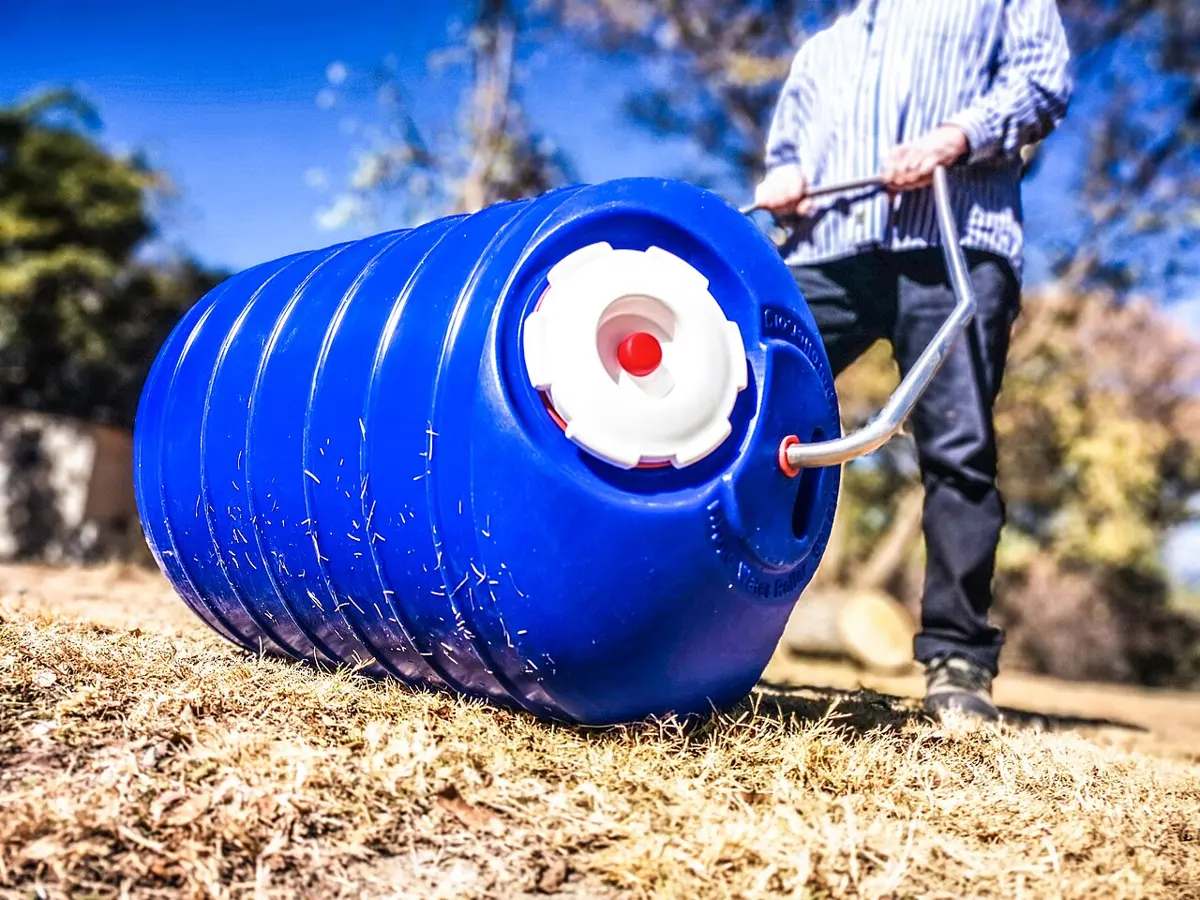
Compare the numbers. One roller holds as much as four and a half buckets, since 90 ÷ 20 = 4.5. And a liter of water weighs about a kilogram, so a full roller weighs about 90 kg. Nobody could lift that onto their head, but the ground holds the weight while the person only pushes.
LifeStraw
The text starts with a large number: 780 million people have no clean, safe drinking water. That fact got a Swiss company, Vestergaard, to invent a special straw. LifeStraw is a long, thin plastic tube. It cleans water as the water passes through it into the person’s mouth. It is very light, and it can clean up to 1,000 liters before you need to replace it. It was used to help people after the Haiti earthquake, and in the floods in Pakistan and Thailand.
Inside today’s LifeStraw are hollow fibers with holes about a fifth of a thousandth of a millimeter wide, which stop nearly all bacteria and parasites. Your own sucking pulls the water through: there are no batteries and no chemicals.
AidPod
While traveling in Zambia, Simon Berry, a British social entrepreneur (a person who starts a project to solve a social problem, not only to make money), noticed something odd: you could buy Coca-Cola in the remotest villages, but the same villages had no medicines, and one child in five was dying before the age of five.
His idea was a question: why don’t they bring medicines when they deliver Coca-Cola? So he invented the AidPod, a triangular packet of medicines that fits between the bottles in a crate (a box for carrying bottles). He experimented with several designs, and he was testing them in Zambia. If it worked, he hoped to do the same in other African countries and save thousands of lives.
Look at what all three have in common. None of them is a complicated machine. Each one starts with somebody noticing how people really live.
How many 20-liter buckets of water fill one hippo-roller?
Pick an answer to see why.
What was Simon Berry’s main idea?
Pick an answer to see why.
Words from the text
| Word | Meaning here |
|---|---|
| injury | harm done to a person’s body |
| deliver | to take goods to the people they are for |
| invention | something new that has been made or thought of |
| straw | a thin tube for drinking through |
| tube | a long, hollow, round piece of plastic, metal or glass |
| pass through | to go through something |
| replace | to change something old for a new one |
| crate | a strong box for carrying bottles or goods |
| experiment | to try something out, to see what happens |
| remote | far from towns and from other people |
| social entrepreneur | a person who starts a project to solve a problem in society |
A. Find the words
Find the words or phrases from the text for the following meanings.
- a.change for a new one
- b.hand over goods to the proper recipients
- c.undertook a scientific procedure to make a discovery
- d.a thing or an idea that has been created
- e.harms done to a person’s body
- f.goes through
Answer
B. True, False or Not Given
Not Given (NG) means that the text doesn’t tell you, one way or the other. Answer from the text only, not from what you may know.
Write whether the following statements are True or False. If the information is not given, write NG.
- a.Women in Africa walked for a long time to fetch water for their homes.
- b.With the hippo-roller, people can carry more water than with a normal bucket.
- c.LifeStraw is made of paddy straw.
- d.LifeStraw never stops working.
- e.Japanese technology was used in those three inventions.
- f.The Coca-Cola company worked with Simon Berry to design the AidPod.
- g.The AidPod has been used successfully in many different countries.
Answer
C. Answer the questions
Why was life tough with traditional plastic buckets?
Answer
Who made the lives of African women easier?
Answer
How does LifeStraw work?
Answer
Where was LifeStraw used during disasters?
Answer
What made Simon Berry design the AidPod?
Answer
If his plan works well, what does Simon Berry hope to achieve?
Answer
D. The most useful one
Which of the inventions mentioned above do you think is the most relevant in your locality? Talk to your friends. Give reasons.
A model answer
Grammar II: Subject–verb agreement
In the present tense, English verbs have a small habit: she walks, but they walk. Is, was and has are singular; are, were and have are plural. A verb must agree with its subject: a singular subject takes a singular verb, and a plural subject takes a plural verb.
It looks easy. The trouble is finding the real subject, and deciding whether it is one or many. These are the cases that come up.
| Case | Rule | Example |
|---|---|---|
| joined by and | two people or things: plural | My aunt and my uncle live in Dharan. |
| both | plural | Both of the buses are late. |
| either … or, neither … nor | the verb agrees with the nearer one | Either the cooks or the manager is here. Neither the manager nor the cooks are here. |
| words between: with, along with, including, as well as | they don’t count; find the real subject | The groom, with his brothers, is on the way. |
| of phrases | the noun before of decides, unless it is an amount word like a lot: A lot of mangoes are ripe. | A box of mangoes costs Rs. 800. |
| an -ing subject | one activity: singular | Planning a wedding takes months. |
| sums | one result: singular | Four plus four makes eight. |
| pair words: scissors, trousers, spectacles, pants | plural | My spectacles are broken. |
| a team, a group | one group: singular | A group of tourists is waiting. |
| one person, with a negative | does not and the base form | Lochan does not eat meat. |
“The bride, along with her sisters, ……… ready.” Which fits?
Pick an answer to see why.
“Neither the bus nor the jeeps ……… running today.” Which fits?
Pick an answer to see why.
“Learning new words ……… time.” Which fits?
Pick an answer to see why.
A. Tick or cross
Do the verbs in the following sentences match with the subjects? Tick (✓) the correct sentences and cross (✗) the incorrect ones.
| i | ii | |
|---|---|---|
| a. | The students attend the language course. | The students attends the language course. |
| b. | Aayusha and her friend decorates her classroom. | Aayusha and her friend decorate her classroom. |
| c. | Either my brother or my father do not let us come to the meeting. | Either my brother or my father does not let us come to the meeting. |
| d. | Has Utsav with his friends made preparations for the program? | Have Utsav with his friends made preparations for the program? |
| e. | The story in a movie, including all the songs, attracts audiences’ attention. | The story in a movie, including all the songs, attract audiences’ attention. |
| f. | They were made dance at the party. | They were made to dance at the party. |
Answer
B. Choose the correct option
Choose the correct option from the brackets to complete the following sentences.
- a.Writing an email ……… (needs/need) a lot of care.
- b.Two plus three ……… (make/makes) five.
- c.Mr. Karki and Mr. Mandal ……… (was/were) studying mathematics together last evening.
- d.Five years ……… (pass/passes) too quickly.
- e.Either the child or the parents ……… (need/needs) to come to receive the prize.
- f.……… (Was/Were) the scissors working properly?
- g.The director and the actor never ……… (go/goes) late for the shooting.
- h.A team of players ……… (receive/receives) medals.
- i.Both of them ……… (has/have) returned home late.
- j.Jina ……… (do not like/does not like) tea.
Answer
Writing II: Paraphrasing
To paraphrase is to say the same thing in your own words: the same meaning, the same facts, about the same length, but different words and sentences. You do it each time you answer a reading question without copying, and whenever you take notes from a book.
A. How the book’s model does it
The book takes a paragraph about a cat lying in the sun and watching a mouse, and rewrites it. It keeps all the ideas, and changes the words like this:
| In the original | In the paraphrase | What changed |
|---|---|---|
| sat on the mat | was sitting on a mat | the tense |
| observed a mouse | watching a mouse | a word with the same meaning |
| across the floor | around the room | a phrase with nearly the same meaning |
| the sun was shining brightly through the window | the rays of the sun were coming through the window | the sentence’s structure |
| lazy and content | relaxed and satisfied | words with the same meaning |
| nothing could bother its peaceful state of mind | nothing could disturb it | a shorter way to say it |
Names and exact facts stay the same, because they have no other word. Everything else is yours to change.
B. Your turn: the dog
The task gives a short paragraph about dogs. Read it carefully, and paraphrase it as in the example.
Hint
A model paraphrase
Project work
Extra bit: British and American words
English has two big families. Most of the time they are the same, but some everyday things have different names. This site uses American spelling, and you will meet both kinds of word in books and movies, so learn to recognize both.
| British | American | British | American |
|---|---|---|---|
| aerial | antenna | autumn | fall |
| biscuit | cookie | chemist’s | drugstore |
| chips | french fries | crossroads | intersection |
| film | movie | rubbish | trash |
| garden | yard | ground floor | first floor |
| handbag | purse | holiday | vacation |
| lift | elevator | lorry | truck |
| paraffin | kerosene | pavement | sidewalk |
| petrol | gasoline | postbox | mailbox |
| queue | line | shop | store |
| sweet | candy | tap | faucet |
| trousers | pants | football | soccer |
A shopkeeper in London tells you, “It’s on the first floor.” Where do you go?
Pick an answer to see why.
Which pair means the same thing?
Pick an answer to see why.
Exercise
Practice on this unit in the style of the final exam. Try each one as in the exam, then open the answer.
Read “Traditional Marriage Customs around the World” again and complete the sentences with the correct words.
- a.Married partners are called ……… .
- b.Indian brides have their ……… , wrists and feet decorated.
- c.In san-san-kudo, the bride and groom each take three sips from ……… different cups.
- d.In Japan, money should be given in a special ……… .
- e.In Wales, a man should carve a ……… and give it to the bride.
Answer
Read “Life Saving Inventions” again and put the events of the AidPod story in the correct order.
- a.He invented a triangular packet of medicines.
- b.Simon Berry traveled in Zambia.
- c.He hopes to do the same thing in other countries.
- d.He noticed that Coca-Cola reached remote villages, but medicines didn’t.
- e.He experimented with several designs.
Answer
Read the news report and answer the questions.
Students of a school in Sindhuli have had a new water filter fixed in their school. For years, students had to bring water from home, because the school’s tap was often dirty after the rains. Last Baisakh, the Grade 8 students wrote to the ward office. They got the ward chairperson to visit the school, and she had the water tested. The test found germs in it, so the ward paid for a filter and had a plumber fix it near the playground. Now 240 students drink clean water every day. The head teacher makes each class clean the area round the tap once a week. — A made-up report, for practice
- a.Why did students bring water from home?
- b.Who visited the school?
- c.What did the test find?
- d.How many students drink the water now?
- e.Who has to clean the area round the tap?
Answer
Choose and copy the best answer for each numbered blank.
Our neighbor’s daughter got married last month. Her father had the house (a) ……… (paint, painted, painting) before the wedding. Her sisters made her (b) ……… (sit, to sit, sat) still for hours for the mehendi. The groom, with his friends, (c) ……… (was, were, are) late. Either the band or the guests (d) ……… (was, were, has) noisy all night. My mother got me (e) ……… (serve, to serve, served) the sweets.
Answer
Identify ten errors in the given paragraph. Rewrite the paragraph by correcting the errors.
have you seen a hippo-roller. it holds ninety liters of water, doesnt it. zeenat said i want one for jumla.
Answer
Write a description of about 100 words of a festival or ceremony in your community. Use the clues: its name; when it happens; what people prepare; what they do; what it means to you.
A plan
Write a letter to your friend about a wedding you attended. Say whose wedding it was, what you saw, and what you liked most.
Hint
A plan
Printable PDFs
- Study notes 2 pages
- Harder practice questions 2 pages Answer key
Practice every question in the book, and keep track of the ones you miss →
A companion to your textbook, not a replacement for it: study from the book your school uses, and where the two differ, follow your teacher. Found a mistake? Please tell us.