
The immune system’s security guards
Nobel Prize in Physiology or Medicine, 2025: Mary E. Brunkow, Fred Ramsdell, and Shimon Sakaguchi

Mary E. Brunkow
born 1961 in the United States
A gene hunter at a small medicines company, who checked twenty genes one by one until the last one gave the answer.
Photo: US Embassy Sweden, CC BY 4.0

Fred Ramsdell
born 1960 in the United States
An immunologist who was hiking in the mountains, out of phone reach, when the prize was announced.
Photo: US Embassy Sweden, CC BY 4.0

Shimon Sakaguchi
born 1951 in Japan
A doctor turned researcher who kept looking for the “guard” cells for more than ten years, while most of his field thought they did not exist.
Every day, germs get into your body: on your hands, in the dust of the road, in the food you eat. Most of them never make you ill, because your immune system finds them and destroys them. It is a powerful army.
But a powerful army is dangerous if it attacks the wrong side. Sometimes the immune system attacks the body’s own organs. That is called an autoimmune disease (auto means “self”). In type 1 diabetes, for example, the body’s own white blood cells destroy the cells in the pancreas that make insulin Grade 10: Diabetes.
The surprise is not that this happens. The surprise is that it doesn’t happen to everyone. In 2025 the Nobel Prize in Physiology or Medicine went to three scientists who found out why: our immune system has its own security guards.
The problem: an army that must not attack its own side
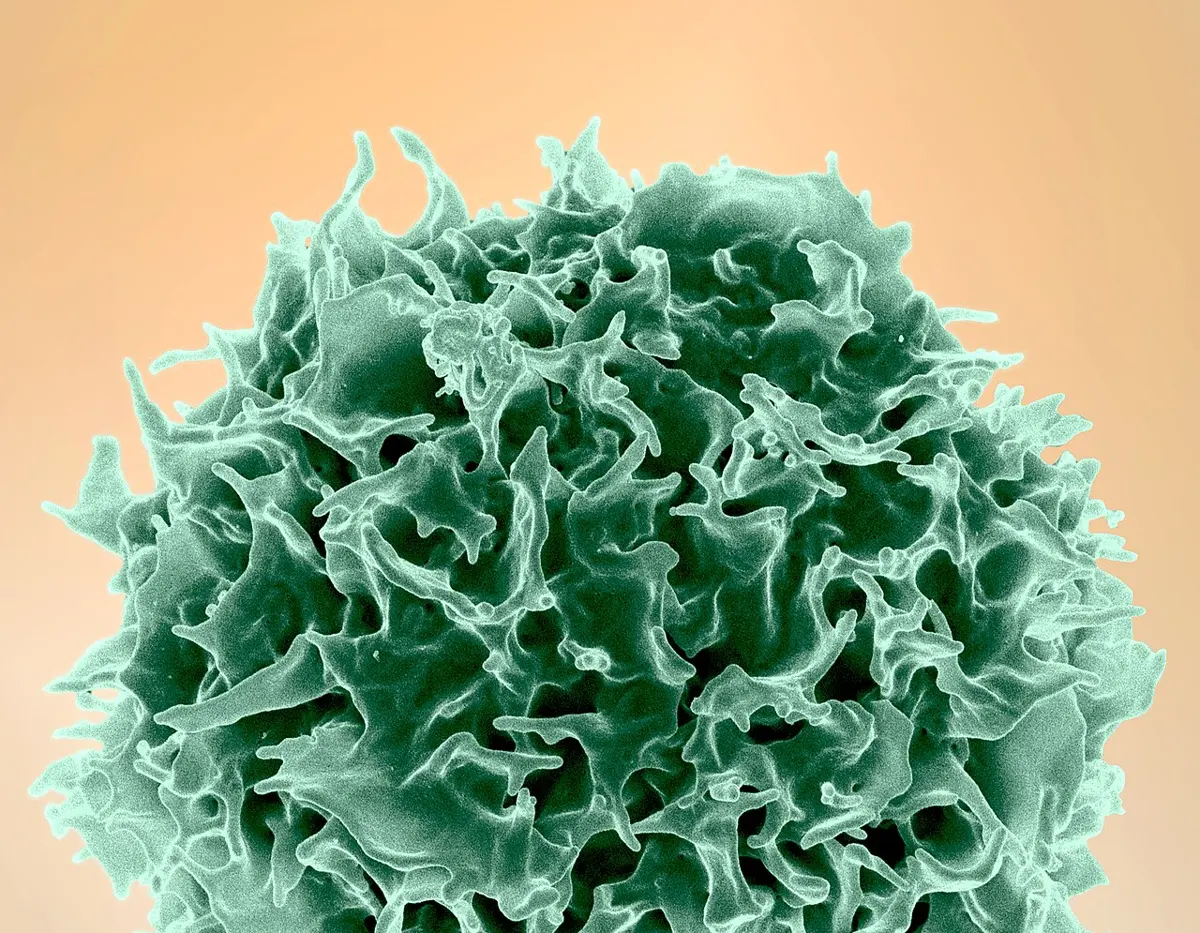
Your white blood cells fight germs Grade 10: White blood cells. One kind, the lymphocytes, includes the T cells, which are at the heart of this story. Two kinds of T cell matter here:
- Helper T cells patrol the body. When they find a germ, they raise the alarm and set other immune cells to work.
- Killer T cells destroy body cells that a virus has got into. They can also kill cancer cells.
How does a T cell know what to attack? On its surface it carries a T-cell receptor, a protein that works like a sensor. Each T cell’s receptor has its own shape, like a piece of a jigsaw puzzle, and it can only grab something of the matching shape. The receptors are built by joining pieces of several genes at random, so the body can make more than 10¹⁵ (a thousand million million) different shapes. Whatever new germ appears, even a new virus like the one that caused COVID-19, some T cell will have a receptor that fits it.
But this random building has a catch. Some of the shapes are bound to fit the body’s own proteins, in the skin, the thyroid, the stomach or the pancreas. A T cell like that could attack its own body. Why doesn’t it?
Why does the body make some T cells that could attack its own organs?
Pick an answer to see why.
The first answer: a test in the thymus
In the 1980s, scientists found part of the answer. Young T cells grow up in the thymus, a small organ in the chest, just behind the breastbone. There they face a kind of test. Each young T cell is shown the body’s own proteins. If its receptor grabs one of them strongly, the cell is destroyed. This is called central tolerance (to tolerate something means to put up with it, not attack it).
It works well, but no test is perfect. Some harmful T cells slip through and go out into the body. Something else must hold them back.
Some scientists had suggested that a special kind of T cell, which they called a suppressor T cell, did this job. But in the 1980s some of the evidence for suppressor cells turned out to be wrong. Most immunologists then dropped the whole idea, and for years it was hard even to get money to study it.
Why it was hard
- The guards look like other cells. Under a microscope, all T cells look alike: small round cells with a big nucleus. Scientists tell them apart by the proteins on their surface, and the guards carry the same main marker as helper T cells, a protein called CD4.
- Nobody believed in them. After the suppressor-cell mistake, anyone claiming to have found such cells was met with doubt.
- Finding a gene was slow. In the 1990s there was no quick way to read a whole set of an animal’s genes. Finding one faulty gene among millions of DNA letters could take years.
What they did, step by step
Sakaguchi: the guards are real
Shimon Sakaguchi trained as a doctor at Kyoto University and then joined a laboratory at the Aichi Cancer Center in Nagoya, Japan. A strange result from that laboratory had caught his interest.
- 1969, a puzzle. Scientists there had removed the thymus from newborn mice, expecting the mice to have weaker immune systems. But when the thymus was taken out on the third day after birth, the opposite happened: the immune system ran wild, and the mice got autoimmune diseases of the thyroid, the stomach and the ovaries.
- Early 1980s, a rescue. Sakaguchi took T cells from healthy mice of the same family (genetically identical, so their cells would not be rejected) and injected them into the mice without a thymus. The mice stayed healthy. So healthy mice must have some T cells that calm the others down.
- Over ten years of searching. Which cells were they? Sakaguchi kept sorting T cells by the proteins on their surface. In 1995 he found the answer: the guards carry CD4 and also a second protein, CD25. He took T cells from healthy mice, removed only the ones with CD25, and put the rest into mice that had no T cells of their own. Those mice got autoimmune diseases in many organs: the thyroid, the stomach, the pancreas, the joints. When he put the CD25 cells back in, the mice stayed healthy.
The new cells were named regulatory T cells (to regulate means to control). But many scientists still doubted them. They wanted more proof.
In Sakaguchi’s experiment, the mice that got only T cells without the CD25 cells fell ill. What did that show?
Pick an answer to see why.
Brunkow and Ramsdell: the mice with flaky skin
The proof came from a very different place.
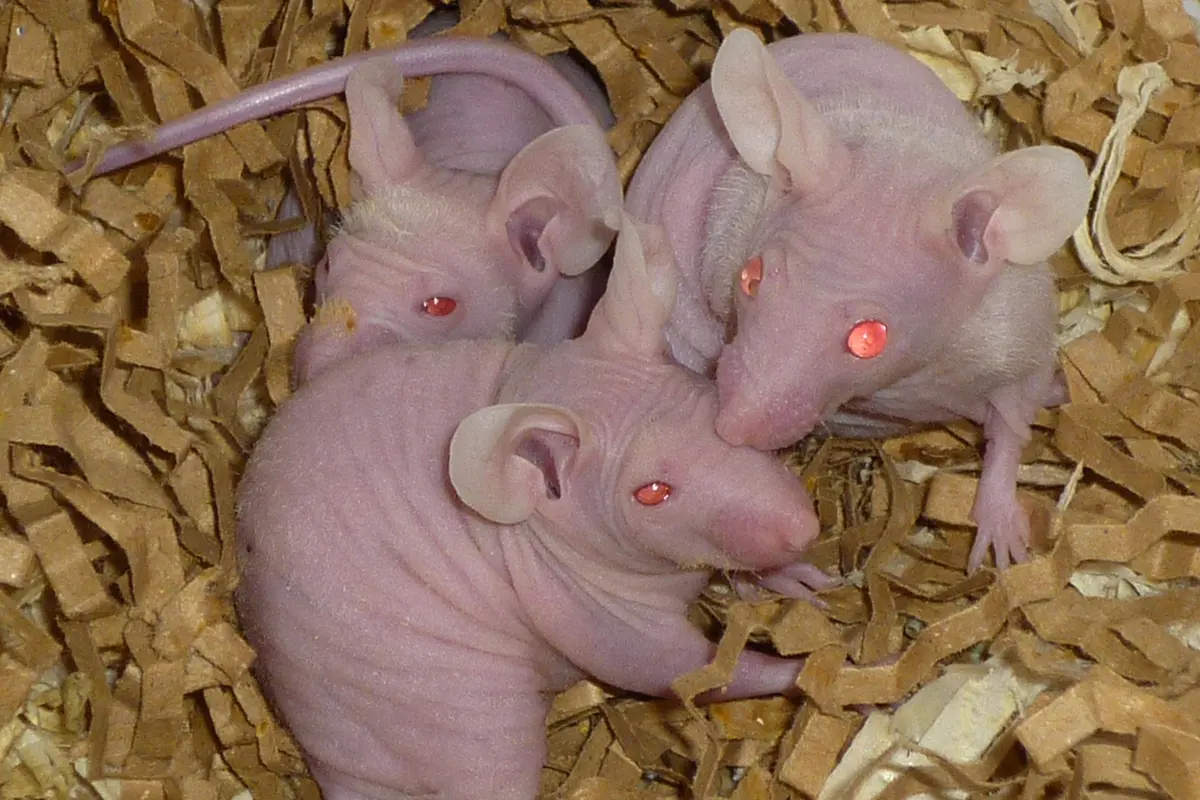
- The 1940s, a strange mouse. At Oak Ridge in Tennessee, USA, scientists were breeding thousands of mice to study the effects of radiation, as part of the project that built the atomic bomb. Some male mice were born with scaly, flaky skin, a hugely swollen spleen and lymph glands, and they lived only a few weeks. The strain was named scurfy (scurf means flakes of skin, like dandruff). Their T cells were attacking their own organs.
- Why only males? The disease came from a faulty gene on the X chromosome. A male mouse, like a boy, has one X chromosome, so one bad copy is enough to make him ill. A female has two X chromosomes, and her healthy copy covers for the faulty one Grade 10: Sex determination. That is how healthy mothers kept passing the gene on.
- The 1990s, the hunt. Mary Brunkow and Fred Ramsdell worked at a company near Seattle, Celltech Chiroscience, that was trying to make medicines for autoimmune diseases. They decided to find the scurfy gene. The mouse X chromosome is about 170 million DNA letters long. Step by step, they narrowed the search down to about 500,000 letters in the middle of it, then mapped that stretch in detail. It held about 20 possible genes.
- Gene after gene. They compared each gene in healthy mice and scurfy mice, one at a time. The first nineteen were the same. Only the twentieth and last gene was different: the scurfy mice had two extra letters in it. The cell reads a gene in groups of three letters, so two extra letters make every group after them wrong, and the protein comes out cut short and useless (One wrong letter). The gene was new to science. It looked like a family of genes called forkhead box (FOX) genes, which switch other genes on and off, so they named it Foxp3.
- 2001, the same disease in children. Brunkow and Ramsdell suspected that a rare disease of baby boys, IPEX, was the human form of scurfy: it too is linked to the X chromosome and attacks many organs at once. With children’s doctors around the world, they collected samples from boys with IPEX and found faults in the human FOXP3 gene. They published both results in 2001.
2003: the pieces fit
Was the gene connected to Sakaguchi’s cells? In 2003, Sakaguchi’s team showed that it is: FOXP3 is switched on in regulatory T cells, and putting the gene into an ordinary T cell turned it into a regulatory T cell. Ramsdell’s team and another team in the United States showed the same year that mice without a working Foxp3 gene have no regulatory T cells. Scurfy mice and boys with IPEX are ill because they have no security guards.
How it works now: two lines of defense
Today we know the body keeps its T cells in check in two places.
- In the thymus (central tolerance), most young T cells whose receptor grabs the body’s own proteins are destroyed.
- Out in the body (peripheral tolerance: peripheral means away from the center), regulatory T cells calm down the harmful T cells that slipped through. FOXP3 is their master switch.
How do the guards calm other T cells? In several ways. One is simple: T cells need a signal called interleukin-2 to grow and multiply, and regulatory T cells soak much of it up, so the T cells around them go hungry. They also give out calming signals, and they touch other cells directly.
They have a second job too. After the immune system has beaten an infection, regulatory T cells help it calm down, so it doesn’t keep fighting at full speed and damage the body. They even help a mother’s body accept her baby during pregnancy: half of the baby’s genes come from the father, so to the mother’s immune system the baby is partly “foreign”.
A baby boy is born with a faulty FOXP3 gene. Why does his immune system attack his own organs?
Pick an answer to see why.
In your life today
There are not yet any regulatory T cell medicines that doctors use every day. But in 2025 more than 200 trials were testing ideas built on them.
- Autoimmune diseases. To make more guards, doctors are giving patients small doses of interleukin-2, the signal that regulatory T cells need most. Others take a patient’s own regulatory T cells, multiply them in a laboratory and put them back. The hope is to treat diseases like type 1 diabetes before the body’s insulin-making cells are destroyed.
- Transplants. A transplanted kidney comes from another person, so the immune system attacks it. Today, patients must take medicines for the rest of their lives that weaken the whole immune system, which leaves them open to infections. In Nepal, the Shahid Dharmabhakta National Transplant Centre in Bhaktapur does close to 200 kidney transplants a year. Researchers are testing guard cells with an “address label” on them, an antibody that sends them to the new organ, to protect just that kidney or liver.
- Cancer. Tumors can attract crowds of regulatory T cells, which shield them from the immune system. Here doctors want the opposite: to break down that wall of guards so that killer T cells can reach the cancer.

What came next
- More kinds of guards. Regulatory T cells come in several kinds: some grow up in the thymus, others form out in the body’s tissues. Scientists are still working out how the thymus decides which young T cells become guards and which are destroyed.
- Guards made to order. Making a patient’s own guard cells in a laboratory is slow and costly, and the cells must keep their FOXP3 switch on after they go back into the body. Making them cheaply and safely is an open problem.
- The open question. Can we calm the immune system in just one place, around a new kidney or in the pancreas of a child with diabetes, while leaving it strong everywhere else against germs and cancer? That is what researchers in this field are now trying to do.
In your science books
- Grade 9: blood as a connective tissue and lymph; the thymus, which some lists wrongly call a vestigial organ; and mutation.
- Grade 10: white blood cells, type 1 diabetes, DNA and sex determination, the X and Y chromosomes.
- Going further: one wrong letter, how a letter added or lost spoils a protein.
Learn more
- The Nobel Prize’s own explanation: They understood how the immune system is kept in check (nobelprize.org).
- The laureates’ Nobel lectures: Brunkow, Ramsdell and Sakaguchi.
The official reason
The prize was given “for their discoveries concerning peripheral immune tolerance.”