
The letters inside the nucleus
Nobel Prize in Physiology or Medicine, 1910: Albrecht Kossel
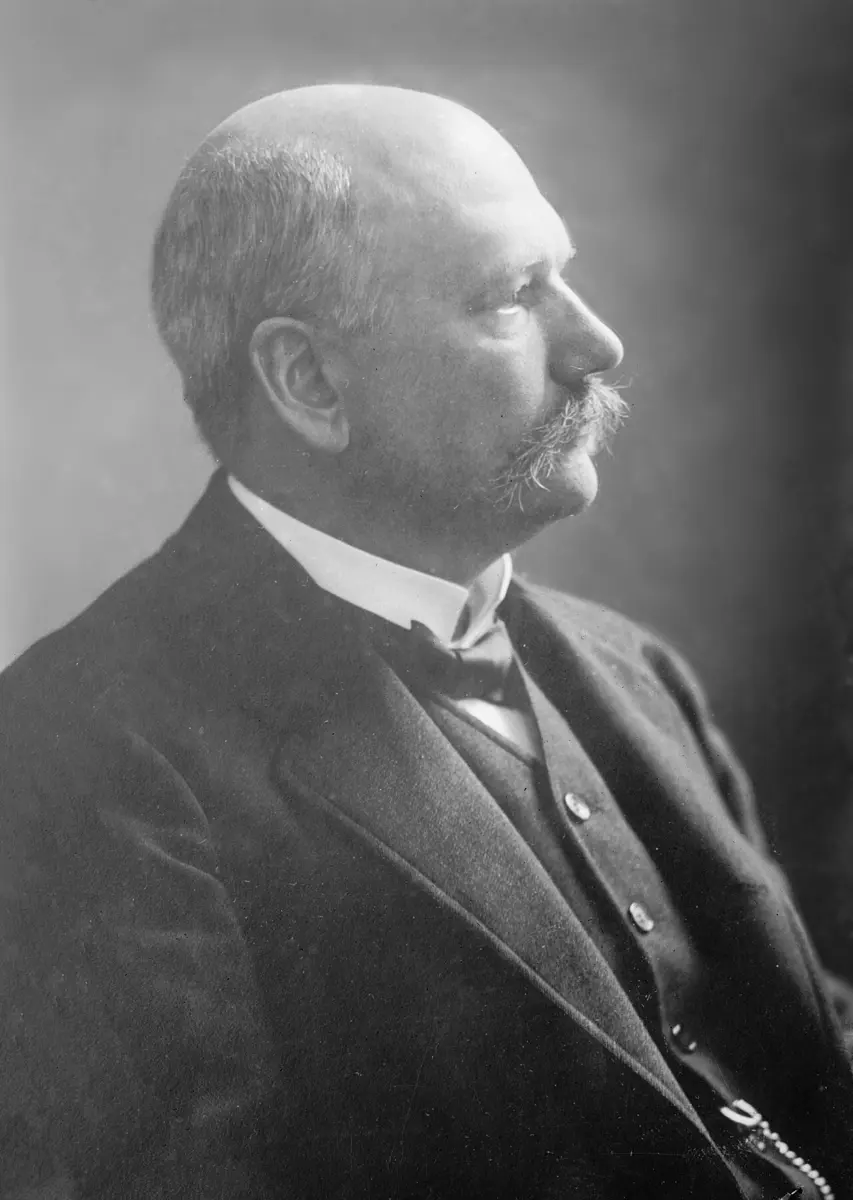
Albrecht Kossel
1853–1927, born in Rostock, Germany
A quiet, modest chemist who spent nearly fifty years taking the cell apart to find what it is made of.
Photo: George Grantham Bain Collection (Library of Congress), Public domain
During the COVID-19 pandemic, almost every family in Nepal knew someone who had a PCR test. A swab from the nose was sent to a laboratory, which searched it for the genetic material of the virus, written in a chemical alphabet of four letters. Police use the same alphabet to identify a criminal from a drop of blood, and doctors use it to find the cause of some inherited diseases. You may have learned the letters in your science class: A, G, C and T.
Those letters are the first letters of four chemicals with long names: adenine, guanine, cytosine and thymine. Most of them were found, and named, by a German chemist, Albrecht Kossel, between 1885 and 1894. He had no idea that they spelled out the instructions of life. But he showed what the material inside the cell nucleus is made of, and for this he received the Nobel Prize in Physiology or Medicine in 1910.
The problem: what is the nucleus made of?
By the 1870s, scientists looking through microscopes knew that almost every cell has a nucleus Grade 8: Nucleus, and that when a cell divides, thread-like bodies, which we now call chromosomes, appear in it and are shared out between the new cells. Something in the nucleus seemed to matter for life and growth. But a microscope shows only shapes. Nobody knew what chemicals the nucleus held.
In 1869 a young Swiss doctor, Friedrich Miescher, working in a laboratory in an old castle in Tübingen, Germany, collected white blood cells from the pus on used bandages from a nearby hospital. From their nuclei he got a new substance, rich in phosphorus, unlike any protein known. He called it nuclein. It was the first time anyone had held what we now call DNA, but nobody knew what nuclein was made of, or what it did.
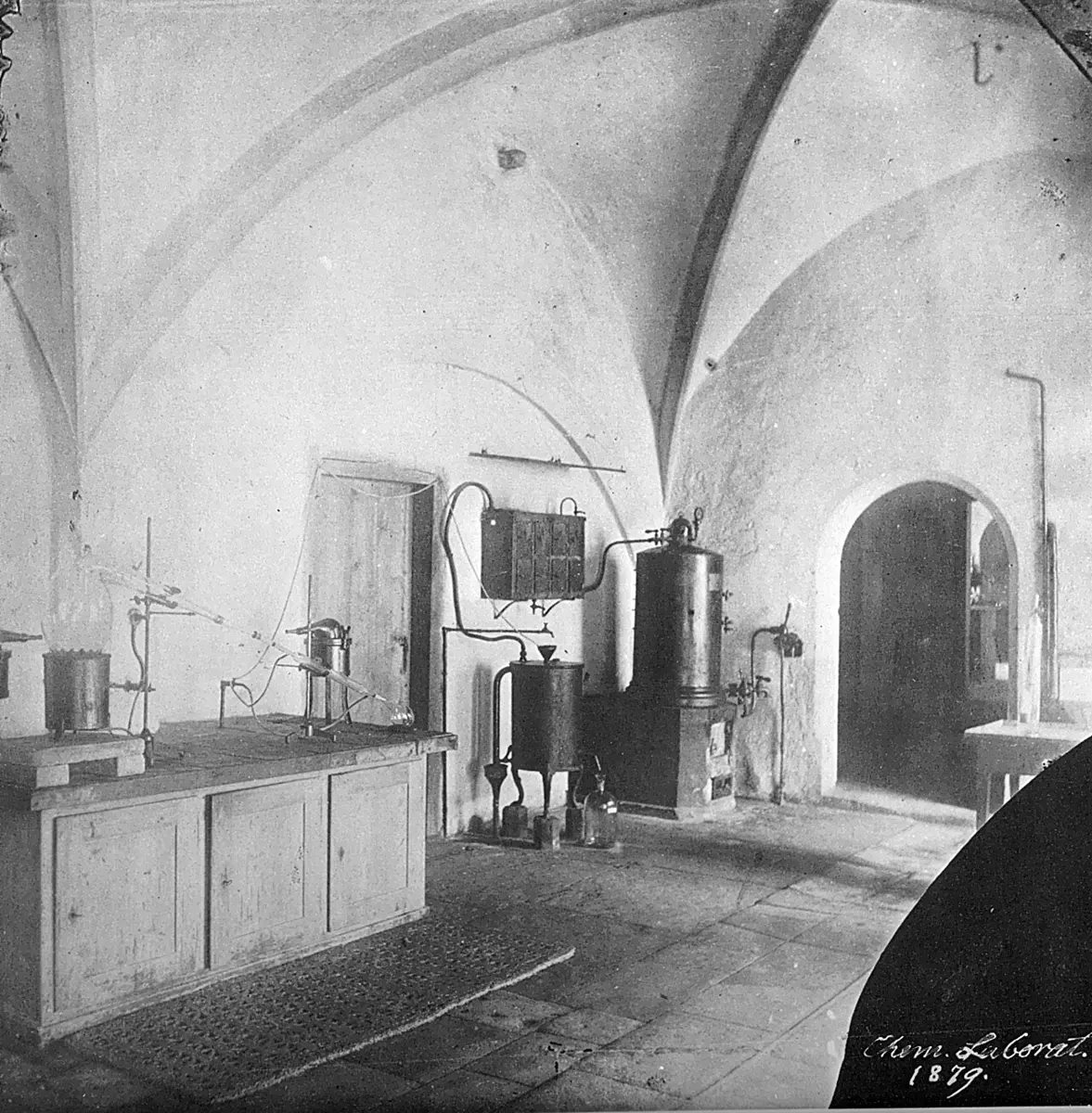
How a chemist takes a big molecule apart
Living things are made of huge molecules: proteins, starch, and the substances of the nucleus. Each is built from many small pieces joined in a chain, like the beads of a mala. Kossel called them building blocks.
To find out what a huge molecule is made of, a chemist breaks it back into its building blocks. Heat it with water and a little acid, and the links between the blocks break. This is called hydrolysis (“splitting with water”). Your own stomach and intestine do much the same when they digest food: enzymes break the proteins in dal into the small pieces they are made of, amino acids, and your body uses those pieces to build its own proteins.
Then the chemist has to separate the mixture of pieces, make each one pure, often as crystals, and work out what each is: which atoms it has, and how they are joined.
Kossel broke nucleic acid into its building blocks by heating it with water and acid. Which everyday process does the same kind of job?
Pick an answer to see why.
Why it was so hard
- Tiny, mixed-up samples. The nucleus is a small part of a cell, mixed with everything else in it. Getting enough nucleus material to study was itself a challenge.
- Fragile building blocks. The acid that breaks the links can also damage the pieces. Too strong, and you destroy what you are looking for; too weak, and nothing breaks.
- Similar pieces. The pieces of a nucleic acid look much alike: white powders with lots of nitrogen. Telling them apart needed careful chemistry, one test after another.
- No machines. There were no instruments to read a molecule’s structure. Chemists worked it out from what each substance was made of, how it reacted, and by making it themselves to check.
What Kossel did, step by step
1. Two parts in nuclein (1879 onwards)
Kossel was born in Rostock, a port on the Baltic Sea, in 1853. He studied medicine, then joined the laboratory of Felix Hoppe-Seyler in Strasbourg, the same teacher under whom Miescher had worked. He began studying nuclein around 1879. He showed that it is made of two different parts: a protein, and an acid that contains no protein at all, which came to be called nucleic acid.
2. A new protein in the nucleus: histones (1884)
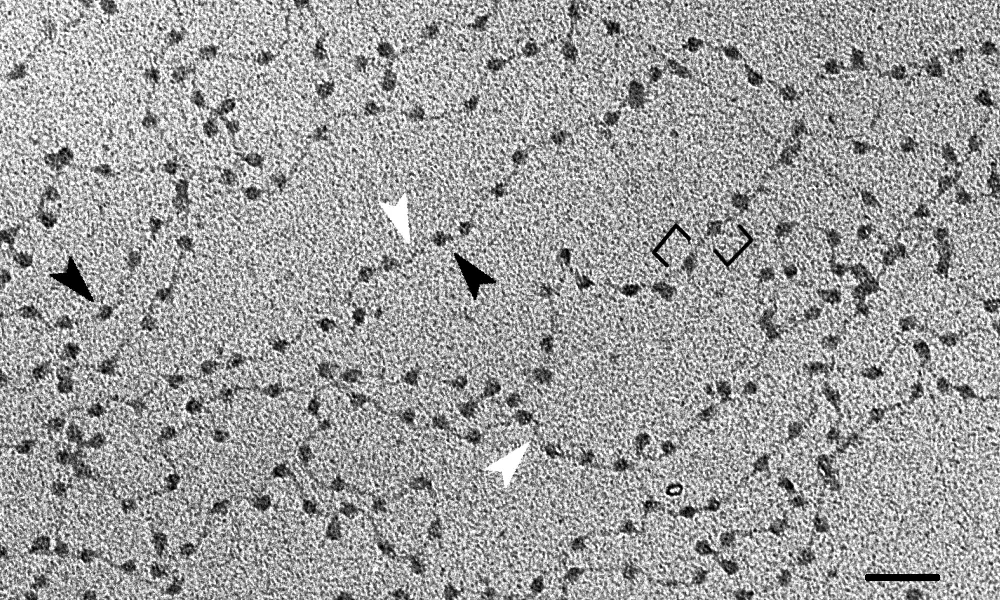
Our red blood cells have no nucleus, but a bird’s red blood cells do Grade 10: Red blood cells. Kossel found that if you put birds’ red blood cells in water, the rest of the cell dissolves and the nuclei are left. From these nuclei he got, in 1884, a new kind of protein, which he named histone. Today we know that the long threads of DNA in each of your cells are wound around tiny spools made of histones, like thread on a reel. That is how two meters of DNA fit into a nucleus far smaller than a full stop.
3. The four bases (1885–1894)
Then Kossel turned to the nucleic acid. He broke it apart with acid and water and found a set of building blocks unusually rich in nitrogen, which he called bases.
- Adenine (1885). Kossel found it in the pancreas and named it after the Greek word for gland, aden.
- Guanine. This one was already known: it had been found in 1844 in guano, the droppings of sea birds used as fertilizer. Kossel showed that it too comes from nucleic acid.
- Thymine (1893) and cytosine (1894). With Albert Neumann, Kossel found these two in the thymus gland of calves. Thymine is named after the thymus; cytosine after the Greek word for cell.
Kossel noticed that the bases come in two shapes. Adenine and guanine have two rings of atoms joined together; they are called purines. Cytosine and thymine have one ring; they are called pyrimidines. He also found that besides the bases, nucleic acid holds a sugar and phosphoric acid, and his co-worker Steudel found one sugar and one phosphate for each base.
In 1900 a fifth base, uracil, was found in the nucleic acid of yeast. It is the base that replaces thymine in RNA Grade 10: RNA.
Which pair of bases has two rings each (the purines)?
Pick an answer to see why.
4. The building blocks of proteins (1896–1910)
Kossel then turned to proteins. In 1896 he and the Swedish chemist Sven Hedin discovered a new amino acid, histidine. He invented methods to measure how much of each nitrogen-rich amino acid a protein contains. He studied the simplest proteins of all, the protamines, found in the sperm of fish such as salmon and sturgeon, which are made of only a few kinds of amino acid. This helped show that every protein is a chain of amino acids.
How it works now
What Kossel found as separate chemicals, we now know as the parts of one machine Grade 10: DNA.
- DNA is a chain of millions of nucleotides. Each nucleotide is a phosphate, a sugar and one of the four bases. The sugars and phosphates form the backbone; the bases stick out.
- DNA has two chains twisted together in a double helix. A base on one chain pairs with a base on the other: A with T, G with C. The pairs are the rungs of the ladder.
- The order of the bases along the chain is a message, written in a four-letter alphabet. A gene is a stretch of this message that tells the cell how to build one protein (A gene makes a protein): three letters at a time pick the next amino acid in the chain.
- DNA is wound round histone spools and packed into chromosomes Grade 10: Chromosomes. Cells can loosen or tighten the winding to switch genes on or off.
So Kossel’s two discoveries, the bases and the proteins, turned out to be connected: the bases carry the instructions, and the proteins are what the instructions build.
In your life today
- DNA tests. Every DNA test, from a COVID-19 PCR test to identifying a person after a disaster or in a crime Grade 10: DNA testing, looks for a particular order of A, G, C and T (or of A, G, C and U in the RNA of a virus).
- Allergy tablets. Histidine, the amino acid Kossel discovered, is what your body turns into histamine, the chemical that makes your nose run and your skin itch in an allergy. The antihistamine tablets sold in every pharmacy for allergies and itching block its effect.
- Gout and kidney stones. When the body breaks down the purine bases, adenine and guanine, it makes uric acid. Too much of it can form painful crystals in the joints (gout) or stones in the kidneys. Doctors advise some people to eat less of foods rich in purines, such as meat and some kinds of fish.
What came next
- 1929: Phoebus Levene identified the sugar of DNA, deoxyribose, and showed how a phosphate, a sugar and a base join into a nucleotide.
- 1944: Oswald Avery and his team showed that DNA, not protein, carries genes in bacteria.
- 1950: Erwin Chargaff found that in DNA the amount of A always equals the amount of T, and G equals C.
- 1953: James Watson and Francis Crick, using Rosalind Franklin’s X-ray photographs, worked out the double helix, in which A pairs with T and G with C (the 1962 Nobel Prize).
- 2003: the Human Genome Project finished reading almost all of the 3 billion letters of human DNA.
- The open question: your cells all carry the same DNA, yet a skin cell and a nerve cell are very different. Part of the answer lies in how tightly the DNA is wound round Kossel’s histones, and in small chemical tags added to them. How exactly does the cell decide which genes to open and which to keep packed away?
In your science books
- Grade 8: the nucleus.
- Grade 10: DNA, with its nucleotides and base pairs; RNA, which has uracil instead of thymine; chromosomes; DNA testing in investigations; red blood cells.
- Going further: How does a gene make a protein?, from four letters to twenty amino acids.
Learn more
- The prize at nobelprize.org: The Nobel Prize in Physiology or Medicine 1910, with the presentation speech.
- Kossel’s own Nobel lecture, “The chemical composition of the cell nucleus”.
The official reason
The prize was given “in recognition of the contributions to our knowledge of cell chemistry made through his work on proteins, including the nucleic substances.”