
Squeeze a lemon into a glass of water and it tastes sour; add a pinch of baking soda and it fizzes and the sourness fades. Your stomach makes hydrochloric acid, at a pH between 1 and 3, yet your blood stays between pH 7.35 and 7.45 whatever you eat. A pinch of acid in pure water changes it enormously, while the same pinch in blood or in a buffer bottle in the laboratory hardly changes it at all.
This unit is about the ions that acids, bases and salts give in water, and the equilibria they settle into. It starts with three ways of saying what an acid is (Arrhenius, Brønsted–Lowry and Lewis), then measures how strong an acid is with one number, Ka, and how acidic a solution is with another, pH. Then come the ideas that use them: the solubility product, which decides which salt comes out of a solution first and is the key to separating metal ions in qualitative analysis; the common ion effect; buffers, which hold a pH steady; indicators and titration curves; and hydrolysis, why a solution of a salt can be acidic or basic.
Introduction to acids and bases
The word acid comes from the Latin acidus, sour (from the verb acere, to be sour). You meet acids every day: curd is sour because of lactic acid, a lemon because of citric acid, vinegar because of acetic acid. Acids that come from living things contain carbon and are called organic acids. Most of them are weak acids, much less corrosive than the acids on the laboratory shelf, which is why you can eat them.
Acetic acid was probably the first acid people made in large amounts: vinegar, a dilute solution of acetic acid in water (about 4–8%), has been made by letting wine or other fermented juices turn sour for thousands of years.
| Acid | Found in | Formula |
|---|---|---|
| Lactic acid (2-hydroxypropanoic acid) | sour milk, curd, tired muscles | CH₃CH(OH)COOH |
| Acetic acid (ethanoic acid) | vinegar | CH₃COOH |
| Citric acid | lemon, orange | HOOCCH₂C(OH)(COOH)CH₂COOH |
| Formic acid (methanoic acid) | the sting of ants and nettles | HCOOH |
| Malic acid | apple | HOOCCH(OH)CH₂COOH |
| Tartaric acid | grapes, tamarind | HOOCCH(OH)CH(OH)COOH |
The bottles of hydrochloric acid, sulphuric acid and nitric acid in the laboratory hold mineral acids (inorganic acids). They are made from minerals and other non-living sources, contain no carbon, and are strong acids: highly corrosive, so they are handled with gloves and goggles and always added to water, never water to them.
| Acid | Formula | Some uses |
|---|---|---|
| Hydrochloric acid | HCl | cleaning sinks and toilets; making pure common salt; cleaning rust off steel |
| Sulphuric acid | H₂SO₄ | the acid in car and motorcycle batteries; making fertilizers, paints, drugs, dyes and artificial silk (rayon) |
| Nitric acid | HNO₃ | making fertilizers such as ammonium nitrate; making explosives such as TNT (trinitrotoluene) |
Bases are the chemical opposites of acids: they cancel an acid’s sourness. A base that dissolves in water is called an alkali. Bases feel slippery (they react with the oils in your skin) and taste bitter, though you should never taste a laboratory chemical to find out.
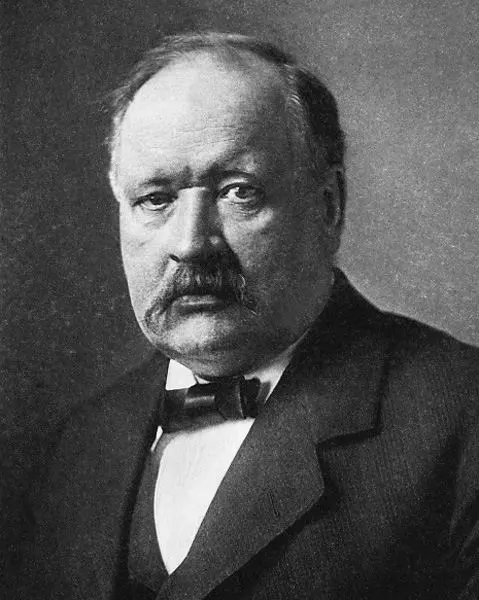
The first theory of acids and bases in terms of ions was given by the Swedish chemist Svante Arrhenius, in his doctoral thesis of 1884, which explained why solutions of salts, acids and bases conduct electricity: they split into ions.
Arrhenius definition. An acid is a substance that gives hydrogen ions (H⁺) in aqueous solution. A base is a substance that gives hydroxide ions (OH⁻) in aqueous solution.
When an acid meets a base, the H⁺ and OH⁻ join to make water: this is neutralization, and the ions left over make a salt.
2.1 Limitations of the Arrhenius concept of acids and bases
The Arrhenius concept explains a great deal, but it has four limitations.
- a.It works only in water. Many acid–base reactions happen in other solvents, or between gases, like (b) above.
- b.It treats H⁺ as free. A bare proton is far too small and too strongly charged to exist by itself in water: it is always bonded to a water molecule, as the hydronium ion, H₃O⁺ (and that in turn is held by more water molecules). Writing H⁺(aq) is a shorthand for H₃O⁺(aq).
- c.It needs H⁺ and OH⁻ in the formula. Ammonia is a base though it contains no OH⁻; carbon dioxide behaves as an acid (it neutralizes alkalis) though it contains no hydrogen.
- d.It can’t explain amphoteric substances, which act as an acid with one partner and as a base with another (below).
Which of these is a base by the Arrhenius definition?
Pick an answer to see why.
2.2 Brønsted–Lowry definition of acids and bases
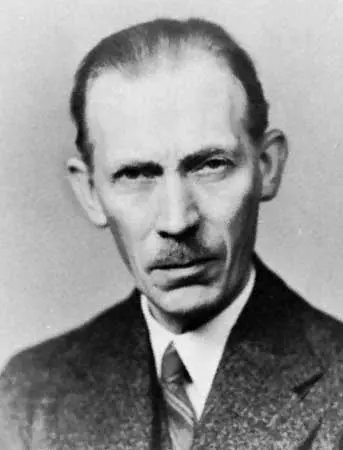
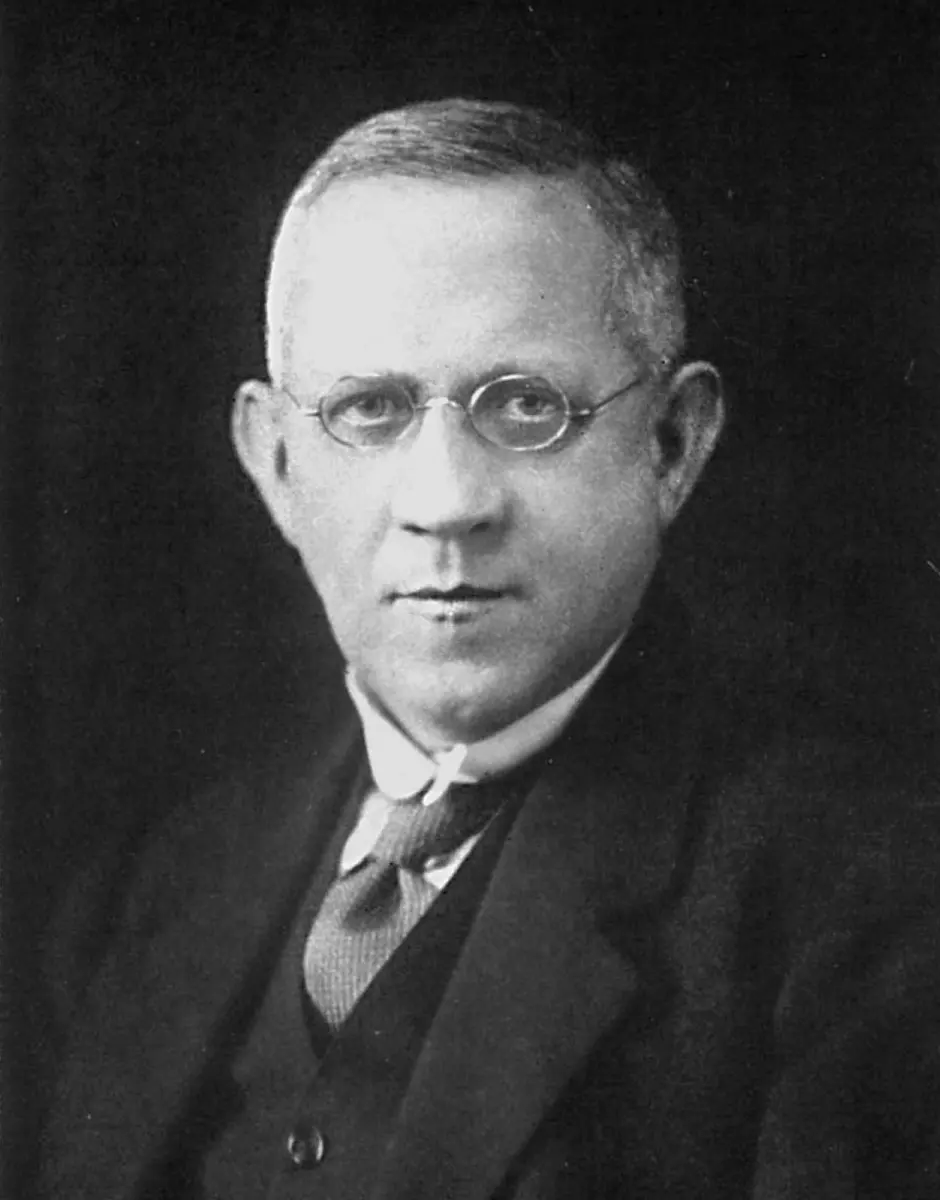
In 1923 two chemists, Johannes Nicolaus Brønsted in Copenhagen and Thomas Martin Lowry in Cambridge, independently proposed a wider definition. It looks not at what a substance contains but at what it does: it follows the proton (H⁺) as it moves from one particle to another.
Brønsted–Lowry definition. A Brønsted–Lowry acid is any species that can donate a proton (H⁺) to another species. A Brønsted–Lowry base is any species that can accept a proton from another species.
So an acid–base reaction is a proton transfer. In the reaction above, water donates a proton and is a Brønsted–Lowry acid; ammonia accepts it and is a Brønsted–Lowry base. Even hydrogen chloride dissolving in water is a proton transfer, with water as the base:
Every Arrhenius acid is also a Brønsted–Lowry acid, because the H⁺ it gives is a proton donated to water. But the Brønsted–Lowry idea goes further: it covers bases with no OH⁻ (NH₃, CO₃²⁻, CH₃COO⁻) and reactions with no water at all.
An acid that can give one proton per molecule is monoprotic (HF, HCl, HNO₃, CH₃COOH); one that can give two is diprotic (H₂SO₄, H₂CO₃); one that can give more than one is polyprotic, a name that covers the diprotic acids too, though it is mostly used for acids with three or more, such as phosphoric acid, H₃PO₄ (triprotic). Only hydrogens that can come off count: acetic acid, CH₃COOH, has four hydrogens but only the one on oxygen is given away, so it is monoprotic.
In , which species is the Brønsted–Lowry acid?
Pick an answer to see why.
2.3 Conjugate acid–base pairs
When an acid gives away its proton, what is left can take a proton back: it is a base. When a base takes a proton, the new species can give it away again: it is an acid. Write a general Brønsted–Lowry acid as HA and a base as B:
The acid HA gives a proton to B and becomes its conjugate base, A⁻; the base B takes the proton and becomes its conjugate acid, HB⁺. Losing a proton lowers the charge by one; gaining one raises it by one. An acid with its conjugate base, or a base with its conjugate acid, is a conjugate acid–base pair.
The conjugate base of an acid is the species left when one proton is removed from it. The conjugate acid of a base is the species formed when one proton is added to it.
So HCl and Cl⁻ are a conjugate pair, as are NH₄⁺ and NH₃, and H₃O⁺ and H₂O. The reaction runs both ways, so there are always two acids and two bases in it, one on each side.
Amphoteric and amphiprotic species
A substance does not always give protons or always take them: it depends on what it meets. A species that can act both as an acid and as a base is called amphoteric (Greek amphoteroi, both), and the property is amphoterism. When it does both in the Brønsted–Lowry sense, by donating and accepting protons, it is also called amphiprotic: water, HCO₃⁻, HSO₄⁻, H₂PO₄⁻, HPO₄²⁻ and the amino acids are amphiprotic. Water is even both at once, with itself:
Many metal oxides and hydroxides are amphoteric too: they react with acids and with alkalis.
2.4 Relative strength of acids and bases
Compare how hydrochloric acid and acetic acid ionize in water:
The one-way arrow says hydrogen chloride ionizes completely: in its solution there are no HCl molecules left, only ions. The double arrow says acetic acid ionizes only partly: in a 0.1 mol/L solution, only about 1 molecule in 75 has given its proton away at any moment; the rest stay as CH₃COOH molecules.
The strength of an acid or a base is how readily it gives or takes a proton. It can be measured by how far it ionizes (its degree of ionization, 2.6), by its dissociation constant ( or , 2.8), or by comparing it with its conjugate.
Strong acids ionize completely in water: HCl, HBr, HI, HNO₃, H₂SO₄ (its first proton) and HClO₄. Weak acids ionize only partly: acetic acid, formic acid, HF, HNO₂, H₂CO₃, HCN and nearly all organic acids. The larger an acid’s acid dissociation constant, , the more it ionizes and the stronger it is.
Strong bases are completely ionized in water and their OH⁻ readily takes protons, : the hydroxides of the alkali metals (LiOH, NaOH, KOH) and of the heavier alkaline earth metals (Ca(OH)₂, Sr(OH)₂, Ba(OH)₂). Weak bases take protons from water only partly: ammonia, methylamine (CH₃NH₂), aniline (C₆H₅NH₂).
The larger a base’s base dissociation constant, , the stronger the base.
There is a seesaw between an acid and its conjugate base. HCl gives its proton so readily that Cl⁻ has almost no wish to take one back: the stronger an acid, the weaker its conjugate base. Acetic acid holds its proton more tightly, so the acetate ion takes protons back quite readily: a weak acid has a stronger conjugate base. In the same way, a strong base (OH⁻) has a very weak conjugate acid (H₂O), and a weak base (NH₃) a stronger one (NH₄⁺). The exact form of this seesaw is , in 2.9.
Which is the strongest base?
Pick an answer to see why.
2.5 Lewis definition of acids and bases
In 1923, the same year as Brønsted and Lowry, the American chemist Gilbert Newton Lewis described acids and bases by electron pairs instead of protons or hydroxide ions.
Lewis definition. A Lewis acid is a species that accepts an electron pair. A Lewis base is a species that donates an electron pair.
In the reaction above, NH₃ is the Lewis base and H⁺ the Lewis acid. Lewis acids are electrophilic (electron-loving): they are short of electrons and attract them. Lewis acids include:
- a.Metal cations, especially small, highly charged ones: Cu²⁺, Fe²⁺, Fe³⁺, Al³⁺.
- b.Atoms and molecules with an incomplete octet: BF₃, BCl₃ and AlCl₃, whose central atom has only six electrons round it.
- c.Molecules with a multiple bond between atoms of different electronegativity, such as CO₂ and SO₂: the electron pair goes to the less electronegative atom and a bond pair moves onto the oxygen. Carbon dioxide dissolving in limewater is a Lewis reaction, .
Lewis bases are nucleophilic (nucleus-loving): they have a lone pair to give, like NH₃, H₂O, OH⁻, F⁻ and CN⁻. Every Brønsted–Lowry base is a Lewis base, because to take a proton it must give it an electron pair.
Ammonia and boron trifluoride react with no proton anywhere. Boron has only six electrons round it, so it accepts ammonia’s lone pair:
A Lewis acid and base join to make an acid–base complex, called a complex ion when it is charged. In water, an aluminium ion takes six electron pairs, one from each of six water molecules round it:
Here Al³⁺ is the Lewis acid and the water molecules are Lewis bases. This is why aluminium salts make water acidic (2.17).
The Lewis concept has its own limitations:
- a.It doesn’t fit the familiar protonic acids well: HCl, H₂SO₄ and HNO₃ don’t accept an electron pair themselves. Their acidity comes from the H⁺ they give, which is the Lewis acid.
- b.It doesn’t give a measure of the relative strength of acids and bases: a Lewis base can be strong towards one Lewis acid and weak towards another.
In , the Lewis acid is:
Pick an answer to see why.
2.6 Ionization of weak electrolytes: Ostwald’s dilution law
Strong electrolytes, such as HCl, NaOH and NaCl, are completely ionized in water. Weak electrolytes, such as acetic acid (CH₃COOH) and ammonia solution (NH₄OH), ionize only partly: most of their molecules stay whole, in equilibrium with a few ions. How far a weak electrolyte has ionized is measured by its degree of ionization, α:
α runs from 0 (no ionization) to 1 (complete ionization), and is often given as a percentage. For a weak electrolyte it is small, and it grows as the solution is diluted; at infinite dilution a weak electrolyte is almost completely ionized.
Deriving Ostwald’s dilution law
Take a weak electrolyte AB, dissolved at a concentration of C mol/L, of which a fraction α ionizes:
| [AB] | [A⁺] | [B⁻] | |
|---|---|---|---|
| At the start | C | 0 | 0 |
| At equilibrium | C(1 − α) | Cα | Cα |
- Write the equilibrium constant (law of mass action, Grade 11 Chemistry, Unit 8):
- Put in the equilibrium concentrations:
- For a weak electrolyte α is very small (α ≪ 1), so 1 − α ≈ 1:
- So
where is the dilution: the volume, in liters, that holds one mole of the electrolyte.
Ostwald’s dilution law. The degree of ionization of a weak electrolyte is inversely proportional to the square root of its concentration, or directly proportional to the square root of its dilution: , .
Dilute a weak acid 100 times and its degree of ionization goes up about 10 times. Why? Diluting pulls the ions apart, so they meet less often to join up again, while the molecules split as often as before: by Le Chatelier’s principle, the equilibrium shifts towards the side with more particles in solution, the ions.
The law applies only to weak electrolytes. A strong electrolyte is completely ionized at every concentration, so there is no equilibrium between molecules and ions to apply it to. And because step 3 assumed α ≪ 1, holds only while α is small: the rule used throughout this unit is that the shortcut is good enough when α comes out under 5% (the 5% rule). Otherwise solve as a quadratic.
2.7 Ionic product of water ()
Water is amphiprotic (2.3), and in pure water a tiny fraction of the molecules pass protons to each other:
The equilibrium constant for this self-ionization is
Water is in such a huge excess (about 55.5 mol/L) that its concentration hardly changes, so it is taken into the constant (strictly, a pure liquid has an activity of 1):
The new constant, , is the ionic product of water: the product of the molar concentrations of H⁺ and OH⁻ ions in water or in any aqueous solution, at a given temperature.
In pure water at 25 °C, measurements give [H⁺] = [OH⁻] = 1.0 × 10⁻⁷ mol/L (self-ionization gives equal numbers of each). So at 25 °C,
That is about two molecules in a thousand million: a liter of pure water holds just 0.0000001 mol of H₃O⁺ ions.
Like every equilibrium constant, changes with temperature. The self-ionization of water is endothermic (it is the reverse of neutralization, which gives out heat), so by Le Chatelier’s principle increases as the temperature rises.
The product [H⁺][OH⁻] is fixed, so in any aqueous solution, when one goes up the other comes down:
- neutral solution: [H⁺] = [OH⁻]
- acidic solution: [H⁺] > [OH⁻]
- basic (alkaline) solution: [H⁺] < [OH⁻]
At 25 °C a solution has [OH⁻] = 1 × 10⁻³ mol/L. What is its [H⁺]?
Pick an answer to see why.
2.8 Dissociation constants of acids and bases (Ka and Kb)
Apply the equilibrium law to a weak acid HA:
and to a weak base, written BOH (or, the Brønsted way, ):
and are the dissociation constants (ionization constants) of the acid and the base. A larger means a stronger acid, more ionized, with more H⁺ at equilibrium; a larger means a stronger base, with more OH⁻. By Ostwald’s law, , so for a weak acid
which is how the pH of a weak acid is found in 2.10. Unlike α, which changes with dilution, and depend only on the temperature: they are the fair way to compare acids.
2.9 pKa and pKb
The of most weak acids lies between about 10⁻² and 10⁻¹⁴, and the of most weak bases between 10⁻² and 10⁻¹³. Numbers like these are awkward to compare, so they are turned into small, ordinary numbers by taking their negative logarithm:
and
The minus sign turns the scale round: the lower the pKa, the stronger the acid, and the lower the pKb, the stronger the base. Each step of 1 in pKa is a factor of 10 in . pKa and pKb are used to predict how acids and bases behave, to choose buffers (2.14) and to compare acids and bases in living things and in the environment.
| Acid | pKa | |
|---|---|---|
| Hydrocyanic acid, HCN | 6.2 × 10⁻¹⁰ | 9.21 |
| Hypochlorous acid, HClO | 4.0 × 10⁻⁸ | 7.40 |
| Acetic acid, CH₃COOH | 1.75 × 10⁻⁵ | 4.76 |
| Benzoic acid, C₆H₅COOH | 6.3 × 10⁻⁵ | 4.20 |
| Formic acid, HCOOH | 1.8 × 10⁻⁴ | 3.75 |
| Nitrous acid, HNO₂ | 5.6 × 10⁻⁴ | 3.25 |
| Hydrofluoric acid, HF | 6.3 × 10⁻⁴ | 3.20 |
| Trichloroacetic acid, Cl₃CCOOH | 2.2 × 10⁻¹ | 0.66 |
| Base | pKb | |
|---|---|---|
| Aniline, C₆H₅NH₂ | 7.4 × 10⁻¹⁰ | 9.13 |
| Pyridine, C₅H₅N | 1.7 × 10⁻⁹ | 8.77 |
| Ammonia, NH₃ | 1.8 × 10⁻⁵ | 4.75 |
| Trimethylamine, (CH₃)₃N | 6.3 × 10⁻⁵ | 4.20 |
| Ethylamine, C₂H₅NH₂ | 4.5 × 10⁻⁴ | 3.35 |
| Methylamine, CH₃NH₂ | 4.6 × 10⁻⁴ | 3.34 |
| Dimethylamine, (CH₃)₂NH | 5.4 × 10⁻⁴ | 3.27 |
Values at 25 °C, from the CRC Handbook of Chemistry and Physics (the bases’ from the pKa of their conjugate acids, pKb = 14.00 − pKa).
Relationship between pKa and pKb
Take a conjugate pair, the ammonium ion and ammonia. Write for the acid and for its conjugate base:
Multiply them: [NH₃] and [NH₄⁺] cancel, leaving
and, taking −log of both sides, at 25 °C
for any conjugate acid–base pair. So if you know the pKa of an acid, you know the pKb of its conjugate base. The pKa of NH₄⁺ is 9.25, so the pKb of NH₃ is 14.00 − 9.25 = 4.75. This is the seesaw of 2.4 in numbers: the stronger the acid (small pKa), the weaker its conjugate base (large pKb).
The pKa of hydrofluoric acid is 3.20. What is the pKb of the fluoride ion, at 25 °C?
Pick an answer to see why.
2.10 pH: of strong and weak acids, and of strong and weak bases
Concentrations of H⁺ such as 0.0000001 mol/L are hard to compare. In 1909 the Danish chemist Søren Sørensen, at the Carlsberg brewery’s laboratory in Copenhagen, where he studied how acidity affects enzymes, proposed a simpler scale: pH.
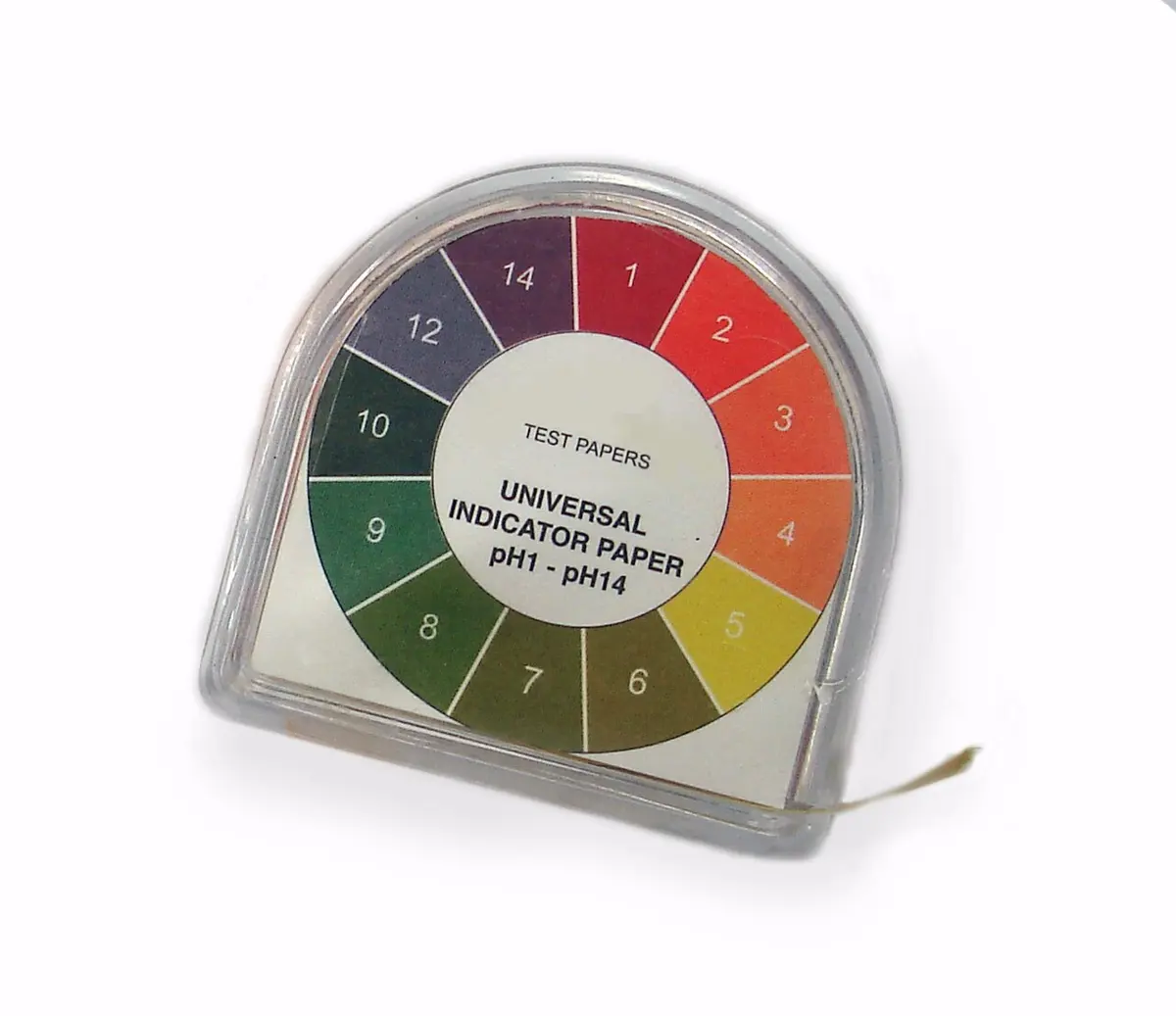
pH is the negative common logarithm of the hydrogen ion concentration (in mol/L): , so .
For example, 0.1 mol/L HCl is completely ionized, so [H⁺] = 0.1 mol/L and pH = −log(0.1) = 1. In the same way, the hydroxide ion concentration is given as pOH:
Because pH is a logarithm, each step of one unit is a tenfold change in [H⁺]: a solution of pH 3 is ten times as acidic as one of pH 4, and a hundred times as acidic as one of pH 5.
2.10.1 Relationship between pH and pOH
The reason for (b) and (c): at 25 °C,
Take −log of both sides:
- In neutral water, [H⁺] = [OH⁻], so [H⁺]² = 1.0 × 10⁻¹⁴, [H⁺] = 1.0 × 10⁻⁷ mol/L, and pH = 7.
- In an acidic solution, [H⁺] > [OH⁻], so [H⁺] > 10⁻⁷ mol/L and pH < 7.
- In a basic solution, [OH⁻] > [H⁺], so [OH⁻] > 10⁻⁷ mol/L, pOH < 7 and pH > 7.
Working out pH
A strong acid or strong base is completely ionized, so [H⁺] (or [OH⁻]) comes straight from its concentration.
A weak acid is only partly ionized. With [H⁺] = [A⁻] = x and [HA] = C − x,
The shortcut C − x ≈ C is the 5% rule again: check afterwards that x is under 5% of C.
A weak base works the same way with OH⁻: [OH⁻] = , then pH = 14 − pOH.
A very dilute acid. In 1.0 × 10⁻⁷ mol/L HCl, the acid gives as much H⁺ as water itself does, and water’s own share can’t be ignored. Its pH is not 7 (that would make it neutral), but found from [H⁺] = 10⁻⁷ + [OH⁻] with [OH⁻] = /[H⁺], a quadratic whose answer is [H⁺] = 1.62 × 10⁻⁷ mol/L, pH 6.79. However much you dilute an acid, its pH climbs towards 7 but never passes it.
Which solution has the lowest pH?
Pick an answer to see why.
2.11 Solubility and the solubility product principle
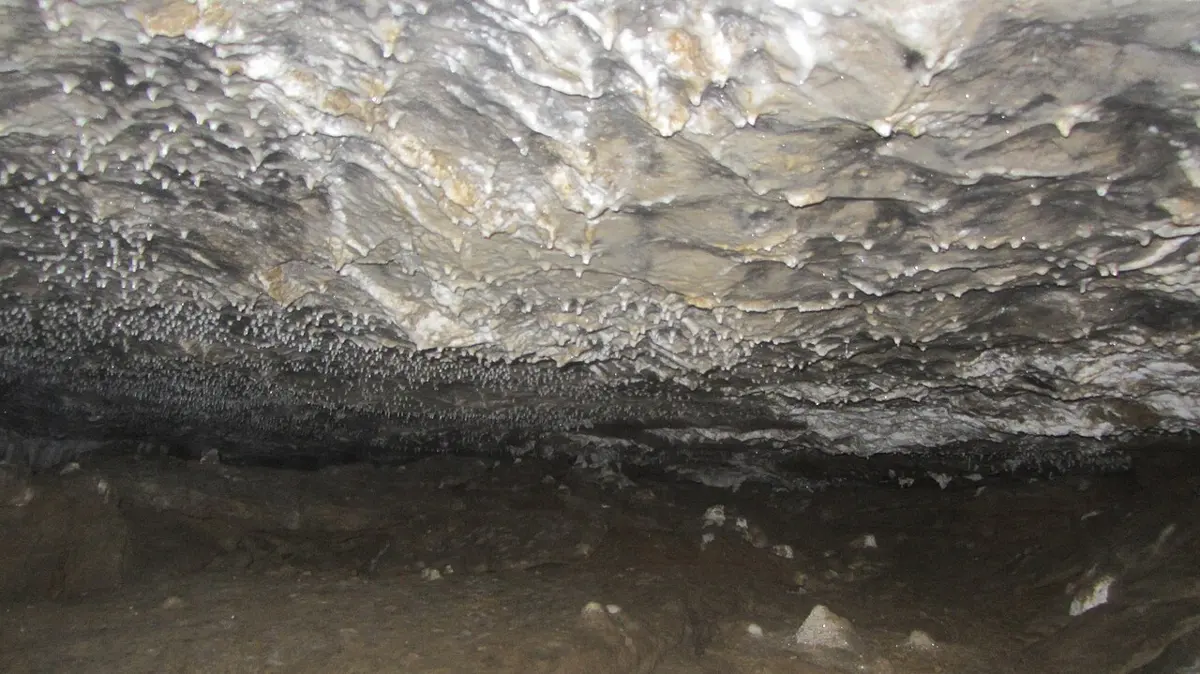
Have you seen the icicle-shaped formations hanging from the ceiling of Mahendra Cave or Gupteshwor Cave in Pokhara? Rainwater with carbon dioxide dissolved in it slowly dissolves limestone (calcium carbonate) as it seeps through the rock, as soluble calcium hydrogencarbonate:
When a drop hangs from a cave’s ceiling, some carbon dioxide escapes from it into the air. The equilibrium shifts to the left, the drop now holds more calcium carbonate than it can keep dissolved, and a thin ring of calcite is precipitated. Drop by drop, a stalactite grows down from the ceiling, and where the drops land a stalagmite grows up from the floor. This section is about the question every drop answers: when does a dissolved salt come out as a solid?
Precipitation reactions (double displacement reactions that give an insoluble solid) are useful in industry, medicine and daily life. Barium sulphate, for example, is so insoluble that it can be swallowed as a “barium meal” to show the stomach and intestines on an X-ray, and sodium hydrogencarbonate (baking soda) is made by precipitating it from brine (2.13). The solubility product explains when such precipitates form.
The solubility product,
When a sparingly soluble ionic compound is put in water, a little of it dissolves, and the dissolved part is completely ionized. A dynamic equilibrium is set up between the solid and its ions in the solution:
The “concentration” of a pure solid doesn’t change however much of it is there (strictly, its activity is taken as 1), so it is taken into the constant:
The new constant, , is the solubility product constant, or simply the solubility product.
The solubility product of a sparingly soluble salt is the product of the molar concentrations of its ions in a saturated solution, each raised to the power of its coefficient in the equilibrium equation, at a given temperature.
Its unit depends on the powers: here (mol/L)³ × (mol/L)² = mol⁵ L⁻⁵. Some more:
The smaller the , the less soluble the salt, when the salts compared give the same number of ions (see the careful box below).
Ionic product,
The ionic product (, also written Q) of a salt is the same product of ion concentrations, each raised to the power of its coefficient, but in any solution, saturated or not:
The solubility product is the ionic product when the solution is saturated. is a fixed number at a given temperature; is whatever the solution happens to have.
Solubility and molar solubility
The solubility of a substance is the most of it that can dissolve in a given amount of solvent at a given temperature (and pressure). It is often given in grams per 100 g of water, and for sparingly soluble salts in grams per liter (g/L) or moles per liter. In moles per liter it is called the molar solubility, s:
Relation between solubility and solubility product
A salt AB that gives two ions. If s mol/L of AB dissolves, it gives s mol/L of each ion:
| AB(s) | A⁺ | B⁻ | |
|---|---|---|---|
| At equilibrium | solid | s | s |
and the solubility in g/L = s × molar mass. (AgCl, BaSO₄, CaCO₃)
A salt AB₂ that gives three ions (CaF₂, Mg(OH)₂, PbCl₂):
A salt A₂B, also three ions (Ag₂CrO₄, Ag₂CO₃):
Any salt , giving x cations and y anions:
For Ca₃(PO₄)₂, x = 3 and y = 2: .
The solubility product principle
In a saturated solution there is a dynamic equilibrium between the undissolved solid and the ions from the part that has dissolved. An unsaturated solution holds less than that, so more solid could still dissolve; a supersaturated one holds more, for a while, and the extra comes out as soon as it can. For a sparingly soluble salt AB, , compare the ionic product of the solution with the solubility product:
- : the solution is unsaturated; more solid, if there is any, dissolves.
- : the solution is saturated and at equilibrium.
- : the solution is supersaturated; the solid precipitates until falls to .
Put a little silver chloride in water, for example: a very small amount dissolves and the rest stays solid. Mix solutions of silver nitrate and sodium chloride, and if [Ag⁺][Cl⁻] in the mixture is more than 1.8 × 10⁻¹⁰, silver chloride precipitates.
Precipitation is the formation of a solid in a solution during a chemical change. It removes ions from the solution until what is left is just saturated.
Solubility product principle. A precipitate forms only when the ionic product of the ions in the solution exceeds the solubility product of the salt.
In a solution of calcium sulphate, is less than . What happens if solid calcium sulphate is added?
Pick an answer to see why.
2.12 Common ion effect
Take a weak electrolyte AB in equilibrium with its ions, and add a strong electrolyte AC that gives the same ion A⁺:
The concentration of A⁺ goes up, and by Le Chatelier’s principle the equilibrium shifts backwards, towards AB, using up some of the extra A⁺. So the weak electrolyte ionizes less.
Common ion effect. The suppression of the degree of ionization of a weak electrolyte by adding a strong electrolyte that has an ion in common with it. The same effect lowers the solubility of a sparingly soluble salt.
Ammonia solution and ammonium chloride. In , adding ammonium chloride () adds NH₄⁺, the common ion. The equilibrium shifts to the left, NH₄OH ionizes less, [OH⁻] falls and the solution becomes less basic (its pH goes down).
Acetic acid and sodium acetate. In 0.10 mol/L acetic acid alone, α = 1.3% (2.6). Add sodium acetate to make the acetate ion 0.10 mol/L as well: now mol/L, so α = 0.0175%, about 75 times smaller, and the pH rises from 2.88 to 4.76.
A sparingly soluble salt. Silver chloride dissolves less in sodium chloride solution than in pure water: the Cl⁻ from NaCl pushes to the left, and some silver chloride precipitates.
2.13 Applications of solubility product and common ion effect

Solubility products let chemists separate ions in a solution by selective precipitation: bringing one kind of ion out as a solid while the others stay dissolved. By adjusting the concentration of the precipitating ion, often with the common ion effect, the salt with the smallest solubility comes out first.
1. Qualitative analysis of basic radicals (cations)
In the laboratory, the cations in an unknown salt are found by separating them into groups, each brought down by its own reagent, in a fixed order. Two of the steps rely on the common ion effect.
Group II (Cu²⁺, Hg²⁺, Pb²⁺, Cd²⁺, Bi³⁺, As³⁺, Sb³⁺, Sn²⁺) is precipitated as sulphides by passing H₂S through the solution after adding dilute HCl. Hydrogen sulphide is a weak acid:
HCl, a strong acid, ionizes completely, , and adds the common ion H⁺. The equilibrium of H₂S shifts backwards and its ionization is suppressed, leaving only a very small concentration of sulphide ions. That small [S²⁻] is still enough to make for the group II sulphides, whose solubility products are extremely small, but not for the sulphides of the later groups (ZnS, MnS, NiS, CoS), whose are far larger: they stay in solution.
Group IIIA (Fe³⁺, Al³⁺, Cr³⁺) is precipitated as hydroxides by adding NH₄Cl and then NH₄OH. Ammonium hydroxide is a weak base, , and ammonium chloride, a strong electrolyte, , adds the common ion NH₄⁺. The ionization of NH₄OH is suppressed and [OH⁻] stays low: enough to exceed the very small of Fe(OH)₃, Al(OH)₃ and Cr(OH)₃, but not that of the hydroxides of the later groups, such as Zn(OH)₂, Mn(OH)₂ and Mg(OH)₂, which stay dissolved.
2. Purification of common salt
Crude salt from salt pans contains soluble impurities (magnesium and calcium chlorides and sulphates) as well as insoluble ones. A saturated solution of the crude salt is made and filtered, and hydrogen chloride gas is passed through it:
HCl ionizes completely and raises [Cl⁻], so the ionic product [Na⁺][Cl⁻] exceeds the solubility product of sodium chloride and pure sodium chloride crystallizes out, while the more soluble impurities stay in solution.
3. Salting out of soap
Soap is the sodium salt of long-chain fatty acids, such as sodium stearate, C₁₇H₃₅COONa. After soap is made by boiling fat with sodium hydroxide, it is dissolved in the mixture. Adding a concentrated solution of common salt brings it out:
The Na⁺ from the salt (the common ion) raises the ionic product [C₁₇H₃₅COO⁻][Na⁺] above the solubility product of the soap, and the soap separates as curds that float on top, leaving glycerol and the excess alkali in the liquid below.
Why is dilute HCl added before H₂S in group II analysis?
Pick an answer to see why.
2.14 Buffer solutions and their applications
The pH of human blood is slightly alkaline, 7.35 to 7.45, and it stays there even when acids from food and exercise pour into it, because carbonic acid (H₂CO₃) and hydrogencarbonate ions (HCO₃⁻) in the blood hold it steady. Such a mixture is a buffer.
A buffer solution is a solution that resists a change in its pH when a small amount of acid (H⁺) or base (OH⁻) is added to it.
Buffers are everywhere a steady pH matters:
| Example | Buffer components | What it does |
|---|---|---|
| Blood | carbonic acid (H₂CO₃) and hydrogencarbonate (HCO₃⁻) | keeps blood at pH 7.35–7.45; outside about 6.8–7.8, a person can’t survive |
| Saliva | phosphate (H₂PO₄⁻/HPO₄²⁻) and hydrogencarbonate | keeps the mouth near pH 6.5–7, protecting tooth enamel from acid |
| Eye drops | phosphate or borate | match the pH of tears (about 7.4), so the drops don’t sting |
| Soft drinks | citric acid and sodium citrate | keep the sourness and taste the same from bottle to bottle |
| Creams and lotions | lactic acid and its salts | keep close to the skin’s own pH (about 4.5–6), so they don’t irritate it |
Buffers keep the pH right for the enzymes and other proteins in living cells, which work only in a narrow pH range, and they are used wherever a reaction needs a fixed pH: in fermentation, dyeing, electroplating and analysis.
A buffer solution has these characteristics:
- a.It has a definite pH.
- b.Its pH hardly changes on keeping, on dilution with a little water, or when a small amount of acid or base is added.
Types of buffers
A. Acidic buffer: a mixture of a weak acid and its salt with a strong base, such as acetic acid and sodium acetate. It keeps the pH below 7, and is written CH₃COOH/CH₃COONa (or CH₃COOH/CH₃COO⁻).
Sodium acetate, a strong electrolyte, is completely ionized, , so the buffer contains a large store of acetate ions. Acetic acid, a weak acid whose ionization is further suppressed by the acetate (the common ion effect), is almost all present as CH₃COOH molecules. This buffer action works like this:
- When acid is added, the H⁺ ions join acetate ions to make weak acetic acid, which hardly ionizes, so [H⁺] scarcely rises:
- When base is added, the OH⁻ ions are neutralized by acetic acid, so [OH⁻] scarcely rises:
Buffer action is the ability of a buffer solution to resist a change in its pH when a small amount of acid or base is added: its components neutralize the added acid or base.
B. Basic buffer: a mixture of a weak base and its salt with a strong acid, such as ammonia solution (NH₄OH) and ammonium chloride. It keeps the pH above 7, written NH₄OH/NH₄Cl (or NH₃/NH₄⁺).
- When acid is added, the H⁺ ions are neutralized by the weak base: .
- When base is added, the OH⁻ ions join ammonium ions to make the weak base, which hardly ionizes: .
Calculating the pH of a buffer: the Henderson–Hasselbalch equation
For an acidic buffer of a weak acid HA and its salt NaA:
- Take −log of both sides: , that is,
- The salt is completely ionized and the weak acid hardly at all (its ionization is suppressed by the common ion A⁻), so [A⁻] ≈ [salt] and [HA] ≈ [acid]:
For a basic buffer, the same steps with give
Equations (1) and (2) are the Henderson–Hasselbalch equations. They give the pH of a buffer, and tell you what ratio of salt to acid (or base) to mix for a pH you want.
What the equations show:
- When [salt] = [acid], log 1 = 0 and pH = pKa. An acetate buffer made of equal amounts has pH 4.76.
- The pH depends on the ratio [salt]/[acid], not on the amounts, so diluting a buffer hardly changes its pH.
- A buffer works best within about one unit of its pKa (salt : acid between 1 : 10 and 10 : 1), and the more concentrated it is, the more acid or base it can take before its pH moves: its buffer capacity is larger. To make a buffer of a given pH, choose an acid whose pKa is close to it.
Applications of buffers
- a.In living things, buffers keep the right pH for proteins to work; if the pH moves outside a narrow range, enzymes stop working and proteins can unfold.
- b.In blood, the carbonic acid–hydrogencarbonate buffer keeps the pH of plasma between 7.35 and 7.45, helped by the lungs (which breathe out CO₂) and the kidneys.
- c.In industry, buffers are used in fermentation (making alcohol, vinegar, curd), in dyeing, leather tanning and electroplating, and to calibrate pH meters.
Which pair makes a buffer?
Pick an answer to see why.
2.15 Indicators, titration curves and the choice of indicator
An acid–base indicator is a weak acid (or weak base) whose un-ionized form and ionized form have different colors. Write it as HIn:
In acid, the equilibrium lies to the left and you see the color of HIn; in alkali, to the right, and you see In⁻. Your eye sees a clear change only when one form is about ten times the other, so the color changes over a pH range of about two units, . Different indicators change over different ranges:
In a titration, the indicator shows the end point, which should fall at the equivalence point, where the acid and base have exactly reacted. Its sudden color change must happen within the steep part of the titration curve, which depends on whether the acid and base are strong or weak. (How to do a titration and calculate from it is in Unit 1, Volumetric Analysis.)
A. Strong acid against strong base
Both are completely ionized, , , and the reaction is simply . At the equivalence point the moles of OH⁻ added equal the moles of H⁺, and the solution of NaCl is neutral, pH 7 at 25 °C.
As NaOH runs in, the pH rises slowly at first: with 24 mL added it is still only 2.7, because most of the acid is gone but what is left still holds [H⁺] far above 10⁻⁷. Then, near the equivalence point, it changes very fast: from pH 3.7 at 24.9 mL to 10.3 at 25.1 mL, two drops. Any indicator that changes within about pH 4 to 10 marks the end point to within a drop: methyl orange, methyl red, bromothymol blue or phenolphthalein.
B. Strong acid against weak base
When the weak base NH₄OH is run into a strong acid, the solution at the equivalence point is ammonium chloride, which is acidic (2.17): pH 5.3. The steep part runs only from about pH 3.7 to 6.9, and after it the curve climbs slowly, since the mixture of NH₃ and NH₄⁺ is a buffer. An indicator must change within that range: methyl red (4.4–6.2) is best, and methyl orange (3.1–4.4) works. Phenolphthalein changes far too late.
C. Weak acid against strong base
When sodium hydroxide is run into acetic acid, the pH starts higher (2.9, a weak acid) and rises slowly in the middle, where the flask holds a buffer of acetic acid and acetate. At the equivalence point the flask holds sodium acetate, which is basic (2.17): pH 8.7. The sharp change runs from about pH 7 to 10, so phenolphthalein (8.2–10.0) is the indicator to use; methyl orange would change long before the end.
D. Weak acid against weak base
Which indicator is right for titrating ammonia solution with hydrochloric acid?
Pick an answer to see why.
2.16 Types of salts: simple, acidic, basic and complex salts
Common salt is only one of many salts used every day: potash alum (fitkiri), baking soda, black salt (bire nun), Himalayan pink salt (sendha nun), washing soda and more. Every salt is made of a basic radical (a cation, from a base) and an acid radical (an anion, from an acid).
A salt is a compound formed by the combination of a basic radical (cation) and an acid radical (anion), as when an acid is neutralized by a base.
Salts are classified by what they contain:
A. Simple (normal) salts
A simple salt is formed by the complete neutralization of an acid by a base. It contains one kind of cation and one kind of anion, and no replaceable hydrogen or hydroxide: sodium chloride (NaCl), copper sulphate (CuSO₄), sodium acetate (CH₃COONa) and ammonium acetate (CH₃COONH₄). Most simple salts that dissolve in water are completely ionized.
By the pH of their solutions in water, simple salts behave in three ways (the reasons are in 2.17):
a. Salts with an acidic solution, such as copper sulphate, zinc nitrate and ammonium chloride (salts of a strong acid and a weak base). Their cation reacts with water and gives H⁺:
(only slightly to the right).
b. Salts with a basic solution, such as sodium acetate (CH₃COONa) and potassium formate (HCOOK) (salts of a weak acid and a strong base). Their anion takes H⁺ from water and leaves OH⁻:
c. Salts with a neutral solution, such as sodium chloride (a salt of a strong acid and a strong base), and ammonium acetate, CH₃COONH₄ (a salt of a weak acid and a weak base of equal strength). In NaCl solution neither ion reacts with water: , and water’s own [H⁺] = [OH⁻].
Acid salts and basic salts
Some salts form when an acid is only partly neutralized: they still contain one or more replaceable hydrogen atoms, and are called acid salts. Sodium hydrogensulphate, NaHSO₄ (sodium bisulphate), forms when sulphuric acid is half-neutralized by sodium hydroxide; complete neutralization gives sodium sulphate, the normal salt:
Other acid salts: sodium hydrogencarbonate (NaHCO₃), sodium dihydrogenphosphate (NaH₂PO₄) and disodium hydrogenphosphate (Na₂HPO₄).
In the same way, a base only partly neutralized gives a basic salt, which still contains hydroxide (OH⁻) or oxide: basic magnesium chloride, Mg(OH)Cl, and basic copper carbonate, CuCO₃·Cu(OH)₂, the green coating on old copper and the mineral malachite.
Uses of salts
- a.Sodium hydrogencarbonate (baking soda) is a leavening agent: mixed with an acidic ingredient (curd, buttermilk, lemon), it gives carbon dioxide, which makes cakes and breads rise.
- b.Acid salts such as NaHCO₃, NaH₂PO₄ and Na₂HPO₄ are parts of the buffers used in laboratories and medicines.
- c.Basic salts of copper, such as copper oxychloride, 3Cu(OH)₂·CuCl₂, are sprayed as fungicides to protect potatoes, tomatoes and fruit trees from fungal diseases (Bordeaux mixture, copper sulphate with lime, works the same way).
- d.Basic lead carbonate, 2PbCO₃·Pb(OH)₂ (white lead), was for centuries the white in paints, until it was found to poison people; lead paint is now banned in many countries, Nepal among them (since 2014).
B. Complex salts
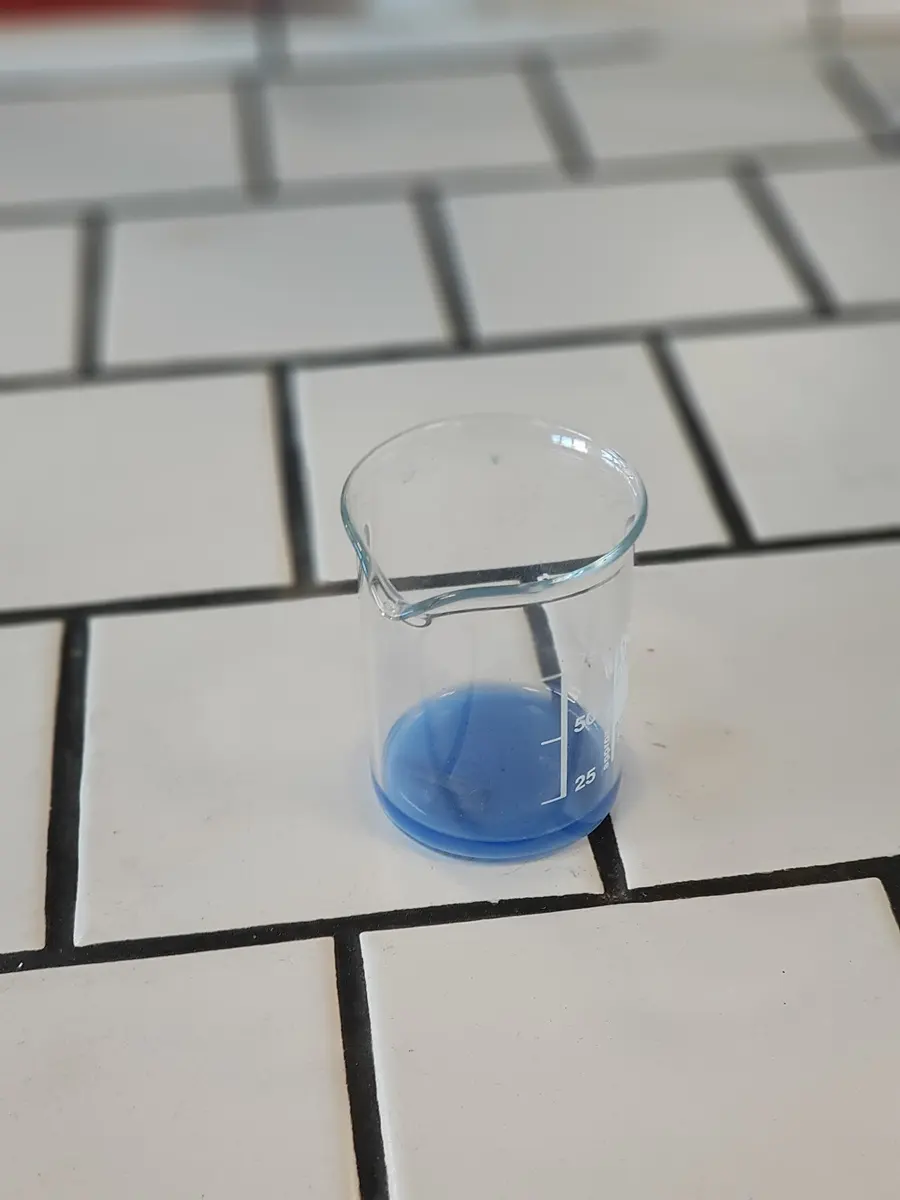
Add ammonia solution, a little at a time, to copper sulphate solution. First a pale blue precipitate of copper(II) hydroxide forms:
With more ammonia the precipitate dissolves, giving a deep blue solution of tetraamminecopper(II) sulphate:
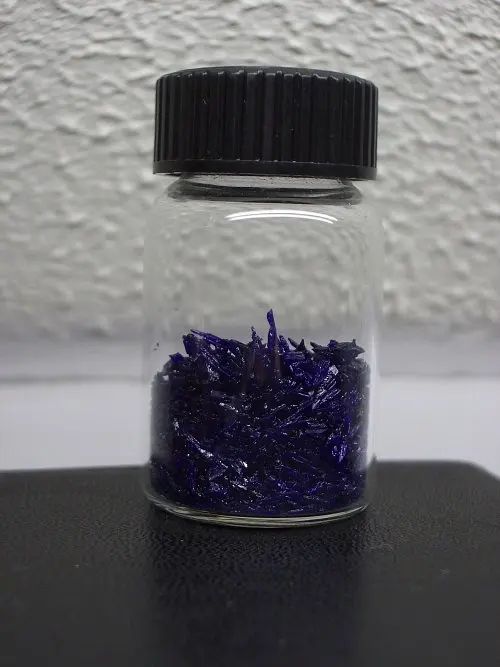
[Cu(NH₃)₄]SO₄ is a complex salt: it contains at least one complex ion. A complex ion forms when a central metal ion accepts lone pairs from molecules or ions around it, called ligands: here four NH₃ molecules each give a lone pair to the Cu²⁺ ion (Lewis bases giving pairs to a Lewis acid, 2.5), making [Cu(NH₃)₄]²⁺. A complex salt is an ionic compound of a complex ion (cation or anion) and a counter ion of opposite charge that balances it: here SO₄²⁻.
2.17 Hydrolysis of salts
Some everyday uses of hydrolysis:
a. Potash alum, KAl(SO₄)₂·12H₂O (fitkiri), is used to clear muddy water. Its aluminium ion reacts with water and gives H⁺, so the solution is acidic; in larger amounts of water the reaction goes on to a jelly-like precipitate of aluminium hydroxide, which gathers the fine mud particles and settles with them:
b. Sodium hydrogencarbonate, baking soda, gives a mildly basic solution, because the HCO₃⁻ ion takes H⁺ from water:
That is why a little of it in water eases heartburn: it neutralizes excess stomach acid.
c. Soap is made by hydrolyzing fats and oils with sodium hydroxide (saponification): the fat splits into glycerol and the sodium salts of its fatty acids, which are soap. A soap solution is itself slightly basic, because the fatty acid’s anion, from a weak acid, reacts with water: the hydrolysis of a salt.
Hydrolysis is the reverse of neutralization:
Hydrolysis of a salt is the reaction of its cation, its anion, or both, with water, which makes the solution acidic or basic.
Only an ion that comes from a weak acid or a weak base reacts with water: it is a fairly strong conjugate base (or acid). The ions of strong acids and bases (Na⁺, K⁺, Cl⁻, NO₃⁻, SO₄²⁻) are such weak conjugates that they don’t.
2.17.1 Salt of a strong acid and a strong base
NaCl, KNO₃ and Na₂SO₄ are not hydrolyzed. Their ions are only surrounded by water molecules (hydrated):
Canceling the ions that appear on both sides leaves only : [H⁺] = [OH⁻], and the solution is neutral, pH 7 at 25 °C, neutral to litmus.
2.17.2 Salt of a strong acid and a weak base
NH₄Cl, CuSO₄, FeCl₃ and Al₂(SO₄)₃ give acidic solutions. Ammonium chloride is completely ionized,
and the ammonium ion, the conjugate acid of the weak base NH₃ (NH₄OH), gives a proton to water:
The solution has more H⁺ than OH⁻, so it is acidic. Because the cation reacts with water, this is cationic hydrolysis.
How acidic? The equilibrium constant of this reaction, the hydrolysis constant , is the of NH₄⁺, so (2.9)
If a fraction h of the salt (the degree of hydrolysis) reacts, at concentration C, then, as in Ostwald’s law, , so
For 0.10 mol/L NH₄Cl: pH = 7 − ½(4.75 − 1) = 7 − 1.87 = 5.13, and h = 7.5 × 10⁻⁵, a very small fraction (the 5% rule holds easily).
2.17.3 Salt of a weak acid and a strong base
CH₃COONa, HCOONa, Na₂CO₃ and KCN give basic solutions. Sodium acetate is completely ionized,
and the acetate ion, the conjugate base of the weak acetic acid, takes a proton from water:
The excess OH⁻ makes the solution alkaline. Because the anion reacts, this is anionic hydrolysis. Here
For 0.10 mol/L sodium acetate: pH = 7 + ½(4.76 − 1) = 8.88. This is the pH at the equivalence point of acetic acid titrated with NaOH (where, diluted to 0.05 mol/L, it is 8.73), which is why phenolphthalein is used there.
Salt of a weak acid and a weak base
In ammonium acetate, both ions react with water: NH₄⁺ gives H⁺ and CH₃COO⁻ gives OH⁻. Then
which doesn’t depend on the concentration. The solution is acidic if the base is weaker than the acid (), basic if the acid is weaker, and neutral if they are equally strong.
Which salt’s solution in water is basic?
Pick an answer to see why.
Exercise
A. Multiple choice questions
- Which of the following is a limitation of Arrhenius’ concept of acids and bases?
Pick an answer to see why.
- Which of the following statements agrees with the Brønsted–Lowry concept?
Pick an answer to see why.
- Which of the following is the conjugate acid of NH₃?
Pick an answer to see why.
- Which of the following best explains the relative strength of an acid?
Pick an answer to see why.
- HCl is a stronger acid than HF. Which statement gives the correct explanation?
Pick an answer to see why.
- A Lewis acid is a lone pair acceptor. Which of the following is not a Lewis acid?
Pick an answer to see why.
- A Lewis base must have:
Pick an answer to see why.
- The reaction between a carbocation and a water molecule is shown in the figure in 2.5. Why does the oxygen carry a positive charge after the reaction?
Pick an answer to see why.
- According to Ostwald’s dilution law, the degree of ionization of a weak electrolyte is:
Pick an answer to see why.
- Which statement explains why acetic acid ionizes so little?
Pick an answer to see why.
- The ionic product of water, , depends on temperature. Which of the following increases ?
Pick an answer to see why.
- Which acid has the highest pKa value?
Pick an answer to see why.
- Which solution has the highest pH?
Pick an answer to see why.
- Which statement best describes the solubility product, , of a salt?
Pick an answer to see why.
- Which of these salts is the least soluble in water at 25 °C?
Pick an answer to see why.
- Which pair resists a change in pH when 2 drops of NaOH are added?
Pick an answer to see why.
- The pH of a buffer solution is decided by:
Pick an answer to see why.
- Phenolphthalein is suitable for titrations of:
Pick an answer to see why.
- Which of the following solutions is acidic because of hydrolysis?
Pick an answer to see why.
- Which of the following gives an acidic solution, and why?
Pick an answer to see why.
- A solution of NaCl does not undergo hydrolysis. What is the reason?
Pick an answer to see why.
- A complex salt is one that contains:
Pick an answer to see why.
- For the hydrolysis of a salt of a weak acid and a strong base, the pH is given by:
Pick an answer to see why.
B. Short answer questions
Define each, with one example: a. Brønsted acid; b. Brønsted base; c. Lewis acid; d. Lewis base; e. conjugate acid.
Answer
Write two differences between:
- a.a conjugate acid and a conjugate base
- b. and
- c.the hydrolysis of sodium acetate and the hydrolysis of ammonium chloride
- d.solubility and solubility product
- e.an acid salt and a basic salt
Answer
Give reasons:
- a.Water is an amphoteric substance.
- b.Phosphine (PH₃) is a Lewis base.
- c.The pH of 10⁻⁷ M HCl is not 7.
- d.Ostwald’s dilution law does not apply to strong electrolytes.
- e.HCl is added before H₂S is passed in the analysis of group II metal ions.
Answer
Ammonia can act as a Brønsted base as well as a Lewis base.
- a.Why does NH₃ act as a Lewis base?
- b.Write an equation to show that ammonia is a Brønsted base, and name its conjugate acid.
- c.With a suitable equation, explain a reaction of the ammonia system with water in which water acts as a Brønsted base.
Answer
Laboratory-grade concentrated sulphuric acid is 98% pure (by mass), and its density is about 1.84 g/mL.
- a.What is meant by a concentrated acid?
- b.What is the concentration of this acid in grams per liter and in molarity? (H₂SO₄ = 98.08 g/mol)
- c.Calculate the pH of this acid.
Answer
Ostwald’s dilution law relates the dissociation constant, the concentration and the degree of dissociation (α) of a weak electrolyte.
- a.Derive the relationship between and α for a weak acid.
- b.How does dilution affect the ionization of the acid?
- c.What is the limitation of this law?
Answer
A flask contains 0.01 mol/L acetic acid, .
- a.Why is acetic acid considered a weak acid?
- b.What is meant by the dissociation constant, , of an acid?
- c.Calculate the pH of the acid.
Answer
Define the ionic product of water, . Discuss how changes with temperature, and explain its significance for the pH of neutral water at different temperatures.
Answer
The solubility product constant, , is a measure of how soluble a compound is in water.
- a.Define the solubility product constant and write the expression for a binary salt such as AgCl.
- b.Calculate the solubility of AgCl in water, if at 25 °C.
- c.Why is the temperature given with a solubility product value?
Answer
Aluminium sulphate, Al₂(SO₄)₃, gives 5 ions when it dissociates.
- a.Write the equation for its dissociation.
- b.Write its expression.
- c.Calculate its solubility if mol⁵ L⁻⁵ at room temperature.
Answer
The example illustrates the common ion effect, which is used in the qualitative analysis of metal cations:
- a.Define the common ion effect. Explain how it affects the ionization of H₂S in this example.
- b.How is the effect used in salt analysis?
Answer
A salt’s hydrolysis can give an acidic, basic or neutral solution. One hydrolysis reaction is:
- a.Define hydrolysis.
- b.What kind of solution does this give, and why?
- c.Give an application of salt hydrolysis.
Answer
Describe the hydrolysis of salts of: a. a strong acid and a strong base; b. a weak acid and a strong base; c. a weak base and a strong acid. How does hydrolysis affect the pH of the solution in each case?
Answer
An acid–base titration of oxalic acid with sodium hydroxide is done with a suitable indicator.
- a.What is an acid–base indicator? Give two examples.
- b.Name the indicator suitable for this titration, and say why it is suitable.
- c.What happens to the accuracy of the titration if another indicator is used?
Answer
Discuss the role of indicators in acid–base titrations. How do you choose a suitable indicator for a. a strong acid–strong base titration; b. a weak acid–strong base titration?
Answer
Explain acidic, basic and neutral salts with two examples of each. How does the nature of the parent acid and base decide the properties of the salt?
Answer
C. Long answer questions
A mixture of acetic acid and sodium acetate is an acidic buffer.
- a.What is an acidic buffer? Give another example of such a buffer system.
- b.What is the use of buffers in the human body?
- c.What is the mechanism of buffer action in this buffer?
- d.Calculate the pH of this buffer using the Henderson–Hasselbalch equation ().
Answer
The solubility products of some sparingly soluble salts at 25 °C are:
| Salt | Solubility equilibrium | |
|---|---|---|
| Aluminium hydroxide | 1.3 × 10⁻³³ | |
| Barium carbonate | 2.6 × 10⁻⁹ | |
| Barium sulphate | 1.1 × 10⁻¹⁰ | |
| Calcium carbonate | 2.8 × 10⁻⁹ | |
| Calcium fluoride | 5.3 × 10⁻⁹ | |
| Calcium sulphate | 9.1 × 10⁻⁶ | |
| Calcium oxalate | 2.7 × 10⁻⁹ | |
| Chromium(III) hydroxide | 6.3 × 10⁻³¹ | |
| Copper(II) sulphide | 8.7 × 10⁻³⁶ | |
| Iron(III) hydroxide | 4 × 10⁻³⁸ | |
| Lead(II) chloride | 1.6 × 10⁻⁵ | |
| Lead(II) chromate | 2.8 × 10⁻¹³ |
- a.Define the solubility product and a sparingly soluble salt.
- b.Calculate the solubility of CaSO₄ and of Fe(OH)₃ in moles per liter and grams per liter.
- c.Use the table to compare the solubility of CaCO₃ with that of BaSO₄.
Answer
The graph shows how the pH changes as a base is added from the burette to an acid.
- a.What is the trend in pH as base is added, and why?
- b.What is the starting pH, and what does it show about the acid?
- c.Name a suitable indicator for this titration, and give the reason.
- d.Draw the graph for the same titration with the acid in the burette instead of the flask.
Answer
The graph shows the pH against the volume of alkali added for two titrations.
- a.What is the starting pH of the HCl, and why does the pH rise as NaOH is added?
- b.At what pH is there a sharp change in the titration of HCl with NaOH?
- c.Name the indicator that is suitable for titrating acetic acid with NaOH, and say why.
Answer
Amino acids, the building blocks of proteins, are amphoteric. An amino acid has the structure H₂N–CH(R)–COOH, where R is a different group in each amino acid.
- a.What is an amphoteric substance?
- b.Why are amino acid molecules amphoteric?
- c.Write the reactions of an amino acid with a hydrogen ion and with a hydroxide ion, showing its amphoteric nature.
Answer
A buffer solution is made by mixing 0.050 mol/L acetic acid and 0.050 mol/L sodium acetate ().
- a.What is a buffer solution? What is the role of buffers in the human body?
- b.Calculate the pH of this buffer.
- c.Calculate the change in pH when 0.001 mol of hydrochloric acid is added to one liter of it (the change in volume is negligible).
- d.Compare this with the pH when the same amount of HCl is added to a liter of pure water.
Answer
A buffer solution is made by mixing 0.1 mol/L formic acid (HCOOH) and 0.05 mol/L sodium formate (HCOONa).
- a.What is an acidic buffer, and why is formic acid–sodium formate one? Give another example of an acidic buffer.
- b.Explain the role of buffers in keeping the pH steady in living things, such as in blood.
- c.Calculate the pH of this buffer with the Henderson–Hasselbalch equation, given of formic acid = 1.77 × 10⁻⁴.
Answer
The solubility products of two sparingly soluble salts are: BaSO₄, 1.1 × 10⁻¹⁰, and Ag₂SO₄, 1.2 × 10⁻⁵.
- a.What are a solubility product and a sparingly soluble salt?
- b.Write the expressions for BaSO₄ and Ag₂SO₄.
- c.Calculate the solubility of each in moles per liter and grams per liter, in pure water.
- d.Which salt precipitates first from a solution of its ions, and why?
Answer
The table gives [H⁺], pH, [OH⁻] and pOH for several solutions at 25 °C.
- a.Define pH and pOH, and write the relationship between them.
- b.Complete the table.
| [H⁺] (mol/L) | pH | [OH⁻] (mol/L) | pOH | Acid or base | |
|---|---|---|---|---|---|
| 1. | 1 × 10⁻⁶ | 6 | 1 × 10⁻⁸ | 8 | acid |
| 2. | 1 × 10⁻⁹ | 9 | 1 × 10⁻⁵ | ? | base |
| 3. | 2.5 × 10⁻⁹ | 8.6 | ? | 5.4 | base |
| 4. | 4.0 × 10⁻¹² | 11.4 | 2.5 × 10⁻³ | 2.6 | ? |
| 5. | 2.5 × 10⁻⁸ | ? | ? | 6.4 | base |
| 6. | 1.6 × 10⁻⁵ | 4.8 | ? | 9.2 | acid |
| 7. | ? | ? | 3.16 × 10⁻¹² | 11.50 | acid |
| 8. | 1.6 × 10⁻⁶ | 5.8 | ? | 8.2 | acid |
| 9. | ? | ? | ? | 12.7 | ? |
| 10. | 1.3 × 10⁻¹⁰ | ? | ? | ? | ? |
| 11. | ? | 6.48 | 3.00 × 10⁻⁸ | 7.52 | acid |
Answer
An acid–base reaction is shown below.
- a.Identify the acid and the base, and say why they are called so.
- b.Name the concept that explains this reaction.
- c.Write the similar reactions of NH₃ with water and of BF₃ with water.
- d.What are the limitations of this concept?
Answer
Solve these numerical problems.
- a.Calculate the solubility product of PbCl₂ (M = 278.1 g/mol), if 50.0 mL of a saturated solution contains 0.2207 g of PbCl₂.
- b.A solution is 0.010 mol/L in barium chloride and 0.020 mol/L in strontium chloride. Can Ba²⁺ or Sr²⁺ be precipitated selectively by adding concentrated sodium sulphate solution? Which ion precipitates first? (: BaSO₄ 1.1 × 10⁻¹⁰, SrSO₄ 3.4 × 10⁻⁷)
- c.Estimate the molar solubility of Ag₂CrO₄ in pure water, if its solubility product is 1.1 × 10⁻¹².
Answer
Printable PDFs
- Study notes 3 pages
- Worksheet 4 pages Answer key
Quiz yourself: Matter, Atoms and Reactions, Grades 5–12 →
Practice every question in the book, and keep track of the ones you miss →
A companion to your textbook, not a replacement for it: study from the book your school uses, and where the two differ, follow your teacher. Found a mistake? Please tell us.