
Open a cupboard where clothes are stored, and you may smell the white naphthalene balls put there to keep moths away. Crush a few jwano (ajwain) seeds between your fingers, or a clove, or a stick of cinnamon: each smell comes from a molecule built on a ring of six carbon atoms. So does the paracetamol in a strip of fever tablets, the nylon of a school bag, and up to a hundredth of the petrol at every pump in Nepal.
That ring is benzene, C₆H₆. On paper it looks like a molecule with three double bonds, so it should react like an alkene, quickly and by addition. It doesn’t. It shrugs off bromine water, keeps its ring through reaction after reaction, and swaps a hydrogen for a new group instead. This unit is the story of why: how chemists argued for forty years over how six carbons and six hydrogens fit together, what aromatic really means (it isn’t the smell), and how benzene is made and what it does.
15.1 Introduction and characteristics of aromatic compounds
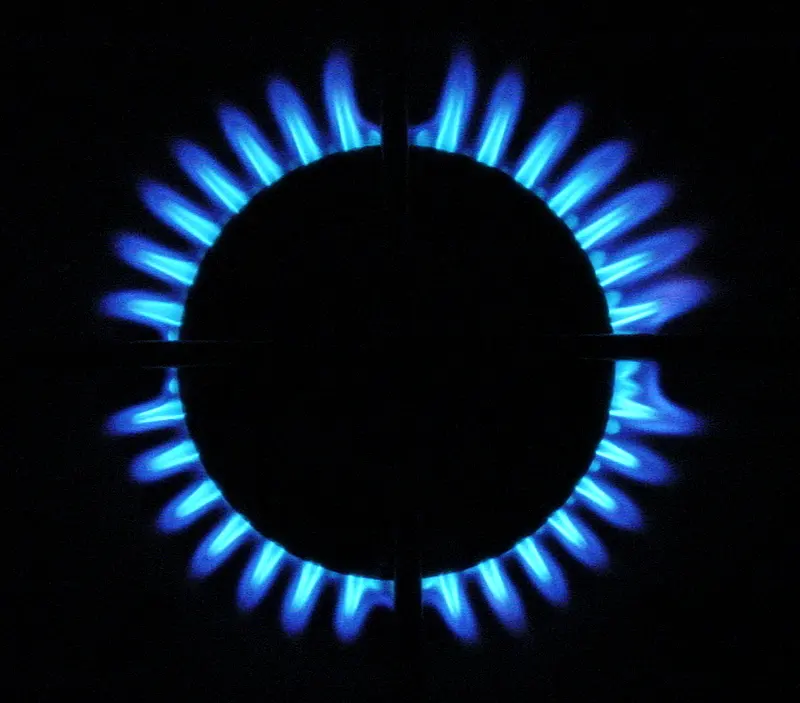
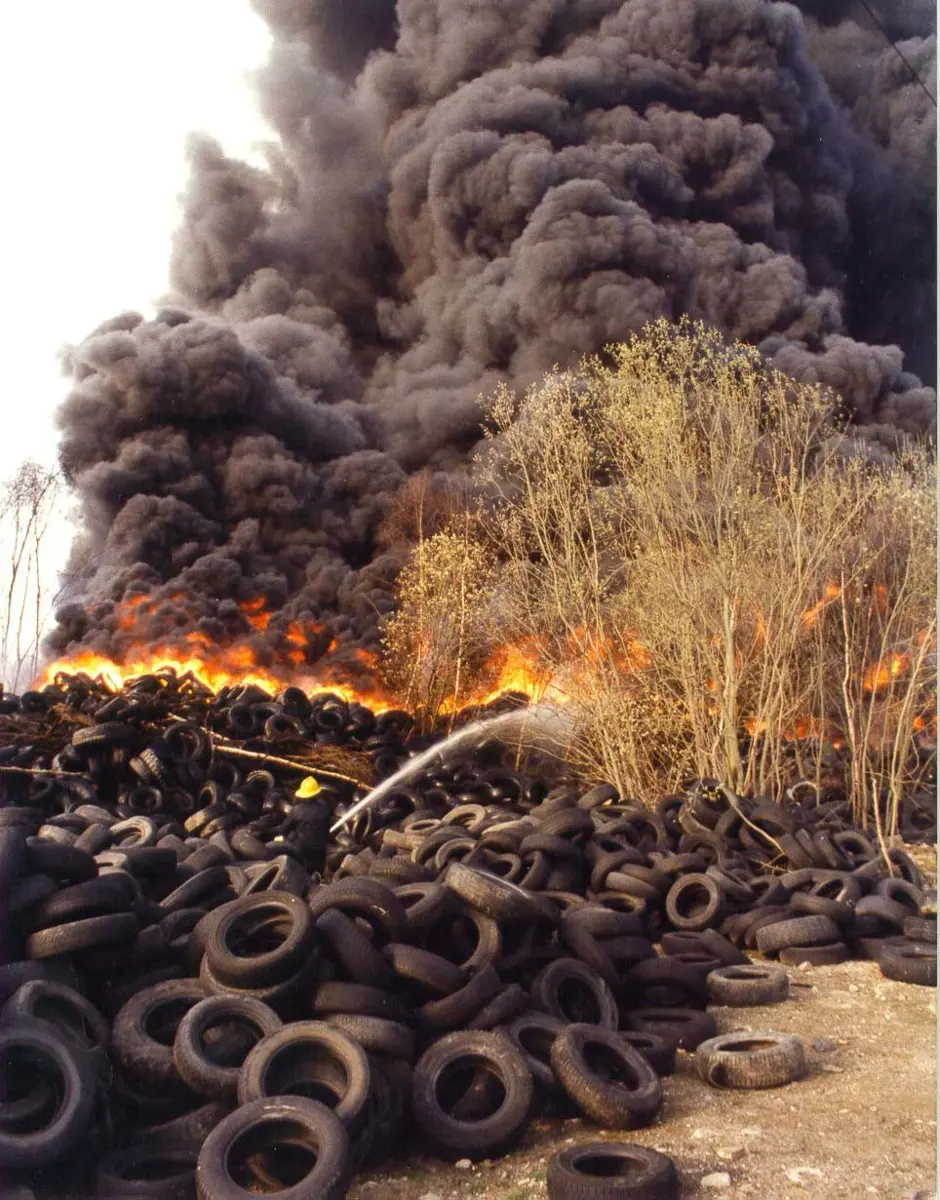
The first chemists named aromatic compounds by their smell. They noticed two more things about them.
- They burn with a sooty flame: yellow and smoky. Benzene, C₆H₆, has one hydrogen for every carbon; hexane, C₆H₁₄, has more than two. With so much carbon for so little hydrogen, not all the carbon burns, and it leaves the flame as soot.
- They don’t behave like unsaturated compounds: their formula says they should have several double bonds, yet they are hard to make add anything. Instead they substitute: an H on the ring is replaced, and the ring stays.
Aromatic hydrocarbons are also called arenes. An arene is a hydrocarbon with a flat ring of carbon atoms, drawn with alternate single and double bonds, whose π electrons are delocalized: shared by every atom of the ring, moving round it, not held between two atoms. These delocalized electrons make the ring unusually stable, which is why addition reactions are hard and substitution easy.
The most important aromatic compound is benzene, C₆H₆: six carbon atoms in a ring, each with one hydrogen. Figure 15.3 shows three ways to draw it.
Why does benzene burn with a sooty flame, while hexane burns with a cleaner one?
Pick an answer to see why.
15.2 Hückel’s rule of aromaticity
What makes a ring aromatic? The first answers were Robinson’s aromatic sextet (1925: a ring with six electrons shared round it, like benzene’s, is especially stable) and the valence bond picture of resonance. In 1931 the German physicist and chemist Erich Hückel worked it out with the quantum theory of electrons in rings, and found a rule that covers rings of any size.
Hückel’s rule: a ring is aromatic if
- it is cyclic, and every atom of the ring has a p orbital (it is sp² or sp, or has a lone pair or an empty orbital that can serve), so the π electrons can go all the way round;
- it is planar (flat), so the p orbitals stand side by side and overlap;
- it has (4n + 2) π electrons, where n is a whole number, 0, 1, 2, 3…: 2, 6, 10, 14… π electrons.
To use the rule, count the π electrons: 2 for each C=C in the ring, and 2 for a lone pair on a ring atom that is in a p orbital. Then solve (number of π electrons) for n. If n is a whole number and conditions 1 and 2 hold, the ring is aromatic.
A ring that is cyclic, flat and has a p orbital on every atom but 4n π electrons (4, 8…) is worse off than an ordinary molecule: sharing those electrons round the ring makes it less stable. Such a ring is called antiaromatic. Cyclobutadiene, C₄H₄, with 4 π electrons, is one: it can be kept only frozen in solid argon near −265 °C. A ring that fails conditions 1 or 2 is simply non-aromatic, and behaves like an ordinary alkene.
The key points of aromatic hydrocarbons:
- They have a cyclic structure, flat, with a p orbital on every ring atom.
- They are drawn with single and multiple bonds in alternate positions (conjugated). In some rings a lone pair on a ring atom takes the place of a double bond: furan’s oxygen gives two of its six π electrons.
- They follow Hückel’s rule: (4n + 2) π electrons.
How many π electrons does naphthalene have, and what is n in Hückel’s rule?
Pick an answer to see why.
15.3 Kekulé’s structure of benzene
Benzene’s formula was known by the 1830s, but how its atoms are joined took another thirty years and longer to settle. The structure was worked out from these facts.
- a.Its formula is C₆H₆. Elemental analysis gives its empirical formula, CH, and the molecular mass, 78, gives C₆H₆.
- b.It is unsaturated. A saturated hydrocarbon with six carbons, hexane, is C₆H₁₄. Benzene has eight hydrogen atoms fewer, so its carbons must be joined by double or triple bonds, or in rings.
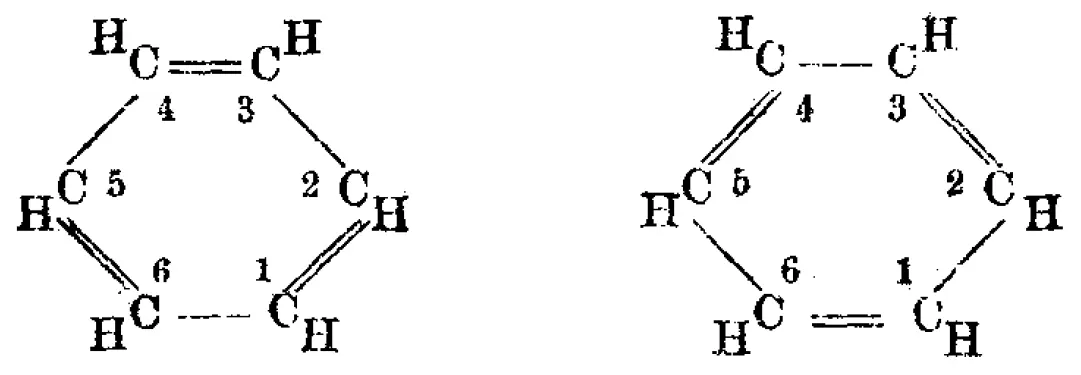
Many structures fit C₆H₆: an open chain with two triple bonds, for instance (Figure 15.6, left). In 1865 August Kekulé proposed a ring of six carbon atoms, each with one hydrogen, joined by alternate single and double bonds (Figure 15.6, right). Each carbon has four bonds: one to H, one single and one double to its neighbors.
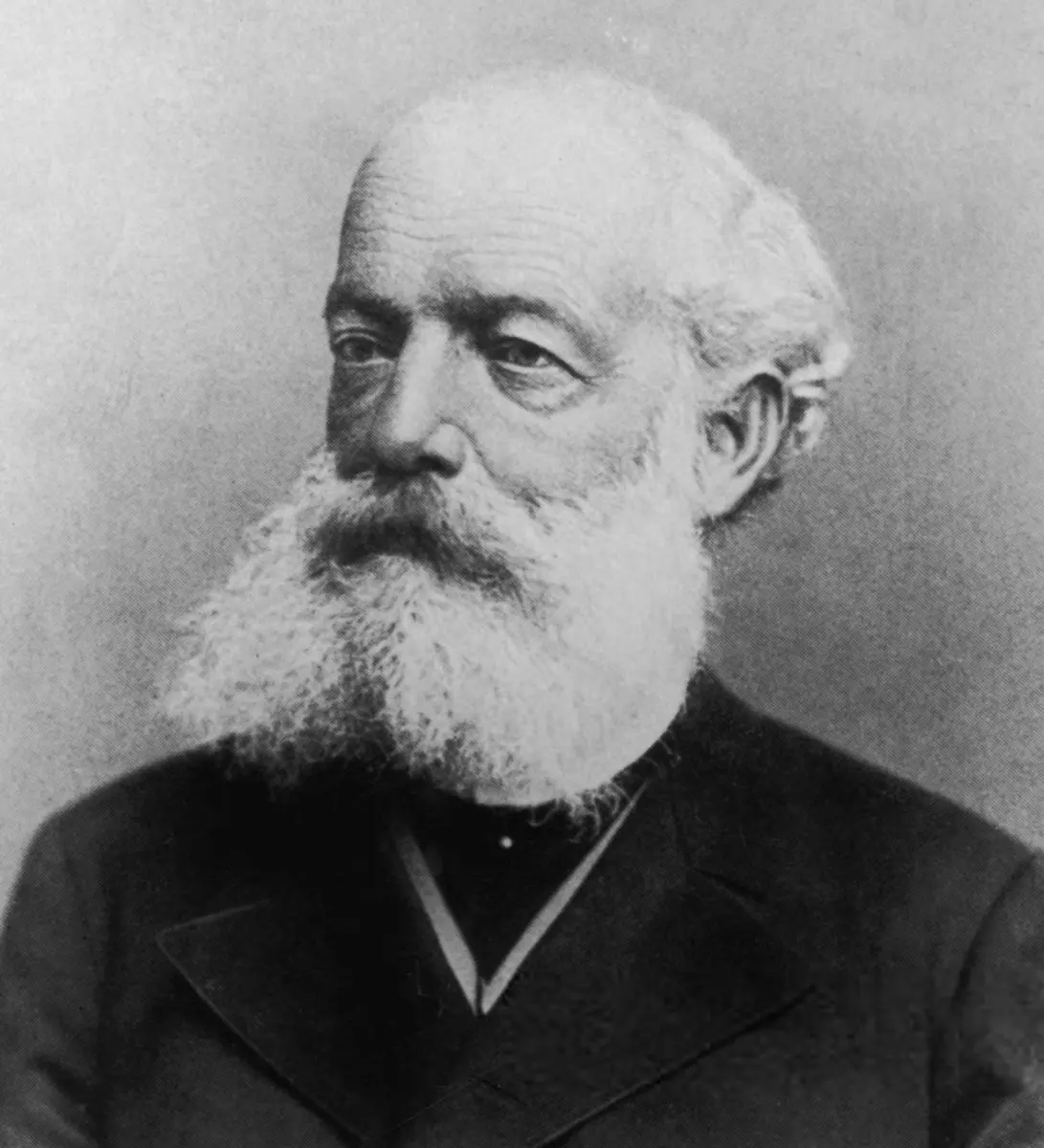
Friedrich August Kekulé (later Kekulé von Stradonitz) was born on 7 September 1829 in Darmstadt, Germany, and died on 13 July 1896 in Bonn. He studied at the University of Giessen, first architecture and then chemistry. Before the benzene ring he had shown, in 1857–1858, that carbon forms four bonds and that carbon atoms can join to each other in chains: the foundation of structural theory in organic chemistry. From the 1850s until his death he was one of the leading chemists in Europe.
Facts that support Kekulé’s structure
1. Benzene gives only one monosubstituted product. In Kekulé’s ring every carbon is like every other, and so is every hydrogen. Replacing any one H by Cl gives the same compound: there is only one chlorobenzene, C₆H₅Cl, and only one bromobenzene, nitrobenzene… This is what is found.
2. Benzene adds three molecules of hydrogen. Heated with hydrogen over a nickel catalyst, under pressure, each benzene molecule takes up three molecules of H₂ (six H atoms) and becomes cyclohexane, C₆H₁₂. So benzene has the equivalent of three double bonds, and since cyclohexane is a ring, so is benzene.
3. Benzene does not give the tests for unsaturation. An alkene decolorizes bromine water at once, and turns cold, dilute purple KMnO₄ brown (Baeyer’s test). Benzene does neither: its π electrons are delocalized round the ring, and adding anything would break that up. This is not what Kekulé’s three ordinary double bonds would do, and it is the first of the objections below.
Drawbacks (objections) of Kekulé’s structure
1. Benzene is stable to addition. If structure II had three ordinary C=C bonds, benzene would add bromine and hydrogen as easily as an alkene. It doesn’t: it needs a catalyst, heat and pressure to add H₂, and sunlight to add Cl₂.
2. All its bonds are the same length. A C–C single bond is 154 pm (1.54 Å) and a C=C double bond 134 pm (1.34 Å). Kekulé’s ring should have three of each, short and long in turn. In 1929 Kathleen Lonsdale’s X-ray photographs of a benzene compound showed a flat, regular hexagon, and every C–C bond in benzene is 139 pm (1.39 Å), between the two.
3. Only one 1,2-disubstituted product is found. In Kekulé’s ring two neighboring carbons may be joined by a double bond or by a single one. So there should be two different 1,2-dibromobenzenes (Figure 15.9). Only one is ever found.
Kekulé answered the third objection in 1872 by suggesting that the double bonds swing quickly back and forth between the two positions (Figure 15.10), so the two forms can’t be separated. The full answer came only with resonance and the quantum theory of the 1930s.
Which fact can Kekulé’s structure, with fixed single and double bonds, not explain?
Pick an answer to see why.
15.4 Resonance and isomerism
Resonance in benzene
These are benzene’s resonance structures (also called resonating structures or canonical forms). Neither drawing is benzene. The real molecule is the resonance hybrid of the two: its six π electrons are delocalized, spread evenly round the whole ring. That is why the circle in Figure 15.3 is a good way to draw it. As you saw in Unit 5:
- a.The resonance hybrid is more stable than either resonance structure. The two Kekulé structures are exactly equivalent, and the real molecule is lower in energy than either. This is why benzene resists addition.
- b.Each structure contributes equally to the hybrid. So every C–C bond in benzene is the same, a bond and a half, intermediate in length between a single and a double bond: 139 pm.
How much more stable is benzene? Heat measurements tell us (Figure 15.12). Adding H₂ to one C=C, in cyclohexene, gives out 120 kJ/mol. A ring with three separate C=C should give out 3 × 120 = 360 kJ/mol. Benzene gives out only 208 kJ/mol. So benzene is about 150 kJ/mol lower in energy than Kekulé’s structure would be: its resonance energy (or delocalization energy).
The orbital structure of benzene
Why are the electrons spread round the ring? Look at each carbon’s orbitals.
Carbon in its ground state, 1s² 2s² 2p², has two half-filled orbitals. In an excited state one 2s electron moves up: 1s² 2s¹ 2pₓ¹ 2p_y¹ 2p_z¹, four half-filled orbitals. In benzene each carbon mixes its 2s with two of its 2p orbitals: sp² hybridization Grade 11: Unit 5. The three sp² orbitals are equal in energy, shape and size, and point to the corners of a triangle, 120° apart in one plane.
- Each carbon uses its three sp² orbitals to form three σ bonds: two to its neighboring carbons and one to its hydrogen (with H’s 1s). So all twelve atoms lie in one plane, every bond angle is 120°, and the ring is a regular hexagon.
- Each carbon still has one unhybridized 2p orbital, with one electron, standing upright, at right angles to the ring (Figure 15.13).
- The six p orbitals are side by side, so each overlaps equally with both its neighbors. They don’t pair off into three separate π bonds. They make one continuous π system: two rings of electron cloud, one above and one below the plane of the ring, holding the six π electrons (Figure 15.14).
This is the molecular orbital picture of the delocalized π electrons that resonance describes in drawings. It explains all three objections to Kekulé: equal bonds, no fixed double bonds to give two 1,2-isomers, and the extra stability that makes addition hard.
In benzene, what is the hybridization of each carbon, and what is the C–C–C bond angle?
Pick an answer to see why.
Isomerism in benzene
Compounds with the same molecular formula but different structures are called isomers, and the existence of such compounds is isomerism. Benzene’s derivatives show position isomerism: the same groups on different carbons of the ring.
1. Monosubstituted benzene. All six carbons of benzene are equivalent, so replacing any one H gives the same compound: there is only one monosubstituted benzene of each kind, such as chlorobenzene (Figure 15.15).
2. Disubstituted benzene. Two groups on the ring can be next to each other, one carbon apart, or opposite. So there are three position isomers (Figure 15.16): ortho (o-, 1,2-), meta (m-, 1,3-) and para (p-, 1,4-).
3. Trisubstituted benzene. The number of isomers depends on the groups. If all three are the same, there are three isomers (Figure 15.17): vicinal (1,2,3-, all next to each other), unsymmetrical (1,2,4-) and symmetrical (1,3,5-, every other carbon).
15.5 Preparation of benzene
Most benzene today comes from petroleum: from the reforming of naphtha in oil refineries, which turns alkanes into rings, and from the liquids left by cracking. In the laboratory it can be made in the following ways.
a. By decarboxylation of sodium benzoate
When sodium benzoate is heated with soda-lime (sodium hydroxide mixed with quicklime, NaOH + CaO), benzene is formed. The –COONa group is removed and replaced by H; the carbon it carried leaves as sodium carbonate. Because a carbon atom, as CO₂, is lost from the starting compound, the reaction is called decarboxylation.
What is needed: sodium benzoate, soda-lime, heat. The CaO keeps the mixture dry and stops the hot NaOH from melting and attacking the glass. This is the same reaction Mitscherlich used in 1834, starting from benzoic acid.
b. By heating phenol with zinc dust
When phenol, C₆H₅OH, is heated with zinc dust, the zinc takes its oxygen and benzene distills off. The zinc becomes zinc oxide. This is a reduction of phenol.
c. By polymerization of ethyne
When ethyne (acetylene) is passed through a red-hot iron or copper tube, at about 500 °C, three molecules join into one ring of benzene.
Several small molecules joining into one is polymerization; an open-chain (aliphatic) compound becoming a ring is cyclization, and becoming an aromatic ring aromatization. So this reaction is called all three. The French chemist Marcellin Berthelot first did it in 1866.
d. By reducing chlorobenzene
Chlorobenzene can be turned back into benzene by reduction: heated with a nickel–aluminium alloy in sodium hydroxide solution, the Cl is replaced by H.
Here [H] stands for the hydrogen the reducing mixture supplies (the HCl is neutralized by the alkali).
Sodium benzoate is heated with soda-lime. Which carbon atom of sodium benzoate is not in the benzene formed?
Pick an answer to see why.
15.6 Physical properties of benzene
- Benzene is a colorless, volatile liquid with a sweet, characteristic smell.
- It is immiscible with water but dissolves in organic solvents (ethanol, ether, hexane), and is itself a good solvent for fats, oils, rubber and iodine. Being non-polar, it can’t form hydrogen bonds with water.
- It boils at 80.1 °C and melts at 5.5 °C: on a cold winter morning in Jumla it would freeze.
- Its density is 0.877 g/cm³, less than water’s, so it floats on water as a separate layer (Figure 15.21).
- It shows resonance (Section 15.4).
- It is highly inflammable and burns with a yellow, sooty flame.
Benzene and health
Benzene is toxic, and it is one of the best-known causes of cancer.
- Breathed in for years, even at low levels, it damages the bone marrow, where blood is made. It causes anemia and a cancer of the blood, acute myeloid leukemia. The International Agency for Research on Cancer lists it in Group 1, “carcinogenic to humans”, the most certain group.
- Breathing a lot at once causes dizziness, headache, and at high levels unconsciousness.
- Our bodies meet small amounts in petrol vapor (at the pump and in traffic) and cigarette smoke, which is the biggest single source for a smoker and those around them.
This is why work-safety rules allow very little: in the United States, an average of 1 part per million in a worker’s air over a day. Petrol sold in India and Nepal (the BS VI standard) may contain at most 1 % benzene, and school laboratories use safer solvents, such as cyclohexane or ethyl acetate, in its place. Benzene is now handled only in closed systems in industry and in fume cupboards in research laboratories.
Which property explains why benzene floats on water as a separate layer?
Pick an answer to see why.
15.7 Chemical properties of benzene
Benzene’s reactions follow from its structure. Its delocalized ring is stable, so it adds things only under harsh conditions; but the ring is rich in π electrons, so it attracts electrophiles (electron-seeking species), which take the place of an H. Its typical reaction is electrophilic substitution.
A. Addition reactions
Benzene is drawn with three double bonds, but because its π electrons are delocalized it doesn’t give the easy addition reactions of alkenes. Under vigorous conditions it does add.
i. Addition of hydrogen (hydrogenation). Benzene vapor and hydrogen, passed over a nickel catalyst (or platinum or palladium) heated to about 200–250 °C under pressure, give cyclohexane (Figure 15.8 above). Three molecules of H₂ add.
Cyclohexane made this way is the starting material for nylon.
ii. Addition of halogen. Benzene and chlorine, in sunlight (ultraviolet light) and with no catalyst, add three molecules of Cl₂: one Cl on every carbon. The product is benzene hexachloride (BHC), C₆H₆Cl₆, whose correct name is 1,2,3,4,5,6-hexachlorocyclohexane: it is no longer a benzene ring.
B. Electrophilic substitution reactions
An electrophilic substitution is the replacement of an atom on a ring (usually H) by another atom or group, brought by an electrophile, an electron-deficient species that attacks the ring’s π electrons. Examples: nitration (NO₂⁺), sulphonation (SO₃), halogenation (Cl⁺ or Br⁺) and the Friedel–Crafts reactions (R⁺, RCO⁺).
i. Orientation in benzene derivatives (o, m, p)
When benzene already has one group, the positions on its ring are named from that group. In toluene (methylbenzene), C₆H₅CH₃, the carbon holding CH₃ is C-1. Then (Figure 15.24):
- ortho (o): the two carbons next to it, C-2 and C-6;
- meta (m): one carbon further, C-3 and C-5;
- para (p): the carbon opposite, C-4.
Orientation means where on the ring the next group goes. It is decided by the group already there, not by the incoming one. Groups fall into two kinds.
| ortho and para directors | meta directors |
|---|---|
| –NH₂, –NHR, –NR₂, –OH, –OR, –O⁻, –NHCOR, –CH₃ and other alkyl groups | –NO₂, –CN, –SO₃H, –COOH, –CHO, –COR, –COOR |
| Mostly activate the ring: it reacts faster than benzene. | All deactivate the ring: it reacts slower than benzene. |
| Push electrons into the ring. | Pull electrons out of the ring. |
Why do groups direct? Look at resonance. In aniline, C₆H₅NH₂, the nitrogen’s lone pair can be pushed into the ring (Figure 15.25). In three of the resonance structures a negative charge sits on C-2, C-4 and C-6: the ortho and para carbons are richer in electrons than in benzene, so an electrophile attacks them, and faster than it attacks benzene. –NH₂ is an ortho–para director and a ring activator.
In nitrobenzene, C₆H₅NO₂, the electrons go the other way (Figure 15.26): the nitro group pulls π electrons out of the ring, leaving a positive charge on C-2, C-4 and C-6. Those positions repel an electrophile, the whole ring becomes poorer in electrons, and the meta carbons, C-3 and C-5, are least affected. –NO₂ is a meta director and a ring deactivator.
ii. Nitration of benzene
Nitration is the introduction of a nitro group, –NO₂, into the benzene ring. Benzene is warmed with a mixture of concentrated nitric acid and concentrated sulphuric acid (the nitrating mixture), keeping the temperature at 50–60 °C. The product is nitrobenzene, a pale yellow oil that smells of bitter almonds.
The electrophile is the nitronium ion, NO₂⁺ (also called the nitryl cation). The stronger acid, sulphuric acid, protonates nitric acid, which then loses water:
Note: if the mixture is heated above 60 °C, to about 100 °C, a second NO₂ group goes in. Because –NO₂ is a meta director, the product is 1,3-dinitrobenzene (m-dinitrobenzene). This is why the temperature is kept at 50–60 °C to make nitrobenzene.
The mechanism (how it happens, step by step):
- The electrophile forms: NO₂⁺, from the two acids (above).
- The ring attacks (slow step). Two of the ring’s π electrons form a bond to the N of NO₂⁺. The carbon that is attacked now has both H and NO₂, and is sp³. The ring has lost two of its π electrons and carries a positive charge: this ion is the arenium ion (or σ complex).
- The ring is restored (fast step). HSO₄⁻ takes the H⁺ from the sp³ carbon. The pair of electrons in the C–H bond goes back into the ring, and the aromatic ring, with its six π electrons, is whole again.
The arenium ion is itself stabilized by resonance: its positive charge is not on one carbon but shared by three, the carbons ortho and para to the one attacked (Figure 15.30). Its hybrid (Figure 15.31) has the charge spread over the five sp² carbons, with the sp³ carbon outside the delocalized part.
iii. Sulphonation
Benzene heated with concentrated sulphuric acid (or warmed with fuming sulphuric acid, SO₃ dissolved in H₂SO₄) gives benzenesulphonic acid, C₆H₅SO₃H. The process is called sulphonation, and the electrophile is sulphur trioxide, SO₃ (its sulphur is strongly δ+). It follows the same steps as nitration.
With fuming sulphuric acid the SO₃ adds directly: .
iv. Halogenation
Benzene and chlorine (or bromine), with a halogen carrier such as iron(III) chloride or iron(III) bromide (a Lewis acid; iron filings work too, since they react with the halogen to form it), in the dark and at room temperature, give a halobenzene: one H is replaced by a halogen atom. This is halogenation.
The FeCl₃ accepts a Cl⁻ from Cl₂, leaving the electrophile, Cl⁺, to attack the ring: . The conditions matter. In the dark with a carrier: substitution (chlorobenzene). In sunlight with no carrier: addition (BHC).
v. Friedel–Crafts reactions
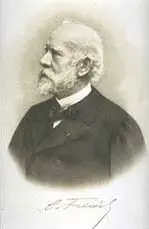
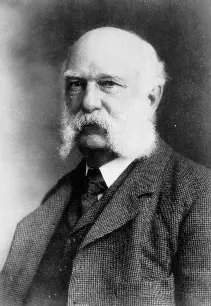
These reactions put an alkyl group or an acyl group onto the benzene ring, using anhydrous aluminium chloride, AlCl₃, a Lewis acid, as the catalyst. They were discovered in 1877, in Paris, by the Frenchman Charles Friedel and the American James Mason Crafts. There are two kinds.
a. Friedel–Crafts alkylation. Benzene warmed with an alkyl halide and anhydrous AlCl₃ (or another Lewis acid, such as FeCl₃ or BF₃) takes an alkyl group, –R: the product is an alkylbenzene. With chloromethane, methylbenzene (toluene); with chloroethane, ethylbenzene.
The AlCl₃ pulls Cl⁻ from the alkyl halide, giving the electrophile, the carbocation: . The catalyst must be anhydrous: water destroys AlCl₃.
b. Friedel–Crafts acylation. Benzene heated with an acyl chloride (or an acid anhydride) and anhydrous AlCl₃ takes an acyl group, RCO–: the product is an acylbenzene, a ketone. With ethanoyl chloride (acetyl chloride), or with ethanoic anhydride (acetic anhydride), the product is acetophenone (1-phenylethanone), C₆H₅COCH₃.
Here the electrophile is the acylium ion, CH₃CO⁺. One difference matters: an alkyl group activates the ring, so alkylation tends to go on and put in a second and third alkyl group; an acyl group deactivates it, so acylation stops cleanly at one.
In Friedel–Crafts reactions, what is the job of anhydrous AlCl₃?
Pick an answer to see why.
vi. Combustion of benzene
Benzene burns in air with a yellow, luminous, sooty flame, giving carbon dioxide and water (and, in an open flame, much soot):
Uses of benzene
- a.As a starting material, by far its biggest use: for ethylbenzene (to make styrene and polystyrene), cumene (to make phenol and acetone), cyclohexane (for nylon), and nitrobenzene (aniline, dyes, drugs and rubber chemicals).
- b.In the synthesis of dyes, drugs, plastics, detergents, perfumes and insecticides.
- c.As an organic solvent, and for extracting fats and oils: once common, now replaced by safer solvents (hexane, for edible oils) because of benzene’s toxicity.
- d.As a fuel, “benzol”, mixed with petrol in the early twentieth century; and petrol still contains a little benzene, with other aromatics that help it resist knocking. Modern standards keep benzene in petrol to 1 % or less.
- e.In dry cleaning, in the past; dry cleaners now use tetrachloroethene or hydrocarbon solvents.
Exercise
A. Multiple choice questions
- What is the molecular mass of benzene?
Pick an answer to see why.
- Study the figure above and identify the compound that would be produced in the round-bottomed flask.
Pick an answer to see why.
- Which of the following fills the blank?
Pick an answer to see why.
- Which of the following is the catalyst for Friedel–Crafts reactions?
Pick an answer to see why.
- Which of the following is correct about the nitration of benzene?
Pick an answer to see why.
- Sodium benzoate is heated with soda-lime. Besides benzene, what is formed?
Pick an answer to see why.
- What is the common name of aromatic hydrocarbons?
Pick an answer to see why.
- Benzene and concentrated nitric acid, with concentrated sulphuric acid at 50–60 °C, give nitrobenzene and water. Which type of reaction is this?
Pick an answer to see why.
- How many π electrons does the compound above contain?
Pick an answer to see why.
- What is the hybridization of the carbon atoms in the compound above?
Pick an answer to see why.
B. Short answer questions
Write the physical and chemical characteristics of benzene.
Answer
Arrange the following compounds in a sensible order of reactant and products, with suitable conditions: C₆H₆, C₆H₅NO₂, CH≡CH.
Hint
Answer
Check whether the compounds above are aromatic or not.
Hint
Answer
What would be the product when:
- i.benzene is treated with chlorine in the presence of sunlight?
- ii.sodium benzoate is heated with soda-lime?
- iii.the compound obtained by passing acetylene through a red-hot iron tube at about 500 °C is heated with ethanoyl chloride in the presence of anhydrous AlCl₃?
Answer
Differentiate between:
- i.aliphatic compounds and aromatic compounds;
- ii.Friedel–Crafts alkylation and acylation;
- iii.a sooty and a non-sooty flame.
Answer
C. Long answer questions
- a.The bar chart above shows six compounds (1 to 6) and the number of carbon and hydrogen atoms in each, as a pair of bars.
- i.Which pair of bars can represent an aromatic hydrocarbon?
- ii.In which ways are compound 1 and compound 6 different? Write any two.
- iii.Find the product when the compound of part i is treated with chlorine in the dark.
- iv.What happens when compound 5 is heated in a red-hot copper tube?
- b.Identify X and Y in this reaction sequence:
Hint
Answer
- a.Write the main differences between the addition reactions and the electrophilic substitution reactions of benzene.
- b.Identify A and B:
Answer
An aromatic hydrocarbon A, of molecular mass 78 amu, is heated with concentrated nitric acid and concentrated sulphuric acid to give compound B. A reacts with acetic anhydride, in the presence of anhydrous AlCl₃, to give C. Identify A, B and C, with equations.
Hint
Answer
A carboxylic acid A, molecular formula C₇H₆O₂, reacts with NaOH solution to give B. B is heated with soda-lime to give C. C reacts with chloromethane (with anhydrous AlCl₃) to give toluene. Identify A, B and C.
Hint
Answer
M, N and O are organic compounds that turn into each other in a cycle: M → N → O → M. M is the aromatic compound of molecular mass 78; N is the product when M undergoes alkylation; and M is obtained from O. Identify M, N and O. What decides whether an incoming electrophile goes to the o-, p- or m- position? Explain with resonance structures.
Hint
Answer
A. Identify S, T, U and V from the table.
| Compound | Conditions | Type of reaction or product |
|---|---|---|
| benzene | T | combustion |
| S | red-hot iron tube | C₆H₆ |
| benzene | chlorine, sunlight | V |
| U | zinc dust | benzene |
B. Explain the resonance structures of benzene. What is the product when benzene burns in air? Explain.
Answer
Project work
Printable PDFs
- Study notes 2 pages
- Worksheet 4 pages Answer key
Quiz yourself: Materials and Chemicals We Use, Grades 5–12 →
Practice every question in the book, and keep track of the ones you miss →
A companion to your textbook, not a replacement for it: study from the book your school uses, and where the two differ, follow your teacher. Found a mistake? Please tell us.