
Sugar and salt are both white crystals that dissolve in tea, yet salt melts only above 800 °C while sugar turns to caramel in a frying pan. Water is a liquid that boils at 100 °C, while hydrogen sulphide, a heavier molecule built the same way, is a gas that stinks of rotten eggs at room temperature. Diamond is the hardest natural substance known; graphite, made of the very same carbon atoms, is soft enough to write with. Every one of these differences comes from the same place: how the atoms are held together, and the shape that holding gives the molecule.
This unit is about those holds. It starts with the octet rule and the three main kinds of bond, ionic, covalent and metallic, and how to draw them as Lewis structures. Then it asks what shape a molecule takes, and answers in two ways: VSEPR theory, which predicts shapes from repelling electron pairs, and valence bond theory with hybridization, which explains them from overlapping orbitals. Last come the properties of bonds (polarity, length, dipole moment) and the weaker forces between molecules, van der Waals forces and hydrogen bonds, which decide whether a substance is a gas, a liquid or a solid on a summer day in Kathmandu.
This browser can’t show the 3D model. The picture above is the same model.
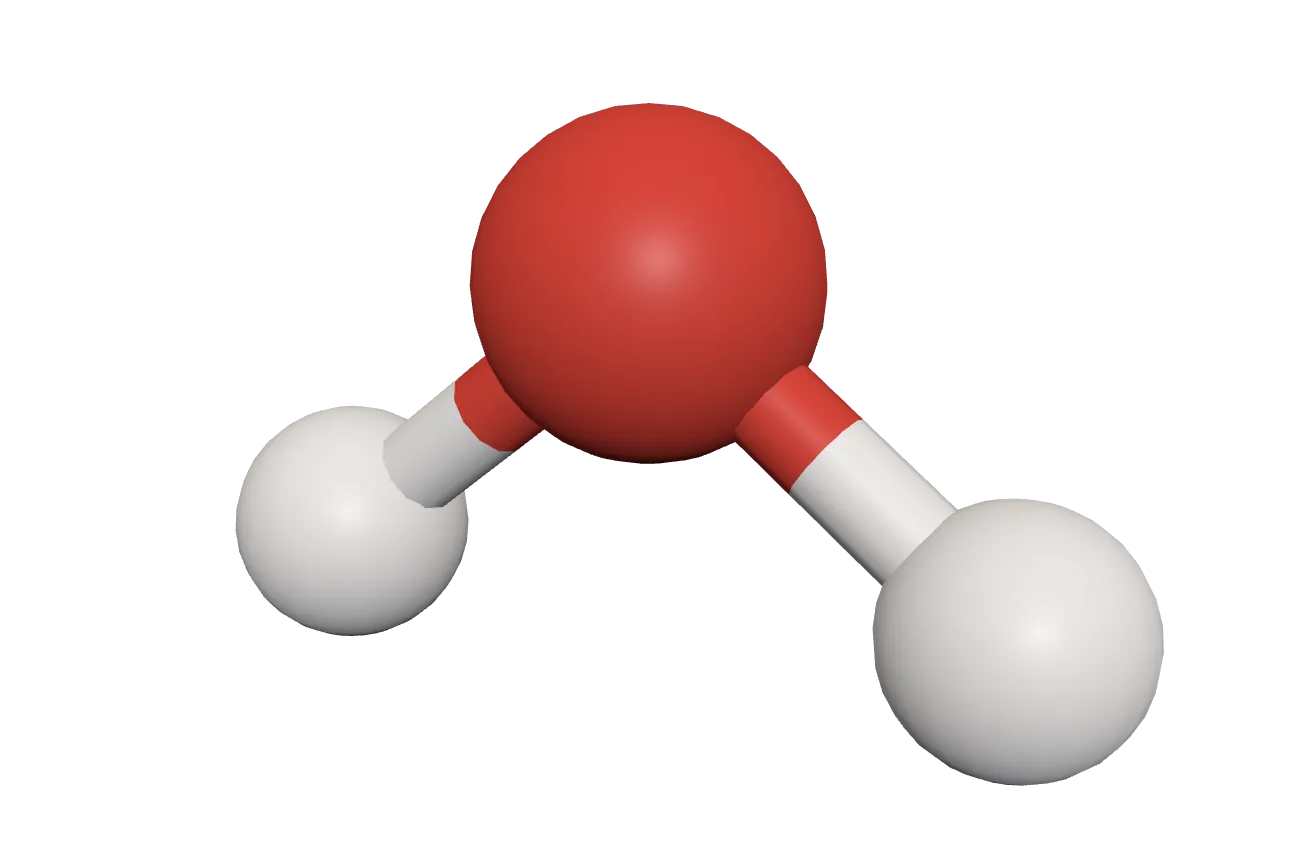
Bent, not straight: the two O–H bonds are 104° apart in this computed model (about 104.5° in real water). Oxygen’s two lone pairs, not drawn, are on the side away from the hydrogens.
Oxygen atom: one single bond to each hydrogen.
Hydrogen atom: one single bond.
Flat: all six atoms lie in one plane (turn it edge-on), the bonds about 120° apart (118.5° and 120.7° here). The two carbons share a double bond.
Carbon atom: a double bond to the other carbon and a single bond to each of two hydrogens.
Hydrogen atom: one single bond.
Drag to turn it. Tap an atom to see what it is.
Molecules: computed 3D conformers from PubChem, National Library of Medicine (public domain): pubchem.ncbi.nlm.nih.gov, CID 962, 6325
5.1 Valence shell, valence electron and octet theory
How strongly an atom combines, and with how many partners, depends on the electrons in its outermost shell. These are its valence electrons, and the outermost shell is its valence shell. Valence electrons decide how reactive an element is and what bonds it can make.
For the main-group elements (the s- and p-blocks), the number of valence electrons follows the group:
- Group 1 elements (Li, Na, K) have 1 valence electron.
- Group 2 elements (Be, Mg, Ca) have 2.
- Groups 13 to 17 have 3 to 7 (the group number minus ten): group 17 elements (F, Cl) have 7.
- Group 18 elements, the noble gases, have 8 (helium has 2, its only shell being full).
The electrons in the inner shells are inner electrons or core electrons. They are held tightly by the nucleus and take no part in ordinary chemical reactions.
The octet rule
The octet rule (or octet theory), set out mainly by G. N. Lewis in 1916, with Walther Kossel in Germany, says:
Atoms tend to gain, lose or share electrons so as to reach a stable configuration with eight electrons in their valence shell, like the noble gas nearest to them.
The octet rule is a simple guide to why atoms bond at all, and it predicts the formulas of thousands of compounds. But it has exceptions, mainly where the central atom has too few electrons to make an octet, or room for more than eight.
Exceptions to the octet rule
a. Incomplete octet. Some molecules have fewer than eight electrons round the central atom. Beryllium has only 2 valence electrons and boron only 3, so in BeH₂, BeCl₂ and BeF₂ beryllium has just 4 electrons round it, and in BF₃ and BCl₃ boron has 6.
b. Expanded octet. Elements of period 3 and below (phosphorus, sulphur, chlorine, iodine, xenon…) can hold more than eight electrons round them, because their valence shell (n = 3 or more) has d orbitals of nearly the same energy and the atom is large enough to have more neighbors. In PCl₅ phosphorus has 10 electrons round it, and in SF₆ sulphur has 12. Such molecules are called hypervalent or super-octet molecules. Nitrogen and oxygen, in period 2, never do this: their valence shell (n = 2) has only one s and three p orbitals, room for eight electrons and no more. That is why PCl₅ exists but NCl₅ doesn’t.
c. Odd-electron molecules. A molecule with an odd total of valence electrons can’t give every atom an octet: one electron is always left unpaired. Examples are nitric oxide, NO (5 + 6 = 11 valence electrons), nitrogen dioxide, NO₂ (17) and chlorine dioxide, ClO₂ (19). Such molecules, with an unpaired electron, are called free radicals, and are usually very reactive: NO₂ is the brown gas in city smog.
Why does PCl₅ exist while NCl₅ does not?
Pick an answer to see why.
5.2 Ionic bond and its properties
This browser can’t show the 3D model. The picture above is the same model.
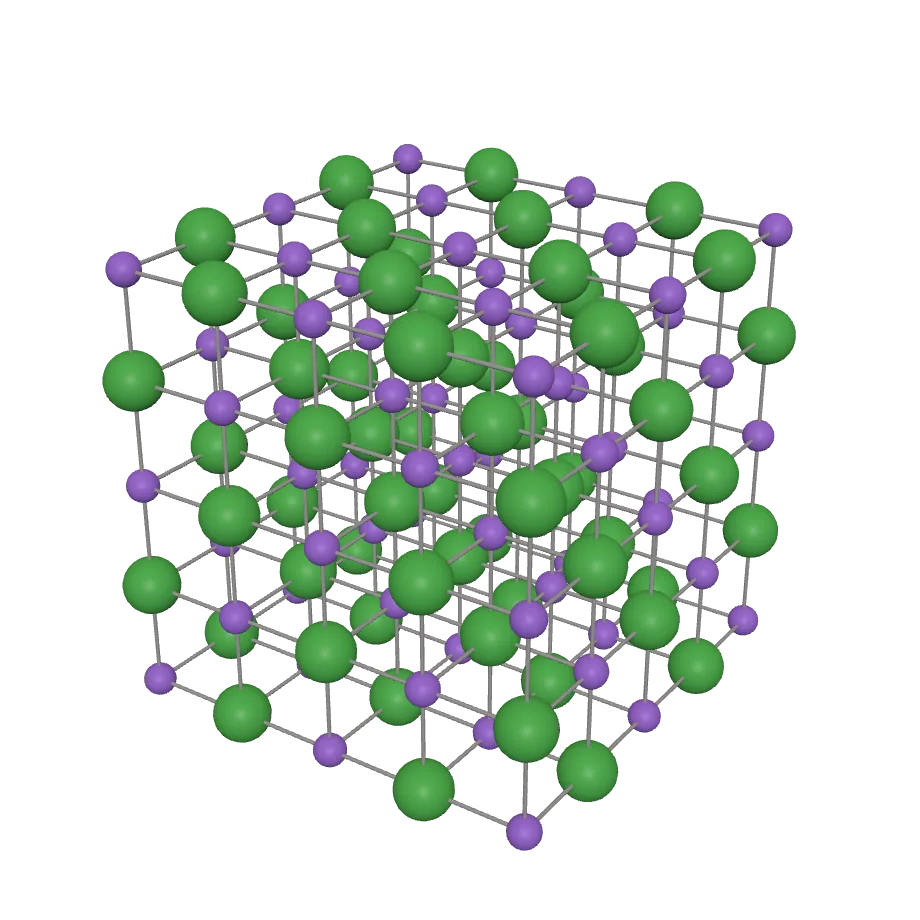
A real salt crystal, five ions each way: sodium ions, Na⁺ (purple), and chloride ions, Cl⁻ (green), take turns in every direction. The lines only show which ions are neighbors: they are not shared-pair bonds.
A sodium ion, Na⁺Six chloride ions round it, above and below, left and right, in front and behind, each 0.282 nm away, and every one of them pulls on it.
A chloride ion, Cl⁻Six sodium ions round it in the same way. No ion belongs to just one partner, so the crystal is one block, not separate NaCl molecules.
The ions at their real sizes: each touches its six neighbors, and the chloride ions are much bigger than the sodium ions. A salt crystal is one packed block of ions.
Drag to turn it. Tap a part, or a name below, to pick it out; tap it again to see the whole.
Salt (halite): COD 9003308, Walker and others (2004), Crystallography Open Database, CC0: www.crystallography.net/cod/9003308.html
A chemical bond is the attraction that holds two atoms, ions or molecules together. When the valence electrons of two atoms come close enough, the atoms may bond, and energy is given out as they do; the same energy, the bond energy, is needed to pull them apart again. That is what makes a bond stable. What kind of bond forms depends on the atoms:
- a metal and a non-metal: an ionic bond (electrons handed over);
- two non-metals: a covalent bond (electrons shared);
- metal atoms with each other: a metallic bond (electrons pooled).
The ionic bond
Metal atoms have few valence electrons and lose them easily, leaving the noble gas configuration underneath. Non-metal atoms are a few electrons short of an octet and gain them readily. So when a metal meets a non-metal, electrons pass from the metal to the non-metal:
- the metal atom becomes a positive ion (cation);
- the non-metal atom becomes a negative ion (anion);
- the oppositely charged ions attract each other.
The ionic bond is the electrostatic force of attraction between oppositely charged ions formed by the transfer of electrons from one atom to another.
Because the atoms in it carry electric charges, an ionic bond is also called an electrovalent bond, and compounds held by it are ionic compounds: KCl, MgSO₄, K₃PO₄, NaCl and most salts.
When the gaseous ions come together and pack into a crystal, a large amount of energy is given out. The lattice energy is the energy released when oppositely charged gaseous ions are brought from an infinite distance to form one mole of the ionic crystal. For NaCl it is 787 kJ/mol. The higher the lattice energy, the more stable the crystal: smaller ions and larger charges give larger lattice energies (MgO, with 2+ and 2− ions, has about 3800 kJ/mol). A high lattice energy also makes a crystal harder to dissolve, unless the ions are strongly hydrated by water to make up for it.
Ionic bond in NaCl and CaCl₂
Sodium (2, 8, 1) loses its one valence electron and becomes Na⁺ (2, 8), with neon’s configuration. Chlorine (2, 8, 7) takes that electron and becomes Cl⁻ (2, 8, 8), with argon’s:
Calcium (2, 8, 8, 2) has two valence electrons to give, and each chlorine atom can take only one, so two chlorine atoms are needed: calcium chloride is CaCl₂.
An ion’s charge pulls equally in every direction, so each ion attracts all the ions of opposite charge round it, not one partner in particular. This is the non-directional nature of the ionic bond: there are no NaCl “molecules” in salt, only a crystal of ions in which each Na⁺ is held by six Cl⁻ round it, and each Cl⁻ by six Na⁺.
Conditions for forming an ionic bond
- a.A large electronegativity difference between the two atoms (usually more than about 1.7) makes the transfer of electrons likely.
- b.The metal should have a low ionization energy, so it loses its electrons easily (the alkali and alkaline earth metals).
- c.The non-metal should have a high electron affinity, so it gains electrons readily (the halogens, oxygen).
- d.A high lattice energy, from small, highly charged ions, makes the ionic crystal stable: the energy released as the ions pack together pays for removing and adding the electrons. In a polar solvent such as water, the ions separate and are stabilized by water molecules instead (hydration, below).
Why is the formula of magnesium fluoride MgF₂, not MgF?
Pick an answer to see why.
Properties of ionic compounds
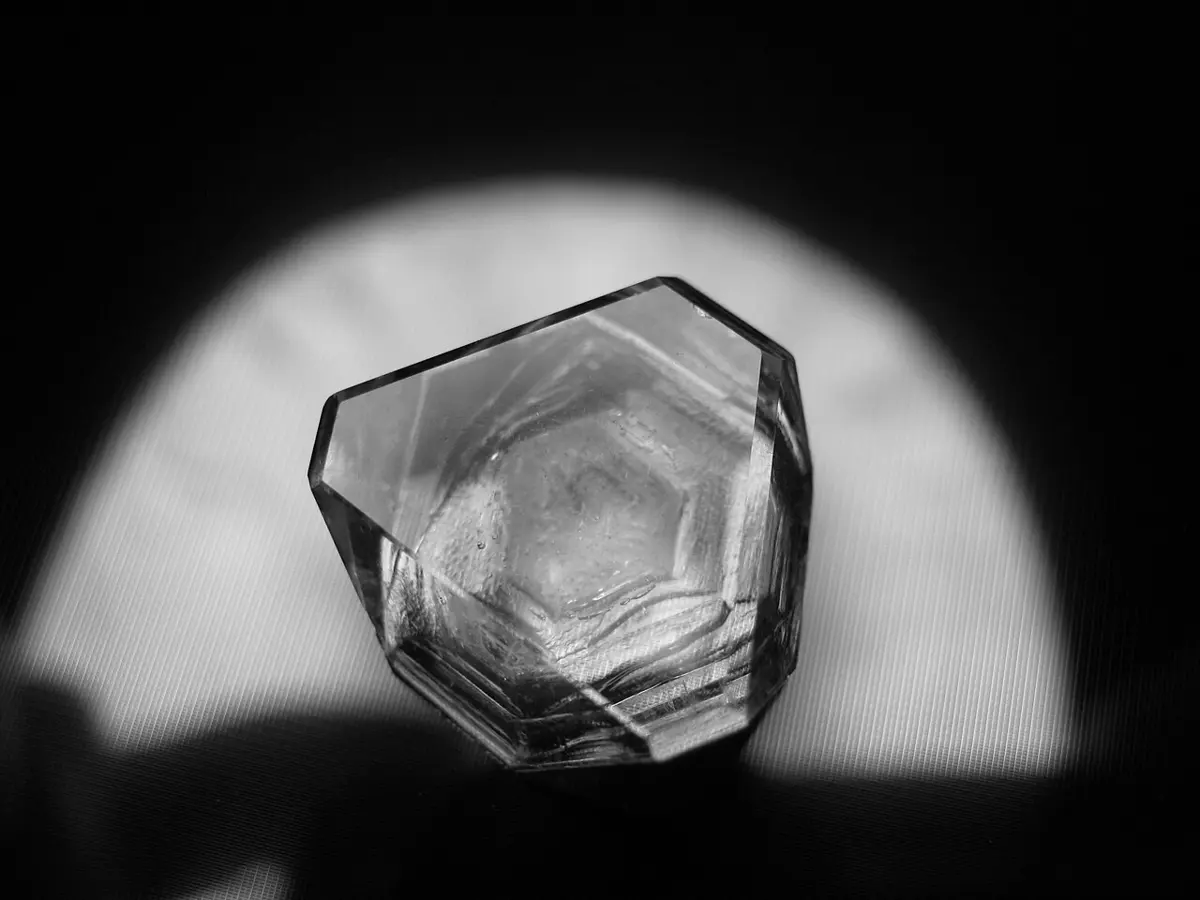
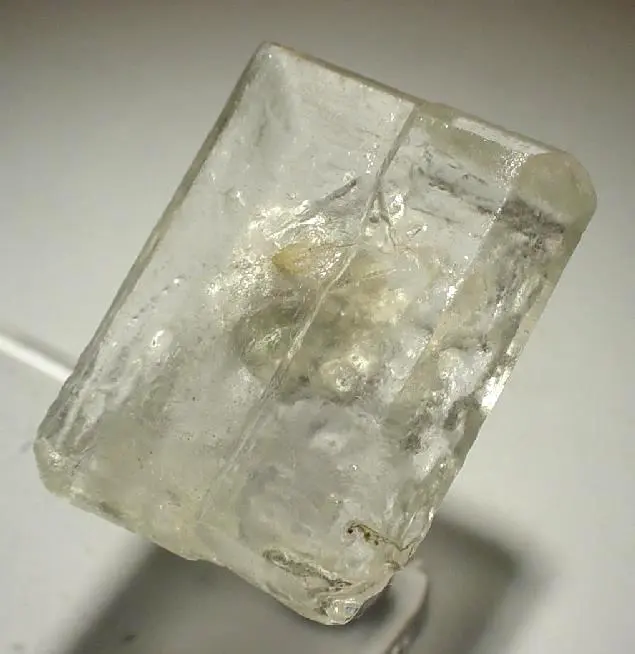
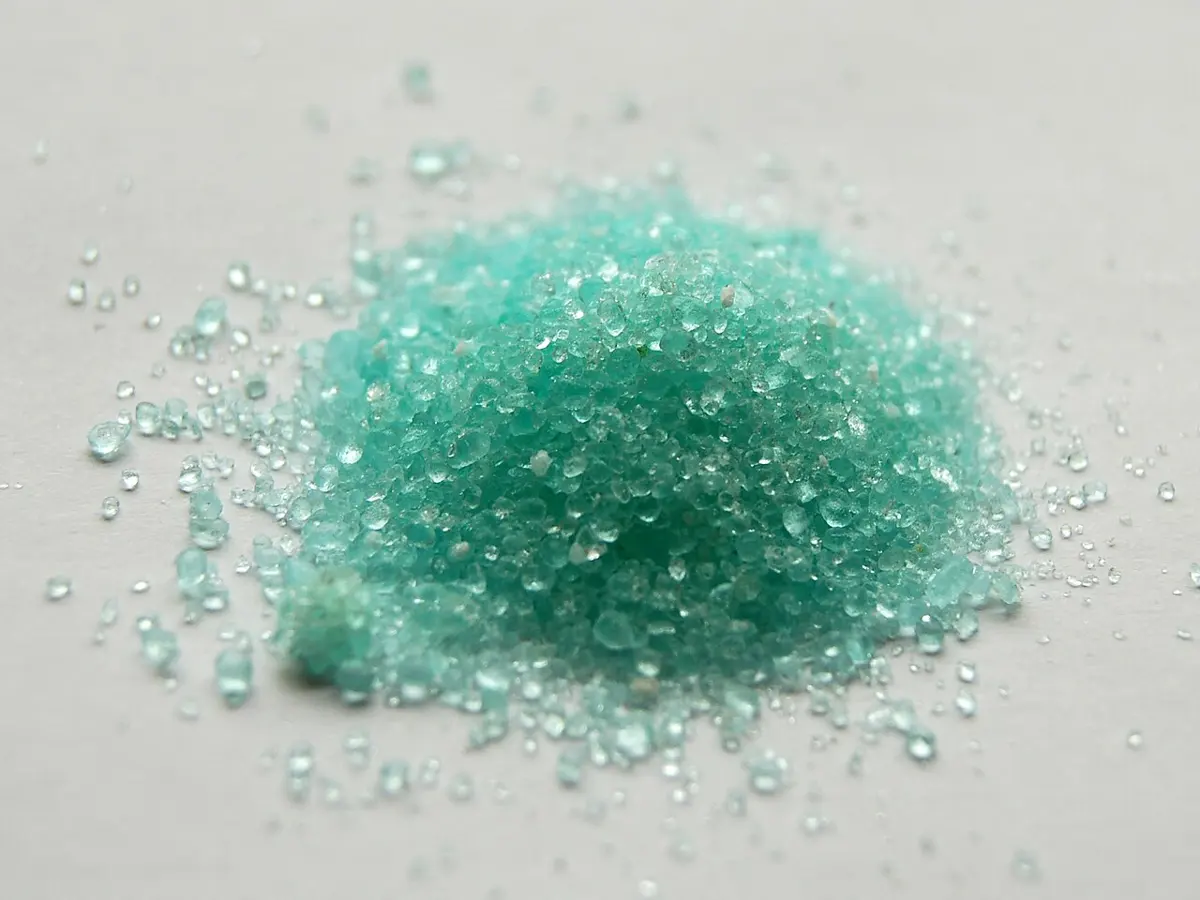
The ions in an ionic compound are held by strong electrostatic forces in every direction, so in the solid state they form a regular crystal lattice. This gives ionic compounds their typical properties:
a. They are hard crystalline solids with high melting and boiling points. Much energy is needed to pull the ions apart: NaCl melts at 801 °C and boils at 1465 °C; MgO, with doubly charged ions, melts at 2852 °C.
b. They are generally soluble in polar solvents such as water, and insoluble in non-polar ones (kerosene, petrol). Water molecules are polar (δ− on the oxygen, δ+ on the hydrogens). At the surface of the crystal they crowd round each ion: their δ− oxygens turn towards the cations and their δ+ hydrogens towards the anions. This attraction, called hydration, releases energy and pulls the ions out of the lattice one by one, so the solid dissolves (Figure 5.18).
c. They don’t conduct electricity as solids, but do when molten or dissolved in water. A current is a flow of charge. In the solid the ions are locked in place; melted or dissolved, the ions are free to move, and they carry charge to the electrodes.
d. They are hard but brittle. A blow pushes one layer of ions along the other by half a step. Then ions of the same charge come face to face, repel each other, and the crystal splits along that plane (Figure 5.19).
Unit cells
The ions of an ionic compound are packed in a rigid, repeating pattern. The smallest box of that pattern which, repeated in three directions, builds the whole crystal is its unit cell. KCl, CaO and NaCl all have the same arrangement, the rock-salt (sodium chloride) structure: a cube with anions at the corners and face centers and cations between them, each ion with six neighbors of the opposite charge. Only the size of the cube differs (564 pm for NaCl, 629 pm for KCl, 481 pm for CaO), because the ions differ in size.
Molten NaCl conducts electricity, but solid NaCl doesn’t. Why?
Pick an answer to see why.
5.3 Covalent bond and coordinate covalent bond
How a covalent bond forms
Think of two hydrogen atoms coming towards each other from far away (the widget below).
- Far apart, they don’t affect each other at all: no attraction, no repulsion. Take their potential energy as zero.
- As they come closer, each nucleus starts to attract the other atom’s electron, and the two electrons repel each other, as do the two nuclei. At first the attractions win, so the potential energy falls.
- At one distance, 74 pm, the attractions and repulsions balance:
The potential energy is at its lowest there. The atoms have formed a covalent bond: their 1s orbitals overlap, and the two electrons are shared between both nuclei. The distance between the two nuclei at this point is the bond length (74 pm for H₂), and the fall in potential energy is the bond energy (436 kJ/mol for H₂): the energy needed to separate the atoms again.
4. Pushed closer still, the repulsion between the nuclei grows quickly, and the potential energy rises steeply. The atoms push back.
Representation of covalent bonds
Each atom gives one electron to every shared pair, and the shared pair counts towards both atoms’ shells. In the dot-and-cross diagrams below, dots are one atom’s electrons and crosses the other’s.
- H₂: each hydrogen gives its one electron; the shared pair gives both a duet. One shared pair is a single bond, H–H.
- O₂: each oxygen (2, 6) needs two more electrons, so the atoms share two pairs: a double bond, O=O.
- N₂: each nitrogen (2, 5) needs three, so they share three pairs: a triple bond, N≡N.
The pairs of electrons in the bonds are bond pairs (bonding pairs). The pairs of valence electrons that take no part in bonding are lone pairs (non-bonding pairs). Lone pairs matter a great deal: they decide the shape of many molecules (Section 5.7) and let a molecule make coordinate bonds. In ammonia, NH₃, nitrogen has three bond pairs and one lone pair.
A covalent bond is the bond formed by the mutual sharing of valence electrons between the combining atoms. Each shared pair is one covalent bond: a single bond shares one pair, a double bond two, a triple bond three.
Conditions for forming a covalent bond
- a.The atoms should have similar, fairly high electronegativities (usually two non-metals), so that neither can take the other’s electrons outright.
- b.Both atoms should have high ionization energies and high electron affinities: neither gives electrons up easily, and both want more, so they share.
- c.The atoms should have half-filled orbitals in the valence shell to overlap (Section 5.8).
Coordinate covalent bond (dative bond)
The same happens when ammonia meets a hydrogen ion, H⁺, which has no electrons at all. Nitrogen gives its lone pair to the H⁺, and the ammonium ion, NH₄⁺, forms:
In a coordinate covalent bond (dative bond), both electrons of the shared pair come from one of the two atoms. The atom that gives the pair is the donor (nitrogen in NH₄⁺); the atom that takes it is the acceptor (H⁺). For this bond to form, the donor must have a lone pair (it already has its octet), and the acceptor must have an empty orbital to take the pair.
A coordinate bond is often drawn as an arrow from the donor to the acceptor, N→H, showing where the pair came from. Once it has formed, though, it is exactly like any other covalent bond: the four N–H bonds in NH₄⁺ are identical, and you can’t tell which one was the dative one. In the same way, water’s lone pair takes H⁺ to make the hydronium ion, H₃O⁺, which is what every acid in water really gives.
In the ammonium ion, NH₄⁺, which statement is true?
Pick an answer to see why.
Non-polar and polar covalent bonds
In a covalent bond the shared pair belongs to both atoms, but not always equally. How it is shared depends on the electronegativity of the two atoms (Unit 4): the power of an atom in a molecule to attract the shared pair of electrons to itself.
- If the two atoms have the same electronegativity, they pull equally. The shared pair sits exactly in the middle, and neither atom gains a charge. This is a non-polar covalent bond (a pure covalent bond). Every bond between two identical atoms is non-polar: H–H, O=O, Cl–Cl, N≡N, and the C–C bonds in ethane.
- If the atoms have different electronegativities, the more electronegative atom pulls the shared pair closer to itself. It takes a small partial negative charge, δ− (delta minus), and the other atom is left with a partial positive charge, δ+. This is a polar covalent bond: Hδ+–Clδ−, Hδ+–Fδ−, and the N–H bonds in ammonia (Nδ−–Hδ+). Every bond between two different atoms is polar to some degree.
The bigger the difference in electronegativity, the more polar the bond, until, at a very large difference, the pair is handed over completely and the bond is ionic. Try it below.
Which of these contains a non-polar covalent bond?
Pick an answer to see why.
5.4 Properties of covalent compounds

Covalent compounds may be gases (methane, carbon dioxide), liquids (water, ethanol, petrol) or solids (sugar, iodine, wax) at room temperature. Their main properties are:
- a.Low melting and boiling points, and usually soft. Inside each molecule the covalent bonds are strong, but between molecules there are only weak intermolecular forces (Section 5.11). Melting or boiling only needs to overcome those weak forces, not the bonds, so it happens at low temperatures. (Giant covalent network solids such as diamond and quartz are the exception: there every atom is held by covalent bonds, and they melt at very high temperatures.)
- b.Soluble in non-polar solvents, and often insoluble in water. “Like dissolves like”: non-polar substances mix with non-polar solvents (oil in petrol, wax in kerosene), and polar substances with polar ones (sugar, ethanol and ammonia in water). Most covalent compounds are non-polar or only slightly polar, so they don’t dissolve in water.
- c.They don’t conduct electricity when pure, because they have no ions or free electrons to carry charge. (Graphite is the exception, and a few covalent compounds, such as HCl, make ions when they dissolve in water.)
5.5 Lewis structures (Lewis dot diagrams)
A Lewis dot diagram (Lewis symbol, or electron dot diagram) shows an atom’s valence electrons as dots round its symbol. G. N. Lewis introduced it in 1916. The dots are put on the four sides of the symbol, one at a time, and paired only when each side already has one (nitrogen: one pair and three single dots).
With Lewis symbols you can show how ionic and covalent bonds form. A Lewis structure of a molecule goes further: it shows how the atoms are connected and where every valence electron is, both in bonds and in lone pairs. Its purpose is to work out a molecule’s structural formula from its molecular formula.
Ionic compounds: the metal’s valence electrons go over to the non-metal; the ions are written with their charges, the anion in square brackets with its new octet.
Covalent molecules: a shared pair between two atoms is a bond, drawn as a dot and a cross between them or as a line; a pair of dots on one atom only is a lone pair. Each line in the drawings below is one shared pair.
How to draw a Lewis structure
- Count the valence electrons of all the atoms. For a negative ion, add one for each negative charge; for a positive ion, take one away for each positive charge.
- Choose the central atom, usually the one that forms the most bonds and is the least electronegative (never hydrogen, which can form only one bond). Join every other atom to it with a single bond (one pair each).
- Complete the octets of the outer atoms with lone pairs (hydrogen needs only its duet).
- Put any electrons left over on the central atom, as lone pairs.
- If the central atom still has fewer than eight, move lone pairs from outer atoms into double or triple bonds with it.
The structures of ammonia (above), sulphuric acid and sulphur hexafluoride:
Formal charges
Sometimes an atom in a Lewis structure “owns” more or fewer electrons than it has as a free atom, and the drawing shows a small + or − beside it: its formal charge.
In the ammonium ion, nitrogen has 5 valence electrons as a free atom but owns 0 + ½ × 8 = 4 in NH₄⁺, so its formal charge is +1, the charge of the whole ion. Formal charges always add up to the charge of the molecule or ion. They are bookkeeping, not real charges, but they help to choose between possible structures: the best structure usually has the smallest formal charges.
Lewis structures of ions
In a positive ion, as many electrons as the charge have been taken away (from the central or an outer atom); in a negative ion, as many electrons as the charge have been added. The whole ion is written in square brackets with its charge outside.
How many lone pairs are there on the central atom of SO₂?
Pick an answer to see why.
5.6 Resonance
Take an ozone molecule, O₃. It has 18 valence electrons, and its Lewis structure needs one O=O double bond and one O–O single bond. But which side gets the double bond? Both drawings are equally good:
In structure I the double bond is between atoms 1 and 2; in structure II, between atoms 2 and 3. The atoms are in the same places in both: only the electrons have moved. Yet experiments show that both O–O bonds in ozone are the same length, 128 pm, between a single O–O bond (148 pm) and a double O=O bond (121 pm). Neither drawing is the real molecule.
Structures I and II are called resonance structures (or canonical forms), and the idea is called resonance: when one Lewis structure can’t describe a molecule, the real molecule is a blend of several, the resonance hybrid. In the hybrid, the electrons of the second bond are delocalized: spread over all three atoms instead of sitting between two. A double-headed arrow ↔ is drawn between resonance structures.
The hybrid is more stable (lower in energy) than any single resonance structure would be, because its electrons are spread over more space and repel each other less. The difference in energy between the real molecule and its most stable resonance structure is the resonance energy. For benzene it is about 150 kJ/mol, which is why benzene is far less reactive than you would expect from three double bonds.
Why resonance matters
- It explains why some molecules and ions are more stable than any one Lewis structure suggests.
- It explains bond lengths and strengths: bonds that resonate are all the same, in between single and double bonds.
- It explains charge spreading: in the carbonate ion the 2− charge is shared equally by all three oxygens, −⅔ each.
Examples:
- The carbonate ion, CO₃²⁻. Three equivalent structures, the double bond to each oxygen in turn. In the hybrid all three C–O bonds are the same (129 pm, between C–O 143 pm and C=O 120 pm), and each oxygen carries −⅔.
- Benzene, C₆H₆. Two Kekulé structures; in the hybrid all six C–C bonds are the same (139 pm, between C–C 154 pm and C=C 134 pm), and the six π electrons are shared round the whole ring, drawn as a circle.
In the carbonate ion, CO₃²⁻, the three C–O bonds are:
Pick an answer to see why.
5.7 VSEPR theory and the shapes of some simple molecules
This browser can’t show the 3D model. The picture above is the same model.
Bent, not straight: the two O–H bonds are 104° apart in this computed model (about 104.5° in real water). Oxygen’s two lone pairs, not drawn, are on the side away from the hydrogens.
Oxygen atom: one single bond to each hydrogen.
Hydrogen atom: one single bond.
Drag to turn it. Tap an atom to see what it is.
Molecules: computed 3D conformers from PubChem, National Library of Medicine (public domain): pubchem.ncbi.nlm.nih.gov, CID 962
Water in a glass takes the shape of the glass, but each water molecule has its own fixed shape: bent. Why bent, and not straight like CO₂? A Lewis structure shows which atoms are joined, but not the shape. Shapes are measured, by X-ray crystallography (how a crystal scatters X-rays), microwave and infrared spectroscopy, electron diffraction and NMR, and predicted by the valence shell electron pair repulsion (VSEPR) theory of Ronald Gillespie and Ronald Nyholm (1957).
The postulates of VSEPR theory
- a.Round the central atom of a covalent molecule there are two kinds of electron pair: bond pairs (in the bonds) and lone pairs (not in bonds). A double or triple bond counts as one bond pair (one “region” of electrons) for the shape.
- b.All these pairs repel each other, and the repulsions decrease in the order:
c. The pairs arrange themselves round the central atom as far apart as possible, to make the repulsion as small as possible. That arrangement decides the shape of the molecule.
Why does a lone pair repel more than a bond pair? A bond pair is held between two nuclei, so its cloud is stretched out along the bond, away from the central atom. A lone pair is held by one nucleus only: its cloud sits close to the central atom and spreads out wider, taking up more of the space round it. So it pushes the other pairs harder, and two lone pairs push each other hardest of all.
Molecules with only bond pairs
With no lone pairs, the shape follows from the number of bond pairs alone, AB₂ to AB₆ (Figure 5.61):
- a.Two bond pairs (AB₂): linear. The two pairs are farthest apart on opposite sides of the central atom: a straight line, bond angle 180°. Examples: BeCl₂, BeF₂, CO₂.
- b.Three bond pairs (AB₃): trigonal planar. Three pairs in one plane, 120° apart, at the corners of a triangle. Examples: BF₃, BCl₃, AlCl₃ (as single molecules).
- c.Four bond pairs (AB₄): tetrahedral. Four pairs pointing to the corners of a tetrahedron, all bond angles 109.5°. In a flat square they would be only 90° apart; in 3D they can do better. Examples: CH₄, CCl₄, NH₄⁺, SO₄²⁻.
- d.Five bond pairs (AB₅): trigonal bipyramidal. Three pairs in a plane round the middle, 120° apart (the equatorial positions), and two above and below it along an axis (the axial positions), at 90° to the plane. Examples: PF₅, PCl₅.
- e.Six bond pairs (AB₆): octahedral. Six pairs pointing to the corners of an octahedron (up, down, and four round a square), all at 90° to their neighbors. Example: SF₆.
Molecules with lone pairs: distorted shapes
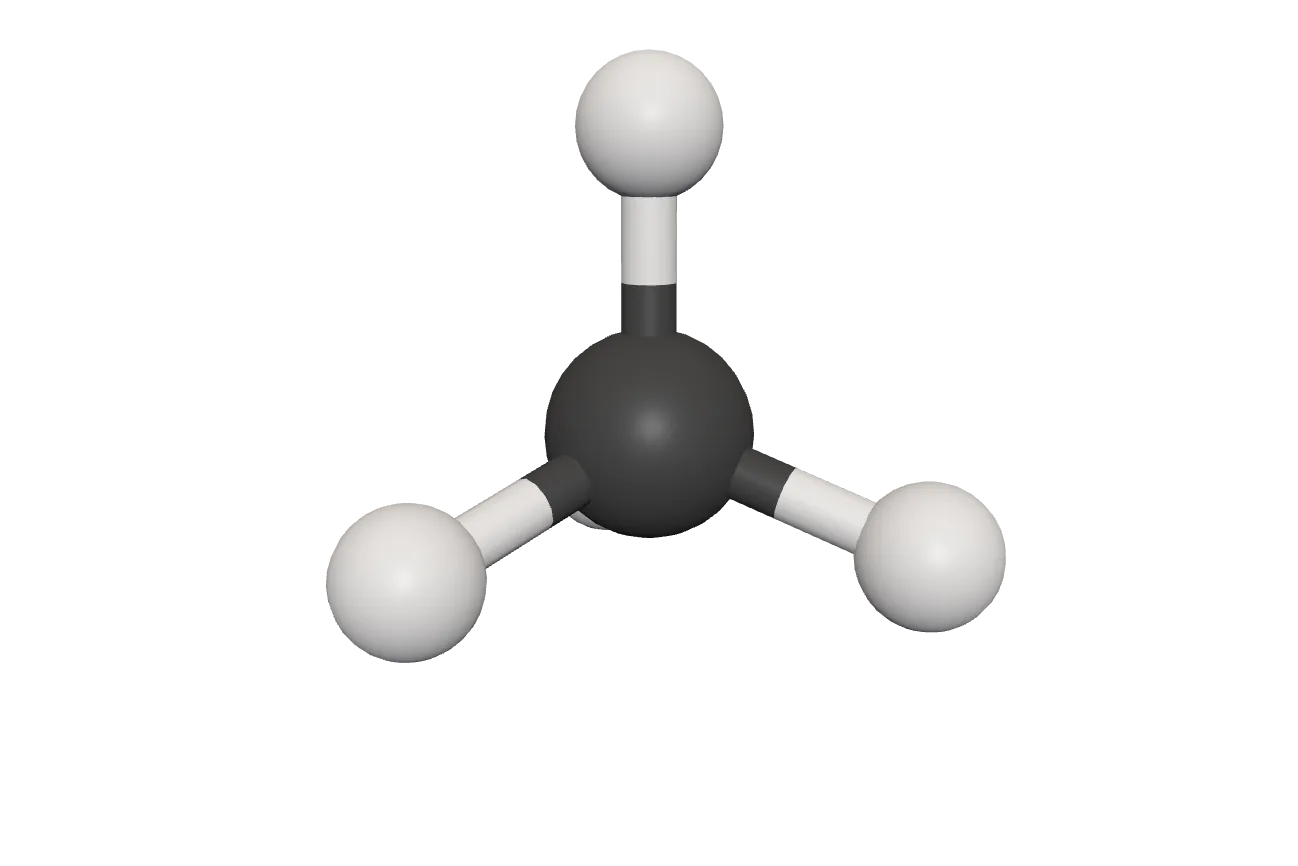
This browser can’t show the 3D model. The picture above is the same model.
A tetrahedron: the four hydrogens are as far apart as they can be, every two bonds 109.5° apart. Stood on three hydrogens, the fourth points straight up.
Carbon atom: four single bonds, one to each hydrogen.
Hydrogen atom: one single bond.
A low pyramid: the nitrogen on top, the three hydrogens below it, every two N–H bonds 106° apart in this computed model (about 107° in real ammonia). Nitrogen’s lone pair, not drawn, points up from the top.
Nitrogen atom: one single bond to each of the three hydrogens.
Hydrogen atom: one single bond.
Bent, not straight: the two O–H bonds are 104° apart in this computed model (about 104.5° in real water). Oxygen’s two lone pairs, not drawn, are on the side away from the hydrogens.
Oxygen atom: one single bond to each hydrogen.
Hydrogen atom: one single bond.
Drag to turn it. Tap an atom to see what it is.
Molecules: computed 3D conformers from PubChem, National Library of Medicine (public domain): pubchem.ncbi.nlm.nih.gov, CID 297, 222, 962
CH₄, NH₃ and H₂O all have four electron pairs round the central atom. But their shapes and angles differ:
- CH₄: 4 bond pairs. All the repulsions are bond pair–bond pair and equal: a perfect tetrahedron, 109.5°.
- NH₃: 3 bond pairs and 1 lone pair. The lone pair takes one corner of the tetrahedron and pushes the three N–H bonds closer together (lone pair–bond pair repulsion is greater than bond pair–bond pair). The three hydrogens make the base of a pyramid with nitrogen at its top: trigonal pyramidal, 107°.
- H₂O: 2 bond pairs and 2 lone pairs. The two lone pairs repel each other most strongly and squeeze the two O–H bonds even closer: bent (angular, V-shaped), 104.5°.
Same shape, different angles: H₂O and H₂S
H₂S is bent like H₂O, but its angle is only 92°. Oxygen is much more electronegative than sulphur, and much smaller. In water the two bond pairs are pulled close to the oxygen, near each other, so they repel strongly and open the angle to 104.5°. In H₂S the bond pairs are held farther out, on the much larger sulphur atom, and less tightly, so they repel each other less, and the angle closes to about 92°.
Double bonds: CO₂ and SO₂
For the shape, a double bond counts as one bond pair (one region of electrons). CO₂ has two double bonds and no lone pair on carbon: two regions, a linear molecule, 180°. SO₂ also has two double bonds between sulphur and oxygen, but sulphur has one lone pair as well: three regions, arranged in a triangle, and the lone pair pushes the two S=O bonds together. SO₂ is bent, 119°.
Which molecule has a bent shape?
Pick an answer to see why.
5.8 Elementary idea of valence bond theory (VBT)
VSEPR theory predicts shapes well, but it doesn’t say why atoms bond, or what the bond is. Valence bond theory (VBT), worked out by Heitler and London in 1927 for H₂ and developed by Linus Pauling, uses the quantum mechanics of Unit 3 to answer: a covalent bond is the overlap of two atomic orbitals, each holding one electron. It also explains why bonds point in definite directions, so molecules have definite shapes.
The postulates of VBT
- a.The electrons of an atom are held in atomic orbitals, and each orbital can hold at most two electrons, with opposite spins.
- b.A covalent bond forms when a half-filled orbital of one atom overlaps a half-filled orbital of another. The two electrons in the overlap must have opposite spins; they pair up and are shared.
- c.The greater the overlap, the stronger the bond.
- d.Head-on overlap (along the line joining the nuclei) forms a sigma (σ) bond; sideways (lateral) overlap forms a pi (π) bond.
- e.As the orbitals overlap, the energy of the system falls, and the molecule is more stable than the separate atoms (the curve in the widget in Section 5.3).
Sigma bonds and pi bonds
Take the hydrogen molecule. Each hydrogen atom has one electron in a half-filled 1s orbital. As the atoms meet, the two spheres overlap, and the two electrons, with opposite spins, pair up in the overlap: a single bond.
A sigma (σ) bond is a covalent bond formed by the head-on (end-to-end) overlap of atomic orbitals, along the internuclear axis.
There are three kinds of head-on overlap, all forming σ bonds: s–s (H₂), s–p (HCl) and p–p (Cl₂, F₂). Properties of the σ bond:
- It is strong: the overlap is direct and large, right between the nuclei.
- Its electron cloud lies along the internuclear axis, symmetrical round it.
- The atoms can rotate freely about a σ bond without breaking it (the overlap doesn’t change as one end turns). That is why the two CH₃ ends of ethane can twist.
- It can exist alone: every single bond is a σ bond, and every multiple bond has exactly one σ bond.
When two parallel p orbitals overlap sideways, they form a pi (π) bond. The overlap is smaller than in a head-on overlap, so a π bond is weaker than a σ bond. Its electron cloud is in two parts, above and below the internuclear axis, with none on the axis itself. Because turning one atom would twist the two p orbitals out of line and break the overlap, there is no free rotation about a π bond (that is why cis and trans isomers of alkenes don’t turn into each other). And a π bond forms only between atoms already joined by a σ bond: the σ bond holds the atoms close enough for their p orbitals to overlap sideways.
The oxygen molecule. Oxygen (1s² 2s² 2p⁴) has two half-filled 2p orbitals. One of them overlaps head-on with its partner on the other oxygen, forming a σ bond; the other two, parallel to each other, overlap sideways to form a π bond. Together they make the O=O double bond: one σ + one π.
An s orbital is a sphere, the same in every direction, so it can only overlap head-on and only forms σ bonds. A p orbital is a dumbbell with a direction, so it can overlap head-on (σ) or sideways (π).
Some molecules by VBT
Fluorine, F₂. Each F (1s² 2s² 2p⁵) has one half-filled 2p orbital. The two overlap head-on: one p–p σ bond, F–F.
Hydrogen chloride, HCl. Hydrogen’s half-filled 1s orbital overlaps head-on with chlorine’s (1s² 2s² 2p⁶ 3s² 3p⁵) half-filled 3p orbital: one s–p σ bond.
How many σ and π bonds are there in a triple bond?
Pick an answer to see why.
5.9 Hybridization
From VBT, each half-filled orbital makes one bond. That works well for chlorine (one half-filled 3p: one bond, Cl₂), oxygen (two: a double bond, O₂) and nitrogen (three: a triple bond, N₂).
But it fails for carbon. Carbon’s ground state, 1s² 2s² 2p², has only two half-filled orbitals, yet in methane it forms four bonds, and the four C–H bonds are all identical, pointing to the corners of a tetrahedron, 109.5° apart. Pure p orbitals are at 90° to each other, so they can’t make that shape either. Pauling explained it in two steps:
- Excitation. One of the 2s electrons is promoted to the empty 2p orbital: 1s² 2s¹ 2p³, now four half-filled orbitals. This costs a little energy, which is more than repaid by forming four bonds instead of two.
- Hybridization. The 2s and the three 2p orbitals don’t bond as they are: they mix to give four new, identical orbitals, called sp³ hybrid orbitals (one s mixed with three p), pointing to the corners of a tetrahedron.
Hybridization is the mixing of atomic orbitals of slightly different energies on the same atom to form an equal number of new, identical orbitals, called hybrid orbitals.
Each of carbon’s four sp³ orbitals then overlaps head-on with a hydrogen 1s orbital, giving four identical C–H σ bonds and a tetrahedral molecule.
Characteristics of hybrid orbitals
- a.The number of hybrid orbitals formed always equals the number of atomic orbitals mixed (one s + three p → four sp³).
- b.Hybrid orbitals have definite directions: they point as far apart as possible, which sets the shape of the molecule.
- c.The hybrid orbitals of one set are equivalent: the same in energy (degenerate) and shape.
- d.Each hybrid orbital has one large lobe and one small one, so it overlaps head-on, strongly, and forms only σ bonds.
Types of hybridization involving s and p orbitals
a. sp hybridization. One s orbital mixes with one p orbital to give two identical sp hybrid orbitals, pointing in opposite directions, 180° apart: a linear (diagonal) arrangement. The two p orbitals left unmixed, at right angles to the line, can form π bonds. Examples: BeCl₂, CO₂ (carbon), C₂H₂.
Beryllium chloride, BeCl₂. Be (1s² 2s²) has no half-filled orbital. One 2s electron is promoted to 2p (2s¹ 2p¹), and the 2s and one 2p mix into two sp orbitals, each overlapping head-on with a half-filled 3p orbital of a chlorine atom: two Be–Cl σ bonds, in a straight line.
Ethyne, C₂H₂. Each carbon is sp hybridized: of its four half-filled orbitals, the 2s and one 2p mix into two sp orbitals, and two 2p orbitals stay unhybridized. One sp orbital of each carbon overlaps the other carbon’s (the C–C σ bond); the other overlaps a hydrogen 1s (C–H σ). The two pairs of unhybridized p orbitals, at right angles to each other, overlap sideways to give two π bonds. So H–C≡C–H is one σ and two π between the carbons, and the molecule is linear: all four atoms on one line.
b. sp² hybridization. One s orbital mixes with two p orbitals to give three identical sp² hybrid orbitals, in one plane, 120° apart: trigonal planar. One p orbital is left unmixed, at right angles to the plane. Examples: BF₃, BCl₃, AlCl₃, C₂H₄, benzene.
Boron trichloride, BCl₃. Boron (2s² 2p¹) promotes one 2s electron to 2p (2s¹ 2p²), and mixes the 2s with two 2p orbitals into three sp² orbitals, each overlapping a chlorine 3p orbital: three B–Cl σ bonds at 120°, a flat triangle.
Ethene, C₂H₄. Each carbon mixes its 2s with two of its 2p orbitals into three sp² orbitals, flat and 120° apart; the third p orbital stays unhybridized, standing up from the plane. The sp² orbitals form three σ bonds per carbon (one C–C, two C–H). The two unhybridized p orbitals, parallel, overlap sideways above and below the plane: the π bond. So C=C is one σ + one π, and the whole molecule is flat, with angles near 120°.
c. sp³ hybridization. One s orbital mixes with three p orbitals to give four identical sp³ orbitals pointing to the corners of a tetrahedron, 109.5° apart. Examples: CH₄, CCl₄, NH₃, H₂O, ethane. Methane is formed as above: four sp³ orbitals of carbon overlap with four hydrogen 1s orbitals.
Water. Oxygen (2s² 2p⁴) also uses four sp³ orbitals, but it has six valence electrons to put in them: two hold a pair each (lone pairs), and two have one electron each. Only the two half-filled ones overlap with hydrogen 1s orbitals. The two lone pairs repel the bonds strongly, closing the angle from 109.5° to 104.5°, and the molecule is bent, not tetrahedral.
What is the hybridization of each carbon atom in ethene, C₂H₄?
Pick an answer to see why.
5.10 Bond characteristics
You have seen how bonds form. This section is about what bonds are like: how polar, how long, how strong, and how ionic.
5.10.1 Dipole moment and polarity of bonds
When the shared pair shifts towards the more electronegative atom, the bond has a positive end and a negative end, separated by the bond’s length: it is a dipole (two poles). How strong a dipole is is measured by its dipole moment, μ (mu):
where q is the size of the charge at each end and d the distance between them. Dipole moment is a vector: it has a direction as well as a size. Chemists draw it as an arrow with a cross at its tail, ⟼, from the positive end to the negative end, pointing the way the electrons are pulled.
Dipole moments are measured in debye (D), named after the Dutch–American chemist Peter Debye, who worked out, from 1912, how a molecule’s dipole moment can be found from measurements (Nobel Prize in Chemistry, 1936):
- Every molecule made of two identical atoms (H₂, O₂, Cl₂) has μ = 0: there is no electronegativity difference, so no dipole. They are non-polar.
- Every molecule made of two different atoms (HCl, HF, CO) has μ > 0: the shared pair is pulled to one end. They are polar.
For a molecule of three or more atoms, each polar bond has its own bond dipole, set by the electronegativity difference of its two atoms. The molecule’s net dipole moment is the vector sum of all its bond dipoles, and so it depends on the molecule’s shape:
- If the bond dipoles cancel, the net dipole is zero and the molecule is non-polar, however polar its bonds. CO₂ and BeF₂ are straight, with two equal dipoles pulling in opposite directions: μ = 0. BF₃ (three equal dipoles at 120°), CH₄ and CCl₄ (four at tetrahedral angles), PCl₅ and SF₆ are non-polar for the same reason: their symmetry cancels every pull.
- If they don’t cancel, the molecule is polar. Chloromethane, CH₃Cl, has three C–H bonds and one much more polar C–Cl bond pulling one way: μ = 1.87 D. Water is bent, so its two O–H dipoles add up instead of canceling, and its lone pairs on the oxygen add to the negative end: μ = 1.85 D. Ammonia is a pyramid, polar in the same way: μ = 1.47 D.
CO₂ has polar C=O bonds, but μ = 0. Why?
Pick an answer to see why.
5.10.2 Bond length
Bond length is the distance between the nuclei of two bonded atoms, the distance at which the energy of the pair is lowest (Section 5.3). It is measured in picometers (1 pm = 10⁻¹² m) or ångströms (1 Å = 10⁻¹⁰ m = 100 pm), by X-ray diffraction of crystals or by the spectra of molecules. What decides it:
- a.The size of the atoms. Larger atoms have their outer electrons farther out, so their nuclei can’t come as close. That is why the halogen molecules get longer bonds going down the group: F–F 142 pm, Cl–Cl 199 pm, Br–Br 228 pm.
- b.The electronegativity difference. A more polar bond is held shorter and stronger by the extra attraction between its partly charged ends: H–F is shorter than H–Cl and H–Br, both because fluorine is smaller and because it pulls the shared pair harder.
- c.The number of bonds between the atoms. More shared pairs pull the two nuclei together more strongly, so multiple bonds are shorter (and stronger) than single bonds between the same atoms:
| Bond | Length (pm) | Bond energy (kJ/mol) |
|---|---|---|
| C–C (ethane) | 154 | 347 |
| C=C (ethene) | 134 | 614 |
| C≡C (ethyne) | 120 | 839 |
5.10.3 Ionic character in covalent bonds
Few bonds are purely covalent or purely ionic. Between the two lies a range: the larger the electronegativity difference (Δχ), the more ionic character a covalent bond has. It can be measured from the dipole moment:
The observed dipole moment is the measured one. The completely ionic one is what it would be if a whole electron charge, e = 1.602 × 10⁻¹⁹ C, sat at each end of the bond: μ = e × d.
Pauling found a simple way to estimate it from Δχ alone, which gives the table below:
| Bond | Δχ | Ionic character |
|---|---|---|
| Li–F | 3.0 | 89 % |
| Be–F | 2.4 | 76 % |
| B–F | 2.0 | 63 % |
| C–F | 1.4 | 39 % |
| N–F | 1.0 | 22 % |
| O–F | 0.6 | 9 % |
| F–F | 0 | 0 % |
As a rough guide, a bond is (Figure 5.90):
- non-polar (pure) covalent when Δχ is about 0 (up to about 0.4, it is nearly non-polar);
- polar covalent when Δχ is between about 0.5 and 1.7;
- ionic when Δχ is more than about 1.7 (about 50 % ionic character).
5.11 Van der Waals forces and molecular solids
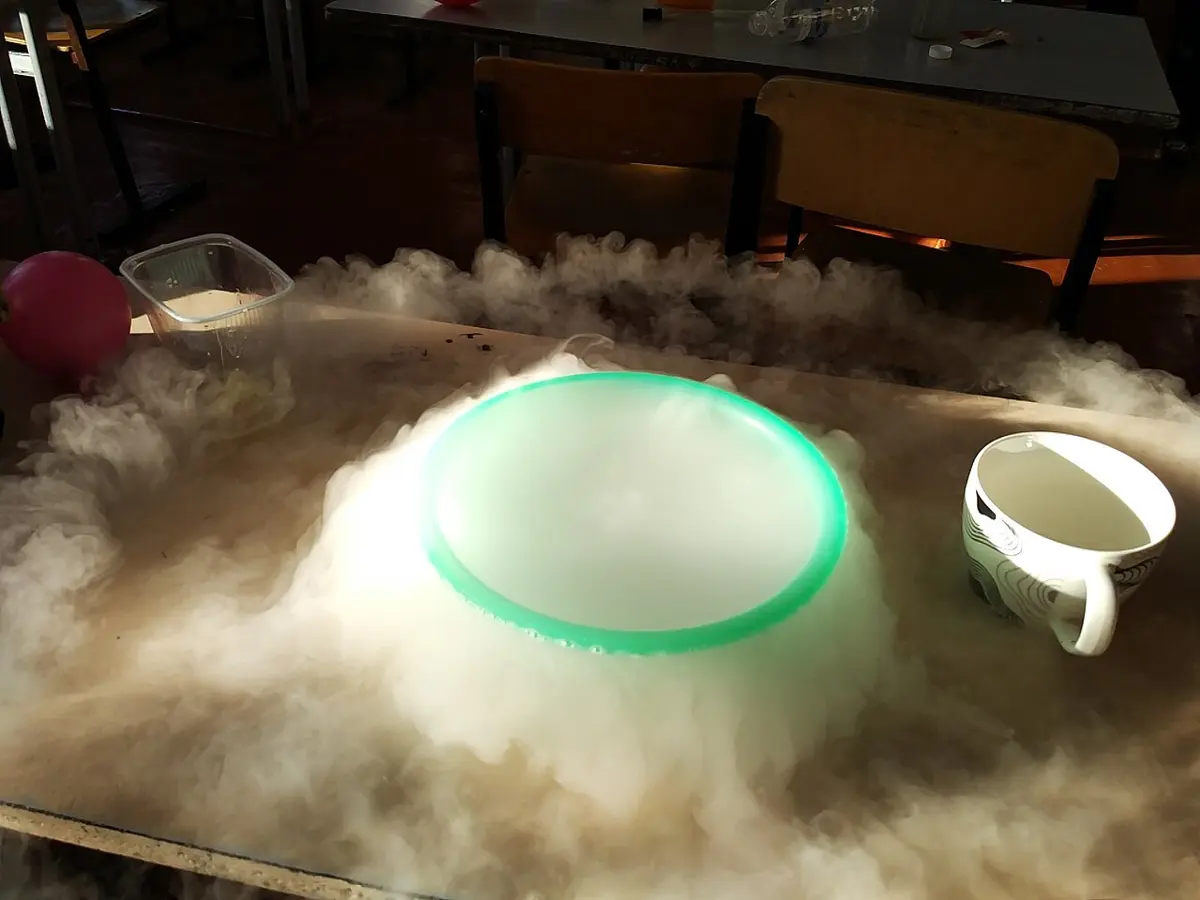
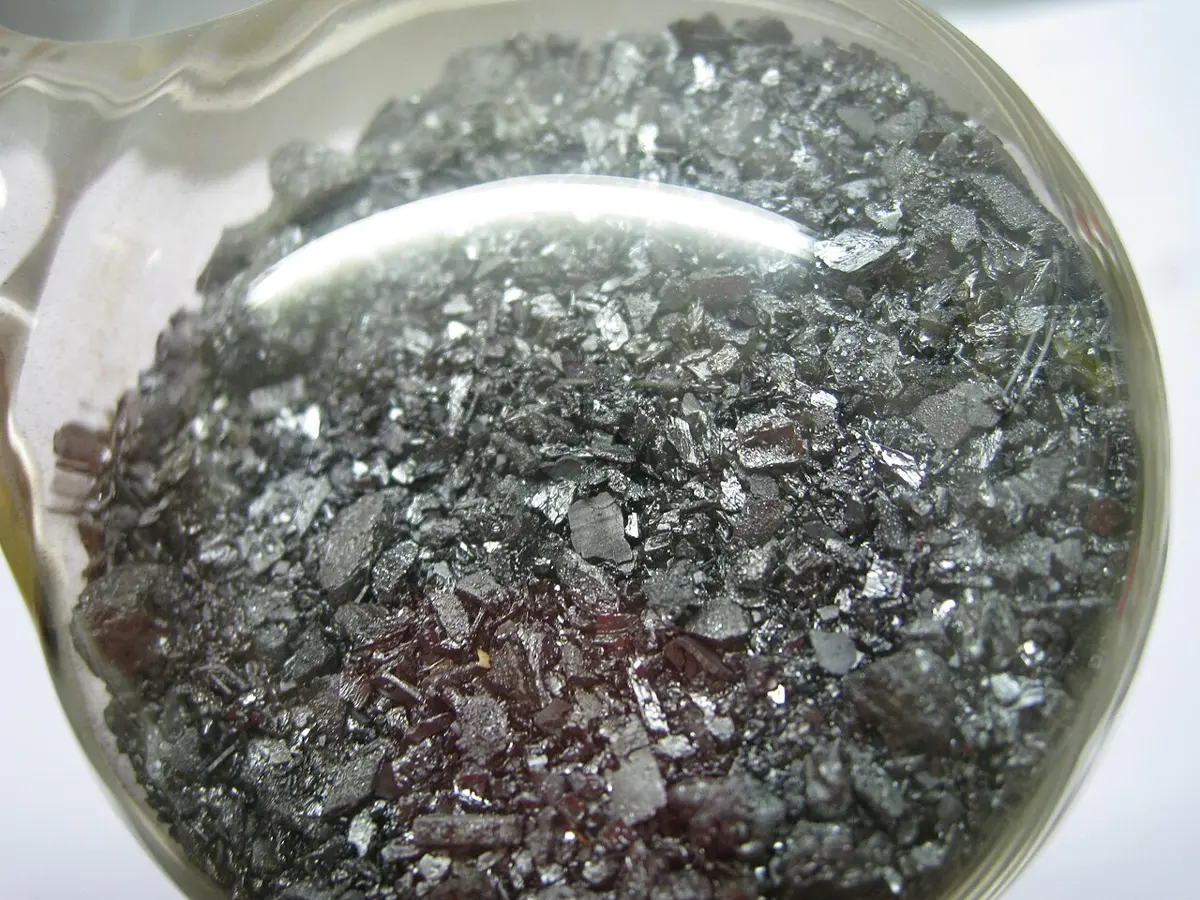
Dry ice, solid carbon dioxide, is −78.5 °C at its surface and is used to keep food and medicines frozen during transport. At room temperature it sublimes quietly to CO₂ gas, leaving no puddle, hence “dry”. Its particles are CO₂ molecules, held together by very weak forces of attraction called van der Waals forces, after the Dutch physicist Johannes Diderik van der Waals (Nobel Prize in Physics, 1910). They act between all atoms and molecules, and are far weaker than covalent or ionic bonds.
Solids made of separate molecules held together by van der Waals forces are called molecular solids: dry ice, solid iodine, naphthalene, camphor, sulphur (S₈ molecules) and, with hydrogen bonds as well, ice. They are soft, with low melting points, and don’t conduct electricity. (Salts such as ammonium chloride are ionic solids, not molecular ones.)
There are two main kinds of van der Waals force:
a. London dispersion forces (London forces), after the German–American physicist Fritz London. The electrons of an atom or molecule are always moving, and at any instant they may happen to be more on one side than the other. For that instant the molecule is a tiny temporary dipole, which pushes the electrons of its neighbor away, making an induced dipole in it: the two attract. The next instant the dipoles are gone, and new ones appear. It is a little like a magnet picking up an iron nail by making the nail a magnet for a while. London forces act between all molecules, and are the only forces between non-polar ones: H₂, Cl₂, CH₄, CO₂, the noble gases. They are the weakest of the van der Waals forces between small molecules, but grow with the size of the molecule.
b. Dipole–dipole forces. Molecules with permanent dipoles line up so that the δ+ end of one is near the δ− end of the next, and they attract. These forces act between polar molecules such as HCl, CH₃Cl and SO₂, in addition to London forces.
Van der Waals forces depend on the size and shape of the molecules. Larger molecules, with more electrons and more surface in contact, have stronger London forces. Substances with stronger van der Waals forces have higher melting and boiling points and are more viscous: that is why methane (CH₄) is a gas, petrol (about C₈H₁₈) a liquid, and candle wax (about C₂₅H₅₂) a solid.
Which force holds the CO₂ molecules together in dry ice?
Pick an answer to see why.
5.12 Hydrogen bonding and its applications
Ethanol is an organic, covalent compound, yet it mixes with water in any amount. Water has a strangely high boiling point for so small a molecule, a high specific heat capacity, and a high surface tension. All of this comes from hydrogen bonding.
A hydrogen bond is a special, strong kind of dipole–dipole attraction between a hydrogen atom covalently bonded to a very electronegative atom (F, O or N) and a lone pair on another very electronegative atom, in another molecule or in another part of the same molecule.
It is drawn as a dashed or dotted line, O–H···O. Bonded to F, O or N, hydrogen’s single electron is pulled away almost completely, so the tiny hydrogen nucleus is left strongly δ+ and nearly bare, and it can come very close to a lone pair of a neighbor. Hydrogen bonds are much stronger than other dipole–dipole forces (about 10 to 40 kJ/mol, against a few kJ/mol), but still much weaker than covalent bonds (about 460 kJ/mol for O–H).
Kinds of hydrogen bond
a. Intermolecular hydrogen bonding: between a hydrogen of one molecule and an electronegative atom of another molecule. Water, alcohols, ammonia and HF are joined this way.
b. Intramolecular hydrogen bonding (chelation): between a hydrogen and an electronegative atom within the same molecule, when the two are close enough. In o-nitrophenol the OH group and the NO₂ group sit side by side on the ring, and the OH’s hydrogen is held by an oxygen of the NO₂. The same happens in salicylic acid (2-hydroxybenzoic acid), from which aspirin is made.
Because o-nitrophenol’s OH is already “busy” inside the molecule, it can’t hydrogen bond to its neighbors or to water. So o-nitrophenol boils lower (216 °C) and is far less soluble in water than p-nitrophenol, whose OH and NO₂ are on opposite sides of the ring and bond to other molecules instead (it decomposes before boiling, near 279 °C).
Effects of hydrogen bonding
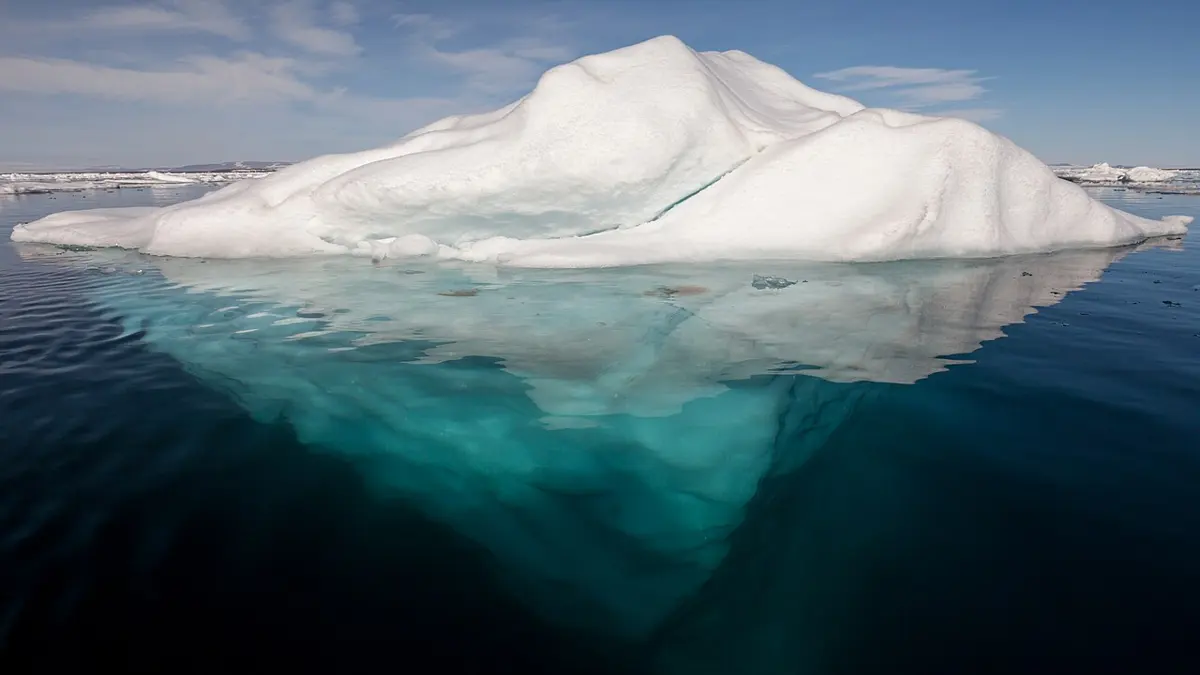
Higher melting and boiling points. Extra energy is needed to break the hydrogen bonds before the molecules can separate. Ammonia boils at −33 °C, much higher than phosphine, PH₃ (−88 °C); HF at 20 °C, much higher than HCl (−85 °C); and water at 100 °C, while H₂S boils at −60 °C. Without hydrogen bonds water would boil at about −80 °C, and there would be no liquid water on Earth.
Greater solubility in water. Molecules that can hydrogen bond with water dissolve in it: alcohols (ethanol), carboxylic acids (acetic acid in vinegar), ammonia, sugar and urea. Their O–H or N–H groups bond to water molecules, which take them in.
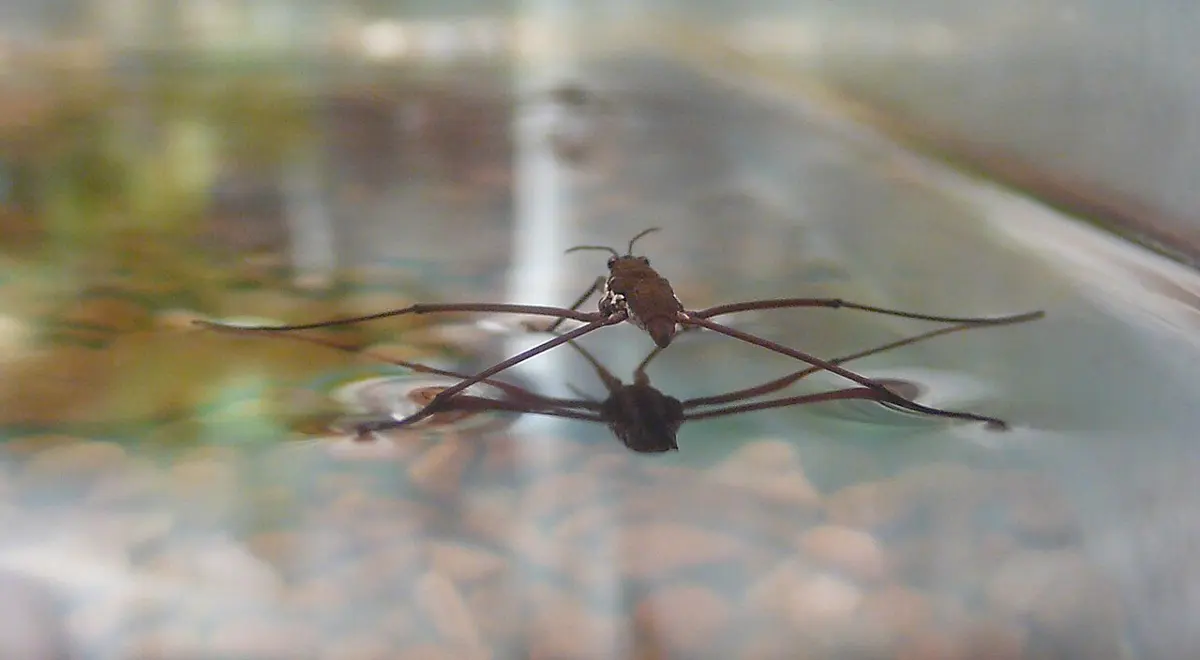
Higher surface tension and viscosity. Hydrogen bonds hold the molecules of a liquid together, so its surface is like a stretched skin (water has the highest surface tension of the common liquids: a water strider can stand on it), and it flows less easily. Glycerol, with three OH groups per molecule, is thick and syrupy for the same reason.
Which has the highest boiling point?
Pick an answer to see why.
5.13 Metallic bonding and properties of metallic solids
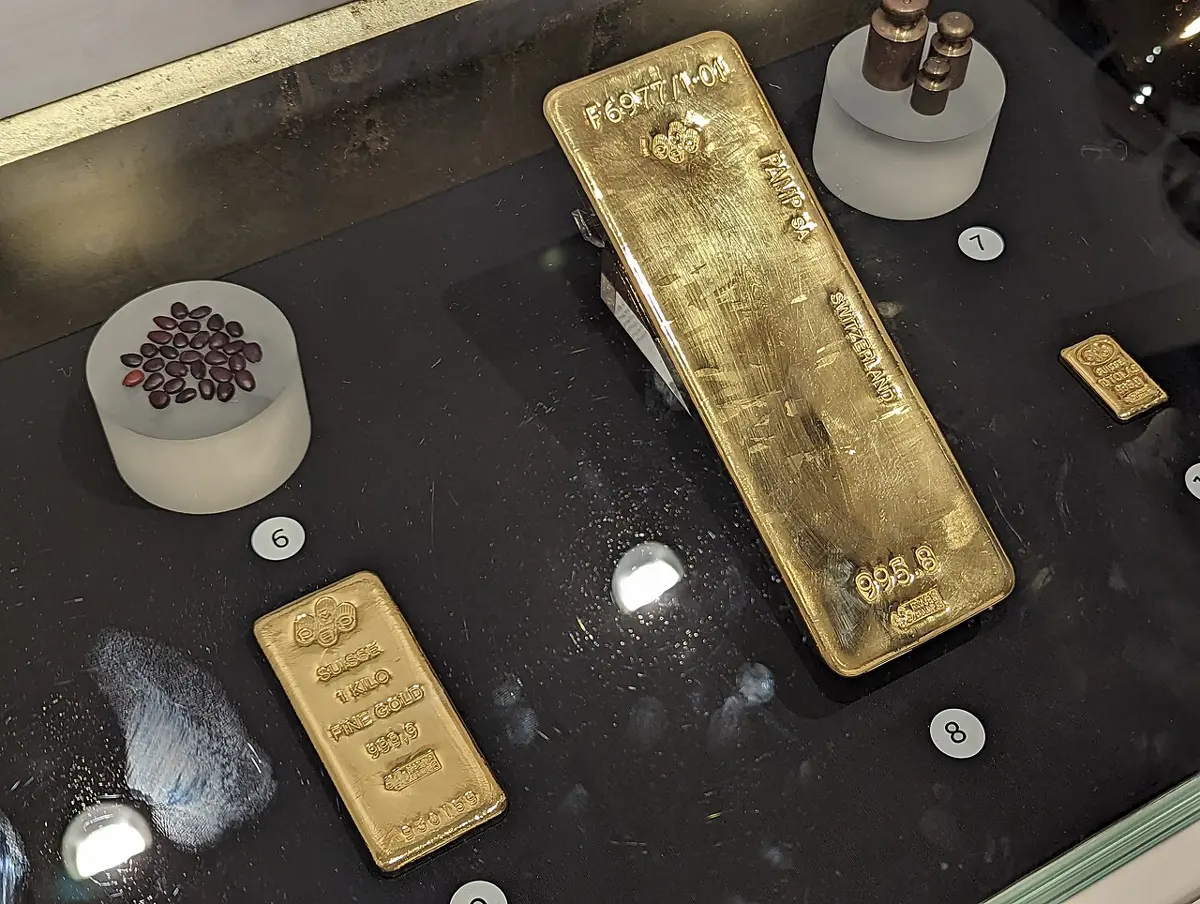
One tola of gold, 11.66 g, the unit gold is still sold in across Nepal, contains about 3.57 × 10²² gold atoms (11.66 g ÷ 197 g/mol = 0.0592 mol, × 6.022 × 10²³). What holds this enormous number of atoms together so tightly that gold can be beaten into leaf without falling apart? The metallic bond, described by the electron sea model:
- Each metal atom gives up its valence electrons and becomes a positive ion (a kernel).
- The electrons don’t belong to any one atom: they are delocalized, free to move through the whole metal, like a sea of electrons round a regular lattice of positive ions.
The metallic bond is the electrostatic force of attraction between the positive metal ions and the sea of delocalized electrons round them.
The strength of the metallic bond depends on:
- a.The charge on the metal ion. Ions with a larger positive charge attract the electron sea more strongly: Mg²⁺ more than Na⁺, Al³⁺ more still.
- b.The size of the metal ion. Smaller ions have their charge more concentrated and are closer to the electrons round them, so they are held more strongly.
- c.The number of delocalized electrons per atom. The more electrons each atom gives to the sea, the stronger the bond: sodium gives 1, magnesium 2, aluminium 3. (Charge and number of electrons go together: an atom that gives 2 electrons becomes a 2+ ion.)
Solids held by metallic bonds are metallic solids: all metals and alloys. Their special properties come from the sea of delocalized electrons:
- Hard, with high melting and boiling points (most of them): the attraction between the ions and the electron sea is strong in every direction. Iron melts at 1538 °C and tungsten, used in old light bulbs, at 3422 °C.
- Good conductors of electricity. Connect a metal to a battery, and the free electrons drift through it from the negative terminal towards the positive, carrying the current.
- Good conductors of heat. At the hot end, the free electrons gain energy and move faster; moving through the metal, they carry that energy quickly to the cold end.
- Malleable and ductile. The atoms of a metal are packed in layers. When a metal is hammered, the layers slide over one another, but the electron sea moves with them and keeps holding every ion: no bond is broken. So a metal can be beaten into sheets (malleable) or drawn into wire (ductile), where an ionic crystal shatters (Figure 5.105).
- Shiny (lustrous). The free electrons absorb the light falling on the metal and at once give it out again, so a clean metal surface reflects most of the light: it shines.
The strength of metallic bonding varies a great deal. Alkali metals have large atoms and give only one loosely held electron each, so their bonds are weak: sodium and potassium are soft enough to cut with a knife and melt below 100 °C. Transition metals (iron, copper, silver) have smaller atoms and give several electrons to the sea, so they are hard, strong and high-melting, which is why they are the metals of tools, pipes, wires and machines.
Why do metals conduct electricity in the solid state, while ionic solids don’t?
Pick an answer to see why.
Exercise
A. Multiple choice questions
- Which statement about hydrogen bonding is true?
Pick an answer to see why.
- A molecule with four bond pairs and no lone pairs round its central atom has the shape:
Pick an answer to see why.
- What is the effect of increasing the number of delocalized electrons on the strength of metallic bonds?
Pick an answer to see why.
- Which molecule has the largest bond angle according to VSEPR theory?
Pick an answer to see why.
- Which statement about the effect of hydrogen bonding on the physical properties of substances is true?
Pick an answer to see why.
- What does valence bond theory (VBT) describe about the formation of chemical bonds?
Pick an answer to see why.
- Which of these has the lowest boiling point?
Pick an answer to see why.
- Which of the following compounds is soluble in water?
Pick an answer to see why.
- Which of these molecules has the strongest London dispersion forces?
Pick an answer to see why.
- How many sigma and pi bonds are there in a molecule of benzene?
Pick an answer to see why.
- The orbital picture of a hydrocarbon is shown above. How many atoms lie on the internuclear axis of this molecule?
Pick an answer to see why.
- In the chain Clδ−···Hδ+–Clδ− of two HCl molecules, the dotted link A (between the Cl of one molecule and the H of the next) and the line B (inside a molecule) are, respectively:
Pick an answer to see why.
- The ammonium ion, NH₄⁺, has which shape and hybridization?
Pick an answer to see why.
B. Short answer questions
Write any two differences between:
- a.an ionic solid and a covalent (network) solid;
- b.sp² and sp³ hybridization;
- c.a sigma bond and a pi bond.
Answer
Give reasons:
- a.Copper sulphate is brittle, whereas copper is malleable.
- b.Solid iodine sublimes easily to vapor.
- c.Glycerol is more viscous than ether.
- d.CO₂ is linear, whereas SO₂ is bent.
- e.NH₃ is a polar molecule but BH₃ is not.
- f.A sigma bond is stronger than a pi bond.
- g.Petrol and diesel are kept in sealed containers.
Answer
What is meant by the octet rule? Give three compounds that follow the octet rule and three that don’t.
Answer
The structure of a hydrocarbon is shown in Figure 5.107.
- a.Write its Lewis structure, showing the bond pairs.
- b.What is the hybridization of each carbon, and its bond angles?
- c.The compound is insoluble in water. Why?
Answer
Figure 5.108 shows the structure of a solid.
- a.Name the bond in the solid, and its unit particles.
- b.What happens when this solid is hammered?
- c.Why does it conduct electricity only when molten or dissolved in water?
- d.Give two examples of such solids.
Answer
Resonance helps explain the stability of some molecules that can’t be represented well by a single Lewis structure.
- a.Define resonance and resonance structures, with an example.
- b.What is the cause of resonance?
- c.How does resonance explain the stability of a species?
Answer
The dipole moment explains various properties of a molecule.
- a.Define dipole moment and write its unit.
- b.How does the dipole moment tell you the polarity of a molecule?
- c.Show, with one example, that a polar bond doesn’t always mean a polar molecule.
Answer
Figure 5.109 gives the shape of a CH₃Cl molecule and the electronegativity of each atom.
- a.Which bond, C–H or C–Cl, is more polar? Why?
- b.Is the molecule polar? Give a reason.
- c.Name its shape and the hybridization of carbon.
Answer
Draw the Lewis structures of: a. H₂O; b. CCl₄; c. PCl₅; d. NO₃⁻; e. SO₄²⁻; f. O₃; g. I₃⁻ (the tri-iodide ion); h. ClO₃⁻; i. SiH₄; j. IF₅; k. HNO₃; l. NO₂⁻.
Answer
For each molecule in Figure 5.112, find the number of lone pairs and bond pairs round the central atom, and name its shape.
Answer
Draw the direction of each C–Cl bond dipole in the molecules of Figure 5.113, and find whether the net dipole is zero. Which molecule is most polar, and which least?
Answer
Valence bond theory explains bonding by the overlap of orbitals, as in the figure above.
- a.Name the type of covalent bond formed by this overlap.
- b.Write three properties of this bond.
Answer
Figure 5.115 shows the orbital overlaps in ethene.
- a.How many head-on and sideways overlaps are there in ethene?
- b.Define hybridization, and give the hybridization of carbon and its bond angle.
- c.Draw the orbital overlaps of ethyne, showing the σ and π bonds, and give the hybridization of its carbon atoms.
Answer
Fill in the table for BeCl₂, BF₃, CH₄ and PCl₅ (angles 180°, 120°, 109.5°, and 90° and 120°): formula, shape and hybridization.
Answer
Copper, dry ice and sodium chloride are all solids, but have very different physical and chemical properties.
- a.What is the reason for their different properties?
- b.Which one is a good conductor of heat and electricity, and why?
- c.Why is sodium chloride brittle?
- d.Dry ice turns directly to vapor when warmed. What is the reason?
Answer
The dipole moment helps to tell a molecule’s polarity and its shape. Figure 5.116 shows two molecules. Give the reasons:
- a.for their different shapes;
- b.NF₃ is a polar molecule;
- c.BF₃ is a non-polar molecule;
- d.the B–F bond is polar.
Answer
Define resonance. Write the resonance structures and the resonance hybrid of: a. SO₃; b. CO₃²⁻; c. SO₂.
Answer
The orbital overlaps of a hydrocarbon are shown above.
- a.What is the structural formula of this hydrocarbon?
- b.Name the bond that runs along the internuclear axis, and write two characteristics of this bond.
- c.Draw the orbital picture of ethane.
Answer
Ammonia is very soluble in water and has a sharp smell. Its shape is shown in Figure 5.119.
- a.Name its shape. What causes this shape?
- b.What happens to the bond angle if the hydrogen atoms are replaced by fluorine atoms?
- c.Why is ammonia so soluble in water?
Answer
For the hydrogen halides HCl, HBr and HI:
- a.arrange them in increasing order of i. bond dipole, ii. bond length, iii. bond strength;
- b.give a reason for each order.
Answer
The boiling points of the hydrogen halides are plotted in Figure 5.120.
- a.Name the halide with the highest boiling point.
- b.Give a reason for it.
- c.Which of the halides is very soluble in water? Give a reason.
Answer
For the molecule in Figure 5.121:
- a.write its formula;
- b.name its shape and give the reason for it;
- c.say whether the molecule is polar or non-polar, and why.
Answer
C. Long answer questions
Boron trifluoride (BF₃) and phosphorus trifluoride (PF₃) have the same general formula, AX₃, but different shapes, as VSEPR theory explains.
- a.Write three postulates of VSEPR theory.
- b.Draw BF₃ and PF₃, and name their shapes.
- c.Why do they have different shapes?
- d.What is the hybridization of boron and of phosphorus in them?
- e.Compare their bond angles.
- f.Which is more polar, and why?
Answer
Methane is the main part of natural gas, used as a fuel; a jar of it holds an enormous number of methane molecules.
- a.How many bond pairs and lone pairs are there in the molecule?
- b.Name its shape, and give its bond angle.
- c.Show the bond dipoles, and state the polarity of the molecule with a reason.
- d.What is the common name of the molecule formed when all the hydrogen atoms are replaced by chlorine? Draw its shape, and compare its bond angle with methane’s.
Answer
Figure 5.124 shows a model of an unknown molecule.
- a.How many lone pairs and bond pairs are there round its central atom?
- b.Predict its shape and polarity.
- c.Give one example of such a molecule.
Answer
Benzene is an aromatic hydrocarbon with both σ and π bonds between its carbon atoms.
- a.How many σ and π bonds are there in benzene?
- b.All the C–C bonds in benzene are the same length (shorter than a single bond, longer than a double bond). Why?
- c.What is the hybridization and bond angle of each carbon in benzene?
Answer
A nitrogen molecule is formed by the overlap of three p orbitals of each atom (x, y and z), as shown in Figure 5.125.
- a.Write the electronic configuration of nitrogen to show its half-filled orbitals.
- b.Name the orbitals that overlap sideways.
- c.Why is the σ bond stronger than the π bond?
- d.How many σ and π bonds are there in a nitrogen molecule?
- e.Why is nitrogen so unreactive?
Answer
Some molecules with odd numbers of electrons, which don’t follow the octet rule, are NO, NO₂ and ClO₂.
- a.Define odd-electron molecules and the octet rule.
- b.Give three other compounds that don’t follow the octet rule.
Answer
Figure 5.126 shows the orbital picture of a hydrocarbon in which each carbon is sp² hybridized.
- a.Define hybridization.
- b.How are sp² hybrid orbitals formed?
- c.What is the shape and bond angle of sp² hybridization?
- d.Find the number of σ and π bonds.
- e.Write the structural formula of the molecule.
Answer
Valence bond theory explains the formation of a hydrogen molecule from two 1s orbitals with opposite spins.
- a.What are the postulates of VBT?
- b.What type of overlap is there in the hydrogen molecule?
- c.Draw the orbital overlap in the HF molecule.
- d.Why can’t He₂ form, like H₂?
Answer
The boiling points of the hydrides of group 16 are plotted in Figure 5.128.
- a.Define boiling point.
- b.Water has the highest boiling point, though its molecular mass is the smallest. Why?
- c.The boiling point rises from H₂S to H₂Te. Why?
- d.Which molecule has the largest bond angle? Why?
Answer
Valence bond theory explains σ and π bonds by orbital overlap.
- a.Write two conditions for orbitals to overlap in VBT.
- b.Give two differences between σ and π bonds.
- c.Draw the orbital picture of an oxygen molecule, showing the σ and π bonds.
Answer
Draw the shapes of H₂S, PH₃, CCl₄ and BeCl₂, and write the hybridization of the central atom.
Answer
The electronic configurations of two elements are A: 2, 8, 2 and B: 2, 5.
- a.Draw the Lewis dot structure of the compound formed by A and B.
- b.Name the bond in it, and write two conditions for forming this bond.
- c.Write the electronic configurations of A²⁺ and B³⁻, and compare their sizes.
Answer
Bohr’s atomic theory explained the spectrum of hydrogen, which Rutherford’s model couldn’t.
- a.Write three postulates of Bohr’s model.
- b.What causes the hydrogen spectrum?
- c.Draw a figure to show the spectral series of hydrogen.
- d.Write two limitations of Bohr’s model.
Answer
Solids are of different kinds, depending on their bonding: ionic, molecular, metallic and covalent (network). Figure 5.132 shows one of each, A to D.
- a.Say what kind of solid A, B, C and D are, and name the bond in each.
- b.Which of them is soluble in water?
- c.Which conducts electricity in the solid state, and why?
- d.Which one is called a network solid?
- e.Which has the lowest melting point? Give a reason.
Answer
Use the table to answer the questions.
| Molecule | Dipole moment (D) |
|---|---|
| HI | 0.42 |
| HBr | 0.80 |
| HCl | 1.03 |
| CHCl₃ | 1.04 |
| NH₃ | 1.48 |
| H₂O | 1.84 |
| HF | 1.91 |
- a.Which molecules are tetrahedral, and which pyramidal?
- b.Which is the most polar, and which the least? Why?
- c.Which of the hydrogen halides has the longest bond, and why?
- d.CHCl₃ is tetrahedral but polar. Why?
Answer
Printable PDFs
- Study notes 3 pages
- Worksheet 4 pages Answer key
Quiz yourself: Matter, Atoms and Reactions, Grades 5–12 →
Practice every question in the book, and keep track of the ones you miss →
Project work
A companion to your textbook, not a replacement for it: study from the book your school uses, and where the two differ, follow your teacher. Found a mistake? Please tell us.