
Every sack of urea a farmer in Chitwan scatters on the paddy, every car battery, every bar of soap and every pane of glass began in a plant like the ones in this unit: tall towers, hot catalysts, pumps and pipes running day and night, turning air, water, salt, limestone and sulphur into the chemicals the world runs on. Here are six of them: ammonia, nitric acid, sulphuric acid, caustic soda, washing soda and urea, and the fertilizers they make possible. For each you need its principle (the chemistry, and the conditions that make it work) and the flow sheet (the plant, unit by unit, drawn as the materials flow through it).
You have met most of the chemistry already. Why a plant chooses its temperature and pressure is Le Chatelier’s principle, in Unit 8, Chemical Equilibrium; ammonia, nitric acid and sulphuric acid themselves, their properties and uses, are in Unit 9, Chemistry of Non-metals. This unit goes inside the factories.
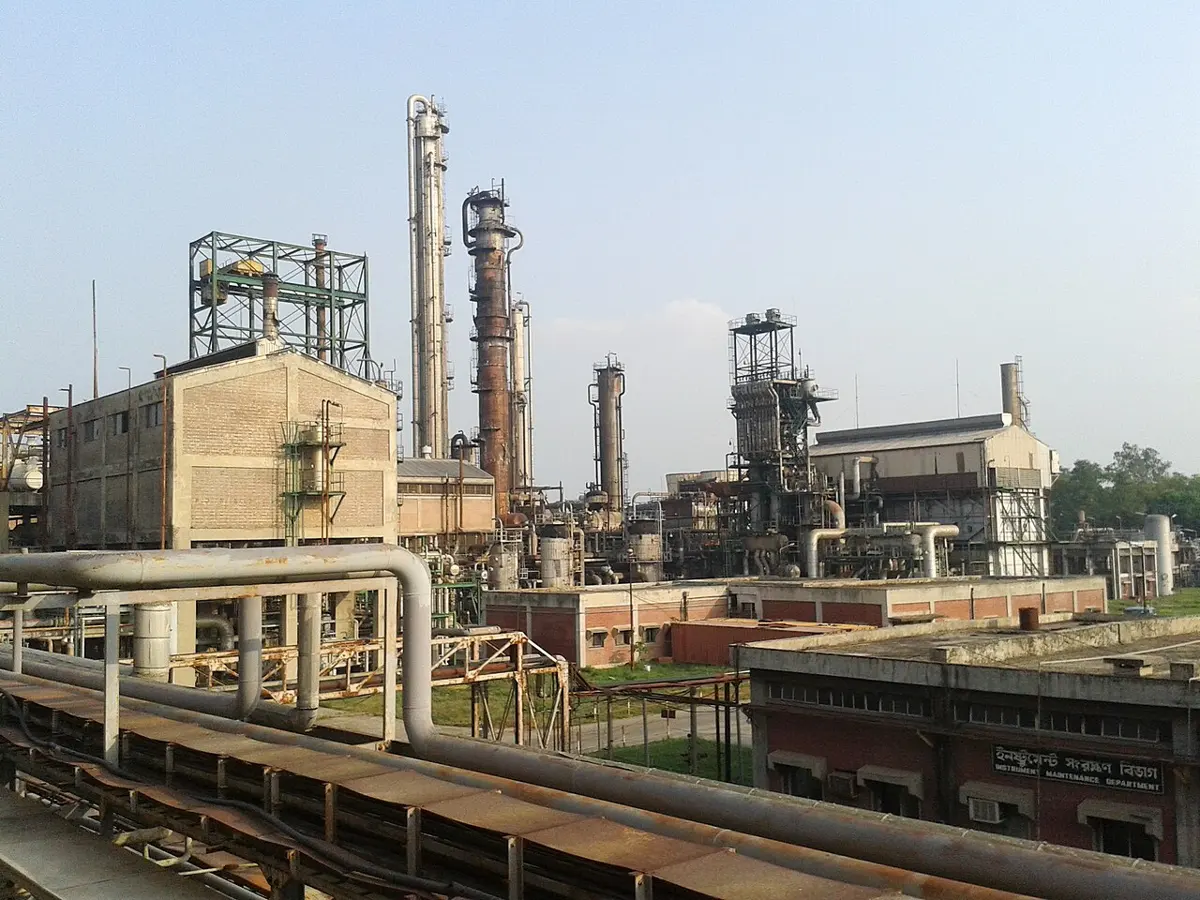
17.1.1 Manufacture of ammonia by Haber’s process
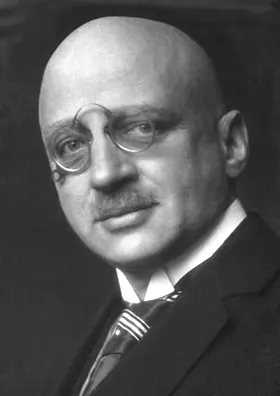
The German chemist Fritz Haber (born 9 December 1868, died 29 January 1934) found how to make ammonia by combining nitrogen and hydrogen directly. Ammonia had been made in other ways: the cyanamide process (calcium carbide heated in nitrogen gives calcium cyanamide, CaCN₂, which gives ammonia with steam) and Serpek’s process (aluminium nitride, made from bauxite, carbon and nitrogen at very high temperature, gives ammonia with water). Both needed huge amounts of energy, and Haber’s process soon replaced them as the most economical.
Haber received the Nobel Prize in Chemistry for 1918 for the synthesis of ammonia from its elements. Turning his laboratory apparatus into a factory was the work of the chemist and engineer Carl Bosch at the company BASF: the first plant, at Oppau in Germany, began making ammonia in 1913. So the process is also called the Haber–Bosch process, and Bosch shared the Nobel Prize in Chemistry for 1931 for his high-pressure methods. The ammonia went into fertilizer and, during the First World War, into explosives. Haber’s prize has its own full story.
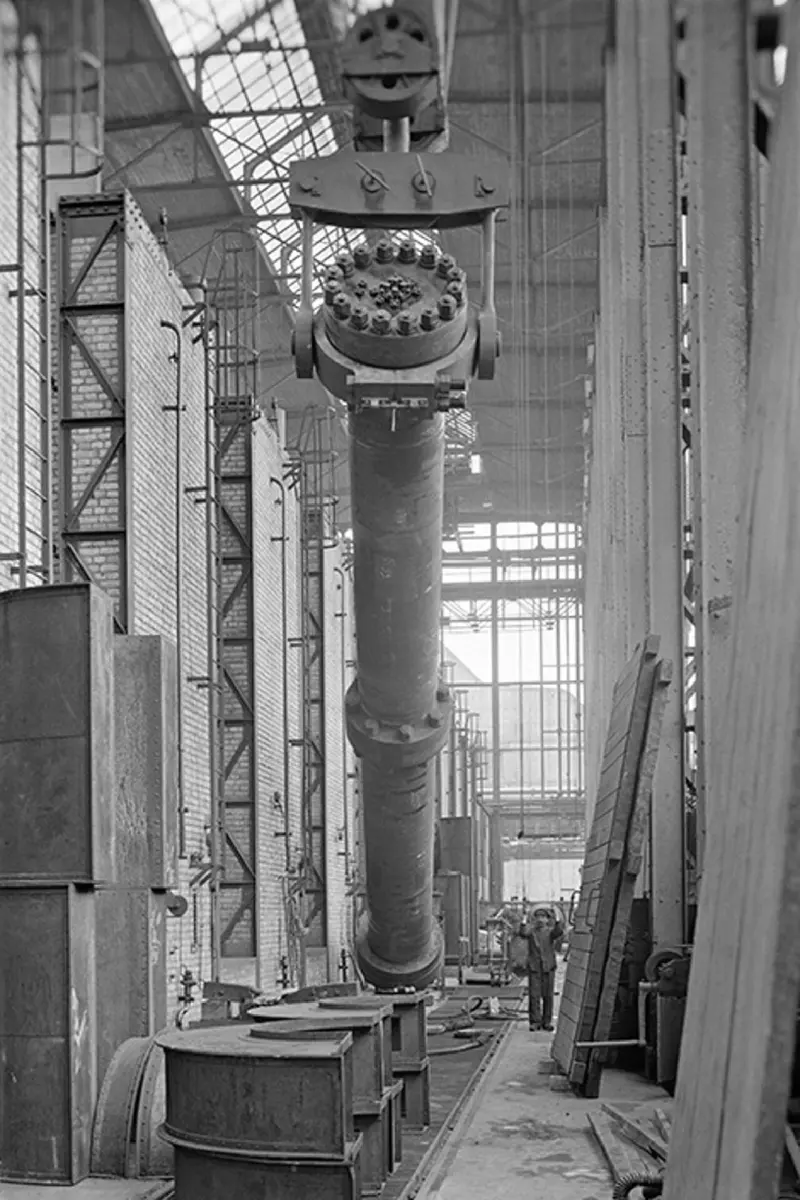
Principle
Dry nitrogen and hydrogen, mixed in the ratio 1 : 3 by volume, are passed at high pressure over a heated iron catalyst containing metal oxides as promoters (potassium oxide and aluminium oxide, which make the iron work better and last longer). They combine to give ammonia:
The reaction is reversible and exothermic, and 4 volumes of gas give 2. Plants run at about 400–450 °C and 150–300 atm (about 200 atm is typical; some older plants used up to 900–1000 atm).
Conditions for a high yield of ammonia
Each condition follows from Le Chatelier’s principle, worked through in Unit 8, together with the need to make ammonia fast.
- a.Low temperature, but not too low. The forward reaction is exothermic, so a lower temperature shifts the equilibrium towards ammonia. But below about 400 °C the reaction is too slow, even with the catalyst; above about 500 °C the ammonia formed largely splits back into nitrogen and hydrogen. 400–450 °C is the compromise: a fair yield, made fast.
- b.High pressure. 4 volumes of gas give 2, so high pressure shifts the equilibrium towards ammonia, and also speeds up the reaction. But every extra atmosphere costs energy to squeeze the gas and thicker steel to hold it: about 200 atm is the usual compromise.
- c.High concentration of nitrogen and hydrogen, in the ratio 1 : 3 that the equation uses, and the ammonia taken away as it forms (by cooling it to a liquid): both shift the equilibrium forward.
- d.A good catalyst. Finely divided iron with promoters gives the reaction a faster path (a lower activation energy), so equilibrium is approached quickly at a temperature low enough for a fair yield. It doesn’t change the yield at equilibrium; it makes the plant fast enough to be worth building.
- e.Pure gases. Compounds containing oxygen (water, carbon monoxide, carbon dioxide) and sulphur compounds poison the iron catalyst, so the gases must be purified before they reach it.
Process
There are six main units.
a. Production of hydrogen and nitrogen. Today almost all the hydrogen comes from natural gas (methane) and steam, over a nickel catalyst (steam reforming), with the carbon monoxide formed then changed into more hydrogen and carbon dioxide:
Older plants made it from coal or coke as water gas (), and a few from the electrolysis of water, which is costly unless electricity is cheap. Nitrogen comes from air, by fractional distillation of liquid air, or by burning some of the hydrogen in air inside the plant, which leaves the nitrogen behind.
b. Compressor. The mixture of nitrogen and hydrogen, 1 : 3 by volume, is compressed to about 200 atm.
c. Purifier. The gas may still carry carbon dioxide, carbon monoxide, water vapor and traces of sulphur compounds, which would poison the catalyst. They are removed: carbon dioxide by an alkali such as soda lime (sodium hydroxide with quicklime), which also takes up moisture,
and, in modern plants, the last traces of carbon oxides by turning them into methane, which does the catalyst no harm.
d. Catalyst chamber (converter). A tall cylinder of thick steel, packed with beds of finely divided iron promoted with K₂O and Al₂O₃. It is heated to about 450 °C to start the reaction; after that, the heat the reaction gives out keeps it going, and the incoming gas is warmed by the gas leaving. Only about 15% of the nitrogen and hydrogen turn into ammonia in one pass.
e. Condenser. The hot gas from the converter is cooled. Ammonia, which liquefies far more easily than nitrogen or hydrogen, condenses to a liquid (liquid ammonia, NH₃(l)) and is drained off and stored under pressure. (Ammonia dissolved in water is liquor ammonia.)
f. Recirculation. The nitrogen and hydrogen that didn’t react are pumped back, with fresh gas, to the compressor and the converter to pass over the catalyst again. Recycled again and again, almost all of the gas ends up as ammonia.
Why is the gas leaving the converter cooled?
Pick an answer to see why.
17.1.2 Manufacture of nitric acid by Ostwald’s process
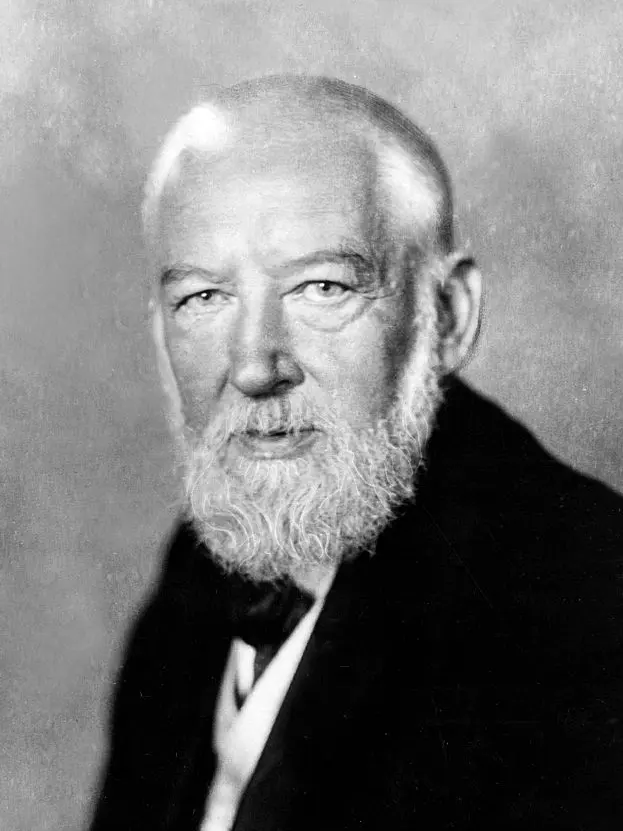
The Baltic German chemist Friedrich Wilhelm Ostwald (born 2 September 1853 in Riga, died 4 April 1932) worked out how to make nitric acid by the catalytic oxidation of ammonia, and patented it in 1902. He received the Nobel Prize in Chemistry for 1909, for his work on catalysis and on chemical equilibrium and reaction rates. He is also known for Ostwald’s dilution law for weak electrolytes, a separate piece of his work.
Principle
Ammonia is oxidized by air on a platinum–rhodium catalyst to nitric oxide; nitric oxide is oxidized further, on cooling, to nitrogen dioxide; and nitrogen dioxide is absorbed in water, with more oxygen, to give nitric acid:
Process
a. Oxidation of ammonia. Ammonia (from Haber’s process) is mixed with about ten times its volume of clean air and blown through a converter, where it passes through layers of fine gauze woven from platinum with about 10% rhodium. The gauze is kept at about 800–900 °C: the reaction is so exothermic that, once started, it keeps the gauze glowing hot by itself. The gas touches the gauze for only about a thousandth of a second, yet about 95% of the ammonia becomes nitric oxide.
b. Oxidation of nitric oxide. The hot gas from the converter is passed through a cooler (where its heat raises steam) and into an oxidation chamber, where the nitric oxide combines with the oxygen of more air to give nitrogen dioxide:
This reaction is unusual: it goes faster at lower temperatures, which is one reason the gas is cooled (to roughly room temperature to 50 °C) before it reaches this step.
c. Absorption of nitrogen dioxide. The nitrogen dioxide, with more air, enters the bottom of a tall absorption tower packed with acid-proof quartz or flint (in modern plants, trays). Water is sprayed in at the top and trickles down over the packing, meeting the rising gas, which is absorbed to form nitric acid:
(Without enough oxygen, a third of the nitrogen dioxide would come back as nitric oxide, ; the extra air oxidizes it again.) The acid collected at the bottom is about 50–68% nitric acid. Distilling it does not concentrate it beyond 68%, because nitric acid and water then boil off together. To get concentrated acid of about 98%, it is distilled under reduced pressure with concentrated sulphuric acid, which holds back the water.
Ostwald’s process is the method used all over the world because it is cheap, it uses ammonia, which is made on a vast scale, it can be controlled easily, and the dilute acid it gives is easily concentrated.
Which metal is the catalyst for the oxidation of ammonia in Ostwald’s process?
Pick an answer to see why.
17.1.3 Manufacture of sulphuric acid by the contact process
Principle
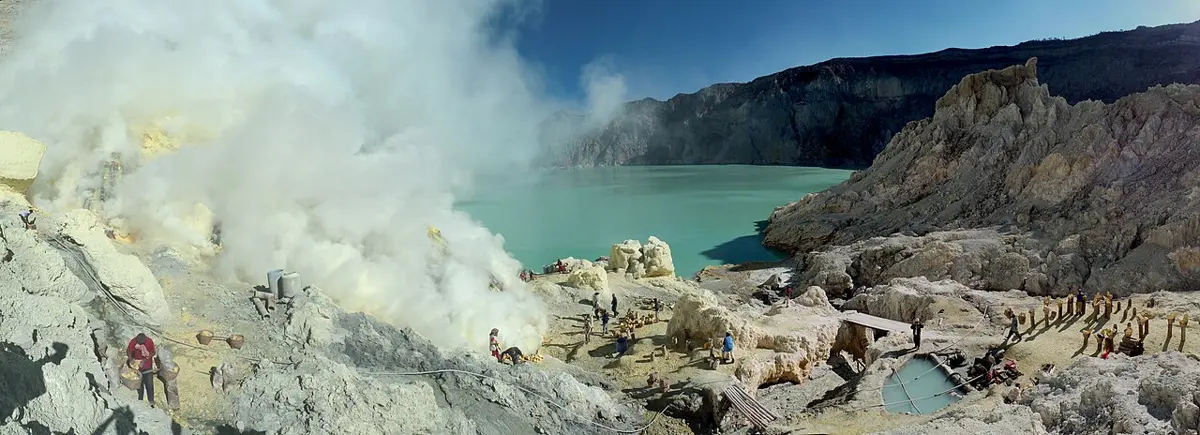
The process is called the contact process because its key step, the oxidation of sulphur dioxide to sulphur trioxide, happens when the gases come into contact with the surface of a solid catalyst, vanadium(V) oxide, V₂O₅. It has four steps.
Step I: Production of sulphur dioxide. Sulphur, or the ore iron pyrite, is burnt in air:
Step II: Oxidation of sulphur dioxide. Sulphur dioxide and oxygen (from air) combine on the catalyst:
This is the step that decides how much sulphuric acid the plant makes, since all the rest depends on the sulphur trioxide formed.
Step III: Formation of oleum. The sulphur trioxide is absorbed in concentrated (98%) sulphuric acid, forming oleum (fuming sulphuric acid), H₂S₂O₇:
Step IV: Sulphuric acid of the desired concentration. The oleum is mixed with a calculated amount of water:
Process
a. Sulphur or pyrite burner. Sulphur (or pyrite, broken into lumps) is burnt in a stream of dry air in a furnace lined with fire bricks, giving sulphur dioxide with plenty of air left in it.
b. Purification units. The sulphur dioxide from the burner may carry dust, water-soluble impurities, arsenic oxide (from pyrite), moisture and unburnt sulphur. Any of them would poison the catalyst or clog it, so the gas passes through a series of chambers (a modern plant burning pure sulphur, recovered from natural gas and oil, makes a much cleaner gas and needs little more than a filter and the drying tower):
- i.Dust precipitator. The dust is removed by electrostatic precipitation: a very high voltage between wires and plates charges the dust particles, which are pulled to the plates and fall off.
- ii.Steam chamber and cooler. In older plants burning pyrite, steam was blown in to wet the remaining fine dust so it settled. The hot gas is then cooled in a cooler.
- iii.Washing tower. The water-soluble impurities and acid mist are washed out by water sprayed down a scrubber packed with quartz, which spreads the water and makes it meet the gas over a large surface.
- iv.Drying tower. Concentrated sulphuric acid is sprayed down a packed tower; it absorbs the moisture, and the sulphur dioxide leaves dry.
- v.Arsenic purifier. Arsenic oxide, from pyrite, would poison the vanadium(V) oxide catalyst. The gas passes over shelves of moist iron(III) hydroxide, which takes up the arsenic oxide as iron(III) arsenite.
- vi.Testing box. A strong beam of light is shone through the gas. If it contains dust or mist, the particles scatter the light and the beam’s path shows up (the Tyndall effect); the gas then goes back to be purified again. If the beam can’t be seen, the gas is pure and goes on.
c. Preheater. The pure, dry gas (sulphur dioxide and air) is heated to about 400–450 °C in a heat exchanger, often by the hot gas leaving the contact chamber.
d. Contact chamber. The gas passes through three or four beds (trays) of the catalyst: vanadium(V) oxide with potassium sulphate on pellets of silica. The reaction is exothermic, so the gas is cooled between the beds to keep it near 420–450 °C, where the yield and the speed are both good. More than 99.5% of the sulphur dioxide becomes sulphur trioxide.
e. Absorption tower. The sulphur trioxide is absorbed in 98% sulphuric acid trickling down a packed tower, forming oleum, which is diluted with a calculated amount of water to the strength wanted. (In many plants the acid in the tower is kept at 98% by adding water to it continuously, so 98% sulphuric acid comes out directly.)
Conditions for a high yield of sulphuric acid
Step II, , decides the yield, so its conditions are chosen by Le Chatelier’s principle (as in Unit 8):
- a.High pressure. 3 volumes of gas give 2, so high pressure shifts the equilibrium towards sulphur trioxide. But the conversion is already over 99% at 1–2 atm, and high pressure would cost a great deal in energy and in equipment that resists the corrosive gas, so plants run at just above atmospheric pressure.
- b.Fairly low temperature. The reaction is exothermic, so a lower temperature gives more sulphur trioxide at equilibrium; but below about 400 °C the catalyst works too slowly. About 400–450 °C is the compromise.
- c.Pure gases. Pure, dry sulphur dioxide and oxygen, free of dust and arsenic, keep the catalyst working.
- d.Excess oxygen. Using more air than the equation needs (high concentration of oxygen) shifts the equilibrium forward.
- e.A proper catalyst. Vanadium(V) oxide speeds up the reaction; it is cheaper than platinum, used in early plants, and isn’t poisoned so easily.
Which reaction happens in the contact chamber?
Pick an answer to see why.
17.1.4 Manufacture of sodium hydroxide by the diaphragm cell
Principle and procedure
Sodium hydroxide (caustic soda) is made by the electrolysis of brine, a concentrated solution of sodium chloride, in a diaphragm cell. The anode is titanium coated with ruthenium and titanium oxides (it resists chlorine; older cells used graphite), and the cathode is steel mesh. Between them is the diaphragm, a porous sheet (once of asbestos, now mostly of polymer fibers) laid on the cathode, which keeps the two compartments apart.
In solution there are Na⁺ and Cl⁻ ions from the salt, and a little H⁺ and OH⁻ from water:
At the anode, chloride ions are oxidized to chlorine gas, which bubbles off through the anode outlet:
(Oxygen from water could also form, but in concentrated brine, at an anode of this kind, chlorine forms far more easily.)
At the cathode, water is reduced to hydrogen gas, which leaves through the cathode outlet, and hydroxide ions are left in the solution:
Sodium ions are not discharged: reducing Na⁺ to sodium needs far more energy (its electrode potential is −2.71 V) than reducing water (−0.83 V). So Na⁺ stays in solution, and with the OH⁻ ions formed at the cathode it makes sodium hydroxide:
The overall change:
Brine is fed into the anode compartment, and its level is kept higher there than on the cathode side, so the solution seeps through the diaphragm towards the cathode all the time. This flow carries sodium ions through, and stops hydroxide ions moving back towards the anode, where they would react with the chlorine () and spoil both products. The diaphragm also keeps the chlorine and hydrogen apart: mixed, they can explode.
The solution drawn off from the cathode compartment (cell liquor) contains about 10–12% sodium hydroxide and about 15% sodium chloride. It is concentrated by evaporating water to about 50% NaOH. Salt is much less soluble in strong sodium hydroxide, so most of it crystallizes out, and is filtered off and used again in fresh brine.
Advantages of the diaphragm cell
- a.It uses no mercury, unlike the older mercury cell, whose mercury escaped into rivers.
- b.It uses less electricity than the mercury cell (a lower voltage).
- c.It works with less pure brine than a membrane cell needs.
- d.It is cheaper to build and simple to run.
Disadvantages of the diaphragm cell
- a.The sodium hydroxide is impure: it still contains about 1% salt after concentration.
- b.The chlorine contains some oxygen (from water oxidized at the anode), so it is of poorer quality.
- c.A great deal of steam is needed to evaporate the cell liquor to 50%.
- d.Old diaphragms were of asbestos, a cause of lung cancer, which had to be replaced often and disposed of safely.
Why is the brine level kept higher in the anode compartment than in the cathode compartment?
Pick an answer to see why.
17.1.5 Manufacture of sodium carbonate by the ammonia–soda (Solvay) process
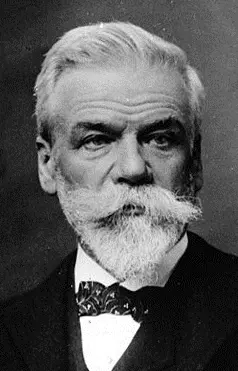
Sodium carbonate (soda ash, Na₂CO₃; and its crystals, washing soda, Na₂CO₃·10H₂O) goes into glass, soap and detergents, paper and water softening. The Belgian chemist Ernest Solvay worked out a way to make it from salt and limestone, with ammonia going round and round, and opened his first works at Couillet in Belgium in 1865. It is called the Solvay process, or the ammonia–soda process.
Principle
When carbon dioxide is passed into a concentrated solution of brine saturated with ammonia, ammonium hydrogencarbonate (ammonium bicarbonate) forms:
Ammonium hydrogencarbonate reacts with the sodium chloride of the brine to give sodium hydrogencarbonate (sodium bicarbonate). Sodium hydrogencarbonate is only sparingly soluble in the cold, salty solution, so it comes out as a precipitate:
The precipitate is filtered off and heated, giving sodium carbonate:
Sodium carbonate crystallizes from water as washing soda:
Process
The whole process has five steps.
- Brine. A concentrated solution of sodium chloride (brine) is prepared and purified.
- Ammonia absorber. The brine is saturated with ammonia gas, giving ammoniacal brine, which is filtered from any solids.
- Carbonation tower. The ammoniacal brine trickles down a tall tower fitted with perforated plates, while carbon dioxide is blown in at the bottom. Ammonium hydrogencarbonate forms, and reacts with the salt, at about 30–35 °C (the tower is cooled, since the reactions give out heat and NaHCO₃ is more soluble when warm):
The precipitate of sodium hydrogencarbonate is filtered off, washed and dried.
4. Calcination. The sodium hydrogencarbonate is heated to about 180 °C, giving sodium carbonate; the carbon dioxide given off goes back to the carbonation tower:
- Ammonia recovery. The filtrate, a solution of ammonium chloride, goes to the ammonia recovery tower, where it is heated with steam and slaked lime (calcium hydroxide, a stronger base than ammonia), which sets the ammonia free to be used again. The lime comes from the lime kiln, where limestone is heated to give the carbon dioxide for the carbonation tower and quicklime, which is slaked with water:
The ammonia goes round and round; the only raw materials used up are brine and limestone (and fuel), and the only waste is calcium chloride. Adding all the steps:
This overall reaction doesn’t happen if you simply mix chalk with salt water; it is the ammonia, recycled through the plant, that makes it go. The Solvay process is far cheaper than the Leblanc process it replaced, which used salt, sulphuric acid, limestone and coal and left two wastes, hydrogen chloride gas and heaps of calcium sulphide. The Solvay process makes most of the world’s manufactured sodium carbonate.
In the carbonation tower, why does sodium hydrogencarbonate come out as a solid?
Pick an answer to see why.
17.2 Fertilizers
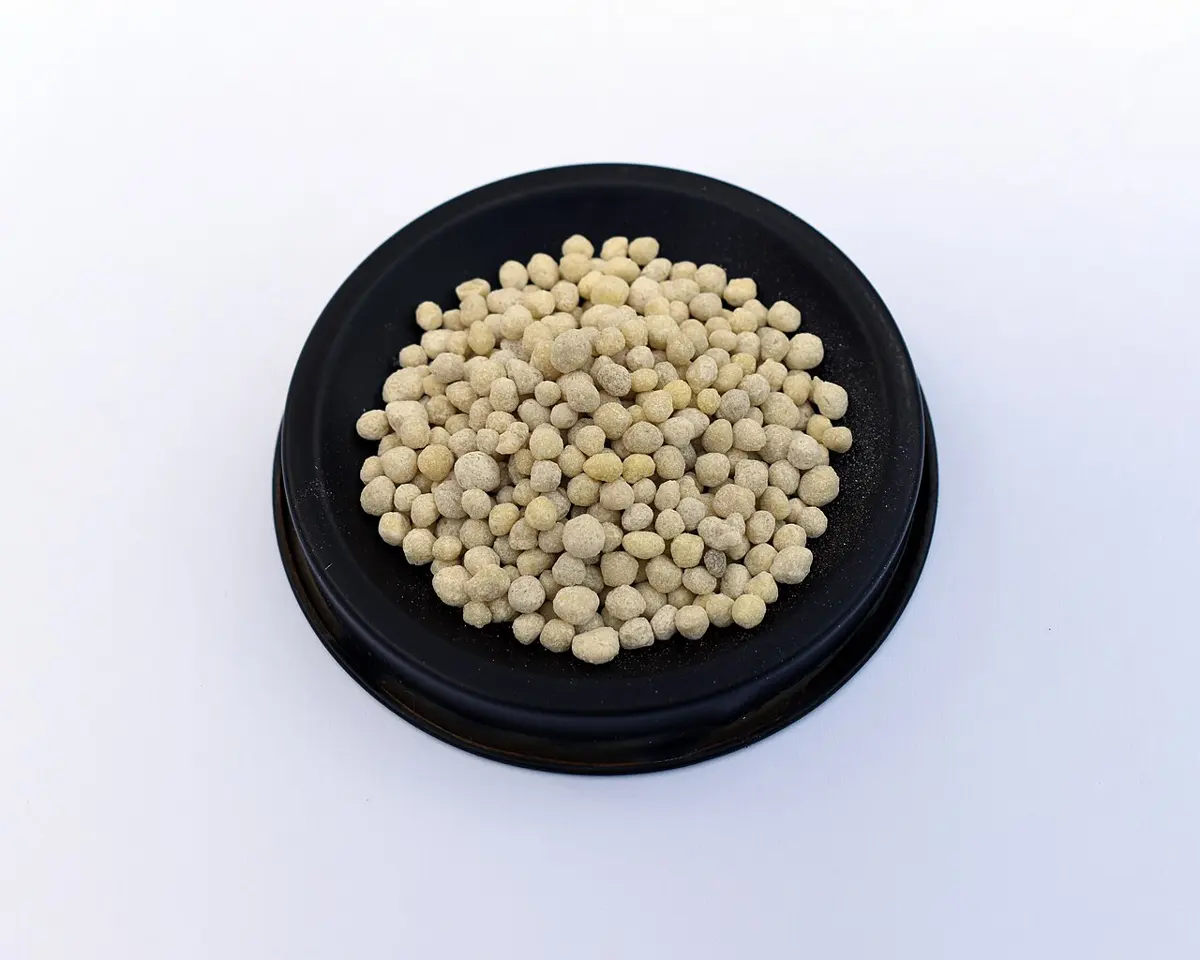
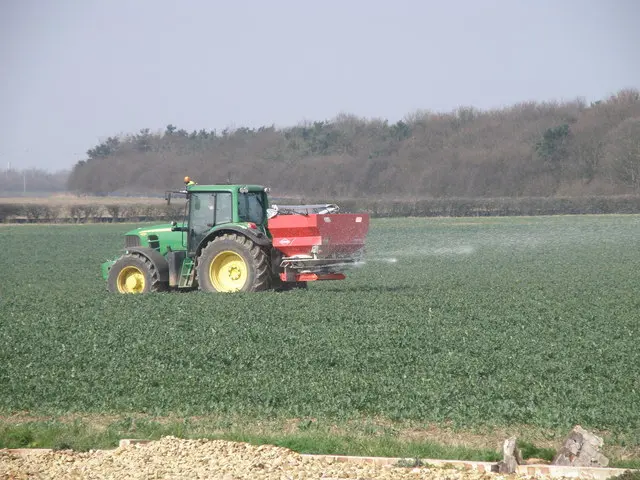
Fertilizers are substances added to the soil (or sprayed on plants) to supply the nutrients plants need for growth that the soil can’t supply in enough amount. Used properly, they increase crop production, and so help a country’s economy. By where they come from, fertilizers are of two kinds:
- a.organic fertilizers (manure): compost, farmyard manure, green manure, bone meal and oil cakes, from plants and animals;
- b.chemical fertilizers (inorganic fertilizers): made in factories by chemical processes.
This unit is about chemical fertilizers. They contain nutrients in a form plants can take up. By how much of each a plant needs, the nutrients are grouped as:
- i.Primary nutrients (macronutrients): nitrogen (N), phosphorus (P) and potassium (K). Plants need them in large amounts, and soils most often run short of them.
- ii.Secondary nutrients: calcium (Ca), magnesium (Mg) and sulphur (S). Plants need them in moderate amounts; they are less often short.
- iii.Micronutrients (trace elements): iron (Fe), manganese (Mn), zinc (Zn), copper (Cu), boron (B), molybdenum (Mo), chlorine (Cl) and nickel (Ni). Plants need only tiny amounts, but without them they fail: many are parts of enzymes, and iron and manganese are needed to make chlorophyll. (Cobalt is needed by the bacteria in the root nodules of legumes that fix nitrogen.)
(Carbon, hydrogen and oxygen, the most abundant elements in a plant, come from air and water.)
In Nepal, much farmland is on slopes, and the monsoon rain washes nutrients out of the soil and soil itself down the hill. Each harvest also carries nutrients away. To give crops enough, farmers add manure and chemical fertilizers. The three used most are urea (for nitrogen), diammonium phosphate (DAP) (for phosphorus and nitrogen) and potash (muriate of potash, KCl, for potassium). Nepal needs about 800,000 tonnes of them a year, more than half of it urea, and all are imported.
Nitrogenous fertilizers
- a.Nitrate fertilizers: sodium nitrate (Chile saltpeter), NaNO₃; calcium nitrate, Ca(NO₃)₂; potassium nitrate, KNO₃.
- b.Ammoniacal fertilizers: ammonium sulphate, (NH₄)₂SO₄; ammonium chloride, NH₄Cl; diammonium phosphate (DAP), (NH₄)₂HPO₄.
- c.Ammonium and nitrate fertilizers: ammonium nitrate, NH₄NO₃; calcium ammonium nitrate (CAN), ammonium nitrate mixed with powdered limestone or dolomite (about 25–27% N), which is safer to store than ammonium nitrate alone. (Fertilizer-grade calcium nitrate is a double salt, 5Ca(NO₃)₂·NH₄NO₃·10H₂O, with about 15.5% N.)
- d.Amide fertilizer: urea, NH₂CONH₂.
Functions of nitrogen in plants:
- a.It makes plants grow fast, with plenty of green leaves and stems.
- b.It is part of chlorophyll, so plants short of nitrogen turn pale yellow, starting with the older leaves.
- c.It is part of every protein (and of DNA), so it is needed for protein synthesis.
- d.It is needed for the development of the whole plant.
Urea is the fertilizer used most for nitrogen.
Phosphatic fertilizers
Rock phosphate, Ca₃(PO₄)₂, is too insoluble for plants to use quickly, so it is treated with acid to make the soluble calcium dihydrogenphosphate, Ca(H₂PO₄)₂:
a. Single superphosphate (SSP): rock phosphate with sulphuric acid. It is a mixture of calcium dihydrogenphosphate and calcium sulphate (gypsum), about 16–20% P₂O₅:
- b.Double superphosphate (DSP): an older name for a superphosphate richer than SSP, made with a mixture of sulphuric and phosphoric acids; the name is sometimes used for TSP.
- c.Triple superphosphate (TSP): rock phosphate with phosphoric acid, giving calcium dihydrogenphosphate without gypsum, about 46% P₂O₅:
DAP, (NH₄)₂HPO₄, made from ammonia and phosphoric acid, supplies phosphorus and nitrogen together, and is the phosphatic fertilizer used most in Nepal.
Functions of phosphorus in plants:
- a.It helps the growth of roots.
- b.It helps the formation of flowers, fruits and seeds.
- c.It helps plants mature (ripen) on time.
- d.It is part of ATP, which carries energy in every cell, and of DNA.
Potassic fertilizers (potash)
- a.Potassium sulphate, K₂SO₄;
- b.Muriate of potash, KCl (potassium chloride; “muriate” is an old name for chloride), mined from old salt beds.
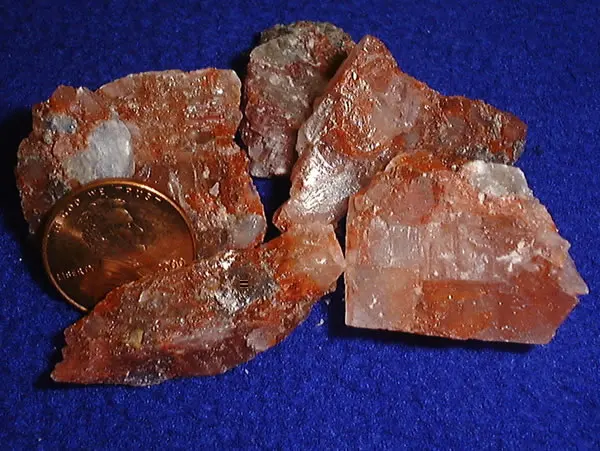
Functions of potassium in plants:
- a.It controls the opening and closing of the stomata in leaves.
- b.It helps plants resist drought, frost and disease.
- c.It makes stems strong, and improves the quality of seeds, grains and fruits.
- d.It helps plants make proteins and sugars, and move the sugars around.
A good fertilizer
A good fertilizer should:
- a.be affordable to farmers;
- b.be soluble in water, so plants can take up its nutrients easily;
- c.contain enough of the nutrients it is meant to give;
- d.be safe for plants (no burning of roots or seedlings, no toxic impurities);
- e.be stable: it should not lose its nutrients in storage, and should release them when the plants need them;
- f.not make the soil acidic (or should help check acidity);
- g.be easily absorbed by plants.
A fertilizer containing all three primary nutrients is an NPK fertilizer. Its sack carries three numbers, such as 20 : 20 : 10: the percentages of nitrogen (N), phosphorus counted as P₂O₅ and potassium counted as K₂O. (Phosphorus and potassium are counted that way by an old custom, though the fertilizer contains no P₂O₅ or K₂O as such.)
Effects of chemical fertilizers on the environment
Used in the right amount, at the right time, fertilizers feed the world. Too much, or used carelessly, they cause harm:
- a.Eutrophication of water. Nitrate and phosphate washed from fields into ponds, lakes and slow rivers feed a huge growth of algae (an algal bloom). When the algae die, bacteria decomposing them use up the water’s dissolved oxygen, and fish and other animals die. The water becomes green, smelly and lifeless.
- b.Acidic soil. Ammonium and urea fertilizers, used year after year, make soil acidic (bacteria turning ammonium into nitrate release H⁺ ions). Acidic soil holds fewer nutrients and grows poorer crops; farmers add lime to correct it.
- c.Health. Nitrate seeping into wells and springs is a danger to babies: in their bodies it is turned into nitrite, which changes hemoglobin so it can’t carry oxygen (methemoglobinemia, or “blue baby syndrome”). This is why drinking water has a limit for nitrate (50 mg/L). Links between nitrate and some cancers have been studied; the evidence is not settled.
- d.Atmosphere. Some of the nitrogen in fertilizer escapes as nitrous oxide, N₂O, a greenhouse gas about 270 times as strong as carbon dioxide, which also depletes the ozone layer. Ammonia escaping from fertilized fields forms fine particles in the air.
- e.Toxic elements in soil. Phosphate fertilizers carry impurities from the rock they are made from: cadmium, fluorides and traces of uranium (which is radioactive), and sometimes arsenic and lead. Over many years they build up in the soil.
Manufacture of urea
Urea, NH₂CONH₂ (CO(NH₂)₂), molar mass 60.06 g/mol, is a nitrogenous fertilizer. Its molecule is the amide of carbonic acid, so it is also called carbamide. It was found in urine (from which it is named) in the 1770s, and in 1828 the German chemist Friedrich Wöhler made it in the laboratory by heating ammonium cyanate: the first time a compound known only from living things was made from non-living ones. It contains 46.67% nitrogen (with N = 14, molar mass 60), the most of any solid nitrogen fertilizer. Its specific gravity is 1.33, and it is very soluble in water. Fertilizer urea is sold as prills (small, round beads, made by letting drops of molten urea fall and solidify in a tower) or as larger granules: “prilled urea” names its form, not a different compound.
Principle
Urea is made from ammonia and carbon dioxide at high pressure, in two steps that both happen in the same reactor:
a. Formation of ammonium carbamate. Ammonia and carbon dioxide (in a mole ratio of at least 2 : 1; plants use an excess of ammonia, about 3 : 1) at about 180–200 °C and 140–200 atm combine to give ammonium carbamate. This step is fast and strongly exothermic:
b. Dehydration of ammonium carbamate. Ammonium carbamate loses water to give urea. This step is slow and slightly endothermic, and it doesn’t go to completion: only about two thirds of the carbamate becomes urea in one pass:
The net reaction, exothermic overall:
For a high yield of urea:
- a.the carbon dioxide should be pure;
- b.the ratio of ammonia to carbon dioxide should be kept right (an excess of ammonia drives the reactions forward);
- c.the ammonia should be preheated, so the mixture reaches the reaction temperature;
- d.the temperature and pressure should be kept at the values the reactions need: hot enough for the slow dehydration, at a pressure high enough to keep the ammonia and carbon dioxide from boiling off.
A problem when the prills are made: if molten urea is held hot for long, two molecules join and lose ammonia, giving biuret, NH₂CONHCONH₂:
Biuret harms seeds and seedlings, so fertilizer urea must contain little of it (about 1% at most), and the last steps of the plant are made fast.
Process
- Ammonia pumping. Liquid ammonia from the ammonia plant (Haber’s process) is pumped at high pressure into the reactor.
- Compression of carbon dioxide. The carbon dioxide comes from the ammonia plant itself: making hydrogen from natural gas and steam gives carbon dioxide as a by-product (17.1.1). It is compressed to the reactor’s pressure.
- Reactor (autoclave, urea synthesis tower). A tall, thick-walled vessel whose inner wall is lined with corrosion-resistant metal (special stainless steel, or titanium or zirconium), since hot carbamate solution eats ordinary steel. At about 180–200 °C and 140–200 atm, carbon dioxide and ammonia form ammonium carbamate, which loses water to give urea. The heat given out is removed (it raises steam for the plant), and the mixture stays long enough for the slow second step. The solution of urea, unreacted carbamate, excess ammonia and water flows on.
- Decomposer (distillation tower). The pressure is let down and the solution heated to about 130 °C: the carbamate that didn’t react splits back into ammonia and carbon dioxide, which are separated, condensed and sent back to the reactor. A solution of about 50–80% urea goes on.
- Flash drum. More water, ammonia and carbon dioxide are boiled off quickly (“flashed”) at low pressure, and recycled; the urea solution, now about 80–85%, can itself be used as a liquid fertilizer.
- Vacuum evaporator. The solution is heated under reduced pressure, which evaporates the water at a lower temperature and quickly (keeping biuret low), giving molten urea about 99% pure.
- Prilling tower. A tall tower, really a dryer and cooler. The molten urea is pumped to the top and sprayed by a rotating bucket with fine holes; the drops fall tens of meters against a stream of air blown up from the bottom, and solidify into round prills, collected at the bottom.
Advantages of urea
- a.It has the highest nitrogen content of any solid nitrogenous fertilizer (46%).
- b.It costs less per kilogram of nitrogen than other nitrogen fertilizers.
- c.It suits all types of crops and soils.
- d.It is easy to store and transport: prills flow freely, and it can’t explode, unlike ammonium nitrate.
- e.It leaves no harmful residue in the soil (unlike ammonium sulphate’s sulphate or ammonium chloride’s chloride).
- f.It is also used to make urea–formaldehyde resins and glues (plywood, electrical switches) and as cattle feed.
Disadvantages of urea
- a.It is hygroscopic: it absorbs moisture from the air and cakes, so it must be kept in sealed bags in a dry place.
- b.Left on the surface of moist soil, an enzyme in the soil (urease) turns it into ammonia, which escapes into the air, wasting nitrogen; it should be worked into the soil or applied before irrigation.
- c.It is very soluble, so heavy rain can wash it away, and if wet in storage or transport it is lost.
- d.Urea with too much biuret (an impurity) harms seeds and seedlings, and must not be used.
Exercise
A. Multiple choice questions
- What is the catalyst used in Haber’s process?
Pick an answer to see why.
- Which of the following is correct about the diagram above?
Pick an answer to see why.
- In Ostwald’s process, nitric acid is prepared by which of the following methods?
Pick an answer to see why.
- Which conditions favor a high yield of ammonia by Haber’s process?
Pick an answer to see why.
- What are the conditions for a high yield of sulphuric acid?
Pick an answer to see why.
- Which reaction occurs in the contact chamber of the contact process?
Pick an answer to see why.
- Which of the following is the molecular formula of oleum?
Pick an answer to see why.
- In which vessel do the following reactions occur?
Pick an answer to see why.
- Which of the following by-products are reused in the Solvay process?
Pick an answer to see why.
- Which of the following is the method of manufacture of sulphuric acid?
Pick an answer to see why.
- What are the products when ammonium chloride is heated with slaked lime?
Pick an answer to see why.
- A farmer’s plants are wilting and their leaves turning yellow. What is the best suggestion to the farmer?
Pick an answer to see why.
- For what is ammonium carbamate used?
Pick an answer to see why.
- A sack of urea is labeled “46.67%”. What does it mean?
Pick an answer to see why.
B. Short answer questions
What are the conditions for a high yield of ammonia? Explain each.
Answer
A chemist wants to produce, on a large scale, a basic gas from hydrogen and nitrogen. Which process should he or she use? Explain it with a flow sheet.
Answer
Draw a well-labeled flow sheet of the manufacture of nitric acid by Ostwald’s process.
Answer
Draw a well-labeled flow sheet of the contact process for the manufacture of sulphuric acid.
Answer
How is sodium hydroxide manufactured? Explain.
Answer
Explain the manufacture of sodium carbonate (no figure is required).
Answer
Identify P, Q, R, S and T in the table.
| Compound | Reaction at |
|---|---|
| sodium carbonate | carbonation tower: Q |
| HNO₃ | oxidation chamber: R |
| P | contact chamber: S |
| NaOH | at the cathode: T |
Answer
What are fertilizers? Write any four qualities of a good fertilizer.
Answer
What would happen if the washing tower and the drying tower were left out of the contact process? How are oleum and sulphuric acid formed? Give the reactions.
Answer
What are A, B, C, D and E in Figure 17.21?
Answer
Fill in M, N, O, P and Q.
| Element | Fertilizer | Functions in plants |
|---|---|---|
| nitrogen | M | N |
| Q | P | helps the growth of roots and fruits |
| potassium | potassium nitrate | O |
Answer
C. Long answer questions
Explain the principle and the process of manufacture of urea from ammonium carbamate, with a flow sheet.
Answer
How is sulphuric acid manufactured by the contact process? Explain every step with a diagram. What are the conditions for a high yield?
Answer
What is an NPK fertilizer? Write two functions of each of these nutrients in plants. Why do we use fertilizers in the soil?
Answer
Write the principles of the manufacture of sulphuric acid by the contact process and of nitric acid by Ostwald’s process. Explain the manufacture of sodium hydroxide by the diaphragm cell.
Answer
Draw a flow sheet of the manufacture of sulphuric acid by the contact process. Write any three advantages of the diaphragm cell for making sodium hydroxide.
Answer
Printable PDFs
- Study notes 3 pages
- Worksheet 4 pages Answer key
Quiz yourself: Materials and Chemicals We Use, Grades 5–12 →
Practice every question in the book, and keep track of the ones you miss →
Project work
A companion to your textbook, not a replacement for it: study from the book your school uses, and where the two differ, follow your teacher. Found a mistake? Please tell us.